ACOMSDave

Community Journalist

  • Home
  • Community Journalist
  • Events
  • Media Page and Press Kit
    • Projects and Work
  • Resources & Documents
    • LGBTQ+ Support Groups and Documents
  • NIGRA
  • Archives
  • Contact

The Missing Reel

05/11/2025 By ACOMSDave Leave a Comment

Why Northern Ireland Urgently Needs Its Own Annual LGBTQ+ Film Festival

The Missing Reel‘The Missing Reel’ – In the cultural landscape of the British Isles and Ireland, Northern Ireland stands as a notable anomaly. London has BFI Flare 1, Cardiff boasts the world-leading Iris Prize 2, Glasgow hosts the accessibility-focused Scottish Queer International Film Festival (SQIFF) 3, and Dublin celebrates GAZE.5 Yet, Northern Ireland remains the sole nation/major region without a dedicated, institutionally supported annual LGBTQ+ film festival. This is more than an artistic oversight; it is a critical cultural and economic gap that demands immediate attention.

We currently rely commendably on multi-arts festivals, such as Outburst Arts 6, and episodic initiatives like the Belfast Film Festival’s ‘Pride On The Big Screen’.7 While these efforts are vital, their multi-disciplinary mandates prevent them from providing the focused, year-round engine required for serious film sector development.

Crucially, this structural gap leaves NI sidelined from major international initiatives. For example, the British Council and BFI Flare partner with GAZE in Dublin as the official Irish hub for the global #FiveFilmsForFreedom campaign.8 Northern Ireland is left relying on ad-hoc screenings, rather than serving as an institutional partner to leverage this soft power and secure focused funding.1

A dedicated festival, which we can call NI-QueerFilm, is the missing catalyst. The blueprint for success already exists in Wales. The Iris Prize is an economic powerhouse that awards a £40,000 short film prize, stipulating that the winner must make their next film in Cardiff.2 Adopting this model in Belfast or Derry-Londonderry would create a direct, annual investment pipeline into the local queer film economy, retaining talent and leveraging national funding that is explicitly prioritised for regions outside London.11

Beyond the economics, film festivals are essential engines for social justice and cohesion. They create communal spaces to challenge discrimination and tackle acute social issues, such as the documented isolation and loneliness experienced by LGBTQI+ people in rural NI.12 A dedicated festival, designed with a mandatory outreach program—like the Iris Prize’s Iris on the Move model 13—would be a powerful tool for community upskilling and social service delivery, aligning directly with the Department for Communities’ LGBTQI+ Strategy goals.14

It is time for Northern Ireland to secure parity of cultural provision —not just to screen films, but to commission them, fund them, and utilise them as the powerful vehicles they are for advancing social equality and projecting an inclusive, modern identity to the world. I refer to the Missing Reel because, in the past, all movies were distributed on acetate and movie reels – bulky and also a fire hazard, but not today, so no need for reels, but there is a need for our own movie festival.

Links:

  • Breaking The Gay Code
  • The History of LGBT (now LGBTQ+) in Northern Ireland


Sources used:


committees.parliament.uk
SCS0159 – Evidence on The social impact of participation in culture and sport – UK Parliament Committees

Opens in a new window

travelagewest.com
Year-Round LGBTQ+ Events to Know in the U.K. | TravelAge West

Opens in a new window

thejournal.ie
‘From the outside it looks like everything’s great, but there’s still a lot to do’: The film festival that celebrates Ireland’s LGBT community – The Journal

Opens in a new window

en.wikipedia.org
Outburst Queer Arts Festival – Wikipedia

Opens in a new window

northernirelandscreen.co.uk
BELFAST FILM FESTIVAL 2024 Launches Today – Northern Ireland Screen

Opens in a new window

irisprize.org
Iris Prize LGBTQ+ Film Festival (13-19 Oct 2025)

Opens in a new window

bfi.org.uk
38th BFI Flare: London LGBTQIA+ Film Festival wraps with audiences up, global talent attendance and 5 world premieres

Opens in a new window

researchgate.net
Negotiating a local gaze: Belfast tour guides and the challenge of post-conflict representation | Request PDF – ResearchGate

Opens in a new window

communities-ni.gov.uk
Sexual Orientation Strategy | Department for Communities

Opens in a new window

committees.parliament.uk
Written evidence submitted by British Film Institute (SFT0083) About the BFI

Opens in a new window

artscouncil.org.uk
Other sources of funding | Arts Council England

Opens in a new window

britishcouncil.ie
GAZE International LGBT Film Festival – British Council | Ireland

Opens in a new window

queensfilmtheatre.com
Imagine Festival: Five Films for Freedom + discussion showing at Queen’s Film Theatre, Belfast.

Opens in a new window

gcn.ie
International LGBTQ+ short films to show as part of Belfast’s Imagine Festival – GCN

Opens in a new window

frameline.org
Iris Prize: The LGBTQ+ Film Prize, Explained – Frameline

Opens in a new window

irisprize.org
About Iris – Iris Prize

Opens in a new window

en.wikipedia.org
Iris Prize – Wikipedia

Opens in a new window

artscouncil-ni.org
Stories of LGBTQI+ people living in rural North… | Arts Council NI

Opens in a new window

queensfilmtheatre.com
LGBT Heritage NI Project: The Troubles I’ve Seen showing at Queen’s Film Theatre, Belfast.

Opens in a new window

gaze.ie
gaze 2020 programme.indd

Opens in a new window

cgiii.com
Scottish Queer International Film Festival – CGiii

Opens in a new window

theskinny.co.uk
Scottish Queer International Film Festival returns for 2025 – The Skinny

Opens in a new window

belfastfilmfestival.org
Statement From Belfast Film Festival

Opens in a new window

filmhubni.org
Foyle Film Festival: We Were Always Here + Q&A – Film Hub NI

Opens in a new window

eurotravelo.com
Outburst Queer Arts Festival – Belfast, Northern Ireland 2025 – Euro Travelo

Opens in a new window

nireland.britishcouncil.org
Northern Ireland organisations awarded grants to support creative international partnerships

Opens in a new window

arts.britishcouncil.org
Outburst – British Council Arts

Opens in a new window

nireland.britishcouncil.org
Arts projects secure funding for international digital collaborations | British Council

Opens in a new window

bfi.org.uk
Applying for BFI National Lottery Impact Feature Funding

Opens in a new window

bfi.org.uk
BFI Filmmaking Fund – Discovery and Impact feature funding

Opens in a new window

ucc.ie
Queer Visibility, Media Industries and Production Cultures: An Irish Case Study. Dr. Páraic Kerrigan (UCD) | University College Cork

Opens in a new window

research.ie
Gay (in)visibility in Irish media | #LoveIrishResearch

Opens in a new window

the-low-countries.com
By, For And With The Community: LGBTQ+ Film Festivals In The Low Countries

Opens in a new window

charitycommissionni.org.uk
Outburst Arts Festival – The Charity Commission for Northern Ireland

Opens in a new window

hansard.parliament.uk
Irish Diaspora in Britain – Hansard – UK Parliament

#NorthernIreland, #QueerFilm, #LGBTQArts, #FilmFestival, #Belfast, #CulturalGap, #IrisPrize, #FiveFilmsForFreedom, #NIArts, #SocialInclusion

Filed Under: Campaigns, Community Journalist Tagged With: Arts policy, Belfast arts, bfi flare, Cultural funding, GAZE, Iris Prize, LGBTQ film festival, Northern Ireland, outburst, queer cinema

Attack on Libraries Should Terrify Us All

27/10/2025 By ACOMSDave Leave a Comment

Attack On LibrariesAttack on Libraries – When I think about libraries, I think about freedom. Not the abstract, flag-waving kind—but the real, tangible freedom to walk into a room and discover ideas that might change your life. The freedom to read without someone looking over your shoulder, deciding what you’re allowed to know.

That freedom is under attack in America right now. And what’s happening there should be a wake-up call for the rest of us.

Book Banning Has Gone From Rare to Epidemic

Here’s a stat that should stop you in your tracks: between 2001 and 2020, an average of 273 book titles were challenged in US libraries each year. In 2023 alone? Over 9,000 titles were targeted. That’s not a trend—it’s an avalanche.

We’re not talking about obscure edge cases. Books by Maya Angelou, Toni Morrison, and Judy Blume are being pulled from shelves. A graphic novel about the Holocaust was banned in Tennessee. Even a children’s book about seahorses faced removal because—wait for it—it showed them mating.

The targets are predictable: anything involving LGBTQ+ themes (39% of challenged titles in 2024), books about race and racial justice, and materials related to sex education. But the scale is what’s new. This is no longer scattered local outrage. It’s organised, well-funded, and strategic.

It’s Not Grassroots—It’s Astroturfed

Groups like Moms for Liberty—which sounds wholesome enough—are actually connected to extremist organisations like the Proud Boys and QAnon conspiracy theorists. They’ve systematically taken over local library boards, using social media to manufacture outrage and fund candidates who’ll do their bidding.

One of the Proud Boys’ leaders literally called Moms for Liberty “the Gestapo with vaginas.” When fascists are giving you compliments, you might want to reconsider your strategy.

Librarians are facing death threats for doing their jobs. Amanda Jones, a Louisiana school librarian, spoke out against book banning at a board meeting. She was immediately accused of grooming children and received such terrifying threats that she now sleeps with a shotgun under her bed. Think about that—a school librarian needs weapons to feel safe because she defends books.

Trump’s Making It Official Policy

Things escalated dramatically when Trump returned to office. In February 2025, Dr. Colleen Shogan—the head of the US National Archives—was fired without explanation. In May, Dr Carla Hayden, the brilliant librarian of Congress, got an email: “Your position is terminated effective immediately.”

Her replacement? Todd Blanche—Trump’s lawyer from the Stormy Daniels case. That’s right: America replaced one of the world’s most accomplished librarians with a defence attorney. The symbolism couldn’t be clearer.

Meanwhile, government datasets are being scrubbed from websites. Environmental data, public health information, disease control statistics—all disappearing down the memory hole. Volunteer librarians are racing to save what they can, but established institutions need to step up and host this rescued data before it’s lost forever.

Why “Just Books” Matters More Than You Think

There’s a quote from philosopher Jacques Derrida that sums this up: “There is no political power without power over the archive.” Whoever controls what gets remembered—what gets preserved, what’s accessible—controls the narrative. They control history itself.

When a Florida judge ruled that public libraries are “government speech” and citizens have no First Amendment right to access books there, it wasn’t just about books anymore. It was about whether we’re allowed to think independently of what the government wants us to think.

It’s Already Crossing the Atlantic

Don’t think this is just an American problem. In Ireland, groups modelled directly on Moms for Liberty are targeting libraries with the same playbook. In the UK, 82% of librarians reported increased pressure to remove books in 2023, especially LGBTQ+ titles.

This August, a mob firebombed Spellow library in Liverpool because it served immigrant communities. A Reform UK councillor in Kent boasted about ordering the removal of “trans-ideological material” from children’s sections—material that didn’t even exist.

The tactics are spreading, and underfunded UK libraries are vulnerable.

What We Need to Do

Libraries have been the “pristine brand” of civic institutions for generations—universally trusted, politically neutral spaces. That brand is being deliberately tarnished, and we can’t let it happen.

We need to fund libraries properly, support librarians who face harassment, and push back loudly when books are targeted. We need to remember that free people read freely—and that freedom isn’t free if someone else decides what you’re allowed to know.

As Helen Keller wrote in 1933, when the Nazis were burning books: “You may burn my books and the books of the best minds in Europe, but the ideas those books contain have passed through millions of channels and will go on.”

Ideas are resilient. But they need defenders. Libraries aren’t just buildings with books—they’re the hidden infrastructure of democracy itself.


Links:

  • Gay Rights: From Revolution to Reflection
  • The Observer – ‘There is no political power without power over the archive’ -Richard Ovenden
  • The Linen Hall Library

#FreedomToRead
#StopBookBans
#DefendLibraries
#NoToCensorship
#ReadingIsResistance

Filed Under: Campaigns, Editor to ACOMSDave Tagged With: archive preservation, banned books, book banning, book challenges, censorship, cultural censorship, democracy, Donald Trump, First Amendment, free speech, Freedom of Information, government censorship, information access, information control, Intellectual freedom, LGBTQ+ rights, librarian attacks, libraries, library censorship, literary freedom, Moms for Liberty, public libraries, reading rights, school libraries, Trump administration

Book Bans in the UK: History Repeats Itself in the Fight for the Right to Read

15/08/2025 By ACOMSDave Leave a Comment

Book BansBook banning or Book Bans — a practice as old as the printed word — is making a troubling return in the UK. What was once thought of as a relic of history is back in the headlines, with queer literature often finding itself at the centre of the storm. The question is no longer “Could it happen here?” but “Why is it happening again?”

A Legacy of Censorship

Britain’s history of banning books is long and uneasy, often tied to sexual “obscenity” laws. Radclyffe Hall’s The Well of Loneliness (1928) — a sympathetic portrayal of lesbian love — was swiftly banned for daring to exist, despite containing no explicit content. Havelock Ellis’s Sexual Inversion faced a similar fate in 1897, vanishing from English shelves for nearly 40 years.

Even in modern memory, Section 28 (1988–2003) cast a long shadow, banning local authorities from “promoting homosexuality.” While it didn’t target specific titles, it gutted library shelves of anything queer-positive for an entire generation.

Other classics faced the censor’s hand too: D.H. Lawrence’s Lady Chatterley’s Lover endured a public obscenity trial in 1960, while James Joyce’s Ulysses remained banned until 1936.

The New Wave of Bans

Fast forward to today, and the bans are back — often quietly, sometimes loudly — with LGBTQ+ books in the crosshairs. A survey by Index on Censorship found that over half of UK school librarians had been asked to remove books. In most cases, the request came from parents, and in far too many cases, the books vanished.

Among the most targeted:

  • This Book Is Gay — Juno Dawson

  • Julián is a Mermaid — Jessica Love

  • ABC Pride — Louie Stowell, Elly Barnes & Amy Phelps

  • Heartstopper series — Alice Oseman

  • Billy’s Bravery — Tom Percival

  • Tricks — Ellen Hopkins

Some librarians have faced intimidation, even threats to their jobs, for resisting. In extreme cases, every LGBTQ+ book in a library was purged after a single complaint.

Quiet Censorship: The Bans You Don’t See

The most insidious trend? “Quiet censorship” — where books never make it to the shelf (a clandestine form of censorship), and book bans. Some authors have been told not to bring their own LGBTQ+ books to school events. In 2025, Kent County Council took further action, ordering the removal of all transgender-related children’s books from its 99 libraries.

Following the US Playbook

Many of these UK cases mirror US campaigns, where book challenges have hit record highs. This transatlantic influence, coupled with political rhetoric framing trans existence as “ideological,” has created fertile ground for censorship.

Fighting Back

Book Bans - the fight Back

Banned Books Week UK returns in October 2025

There is resistance. Banned Books Week UK returns in October 2025, rallying libraries, bookshops, authors, and readers. Groups like Index on Censorship, Stonewall, and the Society of Authors continue to push back, reminding us that libraries are for everyone — and that children exploring sexuality and identity are safer with accurate books than with the unfiltered internet.

The fight isn’t just about shelves. It’s about empathy, understanding, and the refusal to let fear dictate what people can know. As author Simon James Green put it, book banners trade in “hate and fear” — but the counter is “love and acceptance,” which, in the end, will win.

If Britain’s past teaches us anything, it’s this: the freedom to read is never permanently won. It must be defended, again and again.


Links:

  • The Censorship Acceleration An Analysis of Book Ban Trends After 2020
  • The Belfast Anarchist Collection, Just books
  • Crescent Arts – Books Festival
  • School Is In: LGBTQ Picture Books
  • Firm apologises for saying it would not process LGBTQ+ payments 
  • Free speech row as National Library of Scotland bans book opposing gender self-ID after staff complained of ‘hate speech’


Filed Under: Campaigns, Editor to ACOMSDave Tagged With: banned books, banned books week, book banning UK, book bans 2025, book censorship history, censorship, freedom to read, Intellectual freedom, LGBTQ books, literary freedom, queer literature, right to read, Section 28, UK libraries

WHAT DON’T WE KNOW ABOUT LGBTQ+ HOMELESSNESS

14/09/2023 By ACOMSDave Leave a Comment

(AND HOW YOU CAN HELP US ADDRESS THAT)


WHAT DON’T WE KNOW ABOUT LGBTQ+ HOMELESSNESSAccording to Dr Edith England (Cardiff Metropolitan University) and Dr. Neil Turbull (Cardiff University), WHAT DON’T WE KNOW ABOUT LGBTQ+ HOMELESSNESS,  is over and under-researched.   There has been a lot of research carried out on young people (especially those living in areas with high LGBTQ+ populations), but little or no research has been carried out for others, e.g.

  • those over 25
  • rural LGBTQ+ people
  • those disengaged from or avoiding services

To try to gauge just how bad (or good) the reality is, the survey being conducted will look at:

  • What percentage of the LGBTQ+ population has experienced homelessness
  • How homelessness, and experiences of homelessness, differ within the LGBTQ+ population
  • How LGBTQ+ homelessness is different in different areas across the country
  • What LGBTQ+ people experiencing, or at risk of, homelessness want and need
  • What happens after LGBTQ+ people experience homelessness


What can you do to help?

The LGBTQ+ community need a baseline, and with this survey, Dr Edith England and Dr. Neil Turbull, hope to fill the gaps in the areas indicated above.  They believe that establishing answers to these fundamental questions will benefit all researchers in this area, and even help towards emboldening government policy.

The survey takes around 10 minutes to complete and asks questions about demographics, housing and homelessness experiences through the lifetime, and service needs.  If you are aged 18+, UK resident and LGBTQ+, please complete the survey.


Links

  • AKT – the lgbtq+ youth homelessness report 2021
  • Inside Housing Report – LGBTQ+ homelessness: the data hole that undermines services
  • Homelessness  among LGBT adults in the US
  • LGBTQ+ Library Survey

Filed Under: Anti-Bullying & Homophobia, Campaigns Tagged With: Cardiff, homelessness, LGBTQ, older, research, survey, transgender, university, youth

NIGRA

18/07/2023 By ACOMSDave Leave a Comment

NIGRANIGRA is the oldest gay rights organisation in Northern Ireland.  Since its conception, it has seeked to ensure ‘GayRights’ means enhancing the rights of anyone oppressed on account of their -actual or imputes – sexuality.

Through our Facebook [https://www.facebook.com/NIGayRight5] , our Twitter account [https://twitter.com/GayUpstart]  (previously we led by producing our information and resources through our various printed magazines and newssheet).  We now publish articles that are of interest both locally, nationally and internationally from a wide range of sources related to the LGBTQI+’s people’s lives – all topics that we think might be useful for our community and its supporters.  To these articles, we also write and publish independent articles written by local people through ACOMSDave [www. https://acomsdave.com/].

Now we are looking for more local input and support and we would like you to write on any topic that you feel needs highlights, e.g.

  • Best gay spit in Northern Ireland (or your holiday resort area)
  • Things that you like to do in Northern Ireland
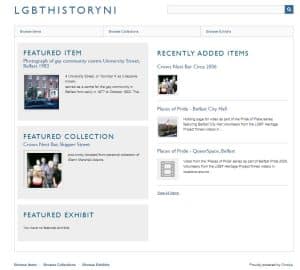
  • LGBTQTI+ history in Northern Ireland – don’t forget that we now have an online archive -LGBTHISTORYNI (LGBTHISTORYNI.com )


Go to LGBTHistoryNI

Visit LGBTHistoryNI and get involved in recording our history

Go NOW

But you decide, just write it and submit it by emailing to The Editor@ACOMSDave.com or dtw.mcfarlane@gmail.com)


Email ACOMSDave

Contact ACOMSDave editor to let us have your stories for publishing

Email Now


NIGRA - on parade

Filed Under: Campaigns, Editor to ACOMSDave Tagged With: Gay Magazines, gay politics, gay publishing, LGBT History NI, NIGRA, Northern Ireland

The History of LGBT (now LGBTQ+) in Northern Ireland

13/07/2023 By ACOMSDave Leave a Comment

The History of LGBT (now LGBTQ+) in Northern Ireland

Our Pride 1991 – by Terry McFarlane


The history of the LGBT (now LGBTQ+) in N Ireland is layered with groups that started to pursue a particular ideal missing from the community at the time.


Groups such as:

  • NIGRA
  • Cara Friend
  • COSO
  • GLYNI
  • Belfast Butterfly Group
  • Queerspace
  • Rainbow Project

Out of these groups came various local publications, e.g.

  • Gay Star
  • upstart
  • Update
  • NIGRA News
  • Gay Community News

The History of LGBT (now LGBTQ+) in Northern Ireland


But we also provided meeting spaces for individuals and groups, and the development of our own local lending library in the Carpenter Centre, Long Lane, Belfast.  This library held:

  • Books (both fiction and non-fiction)
  • Magazines

o   Foreign:

      • The Advocate (USA)
      • Christopher Street (USA)
      • Curve (USA)
      • Physique Magazine (USA) – a few copies
      • Zipper (*****)
      • Gai pied (French)
      • Lambda (Italian)
      • De Gayt Krant (Dutch)

o   Great Britain

      • Boyz
      • The Quorum
      • ScotsGay
      • Pink News
      • Gay Times
      • Gay News
      • Attitude
      • Diva
      • Fyne Times

o   Posters (both local and from abroad)

o   Banners (for various organisations)

o   Placards


NIGRA Banner at Pride

It was in a lot of ways our history repository.

The History of LGBT (now LGBTQ+) in Northern Ireland

Unfortunately, when we had to move to the Cathedral Buildings due to redevelopment, a lot of our history was lost, but still some of has found its way to.


  • The Ulster Museum – https://www.ulstermuseum.org/
  • The Linen Hall Library – https://www.linenhall.com/
  • PRONI – https://www.nidirect.gov.uk/campaigns/public-record-office-northern-ireland-proni

For people to access and learn about our history.

We need to develop spaces for writers, artists, and musicians within our community.  Yes, we need those spaces for well-being, befriending etc., but why have we limited ourselves?

I was thinking about when I first realised, I was gay, and how access to books and magazines seemed to be so restrictive.  But, after careful consideration what I have realised was that in terms of today, we had many more venues in which we could get a book or a magazine.  We had at least eight different bookstores we could visit, and then there were the various corner stores and bars that welcomed LGBT clientele (some grudgingly) but also stocked the various free gay magazines and papers. An enticement no doubt to bring people in, but at least they were there.

Today, we are a larger more supportive society, but, though we have the internet, Amazon, online magazines (which we mostly have to pay for) and a quarterly printed magazine (Attitude) available in some selected outlets (or by post), we seem to have less well written and researched news, less knowledge about the books that are available or the movies that are coming out (unless they are blockbusters).

We are also getting to that time in history when people who fought and made our history are reaching the end of their life.  Often without their history being noted, recorded, and save for our future.  Once they die, there is no way of returning that historical knowledge.

We have in part a way of saving our history, which is the LGBTHISTORYNI online archive site, but our community needs to get behind it, get involved with it and start telling everyone about our history.

The History of LGBT (now LGBTQ+) in Northern Ireland

LGBTHistoryNI


Links:

  • 1991 A Belfast Pride to be remembered!
  • Stories of hidden LGBT history


Go to LGBTHistoryNI

Visit LGBTHistoryNI and get involved in recording our history

Go NOW


Filed Under: Campaigns, Editor to ACOMSDave Tagged With: Belfast Butterfly Group, book shopos, Cara Friend, Carpenter Club, COSO, gay books, GayStar, GLYNI, history, LGBTHistoryNI, LGBTQ, library, NIGRA, queerspace, Rainbow project, Upstart, venues

The State of Our Library

12/05/2022 By ACOMSDave Leave a Comment

Books

The library provides books which provide a backdrop to our psyche and normal identity, in 868 A.D. The Diamond Sutra became the first printed book to come out of the press and it is no surprise it was a book about belief (The text challenges the common belief that inside each and every one of us is an immovable core, or soul—in favour of a more fluid and relational view of existence.).  However, as the whole population gained access to education and thus the ability to read, and slowly over time ‘leisure time’ became accessible by the majority and not just the limited echelons of the very rich, so reading became a national past-time, and people started writing stories down for posterity, which had previously been verbatim and fireplaces or bedtime for children


Sion Coin, The Guardian Booklist editor, said:

Library

“You can tell a lot about a country from how it treats its libraries and its authors…”

Across the UK, we see libraries being closed, hours reduced for those left operating, and full-time staff cut or replaced by volunteers under the guise ‘if you want a library in your community, then volunteer and run it!’

Libraries for so many have provided a refuge for people with limited access to resources and the ability to attend schools, colleges, and universities during COVID, and other times.  The Workers’ Educational Association (WEA)  facilities (in both town and rural areas) have been decimated, indeed we no longer have a WEA in Northern Ireland.

 The question is ‘How do we want to be remembered in our future?’  The generation who not only destroyed the economy, but the planet and its resources, and also the one that forgot about its people and the need for our libraries.


Links:

  • LGBTQ+ Library Survey
  • WEA UK
  • You can tell a lot about a country from how it treats its libraries
  • School is In: LGBTQ representation in professional school library literature
Library

Save Our Library

Filed Under: Campaigns, Community Journalist Tagged With: campaigns, libraries, providing for our future, saving our heritage

LGBTQ+ Library Survey

13/10/2021 By ACOMSDave Leave a Comment

LGBTQ+ Library SurveyLGBTQ+ Survey – Over the last 30+ years, I have written for various magazines and organisations, and I have been an active member of the Northern Ireland Gay Rights Association,  and whilst based in Surrey was active in CHE.

Prior to the pandemic, I had been trying to find out how libraries across the United Kingdom had been responding to the LGBTQ+ community, but with little success.  

This is not my first time trying to gain an understanding of what is happening in our libraries for the LGBTQ+ community; whilst I was based in Surrey, England I was totally surprised over what can occur during a four year period.  When I first arrived in Sutton, a town 14 miles from Central London, and in the heart of natural conservatism, stocked the Pink Paper, Capital Gay and Gay Times (all of which are no longer in production or print-based magazines).  They also had a ‘few’ gay books on the shelves in the social studies section.  these items slowly disappeared because according to the librarians ‘some users abused the facilities i.e. they kept moving or hiding the items.

Just as everything seemed to go into limbo, Sutton Libraries got a new assistant librarian.  IN the two years following my initial survey, she provided the LGBTQ+ community with an alternative book show, including a display from Gay’s the Word, free copies of gay papers openly available on a shelf for anyone who wanted one, and also a Gay & Lesbian section in the main library with over 120 items including videos.

To find out what our current situation is after the pandemic I have created a short survey online and I am asking any individual or group to go and check it out and complete it in relation to their location.

I hope you will all take part and look forward to pulling together the survey results and publishing them.  LGBTQ+ Library Survey


LGBTQ+ Library Survey

LGBTQ+ Library Survey


Links:

  • Gay Magazines
  • The Truth About Alex by Anne Snyder – a gay book review and a movie

Filed Under: Campaigns Tagged With: branch, gay survey, LGBTQ, LGBTQ+ Library Survey, libraries, survey, UK

The Portsmouth Defence by Jeff Dudgeon

06/09/2021 By ACOMSDave Leave a Comment

Portsmouth DefenceThe Portsmouth Defence – every solicitor and barrister knows the traditional defence to utilize when defending a client accused of murdering a gay man when there is no other legitimate defence available.  Its name indicates that it originated in medieval times in seaports when mariners were caught on rolling/robbing their homosexual clients or victims.

Brief Heroes

It is simply this – the deceased made a pass in the form of a smile, a word or a touch, at my client.  being a man he beat the pervert to death/strangled him/repeatedly stabbed him.  Judges especially, juries less so, are susceptible to this defence.  Sometimes killers have been acquitted, even become brief heroes, as in the George Brinham case in the 1960s when a Labour and Trade Union politician was butchered in London.

Macho Sentiments

Obviously, if females, subjected to unwanted attentions, disembowelled wolf-whistlers, the male population would plummet.  But judges, being men, instantly warm to the macho sentiments aroused at the notion of innocent heterosexual manhood threatened by oily homosexuals.

Fate Worse Than Death

Nowadays, acquittals would be rare, but the continued use of the Portsmouth Defence is designed to get the charge reduced from murder to manslaughter and the sentence reduced accordingly.  this still works even though in every other case a murder rap would hold unless it was self-evident that had the defendant not attacked the victim his own life would have been in jeopardy.  \but, to the conservative judiciary, being touched up or smiled at by a queer is a fate worse than death.  It is plain that in 99% of such cases the gay victim is offering no violence at all, just checking the other guy out or using a little verbal persuasion.

A Local Crop

In the recent Addis (Portadown) and Hagan (\belfast) murder cases the victims made a suggestion through porno pics and divesting himself of his clothes respectively.  \both were brutally done to death.  their killers received light sentences and the Portsmouth Defence was used.  this was in courts in Northern Ireland in the 1980s where the establishment continues to think of gays as less than human and their killers as less than criminals.  A test case will occur soon in a trial relating to a killing in Ballymena where the Portsmouth Defence has already been used in a bail application.

Casual Violence

It is important that the legal establishment is made aware of the new social and legal status that gays now enjoy.  And that we will no longer tolerate such frequent murders.  The Director of Public Prosecutions – who decides what charges to prefer – and whether to accept plea-bargaining to get a lesser charge preferred, has to take account of social change and modern literature*.  If for no other reason than that, anti-gay tugs (and their homosexual counterparts), will continue to use massive violence on gay victims in the sure knowledge that the courts will see their crimes as slight!


*Attacks on Gay People by Julian Meldrum (CHE) 1977 – A comprehensive and meticulously researched casebook (Currently out of Print)


Amazon Product details

  • Publisher ‏ : ‎ Campaign for Homosexual Equality (1 Aug. 1981)
  • Language ‏ : ‎ English
  • Paperback ‏ : ‎ 48 pages
  • ISBN-10 ‏ : ‎ 095044295X
  • ISBN-13 ‏ : ‎ 978-0950442952

Links:

  • Wikipedia – Gay panic defense
  • Gay and Trans Panic Defence Prohibition Act 2018
  • Play aired in 1966 – The Portsmouth Defence
  • Belfast Pride and Economics


This article was first printed in Gay Star No 10, a copy of which is held in the archive of the Linenhall Library


Filed Under: Anti-Bullying & Homophobia, Campaigns, Community Journalist Tagged With: courts, homophobia, Jeff Dudgeon, law, legal system, Linenhall Library, murder of gay men, Portsmouth Defence

Poems by Ian Duhig in Support of Belfast Pride

25/04/2021 By ACOMSDave Leave a Comment


Poems by Ian DuhigTwo poems by Ian Duhig were submitted In January 1991 to Sean McGouran, the Editor of various publications for NIGRA (The Northern Ireland Gay rights Association) to be published as two pieces of poetry because of a piece that Sean had written in ‘Fortnight’magazine, a left-of-centre magazine produced in N Ireland for the N Ireland market, but with larger ramifications.

The two pieces of poetry by Ian Duhig were in support of Gay Pride Week in Belfast, our first Gay Pride in 1991.  Our first Pride march consisted of 120 individuals who marched through Belfast City Centre to the Botanic Gardens.  To quote John Bercow, who was the 157th Speaker of the House of Commons when he visited us in 2013


…What was once a celebration marked by a tiny hardcore of principled and brave individuals has been transformed into something approaching institutional status. …


Pride Belfast has moved on, to quote its current organisers (and others)


…Belfast Pride is one of the biggest festivals in Belfast, Ireland’s largest lesbian, gay, bisexual and transgender festival and ranks in the top ten largest Pride parades in the UK! …


What Ian Says…

The two poems by Ian Duhig are connected by the idea of jealousy and religion.  This is because they were written after the anti-clause 27/88 campaign had focused on letters to members of the House of Lords in an effort to get changes.  He found himself writing to the Archbishop of York and observing the extraordinary protocol that goes with it (you certainly don’t often get to start letters with ‘Your Grace’).  Both poems are closely based on fact.  Mar Jacobus being a friend of Corvo’s called Lewis or something and Bartolomea and Bendetta’s story came from research on an American historian called Janet Brown(?)was doing amongst old Medici papers in the Vatican.  The latter was one of the joint winners of the Northern Poetry Competition in England in 1989 and both will be appearing in his book the Bradford Count which was published on 27 June 1991. 


What

The Bradford Count by Ian Duhig


Brendan Kennelly said about Ian’s Book of Poetry ‘The Bradford Count’

…Ian Duhig’s witty and bizarre poems are profane and profound, often drawing on tall tales and strange episodes from history, Irish legend and colonial lore. Shortlisted for the Whitbread Poetry Award. ‘Ian Duhig’s world is an exciting blend of the old and the new, the tragic and the comic, the grave and the light-hearted… He rifles mythologies, histories, legends and folklores in a manner that is at once devastating and disarming.’ – Brendan Kennelly…


Archbishop Mar Jacobus Remembers the Baron

(link to download full poem)


Even the Syro-Chaldean bishopric I offered

On the strength of ‘Hadrian VII@

Did not tempt Corvo.  As mere Provost

To the Lieutenant of Grandmagistracy

Of Santissima Sophia he fled

To Veniuce, convinced the Rhodes Trustees

Were plotting his assassination…


Splenditello

(link to download full poem)


I, Guliano Carlini, third richest man

In Vellano, this scurfedge of the Apennines,

Where our children are assailed by witches

In the shapes of swallows or nightingales,

Which is rich only in undowried girls,

Which is scoffed at even in Pescia,

I do promise and avow, Madonna,

That I will make my house a shrine to you

And my only child, my daughter Benedetta,

Blessed, will be herself a hymn to you…


Links –

  • Speaker delivers lecture at Belfast Pride Festival 4th July 2013
  • Lesbian Gay Bisexual Trans + History Month
  • New Pride: How Belfast embraced its LGBTQ+ population – OU
  • The History of Pride in Ireland
  • Lost in Belfast – 12: The beginnings of Gay Pride in Belfast
  • Belfast Pride Festival
  • Amazon – The Bradford Count
  • Poetry from Peter Brooke
  • Gay Pride, Belfast 1991 – on to civil rights/equal citizenship

Filed Under: Campaigns, Editor to ACOMSDave, Poetry and Prose Tagged With: Belfast Pride, Brian Kennelly, campaign, Ian Duhig, The Bradford Count, The Speaker of the House of Commons

  • 1
  • 2
  • 3
  • …
  • 9
  • Next Page »

Categories

Copyright ACOMSDave.com © 2026