
 Attack on Libraries – When I think about libraries, I think about freedom. Not the abstract, flag-waving kind—but the real, tangible freedom to walk into a room and discover ideas that might change your life. The freedom to read without someone looking over your shoulder, deciding what you’re allowed to know.
That freedom is under attack in America right now. And what’s happening there should be a wake-up call for the rest of us.
Book Banning Has Gone From Rare to Epidemic
Here’s a stat that should stop you in your tracks: between 2001 and 2020, an average of 273 book titles were challenged in US libraries each year. In 2023 alone? Over 9,000 titles were targeted. That’s not a trend—it’s an avalanche.
We’re not talking about obscure edge cases. Books by Maya Angelou, Toni Morrison, and Judy Blume are being pulled from shelves. A graphic novel about the Holocaust was banned in Tennessee. Even a children’s book about seahorses faced removal because—wait for it—it showed them mating.
The targets are predictable: anything involving LGBTQ+ themes (39% of challenged titles in 2024), books about race and racial justice, and materials related to sex education. But the scale is what’s new. This is no longer scattered local outrage. It’s organised, well-funded, and strategic.
It’s Not Grassroots—It’s Astroturfed
Groups like Moms for Liberty—which sounds wholesome enough—are actually connected to extremist organisations like the Proud Boys and QAnon conspiracy theorists. They’ve systematically taken over local library boards, using social media to manufacture outrage and fund candidates who’ll do their bidding.
One of the Proud Boys’ leaders literally called Moms for Liberty “the Gestapo with vaginas.” When fascists are giving you compliments, you might want to reconsider your strategy.
Librarians are facing death threats for doing their jobs. Amanda Jones, a Louisiana school librarian, spoke out against book banning at a board meeting. She was immediately accused of grooming children and received such terrifying threats that she now sleeps with a shotgun under her bed. Think about that—a school librarian needs weapons to feel safe because she defends books.
Trump’s Making It Official Policy
Things escalated dramatically when Trump returned to office. In February 2025, Dr. Colleen Shogan—the head of the US National Archives—was fired without explanation. In May, Dr Carla Hayden, the brilliant librarian of Congress, got an email: “Your position is terminated effective immediately.”
Her replacement? Todd Blanche—Trump’s lawyer from the Stormy Daniels case. That’s right: America replaced one of the world’s most accomplished librarians with a defence attorney. The symbolism couldn’t be clearer.
Meanwhile, government datasets are being scrubbed from websites. Environmental data, public health information, disease control statistics—all disappearing down the memory hole. Volunteer librarians are racing to save what they can, but established institutions need to step up and host this rescued data before it’s lost forever.
Why “Just Books” Matters More Than You Think
There’s a quote from philosopher Jacques Derrida that sums this up: “There is no political power without power over the archive.” Whoever controls what gets remembered—what gets preserved, what’s accessible—controls the narrative. They control history itself.
When a Florida judge ruled that public libraries are “government speech” and citizens have no First Amendment right to access books there, it wasn’t just about books anymore. It was about whether we’re allowed to think independently of what the government wants us to think.
It’s Already Crossing the Atlantic
Don’t think this is just an American problem. In Ireland, groups modelled directly on Moms for Liberty are targeting libraries with the same playbook. In the UK, 82% of librarians reported increased pressure to remove books in 2023, especially LGBTQ+ titles.
This August, a mob firebombed Spellow library in Liverpool because it served immigrant communities. A Reform UK councillor in Kent boasted about ordering the removal of “trans-ideological material” from children’s sections—material that didn’t even exist.
The tactics are spreading, and underfunded UK libraries are vulnerable.
What We Need to Do
Libraries have been the “pristine brand” of civic institutions for generations—universally trusted, politically neutral spaces. That brand is being deliberately tarnished, and we can’t let it happen.
We need to fund libraries properly, support librarians who face harassment, and push back loudly when books are targeted. We need to remember that free people read freely—and that freedom isn’t free if someone else decides what you’re allowed to know.
As Helen Keller wrote in 1933, when the Nazis were burning books: “You may burn my books and the books of the best minds in Europe, but the ideas those books contain have passed through millions of channels and will go on.”
Ideas are resilient. But they need defenders. Libraries aren’t just buildings with books—they’re the hidden infrastructure of democracy itself.
Links:
- Gay Rights: From Revolution to Reflection
- The Observer – ‘There is no political power without power over the archive’ -Richard Ovenden
- The Linen Hall Library
#FreedomToRead
#StopBookBans
#DefendLibraries
#NoToCensorship
#ReadingIsResistance
 Book banning or Book Bans — a practice as old as the printed word — is making a troubling return in the UK. What was once thought of as a relic of history is back in the headlines, with queer literature often finding itself at the centre of the storm. The question is no longer “Could it happen here?” but “Why is it happening again?”
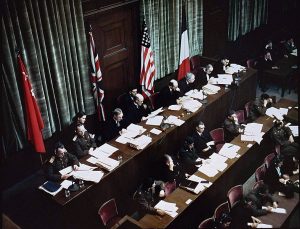 Yesterday I watched the Judgement of the Nuremberg Trials again. I was set on this because I have just started the book ‘
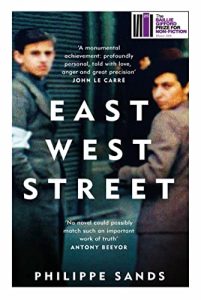 In this book, Phillipe begins a journey on the trail of his family’s secret history, which through many convoluted routes leads him to the origins of international law at the Nuremberg trial.