ACOMSDave

Community Journalist

  • Home
  • Community Journalist
  • Events
  • Media Page and Press Kit
    • Projects and Work
  • Resources & Documents
    • LGBTQ+ Support Groups and Documents
  • NIGRA
  • Archives
  • Contact

Queer Narratives: Lived Experience, Activism & Change in Northern Ireland

27/07/2023 By ACOMSDave

PERFORMANCE AREA | £6.50 / £5.00 (MEMBERS)

QUEER NARRATIVES: LIVED EXPERIENCE, ACTIVISM & CHANGE IN NORTHERN IRELANDQUEER NARRATIVES: LIVED EXPERIENCE, ACTIVISM & CHANGE IN NORTHERN IRELAND – To mark Belfast Pride, we have invited artists and activists from the LGBTQ+ community to explore The Linen Hall’s LGBTQ+ archives. Hilary McCollum, Amanda Verlaque, Heather Fleming, and Mícheál McCann will choose an item from the archive – an artefact, a newspaper article, or a letter – to talk about their own lived experience and the history of gay rights in Northern Ireland.

PANELLISTS

Hilary McCollum
Hilary McCollum is an Irish writer and feminist activist with a long-standing interest in creative responses to trauma. She has explored issues related to violence against women and girls through narrative non-fiction, fiction, and drama. Her writing often focuses on women’s resistance to abuse and oppression. Her first novel, Golddigger, won the Golden Crown Literary Society prize for historical fiction in 2016. She has a PhD in Creative Writing from QUB and is a Senior Policy and Liaison Officer for Northern Ireland with the Society of Authors.

Amanda Verlaque
Amanda Verlaque writes for stage, screen, and VR. The Lyric produced This Sh*t Happens All the Time, her critically acclaimed play about homophobia, misogyny and coercive control. The MAC produced her critically acclaimed debut play Distortion, a satire about political hypocrisy, homophobia and PR spin. Amanda adapted and wrote the pilot for An Irish Country Doctor based on Patrick Taylor’s award-winning novel and she made her directorial debut with Egg, her VR short film in collaboration with RETìníZE. One of the Irish Theatre Institute’s Six in The Attic artists for 2022/23, she is also under commission to the National Theatre (GB) and the Abbey. Amanda worked in TV drama for 25 years as a script editor, storyliner, producer and executive producer before starting her writing career.

Heather Fleming
Heather Fleming came out, when she was seventeen, in rural Co Down in 1977. She moved to Belfast, became involved in LGBTQ+ activism; joining NIGRA, volunteering for CaraFriend /Lesbian Line and founding Lavender Lynx (a safe space for lesbians, especially those just coming out). Heather is a visual artist and has exhibited widely throughout Ireland and internationally. Creative writing was confined to her sketchbooks but in the last few years, it has become more public. A number of her “Ten X 9” stories were broadcast on BBC Radio Ulster’s Tall Tales. A recording of one of her stories about being lesbian in NI is now part of the Irish Studies curriculum at the prestigious Swarthmore University in Philadelphia. In 2023, two of her poems were ‘Highly Commended’ for the CAP/Executive Office Good Relations Award and she had a poem printed in the Seamus Heaney Award for New Writing Anthology.

Mícheál McCann

Mícheál McCann is a poet from Derry. His poems have appeared in The Poetry Review, The Stinging Fly and Poetry Ireland Review, and anthologised in Queering the Green and Romance Options: Love Poems for Today. He has published pamphlets of poems, most recently Waking Light (Skein Press) and Keeper (14publishing). He was a co-editor of Hold Open the Door (UCD Press), Trumpet (Poetry Ireland) and is a founder and editor of Outburst Arts’ catflap magazine. He lives in Belfast where he is completing a PhD in the Seamus Heaney Centre for Poetry.

Tagged With: Activism, Cara Friend, Carpenter Club, change, library, Linen Hall, Lived Experiences, Narratives, NIGRA, Northern Ireland, queer

The History of LGBT (now LGBTQ+) in Northern Ireland

13/07/2023 By ACOMSDave Leave a Comment

The History of LGBT (now LGBTQ+) in Northern Ireland

Our Pride 1991 – by Terry McFarlane


The history of the LGBT (now LGBTQ+) in N Ireland is layered with groups that started to pursue a particular ideal missing from the community at the time.


Groups such as:

  • NIGRA
  • Cara Friend
  • COSO
  • GLYNI
  • Belfast Butterfly Group
  • Queerspace
  • Rainbow Project

Out of these groups came various local publications, e.g.

  • Gay Star
  • upstart
  • Update
  • NIGRA News
  • Gay Community News

The History of LGBT (now LGBTQ+) in Northern Ireland


But we also provided meeting spaces for individuals and groups, and the development of our own local lending library in the Carpenter Centre, Long Lane, Belfast.  This library held:

  • Books (both fiction and non-fiction)
  • Magazines

o   Foreign:

      • The Advocate (USA)
      • Christopher Street (USA)
      • Curve (USA)
      • Physique Magazine (USA) – a few copies
      • Zipper (*****)
      • Gai pied (French)
      • Lambda (Italian)
      • De Gayt Krant (Dutch)

o   Great Britain

      • Boyz
      • The Quorum
      • ScotsGay
      • Pink News
      • Gay Times
      • Gay News
      • Attitude
      • Diva
      • Fyne Times

o   Posters (both local and from abroad)

o   Banners (for various organisations)

o   Placards


NIGRA Banner at Pride

It was in a lot of ways our history repository.

The History of LGBT (now LGBTQ+) in Northern Ireland

Unfortunately, when we had to move to the Cathedral Buildings due to redevelopment, a lot of our history was lost, but still some of has found its way to.


  • The Ulster Museum – https://www.ulstermuseum.org/
  • The Linen Hall Library – https://www.linenhall.com/
  • PRONI – https://www.nidirect.gov.uk/campaigns/public-record-office-northern-ireland-proni

For people to access and learn about our history.

We need to develop spaces for writers, artists, and musicians within our community.  Yes, we need those spaces for well-being, befriending etc., but why have we limited ourselves?

I was thinking about when I first realised, I was gay, and how access to books and magazines seemed to be so restrictive.  But, after careful consideration what I have realised was that in terms of today, we had many more venues in which we could get a book or a magazine.  We had at least eight different bookstores we could visit, and then there were the various corner stores and bars that welcomed LGBT clientele (some grudgingly) but also stocked the various free gay magazines and papers. An enticement no doubt to bring people in, but at least they were there.

Today, we are a larger more supportive society, but, though we have the internet, Amazon, online magazines (which we mostly have to pay for) and a quarterly printed magazine (Attitude) available in some selected outlets (or by post), we seem to have less well written and researched news, less knowledge about the books that are available or the movies that are coming out (unless they are blockbusters).

We are also getting to that time in history when people who fought and made our history are reaching the end of their life.  Often without their history being noted, recorded, and save for our future.  Once they die, there is no way of returning that historical knowledge.

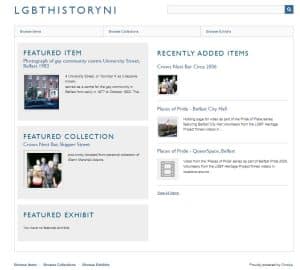
We have in part a way of saving our history, which is the LGBTHISTORYNI online archive site, but our community needs to get behind it, get involved with it and start telling everyone about our history.

The History of LGBT (now LGBTQ+) in Northern Ireland

LGBTHistoryNI


Links:

  • 1991 A Belfast Pride to be remembered!
  • Stories of hidden LGBT history


Go to LGBTHistoryNI

Visit LGBTHistoryNI and get involved in recording our history

Go NOW


Filed Under: Campaigns, Editor to ACOMSDave Tagged With: Belfast Butterfly Group, book shopos, Cara Friend, Carpenter Club, COSO, gay books, GayStar, GLYNI, history, LGBTHistoryNI, LGBTQ, library, NIGRA, queerspace, Rainbow project, Upstart, venues

School Is In: The Q in LGBTQ

25/09/2015 By ACOMSDave Leave a Comment

 
schooling

  • In: Columns, Featured, GLBT News
  • On: September 20, 2015
By Elizabeth Gartley
Often, when I’m speaking with educators about LGBTQ topics, one of the first questions I’m asked is “What does the Q stand for?” The primary definition that I provide is that “Q” stands for “questioning.” By acknowledging those who are questioning, we acknowledge those people, particularly young people, who for one reason or another, have not adopted an identity label, such as lesbian, gay, bisexual, or transgender, and yet may still experience same-sex attraction or may not identify wholly with the gender identity they have been assigned.* This “Q” is easy to overlook, and yet particularly important to remember, especially for those who work with young people and in light of recent research.
A recent study by YouGov found that a third of young Americans (18 to 29 year-olds) don’t consider themselves “exclusively heterosexual.” Participants were asked to place themselves on the Kinsey Scale, a scale from 0 (exclusively heterosexual) to 6 (exclusively homosexual). A third of adults 18 to 29 placed themselves somewhere other than exclusively heterosexual, indicating some level of same-sex attraction. Interestingly, the survey data shows that while 10 percent of young adults identified themselves as bisexual, 29 percent placed themselves somewhere on the Kinsey scale other than “exclusively hetersexual” or “exclusively homosexual.” Overall, the study also concluded that younger adults were much more likely to acknowledge some level of fluid sexual attractions compared to older age brackets.
The biennial Youth Risk Behavior Survey in Massachusetts has consistently found that more students in grades nine to 12 identify as gay, lesbian, or bisexual and/or report same-sex sexual contact than those who only identify themselves as gay, lesbian, or bisexual. For example, in 2013, 5 percent of all students identified as gay, lesbian or bisexual, but 8 percent identified as gay, lesbian, or bisexual and/orreported same-sex sexual contact. And a 2013 study published by the National Bureau of Economic Research concluded that conventional survey methods lead to “substantial under-reporting of LGBT identity and behaviors” due to “social desirability bias,” that is, the tendency for people to not give responses they feel may be outside the mainstream.
As an educator, I find these kinds of studies interesting because I often find that many of my straight colleagues, teachers and school librarians, are somewhat naive in their assumptions about the LGBTQ students they serve. One of the messages I try to impart to my colleagues is that LGBTQ students are in their classrooms, whether they, as educators, are aware of them or not. Many times, teachers seem surprised by the suggestion that there are usually at least one or two LGBTQ students in every class they teach. There seems to be an implicit assumption among many educators that they will know when they have LGBTQ students in their classroom, as though to be LGBTQ, students must be publicly out to all in the school community.
“But no one in this class is gay,” is the kind of assumption that gets made without even the awareness that an assumption has been made, and this is what I try to challenge. Fortunately, in my experience, this isn’t a difficult bias to tackle; even a little bit of reflection will have people rethinking their assumptions.
In a recent Knowledge Quest article, Wendy Rickman surveyed Arkansas school library professionals and found that most responded that there were no self-identified LGBTQ students in their school, but a majority of respondents felt that there were LGBTQ students who had not yet self-identified. However, the survey also found that a majority of respondents were reluctant to purchase LGBTQ items for the library collection.
Educators, especially school librarians, have a responsibility to help students explore the world beyond their experience and to help students find themselves. School librarian’s strive to create a safe environment where students can learn more about who they are, to explore their interests and identities. We can’t wait for our LGBTQ students to be out, leading the GSA and advocating for themselves before we provide the resources they need. For those students who are LGBTQ but not out, or who are questioning, or who maybe aren’t ready to take LGBTQ-themed books out of the library yet, just seeing the resources are available will help them feel like they belong.
School librarians have a great opportunity to help normalize LGBTQ lives and experiences and portray sexual and gender diversity has part of the human experience. By creating a more inclusive collection and integrating LGBTQ titles into book talks, library displays, and reader’s advisory, all students will benefit: out LGBTQ students will see themselves reflected in their school library, straight students will see a more accurate representation of the diversity in the world, and “Q” students will see that they are not alone in their experiences.
*The Q in LGBTQ is often intended to simultaneously stand for “questioning” as well as “queer,” a loaded word which was once considered a slur, but has in recent decades been reclaimed by LGBT activists as an umbrella term or in some cases, a label an individual may adopt when more recognizable identity labels don’t seem to fit.

Filed Under: Anti-Bullying & Homophobia Tagged With: LGBTQ, libraries, library, questioning, school, schools

Manchester library unveils public LGBT archives

18/11/2014 By David McFarlane Leave a Comment

LGFUK Logo

Manchester library unveils public LGBT archives

  • In: Carousel, GLBT News
  • |
  • On: October 30, 2014
By John Mack Freeman
The Manchester Libraries have teamed with the Lesbian and Gay Foundation to make the Foundation’s holdings more publicly accessible. Via PinkNews:

The LGF’s history collection – made available at Central Library in Manchester – includes a comprehensive catalogues of LGB magazines, including Mancunian Gay, Outnorthwest, Gay Times, Diva, and several grassroots publications.
The collection, housed in the Libraries Archives+ Centre, also includes several historic documents about early Pride celebrations, Manchester’s gay movement, and literature from the AIDS crisis.
Heather Williams of the LGF said: “We are delighted to be working with Manchester Central Library to make our archives accessible to the public.
“These archives contain valuable records of the development of LGBT rights and changing attitudes in society, and now the people of Manchester will be able to discover and celebrate the history of the North West’s LGBT communities.”

Filed Under: Campaigns Tagged With: archives, LGBT, library, manchester

Categories

Copyright ACOMSDave.com © 2026