
ACOMSDave

Community Journalist

  • Home
  • Community Journalist
  • Events
  • Media Page and Press Kit
    • Projects and Work
  • Resources & Documents
    • LGBTQ+ Support Groups and Documents
  • NIGRA
  • Archives
  • Contact

The Catch Trap by Marion Zimmer Bradley – Review

30/10/2025 By ACOMSDave Leave a Comment

The Catch TrapA forgotten period masterpiece – Marion Zimmer Bradley’s The Catch Trap, published in 1979, represents a significant departure from the author’s more celebrated work in fantasy and science fiction. Set within the American circus world of the 1930s through 1950s, this novel centres on the professional and romantic partnership between two trapeze artists, exploring both the technical mastery of their craft and the emotional complexity of a relationship constrained by the rigid morality of mid-century America.

The narrative follows Tommy Zane, son of a lion tamer, whose natural gift for flying leads him to become the protégé and catcher to Mario Santelli, an established star of the trapeze. As their aerial act achieves renown, the pair must navigate not only the physical dangers of attempting the triple somersault – that most treacherous of circus feats – but also the tensions within their circus family and, more significantly, the necessity of concealing the true nature of their bond from a society unprepared to acknowledge it.

Bradley’s considerable achievement here lies in her meticulous attention to the technicalities of trapeze work. The descriptions of aerial acts are breathtakingly detailed, drawing readers into the physicality, precision, and danger inherent in the art. The reader gains an authentic sense of the rigorous training, the split-second timing, the absolute trust required between flyer and catcher. This is no romanticised or superficial treatment of circus life; rather, Bradley presents it as demanding physical labour, a discipline as exacting as any art form. The circus itself becomes more than mere backdrop – it functions as a fully realised world with its own hierarchies, traditions, and codes of behaviour. Indeed, the high-flying artistry of the trapeze serves as a metaphor for the characters’ yearning for freedom and transcendence over societal limitations.

What distinguishes The Catch Trap from much gay fiction of its era is Bradley’s refusal to sensationalise or apologise for the relationship at its centre. Tommy’s journey from naïve teenager to confident artist and self-aware individual forms the emotional core of the novel, with Mario serving as both mentor and eventual lover – a deeply charismatic figure whose experiences and convictions guide Tommy through his personal and professional growth. Their love is presented neither as tragedy nor as manifesto, but simply as the central emotional reality around which all else turns. The constraints they face are real – the period setting ensures that discretion is not merely advisable but essential – yet Bradley affords her characters both dignity and complexity. They are not reduced to their sexuality; they are artists, sons, colleagues, individuals shaped by circumstance yet possessing agency within those limitations.

Bradley’s portrayal operates as incisive social commentary, critiquing the rigid structures of heteronormativity and the oppressive expectations imposed on those who deviate from convention. The circus, traditionally a space of marginality and otherness, becomes a microcosm where characters grapple with questions of identity, belonging, and resistance to conventional morality. The generational tensions within the Santelli family add further depth, as Mario struggles to honour his family’s circus traditions while forging his own path – a conflict between preserving heritage and pursuing individual desires that underscores the weight of legacy as both pride and burden.

The novel’s treatment of relationships, whether romantic, familial, or professional, is layered and nuanced. Bradley’s prose possesses a lyrical quality and emotional resonance that renders the camaraderie and rivalries among circus performers with authenticity, creating a palpable sense of community and shared struggle. The parallels between the trust required in a trapeze act – where one’s life depends absolutely upon one’s partner – and the vulnerability inherent in any loving relationship are never belaboured but remain powerfully implicit throughout.

Yet the novel is not without its problematic aspects. The depiction of Mario and Tommy’s relationship, particularly given their significant age difference and the inherent power imbalance between mentor and protégé, raises uncomfortable questions about agency and ethical boundaries. While the narrative frames their bond as consensual and deeply loving, contemporary readers may find themselves troubled by dynamics that the text itself presents uncritically. Bradley challenges readers to grapple with complex moral and emotional terrain, though whether she fully confronts these complications or merely reproduces them remains open to debate.

The novel shares, too, certain weaknesses common to its genre and period. At times the prose tends toward melodrama, and some secondary characters remain rather thinly drawn, serving more as obstacles or facilitators to the central relationship than as fully developed persons in their own right. The historical setting, while providing necessary context for the couple’s secrecy, occasionally feels more imposed than organic, as though Bradley were more comfortable with the circus milieu than with the broader social landscape of post-war America.

Yet these are considerations rather than fatal flaws in a work that succeeds admirably in its primary aims. Bradley has written a novel that illuminates both a specialised professional world and a particular emotional experience with equal authenticity. The Catch Trap is a story of resilience and courage, celebrating the triumphs of the human spirit even in the face of societal condemnation and personal sacrifice. It invites readers into a world of dazzling artistry and intense emotional stakes, where characters navigate the precarious balance between their public and private selves.

The Catch Trap serves as an important reminder that Bradley’s talents extended well beyond the fantasy fiction for which she is primarily remembered. This is not a ‘gay novel’ inThe Catch Trap any limiting sense, but rather a novel about human beings whose capacity for love, ambition, fear, and courage transcends any single aspect of their identity. The fact that it depicts a same-sex relationship with such matter-of-fact seriousness – neither apologising for it nor making it the sole focus – represented a significant achievement for 1979, even as certain aspects of that depiction now invite more critical scrutiny.

For readers interested in LGBTQ historical fiction, or indeed for anyone drawn to stories of obsessive dedication to craft and the complications of partnerships both professional and personal, The Catch Trap deserves attention. It is a novel written with confidence and care, illuminating corners of human experience that remain as relevant today as they were in the circus rings of mid-century America. Bradley’s ability to craft a narrative that is both deeply personal and broadly reflective of larger societal issues ensures that the novel resonates long after its final page.

Title: The Catch Trap
Author: Marion Zimmer Bradley
Original Publication: 1979
Current Publisher: Open Road Media


#TheCatchTrap #MarionZimmerBradley #BookReview #LGBTQFiction #QueerLiterature #HistoricalFiction #GayFiction #CircusNovel #LGBTQBooks #QueerBooks #BookBlog #LiteraryFiction #1930s #GayRomance #QueerHistory #LGBTQReads #ClassicFiction #BookRecommendations


Links:

  • Wikipedia: The Catch Trap
  • Amazon UK: The Catch Trap
  • Eustace Chisholm and the Works and A Domestic Animal – two book reviews

Filed Under: Editor to ACOMSDave Tagged With: 1930s America, acrobat fiction, American circus, book blog, book review, circus life, circus novel, gay historical fiction, gay modern classics, gay romance, LGBTQ fiction, LGBTQ historical fiction, literary fiction, Marion Zimmer Bradley, Marion Zimmer Bradley novels, mid-century gay fiction, queer historical romance, queer literature, The Catch Trap, trapeze artists

30 Must-Read LGBTQ Books That Everyone Should Know

15/10/2025 By ACOMSDave Leave a Comment

30 Must Read LGBTQ Books30 Must-Read LGBTQ Books That Everyone Should Know

The literary world has been profoundly enriched by LGBTQ voices telling stories of love, identity, struggle, and triumph. From groundbreaking classics to contemporary masterpieces, these books offer windows into diverse experiences while exploring universal themes of authenticity, belonging, and self-discovery. Here are 30 essential LGBTQ books that have shaped conversations, broken barriers, and touched countless hearts.

Classic Groundbreakers

1. Giovanni’s Room by James Baldwin (1956). Baldwin’s exquisite novel explores a passionate affair between an American man and an Italian bartender in Paris. Raw and unflinching, it examines masculinity, desire, and the devastating consequences of denying one’s true self.

2. The Price of Salt by Patricia Highsmith (1952) Originally published under a pseudonym, this revolutionary novel offered one of the first lesbian love stories with a hopeful ending. Later adapted into the film Carol, it remains a tender portrait of forbidden love in 1950s America.

3. Orlando by Virginia Woolf (1928) This fantastical biography follows a nobleman who lives for centuries and mysteriously changes gender. Woolf’s playful, genre-bending masterpiece challenges conventional notions of gender and identity.

4. The Colour Purple by Alice Walker (1982). Walker’s Pulitzer Prize-winning novel tells the story of Celie, a Black woman in the rural South whose life is transformed through love and friendship, including a profound relationship with the singer Shug Avery.

5. Maurice by E.M. Forster (1971) Written in 1913 but published posthumously, this novel traces a young man’s journey to self-acceptance in Edwardian England. Forster’s insistence on a happy ending was radical for its time.

Memoirs and Non-Fiction

6. Fun Home by Alison Bechdel (2006). This graphic memoir interweaves Bechdel’s coming out with the revelation of her father’s hidden sexuality and eventual death. Beautifully illustrated and deeply moving, it revolutionised the graphic novel genre.

7. When We Rise by Cleve Jones (2016). Jones, a protégé of Harvey Milk, chronicles his journey from the early days of the gay liberation movement through the AIDS crisis to the fight for marriage equality. This is living history from someone who helped make it.

8. Redefining Realness by Janet Mock (2014). Mock’s groundbreaking memoir offers an intimate look at growing up trans and multiracial in America. Her writing is both personal and political, challenging readers to expand their understanding of gender and identity.

9. The Best We Could Do by Thi Bui (2017) This illustrated memoir explores identity, family, and the refugee experience through a queer Vietnamese-American lens, examining intergenerational trauma and the meaning of home.

10. In the Dream House by Carmen Maria Machado (2019) Machado crafts an innovative memoir about surviving domestic abuse in a same-sex relationship. Each chapter employs a different literary genre, creating a haunting exploration of love and violence.

Contemporary Fiction

11. Call Me by Your Name by André Aciman (1997) Set in 1980s Italy, this sensuous novel captures a transformative summer romance between seventeen-year-old Elio and his father’s graduate assistant, Oliver. Aciman’s prose is intoxicating and bittersweet.

12. The Song of Achilles by Madeline Miller (2011). Miller reimagines Homer’s Iliad through the love story between Achilles and Patroclus. This mythological retelling won the Orange Prize and introduced a new generation to queer classical literature.

13. Red, White & Royal Blue by Casey McQuiston (2019) This joyful romantic comedy imagines the First Son of the United States falling for the Prince of Wales. Smart, swoony, and politically engaged, it became a cultural phenomenon.

14. Stone Butch Blues by Leslie Feinberg (1993) Feinberg’s semi-autobiographical novel follows Jess Goldberg, a working-class butch lesbian navigating identity and survival from the 1960s through the 1990s. A cornerstone of transgender literature.

15. Boy Erased by Garrard Conley (2016) This powerful memoir recounts Conley’s experience in a conversion therapy program in the South. Unflinching yet compassionate, it examines faith, family, and the harm of trying to change someone’s sexuality.

Young Adult Literature

16. Aristotle and Dante Discover the Secrets of the Universe by Benjamin Alire Sáenz (2012) This tender coming-of-age story follows two Mexican-American teenagers in 1980s El Paso as their friendship deepens into something more. Sáenz’s writing is poetic and emotionally resonant.

17. Simon vs. the Homo Sapiens Agenda by Becky Albertalli (2015) A charming story about a closeted teen who falls for an anonymous classmate online. Adapted into the film Love, Simon, it brought mainstream attention to LGBTQ YA literature.

18. The Miseducation of Cameron Post by Emily M. Danforth (2012). After being caught with another girl, Cameron is sent to a conversion therapy centre. This novel beautifully captures adolescent resilience and the search for authentic community.

19. Cemetery Boys by Aiden Thomas (2020) This supernatural romance follows a trans boy brujo determined to prove himself to his traditional Latinx family by summoning the ghost of his murdered cousin—but he accidentally summons the wrong ghost.

20. I’ll Give You the Sun by Jandy Nelson (2014) Told from dual perspectives, this luminous novel follows artistic twins navigating first love, family secrets, and grief. One twin’s storyline centers on a gay relationship that will break and mend your heart.

Poetry and Plays

21. The Collected Poems of Audre Lorde (1997). Lorde’s poetry explores being Black, lesbian, mother, and warrior. Her work is fierce, sensual, and politically charged—essential reading for understanding intersectional feminism.

22. Angels in America by Tony Kushner (1991-1992). This Pulitzer Prize-winning two-part play is an epic exploration of the AIDS crisis in 1980s America. Blending realism with fantasy, it remains one of the greatest works of American theatre.

23. Citizen: An American Lyric by Claudia Rankine (2014) While not exclusively LGBTQ, Rankine’s groundbreaking work examines microaggressions and systemic racism in contemporary America, with intersectional insights relevant to all marginalised communities.

24. Night Sky with Exit Wounds by Ocean Vuong (2016) Vuong’s debut poetry collection explores his identity as a gay Vietnamese-American man, weaving together family history, war, and desire in stunning, heartbreaking verses.

Genre Fiction

25. The Priory of the Orange Tree by Samantha Shannon (2019). This epic fantasy features a slow-burn lesbian romance at its centre while delivering dragons, political intrigue, and world-ending threats. At 800+ pages, it’s a commitment—but worth every moment.

26. Gideon the Ninth by Tamsyn Muir (2019). Described as “lesbian necromancers in space,” this sci-fi fantasy mash-up is wickedly funny, original, and features one of the most compelling enemies-to-lovers dynamics in recent memory.

27. The House in the Cerulean Sea by TJ Klune (2020) This cozy fantasy follows a caseworker who investigates an orphanage for magical children. Featuring a middle-aged gay romance, it’s a heartwarming story about found family and acceptance.

Essential Historical and Cultural Works

28. The Stonewall Reader edited by the New York Public Library (2019). This anthology collects firsthand accounts, speeches, and documents from the gay liberation movement. It’s essential for understanding the historical context of LGBTQ rights.

29. Gender Trouble by Judith Butler (1990.) Butler’s foundational academic text challenged conventional thinking about gender, arguing it’s performative rather than innate. Dense but revolutionary, it shaped queer theory for generations.

30. And the Band Played On by Randy Shilts (1987) Shilts’s investigative journalism chronicles the early years of the AIDS epidemic and the political failures that allowed it to spread. Devastating and necessary, it documents a crisis that decimated a generation.

Why These Books Matter

These thirty books represent just a fraction of LGBTQ literature, but they offer entry points into different genres, time periods, and perspectives. They document struggles and celebrate victories. They capture first loves and last goodbyes. They make visible what society once kept hidden.

Whether you’re looking for your own story reflected to you or seeking to understand experiences different from your own, these books offer empathy, education, and connection. They remind us that LGBTQ people have always existed, always loved, always created—and that their stories deserve to be read, celebrated, and remembered.

The best part? This is just the beginning. For every book on this list, hundreds more deserve recognition. The literary landscape continues to expand with new voices, new stories, and new ways of understanding identity and love. These 30 books are must-reads, but they’re also invitations to explore further and discover the rich, diverse world of LGBTQ literature.


Remember, Christmas is not far away, and there is nothing like receiving a gift that has been thought about for you – a lovely book!

Links:

  • LGBTQI+ Books
  • Gay Book Reads

#BookList

#WhatToRead

#BookBlog

#ReadingCommunity

#Bibliophile

Filed Under: Book Reviews Tagged With: bisexual fiction, book list, contemporary queer lit, diverse books, gay books, inclusive literature, lesbian books, LGBTQ authors, LGBTQ book recommendations, LGBTQ books, LGBTQ classics, must-read LGBTQ, pride reading list, queer fiction, queer literature, reading guide, representation matters, transgender memoirs

Book Bans in the UK: History Repeats Itself in the Fight for the Right to Read

15/08/2025 By ACOMSDave Leave a Comment

Book BansBook banning or Book Bans — a practice as old as the printed word — is making a troubling return in the UK. What was once thought of as a relic of history is back in the headlines, with queer literature often finding itself at the centre of the storm. The question is no longer “Could it happen here?” but “Why is it happening again?”
A Legacy of Censorship

Britain’s history of banning books is long and uneasy, often tied to sexual “obscenity” laws. Radclyffe Hall’s The Well of Loneliness (1928) — a sympathetic portrayal of lesbian love — was swiftly banned for daring to exist, despite containing no explicit content. Havelock Ellis’s Sexual Inversion faced a similar fate in 1897, vanishing from English shelves for nearly 40 years.

Even in modern memory, Section 28 (1988–2003) cast a long shadow, banning local authorities from “promoting homosexuality.” While it didn’t target specific titles, it gutted library shelves of anything queer-positive for an entire generation.

Other classics faced the censor’s hand too: D.H. Lawrence’s Lady Chatterley’s Lover endured a public obscenity trial in 1960, while James Joyce’s Ulysses remained banned until 1936.

The New Wave of Bans

Fast forward to today, and the bans are back — often quietly, sometimes loudly — with LGBTQ+ books in the crosshairs. A survey by Index on Censorship found that over half of UK school librarians had been asked to remove books. In most cases, the request came from parents, and in far too many cases, the books vanished.

Among the most targeted:

  • This Book Is Gay — Juno Dawson

  • Julián is a Mermaid — Jessica Love

  • ABC Pride — Louie Stowell, Elly Barnes & Amy Phelps

  • Heartstopper series — Alice Oseman

  • Billy’s Bravery — Tom Percival

  • Tricks — Ellen Hopkins

Some librarians have faced intimidation, even threats to their jobs, for resisting. In extreme cases, every LGBTQ+ book in a library was purged after a single complaint.

Quiet Censorship: The Bans You Don’t See

The most insidious trend? “Quiet censorship” — where books never make it to the shelf (a clandestine form of censorship), and book bans. Some authors have been told not to bring their own LGBTQ+ books to school events. In 2025, Kent County Council took further action, ordering the removal of all transgender-related children’s books from its 99 libraries.

Following the US Playbook

Many of these UK cases mirror US campaigns, where book challenges have hit record highs. This transatlantic influence, coupled with political rhetoric framing trans existence as “ideological,” has created fertile ground for censorship.

Fighting Back

Book Bans - the fight Back

Banned Books Week UK returns in October 2025

There is resistance. Banned Books Week UK returns in October 2025, rallying libraries, bookshops, authors, and readers. Groups like Index on Censorship, Stonewall, and the Society of Authors continue to push back, reminding us that libraries are for everyone — and that children exploring sexuality and identity are safer with accurate books than with the unfiltered internet.

The fight isn’t just about shelves. It’s about empathy, understanding, and the refusal to let fear dictate what people can know. As author Simon James Green put it, book banners trade in “hate and fear” — but the counter is “love and acceptance,” which, in the end, will win.

If Britain’s past teaches us anything, it’s this: the freedom to read is never permanently won. It must be defended, again and again.


Links:

  • The Censorship Acceleration An Analysis of Book Ban Trends After 2020
  • The Belfast Anarchist Collection, Just books
  • Crescent Arts – Books Festival
  • School Is In: LGBTQ Picture Books
  • Firm apologises for saying it would not process LGBTQ+ payments 
  • Free speech row as National Library of Scotland bans book opposing gender self-ID after staff complained of ‘hate speech’


Filed Under: Campaigns, Editor to ACOMSDave Tagged With: banned books, banned books week, book banning UK, book bans 2025, book censorship history, censorship, freedom to read, Intellectual freedom, LGBTQ books, literary freedom, queer literature, right to read, Section 28, UK libraries

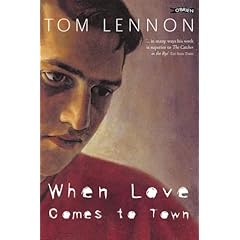
WHEN LOVE COMES TO TOWN by Tom Lennon – Book Review

13/12/2008 By David McFarlane Leave a Comment

Auth: Tom LENNON
Pub: The O’Brien PressWhen Love Comes to Town
The central figure (hero, if you like) of this story (When Love Comes To town)  is 17-year-old Neil Byrne. He is a sportsman and a good scholar. He is implicitly middle-class (his parents incessantly gripe about money, that’s how one knows). His response to the trauma of coming out, or being outed by circumstances, simply does not ring true.

Neil responds to an ad in what’s Hot Press, but aborts actual contact because the other man (the advertiser) is not as appealing as he claimed. Surely, an intelligent youth would have noticed ads for Tel-a-Friend, or articles on various Gay campaigns. He makes Sean intervene on a radio phone-in programme, but doesn’t hang around for the phone number (or numbers) which usually follow such broadcasts. 

There wouldn’t have been much of a story then, admittedly, but one got the distinct impression, reading this, that we were not dealing with the 1990s (it was first published in 1993) but with the 70s, even ’60s. Master Byrne is just going to experience certain emotions and prejudices, whether these ring true or not.

The other characters in ‘When Love Comes to Town’  are rather shadowy, and authorial prejudices show:- sissies (including married transvestites!) are sound; bisexuals-are abused as what people in Belfast called “bendy-tries. “. The blurb claims Neil is “a new type of hero” in Irish fiction, but there are stock characters. The Mother is loving, suffering and forgiving (but, naturally, uncomprehending). The Da’s a bastard – as are nearly all of the heterosexual men, Neil’s fellow students for example. The treatment of the women is a bit off-hand, even slightly misogynistic. Neil’s lover is a grumpy Belfast man called Shane who loves him and leaves him (but not before introducing him to the joys of classical music)!

Tom Lennon (it’s a nom-de-plume [de guerre?]) has his cake of a happy ending, while giving us the full tragic-suicide finale (this happens inside Neil’s head: he is a bit of a Drama-Queen on the quiet). It is a well-made, entertaining naturalist/realist novel. But one is left rather wishing for something a bit more substantial and a bit more real.

Not everything in this island is rosy for Gay people – young, old, women or men – but l7-year-olds knew in 1993 (and know today) that there iSean infrastructure, built by Gay people, of telephone helplines, campaigning and social groups, as well a sporting and religious ones, bookshops, bars, bistros, saunaSean safer-sex projects. There’s a social group in deepest Fermanagh! Since law reform in the Republic, GCN’s listings have grown to include six of the smaller towns.
All of this suggests a dramatic change, which is surely worth writing about.

[Sean McGOURAN]


Links:

  • Catflap – Book Review
  • Amazon – When Love Comes to Town

Filed Under: Book Reviews Tagged With: 1990s Ireland, authorial prejudices, Bisexuality, classical music, coming out, family dynamics, gay culture, gay fiction, Irish fiction, LGBTQ, love and loss, middle-class, Neil Byrne, queer literature, realistic portrayal, societal challenges, sportsman, teenage drama, tragedy, young adult literature

Categories

Copyright ACOMSDave.com © 2025