ACOMSDave

Community Journalist

  • Home
  • Community Journalist
  • Events
  • Media Page and Press Kit
    • Projects and Work
  • Resources & Documents
    • LGBTQ+ Support Groups and Documents
  • NIGRA
  • Archives
  • Contact

UK Research: Anti-LGBTQ+ Hate and Rising Trends

04/11/2025 By ACOMSDave Leave a Comment

Hate Crime Statistics die Anti-LGBTQ+ Hate and Rising Trends

The data on UK hate crimes presents a complex picture. Recent official statistics show a 2% decrease in sexual orientation-related hate crimes (from 19,127 to 18,702) and an 11% decrease in transgender identity-related crimes (from 4,258 to 3,809) in 2024/25. However, advocacy groups caution that these figures don’t tell the full story.

The statistics exclude Metropolitan Police data due to reporting changes, which significantly affect LGBTQ+ data, given that many LGBTQ+ people live in London. Additionally, over the past five years, hate crimes based on sexual orientation have risen by around 44% and those based on trans identity have nearly doubled at 88%.

LGBTQ+ hate crime charity Galop saw a 60% increase in LGBTQ+ hate crime victims coming to them for support in 2024, suggesting the official figures underestimate the true scale of the problem. Fewer than one in ten LGBTQ+ people report hate crimes or incidents to police, with half feeling the police wouldn’t do anything.

The Supreme Court Ruling

In April 2025, the UK Supreme Court ruled unanimously that the legal definition of woman under the Equality Act 2010 refers to biological sex assigned at birth. The case originated from a challenge by For Women Scotland to Scottish legislation requiring 50% of public board members to be women, which included transgender women with gender recognition certificates.

The ruling determined that interpreting ‘sex’ as certificated sex would cut across the definitions of ‘man’ and ‘woman’ in an incoherent way, and that transgender women could be excluded from same-sex facilities such as changing rooms if proportionate.

Many LGBTQ+ people are living in fear following the Supreme Court judgment, according to advocacy groups, though this period doesn’t fall within the most recent hate crime statistics. The ruling effectively forced trans people to use sex-segregated public services and facilities according to their sex-assigned at birth, contrary to their identity and appearance.

Reform UK’s Growing Influence

Reform UK’s manifesto pledges to ban “transgender ideology” in primary and secondary schools, with no gender questioning, social transitioning or pronoun swapping, and mandates single-sex facilities in schools. The party also states it will scrap the 2010 Equality Act and eliminate diversity, equality and inclusion roles.

69% of Reform UK voters believe that trans people should not be able to legally change their gender via a gender recognition certificate, though 65% still believe same-sex couples should be allowed to marry. The 10 English councils now controlled by Reform have banned the flying of Pride flags, limiting flagpoles to the Union Jack and regional emblems.

Reform UK’s electoral threat has pushed both Conservative and Labour parties to adopt more conservative positions on gender self-identification and transgender rights, framing these policies around safeguarding concerns for cisgender women and children.

Online Harassment and Platform Safety

GLAAD’s 2025 Social Media Safety Index found that platforms broadly under-moderated anti-LBGTQ+ hate content while over-moderating LGBTQ+ users, including taking down hashtags containing phrases such as queer, trans and non-binary. In the UK, coordinated far-right and Christian extremist online campaigns have targeted Pride events with fabricated claims that they are “sexualising public spaces,” with these narratives emboldening physical protests and attacks such as those witnessed at London Pride in 2024.

Two in five LGBTQ+ young people, including 58% of trans young people, have been targets of homophobic, biphobic or transphobic online abuse, while nearly all (97%) have witnessed it. Less than half of LGBTQ+ victims of online abuse reported their experiences to social media platforms, and less than one in ten reported to police.

School Bullying

A 2024 YouGov poll found that 47% of LGBTQ+ youth in the UK have been bullied or discriminated against at school or university because of their sexual orientation, and 25% faced bullying due to their gender identity. Half of those who experienced bullying never reported it, and of those who did report it to staff, more than seven in ten said staff responded badly.

Respondents reported being locked in toilets, kicked, verbally and sexually abused, with some being driven to suicidal thoughts, while others complained of teachers purposefully misgendering and mocking them in classrooms. 43% of LGBT+ school students have been bullied compared to 21% of non-LGBT+ students.

Conclusion

The research confirms the article’s themes for the UK context: rising anti-LBGTQ+ sentiment manifesting in hate crimes, discriminatory political developments like the Supreme Court ruling, the growing influence of anti-trans political parties like Reform UK, widespread online harassment, and persistent bullying in schools. While official hate crime statistics show recent decreases, the broader five-year trend shows significant increases, and underreporting remains a major issue.

Anti-LGBTQ+ Hate and Rising Trends

Links:

  • Anti-LGBTQ+ hate is rising in Western nations both on & offline
  • Homophobia and Terrorism are not limited to Muslims.

#LGBTQRights #TransRights #HateCrimes #UKPOLITICS #QueerRights #EndTransphobia #EndHomophobia #ProtectTransYouth #Equality #HumanRights #LGBTQSafety #UKNews #StandWithLGBTQ


Filed Under: Anti-Bullying & Homophobia, Community Journalist Tagged With: AI moderation, ally, anti-LGBT bills, anti-trans legislation, asexual, bathroom bills, biological sex, bisexual, British politics, bullying, censorship, child protection, civil rights, coming out, conversion therapy, culture wars, detransition, digital rights, discrimination, diversity, equality, Equality Act, erasure, far-right politics, feminist discourse, For Women Scotland, Galop, gay, gender critical, gender identity, gender ideology, gender nonconforming, gender recognition, gender recognition certificate, gender self-identification, gender-affirming care, GLAAD, grassroots activism, hate crime statistics, HATE CRIMES, hate speech, homophobia, hormone therapy, Human Rights, inclusion, Institute for Strategic Dialogue, Intersectionality, ISD, lesbian, LGBT, lgbt history, LGBTQ, LGBTQ advocacy, LGBTQ charities, LGBTQ culture, LGBTQ discrimination, LGBTQ education, LGBTQ families, LGBTQ mental health, LGBTQ news, LGBTQ organizations, LGBTQ policy, LGBTQ research, LGBTQ safety, LGBTQ violence, LGBTQ+ activism, LGBTQ+ support, LGBTQ+ visibility, LGBTQ+ youth, medical transition, moral panic, nonbinary, online harassment, pansexual, parental rights, platform safety, police response, political backlash, Pride, puberty blockers, queer community, queer news, queer rights, Reform UK, religious extremism, safeguarding, same sex marriage, school bullying, sex segregated spaces, sex-based rights, sexual orientation, social justice, social media harassment, sports bans, stonewall, Supreme Court, trans community, trans healthcare, trans news, trans rights, trans youth, transgender, transphobia, UK, UK legislation, underreporting, United Kingdom, women's rights, workplace discrimination

Attack on Libraries Should Terrify Us All

27/10/2025 By ACOMSDave Leave a Comment

Attack On LibrariesAttack on Libraries – When I think about libraries, I think about freedom. Not the abstract, flag-waving kind—but the real, tangible freedom to walk into a room and discover ideas that might change your life. The freedom to read without someone looking over your shoulder, deciding what you’re allowed to know.

That freedom is under attack in America right now. And what’s happening there should be a wake-up call for the rest of us.

Book Banning Has Gone From Rare to Epidemic

Here’s a stat that should stop you in your tracks: between 2001 and 2020, an average of 273 book titles were challenged in US libraries each year. In 2023 alone? Over 9,000 titles were targeted. That’s not a trend—it’s an avalanche.

We’re not talking about obscure edge cases. Books by Maya Angelou, Toni Morrison, and Judy Blume are being pulled from shelves. A graphic novel about the Holocaust was banned in Tennessee. Even a children’s book about seahorses faced removal because—wait for it—it showed them mating.

The targets are predictable: anything involving LGBTQ+ themes (39% of challenged titles in 2024), books about race and racial justice, and materials related to sex education. But the scale is what’s new. This is no longer scattered local outrage. It’s organised, well-funded, and strategic.

It’s Not Grassroots—It’s Astroturfed

Groups like Moms for Liberty—which sounds wholesome enough—are actually connected to extremist organisations like the Proud Boys and QAnon conspiracy theorists. They’ve systematically taken over local library boards, using social media to manufacture outrage and fund candidates who’ll do their bidding.

One of the Proud Boys’ leaders literally called Moms for Liberty “the Gestapo with vaginas.” When fascists are giving you compliments, you might want to reconsider your strategy.

Librarians are facing death threats for doing their jobs. Amanda Jones, a Louisiana school librarian, spoke out against book banning at a board meeting. She was immediately accused of grooming children and received such terrifying threats that she now sleeps with a shotgun under her bed. Think about that—a school librarian needs weapons to feel safe because she defends books.

Trump’s Making It Official Policy

Things escalated dramatically when Trump returned to office. In February 2025, Dr. Colleen Shogan—the head of the US National Archives—was fired without explanation. In May, Dr Carla Hayden, the brilliant librarian of Congress, got an email: “Your position is terminated effective immediately.”

Her replacement? Todd Blanche—Trump’s lawyer from the Stormy Daniels case. That’s right: America replaced one of the world’s most accomplished librarians with a defence attorney. The symbolism couldn’t be clearer.

Meanwhile, government datasets are being scrubbed from websites. Environmental data, public health information, disease control statistics—all disappearing down the memory hole. Volunteer librarians are racing to save what they can, but established institutions need to step up and host this rescued data before it’s lost forever.

Why “Just Books” Matters More Than You Think

There’s a quote from philosopher Jacques Derrida that sums this up: “There is no political power without power over the archive.” Whoever controls what gets remembered—what gets preserved, what’s accessible—controls the narrative. They control history itself.

When a Florida judge ruled that public libraries are “government speech” and citizens have no First Amendment right to access books there, it wasn’t just about books anymore. It was about whether we’re allowed to think independently of what the government wants us to think.

It’s Already Crossing the Atlantic

Don’t think this is just an American problem. In Ireland, groups modelled directly on Moms for Liberty are targeting libraries with the same playbook. In the UK, 82% of librarians reported increased pressure to remove books in 2023, especially LGBTQ+ titles.

This August, a mob firebombed Spellow library in Liverpool because it served immigrant communities. A Reform UK councillor in Kent boasted about ordering the removal of “trans-ideological material” from children’s sections—material that didn’t even exist.

The tactics are spreading, and underfunded UK libraries are vulnerable.

What We Need to Do

Libraries have been the “pristine brand” of civic institutions for generations—universally trusted, politically neutral spaces. That brand is being deliberately tarnished, and we can’t let it happen.

We need to fund libraries properly, support librarians who face harassment, and push back loudly when books are targeted. We need to remember that free people read freely—and that freedom isn’t free if someone else decides what you’re allowed to know.

As Helen Keller wrote in 1933, when the Nazis were burning books: “You may burn my books and the books of the best minds in Europe, but the ideas those books contain have passed through millions of channels and will go on.”

Ideas are resilient. But they need defenders. Libraries aren’t just buildings with books—they’re the hidden infrastructure of democracy itself.


Links:

  • Gay Rights: From Revolution to Reflection
  • The Observer – ‘There is no political power without power over the archive’ -Richard Ovenden
  • The Linen Hall Library

#FreedomToRead
#StopBookBans
#DefendLibraries
#NoToCensorship
#ReadingIsResistance

Filed Under: Campaigns, Editor to ACOMSDave Tagged With: archive preservation, banned books, book banning, book challenges, censorship, cultural censorship, democracy, Donald Trump, First Amendment, free speech, Freedom of Information, government censorship, information access, information control, Intellectual freedom, LGBTQ+ rights, librarian attacks, libraries, library censorship, literary freedom, Moms for Liberty, public libraries, reading rights, school libraries, Trump administration

Book Bans in the UK: History Repeats Itself in the Fight for the Right to Read

15/08/2025 By ACOMSDave Leave a Comment

Book BansBook banning or Book Bans — a practice as old as the printed word — is making a troubling return in the UK. What was once thought of as a relic of history is back in the headlines, with queer literature often finding itself at the centre of the storm. The question is no longer “Could it happen here?” but “Why is it happening again?”

A Legacy of Censorship

Britain’s history of banning books is long and uneasy, often tied to sexual “obscenity” laws. Radclyffe Hall’s The Well of Loneliness (1928) — a sympathetic portrayal of lesbian love — was swiftly banned for daring to exist, despite containing no explicit content. Havelock Ellis’s Sexual Inversion faced a similar fate in 1897, vanishing from English shelves for nearly 40 years.

Even in modern memory, Section 28 (1988–2003) cast a long shadow, banning local authorities from “promoting homosexuality.” While it didn’t target specific titles, it gutted library shelves of anything queer-positive for an entire generation.

Other classics faced the censor’s hand too: D.H. Lawrence’s Lady Chatterley’s Lover endured a public obscenity trial in 1960, while James Joyce’s Ulysses remained banned until 1936.

The New Wave of Bans

Fast forward to today, and the bans are back — often quietly, sometimes loudly — with LGBTQ+ books in the crosshairs. A survey by Index on Censorship found that over half of UK school librarians had been asked to remove books. In most cases, the request came from parents, and in far too many cases, the books vanished.

Among the most targeted:

  • This Book Is Gay — Juno Dawson

  • Julián is a Mermaid — Jessica Love

  • ABC Pride — Louie Stowell, Elly Barnes & Amy Phelps

  • Heartstopper series — Alice Oseman

  • Billy’s Bravery — Tom Percival

  • Tricks — Ellen Hopkins

Some librarians have faced intimidation, even threats to their jobs, for resisting. In extreme cases, every LGBTQ+ book in a library was purged after a single complaint.

Quiet Censorship: The Bans You Don’t See

The most insidious trend? “Quiet censorship” — where books never make it to the shelf (a clandestine form of censorship), and book bans. Some authors have been told not to bring their own LGBTQ+ books to school events. In 2025, Kent County Council took further action, ordering the removal of all transgender-related children’s books from its 99 libraries.

Following the US Playbook

Many of these UK cases mirror US campaigns, where book challenges have hit record highs. This transatlantic influence, coupled with political rhetoric framing trans existence as “ideological,” has created fertile ground for censorship.

Fighting Back

Book Bans - the fight Back

Banned Books Week UK returns in October 2025

There is resistance. Banned Books Week UK returns in October 2025, rallying libraries, bookshops, authors, and readers. Groups like Index on Censorship, Stonewall, and the Society of Authors continue to push back, reminding us that libraries are for everyone — and that children exploring sexuality and identity are safer with accurate books than with the unfiltered internet.

The fight isn’t just about shelves. It’s about empathy, understanding, and the refusal to let fear dictate what people can know. As author Simon James Green put it, book banners trade in “hate and fear” — but the counter is “love and acceptance,” which, in the end, will win.

If Britain’s past teaches us anything, it’s this: the freedom to read is never permanently won. It must be defended, again and again.


Links:

  • The Censorship Acceleration An Analysis of Book Ban Trends After 2020
  • The Belfast Anarchist Collection, Just books
  • Crescent Arts – Books Festival
  • School Is In: LGBTQ Picture Books
  • Firm apologises for saying it would not process LGBTQ+ payments 
  • Free speech row as National Library of Scotland bans book opposing gender self-ID after staff complained of ‘hate speech’


Filed Under: Campaigns, Editor to ACOMSDave Tagged With: banned books, banned books week, book banning UK, book bans 2025, book censorship history, censorship, freedom to read, Intellectual freedom, LGBTQ books, literary freedom, queer literature, right to read, Section 28, UK libraries

Impact of Book Bans on the LGBTQI+ Community in the UK

20/06/2025 By ACOMSDave Leave a Comment

Impact of Book Bans on the LGBTQI+ Community in the UK

Banned BooksOverview

In the UK, the issue of censorship and banned books targeting LGBTQI+ content is increasingly making headlines. While outright bans are less widespread than in some countries, recent developments highlight a concerning trend that affects young people, educators, and the broader community. These restrictions threaten access to vital stories and resources that support LGBTQI+ identities and well-being[1][2][3].

Key Effects

1. Mental Health and Wellbeing

– Increased Isolation: When LGBTQI+ books are removed from school libraries and classrooms, it sends a damaging message to young people that their identities are unwelcome or invalid. This can lead to feelings of loneliness and invisibility[1][2][3].

– Fear and Self-Censorship: Librarians and teachers often report feeling pressured or intimidated into removing LGBTQI+ literature, which results in self-censorship and limits access for students seeking representation[1][2].

– Loss of Support: Many young people rely on inclusive literature to see themselves reflected and to find reassurance. Banning these resources can harm their mental health, self-esteem, and sense of belonging[1][3].

2. Erasure of Identity and Representation

– Reduced Visibility: Censorship efforts diminish the presence of LGBTQI+ stories, history, and voices within educational environments, making it harder for young people to explore and understand their identities[1][2][3].

– Barriers to Understanding: Without access to diverse narratives, both LGBTQI+ youth and their peers miss opportunities to learn about different experiences, fostering ignorance and prejudice[1][2].

3. Societal and Educational Consequences

– Cultivating Intolerance: Targeted bans reinforce harmful stereotypes and can foster a climate of hostility, bullying, and intolerance within schools and local communities[1][2][3].

– Risks for Librarians and Educators: Those who resist censorship often face professional repercussions, including threats, job loss, or disciplinary action, discouraging the inclusion of LGBTQI+ materials[1][2].

– Chilling Effect: The absence of clear national guidance creates a climate of uncertainty, leading many librarians to avoid purchasing or displaying LGBTQI+ books altogether to prevent controversy[1][2][3].

Data and Trends

| Statistic/Trend | Source |
|———————————————————————————|————-|
| Over half (around 53%) of UK school librarians surveyed report being asked to remove books or being given a list of banned books, with many titles related to LGBTQI+ themes. | [1][2][3] |
| Requests for removal are primarily initiated by individual parents or community members, rather than official government directives, but they have a significant impact. | [1][2][3] |
| Commonly targeted titles include *This Book Is Gay* by Juno Dawson, *Julián is a Mermaid* by Jessica Love, and *ABC Pride* by Louie Stowell et al. | [2][3][4] |
| Many librarians have been instructed to remove all LGBTQI+ books after a single complaint; some have faced job insecurity for refusing. | [1][2][3] |
| There is no comprehensive UK database tracking the full scope of bans, but anecdotal evidence suggests the trend is growing. | [1][2][5] |

Voices from the Community

– Stonewall, the UK’s leading LGBTQI+ rights organisation, has called the increasing censorship “deeply troubling,” emphasising that access to inclusive resources is essential for young people’s well-being and self-acceptance[3].

– Many librarians and teachers express feeling unsupported and vulnerable. Some have resorted to discreet or off-the-record loans to ensure students can access banned books, despite risks[1][2][3].

Conclusion

The rising tide of book bans targeting LGBTQI+ content in the UK is having serious repercussions for young people and the wider community. These measures foster exclusion, erasure, and fear, undermining the vital educational and emotional support that diverse literature provides. Without clear guidance and backing from national authorities, many educators feel compelled to self-censor, further limiting access to inclusive stories. Advocacy organisations like Stonewall and professional bodies must continue to push for policies that safeguard the right to inclusive education and ensure every young person can see themselves reflected positively in the books they read[1][2][3].

—

References:
1. https://www.independent.co.uk/news/uk/home-news/lgbt-books-removed-uk-libraries-b2732791.html
2. https://www.indexoncensorship.org/2024/08/banned-school-librarians-shushed-over-lgbt-books/
3. https://www.independent.co.uk/news/uk/home-news/lgbt-books-ban-uk-schools-library-b2596374.html
4. https://www.thebookseller.com/news/school-libraries-censored-as-survey-reveals-28-librarians-asked-to-remove-books-from-shelves
5. https://www.lovereading4kids.co.uk/school-blog/censorship-more-than-half-of-school-librarians-asked-to-remove-books-from-their-shelves-6430

Links:

  • How Britain’s 1980s Anti-Gay Laws Impacted a Generation of Young LGBTQ Readers
  • A new wave of books celebrating queer spaces

Queer spaces are something which our community in Northern Ireland is loosing memory about.  When I first came out on the scene, there were at least 42 different event nights encompassing at least 20 different venues.  Today, there are many fewer, and with that comes less choice.  So far, I have written one in-depth article about ‘The Carpenter Club“, I am now about to start one on Delaney’s, so if you have any thoughts, news, titbits, pics that would be of use, please let me have them.

Filed Under: Anti-Bullying & Homophobia, Community Journalist, History Tagged With: censorship, censorship impact, inclusive books, LGBTQ+ rights, LGBTQI+ book bans, LGBTQI+ representation, school libraries, UK education, UK schools, youth mental health

UK Libraries under Threat

28/09/2023 By ACOMSDave Leave a Comment

UK Libraries under Threat

 I was reading the article ‘As book bans soar, a more subtle form of censorship has begun ravaging U.S. libraries’, and it was obvious that American libraries are under attack; however, I then thought about what was happening to the libraries in the United Kingdom- and what I found was that UK Libraries under Threat.

My research indicates that yet again we live in two countries:

a.   England, Scotland and Wales – where an article by Sarah Shaffi in the Guardian (Thu 2 Mar 2023) indicates that spending on British libraries has fallen 17% as i-person visits have soared.

andUK Libraries under Threat

b.   In Northern Ireland, the Guardian reports (Ella Creamer, 22 Sep 2023) that its libraries can no longer afford to buy books, that the library service will operate with reduced hours

UK Libraries under Threat

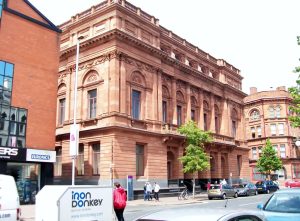
The Belfast Central Library in Royal Avenue

Whatever way you look at it, it is the ‘working poor’ who are being disenfranchised.  They do not have the access to books, papers, magazines etc. that the upper and middle class do; also the government in the UK advised benefit claimants to make use of the free computers in the libraries to manage their claims – something they cannot do if there are no libraries open!

But, is there also a hidden agenda; if the libraries are starved of resources, isn’t it also going to be minority groups [like the LGBTQ+] who will suffer by not being able to find books, magazines, newspapers, resources to support them?

It is obvious that the current government is one of austerity for the poorer class, but not for the rich!


Links:

  1.   As book bans soar, a more subtle form of censorship has begun ravaging U.S. libraries
  2. Spending on British libraries falls 17% as in-person visits soar
  3. Northern Ireland libraries can no longer afford to buy books
  4. The State of Our Library


Filed Under: Editor to ACOMSDave, Government & Politics Tagged With: censorship, closures, England, Great Britqain, libraries, NI, Northern Ireland, scotland, Wales

Porn Laws by Tim Clarke

09/09/2021 By ACOMSDave Leave a Comment

Porn LawsIn the Court proceedings against Lady Chatterley’s Lover in 1960, the jury was invited by the prosecution to consider whether “It is a book that you wish your wife or servants to read?”

Unfortunately, there are many people in this ostensibly more enlightened age who would share these sentiments, the  Hungarian Parliament and Russian Parliament for example, and they are not all Christian fundamentalists.  Indeed, some would claim to be progressive and liberal, Belfast Men Against Pornography is a group of “right-on” or “politic-all-correct” individuals who say they are ‘opposed to’ pornography because it is a key element in the oppression of women and it works on men by manipulating our sexuality.

The notion that porn exists because people (women and men) derive a great deal of pleasure from it is of no consequence to this group.  they have made their minds up that they, self-appointed ‘representatives of the social good, what material is or is not fit to be seen by all of us.

Their policy aims are to “increase awareness of the harmful effects” of porn on men and to “campaign to end the production, distribution and sale of pornography here (*remember this was pre the internet explosion).

With friends like that, you may well ask, who needs H.M. Customs and Mary  Whitehouse!

The two men from the group who attended the NIGRA meeting attempted to draw a distinction between (harmful) pornography and ‘erotica’.  the latter was defined as “sexually explicit material premised on equality”.

Their argument was not particularly convincing – one said that porn “degraded women” by portraying them as “objects to be dominated”, but was unable to substantiate this claim.  He became defensive when challenged on this point, and said something about “some feminists” he knew who found porn “offensive”.  It soon became evident that BMAP’s definition of pornography was fairly wide-ranging and would include most, if not all SM material.

It has always been my contention that the only legitimate purpose for which state power can be exercised over an individual against her or his will is to prevent harm to others.

BMAP maintain that porn has “harmful effects” on men as it (non-Gay porn) tells us that women” want to be dominated”.  Whilst some such material undoubtedly exists, it is simply not possible to legislate against heterosexism by attemp6ting to impose a ban on people’s fantasies.

I am not suggesting that women and young men should not be legally protected against exploitation.  People who work in the ‘sex-industry’ should demand fair pay and decent conditions for their work.  Women who want something more raunchy than Playgirl (*what is the equivalent today I wonder) should make their voices heard, only then will “sexually explicit material premised on equality” become more widely available.

There are enough right-wing groups and clerics campaigning to “end the production, distribution and sale of pornography” without people who claim to be politically progressive demanding censorship, whatever their reasons.

If people demand repressive legislation, of which there is enough on the statute book already, they will almost certainly get it (*again, remember, this was written pre the internet explosion of pornography sites, and every time that government attempts to look at this problem it runs away).  Quite how this will promote sexual equality is beyond my understanding.  Laws banning pornography will drive it underground (*the dark web) and suppress a great deal of open, rational discussion about sex and sexual inequalities.

BMAP did not have much to say about lesbian or gay male porn, although they were inclined to the view that most of it is probably OK as it is not premised on”inequality”.

Porn LawsIt is all very well for them to think along these lines, but the fact remains that the advocacy of repressive measures aimed at depriving people of the right to the reading of material of their choice could all too easily result in the targeting of the ‘gay’ community as purveyors of “material likely to deprave and corrupt”.  It is not long since HM Customs used their draconian powers to seize material from gay book shops (In 1984, Customs and Excise, assuming Gays’s The Word, London to be a porn store rather than a serious bookstore and ordered the destruction of imported books without reference to the Obscene Publications Act.)

Sexual equality and ‘Gay’ liberation can only come about as a consequence of the removal of oppressive laws which purport to regulate people’s sexual behaviour, women’s fertility – in short – Gay Liberation means nothing if not the removal of all constraints on consensual sexual activities and the lifting of restrictions on the rights of individuals to look at sexually explicit material, regardless of the opinions of others.

…first published in Upstart (Reasons to be cheerful ) – a paper copy of this magazine is held in the Linenhall Library, Belfast…


Links:

  • The Linenhall Library
  • Gay’s The Word
  • Pornography
  • Young voters ‘fed up’ with Northern Irish politicians

Filed Under: Community Journalist, History Tagged With: censorship, Customs and Excise, Gays The word, Hungary, Linenhall Library, Obscene Publications Act, pornography, Russia

Categories

Copyright ACOMSDave.com © 2026