ACOMSDave

Community Journalist

  • Home
  • Community Journalist
  • Events
  • Media Page and Press Kit
    • Projects and Work
  • Resources & Documents
    • LGBTQ+ Support Groups and Documents
  • NIGRA
  • Archives
  • Contact

Love in the tent

20/07/2025 By ACOMSDave Leave a Comment

Love in the tentLove in Small Moments: Comparing Camping, Confession, and Comfort in ‘In the Tent’ and the YouTube Story

Camping trips often serve as more than just outdoor adventures; they become intimate stages where vulnerability, connection, and unspoken feelings unfold. Two stories—David Rees’s ‘In the Tent’ and the YouTube story ‘He Said the Floor Was Too Cold—Climbed Into My Sleeping Bag Without Asking’—capture these tender moments with nuance, humour, and depth. While they differ in tone and format, both narratives highlight how simple, everyday gestures can reveal profound truths about love and friendship.


The Setting of Intimacy: Campgrounds as Confessionals

Both stories are rooted in the natural, unpretentious setting of camping—a space that strips away societal masks and reveals raw human emotion. In *In the Tent*, Rees recounts his personal experiences sharing a tent with friends, exploring how physical proximity fosters emotional closeness through humour and reflection. His anecdotes remind us that sometimes, the most meaningful connections are formed in mundane, shared moments.

Similarly, the YouTube story centres on a camping trip that becomes a stage for unspoken feelings. The night when Jaime, feeling the cold, climbs into Alex’s sleeping bag without asking becomes a pivotal moment—an act that signifies a desire for closeness, comfort, and perhaps something more. The act of sharing warmth transcends necessity; it becomes an act of vulnerability and affection.

The Power of Small Gestures

A core theme in both stories is the importance of subtle, often innocent, gestures. In ‘In the Tent’, Rees reflects on moments like sharing a space during a snowstorm or late-night conversations where physical closeness hints at deeper feelings. These small acts—cuddling against a lawn mower or huddling in a shed—are portrayed as tender symbols of trust and intimacy.

The YouTube story similarly emphasises the significance of deliberate acts. Jaime’s decision to enter Alex’s tent and his straightforward reason—”the floor is too cold”—belies a more meaningful intent. The act of climbing into the sleeping bag, pressing bodies together, and sharing warmth becomes an intimate confession. Jaime’s gentle question, “Is this okay?” underscores vulnerability, blurring the line between friendship and love.

Emotional Courage: Facing Fear and Hope

Both narratives explore the bravery required to express or accept love. In *In the Tent*, Rees recounts moments of hesitation and the gradual realisation of feelings, emphasising that vulnerability is essential to authentic connection. His stories highlight the tension between the fear of risking friendship and the desire for honesty.

The YouTube story vividly captures this courage. Alex’s internal monologue reveals overthinking and hesitation, questioning whether he is reading too much into Jaime’s gestures. When Jaime confesses, “I like you, not just as a friend,” it marks a significant step—an act of mutual bravery and hope for something more. Their shared kiss and subsequent conversations symbolise a turning point—an acknowledgement of feelings long held beneath the surface.

Tone and Style: Reflection Versus Narrative

Rees’s *In the Tent* employs a reflective, often humorous tone, blending personal anecdotes with philosophical musings about friendship and intimacy. His storytelling invites readers to see the tent as a metaphor for human closeness, emphasising that vulnerability often resides in everyday moments.

The YouTube story adopts a visceral, cinematic style, drawing the audience into Alex’s internal world through detailed narration and vivid dialogue. It captures the nervous anticipation and tenderness of that night in the sleeping bag, emphasising the immediacy of emotion.

The Significance of Small Moments

Both stories demonstrate that love and connection often hinge on small, seemingly insignificant moments—shared glances, accidental touches, whispered confessions. They challenge the idea that romance must be grand or dramatic; instead, they celebrate quiet, authentic expressions of affection that unfold naturally.

In ‘In the Tent’, Rees’s stories remind us that physical proximity can be a space where friendship deepens into something more meaningful. Likewise, the YouTube story shows that even a simple act like climbing into a sleeping bag can reveal unspoken feelings and forge a new understanding.

Conclusion: Love Found in Silence and Simplicity

Ultimately, both ‘In the Tent’ and the YouTube story underscore a vital truth: love and connection often thrive in small moments—those gentle acts, shared silences, and honest confessions that happen away from the spotlight. They reveal that vulnerability isn’t about grand gestures but about embracing the quiet, ordinary moments that truly matter.

Whether through humour, reflection, or visceral storytelling, these narratives affirm that the deepest bonds are built in trust, proximity, and honesty—sometimes in the simplest of settings: a tent, a sleeping bag, or a quiet campsite under the stars.


My one regret today is that David Rees’ publications are mainly out of print.  Yes, they are of a time, but they are beautifully crafted and written.  A time past.


Link:

  • He Said the Floor Was Too Cold—Climbed Into My Sleeping Bag Without Asking
  • Conchies by Ann Kramer – Book Review


Filed Under: Book Reviews, Poetry and Prose Tagged With: campground intimacy, camping romance, friendship and love, love in the tent, Personal Storytelling, quiet moments, romantic stories, small moments of love, unspoken feelings, vulnerability

Kinsella’s Oversight by Tommy Dwyer – a poetry review

01/09/2021 By ACOMSDave Leave a Comment

Kinsella's OversightKinsella’s Overisght by Tommy Dwyer is a riposte to ‘Butcher’s Dozen’, a poem written by the Eire establishment poet Thomas Kinsella.  It commemorated the thirteen people killed by the Para at a pur4ely peaceful demonstration in January 1972, organized by the Northern Ireland Civil Rights Association in Derry City, against the continuation of internment without trial.  As the introduction says,  “If the poem also commemorated the innocent Protestant dead, and worked up emotions against the political process which killed them, it would be as useful a contribution to the cause of progress as a bourgeois poet could make in this day and age.”  Kinsella abuses the Ulster Protestant as Britains … ‘rubbish … slaps and scraps …,’ and works up purely Nationalist hatred for the ‘Brits’ and especially the Ulster Protestant community.  Despite this Kinsella says “They, even they, with other nations have a place”.

This appears to be a tacit acceptance of the view that there are two historical communities, nations, if you prefer, on the island of Ireland, which rather damages Kinsella’s own thesis that the people being abused belong to an alleged historical Irish nation.

The booklet itself is decorated, if that is the word, with photographs of the IRA’s ‘Bloody Friday’ anti (civilian) personnel atrocities of 1972.  there are one or two misprints, and on one page there are two footnotes inversed, but generally, it is a very good job.

To the poem itself,  Kinsella’s Overisght by Tommy Dwyer, it suffers from a number of problems, it is a ferociously serious parody, but as Tommy Dwyer wants to transcend hate-mongering the parody is restricting.  It is also emphatically not emotion recollected in tranquility, and it shows.  But at the beginning of the poem the spirit of a baby girl killed in a no-warning bombing of a furniture shop aks of the bombers:p


“In days of old, in times gone by,

Could they see with Future’s eye?

Did my death make the Wild Geese fly?”


This sort of thing is a superb antidote to the romanticized garbage written about the past war.  


Tommy Dwyer makes his living working as a bricklayer, a former member of the Republican movement, he used to teach Gaelic in an Cumann Cluin Ard.


Links:

  • Athol Books
  • Poetry from Peter Brooke


Product details

  • ASIN ‏ : ‎ B001PDEITK
  • Publisher ‏ : ‎ Athol Books (1 Jan. 1987)
  • Unknown Binding ‏ : ‎ 12 pages

Filed Under: Poetry and Prose, Reviews Tagged With: Athol Books, Bloody Friday, Bloody Sunday, IRA, Thomas Kinsella, Tommy Dwyer

Poems by Ian Duhig in Support of Belfast Pride

25/04/2021 By ACOMSDave Leave a Comment


Poems by Ian DuhigTwo poems by Ian Duhig were submitted In January 1991 to Sean McGouran, the Editor of various publications for NIGRA (The Northern Ireland Gay rights Association) to be published as two pieces of poetry because of a piece that Sean had written in ‘Fortnight’magazine, a left-of-centre magazine produced in N Ireland for the N Ireland market, but with larger ramifications.

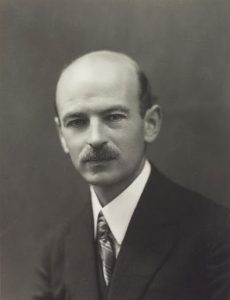
The two pieces of poetry by Ian Duhig were in support of Gay Pride Week in Belfast, our first Gay Pride in 1991.  Our first Pride march consisted of 120 individuals who marched through Belfast City Centre to the Botanic Gardens.  To quote John Bercow, who was the 157th Speaker of the House of Commons when he visited us in 2013


…What was once a celebration marked by a tiny hardcore of principled and brave individuals has been transformed into something approaching institutional status. …


Pride Belfast has moved on, to quote its current organisers (and others)


…Belfast Pride is one of the biggest festivals in Belfast, Ireland’s largest lesbian, gay, bisexual and transgender festival and ranks in the top ten largest Pride parades in the UK! …


What Ian Says…

The two poems by Ian Duhig are connected by the idea of jealousy and religion.  This is because they were written after the anti-clause 27/88 campaign had focused on letters to members of the House of Lords in an effort to get changes.  He found himself writing to the Archbishop of York and observing the extraordinary protocol that goes with it (you certainly don’t often get to start letters with ‘Your Grace’).  Both poems are closely based on fact.  Mar Jacobus being a friend of Corvo’s called Lewis or something and Bartolomea and Bendetta’s story came from research on an American historian called Janet Brown(?)was doing amongst old Medici papers in the Vatican.  The latter was one of the joint winners of the Northern Poetry Competition in England in 1989 and both will be appearing in his book the Bradford Count which was published on 27 June 1991. 


What

The Bradford Count by Ian Duhig


Brendan Kennelly said about Ian’s Book of Poetry ‘The Bradford Count’

…Ian Duhig’s witty and bizarre poems are profane and profound, often drawing on tall tales and strange episodes from history, Irish legend and colonial lore. Shortlisted for the Whitbread Poetry Award. ‘Ian Duhig’s world is an exciting blend of the old and the new, the tragic and the comic, the grave and the light-hearted… He rifles mythologies, histories, legends and folklores in a manner that is at once devastating and disarming.’ – Brendan Kennelly…


Archbishop Mar Jacobus Remembers the Baron

(link to download full poem)


Even the Syro-Chaldean bishopric I offered

On the strength of ‘Hadrian VII@

Did not tempt Corvo.  As mere Provost

To the Lieutenant of Grandmagistracy

Of Santissima Sophia he fled

To Veniuce, convinced the Rhodes Trustees

Were plotting his assassination…


Splenditello

(link to download full poem)


I, Guliano Carlini, third richest man

In Vellano, this scurfedge of the Apennines,

Where our children are assailed by witches

In the shapes of swallows or nightingales,

Which is rich only in undowried girls,

Which is scoffed at even in Pescia,

I do promise and avow, Madonna,

That I will make my house a shrine to you

And my only child, my daughter Benedetta,

Blessed, will be herself a hymn to you…


Links –

  • Speaker delivers lecture at Belfast Pride Festival 4th July 2013
  • Lesbian Gay Bisexual Trans + History Month
  • New Pride: How Belfast embraced its LGBTQ+ population – OU
  • The History of Pride in Ireland
  • Lost in Belfast – 12: The beginnings of Gay Pride in Belfast
  • Belfast Pride Festival
  • Amazon – The Bradford Count
  • Poetry from Peter Brooke
  • Gay Pride, Belfast 1991 – on to civil rights/equal citizenship

Filed Under: Campaigns, Editor to ACOMSDave, Poetry and Prose Tagged With: Belfast Pride, Brian Kennelly, campaign, Ian Duhig, The Bradford Count, The Speaker of the House of Commons

Poetry from Peter Brooke

13/04/2021 By ACOMSDave Leave a Comment

Approaching any review is like the start of a journey, you know where you are starting from but you have no idea where the journey is going to take you, what side-tracks or falls you may have and whether you will enjoy the journey because not all journeys are enjoyable.  I was asked to review two completely different booklets of poetry from Peter Brooke, the first “To a Mask” covers the period Oct 2013-Dec 2014, the second is a series of poems entitled “8 poems” translated from the French of Georges Ribemont-Dessaignes and published in 2020.

Georges Ribemont-Dessaignes - Poetry from Peter Brooke

Georges Ribemont Dessaignes

Peter’s first booklet embraces ‘Politics and Theology, a central piece of his life.  Peter is an artist, writer, and educationalist with a depth and breadth of knowledge that enables him to write and interpret extremely well for himself and others.

There are twenty-one poems in this slim booklet which cover a painting by Antonia Spowers to Little Children to Christian Love to The Book of Mormon to his final piece The Wrath of God.

I am not a poet, indeed generally I find poetry to be boring and of little relevance to me at all.  But each piece in this booklet has a line(s) that stop you and make you think.  They haven’t made me turn to ‘God’ as I feel that the god that churches and religion speak about is one made up by so many people as a way of comforting and also of controlling others.  But, you can read Peter Brooke’s prose, indeed dip into it, and think, and surely that is what any good writing should do.


Paintings by Peter Brooke

Painting by Peter Brooke
Paintings by Peter Brooke

Painting by Peter Brooke
Paintings by Peter Brooke

Now in his second booklet, “8 poems” Peter Brooke has gone back to his love of art and to his own love of Gleizes, a Cubist avant-garde artist who was a contemporary of Georges Ribemont-Dessagnes, and a solid member of the Dada movement.  So when reading these poems by Georges you have to align yourself to that time period and Dadaism which was an art movement of the European avant-garde in the early 20th century, with early centres in Zürich, Switzerland, at the Cabaret Voltaire (c. 1916). New York Dada began c. 1915,[2][3] and after 1920 Dada flourished in Paris. Dadaist activities lasted until c. the mid 1920s. (Wikipedia).


…‘What were you born of, poet? Of time and space,

Without beginning or end,…’


The ‘8 poems’ move through the origins of a poet, to childhood, to looking at (through) a mirror, youth, knowledge and old age / wax beauty.  They flow well in this interpretation by Peter, and I found these poems somewhat more reachable, but, yet again on a literal medium I can understand and interpret the words and they conjure up pictures, I still don’t know if the pictures being created are those that the poet was aiming for, and with that thought, I think I will have to accept that poetry is and can only be subjective to the reader.  I know what I like, exactly in the same way as you do, but we can agree to disagree and remain friends.

Links:

  • WikiArt – Dada Movement
  • WikiArt – Georges Ribemont-Dessaignes
  • MoMA – Georges Ribemont-Dessaignes
  • Wikpedia – Dada
  • Peter Brooke
  • Jack Clemo – Poet
  • Art by Peter Brooke – Cubism and Tradition
  • Charles Filiger as a young man in Paris, 1888 – a wonderful article by Peter


Filed Under: Editor to ACOMSDave, Poetry and Prose Tagged With: Arty by Peter Brooke, beginnings, Cabaret Voltaire, Charles Filiger, Dada, death, Georges Ribemont-Dessagnes, old age, Peter Brooke, religion, youth

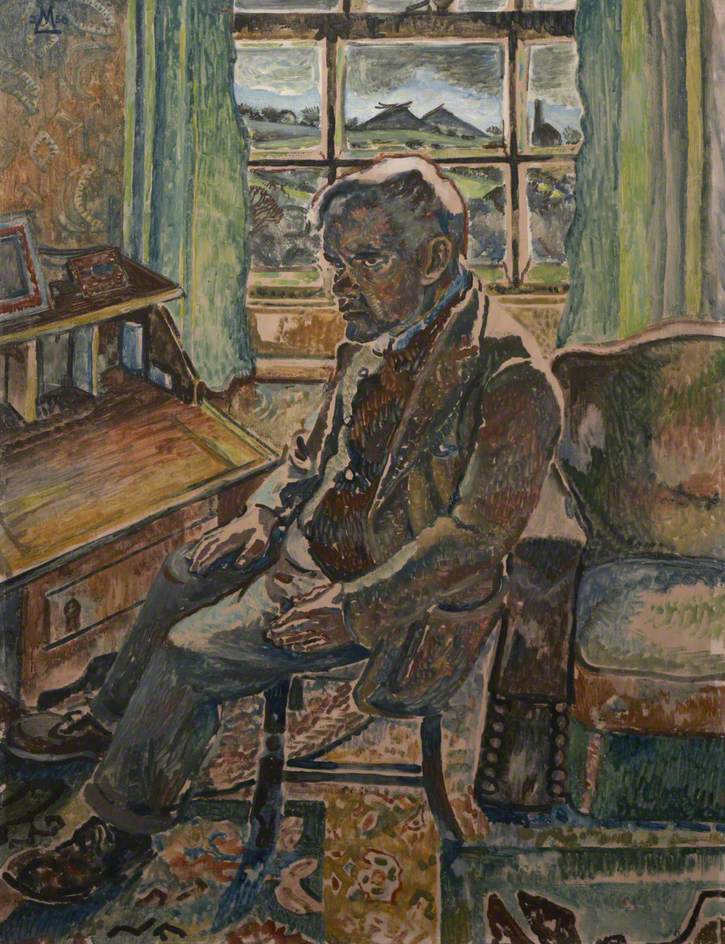
Jack Clemo – Poet

15/01/2021 By ACOMSDave Leave a Comment

I was watching a Rick Stein program tonight and he mentioned the poet Jack Clemo – I am not really a reader of poetry, but after hearing a few lines I was drawn to find out more about this poet.

Jack Clemo was born in Goonamarris. Jack was educated locally in the village school and concentrated on his poetry, while he lived in poverty with his widowed mother.  He lost his hearing and sight by 1955, the scenes of the Clay Country became his symbols for mystical and religious experiences.

The Clay-Tip Worker

Our clay-dumps are converging on the land:

Each day a few more flowers are killed,
A few more mossy hollows filled
With gravel. Like a clutching hand
The refuse moves against the dower,
The flaunting pride and power
Of springtide beauty menacing the sod;
And it is joy to me
To lengthen thus a finger of God
That wars with Poetry. […]

I love to see the sand I tip
Muzzle the grass and burst the daisy heads.
I watch the hard waves lapping out to still
The soil’s rhythm for ever, and I thrill
With solitary song upon my lip,
Exulting as the refuse spreads:
“Praise god, the earth is maimed,
And there will be no daisies in that field
Next spring; it will not yield
A single bloom or grass blade: I shall see
In symbol potently
Christ’s Kingdom there restored:
One patch of Poetry reclaimed
By Dogma: one more triumph for our Lord.”


Jack Clemo (1916–1994) | Art UK


The Flooded Clay-Pit

These white crags
Cup waves that rub more greedily
Now half-way up the chasm; you see
Doomed foliage hang like rags;

The whole clay-belly sags.

What scenes far
Beneath those waters: chimney-pots
That used to smoke; brown rusty clots
Of wheels still oozing tar;
Lodge doors that rot ajar.

Those iron rails
Emerge like claws cut short on the dump,
Though once they bore the waggon’s thump:
Now only toads and snails
Creep round their loosened nails.

Those thin tips
Of massive pit-bed pillars – how
They strain to scab the pool’s face now,
Pressing like famished lips
Which dread the cold eclipse.


Links:

  • Keeping Poets Alive: Why You Should Know About Jack Clemo
  • POETS OF THE CLAY COUNTRY: Jack Clemo
  • Belfast Book Festival 2015


Filed Under: Editor to ACOMSDave, Poetry and Prose Tagged With: clay pits, Cornwall, Jack Clemo, poetry

"Gay and Proud"

09/06/2015 By Dave McFarlane Leave a Comment

A poem from a gay-unionist called “Gay and Proud” which appeared in the March/April 2013 issue of Humanism Ireland which is the magazine of The Humanist association of Northern Ireland

I am an Ulster-Scot

Gay and Proud

Save Ulster from Sodomy

Is the message from Paisley (SNR)

The Catholic Cardinal is no better

in his message

But gay is what I am

Small town Ulster beware

From Comber in County Down

to Comber in Ontario, Canada

Gaymen and Lesbians arise

No longer in chains

Am now free to say I am gay

From the top of Scrabo Tower

Or from Rough Island at Islandhill

Gaymen and lesbians Stand United

and be Proud to be Gay.


Filed Under: Poetry and Prose Tagged With: gay, gay-unionist, unionist

Categories

Copyright ACOMSDave.com © 2026