
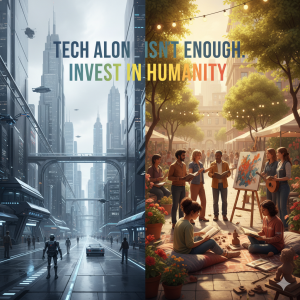
 Elif Shafak’s recent article in ‘The Observer’ really struck a chord with me. It’s a powerful reminder of why the humanities – literature, arts, history, philosophy – aren’t just nice-to-haves, but essential for a healthy society.
Shafak draws on Jules Verne’s forgotten dystopian novel, ‘Paris in the Twentieth Century’, where a poet is ridiculed for his “useless” skills in a world dominated by business and technology. Verne, known for his uncanny predictions, paints a bleak picture of a future devoid of human connection and empathy.
The article challenges the notion that the humanities are in decline, citing the steady readership of fiction worldwide. It emphasises the importance of “kairos” – deep time focused on meaning – over the fleeting “chronos” of our fast-paced world. Literature, Shafak argues, nourishes our need for meaning and connection, just like food and water.
However, the crux of the issue is that the humanities are under threat. Universities are shifting focus to “high-income disciplines,” devaluing subjects that foster critical thinking, empathy, and cultural understanding. As Shafak points out, cutting funding for culture has serious social and political consequences.
Empathy, that ability to “feel into” another’s existence, is crucial for a harmonious society. Literature allows us to step outside ourselves and connect with others, fostering understanding and breaking down barriers.
Shafak also connects the humanities to broader issues, such as climate change, water scarcity, and women’s rights, reminding us that everything is interconnected. A society that values only profit and technological advancement risks losing its sense of purpose.
Verne’s father wanted him to be a lawyer, but Verne’s heart was in storytelling. We need to encourage young people to pursue their passions, whether it’s law, math, or poetry. As the saying (often attributed to Verne) goes, we need to “dream with our eyes open,” combining imagination with knowledge and critical thinking.
The humanities aren’t a luxury; they’re a necessity. They equip us with the tools to navigate a complex world, connect with others, and build a more just and compassionate future. Let’s not let Verne’s dystopia become our reality.
 Isaiah Henderson’s “Balloons” isn’t just a short film; it’s a gut punch wrapped in eight minutes of raw emotion. If you’ve ever navigated the treacherous waters of a love that’s vibrant behind closed doors but shrouded in fear in public, this one will resonate deeply.
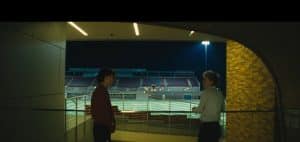
 Daniel (2012) is a short film that captures the ephemeral magic of first love with a gentle, poetic touch. Written and directed by Vincent Fitz-Jim, this coming-of-age story unfolds on a seemingly endless summer’s day, following a teenage boy as he experiences the intoxicating bloom of romance.
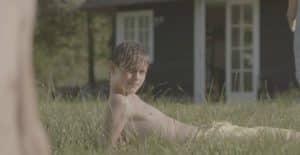 small details – the way sunlight filters through leaves, the gentle sway of grass – creating a dreamlike atmosphere that perfectly complements the story’s themes. The music, composed by The Album Leaf, is equally evocative, weaving a delicate tapestry of sound that enhances the film’s emotional resonance. The score is very effective.

 Alan Turing, the brilliant mathematician who cracked the Enigma code, was prosecuted for being gay and stripped of his security clearance. Similarly, Jeremy Wolfenden, a journalist and MI6 asset, was blackmailed by the KGB because of his sexuality, leading to a tragic end. These cases highlight the systemic discrimination and paranoia that plagued intelligence agencies.
 QueerAF, a not-for-profit LGBTQ+ media outlet, has uncovered deeply concerning data about youth suicide rates in England through a year-long investigation. After persistent Freedom of Information requests to the National Child Mortality Database, they revealed that one in six children who died by suicide between 2019 and 2025 were LGBTQ+—totalling 107 young lives lost, of whom 46 identified as transgender.

 In the 1890s, a peculiar game of cat and mouse played out in the classified sections of London newspapers. What appeared to be innocent advertisements for massage therapy and treatments concealed a thriving underground sex work industry, sparking a scandal that would reshape both commerce and language.


 Joris Deffte’s “Oskar” is a student project that delves into familiar territory, focusing on the poignant transition of letting go of old friendships to embrace new beginnings. Deffte himself acknowledges a degree of dissatisfaction with the final product, yet his decision to share it offers viewers a glimpse into the challenges and rewards of youthful self-discovery.


 Lord Chris Smith, the United Kingdom’s first openly gay Member of Parliament, is advocating for a formal apology from both the government and the NHS. He has characterised the practice as “inhumane” and emphasised the need for accountability.
 17 is a short film linked above that follows a 17-year-old boy who moves through the world like a ghost in his own life—barely seen at school, barely understood at home, and desperate for any kind of touch that feels real. His choice to look for intimacy through a gay hookup app isn’t framed as scandalous or reckless; instead, it feels like a quiet attempt to carve out a place in a life that has given him very few.


 The New Activistism: There’s a telling image from 1984: a scrappy banner reading Lesbians and Gays Support the Miners — a grassroots, cross-class act of solidarity that helped knit two very different communities together at the height of Thatcher’s assault on organised labour. That episode shows what sustained, practical solidarity looks like; it’s also the compass by which we can judge whether today’s mutual-aid co-operatives have the muscle to succeed where earlier cultural resistance (punk among them) often fell short.