
ACOMSDave

Community Journalist

  • Home
  • Community Journalist
  • Events
  • Media Page and Press Kit
    • Projects and Work
  • Resources & Documents
    • LGBTQ+ Support Groups and Documents
  • NIGRA
  • Archives
  • Contact

Humanities SOS: Jules Verne’s Warning & Our Future

15/02/2026 By ACOMSDave Leave a Comment

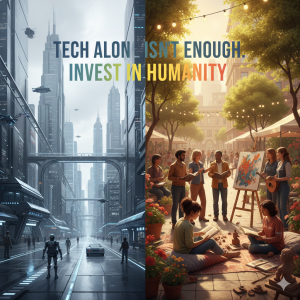
Jules Verne's WarningElif Shafak’s recent article in ‘The Observer’ really struck a chord with me. It’s a powerful reminder of why the humanities – literature, arts, history, philosophy – aren’t just nice-to-haves, but essential for a healthy society.

Shafak draws on Jules Verne’s forgotten dystopian novel, ‘Paris in the Twentieth Century’, where a poet is ridiculed for his “useless” skills in a world dominated by business and technology. Verne, known for his uncanny predictions, paints a bleak picture of a future devoid of human connection and empathy.

The article challenges the notion that the humanities are in decline, citing the steady readership of fiction worldwide. It emphasises the importance of “kairos” – deep time focused on meaning – over the fleeting “chronos” of our fast-paced world. Literature, Shafak argues, nourishes our need for meaning and connection, just like food and water.

However, the crux of the issue is that the humanities are under threat. Universities are shifting focus to “high-income disciplines,” devaluing subjects that foster critical thinking, empathy, and cultural understanding. As Shafak points out, cutting funding for culture has serious social and political consequences.

Empathy, that ability to “feel into” another’s existence, is crucial for a harmonious society. Literature allows us to step outside ourselves and connect with others, fostering understanding and breaking down barriers.

Shafak also connects the humanities to broader issues, such as climate change, water scarcity, and women’s rights, reminding us that everything is interconnected. A society that values only profit and technological advancement risks losing its sense of purpose.

Verne’s father wanted him to be a lawyer, but Verne’s heart was in storytelling. We need to encourage young people to pursue their passions, whether it’s law, math, or poetry. As the saying (often attributed to Verne) goes, we need to “dream with our eyes open,” combining imagination with knowledge and critical thinking.

The humanities aren’t a luxury; they’re a necessity. They equip us with the tools to navigate a complex world, connect with others, and build a more just and compassionate future. Let’s not let Verne’s dystopia become our reality.

 
  • The Observer -Jules Verne’s dystopia was a world without humanities. Don’t let his nightmare come true
  • Education Shortfalls – for better or poorer

Filed Under: Community Journalist, Editor to ACOMSDave Tagged With: critical thinking, culture, education, Elif Shafak, empathy, future, humanities, Jules Verne, literature, social commentary

“Turn it Around” – by Niels Bourgonje – Gay Movie Review

08/04/2025 By ACOMSDave Leave a Comment

**”Turn it Around” by Niels Bourgonje: A Spiraling Journey of Self-Discovery and Redemption**

Turn It AroundIn “Turn it Around,” Niels Bourgonje crafts a compelling narrative that delves into the intricate landscape of self-discovery and the transformative power of redemption. The story follows the protagonist’s tumultuous journey, filled with struggles and revelations that resonate on multiple levels.

At the heart of the narrative is a poignant exploration of personal failings and the pursuit of change. Bourgonje masterfully portrays the character’s internal battles, highlighting the struggle to confront past mistakes while navigating the complexities of relationships and identity. As the protagonist grapples with their choices, readers are invited to join in a reflection on the universal themes of regret, growth, and the yearning for a second chance.

The storytelling is both vivid and intimate, allowing readers to connect deeply with the protagonist’s emotions. Each moment is steeped in introspection as the characters inch closer to understanding not only themselves but also the impact of their actions on those around them. Through gripping scenes and relatable dialogue, Bourgonje effectively captures the essence of what it means to “turn it around”—to embrace the possibility of change and forge a new path.

Bourgonje’s writing style is engaging and approachable, balancing moments of heart-wrenching honesty with flashes of hope and humor. The pacing maintains a rhythmic flow that keeps readers invested in the character’s journey, making it difficult to put the story down.

Ultimately, “Turn it Around” is more than just a tale of redemption; it serves as a reminder that the human experience is rich with opportunities for growth and transformation. Niels Bourgonje delivers an evocative narrative that resonates long after the last page is turned, inspiring readers to reflect on their journeys of self-discovery and the courage it takes to change. This is a must-read for anyone seeking a story that reflects the complexities of life, love, and the unyielding pursuit of a better tomorrow.

Original title – Turn it Around

Director – Niels Bourgonje

Writer – Paul Bontenbal

Producer – François Pieneman

With – Valentijn Avé, Tonko Bossen, Timo Dries Year – 2017

Links:

  • YouTube – Turn It Around
  • Sequin in a Blue Room


Filed Under: Movie Reviews Tagged With: character study, emotional narrative, gay sefl discovery, literature, Niels Bourgonje, personal growth, redemption, relationships, self-discovery, transformative journey, Turn it Around

LGBTQ Online Book Club: Brendan Behan’s Borstal Boy

10/11/2024 By ACOMSDave

About Borstal Boy

From Wikipedia:

Borstal Boy

Borstal Boy is a 1958 autobiographical book by Brendan Behan. The story depicts a young, fervently idealistic Behan, who loses his naïveté over the three years of his sentence to a juvenile borstal, softening his radical Irish republican stance and warming to his British fellow prisoners.[1] From a technical standpoint, the novel is chiefly notable for the art with which it captures the lively dialogue of the Borstal inmates, with a variety of the many subtly distinctive accents of Britain and Ireland intact on the page. Ultimately, Behan demonstrated by his skillful dialogue that working class Irish Catholics and English Protestants actually had more in common with one another through class than they had supposed, and that alleged barriers of religion and ethnicity were merely superficial and imposed by a fearful middle class.

The book is available from all good and bad booksellers, on Kindle and audiobook. There are also lots of very affordable pre-owned copies on eBay.

We’d love for you to join us for our very first book club evening!

The book club will take place online and tickets for the event are free.

As always, we strive to ensure that our events are a safe space for our LGBTQ community and friends. To do this, we ask that you register for the event beforehand. You can read our privacy policy here.

You can book your place at the event here or in the Eventbrite widget below.

The link will go live at 1855 on November 19th and our moderator will allow you enter the Zoom meeting. You will receive the link to join the event in your confirmation email. Please keep this safe. Will will also send you a reminder just before the event.

If you have any comments or questions, please email londonirishlgbtnetwork@gmail.com


Links:


  • Conchies by Ann Kramer – Book Review


Tagged With: autobiographical novel, Book Club, Borstal Boy, Brendan Behan, British prisoners, dialogue, discussion, Eventbrite, free event, Irish republican, LGBTQ community, literature, online book club, safe space

Categories

Copyright ACOMSDave.com © 2026