ACOMSDave

Community Journalist

  • Home
  • Community Journalist
  • Events
  • Media Page and Press Kit
    • Projects and Work
  • Resources & Documents
    • LGBTQ+ Support Groups and Documents
  • NIGRA
  • Archives
  • Contact

NIGRA

18/07/2023 By ACOMSDave Leave a Comment

NIGRANIGRA is the oldest gay rights organisation in Northern Ireland.  Since its conception, it has seeked to ensure ‘GayRights’ means enhancing the rights of anyone oppressed on account of their -actual or imputes – sexuality.

Through our Facebook [https://www.facebook.com/NIGayRight5] , our Twitter account [https://twitter.com/GayUpstart]  (previously we led by producing our information and resources through our various printed magazines and newssheet).  We now publish articles that are of interest both locally, nationally and internationally from a wide range of sources related to the LGBTQI+’s people’s lives – all topics that we think might be useful for our community and its supporters.  To these articles, we also write and publish independent articles written by local people through ACOMSDave [www. https://acomsdave.com/].

Now we are looking for more local input and support and we would like you to write on any topic that you feel needs highlights, e.g.

  • Best gay spit in Northern Ireland (or your holiday resort area)
  • Things that you like to do in Northern Ireland
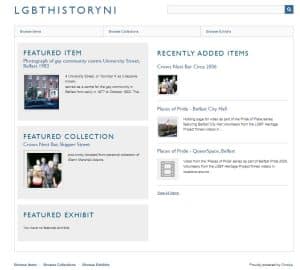
  • LGBTQTI+ history in Northern Ireland – don’t forget that we now have an online archive -LGBTHISTORYNI (LGBTHISTORYNI.com )


Go to LGBTHistoryNI

Visit LGBTHistoryNI and get involved in recording our history

Go NOW

But you decide, just write it and submit it by emailing to The Editor@ACOMSDave.com or dtw.mcfarlane@gmail.com)


Email ACOMSDave

Contact ACOMSDave editor to let us have your stories for publishing

Email Now


NIGRA - on parade

Filed Under: Campaigns, Editor to ACOMSDave Tagged With: Gay Magazines, gay politics, gay publishing, LGBT History NI, NIGRA, Northern Ireland

The History of LGBT (now LGBTQ+) in Northern Ireland

13/07/2023 By ACOMSDave Leave a Comment

The History of LGBT (now LGBTQ+) in Northern Ireland

Our Pride 1991 – by Terry McFarlane


The history of the LGBT (now LGBTQ+) in N Ireland is layered with groups that started to pursue a particular ideal missing from the community at the time.


Groups such as:

  • NIGRA
  • Cara Friend
  • COSO
  • GLYNI
  • Belfast Butterfly Group
  • Queerspace
  • Rainbow Project

Out of these groups came various local publications, e.g.

  • Gay Star
  • upstart
  • Update
  • NIGRA News
  • Gay Community News

The History of LGBT (now LGBTQ+) in Northern Ireland


But we also provided meeting spaces for individuals and groups, and the development of our own local lending library in the Carpenter Centre, Long Lane, Belfast.  This library held:

  • Books (both fiction and non-fiction)
  • Magazines

o   Foreign:

      • The Advocate (USA)
      • Christopher Street (USA)
      • Curve (USA)
      • Physique Magazine (USA) – a few copies
      • Zipper (*****)
      • Gai pied (French)
      • Lambda (Italian)
      • De Gayt Krant (Dutch)

o   Great Britain

      • Boyz
      • The Quorum
      • ScotsGay
      • Pink News
      • Gay Times
      • Gay News
      • Attitude
      • Diva
      • Fyne Times

o   Posters (both local and from abroad)

o   Banners (for various organisations)

o   Placards


NIGRA Banner at Pride

It was in a lot of ways our history repository.

The History of LGBT (now LGBTQ+) in Northern Ireland

Unfortunately, when we had to move to the Cathedral Buildings due to redevelopment, a lot of our history was lost, but still some of has found its way to.


  • The Ulster Museum – https://www.ulstermuseum.org/
  • The Linen Hall Library – https://www.linenhall.com/
  • PRONI – https://www.nidirect.gov.uk/campaigns/public-record-office-northern-ireland-proni

For people to access and learn about our history.

We need to develop spaces for writers, artists, and musicians within our community.  Yes, we need those spaces for well-being, befriending etc., but why have we limited ourselves?

I was thinking about when I first realised, I was gay, and how access to books and magazines seemed to be so restrictive.  But, after careful consideration what I have realised was that in terms of today, we had many more venues in which we could get a book or a magazine.  We had at least eight different bookstores we could visit, and then there were the various corner stores and bars that welcomed LGBT clientele (some grudgingly) but also stocked the various free gay magazines and papers. An enticement no doubt to bring people in, but at least they were there.

Today, we are a larger more supportive society, but, though we have the internet, Amazon, online magazines (which we mostly have to pay for) and a quarterly printed magazine (Attitude) available in some selected outlets (or by post), we seem to have less well written and researched news, less knowledge about the books that are available or the movies that are coming out (unless they are blockbusters).

We are also getting to that time in history when people who fought and made our history are reaching the end of their life.  Often without their history being noted, recorded, and save for our future.  Once they die, there is no way of returning that historical knowledge.

We have in part a way of saving our history, which is the LGBTHISTORYNI online archive site, but our community needs to get behind it, get involved with it and start telling everyone about our history.

The History of LGBT (now LGBTQ+) in Northern Ireland

LGBTHistoryNI


Links:

  • 1991 A Belfast Pride to be remembered!
  • Stories of hidden LGBT history


Go to LGBTHistoryNI

Visit LGBTHistoryNI and get involved in recording our history

Go NOW


Filed Under: Campaigns, Editor to ACOMSDave Tagged With: Belfast Butterfly Group, book shopos, Cara Friend, Carpenter Club, COSO, gay books, GayStar, GLYNI, history, LGBTHistoryNI, LGBTQ, library, NIGRA, queerspace, Rainbow project, Upstart, venues

Mad About The Boy – Noel Coward

13/06/2023 By ACOMSDave Leave a Comment

Mad About The BoyI watched Mad About The Boy the documentary about Noel Coward in the Queens Film Theatre, Belfast and was intrigued and entranced with Noel’s life, his ability to have escaped from poverty with a father who is mentioned briefly in the beginning and who was a piano salesman, and his mother who was his bedrock throughout his life until she died in 1954.

The Beginning

Coward was born on the 16th of December 1899 and lived until 1973.  He had very little formal schooling, leaving full-time education when he was 9 years old, but haunting his local library where he was a voracious reader and self-educated himself.  But he had been bitten by the performing bug early on and at age 7 appeared in local productions.  This was encouraged by his mother, who arranged for him to attend a dance academy.  Then through a small (wee) advertisement in the Mirror which asked for young boys to apply for a part in a play with Lila Field The Goldfish.  The road was set.

War Service

His career had its ups and downs, he didn’t see World War 1 service due to being ‘unfit for service’; however, during World War 2 he worked early on with the British Secret Service in Paris and then in the USA.  In both locations, he gathered intelligence and passed it on, and he also sought to influence people to support the United Kingdom.

Unfortunately, during this time, the British Media were very anti-Coward – ‘why should he be able to prance about and live the high life, when his fellow countrymen were being killed’.  Coward was deeply hurt by this but was unable to reply to their barbs due to the Official Secrets Act.

Relationships

Running in conjunction with his acting was his social life, including his gay life.  He had a number of discreet relationships – most of substantial length, the longest being with the film actor Graham Payne, and this began in the mid-1940s and lasted until Coward’s death.

Noel Coward loved people, men and women, and had deep friendships with a select band throughout his life.Mad About the Boy

And binding all this together was his ability to act, write plays and musicals, write lyrics, poetry and also music – he was the ‘Quintessential British Gentleman’.

The documentary shows all of the above and more, being able to show highlights from home videos made by Coward and his friends, but also the newsreels of the time, picture archives and Rupert Everett reading some of his journals extracts, and Alan Cummings narration it is fully entrancing, you get some idea of the man.

I enjoyed the movie/documentary, but at times it felt weird to watch a current showing with black-and-white excerpts.  Yes, the home movies probably did not have sound, but a lot of the films of his work would and I cannot understand why these were not included.  Their silences did not add to the overall structure of the documentary.

The Man

Coward was a unique man, and like all of us had good and bad bits, but without doubt he was in most ways a renaissance man.


Links

  • Wikipedia – Noel Coward 
  • The Guardian – Mad About the Boy: The Noël Coward story review – fascinating portrait of a 20th-century great
  • IMDB – Mad About the Boy: The Noel Coward Story 
  • YouTube – Mad About The Boy 
  • YouTube Trailer for Mad About the Boy Documentary
  • Photographs – A Gay Movie Review


Movie Information:

Directed by Barnaby Thompson

Writing Credits – Barnaby Thompson

Music by – Rael Jones

Editing by – Ben Hilton


Filed Under: Movie Reviews, Reviews Tagged With: British Intelligence Service, gay, Gay Partner, Mad About The Boy, Noel Coward, Paris, Queen's Film Theatre, USA

Water and Politics, A Dirty Business

05/06/2023 By ACOMSDave Leave a Comment

Water In 2021 I wrote about the crisis we were having with water in N Ireland.  To put it bluntly, our waterboard has left a lot of things undone, and on reading a current article by Sandra Laville which stated that our Ministers were warned over 20 years ago on how private equity would affect the water industry and ultimately our safety and well being (The Guardian 20 May 2023).  Basically, privatisation would lead to (as it normally does with private companies), the concentration on those areas which made money, and then left to the side those areas which didn’t but are necessary for the well-being of the population, i.e. sewage treatment, water pipe replacement etc.  According to figures released, which Sandra reported on, our rivers in the GB receive 11bn litres of raw sewage from 30 water treatment works in a year, and in 2021 the Guardian reported that 7m tonnes of raw sewage were discharged into Northern Irish rivers a year, NI Water said at the time, that these overflows were required to reduce the risk of sewage escaping from sewers and causing the flooding of homes, schools and businesses…

The difference between Great Britain and N Ireland is N Ireland’s water is controlled by the state (so far), and in Great Britain, it is privatised.  The privatised water companies are led by profit as I have already stated, whilst a state-owned enterprise should be led by safety.  It is not to say money isn’t a consideration, but it is to say that the planning should be different.

Privatisation

2023 Richard Seymour wrote in ‘A Short History of Privatisation in the UK’ … The emerging doctrine was that privatisation would make the large utilities more efficient and productive, and thus make British capitalism competitive relative to its continental rivals (1982-1986: Lift-0ff) …

However, the experiment cannot be seen to have worked, and certainly, Margaret Thatcher would be shocked to discover how many of our privatised industries are now controlled by extremely large organisations outside the United Kingdom, who only consider profit first!

The future

Currently, the water companies are saying that they will have things fixed by 2030, but, it will come as part of its £10bn investment, but that this will have to be paid from users.  So the observation might be, we pay the rich, including the shareholders, but we suck from the poor.

Water runs out as bosses rinse utilities for profit

Water tap. Free public domain CC0 photo.

I want to quote from an article about the Full Monty TV Series:

…The political destruction wreaked by successive governments wasn’t about destroying industry:  it was the infrastructure of the country they’d come to asset-strip, slowly and incredibly successfully.  Schools, hospitals, dental care, social care, mental health care, transport, the courts, water:  all of the structures that allow people in need to function were now on the edge of collapse…

If you wish to survive in today’s society you must be extremely rich, or be a politician, the ordinary working person is going backwards.  Only the ordinary working person can change this by voting in elections, both local and general, and if the right candidate isn’t there, then again do something about it – it is your country


…The structure of an oil molecule is non-polar. Its charge is evenly balanced rather than having one positive and one negative end. This means oil molecules are more attracted to other oil molecules than water molecules, and water molecules are more attracted to each other than oil, so the two never mix… (Science Sparks)

I think from looking at all the parties in or out of Government, we can now say that ‘Water and Politics’ don’t mix most definitely for the benefit of those who are not wealthy!

Links:

  • Taking their clothes off was a metaphor – The Guardian 20 May 2023
  • Rivers ‘receive 11bn litres of raw sewage from 30 water treatment works in a year’ – The Guardian 27 May 2023
  • Warning about privatised water kept secret for over 20 years – The Guardian 20 May 2023
  • POLITICS AND WATER DO NOT MIX – The Dark Side
  • Why water politics matters
  • Northern Ireland Water and Meter Charges

Filed Under: Community Journalist Tagged With: Northern Ireland Water, politics, sewage, water, water boards

Photographs – A Gay Movie Review

02/06/2023 By ACOMSDave Leave a Comment

PhotographsPhotographs is a short gay romance movie about Greyson who has just broken up with his girlfriend, Maddie, and Robbie a college-aged boy who can help him get the photographs he needs for a dating app.

Robbie is gay, but Greyson doesn’t seem to know what he wants or who at the start of the movie.  Every time they meet for a photograph session there seems to be an invisible barrier, and when Robbie returns home to download the pictures, at first he seems to want to spend more time with Greyson and he then pretends the photographs or manipulate them so that there has to be more sessions.

After a call from Maddie which seems to throw Greyson into a loop, preceded by a call between him and Robbie in which he has Robbie to come over so that he can view the photos of himself.  When they meet both are slightly awkward with each other, and both end up parting without understanding why. 

Greyson quickly comes to understand that he does like Greyson and rives off to catch him up and here I ask you to watch the movie and tell me your thoughts about the ending.

Photographs is a movie produced and filmed by Dmitri Mikhnev and Ly Tran of GoodGaff Productions from Los Angeles

Photographs - Just starting
Photographs - Robbie
Photographs - Robbie and Greyson

Cast:

  • Robby – Jackson T Lafleur
  • Greyson – Sean Sedey
  • Maddie – Cecily Swason

Links:

  • Goodgaff Productions – https://www.facebook.com/GoodGaff/
  • Meet Dmitri Mikhnev and Ly Tran of GoodGaff Productions in Downtown – http://voyagela.com/interview/meet-dmitri-mikhnev-ly-tran-goodgaff-productions-downtown-la/
  • Photographs [2023] – current YouTube location 
  • Breathe – a gay movie review


Filed Under: Movie Reviews Tagged With: Cecily Swason, Dmitri Mikhnev, gay movie, Goodgaff Proudctions, Jackson T Lafleur, Ly Tran, Photographs, Sean Sedey

Queen’s University, Naughton Gallery Sports Exhibition – Fix Your Pony

07/04/2023 By ACOMSDave Leave a Comment

This is the Naughton Gallery’s fifth sports exhibition series, celebrating ‘art and sport’ coming together and delving into the areas of diversity and inclusion.

Fix Your PonyFix Your Pony is an interesting exhibition in its scope, width and range of contemporary artists:

  • Rachelle Baker
  • Laura Callaghan
  • Nial Cullen
  • Emile-Samory Fofana
  • Justin French
  • M. S. Harkness
  • Jaime Hernandez
  • A Klass
  • Dougal McKenzie
  • Thenjiwe Niki Nkosi
  • Nana Yaw Oduro
  • Bram Paulussen
  • Sars Perovic 

and the artists in various degrees tackle

  • race
  • gender
  • politics
  • sexuality

but they also go beyond this to look at areas such as

  • basketball
  • skateboarding
  • gymnastics
  • tennis
  • lucha libre (Mexican wrestling)

and not least bull racing in Bali!  Fix Your Pony makes you think because the answers are not always obvious.   Oscar Wilde said, 

“If a thing is worth doing, it is worth doing well. If it is worth having, it is worth waiting for.

If it is worth attaining, it is worth fighting for. If it is worth experiencing, it is worth putting aside time for.”


If you have not been to Queens University for a visit, and also the Naughton Gallery, it is very easy to discover – a simple 22 min stroll for Belfast City Centre.


All the artists have their own story, but I’ve delved back in time to two who I remember:

  • Hello Mr - Fix Your PonyRyan Fitzbiggon and his “Hello Mr” (01/06-30/07/2017) showed the diversity of gay culture …it is a community of “men who date men”, starting new conversations about their interests, loves, hopes and fears…

and

  • Brock Williams and Chris Lin - Fix Your PonyBrock William and Chris Lin and their “Yummertime” (18/10-12/12/2018) … s San Francisco-based lifestyle and photography blog co-founded..
Please do go and find this small, wonderful gallery, and view the current showing but remember, the story is always changing at the Naughton as do the exhibitions.


Links:

  • 2017 – Royal Ulster Academy of Arts Exhibition


Filed Under: Reviews Tagged With: Brock William, Chris Lin, Fix Your Pony, Hello Mr, Naughton Gallery, Queen's University, Ryan Fitzgibbon, Yummertime

Judgement at Nuremberg Trials

06/04/2023 By ACOMSDave Leave a Comment

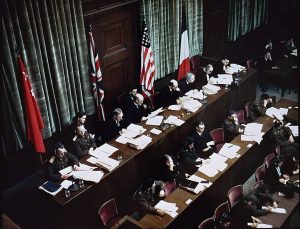
Judgement at Nuremberg TrialsYesterday I watched the Judgement of the Nuremberg Trials again.  I was set on this because I have just started the book ‘East West Street‘ by Philippe Sands. Judgement at Nuremberg TrialsIn this book, Phillipe begins a journey on the trail of his family’s secret history, which through many convoluted routes leads him to the origins of international law at the Nuremberg trial.

I am lucky, I live in a country which allows me the freedom to watch and read, in general, anything; this means I have ‘freedom’, but to so many of those who ended up on trial and then camps, or just placed in camps, they were not so lucky.  

…Beginning on May 10, 1933, Nazi-dominated student groups carried out public burnings of books they claimed were “un-German.” The book burnings took place in 34 university towns and cities. Works of prominent Jewish, liberal, and leftist writers ended up in the bonfires. The book burnings stood as a powerful symbol of Nazi intolerance and censorship…

USA…‘We’re seeing a relaunch of an old story’: Exploring the movement to ban books with LGBTQ characters in the USA…

The book banning boom continues.

Already, the number of attempts this year to censor books in K-12 schools, universities and public libraries is on track to eclipse 2021’s record count, the American Library Association said on Friday. The ALA cataloged 681 attempts between January 1 and August 31; the 2021 tally was 729…

…Hungary restricts sales of LGBT-themed children’s books…


So many parts of the world seek to restrict intellectual freedom and access to information.  There are attempts to put restrictions on the internet, for message services to not use end-to-end encryption ‘to protect the people, society and the country.

The American Library Association states:-


…Intellectual freedom is the right of every individual to both seek and receive information from all points of view without restriction. It provides for free access to all expressions of ideas through which any and all sides of a question, cause or movement may be explored…

So this brings me back to the Nuremberg Trials, I am attaching a link  to the transcript of the Judgement Nuremberg Trials, and also a link to an excerpt of the movie with Spencer Tracy playing Chief Judge Dan Haywood.

judgement at Nuremberg Trial

Whilst the whole statement should be read to truly understand the trial, the first section entitled ‘The Seizure of Power and Subjugation of Germany to a Police State.’ brings me to look at the world in so many places, including the UK.  Which states currently seem to be applying what is outlined?  

Please think carefully before you sign up for things calling for your support, understand the whole picture, not just that outlined to you in the Call to Action.


Links:

  • Summation for the Prosecution by Justice Robert Jackson
  • YouTube – The Judgement at the Nuremberg Trials (excerpt)
  • Surveillance and Big Brother
  • Wikipedia – Spencer Tracy


Filed Under: Community Journalist, Editor to ACOMSDave, History Tagged With: big brother, Intellectual freedom, Judge Dan Haywood, Judgement at Nuremberg Trials, Nuremberg Trial, Spencer Tracy, transcript of trial

Beyond The Law by Charles Upchurch – Gay Book Review

14/03/2023 By ACOMSDave Leave a Comment

This book was reviewed in the North Philly Notes in November 2021.  This review is comprehensive, as is the book, so I am reprinting the review to remind our readers of this history we have lived through, and why it is so important that we monitor government, both local and national, to ensure we do not loose all the gains we have made.

…

This week in North Philly Notes, Charles Upchurch, author of “Beyond the Law,” writes about the first public debate in the Commons over the ethics of punishing sex between men.

Beyond The Law

The first sustained debate in the British Parliament (and likely in any parliament anywhere) over the ethics of punishing sex between men occurred 180 years ago and no one has remembered it—at least until now. That’s the premise of “Beyond the Law,” which explains how and why this happened. Most historians think this time frame is far too early for anything like this to have occurred, since it is too early for modern sexual identities to have formed, let alone for there to have been a political effort organized around them. But a modern homosexual identity is not needed to have an ethical objection to the execution of individuals for a private consensual act, which is what sodomy was in some cases. In the first decades of the nineteenth century, the law allowed for such executions. While many upper- and middle-class men did publicly rail against sodomy as “the worst of crimes” and supported the executions, others, drawing on enlightenment philosophy or more latitudinarian religious ideas, thought such executions were more immoral, perhaps far more immoral, than the acts themselves. These men included Lord John Russell, leader of the Whig majority in the House of Commons, who eventually argued against executions for sodomy in 1841, even as he kept the government at a distance from the private member’s bill that was the focus of the reform effort.

Russell, like almost every other politician of his era, did not want to publicly speak about sex between men, but broader events were forcing him and the government to do so. That was because the death penalty was being eliminated for hundreds of crimes. Up to the start of the nineteenth century, it was the terror of the gallows that was to scare individuals away from committing crime. Theft of even small amounts might be punished with death, since there had previously been only minimal systems for policing or imprisonment. But that policing and incarceration infrastructure was created in the early nineteenth century, and the number of capital crimes tumbled, so that by the end of the 1830s there were only slightly more than a dozen. Those capital crimes included murder, attempted murder, treason, piracy, rape, a few minor crimes that were missed by previous reform legislation, and sodomy, which could be a private consensual act. With the death penalty now gone for almost everything else, the anomaly of retaining it for sodomy was glaring for many. But almost no man wanted to be the person who stood up on the floor of the House of Commons to argue for the lessening of the penalties for sex between men, knowing that some of the most evangelical members of that body would likely denounce them for defending immorality (as did eventually happen).

The reform effort did happen, though, and two exceptional men stepped forward to shepherd the bill through the Commons in a process that played out over the better part of a year. They had the prestige of Jeremy Bentham behind them since, contrary to what has been written by other scholars, Bentham published some of his arguments against the punishment of sex between men in his lifetime. He did so in a way that would likely only be understood by legal experts, but those were exactly the people who were drafting the recommendations to parliament on which laws to amend, and which ones to retain without alterations. Bentham’s ideas of legal reform were shaping the entire process of eliminating the death penalty within the English criminal law, and his arguments against punishing sex between men in general, let alone executing men for a private consensual act, were known to the men shaping the reform.

Reasoned arguments were not enough to motivate a man to sponsor such a bill, to risk his reputation, and to speak publicly against such an injustice. It can be proven that both Jeremy Bentham and Lord John Russell agreed with this reform, but neither man would publicly champion it. A judge at the time privately told Russell that he was “convinced that the only reason why the punishment of death has been retained in this case is the difficulty of finding any one hardy enough to undertake what might be represented as the defense of such a crime.” And that brings us to the most remarkable discovery in ‘Beyond the Law’, because the two men who were brave enough to do this were inspired to act not primarily through reasoned arguments, but through the emotional and affective bonds of family. Fitzroy Kelly, a newly elected Tory MP, grew up in economic hardship, only saved from poverty through the work of his mother, the novelist Isabella Kelly. The Kelly family was helped repeatedly by the gothic novelist Matthew Gregory Lewis, whose sexual interest in men was remarked on at the time. Moreover, William Kelly, Isabella’s son and Fitzroy’s brother, has been identified by scholars at least since the 1930s as Matthew’s strongest emotional attachment. Matthew’s sister was also married to the brother of the other co-sponsor of the 1840 and 1841 legislation, the lawyer and abolitionist Steven Lushington. It was Lushington, also, more than a decade before, who had worked with Lady Byron during her separation from Lord Byron, and it was Lushington who had raised the threat of accusing Byron of committing sodomy within his marriage as leverage in the separation proceedings. This web of family connections, cemented by love more than sex, is dense, convoluted, and still in significant parts obscure and unrecoverable. Nevertheless, ‘Beyond the Law’ recounts much of it, and tells a story wholly different from anything previously recovered for the early nineteenth century. It pieces together many public and private aspects of the first debates in the nineteenth century over the ethics of punishing sex between men.


Links:


  • Amazon UK:  Beyond The Law
  • The Truth About Alex by Anne Snyder – a gay book review and a movie


Filed Under: Book Reviews Tagged With: 180 years in court, Beyond the Law, British Parliament, Charles Upchurch, gay men

CAL [1984] – a move review

01/01/2023 By ACOMSDave Leave a Comment

Cal is a young man on the fringes of the I.R.A., but he falls in love with a Catholic woman whose husband, a Protestant policeman, has been killed a year earlier by the I.R.A.

Cal (John Lynch), as I have said, loves Marcella (Dame Helen Mirren) and put together such a wonderful performance that Mirren won the award of Best Actress at the Cannes Film Festival in 1984.

Two quotes covering this were:

  • Dirk Bogarde was President of the Jury that year and wrote to his friend Kathleen Tynan to say that while he’d seen some ‘pretty crummy movies’, he had also watched ‘a modest, excellent little film about the Irish Business for which, to my delight (and astonishment) Helen Mirren won Best Actress’.
  • Nigel Andrews of the Financial Times stated that ‘Cal is the most moving and convincing portrait of life in Northern Ireland the cinema has yet given us’.

John Lynch – Cal – 1984 | Regis Autographs

JOHN LYNCH, CAL, 1984 Stock Photo - Alamy

Links:

  • IMDB – Cal
  • YouTube – ‘Irish Movie’ [Cal]
  • Breathe – a gay movie review


Filed Under: Editor to ACOMSDave

Lost Photos of Nude Men on the Beach from the 1930s

15/11/2022 By ACOMSDave Leave a Comment

Keith Vaughan is an artist who is often overlooked, but when you view his work, and in particular ‘Nude Men on the Beach’ you will be hooked.

Nude Men on the BeachMuch is known about the British painter Keith Vaughan thanks to his extensive journals, written between 1939 and his death in 1977, and described as some of “the greatest confessional writing of the 20th-century”. They document the trials he faced as a gay artist whose principal focus was the male nude, rendered first in an erotic, Neo-Romantic style, and later an increasingly abstracted one.

GALLERY

Keith Vaughan male nude erotica 1930s vintageNude Men on the Beach - Keith Vaughan male nude erotica 1930s vintageKeith Vaughan male nude erotica 1930s vintageKeith Vaughan male nude erotica 1930s vintage

Keith Vaughan

Now further light has been shed on Vaughan’s oeuvre thanks to the rediscovery of a collection of lost photographs from Nude Men on the Beach, taken by the self-taught artist during covert visits to Pagham Beach in West Sussex in the 1930s, with a coterie of male friends. “When Vaughan decided to become a fine artist in 1938, he began to distil a visual language through photography, based on the male figure,” explains David Archer, curator of a new exhibition of the images in London. “After the war, he used the photographs to develop his unique drawing style, with compositional elements recurring in his gouaches and oil paintings until the mid-50s.”

The pictures depict Vaughan’s lithe pals cavorting on the beach, nude or semi-nude, performing handstands and drinking from shells. They brilliantly capture the abundant joy of their protagonists, temporarily freed from the shackles of societal prejudice, while their technical skill aligns Vaughan with the likes of Man Ray and László Moholy-Nagy. “It’s as if he could disappear from his subjects’ presence; he was an observer but never a ringleader,” notes Archer. “Like all true works of art, these images transcend time.”

Keith Vaughan: On Pagham Beach is at Austin Desmond Gallery until 8 December, 2017.

  • Wikipedia – Keith Vaughan
  • Artnet – Keith
  • The Art of Persuasion

Filed Under: Community Journalist Tagged With: 1930s, artist, Beach, exhibition, Keith Vaughan, men, Nude., Pagham Beach, West Susses

  • « Previous Page
  • 1
  • …
  • 12
  • 13
  • 14
  • 15
  • 16
  • …
  • 108
  • Next Page »

Categories

Copyright ACOMSDave.com © 2026