ACOMSDave

Community Journalist

  • Home
  • Community Journalist
  • Events
  • Media Page and Press Kit
    • Projects and Work
  • Resources & Documents
    • LGBTQ+ Support Groups and Documents
  • NIGRA
  • Archives
  • Contact

30 Must-Read LGBTQ Books That Everyone Should Know

15/10/2025 By ACOMSDave Leave a Comment

30 Must Read LGBTQ Books30 Must-Read LGBTQ Books That Everyone Should Know

The literary world has been profoundly enriched by LGBTQ voices telling stories of love, identity, struggle, and triumph. From groundbreaking classics to contemporary masterpieces, these books offer windows into diverse experiences while exploring universal themes of authenticity, belonging, and self-discovery. Here are 30 essential LGBTQ books that have shaped conversations, broken barriers, and touched countless hearts.

Classic Groundbreakers

1. Giovanni’s Room by James Baldwin (1956). Baldwin’s exquisite novel explores a passionate affair between an American man and an Italian bartender in Paris. Raw and unflinching, it examines masculinity, desire, and the devastating consequences of denying one’s true self.

2. The Price of Salt by Patricia Highsmith (1952) Originally published under a pseudonym, this revolutionary novel offered one of the first lesbian love stories with a hopeful ending. Later adapted into the film Carol, it remains a tender portrait of forbidden love in 1950s America.

3. Orlando by Virginia Woolf (1928) This fantastical biography follows a nobleman who lives for centuries and mysteriously changes gender. Woolf’s playful, genre-bending masterpiece challenges conventional notions of gender and identity.

4. The Colour Purple by Alice Walker (1982). Walker’s Pulitzer Prize-winning novel tells the story of Celie, a Black woman in the rural South whose life is transformed through love and friendship, including a profound relationship with the singer Shug Avery.

5. Maurice by E.M. Forster (1971) Written in 1913 but published posthumously, this novel traces a young man’s journey to self-acceptance in Edwardian England. Forster’s insistence on a happy ending was radical for its time.

Memoirs and Non-Fiction

6. Fun Home by Alison Bechdel (2006). This graphic memoir interweaves Bechdel’s coming out with the revelation of her father’s hidden sexuality and eventual death. Beautifully illustrated and deeply moving, it revolutionised the graphic novel genre.

7. When We Rise by Cleve Jones (2016). Jones, a protégé of Harvey Milk, chronicles his journey from the early days of the gay liberation movement through the AIDS crisis to the fight for marriage equality. This is living history from someone who helped make it.

8. Redefining Realness by Janet Mock (2014). Mock’s groundbreaking memoir offers an intimate look at growing up trans and multiracial in America. Her writing is both personal and political, challenging readers to expand their understanding of gender and identity.

9. The Best We Could Do by Thi Bui (2017) This illustrated memoir explores identity, family, and the refugee experience through a queer Vietnamese-American lens, examining intergenerational trauma and the meaning of home.

10. In the Dream House by Carmen Maria Machado (2019) Machado crafts an innovative memoir about surviving domestic abuse in a same-sex relationship. Each chapter employs a different literary genre, creating a haunting exploration of love and violence.

Contemporary Fiction

11. Call Me by Your Name by André Aciman (1997) Set in 1980s Italy, this sensuous novel captures a transformative summer romance between seventeen-year-old Elio and his father’s graduate assistant, Oliver. Aciman’s prose is intoxicating and bittersweet.

12. The Song of Achilles by Madeline Miller (2011). Miller reimagines Homer’s Iliad through the love story between Achilles and Patroclus. This mythological retelling won the Orange Prize and introduced a new generation to queer classical literature.

13. Red, White & Royal Blue by Casey McQuiston (2019) This joyful romantic comedy imagines the First Son of the United States falling for the Prince of Wales. Smart, swoony, and politically engaged, it became a cultural phenomenon.

14. Stone Butch Blues by Leslie Feinberg (1993) Feinberg’s semi-autobiographical novel follows Jess Goldberg, a working-class butch lesbian navigating identity and survival from the 1960s through the 1990s. A cornerstone of transgender literature.

15. Boy Erased by Garrard Conley (2016) This powerful memoir recounts Conley’s experience in a conversion therapy program in the South. Unflinching yet compassionate, it examines faith, family, and the harm of trying to change someone’s sexuality.

Young Adult Literature

16. Aristotle and Dante Discover the Secrets of the Universe by Benjamin Alire Sáenz (2012) This tender coming-of-age story follows two Mexican-American teenagers in 1980s El Paso as their friendship deepens into something more. Sáenz’s writing is poetic and emotionally resonant.

17. Simon vs. the Homo Sapiens Agenda by Becky Albertalli (2015) A charming story about a closeted teen who falls for an anonymous classmate online. Adapted into the film Love, Simon, it brought mainstream attention to LGBTQ YA literature.

18. The Miseducation of Cameron Post by Emily M. Danforth (2012). After being caught with another girl, Cameron is sent to a conversion therapy centre. This novel beautifully captures adolescent resilience and the search for authentic community.

19. Cemetery Boys by Aiden Thomas (2020) This supernatural romance follows a trans boy brujo determined to prove himself to his traditional Latinx family by summoning the ghost of his murdered cousin—but he accidentally summons the wrong ghost.

20. I’ll Give You the Sun by Jandy Nelson (2014) Told from dual perspectives, this luminous novel follows artistic twins navigating first love, family secrets, and grief. One twin’s storyline centers on a gay relationship that will break and mend your heart.

Poetry and Plays

21. The Collected Poems of Audre Lorde (1997). Lorde’s poetry explores being Black, lesbian, mother, and warrior. Her work is fierce, sensual, and politically charged—essential reading for understanding intersectional feminism.

22. Angels in America by Tony Kushner (1991-1992). This Pulitzer Prize-winning two-part play is an epic exploration of the AIDS crisis in 1980s America. Blending realism with fantasy, it remains one of the greatest works of American theatre.

23. Citizen: An American Lyric by Claudia Rankine (2014) While not exclusively LGBTQ, Rankine’s groundbreaking work examines microaggressions and systemic racism in contemporary America, with intersectional insights relevant to all marginalised communities.

24. Night Sky with Exit Wounds by Ocean Vuong (2016) Vuong’s debut poetry collection explores his identity as a gay Vietnamese-American man, weaving together family history, war, and desire in stunning, heartbreaking verses.

Genre Fiction

25. The Priory of the Orange Tree by Samantha Shannon (2019). This epic fantasy features a slow-burn lesbian romance at its centre while delivering dragons, political intrigue, and world-ending threats. At 800+ pages, it’s a commitment—but worth every moment.

26. Gideon the Ninth by Tamsyn Muir (2019). Described as “lesbian necromancers in space,” this sci-fi fantasy mash-up is wickedly funny, original, and features one of the most compelling enemies-to-lovers dynamics in recent memory.

27. The House in the Cerulean Sea by TJ Klune (2020) This cozy fantasy follows a caseworker who investigates an orphanage for magical children. Featuring a middle-aged gay romance, it’s a heartwarming story about found family and acceptance.

Essential Historical and Cultural Works

28. The Stonewall Reader edited by the New York Public Library (2019). This anthology collects firsthand accounts, speeches, and documents from the gay liberation movement. It’s essential for understanding the historical context of LGBTQ rights.

29. Gender Trouble by Judith Butler (1990.) Butler’s foundational academic text challenged conventional thinking about gender, arguing it’s performative rather than innate. Dense but revolutionary, it shaped queer theory for generations.

30. And the Band Played On by Randy Shilts (1987) Shilts’s investigative journalism chronicles the early years of the AIDS epidemic and the political failures that allowed it to spread. Devastating and necessary, it documents a crisis that decimated a generation.

Why These Books Matter

These thirty books represent just a fraction of LGBTQ literature, but they offer entry points into different genres, time periods, and perspectives. They document struggles and celebrate victories. They capture first loves and last goodbyes. They make visible what society once kept hidden.

Whether you’re looking for your own story reflected to you or seeking to understand experiences different from your own, these books offer empathy, education, and connection. They remind us that LGBTQ people have always existed, always loved, always created—and that their stories deserve to be read, celebrated, and remembered.

The best part? This is just the beginning. For every book on this list, hundreds more deserve recognition. The literary landscape continues to expand with new voices, new stories, and new ways of understanding identity and love. These 30 books are must-reads, but they’re also invitations to explore further and discover the rich, diverse world of LGBTQ literature.


Remember, Christmas is not far away, and there is nothing like receiving a gift that has been thought about for you – a lovely book!

Links:

  • LGBTQI+ Books
  • Gay Book Reads

#BookList

#WhatToRead

#BookBlog

#ReadingCommunity

#Bibliophile

Filed Under: Book Reviews Tagged With: bisexual fiction, book list, contemporary queer lit, diverse books, gay books, inclusive literature, lesbian books, LGBTQ authors, LGBTQ book recommendations, LGBTQ books, LGBTQ classics, must-read LGBTQ, pride reading list, queer fiction, queer literature, reading guide, representation matters, transgender memoirs

Albert Camus, The Philosopher

12/10/2025 By ACOMSDave Leave a Comment

Albert CamusAlbert Camus, The Philosopher Who Taught Me How to Live

If you, like me, have ever stared up at the night sky and felt a profound sense of “What is the point of all this?” then you need to meet Albert Camus (1913–1960).

Camus, a Nobel laureate and journalist from French Algeria, is often mistakenly called an Existentialist. But he defined his own, arguably more comforting, philosophy: Absurdism. It’s the framework I return to whenever the world feels overwhelming. This isn’t just dusty old philosophy; it’s a manual for finding passion in a world that doesn’t care.

The Core Conflict: A Home vs. A Divorce

Camus diagnosed the fundamental problem of human existence: the Absurd. It’s not an argument; it’s a feeling.

According to Camus, the Absurd is the permanent conflict between two things (and I love the emotional language he uses in his essays, like The Myth of Sisyphus):

  1. Our innate, passionate need for meaning and clarity (we yearn for a “home”).
  2. The universe’s absolute silence and cold indifference to our questions (this is the “divorce”).

The universe simply doesn’t contain the ultimate meaning we crave. So, what do we do?

The Only Way Out: Revolt and Passionate Living

Camus laid out three responses to this tragicomic situation, and he only accepted one:

  1. Suicide: A physical escape. Camus rejected this as a cowardly refusal to confront the problem.
  2. Leap of Faith: What he called “philosophical suicide.” This means abandoning reason to embrace an artificial system (religious dogma or political ideology) to pretend meaning exists. Again, rejection.
  3. Revolt and Freedom: This is the move. It means acknowledging the Absurd completely, accepting that life has no ultimate meaning, and then living fully, intensely, and passionately despite it. You find freedom in that conscious act of defiance.

You are free the moment you stop waiting for the universe to permit you to be happy.

Where to Start: A Quick Look at His Major Works

Camus explored these ideas through beautiful, accessible novels.

  • The Stranger (L’Étranger, 1942): Meet Meursault, the detached narrator. The novel is a chilling look at what happens when a man simply refuses to play society’s game of manufactured meaning, eventually leading to tragedy. It’s a study in indifference that forces the reader to examine their own moral structures.
  • The Plague (La Peste, 1947): A powerful allegory. While it was read as a response to the German occupation of France, it’s really about human solidarity and the power of everyday effort. Dr Rieux and his companions simply choose human decency and hard work (the “revolt” in action) over nihilistic despair. If you want a book about collective resilience, start here.

The True Answer is ‘The Sea Close By’

For a feeling of his philosophy, I recommend seeking out some of his lyrical prose, like the pamphlet ‘The Sea Close By.’ These writings are drenched in the North African sun. They show Camus finding joy not in grand intellectual theories, but in the immediate, physical reality: the feel of the sea, the heat on his skin, the bright light.

This is his final answer: Happiness is found not by looking to the stars for answers, but by enjoying the tangible world right beside you.

A Final, Absurd Irony

It’s tragically fitting that Camus, the man who wrote so eloquently about the random, indifferent nature of existence, died in a sudden car crash in 1960 at age 46. The final absurd twist? He reportedly had a train ticket in his pocket but chose to drive that day.

If you’re ready to stop waiting for meaning and start creating it, Camus is your man. Grab The Stranger this weekend and tell me what you think in the comments!


“The bay, the sun, the red

and white games on the

seaward terraces, the

flowers and sports stadiums, 

the cool-legged girls”


Links:

  • Amazon – The Sea close by
  • Catflap

#AlbertCamus #Absurdism #TheStranger #ExistentialPhilosophy #BookReview #LiteraryLife

Filed Under: Book Reviews Tagged With: Absurdism, Albert Camus, existentialism, literary analysis, meaning of life, philosophy, revolt, Sisyphus, The Plague, The Stranger

Love in the tent

20/07/2025 By ACOMSDave Leave a Comment

Love in the tentLove in Small Moments: Comparing Camping, Confession, and Comfort in ‘In the Tent’ and the YouTube Story

Camping trips often serve as more than just outdoor adventures; they become intimate stages where vulnerability, connection, and unspoken feelings unfold. Two stories—David Rees’s ‘In the Tent’ and the YouTube story ‘He Said the Floor Was Too Cold—Climbed Into My Sleeping Bag Without Asking’—capture these tender moments with nuance, humour, and depth. While they differ in tone and format, both narratives highlight how simple, everyday gestures can reveal profound truths about love and friendship.


The Setting of Intimacy: Campgrounds as Confessionals

Both stories are rooted in the natural, unpretentious setting of camping—a space that strips away societal masks and reveals raw human emotion. In *In the Tent*, Rees recounts his personal experiences sharing a tent with friends, exploring how physical proximity fosters emotional closeness through humour and reflection. His anecdotes remind us that sometimes, the most meaningful connections are formed in mundane, shared moments.

Similarly, the YouTube story centres on a camping trip that becomes a stage for unspoken feelings. The night when Jaime, feeling the cold, climbs into Alex’s sleeping bag without asking becomes a pivotal moment—an act that signifies a desire for closeness, comfort, and perhaps something more. The act of sharing warmth transcends necessity; it becomes an act of vulnerability and affection.

The Power of Small Gestures

A core theme in both stories is the importance of subtle, often innocent, gestures. In ‘In the Tent’, Rees reflects on moments like sharing a space during a snowstorm or late-night conversations where physical closeness hints at deeper feelings. These small acts—cuddling against a lawn mower or huddling in a shed—are portrayed as tender symbols of trust and intimacy.

The YouTube story similarly emphasises the significance of deliberate acts. Jaime’s decision to enter Alex’s tent and his straightforward reason—”the floor is too cold”—belies a more meaningful intent. The act of climbing into the sleeping bag, pressing bodies together, and sharing warmth becomes an intimate confession. Jaime’s gentle question, “Is this okay?” underscores vulnerability, blurring the line between friendship and love.

Emotional Courage: Facing Fear and Hope

Both narratives explore the bravery required to express or accept love. In *In the Tent*, Rees recounts moments of hesitation and the gradual realisation of feelings, emphasising that vulnerability is essential to authentic connection. His stories highlight the tension between the fear of risking friendship and the desire for honesty.

The YouTube story vividly captures this courage. Alex’s internal monologue reveals overthinking and hesitation, questioning whether he is reading too much into Jaime’s gestures. When Jaime confesses, “I like you, not just as a friend,” it marks a significant step—an act of mutual bravery and hope for something more. Their shared kiss and subsequent conversations symbolise a turning point—an acknowledgement of feelings long held beneath the surface.

Tone and Style: Reflection Versus Narrative

Rees’s *In the Tent* employs a reflective, often humorous tone, blending personal anecdotes with philosophical musings about friendship and intimacy. His storytelling invites readers to see the tent as a metaphor for human closeness, emphasising that vulnerability often resides in everyday moments.

The YouTube story adopts a visceral, cinematic style, drawing the audience into Alex’s internal world through detailed narration and vivid dialogue. It captures the nervous anticipation and tenderness of that night in the sleeping bag, emphasising the immediacy of emotion.

The Significance of Small Moments

Both stories demonstrate that love and connection often hinge on small, seemingly insignificant moments—shared glances, accidental touches, whispered confessions. They challenge the idea that romance must be grand or dramatic; instead, they celebrate quiet, authentic expressions of affection that unfold naturally.

In ‘In the Tent’, Rees’s stories remind us that physical proximity can be a space where friendship deepens into something more meaningful. Likewise, the YouTube story shows that even a simple act like climbing into a sleeping bag can reveal unspoken feelings and forge a new understanding.

Conclusion: Love Found in Silence and Simplicity

Ultimately, both ‘In the Tent’ and the YouTube story underscore a vital truth: love and connection often thrive in small moments—those gentle acts, shared silences, and honest confessions that happen away from the spotlight. They reveal that vulnerability isn’t about grand gestures but about embracing the quiet, ordinary moments that truly matter.

Whether through humour, reflection, or visceral storytelling, these narratives affirm that the deepest bonds are built in trust, proximity, and honesty—sometimes in the simplest of settings: a tent, a sleeping bag, or a quiet campsite under the stars.


My one regret today is that David Rees’ publications are mainly out of print.  Yes, they are of a time, but they are beautifully crafted and written.  A time past.


Link:

  • He Said the Floor Was Too Cold—Climbed Into My Sleeping Bag Without Asking
  • Conchies by Ann Kramer – Book Review


Filed Under: Book Reviews, Poetry and Prose Tagged With: campground intimacy, camping romance, friendship and love, love in the tent, Personal Storytelling, quiet moments, romantic stories, small moments of love, unspoken feelings, vulnerability

Catflap – Book Review

23/01/2025 By ACOMSDave Leave a Comment

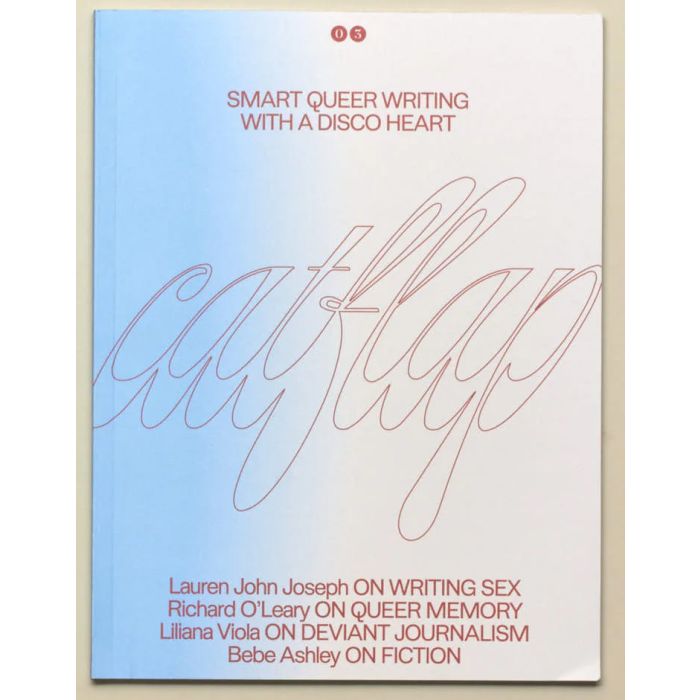
Catflap is a ‘literary journal’ of queer non-fiction and poetry from people in Belfast and Ireland with the title ‘Smart Queer Writing With A disco Heart’.  The copy I have (issue 3) incorporated works by:

Catflap

Bebe Ahsley – the Olive Branch
Samson Furlong Tighe – Found Poem in Loughlistown
Liliana Viola – SOY: Proof of Queer Life
Richard O’Leary – Objects of Desire: Portrait of the Homoseachai
Zara Meadows – Sign
Ian Macartney – Yesterday, Forth Rail Bridge (December 2-16)
Lauren John Joseph – Writing Sex
Anna Loughran – Nude & In the Gardens
Marc Gregg – Fuck Me Thru The Phone
(DW) Dean Black – essiage
Laima Kreivyte – Waiting & a feminist asks questions in church
Charlie McIlwain – Blue is Blue & Yes
Adam James Martin – Cross & Out
Dear Hole (Advice Column)

The journal consists of 89 pages, 87 in print.


It isn’t easy to put a finger on this journal, to me it is one for dipping into and finding that which you like and disregarding the rest.  But then on another day those that you have disregarded may have meaning.

Directly the piece about Richar O’Leary did appeal, as I know Richard, indeed I had the pleasure of listening to him and one of his pieces at last year’s Cara Friend sponsored meeting at Queens University (with his props).  Richard’s stories are interesting and thought-provoking; he has led an interesting life, had a wonderful partner, and now enjoys educating people about being gay in Ireland’s past.


Zara Meadows ‘Sign’  is a poem of seven verses – it is very descriptive

…Muggy night on Castle Lane

The rain falls on your jacket

Like paper planes on fire


Made from receipts

Stolen out from the pockets

Of corrupt politicians…


I am not a poet (I have only written one poem in my life at that was about World War 1 whilst I was at secondary school), and often I find poems do little for me.  I think it takes time again to read and digest what each poet is saying, an example being Robert Forst’s poems which often have at least three levels to read and understand them by.

I am gong to suggest that you become readers of ‘Catflap’ editions published by Outburst Arts Festival.  Give them the support that all writers and publishers need, especially in these times, and read about being gay in Belfast and Northern Ireland


Links:

  • Books Ireland – Smart queer writing, with a disco heart—catflap
  • Conchies by Ann Kramer – Book Review

Filed Under: Book Reviews Tagged With: AuthorSpotlight, BelfastArtsScene, BelfastWriters, CatflapJournal, CelebrateDiversity, CulturalCommentary, EmergingWriters, LGBTQPoetry, LiteraryCommunity, LiteraryJournals, NonFiction, NorthernIrelandArts, OutburstArtsFestival, PersonalNarratives, PoeticExpression, PoetryReview, QueerIdentity, QueerLiterature, QueerVoices, WritingAboutQueerness

Conchies by Ann Kramer – Book Review

17/10/2023 By ACOMSDave Leave a Comment

Conchies by Ann KramerBook Review – Conchies by Ann Krammer

Pub 2013


Conchies [Conscientious Objectors of the First World War] was researched and written by An Krammer.  If you roll forward three years to 2016, there was the centenary of the introduction of compulsory military service, and conscription in Britain, This proved to be a challenge in terms of personal feeling, religion or political reasons for approximately 20,000 young men of military service age who refused to take up arms, and was called Conscientious Objectors – ‘COs’, ‘Conchies’

My interest lies in understanding history, as far as one can, and people.  I am from a service family, indeed it would seem to go back quite a distance of a member in military service.  Reading around the topic you hear of family estrangements for life (even sometimes beyond death, carried over to younger family members).  On an aside, you can see parallels for those who broke the miner strikes in the past!

Conchies as a book is what I would call a primer, it is a starter for you to read and to see if you have your interests piqued, but what it doesn’t do is provide you with ways and links to continue your interest.  That is left up to you and the internet.

Reading various reviews of Conchies on the internet, most have found it lightweight, and on one items the information would appear to be incorrect.  The photos included are of interest and do provide another way for you to get into the topic.

On Amazon, at present the cost of the books runs from:

  • Kindle edition £2.99
  • Hardcover edition £0.83 – £27.30
  • Paperback edition £1.18 – £27.97

Conchies


Links:

  • Uncovering the history of Britain’s war resisters www.heritagefund.org.uk
  • Conscientious Objectors and the Peace Movement in Britain 1914-1945 – https://librarysocietyfriendsblog.wordpress.com
  • Conscientious Objectors in Their Own Words – iwm.org.uk
  • Where have all the conscientious objectors gone? – Moira Redmond – theguardian.com
  • Amazon – Conchies by Ann Krammer – https://www.amazon.co.uk/Conchies-Conscientious-Objectors-First-World-ebook/dp/B00I5KF95S/ref=sr_1_1?crid=26KNTX1F7HOPK&keywords=conchies%2Bann+kramer&qid=1697144621&sprefix=conchies%2Bann+kramer%2Caps%2C71&sr=8-1
  • Beyond The Law by Charles Upchurch – Gay Book Review

This book, as I have said, is at best a primer to get someone interested.  I agree with one Quaker parent’s comment who felt that it may not be suitable for some children without guidance (her child was in Primary School), it is more suited to teenagers and adults, but it has to be in context


Conchies


Filed Under: Book Reviews Tagged With: Ann Kramer, Conchies, Conscientious, COs, Friends Society, Objectors, prison, Quakers, White Feather, WW1, WW2

Beyond The Law by Charles Upchurch – Gay Book Review

14/03/2023 By ACOMSDave Leave a Comment

This book was reviewed in the North Philly Notes in November 2021.  This review is comprehensive, as is the book, so I am reprinting the review to remind our readers of this history we have lived through, and why it is so important that we monitor government, both local and national, to ensure we do not loose all the gains we have made.

…

This week in North Philly Notes, Charles Upchurch, author of “Beyond the Law,” writes about the first public debate in the Commons over the ethics of punishing sex between men.

Beyond The Law

The first sustained debate in the British Parliament (and likely in any parliament anywhere) over the ethics of punishing sex between men occurred 180 years ago and no one has remembered it—at least until now. That’s the premise of “Beyond the Law,” which explains how and why this happened. Most historians think this time frame is far too early for anything like this to have occurred, since it is too early for modern sexual identities to have formed, let alone for there to have been a political effort organized around them. But a modern homosexual identity is not needed to have an ethical objection to the execution of individuals for a private consensual act, which is what sodomy was in some cases. In the first decades of the nineteenth century, the law allowed for such executions. While many upper- and middle-class men did publicly rail against sodomy as “the worst of crimes” and supported the executions, others, drawing on enlightenment philosophy or more latitudinarian religious ideas, thought such executions were more immoral, perhaps far more immoral, than the acts themselves. These men included Lord John Russell, leader of the Whig majority in the House of Commons, who eventually argued against executions for sodomy in 1841, even as he kept the government at a distance from the private member’s bill that was the focus of the reform effort.

Russell, like almost every other politician of his era, did not want to publicly speak about sex between men, but broader events were forcing him and the government to do so. That was because the death penalty was being eliminated for hundreds of crimes. Up to the start of the nineteenth century, it was the terror of the gallows that was to scare individuals away from committing crime. Theft of even small amounts might be punished with death, since there had previously been only minimal systems for policing or imprisonment. But that policing and incarceration infrastructure was created in the early nineteenth century, and the number of capital crimes tumbled, so that by the end of the 1830s there were only slightly more than a dozen. Those capital crimes included murder, attempted murder, treason, piracy, rape, a few minor crimes that were missed by previous reform legislation, and sodomy, which could be a private consensual act. With the death penalty now gone for almost everything else, the anomaly of retaining it for sodomy was glaring for many. But almost no man wanted to be the person who stood up on the floor of the House of Commons to argue for the lessening of the penalties for sex between men, knowing that some of the most evangelical members of that body would likely denounce them for defending immorality (as did eventually happen).

The reform effort did happen, though, and two exceptional men stepped forward to shepherd the bill through the Commons in a process that played out over the better part of a year. They had the prestige of Jeremy Bentham behind them since, contrary to what has been written by other scholars, Bentham published some of his arguments against the punishment of sex between men in his lifetime. He did so in a way that would likely only be understood by legal experts, but those were exactly the people who were drafting the recommendations to parliament on which laws to amend, and which ones to retain without alterations. Bentham’s ideas of legal reform were shaping the entire process of eliminating the death penalty within the English criminal law, and his arguments against punishing sex between men in general, let alone executing men for a private consensual act, were known to the men shaping the reform.

Reasoned arguments were not enough to motivate a man to sponsor such a bill, to risk his reputation, and to speak publicly against such an injustice. It can be proven that both Jeremy Bentham and Lord John Russell agreed with this reform, but neither man would publicly champion it. A judge at the time privately told Russell that he was “convinced that the only reason why the punishment of death has been retained in this case is the difficulty of finding any one hardy enough to undertake what might be represented as the defense of such a crime.” And that brings us to the most remarkable discovery in ‘Beyond the Law’, because the two men who were brave enough to do this were inspired to act not primarily through reasoned arguments, but through the emotional and affective bonds of family. Fitzroy Kelly, a newly elected Tory MP, grew up in economic hardship, only saved from poverty through the work of his mother, the novelist Isabella Kelly. The Kelly family was helped repeatedly by the gothic novelist Matthew Gregory Lewis, whose sexual interest in men was remarked on at the time. Moreover, William Kelly, Isabella’s son and Fitzroy’s brother, has been identified by scholars at least since the 1930s as Matthew’s strongest emotional attachment. Matthew’s sister was also married to the brother of the other co-sponsor of the 1840 and 1841 legislation, the lawyer and abolitionist Steven Lushington. It was Lushington, also, more than a decade before, who had worked with Lady Byron during her separation from Lord Byron, and it was Lushington who had raised the threat of accusing Byron of committing sodomy within his marriage as leverage in the separation proceedings. This web of family connections, cemented by love more than sex, is dense, convoluted, and still in significant parts obscure and unrecoverable. Nevertheless, ‘Beyond the Law’ recounts much of it, and tells a story wholly different from anything previously recovered for the early nineteenth century. It pieces together many public and private aspects of the first debates in the nineteenth century over the ethics of punishing sex between men.


Links:


  • Amazon UK:  Beyond The Law
  • The Truth About Alex by Anne Snyder – a gay book review and a movie


Filed Under: Book Reviews Tagged With: 180 years in court, Beyond the Law, British Parliament, Charles Upchurch, gay men

The Truth About Alex by Anne Snyder – a gay book review and a movie

26/09/2021 By ACOMSDave Leave a Comment

The Truth About AlexThis book, The Truth About Alex, was originally entitled ‘Counterplay’ and has since been made into a film by HBO starring Scott Baio.  The story is about an adolescent growing up in a pressured society, with a domineering absentee father and a placating mother.  It is about his development, about how he deals with his “best” friend’s gayness and other people’s inability to handle the situation.  Counterplay, or The Truth About Alex,  tells the story of Alex Prager, a high school student who is inadvertently outed as gay and the difficulty his best friend Brad has in coming to terms with it.

The story is supportive, teenage reading, and it would be pleasant if life treated everyone this way.


Information:

Format: Mass Market Paperback
Language: English
ISBN: 0451149963
ISBN13: 9780451149961
Release Date: February 1987
Publisher: Penguin Publishing Group

The Truth About Alex


  • Director  Paul Shapiro
    Writers  Craig StorperAnne Snyder(novel – Counter Play)
    Stars  Scott Baio,  Peter Spence,  Jessica Steen
  •  
  •  


Links:

  • YouTube – The Truth About Alex Scott Baio (1986) HBO Full Show
  • IMDB – The Truth About Alex
  • Torch Song Trilogy
  • ABC  After School Special in 1972.


Filed Under: Book Reviews, Reviews Tagged With: adolescence, Alex Prager, Counterplay, gay book review, LGBTQ+ Book Review, Penguin Publishing, Scott Baio

Night Kites by M E Kerr – a gay book review

10/09/2021 By ACOMSDave Leave a Comment

Night KitesI found Night Kites in the teenage fiction section of a local mobile library.  It was the very pleasant cover design that caught my eye and then the blurb which mentions AIDS.

the story is about the relations of a teenage boy (Ricky) with his peers.  He is a typical American youth, interested in girls and having a good time, his older brother is ‘Gay’ and has AIDS.  This character and the parents – who react badly to the annunciation of the illness – are cliched.

Night Kites will not revolutionise the public’s view of Gay people, AIDS or sex.  Indeed, it reinforces some of the stigmas, however, the fact that a work of fiction on this subject is in a mobile library, on the teenage readers’ shelves is a sign of hope in itself.


Product details

  • Publisher ‏ : ‎ HarperCollins Publishers (1 May 1986)
  • Language ‏ : ‎ English
  • ISBN-10 ‏ : ‎ 0060232536
  • ISBN-13 ‏ : ‎ 978-0060232535

Links:

  • Amazon – Night Kites
  • Kinderkill by Richard Harper

Filed Under: Book Reviews, Reviews Tagged With: AIDS, American youth, gay boy, gay sex, M E Kerr, Night Kites, stigmas, teenage reader

Kinderkill by Richard Harper – 1 Mar. 1989 – a gay book review

10/09/2021 By ACOMSDave Leave a Comment

KinderkillKinderkill brings into print the subject of “snuff” movies, and the related topics of child sex fanatics.  The characters whether cops or child molesters are stereotypes, of no real depth or interest.  The story development is progressive, with one or two hiccups due to the author’s attempts to assign qualities to his characters that are not necessary to the story.  Indeed the author’s preoccupation with having clear black and white characters gives the book an unreal quality.

Kinderkill is readable – just – but for those with enquiring minds, it does little to explain the thinking of ‘child lovers’ or those now involved in the worldwide conspiracy of ‘snuff movies’ which we are advised is a plague.


Product details

  • Publisher ‏ : ‎ Lynx Books (1 Mar. 1989)
  • ISBN-10 ‏ : ‎ 1558022252
  • ISBN-13 ‏ : ‎ 978-1558022256

Links

  • Amazon – Kinderkill by Richard Harper
  • Who Lies Inside by Timothy Ireland
  • The Linenhall Library


Filed Under: Book Reviews, Reviews Tagged With: boy lov, child lovers, gay book review, Kinderkill, LGBTQ+ Book Review, Linenhall Library, Richard Harper, snuff movies

Who Lies Inside by Timothy Ireland – a gay book review by Tim Clarke

01/09/2021 By ACOMSDave Leave a Comment

Who Lies Inside by Timothy IrelandWho Lies Inside by Timothy Ireland,  deals with a young man’s struggle to come to terms with his sexual attraction to other men.  Martin Conway comes from a typical English working-class family in which any manifestation of emotion meets with rental disapproval.  Martin or “Jumbo”, is a rugby player, and a wimp,  and an 18 year old sixth former.  He becomes increasingly alienated from his parents and from his straight friends, and, despite his initial unwillingness to confront the ‘stranger’ inside him he eventually decides that the ‘stranger’, i.e. his gayness, must ‘step out into the light and be seen’,  if he is to be truly happy.

The story ends on a positive note as Martin finds a lover and is prepared to face the hostility of the straight society which had been his prison for so long, having fought his own self-oppression.

I found the book most uplifting and I felt a great deal of empathy with Martin as his story made me recall some of my own experiences.  I would especially recommend this book to younger readers.  Tim Clarke, reviewerWho Lies Inside by Timothy Ireland


Publication Information for Who Lies Inside by Timothy Ireland

Paperback, 128 pages
Published December 1st 1995 by Gay Men’s Press (first published January 1st 1993)
 
Links:
  • Amazon – Who LIes Inside
  • Teardrops On My Drum by Jack Robinson
  • Linenhall Library

(Please note that this review was first  published in Gay Star, a copy of which is held in the Linenhall Library archives)

Filed Under: Book Reviews, Reviews Tagged With: gay book review, gay men's press, LGBTQ+ Book Review, Linenhall Library, Martin Conway, Timothy Ireland

  • 1
  • 2
  • 3
  • …
  • 19
  • Next Page »

Categories

Copyright ACOMSDave.com © 2026