
ACOMSDave

Community Journalist

  • Home
  • Community Journalist
  • Events
  • Media Page and Press Kit
    • Projects and Work
  • Resources & Documents
    • LGBTQ+ Support Groups and Documents
  • NIGRA
  • Archives
  • Contact

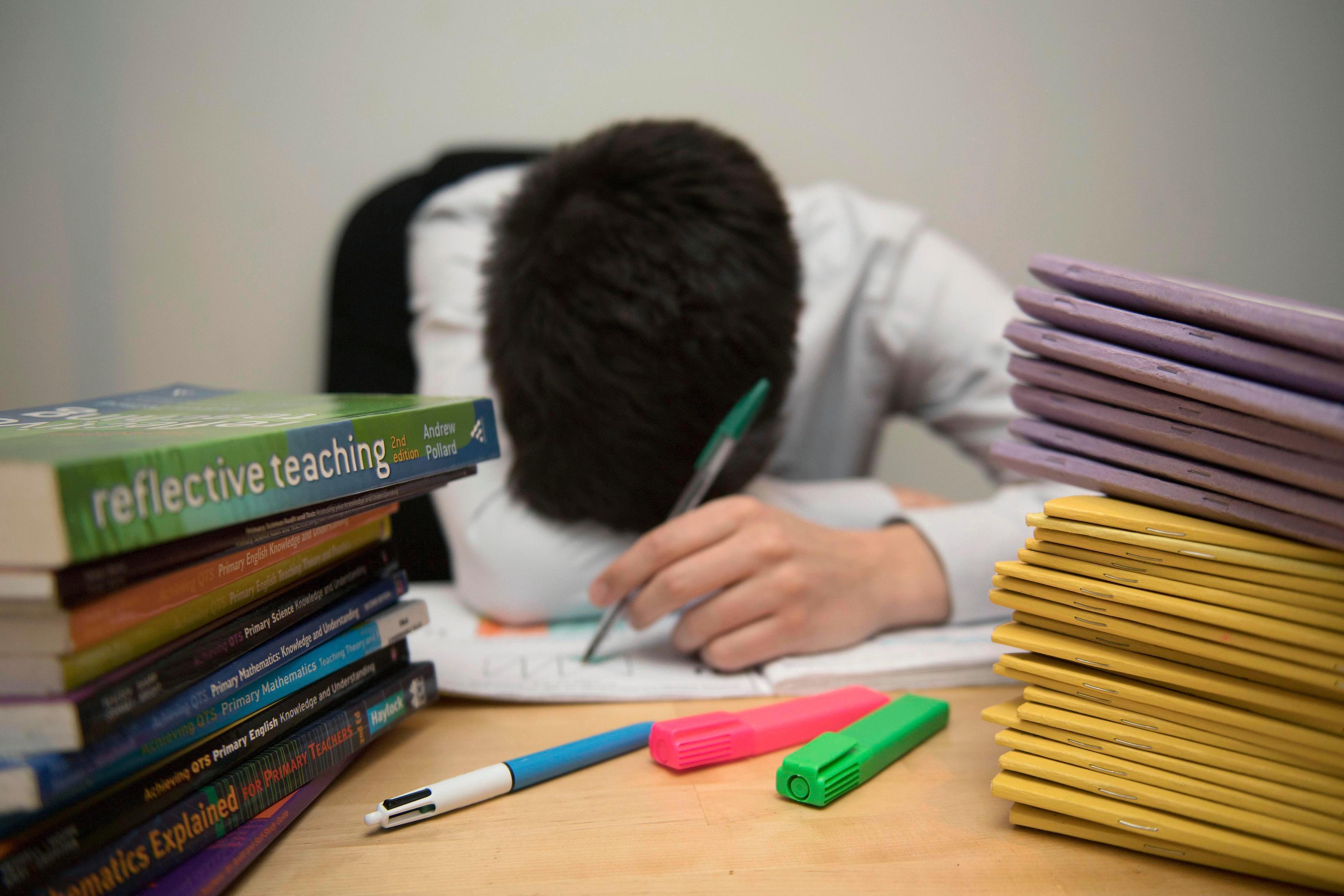
Education Shortfalls – for better or poorer

20/04/2017 By ACOMSDave Leave a Comment

Britain refers to just two parts of the United Kingdom, and only one of  the two parts quoted in this article.  However that should not detract from the figures and the relevance it has to the future of the United Kingdom.  Brexit is here, the ink of the letter is dry, and now they just have to sort out the nitty gritty and we will know what impact it will have on the country. But again it will take a fair number of years before we manage to rise up from the ashes like a phoenix, and we won’t don it with ‘education shortfalls’!

For my part I am worried about the youth of today, and those following; they have to pick up the pieces and also try to extract the country from what will be in all probability a quagmire of bureaucracy and debt, and to do this they will need education.  By this I do not mean this elitist ‘grammar’ school idea of our current Prime Minister (hopefully not for too much longer), but one that has the resources across the board in terms of financial, teachers, building etc – one that can deliver a revitalised, energised group of people who will know what to do and how they can manage a country that is demoralised and fighting against each other.

This report shows that currently that is not likely to happen.  I was lucky during my life to be able to achieve the educational levels I set out for, not without hard work and money (which I provided), but also with the support of parents and friends, and on occasion even employers.  I can only hope that we have employers left after Brexit!

Education Shortfalls

Education Shortfalls

Can't read, can't add - education shortfallsBRITAIN is facing a chronic skills shortage as the country’s teens languish among the worst in the western World at reading and maths. A devastating new report last night claimed England and Northe…

Source: UK faces skills crisis as teens ranked lowest for literacy and maths skills

Filed Under: Education and Development Tagged With: Brexit, education, government, politics, shortfalls

When is a Conflict of Interest not a Conflict of Interest?

20/03/2017 By ACOMSDave Leave a Comment

Conflict of InterestSo George Osborne is to become the Editor (for two days a month at a unknown salary, which I am sure is not a pittance)which if this was his only role would not raise an eyebrow from anyone; however he is a sitting MP with responsibilities to his constituents (especially in these dire times with Brexit on the horizon – we are just waiting for the ‘HARD’ date), so is there a conflict of interest?

According to Sky News he has currently six (yes 6) jobs running simultaneously:

  • He’s a speaker at the Washington Speaker’s Bureau, where he has a lucrative contract to perform after-dinner speeches around the world
  • He’s a chairman of the Northern Powerhouse Partnership (not an obvious position for the editor of London’s biggest newspaper)
  • He’s an advisor to the American fund management firm Blackrock. He’s thought to be paid £650,000 a year (yes, you read that right) for working one day a week for the company (yes, you read that right as well)
  • He’s a fellow at the McCain Institute, an American think tank
  • He will be (as of mid-May) the editor of London’s Evening Standard newspaper.
  • And oh yes … he’s (still) the MP for Tatton (a salary of £75,000 a year plus expenses).

Now we all think good on him for making a success of his life and looking after his family; but, and it is a big BUT, the Business Dictionary defines a conflict of interest as being:

  1. A situation that has the potential to undermine the impartiality of a person because of the possibility of a clash between the person’s self-interest and professional interest or public interest.
  2. A situation in which a party’s responsibility to a second-party limits its ability to discharge its responsibility to a third-party.

    (Read more: http://www.businessdictionary.com/definition/conflict-of-interest.html)

It would clear to me, and to a good many others from the outcry that has arisen, that being an editor of a ‘Conservative’ ideological paper which clearly shows its stance as being in total support of Conservative doctrine, means that in all honesty he cannot be an editor who can give an unbiased editorial-ship to this paper. Never mind that as someone who has edited a paper and a magazine, I can tell you it is time consuming and tiring. I did it whilst doing my full-time job as an internal auditor and subsequent as a full-time student. I found it difficult doing two roles, and yet he is doing six – he clearly is superman!

It surely must now be up to his constituents to review his seat and decide whether he can and is fulfilling his MP duties fully, and they decide that he is isn’t give him guidance as to their needs, and if necessary request he stand down or give up these other roles which may be causing a distraction.


Further reading:

  • The Guardian – George Osborne facing calls to quit as MP over Evening Standard job
  • The Mirror – Every job millionaire George Osborne will do in between working as a part-time MP

Filed Under: Editor to ACOMSDave Tagged With: conflict, editor, Evening Standard, George Osborne, interest, money, politics

Civil Liberties and the World Wide Web

13/03/2017 By ACOMSDave Leave a Comment

Civil LibertiesIt is interesting to read this article, as it reflects the things that I have been writing and talking about over the last 20 years – of course I have been writing about Big Brother and the loss of civil liberties in part, and this is now encompassed in the world wide web and how government is using it to monitor and control what we do, see and hear.  I make no bones about the fact that I distrust government in its attitude and continued use of phrases  about we need CCTV to control terrorism, for your protection etc.  That we don’t need personal encryption, as if you are doing nothing wrong you have nothing to hide, and we won’t maintain personal data longer ‘that is necessary’.  There ares lots of more glib phrases, but they all come down to government control, and you losing your civil liberties  Civil Liberties - CCTV

It has taken all of us to build the web we have, and now it is up to all of us to build the web we want – for everyone

Source: I invented the web. Here are three things we need to change to save it | Tim Berners-Lee

Filed Under: Community Journalist Tagged With: big brother, encryption, government, police, politics

Libraries need saving – NOW!!!

13/02/2017 By ACOMSDave Leave a Comment

libraries
libraries

I am posting this article because I think there is a need for us to step back from the abyss in the United Kingdom and realise that the closure of libraries and associated resources (including school libraries) is detrimental to our future as a country and also for us as individuals.  The first public library came into being with The Public Libraries Act 1850, and this gave local boroughs the power to establish ‘free’ public libraries.  The Act was the first legislative step in the creation of an enduring national institution that provides universal free access to information and literature, and was indicative of the moral, social and educative concerns of the time.

Our libraries need saving now!

librariesAfter nearly 170 years we are close to loosing that infrastructure for self education.  The article below from Emily Prado, and in particular here paragraph just prior to the quote, ..Yet the recent election cycle and studies revealing Americans’ inability to sort clickbait from facts demonstrate how far from the truth this sentiment really is – ‘that libraries are not necessary’.

I am a long term self educationalist, with a passion for books and libraries.  I access them through libraries, book shops, charity shops and also the internet.  However without the library services of the past I would not be in that position today.  Boys and girls require different stimuli and the libraries of the past allowed for this to happen, whether it was at school or in public libraries; now our future is looking bleak!

Further reading:

  • History of libraries
  • Public Libraries Act 1850

Libraries are radical, evolving resources that function with the sole purpose of providing free access to information for the masses and creating intellectual equality.

Source: Freedom of Information: Libraries in the Age of Trump

Filed Under: Community Journalist, Government & Politics Tagged With: books, government, library closures, politics, United Kingdom

Are you ready for the New Year – 2017?

29/12/2016 By ACOMSDave Leave a Comment

How we should get ready for 2017!

Happy New Year - 2017In America we have seen Donald Trump’s election win, and in the UK we have seen Brexit win out. Whilst we don’t know what the courts will say in terms of the Prime Minister’s rights, it is clear that the referendum has been taken and won and that the New Year will bring many changes, and that the far right seems to have gained ascendancy in terms of leaving Europe and also in terms of how we are supposed to ‘handle’ immigrants and other minorities.
President Elect ‘Trump’ has through his cabinet choices shown that he and his cronies are completely anti-LGBTQ, as all of them have either voted for some bill that denied the LGBTQ community one or all of the following:

  • job protections
  • right to marry
  • health services

In the UK we have seen the backlashes and phobias starting with people being beaten up because ‘they are not British’. Taunts like ‘ go back from where you came from’, ‘go back into the closet’, ‘your are not normal’.
It is obvious that things will get worse, especially if the Prime Minister, Theresa May, decides to push the removal of the Human Rights Act and replace with a Britsh Bill of Rights, which in all probability will be of no use at all, and probably only protect the rich and business.

LGBTQ Community

So what can we do about it?

Firstly, we need to make certain that our LGBTQ organisations are actually working for our community, and not just fund raising to ensure there existence. But also, we as a community need to be involved with these organisations – they cannot exist in a vacuum. And it is pretty obvious that funding is drying up from government and other sources.

Secondly, we need to remember that back in the 60s and 70s, whilst we did have some problems regarding personalities, we all realised that we needed to work together to achieve the common goal. This is even more relevant in the light of the attacks that are being made on our community from so many directions. We need to work together in the New Year to achieve our common goals.
LGBTQ Voting Power
Thirdly, we need to channel our voting power in the New Year. No longer should politicians of any ilk or cloth assume because they say they support they support the LGBTQ that they will automatically get our vote – they must prove they are more than fair-weather friends.
PA at Belfast Pride Snow Ball ‏ 2011
Lastly, we need to work with other groups who have experience and knowledge; they can help us develop our policies and mechanisms, the same as they can learn from us. There is strength in numbers, as well as that feeling of not being alone.
We need only look back in our history to discover how we in the past have come together and fought and won. Don’t stand alone, find friends, gather together in groups and support and learn to fight within the bounds of the law to get our rights and those of the future community
 
Further reading:

  • 5 ways LGBTQ people should get ready for 2017 – USA orientated

Filed Under: Anti-Bullying & Homophobia, Campaigns Tagged With: Brexit, british government, government, LGBTQ, New Year, politics

Struggling white working-class pupils

10/11/2016 By ACOMSDave Leave a Comment


Working class boys needs room and suppot


Education seems to have forgotten a proportion of its population – namely working class boys and girls! Whether we like to admit it or not, one size does not fit all when it comes to education, and boys are a completely different fit to girls, they need different stimuli and different provisions. This does not mean that we need segregated schools before certain elements of the population starts, but it does mean that we need to be inclusive of boys needs which we are not currently in the educational strata. Books need to cater for boys, not just girls. Boys also need more room to run about and get rid of energy, and also classes need to reflect this. It will be interesting to see if government, the educational establishment, and to a large degree teachers can make the changes needed.  We continue to talk about league tables, revamping education etc, but we seem to have difficulty in having a long term strategy, to allow it to develop with tinkering (government and inspectors) and to also allow teachers room and time to implement strategy without complaining even before it has had time for the ink to dry! Dave McFarlane, Community Journalist

Study finds poorer white children’s attainment has stayed stubbornly low despite improvements among other groups

Source: Schools must focus on struggling white working-class pupils, says UK charity

Filed Under: Community Journalist Tagged With: boys, developments, education, history, politics

Consign homophobia to history, urges ex-Irish president Mary McAleese

26/10/2016 By ACOMSDave Leave a Comment

Homophobia Not AllowedJeff Dudgeon MBE, is part of the history of Northern Ireland, and with his court case made the case for homophobia to be abolished in N Ireland.  Unfortunately until 1982 it was still a crime to be a homosexual in Ulster, indeed people were still persecuted under other laws for being gay, and their lives destroyed by what can only be called vindictive police cases which should never have ended up in court subsequent to this repeal.
Today, liFe has improved, but there are still problems; only within the last two weeks was a gay man attacked for challenging two men passing by who called him’queer’ and other words.
People are regularly still harassed in their homes. and probably more worrying is that fact that being young and gay is still open to abuse in schools, colleges and universities.
This is not acceptable in today’s world, and the more that we stand up against any form of persecution the more we as human beings earn the right to be called ‘human’.

Homophobia Not Allowed

President Barack Obama talks with Irish President Mary McAleese during a courtesy call in the Drawing Room of the President’s residence in Dublin, Ireland, May 23, 2011. (Official White House Photo by Pete Souza)

Mary McAleese has said homophobia should be consigned to history in Northern Ireland.

Source: Consign homophobia to history, urges ex-Irish president Mary McAleese – BelfastTelegraph.co.uk

Filed Under: Anti-Bullying & Homophobia, History Tagged With: homophobia, Ireland, LGBT, politics

Russian Embassy mocks Europeans as ‘gay pigs’ as warships taunts Bris | Daily Star

25/10/2016 By ACOMSDave Leave a Comment

RussiaRussian Humour.

As with all reporting, you need to take a step back and try to see if it is balanced.  Lovely headlines do not make for in depth reporting.  Yes, the Russian fleet (or part of it) did sale up the North Sea; however we did know about it, it was a planned sailing, so why the big headlines from the papers.  Secondly, Russia is doing no more today than it has been doing for the last 10 plus years, and whilst the West is in disarray it will continue to do so!
If the UK, which is now going to disconnect from Europe, is worried then it needs a cohesive defence plan, not the piece meal one which it now seems to offer to its voting population.  If we have restrictions due to our balance sheet, then we must be realistic about what we can and can’t do.
For me the worrying thing in Russia, is its backward stepping in terms of LGBT rights, the rights of woman and in particular their right to a free, safe abortion when necessary.  For a country which has as its political background and current leanings Communism, it is very funny (and not funny amusing) on how much the church and indeed now outside American groups seem to be influencing Russian policy!
 
Russian humourSource: Russian Embassy mocks Europeans as ‘gay pigs’ as warships taunts Bris | Daily Star

Filed Under: Anti-Bullying & Homophobia Tagged With: navy, politics, posturing, Russia

Change.org Petition Launched to Stop the DUP using Petition of Concern to derail Equality in NI

14/02/2016 By ACOMSDave Leave a Comment


thegaysay1

People in Northern Ireland are sick of living in a discriminatory backwater for gay people’ – Patrick Corrigan (Amnesty International’s Northern Ireland Programme Director)


The Northern Ireland Assembly in Stormont have now voted on the issue of marriage equality 5 times. All 5 of those motions were blocked by the Democratic Unionist Party through their use of a parliamentary veto called the “petition of concern.” 
Under the complex rules of power sharing in Northern Ireland, parties from either the unionist or nationalist community can use this veto if they feel there is not enough backing from Protestants or Catholics for particular legislation. It was designed to ensure no one community dominated the other following the 1998 Belfast agreement.
This mechanism established to ensure the rights of minorities in Northern Ireland is being continually abused to deny a fundamental right to the LGBT community and, because of this, Northern Ireland is lagging behind the rest of Western Europe in adopting a fairer, more equal and more forward thinking approach to human rights. 
Four previous motions failed to reach a majority in favour of Marriage Equality. However, even if any of these motions did achieve a majority in favour , the DUP had already implemented the petition of concern prior to each vote to ensure the result was a foregone conclusion.
This was also the case with vote 5 in November 2015, but on this occasion the mechanism was officially enacted to veto a majority of politicians who voted ‘AYE’ in favour of the legislation.
Four independent unionist assembly members joined nationalists and others with 53 votes in favour of marriage equality – one vote ahead of the remaining unionists and independents opposed to any reform. A narrow majority but a majority all the same.
The party known as the “Democratic” Unionist Party (DUP) thwarted a democratic vote and derailed equality by using the mechanism unfairly on this issue and it seems most people are not happy about this. 
Numerous surveys have shown that a majority of people in NI are now in favour of marriage equality.

  • In November 2015 a poll jointly commissioned by BBC Northern Ireland and Irish broadcaster RTÉ, revealed that 64 percent of people support equal marriage in Northern Ireland while just 23 percent oppose it. Over 2000 people were surveyed for the cross-borders research, carried out by the polling company B&A. Not far off the landslide 62% YES vote in Ireland’s marriage equality referendum last year.
  • In June 2015 an Ipsos MORI survey interviewed a representative sample of 1,000 adults aged 16+ from across Northern Ireland. The interviews were conducted face-to-face between 20th May and 8th June 2015 with data weighted to match the profile of the population. The results showed that 68% of those surveyed supported marriage equality. The figure rises to 82% among 16 to 34-year-olds and 75% support among 35 to 54-year-olds, but falls to 47% among those aged 55 and over. 

In 2005 UK government actuaries suggested 6% (1 in 16.66) of the population, or about 3.6 million citizens, are either gay or lesbian. The Treasury calculated this estimate when analysing the financial implications of the Civil Partnerships Act. The figures were based on the 2000 National Survey of Sexual Attitudes and Lifestyles (NATSAL), which asked respondents about sexual attitudes and behaviours, but not orientation, and on comparable research from Europe and America.
In a study examining the responses of 7,441 individuals, conducted by the Economic and Social Research Institute in Ireland, found that 2.7% of men and 1.2% of women self-identified as homosexual or bisexual. A question based on a variant of the Kinsey scale found that 5.3% of men and 5.8% of women reported some same-sex attraction. Of those surveyed, 7.1% of men and 4.7% of women reported a homosexual experience some time in their life so far.
In reality however this has less to do with numbers and more to do with human beings with feelings and without access to an equal definition and commitment to love. Most of us will know someone who is gay. This issue is not just about our friends, family, acquaintances, colleagues and neighbours. It is about standing up for basic human rights. 
The DUP have to stop differentiating peoples’ rights under the law according to their sexuality. It’s simple genetics. It would be absurd to say blonde people couldn’t marry. We’ll give them blond partnerships. Blond people could ruin the sanctity of marriage.
The DUP should step up on this issue and show NI is about equality and unity. The negative narrative has clearly has now so evidently isolated us in Western Europe.
The love between same sex and opposite sex couples is the same. Why can’t their love be recognised in the same way?
Love is love regardless of gender and hair colour.
This shouldn’t be an issue of gay rights, blond rights, transgender rights or Christian rights. This is about human rights and the equal recognition of love under the law.
It has already been established that any marriage equality legislation will grant religious organisations protections so that they will not have to officiate same sex ceremonies. This means there is no threat to the religious interpretation and view that marriage should remain as between a man and a woman. It’s just not right that in a democratic society everyone should be forced to think that way. The only people truly affected by this legislation would be those who wish to marry someone of the same sex.
Sign this petition to voice your opposition to the DUP’s abuse of the petition of concern and to petition OFMDFM to agree not to use such a veto on what is evidently a human rights and equality issue.  
As first minister and leader of the DUP, Arlene Foster has the power to bring Northern Ireland into the 21st century and alter the perception that her party is trapped in the past. The last thing Northern Ireland needs for its image right now is the perception that it is “on the wrong side of history.” Sign your name on the petition HERE and stand up for human rights.

Letter to
Office of the First and Deputy First Minister in Northern Ireland (OFMDFMNI)
Stop the DUP using the ‘petition of concern’ to veto Marriage Equality in Northern Ireland

Filed Under: Campaigns Tagged With: “petition of concern”, DUP, NI politics, Petition, politics

Britain’s concentration camps for gay men

22/01/2016 By ACOMSDave Leave a Comment

 Yes, you have read correctly,  Britain’s concentration camps for gay men did exist.

Britain’s concentration camps for gay men

Auschwitz Concentration Camp

Historian and author Simon Webb writes about the gay men who were kept in concentration camps in the UK.

We are most of us aware that gay men were routinely sent to the concentration camps of the Third Reich for no other reason than that their sexuality was unacceptable to the Nazis.  A special section of the Gestapo, the Reich Central Office for the Combating of Homosexuality and Abortion was set up by Heinrich Himmler in 1936, with the avowed intention of rooting out homosexuality wherever it was to be found in Germany.
In Britain during the 1930s and 1940s, gay men were certainly imprisoned for what was then classified as criminal behaviour, but few people know that there were also concentration camps operating in this country between 1940 and 1946, to which one special category of gay men was sent.
In 1940, following the fall of France, an estimated 30,000 Polish soldiers arrived in Britain; men who had fought alongside the French army to stave off the invading Germans.

They were led by a former Prime Minister of Poland, General Wladyslaw Sikorski. Fearing that this country was itself about to be invaded, these troops were rushed to Scotland to defend the east coast against possible landings of German troops launched from Norway.  Britain was thus indebted to the new Polish government-in-exile, which was led by Sikorski. Without the Polish troops, Scotland would have been all but undefended against the German attack.

General Sikorski was not universally popular with his fellow countrymen and opposition groups emerged which threatened his position as leader of the Polish government and commanding officer of the tens of thousands of Polish soldiers.  The solution, at least as far as Sikorski was concerned, was simple. These enemies would have to be neutralised.

Britain’s concentration camps for gay men

General Sikorski – the man responsible for the concentration camps in Scotland

On 18 July 1940, General Sikorski told the Polish National Council in London: “There is no Polish judiciary. Those who conspire will be sent to a concentration camp.”
Since he and the others were likely to be in Britain for the foreseeable future, it was plain that the concentration camp of which he talked, would be set up in this country.
General Marian Kukiel, appointed Commander of Camps and Army Units in Scotland by Sikorski, received a secret order relating to what was described as, ‘an unallocated grouping of officers’, who were to be held in a special camp.

Rothesay on the Isle of Bute, before the Second World War. The first Polish concentration camp was established here in 1940

Life inside the concentration camps of Scotland – The Jewish Post

Not only did Sikorski wish to see senior officers and political rivals who might challenge his authority tucked out of the way, but he also wished to purge the Polish army of what he termed, ‘Person of improper moral level’ (homosexuals, Jews etc).

General Sikorski was an austere and autocratic leader and had very strong ideas on what constituted acceptable behaviour.
He loathed drunks, gamblers, the sexually promiscuous and especially homosexuals.
So it was that along with all the men he feared might interfere with his leadership of the Polish government-in-exile, generals and senior politicians from pre-war Poland, Sikorski decided to lock up many other men of whose conduct he happened to disapprove.  The site chosen for this, the first concentration camp to be established in Britain, was the Isle of Bute.

The inmates of the new camp were at first housed in tents. Not all were military men.  Among the first to be imprisoned, there were men such as Michael GrazynskI, President of the Polish Scouting Association. Another important prisoner was Marian Zyndram-Kosciakowlski; who was Prime Minister of Poland from 1935-1939.  The atmosphere in the camp on the Isle of Bute was toxic.
The senior officers, no fewer than twenty generals were held captive there at various times, refused to have anything to do with what was known as the ‘pathological cases’; I.e. the drunks and homosexuals.

This led to the development of a sub-culture of gay prisoners, who tended to stick together; a situation which represented something of a scandal to those running the camp and it was decided that the ‘pathological’ types should be separated from the political prisoners.

A new and harsher camp was set up on the Scottish mainland at Tighnabruich and the gay prisoners transferred there.  This village voted in 2002 ‘the prettiest village in Argyll, Lomand and Stirlingshire’, is on the coast, facing the Isle of Bute. The commandant of the new camp was Colonel Wladyslaw Spalek.  How was it possible that the Polish government-in-exile was allowed to operate concentration camps in this way, without any objections from the British government?  After the evacuation of Dunkirk in 1940, the British needed all the help they could get to defend their country against a German invasion.  The Allied Forces Act was accordingly passed that same year.  This gave the governments-in-exile of Poland, Norway, The Netherlands, Belgium and Czechoslovakia the legal right to raise their own independent forces from among citizens of their countries resident in Britain.  Their army camps and military bases were to be regarded as the sovereign territory of the various countries concerned and, as such, immune from interference by the British police or any other authorities.

How this worked in practice was that if General Sikorski took a dislike to any Polish person living in this country, he was able to draft that person into his army and then have him arrested by the military police and taken off into captivity as either a deserter or mutineer.  This neat little trick meant that any Polish man whose behaviour, sexual or otherwise, did not meet with Sikorski’s approval was apt to find himself being shipped off to Scotland and held behind barbed wire.  In another grim echo of the situation in Nazi Germany, not only were gay men marked down for imprisonment in the camps; communists and Jews were also likely to fall foul of the Polish government in London.

One of the most famous prisoners on the Isle of Bute was the writer, journalist and biographer of Stalin; Isaac Deutscher.  Although born in Poland, Deutscher, a Jew, had emigrated to Britain where he made a life for himself before the outbreak of war in 1939.  In 1940, following Dunkirk and the Fall of France, he travelled to Scotland to volunteer for the Polish army which was now based there.  No sooner had he joined up, than Deutscher found himself arrested and sent to the camp at Rothesay.  Being both a Jew and also a communist, he was regarded as a dangerous subversive by senior figures in General Sikorski’s administration.  Rumours began to circulate among MPs in London that something unsavoury was going on in Scotland.
Names began to emerge of Polish citizens being held for no apparent reason in secret installations.  In all cases, the men being detained seemed to be Jews.
On February 19 1941, for example, Samuel Silverman, MP for Nelson and Colne, raised the question in the House of Commons of two Jewish brothers called Benjamin and Jack Ajzenberg. These men had been picked up by Polish soldiers in London and taken to a camp in Scotland.  The following year, Adam McKinley, MP for Dumbartonshire in Scotland, asked in the House what was happening on the Isle of Bute.  The government, which had no wish to upset a valuable ally, refused to provide any information.
Under the terms of the Allied Forces Act, the British had, in any case, no legal right to interfere in what was happening at camps and army bases being operated by the Polish Government in Exile.
Having found that they were apparently able to operate concentration camps on British soil with complete impunity, the Polish leadership opened new facilities for holding political prisoners and others at Kingledoors, Auchetarder and Inverkeithing.  The last-named of these was located just eight miles from Edinburgh.

These were dreadful places that looked like the traditional idea of a concentration camp; barbed wire fences, primitive accommodation and watchtowers containing armed guards.  Those living nearby heard rumours of maltreatment, starvation, beatings and even the death of inmates.  In several cases, the reports of deaths by shooting turned out to be quite true. On 29 October 1940, for instance, a Jewish prisoner called Edward Jakubowsky was shot dead in the camp in Kingledoors, for allegedly insulting a guard.

The Polish camps were to operate for another six years.  Increasing unease on the part of British MPs and others led to questions being asked in the House about what precisely was going on in Scotland.  Matters came to a head, on the 14th June 1945. Robert McIntyre, the Member for the Scottish constituency of Motherwell, stood up in the House and asked the following question:

“Will the government make provision for the inspection, at any time, by representatives of the various districts of Scotland of any penal settlements, concentration camps, detention barracks, prisons, etc. within their area, whether these institutions are under the control of the British, American, French or Polish governments or any other authority; and for the issuing of a public report by those representatives?”

This caused something of a sensation; the suggestion that there were concentration camps in Scotland.

That same day, Moscow Radion made the same accusation, citing the detention of a Jewish academic called Dr Jan Jagodzinski in a camp at Inverkeithing.
This provoked widespread interest and the world’s press began to ask what was happening in these Polish camps.

Britain’s concentration camps for gay menIn an attempt to defuse the anger being felt, the Polish government-in-exile agreed to allow journalists to visit the camp at Inverkeithing.  This action did little to reassure anybody. The first prisoner to whom reporters spoke turned out to be yet another Jew, by the name of Josef Dobosiewicz.  He alleged that a prisoner had recently been shot dead in the camp. The commandant conceded that this was true, but claimed that the dead man had been trying to escape.

Once again, the local police had been powerless to act, under the terms of the Allied Forces Act.

A year after the Second World war had come to an end, the camps were still in existence and still seemingly holding Jews.
On 16 April 1946, the MP for Fife West, William Gallacher, asked the Secretary of State for War to look into the case of two more Jews being held in a camp in Scotland; David Glicenstein and Shimon Getreudhendler.

It is impossible at this late stage to know precisely what was happening in these camps.  That they were in fact concentration camps is undeniable; that after all is what general Sikorski had announced that he would be setting up.  We have no idea at all how many gay men were sent to the camps, nor how long they were held there.  The same is true for the statistics relating to communists and Jews.
What is beyond dispute is that from 1940 onwards, men in this country were being arrested and taken to concentration camps for no other reason than that they were gay.

Simon Webb is the author of ‘British Concentration Camps: A Brief History from 1900 – 1975′.


Links:

  • Crackdown on Camps

Filed Under: Anti-Bullying & Homophobia, Community Journalist, History Tagged With: barbed wire, Britain's concentration camps, concentration, concentration camps, gay, history, Isle of But, LGBT, men, persecution, politics, Tents

  • « Previous Page
  • 1
  • 2
  • 3
  • 4
  • …
  • 8
  • Next Page »

Categories

Copyright ACOMSDave.com © 2026