
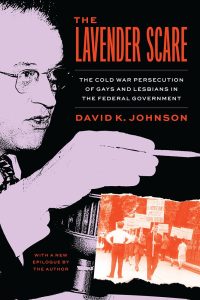
The Lavender Scare serves as a powerful reminder of the dangers of state-sanctioned discrimination against LGBTQI+ individuals and the profound impact it can have on lives and civil rights. While the UK has made notable progress since the deeply ingrained stigma of the mid-20th century, ongoing advocacy and awareness remain vital to achieving true equality and acceptance. Understanding this historical context is essential for recognising how far we’ve come and the work still ahead to fully support LGBTQI+ rights and inclusion.
The “Lavender Scare” describes a dark chapter in mid-20th-century history, mainly from the late 1940s through the 1960s, when gay men and lesbians working in the US federal government faced widespread dismissal and forced resignation because of their sexuality. This period of repression was closely linked to anti-communist fears and congressional investigations, which falsely painted LGBTQ+ individuals as security threats and potential communist sympathisers.
Key lessons from the Lavender Scare include:
- Perception of vulnerability: Homosexuality was heavily stigmatised, with the false belief that LGBTQ+ individuals were susceptible to blackmail, risking national security.
- Anti-communist parallels: This era coincided with the Red Scare and McCarthyism, where suspicion of communist ties led to widespread suspicion and persecution.
- Dismissals and forced resignations: Many federal employees were fired or compelled to leave their jobs solely based on their sexual orientation.
- Absence of legal protections: There were no laws safeguarding against discrimination based on sexual orientation during this time.
- Social isolation and stigma: Many affected individuals faced profound social rejection and lived in fear and silence.
- Impact on civil rights: The Lavender Scare fueled the broader fight for LGBTQ+ civil rights, highlighting the need for equality.
- Legal progress: Over time, legal battles and court rulings began to challenge and curb federal discrimination, laying the groundwork for future protections.
Reflecting on this history underscores both the resilience of the LGBTQI+ community and the ongoing necessity of activism and awareness to protect and advance their rights today.
Links:
- Purging the Government: How the Lavender Scare Targeted LGBTQ+ Federal Employees
- You’ve Probably Heard of the Red Scare, but the Lesser-Known, Anti-Gay ‘Lavender Scare’ Is Rarely Taught in Schools
- The Lavender Scare from an Islamic Perspective: Is Islam to Blame?
- The Seventies – A Breakthrough Decade for LGBT Rights
- Cold War Timeline
- YouTube – Time Magazine – The Lavender Scare – History You Didn’t Learn
- LGBTQ+ Library Survey
- Lavender 2.0
- Violet delights: A queer history of purple
- Queer Codes: Gay Men in the Civil Service
 This week, I picked up a copy of “The Saint Plays with Fire“, published originally in 1958.
 I must respond to a series of newspaper articles reproduced in TRP based on the reissued Chris Moore book about the Kincora boys’ home, which are stated to be ‘deeply damaging’ to unionism.



 I discussed how we might reform the House of Lords, even the House of Commons with Sean McGouran last weekend. The surprising thing was that I was the one coming up with radical ideas!
 A week into the new year, British politics has been dominated by Elon Musk, and outside ‘Rogue Element’. The focus has shifted to the grooming gangs scandal, which continues to make headlines, with victims failed by police, social services, and politicians for decades. Musk’s intervention in this long-standing issue has finally prompted action. The government is now considering the key recommendations from Professor Alexis Jay’s 2022 report on child sexual abuse, with Home Secretary Yvette Cooper announcing plans for implementation.
 “The Woodfolk,” directed by the talented duo Joey and Luke Culver, is an enchanting exploration of self-discovery wrapped in the charm of rural life. This romantic drama, produced by Benjy Alfreds, offers an engaging narrative that intertwines the whimsical with the profound, as it follows the journey of a young field worker, portrayed captivatingly by Bruno Kalo, in search of deeper meaning amidst the simplicity of his daily routine.
 1983 – Gay Conference Comes To Belfast, what a headline. When you consider that the Good Friday Agreement was 5 years away. The ‘troubles’ were still happening all around us, and we were also 8 years away from our first Pride March in Belfast, the fact that a gay conference was held is nothing short of remarkable. This is the small article that was published in Northern Ireland’s only gay publication, which can be found in the Linen Hall Libary Political Collection on the fourth floor.
 The LGBTQ+ community has a historical reason for being cautious of data collection. Here are some key factors: