ACOMSDave

Community Journalist

  • Home
  • Community Journalist
  • Events
  • Media Page and Press Kit
    • Projects and Work
  • Resources & Documents
    • LGBTQ+ Support Groups and Documents
  • NIGRA
  • Archives
  • Contact

A visit to Cullera, Valencia

17/09/2016 By ACOMSDave Leave a Comment

The drive from Real Monasterio DeSanta Maria de la Valldigna to Cullera is a relatively unexciting drive, it takes you along the CV 600 then the CV605 and takes about 28 minutes.


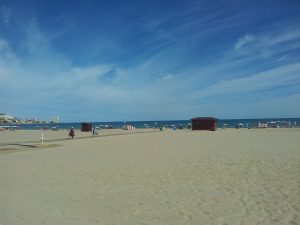
Part of the way is well signed, but when you get close to the town then things got slightly more difficult, but with luck and guesswork we found our way to the metal bridge at the Oliva/Gandia end of town and then down to the beach area.  Parking was relatively easy, as at this time of the year there was free parking up to 8.30 pm – please note that during the various holiday seasons parking charges are in force, don’t get caught out, it does get costly.

Cullera Beach - 1

Cullera Beach – 1

Cullera Beach - 2

Cullera Beach – 2


Having successfully parked and made our way to the beach we walked up to the restaurants strip, and Eli my guide took me to her normal eatery – the service was attentive, and the food was lovely.  It was added to by being able to sit outside and look out over the sea and beach area and to see families and individuals enjoying themselves. There was a fair cross-section of ages, and a lot of those on the beach appeared to be Spanish.

Having finished and paid for our lunch, we then decided to go for a stroll looking at the few shops with things to sell – a lot of it was you would guess for the tourist market, but there were still some items of interest.  There was no point of us walking into the main part of the town, as it was Saturday and after 1.30pm which meant that the local shops had closed for the weekend.

At the end of the strip but the blue fountain, we were able to get a glimpse of the castle on the hill – or more rightly I should say  it is a fortress built in the 13th century over the old Moorish fortress.

Cullera - Fortress -2

Cullera – Fortress -2

Cullera - Fortress -1

Cullera – Fortress -1

It was then back to the car, calling into the Ale-Hop – a shop which seems to have a wild mix of items, but for myself I loved the books which they had for drawing and writing – wonderful exotic backs and covers, and not expensive for what you where getting.

 

ale-hop-cullera

ale-hop-cullera

The drive back to Oliva was uneventful, and everyone went home having had a wonderful day, both in terms of place and weather.


Links:

  • Wikipedia – Cullera
  • Tourism Spain – Cullera

Filed Under: Editor to ACOMSDave Tagged With: Cullera, food, Spain, tourism, Valencia

Real Monasterio De Santa Maria de la Valldigna

17/09/2016 By ACOMSDave Leave a Comment

Today I had the lovely task of chauffeuring two friends to see the Real Monasterio DeSanta Maria de la Valldigna, followed by travelling to Cullera for lunch.  Both of these locations are located in Valencia, and both for completely different reasons are worth seeing.

Valldigna - Two Friends

Valldigna – Two Friends


The monastery is set in superb grounds, in a lovely valley, with a lovely backdrop of mountain ranges.

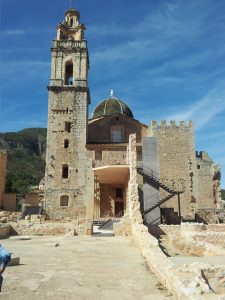
…The monastery was founded in 1297 by James II of Aragon. Since the beginning, it was one of the most important monasteries of the Cistercian order. It was founded by the monks of Santes Creus in the Tarragona province. The whole Valldigna valley belonged to the monks, according to a royal order.

The monastery was inhabited by monks until 1835, when a revolt in the Valldigna valley took place after the Ecclesiastical Confiscations of Mendizábal. After that, the monks were forced to abandon the monastery. Most of its goods and works of art were sold, plundered or destroyed….(Wikipedia)

I was immediately taken by the tranquility of the location, of the range of buildings and outhouses, and with the internal art work shown in the main building in the grounds.  The interior of the main building shows only a flavour of what it must of looked like at the high of its occupation by the monks.

20160917_113312

Valldigna – Interior

Valldigna - roof atrium

roof atrium


I fell in love with quietness of the location, and with the beauty of the craftsmanship and thought which had gone into the plans for the monastery.  It obviously was a place of work, but also of contemplation and spiritual retreat.

Valldigna -Tritons Fountain
Valldigna - the structured garden
Valldigna – the structured garden
Valldigna - The tower
Valldigna – The tower

Valldigna - Taken from the rear
Valldigna – Taken from the rear
Valldigna - The stones of time
Valldigna – The stones of time
Valldigna - Work in Progress
Valldigna – Work in Progress

Valldigna - Roses
Valldigna – Roses from the back garden
Valldigna - roof atrium
roof atrium


I have been smitten by this monastery and will be returning at least once a  month so that I can sketch and paint some part of it, and also to take time out to recharge my batteries.


Links:
  • Monastery of Santa María de la Valldigna

  • Monastery of Santa María de la Valldigna – Youtube site

Filed Under: Editor to ACOMSDave Tagged With: history, monastery, Spain, Valencia, Valldigna

Course 2 – Day Six: Landscape — Crop Your Image

04/09/2016 By ACOMSDave Leave a Comment

In today’s challenge, which I am a little behind in doing (ugh!) I was to walk in the footsteps of masters like Ansel Adams and focus on landscape photography.

Landscapes generally focus on wide, vast depictions of nature and all of its elements, from formations to weather. In this genre of photography, you won’t find much of a human presence: nature itself is the subject. A focus on nature isn’t mandatory, however — you can also capture a sweeping panorama of a city.

Landscape

Today, I was to take a picture of a landscape. Focus on the gestalt — the entire setting as a whole, like the shot above of the English countryside in Kent — rather than a specific subject or focal point within the scene. The setting itself is the star.

Oliva, is a small Spanish town with beaches and a seaport close by, but it does not have what you might call spectacular scenery on the doorstep; so when I was looking at this challenge I tried a number of different shots and subjects to try and match the challenge, and this is my selection:

Landscape of fountains
Oasis in the desert
Landscape - cafe culture
Cafe Culture
Landscape at night of old quarter
The Old quarter

The Old Quarter
Landscape of shot marked wall
Shot to nothing
Landscape of orange grove and trees
All in rows

Landscape of industrial desert
Industrial desert
Landscape of road bisecting orange grove trees
Road in the distance

My final selection came up with the diversity that the town has to offer if you go hunting for it, but, it takes time and patience – it is not always obvious where your journey is going to take you, but it is worthwhile and usually productive.

However for the challenge I had to choose one, and this is my choice,

Landscape of road bisecting orange grove trees

Road in the distance

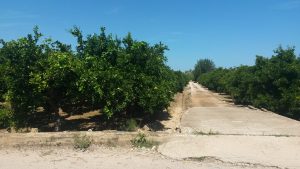
I would have loved to choose the either of my two photographs for the Old Quarter, but they are not landscape – but this I believe has merit.  It reflects the farming background of Oliva, its rich history in producing oranges and all the off-shoots from oranges; but what it doesn’t reflect is the fact that prices for oranges have been driven down through the ground, and that the younger people do not want to work on the land for peanuts.

#developingyoureye #Oliva #Orangegrove #Oldtown


Filed Under: Editor to ACOMSDave Tagged With: landscape, old quarter, Oliva, oranges, roads

Course 2 Day – Day Four: Natural World

17/08/2016 By ACOMSDave Leave a Comment

Day Four: “Natural World” — Leading Lines

Today I was tasked with capturing the natural world: snap a moment outside, big or small. From a close-up of a leaf in your backyard to a panorama from your morning hike, we invite you to document this wondrous world around us.

Now at first glance (thought) this seems a very easy project to go out and do, especially when you are living in Spain with its generally rolling sunshine, and people with a sunny disposition.

The problem is the heat – a lot of what you might target for photographs, when considered closely do not give you that oomph that would be expected.

However I persevered and came up with these  shots:
Natural World
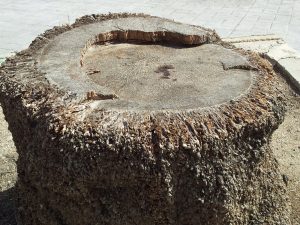
Singular Perfection
Natural World - 2
Starburst
Natural World - 3
A Dying Art

Attacked by Pests
Natural World - 5
Gnarled with Age
Natural World - 6
Subtelty of Colour

Natural World - 6
Friends hanging out
Natural World - 7
History cut short
Natural World - 8
In Full Bloom -1

Natural World - 9
In Full Bloom – 2
Natural World - 10
Dying to show


Natural World

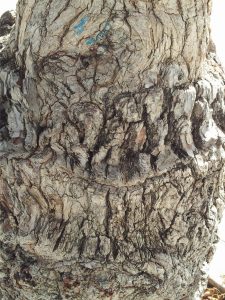
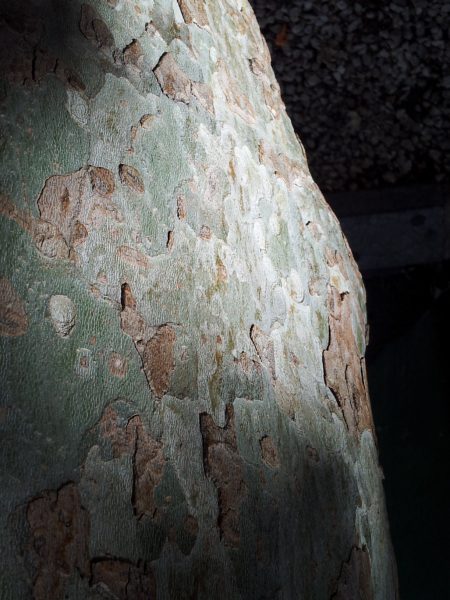
However after consideration when I got back from my safari, I decided that the following photograph reflected the qualities of the assignment – showing natural lines that lead you to different parts of the frame.  The photograph was taken on a Samsung mobile phone with 8 megapixels camera, which rendered a photograph with just over 3Mb, which I have now resized to 2Mb – hopefully without loss of clarity to the brief.  No flash was used, just the shadow and natural sunlight, which I feel makes for a wonderful atmospheric photograph

Natural World - Trunk in Shade

Trunk in Shade

‪#‎developingyoureye‬ ‪#‎trunkinshade‬ ‪#‎naturalworld‬


Filed Under: Editor to ACOMSDave Tagged With: camerphone, colour, dying, gnarled, history, natural, samsung, trunk, world

Charities hounding people on official ‘no-call’ list

07/07/2015 By ACOMSDave

An investigation is launched after it emerges that some of Britain’s biggest charities are exploiting a loophole in the Telephone Preference Service system

Charity collection box

Charities are in the spotlight after the death of poppy seller Olive Cooke, who was swamped by calls Photo: ALAMY
Dan Hyde

By Dan Hyde, Consumer Affairs Editor

8:47AM BST 07 Jul 2015

Charities are under investigation for exploiting a legal loophole to cold call vulnerable people who had registered on the official “no-call” list and hounding them for cash.

The information watchdog is concerned that people registered with the Telephone Preference Service (TPS), which is supposed to stop unsolicited calls, are nevertheless being contacted by some of Britain’s charities.

Staff working for the British Red Cross, NSPCC, Oxfam and MacMillan are said to be using a quirk in the law to circumvent TPS restrictions where someone has failed to tick a box on a privacy policy to prevent marketing calls.

Undercover reporters working for the Daily Mail found that one of the call centre agencies used by these and dozens of other charities was telling staff to be “brutal” and “ferocious” in dealing with potential donors.

GoGen staff were taught to “deflect” any objections raised by those who answered the phone. This applied regardless of whether potential supporters were in their nineties, had dementia or admitted to confusion and memory problems.

The Information Commissioner’s Office believes the company could be breaking the law. All the charities denied acting unlawfully and have begun internal inquiries. Oxfam has suspended telephone fundraising and Save the Children said it had already ended cold-calling.


The death of poppy seller Olive Cooke put fundraising tactics in the spotlight

Stephen Eckersley, head of enforcement at the ICO, said: “On the face of it this could be a breach of both the Data Protection Act and the Privacy and Electronic Communications Regulations.

“We will be launching an investigation into the call centre and charities involved.”

Its inquiry comes with charities already facing scrutiny over the tactics used to solicit donations – particularly after the death of Olive Cooke. The 92-year-old, who was Britain’s longest-serving poppy seller, was battling depression and had expressed her dismay at being unable to answer all 260 charities appeal letters she received each a month.

What the charities say

A spokesman for Macmillan said: “We take the claims made by the Daily Mail seriously and are looking into these as a priority. We do not wish to contact people if we are aware this is unwanted.”

A spokesman for the British Red Cross said the charity was “deeply concerned” by the claims and would seek clarification to ensure it was not in breach of the law.

A spokesman for the NSPCC said it had “contractual arrangements in place with those that fund-raise on our behalf, including strict guidance on vulnerable people, and expect the highest standards of behaviour.”

An Oxfam spokesman said: “Oxfam fights for the rights of poor and vulnerable people across the world and we apply our values to all aspects of our work. We would never exploit an individual’s vulnerability in our marketing.

“Our agencies have clear, regulated policies that help strike the appropriate balance between enabling people with dementia to live as full a life as possible, including supporting their favourite charity, and protecting them from the vulnerability caused by dementia.”

dan.hyde@telegraph.co.uk

Filed Under: Editor to ACOMSDave

Caring for Family – Hospital A&E

18/06/2015 By ACOMSDave

Family CaringOver the last year I have had to take my father into Belfast hospital A&E  for assessment and admission following a pro-longed illness and time at home – this occurred on a number of occasions.  The waiting times at A&E from time registered to time of admission into the ward have been 11-12 hours on each occasion – and according to the hospital staff, these were not busy, busy days!

The staff in the wards were excellent and they managed to get my father stabilised; however in the first instance whilst they resolved his physical symptoms they did not tactical underlying problem, and he was discharged after nearly three weeks to his home and myself.  This discharge was pushed through due the urgent need to release beds for new patients, and when I arrived in the evening to pick my father up I found him sitting in his pyjamas, dressing gown and with a blanket wrapped around him beside the desk in the reception area; totally unsure of where he was and why he was being asked to sit there.  I further had the indignity of having to dress him into his street clothes by using the toilet, as there was nothing else available.  This whole situation further stressed him out, and when I did get him home he slipped into  the illness and went straight back to where it had been before admission, and after another 4 weeks of both stress for my father and myself, he was again admitted to hospital, and this time was taken onto a ‘Ward for the Elderly’ where he was assessed as having dementia.

From this point forward the route was fairly well planned, and he ended up being discharged to a great nursing home ‘Ben Madigan’ in Newtownabbey.  The staff here have proved to be wonderful and very supportive of both my dad and myself, for being in the midst of dementia is stressful for both the parties – the family member diagnosed and the rest of the family supporting.

Illness at any time is stressful, but when the patient is suffering from such a debilitating disease as dementia, then more care must be taken in hospitals and our NHS to ensure a quality of care above that of what we expect.


Filed Under: Editor to ACOMSDave Tagged With: A&E, Belfast A&E, dementia

Physiotherapy can transform the NHS and lives of older adults

19/05/2015 By ACOMSDave

The Guardian – Wednesday 13 May 2015 16.15 BST Last modified on Wednesday 13 May 2015 16.18 BST


There are three million falls annually among older people, and the cost to the health service is estimated to be £2.3bn a year


Dean Metz

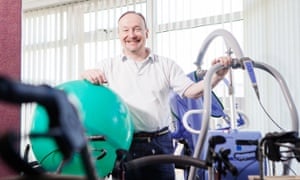
Physiotherapist Dean Metz says that falls in old age are not inevitable. Photograph: Dan Prince Kate Murray

Starting an exercise regime in your 70s or 80s may sound unusual. But for a growing number of older people it could help them hold on to their independence for longer, and reduce the pressure on families, carers and the health and social care system.

“There is a lot of evidence that physical activity and exercise are valuable however old you are, and that frail, older people gain the most benefit,” says Louise McGregor, vice-chair of the Agile professional network for physiotherapists working with older people. “You are really never too old. We now have a lot more people who live into their 100s and they can still benefit from the right type of exercise.”

Prescribing more activity for older people is part of a more proactive approach by physiotherapists to prevent a loss of mobility and independence.
But first, says McGregor, we need to challenge some of the beliefs about ageing among older people, their carers and even some health professionals: “When people start to slow down, it’s not necessarily a part of normal ageing.

“We have to dispel the myth that nothing is reversible, when actually for many people problems of balance and muscle weakness can be addressed even when you’re in your 90s.”

The impact of a carefully tailored physiotherapy regime can be significant, in some cases, according to McGregor, a relatively small input can “transform lives”.

However, with an ageing population putting a strain on the NHS and social care – over-65s now account for 70% of bed days in hospital – there is also a real financial pay-off. There are three million falls annually among older people, and the cost to the NHS is estimated to be £2.3bn a year.

The Chartered Society of Physiotherapy believes that almost 200,000 of those falls could be prevented annually through physiotherapy-led prevention services, which would save £275m.

When people slow down, it’s not necessarily a part of normal ageing
Louise McGregor
One notable success story is in the north-east, where a multi-disciplinary falls prevention service at South Tyneside district hospital offers a “one-stop” clinic with joint assessments by a nurse and a physiotherapist to identify what may be causing patients’ falls and what can be done to help prevent them in future.

Dean Metz, falls specialist physiotherapist at the hospital, explains that the process includes everything from blood pressure and vision tests, to a full balance-and-strength assessment with follow-up programmes devised to help.

“As a child, when we develop, we learn to do things like stand on one leg. Often, as older adults, we need to relearn those skills, so we will do that with them in a safe environment,” he says.

Metz believes it is important to challenge the belief that falls are inevitable in older age. “A lot of older adults feel it’s just a natural part of getting older, they’ll say: ‘Oh, I fell over, I’m getting on,’” he says.

“And there’s a big amount of fear. Older adults don’t necessarily want to tell anyone in case people say maybe they shouldn’t be living on their own or maybe it’s time for them to go into a home.

“We want to encourage them to have that discussion as it’s important when it could be something simple to address.”

The programme has had some impressive results: 81% of patients reported a decrease in falls in the six months after visiting the service, although Metz says the real figure may be lower as patients were self-reporting. However, he says that he can see for himself the difference the service makes: “It’s wonderful to see one of my patients out and about.

“They are so grateful that they have got such an important part of their life back and they no longer feel prisoners in their own home.”

Another area where physiotherapy can have a real benefit is with people with dementia, where physiotherapists can play a key part in assessing a patient’s needs and ensuring high-quality care.

McGregor, who is also an allied health professional therapist consultant, older people rehabilitation, at St George’s NHS trust in London, says she often supports those with dementia and their carers, and is passionate about the difference physiotherapy can make.

“Working with people with dementia, you have to be a lot more adaptable and more creative. You have to be flexible – an older person with dementia would still benefit from exercise, but may not remember to do those exercises,” she says.

“However, getting to know the person can really help – finding out what they used to do can be helpful in finding a way to communicate. Then you can get really good results.”

Filed Under: Editor to ACOMSDave Tagged With: Dan Metz, dementia, physiotherpay

Bradford leads the way in fight against dementia

19/05/2015 By ACOMSDave

Bradford Telegraph and Argus Last updated 14:09 Monday 18 May 2015 by Claire Wilde, City Hall Reporter

Bradford leads the way in the fight against dementia
Bradford Telegraph and Argus: Photograph of the Author by Claire Wilde, City Hall Reporter

A PIONEERING project looks set to put Bradford at the forefront of the battle against dementia.
Bradford Council has teamed up with a host of organisations, including two of the country’s top three universities, on what is being described as the most comprehensive study of its kind ever carried out by a local authority.
In an 18-month project, public health bosses, academics, hospitals and GPs, voluntary groups, patients and their families have come together to show how dementia affects people’s lives in Bradford.
The work shines a light on the current picture in the district, as well as looking forward to what the problem might look like in five years’ time.
It will also set out an action plan of what health bosses and others will need to do to help prevent people developing dementia, improve the lives of those with the condition and ease the burden it places on families.
The findings will be revealed today, but are expected to show that the number of people with dementia is predicted to rise by an estimated 15 per cent by 2020, to around 5,750.
And to mark the beginning of dementia awareness week today, those involved are unveiling a new five-year dementia strategy for the district.
Dr Andrew O’Shaughnessy, consultant in public health for Bradford Council, is one of those who has been leading the project.
He said dementia was “one of the greatest, if not the single greatest, health and social care challenge we are currently dealing with”.
He said: “People are living longer. It’s basic arithmetic to say we are going to get more dementia, because it is predominantly – but not exclusively – a disease of old age.
“We don’t have a way of curing dementia. I know people are working on it but it is not something we can afford to look at because it is not on our radar. It is not on anybody’s radar.
“What we want to do is we want people to live well with dementia.”
Dr O’Shaughnessy said another important aspect of the work was looking into how people’s lifestyles affected the likelihood they would develop the condition in the first place.
He said: “One in three cases of dementia is the result of bad lifestyle choices.
“Quitting smoking, improving your diet and getting enough exercise at a younger age could help prevent people getting dementia in the first place.
“We’re also looking at how we can improve the quality of life for those with the disease by allowing people with dementia to stay in their own homes for as long as possible and further improving the care they get.”
In one groundbreaking strand of the work, health bosses have teamed up with world-class academics from Oxford University and the London School of Economics on a five-year research project funded by the Health Foundation.
The research, which is now under way, aims to measure the cost-effectiveness of every £1 spent on dementia projects in the district, so funding can be ploughed into the most value-for-money schemes.

YOUR VOTE
Do you think enough is done to help dementia sufferers and their carers?
Yes:
Bradford Telegraph and Argus: results 10%
No:
Bradford Telegraph and Argus: results 90%
Thanks for voting – this ballot is now closed

Dr O’Shaughnessy said throughout the project they had been working very closely with Bradford University’s School of Dementia Studies, keen to harness the expertise on their doorstep.
And he said Bradford was now leading the way with work to create dementia-friendly communities.
The new five-year strategy sets out five main aims for the district’s health and care services.

They are:
– To keep people with dementia in their homes for as long as possible;
– To increase the focus on dementia in care homes;
– To increase awareness of prevention of dementia through healthy lifestyles;
– To provide high-quality end-of-life care for people with dementia;
– To enable people to live well with dementia.

Councillor David Green, council leader and chairman of the district’s Health and Wellbeing Board, said: “The welfare of vulnerable people is a priority for the district and addressing health inequalities.
“Bradford district is leading the way in developing a number of dementia-friendly programmes and the actions that come from this strategy will make a real difference to people’s lives.
“The work being carried out in Bradford is pioneering and at the forefront of dementia research, which will enable other local authorities to develop their own strategies.”

Filed Under: Editor to ACOMSDave Tagged With: Bradford, dementia, local government

Caring for Family

13/05/2015 By ACOMSDave

Over the course of the next few months/years I will be writing about my experiences of caring for my father, and also about the development of his dementia – an illness which is different for every person.  This fact is something that I only found out as I read about the illness and how it affects each person, about the methods and medication(s) that are available, and what affects these may have.

For over five years I have been the carer for my father, and in the last two years I have had to take on more and more responsibility for his affairs and his life,  He is now 86, his birthday was in March, and it has been sad to see a once vibrant man disappear in front of me on a day to day basis.

The symptoms which first indicated that something may be wrong, was his short term memory lost, his inability to remember things, even when they has been put on paper for him, or on the calendar.  Then there were things like his shuffling, which he had developed over the years, and which I had put down to him being unsure of his feet due to an accident he had whilst crossing the road.

In the last two years his memory problems became more and more obvious,; even things like going to the barbers’ where I had dropped him off, and was sitting in the car waiting form him, when he came out he had forgotten I was with him, or where the car was.

For anyone this is stressful, and I am certain for my father it was also – he would often come out with phrases like ‘I’m stupid’ etc when referring to not being able to remember things.

For the present he is in a nursing home, which I will talk about more in my next piece; however as I have said dementia is different for everyone, and I include a link to a wonderful uplifting article on the use of technology and dementia ‘ ‘Life after diagnosis: Dementia Diaries, stigma and the media‘

dd ownphone

Credit: On Our Radar. The OwnFone diarists use to send audio reports is designed for simplicity

Filed Under: Editor to ACOMSDave Tagged With: caring, family, friend, journey

  • « Previous Page
  • 1
  • …
  • 7
  • 8
  • 9

Categories

Copyright ACOMSDave.com © 2026