ACOMSDave

Community Journalist

  • Home
  • Community Journalist
  • Events
  • Media Page and Press Kit
    • Projects and Work
  • Resources & Documents
    • LGBTQ+ Support Groups and Documents
  • NIGRA
  • Archives
  • Contact

Recruitment Drive

04/09/2016 By ACOMSDave Leave a Comment


NIGRA is on a recruitment drive for you!
The law in Northern Ireland on gay relationships was changed through the actions of NIGRA and Jeff Dudgeon’s legal case which went through the legal system in the United Kingdom and then to the Europen Courts of Human Rights. NIGRA and Jeff did not do this on their own, it was through the efforts of many fundraiser throughout the UK and Ireland that this was managed. The case was won, but the fight still needs to go on to achieve full equality. If you have time and want to help then contact us through our website (http://nigra.org.uk/) – we have room for everyone!
So this is a recruitment plea asking you to give  us some time and help us develop the various projects which we have in mind:

  • An ‘Online’ LGBT Archive so that we can record our history, both the past and the current as it unfolds.  Recruitment - LGBT ArchiveWe need to interview the players in out history before they leave us, we also need to develop photographic evidence of artifacts before we arrange for them to be deposited in the Ulster Museum with whom we have now agreed a facility for depositing items like placards, photographs, home videos of historical moments, paintings etc.  Documentation can be deposited with the PRONI (Public Records Office Northern Ireland), and we have already done this for items from Jeff’s case and also from PA’s archives
  • Monitoring of Stormont and Westminster, particularly now we are through the Brexit vote.  We need to ensure that we know what is said and what is planned, and where necessary activate the community as required when we need to pressure our politicians.

These are only two of our projects, there are others, and off course we would welcome suggestions from you.
Please contact us and volunteer.


Filed Under: Campaigns, History Tagged With: Archive, david norris, history, Jeff Dudgeon, LGBT, recruitment

Course 2 Day – Day Four: Natural World

17/08/2016 By ACOMSDave Leave a Comment

Day Four: “Natural World” — Leading Lines

Today I was tasked with capturing the natural world: snap a moment outside, big or small. From a close-up of a leaf in your backyard to a panorama from your morning hike, we invite you to document this wondrous world around us.

Now at first glance (thought) this seems a very easy project to go out and do, especially when you are living in Spain with its generally rolling sunshine, and people with a sunny disposition.

The problem is the heat – a lot of what you might target for photographs, when considered closely do not give you that oomph that would be expected.

However I persevered and came up with these  shots:

Natural World
Singular Perfection
Natural World - 2
Starburst
Natural World - 3
A Dying Art

Attacked by Pests
Natural World - 5
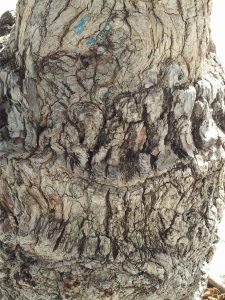
Gnarled with Age
Natural World - 6
Subtelty of Colour

Natural World - 6
Friends hanging out
Natural World - 7
History cut short
Natural World - 8
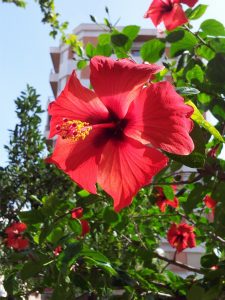
In Full Bloom -1

Natural World - 9
In Full Bloom – 2
Natural World - 10
Dying to show


Natural World

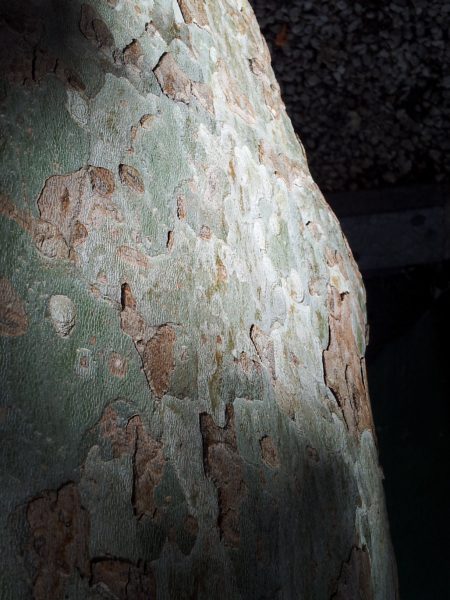
However after consideration when I got back from my safari, I decided that the following photograph reflected the qualities of the assignment – showing natural lines that lead you to different parts of the frame.  The photograph was taken on a Samsung mobile phone with 8 megapixels camera, which rendered a photograph with just over 3Mb, which I have now resized to 2Mb – hopefully without loss of clarity to the brief.  No flash was used, just the shadow and natural sunlight, which I feel makes for a wonderful atmospheric photograph

Natural World - Trunk in Shade

Trunk in Shade

‪#‎developingyoureye‬ ‪#‎trunkinshade‬ ‪#‎naturalworld‬


Filed Under: Editor to ACOMSDave Tagged With: camerphone, colour, dying, gnarled, history, natural, samsung, trunk, world

Pushing the Boundaries; Decriminalising Homosexuality 1974-1982: The Role of the Northern Ireland Gay Rights Association by Jeffrey Dudgeon & Richard Kennedy

09/08/2016 By ACOMSDave Leave a Comment

Filed Under: History Tagged With: Freedom, history, homosexuality, persecution

FLETCHER CHRISTIAN CONFESSES – The Grave Tattoo by Val McDermid

08/08/2016 By ACOMSDave Leave a Comment

FLETCHER CHRISTIAN CONFESSES

Fletcher Christian - The Grave TattooThe Grave Tattoo

ISBN 978-0-00-782552-3

Val McDermid

The conceit in this thriller is that William Wordsworth encountered a fugitive Fletcher Christian (hero / villain of the the mutiny against Captain William Bligh of HMS Bounty. Bligh, while captain of the ship was, confusingly, a Lieutenant by actual rank). Fletcher, a Cumbrian, wants to get his side of the events recorded. The account given here of his adventures on Pitcairn Island, and in places as far-flung as Valparaiso, the Carolinas, and the Isle of Man from where he trades as a smuggler to the gentry of Cumbria; (something of an anachronism), ‘Cumbria’ was invented in 1972. Prior to that it had been the ancient counties of Cumberland and (landlocked) Westmoreland, a large bit of Lancashire (the Furness peninsula) and a small bit of Yorkshire).

This epic poem and letters about it are alleged to have been given on the death (of the now entirely non-revolutionary Wordsworth) to the care of his maidservant Dorcas Mason (also known as ‘Mayson’ – claimed here, to be because of ignorance on the part of clerks, even clergy, but English spelling didn’t settle-down until work on the Oxford English Dictionary began. And the notional introduction of universal education in Great Britain in the early 1870s. It only became genuinely universal at the turn of the 19th / 20th century. Jane Gresham, a native of the English Lakelands and a Wordsworth scholar, lives in a south London sink estate, has to serve in a [booze-]bar in the evenings to make ends meet. She is a part-time Lecturer, simultaneously attempting to do heavy-duty research on Our William, while keeping an eye on the single-parented wild-child Tenille. She doesn’t like school, but does like reading in general and poetry in particular.

Jane Gresham travels to her home territory in search of the, possibly non-existent, Wordsworth documents. As this is a (quite thrilling) thriller a villain is also on the case. And on her trail. In fact the tranquil Lake District is crowded with villains. Some of them are false friends. One of the falsest being a Gay man with whom Jane went to the local primary school. Her jealous, sulky, elder brother is headmaster of said school. He turns out not be be a jealous as Jane thinks (it’s that sort of book). That is not a sneer, this is an absorbing tale, but possibly too complex (or, more than conceivably, one is too thick to keep up… (you are allowed to disagree with this judgement)).

My one (slightly treasonable) problem with the narrative was that it must have struck somebody in the course of two centuries that making a transcript of the Great Man’s work would have been a good idea. The reasoning will have to be withheld as the sting in the tail of the tale will be wasted. After all, a ‘Pencil Museum’ is mentioned in the course of this narrative, quills were definitely available, the metal nib and the typewriter were invented relatively shortly after Wordsworth turned his toes up.

This is an interesting and pleasurable read (lots of elderly corpses, though) and should while away some hours of the (currently grisly) weather, or that beach-wait, before the cute Latinos / Latinas happen along.

Seán McGouran

Filed Under: Book Reviews Tagged With: Fletcher Christian, heritage, history, poetry, prose, Wordsworth

Britain’s concentration camps for gay men

22/01/2016 By ACOMSDave Leave a Comment

 Yes, you have read correctly,  Britain’s concentration camps for gay men did exist.

Britain’s concentration camps for gay men

Auschwitz Concentration Camp

Historian and author Simon Webb writes about the gay men who were kept in concentration camps in the UK.

We are most of us aware that gay men were routinely sent to the concentration camps of the Third Reich for no other reason than that their sexuality was unacceptable to the Nazis.  A special section of the Gestapo, the Reich Central Office for the Combating of Homosexuality and Abortion was set up by Heinrich Himmler in 1936, with the avowed intention of rooting out homosexuality wherever it was to be found in Germany.
In Britain during the 1930s and 1940s, gay men were certainly imprisoned for what was then classified as criminal behaviour, but few people know that there were also concentration camps operating in this country between 1940 and 1946, to which one special category of gay men was sent.
In 1940, following the fall of France, an estimated 30,000 Polish soldiers arrived in Britain; men who had fought alongside the French army to stave off the invading Germans.

They were led by a former Prime Minister of Poland, General Wladyslaw Sikorski. Fearing that this country was itself about to be invaded, these troops were rushed to Scotland to defend the east coast against possible landings of German troops launched from Norway.  Britain was thus indebted to the new Polish government-in-exile, which was led by Sikorski. Without the Polish troops, Scotland would have been all but undefended against the German attack.

General Sikorski was not universally popular with his fellow countrymen and opposition groups emerged which threatened his position as leader of the Polish government and commanding officer of the tens of thousands of Polish soldiers.  The solution, at least as far as Sikorski was concerned, was simple. These enemies would have to be neutralised.

Britain’s concentration camps for gay men

General Sikorski – the man responsible for the concentration camps in Scotland

On 18 July 1940, General Sikorski told the Polish National Council in London: “There is no Polish judiciary. Those who conspire will be sent to a concentration camp.”
Since he and the others were likely to be in Britain for the foreseeable future, it was plain that the concentration camp of which he talked, would be set up in this country.
General Marian Kukiel, appointed Commander of Camps and Army Units in Scotland by Sikorski, received a secret order relating to what was described as, ‘an unallocated grouping of officers’, who were to be held in a special camp.

Rothesay on the Isle of Bute, before the Second World War. The first Polish concentration camp was established here in 1940

Life inside the concentration camps of Scotland – The Jewish Post

Not only did Sikorski wish to see senior officers and political rivals who might challenge his authority tucked out of the way, but he also wished to purge the Polish army of what he termed, ‘Person of improper moral level’ (homosexuals, Jews etc).

General Sikorski was an austere and autocratic leader and had very strong ideas on what constituted acceptable behaviour.
He loathed drunks, gamblers, the sexually promiscuous and especially homosexuals.
So it was that along with all the men he feared might interfere with his leadership of the Polish government-in-exile, generals and senior politicians from pre-war Poland, Sikorski decided to lock up many other men of whose conduct he happened to disapprove.  The site chosen for this, the first concentration camp to be established in Britain, was the Isle of Bute.

The inmates of the new camp were at first housed in tents. Not all were military men.  Among the first to be imprisoned, there were men such as Michael GrazynskI, President of the Polish Scouting Association. Another important prisoner was Marian Zyndram-Kosciakowlski; who was Prime Minister of Poland from 1935-1939.  The atmosphere in the camp on the Isle of Bute was toxic.
The senior officers, no fewer than twenty generals were held captive there at various times, refused to have anything to do with what was known as the ‘pathological cases’; I.e. the drunks and homosexuals.

This led to the development of a sub-culture of gay prisoners, who tended to stick together; a situation which represented something of a scandal to those running the camp and it was decided that the ‘pathological’ types should be separated from the political prisoners.

A new and harsher camp was set up on the Scottish mainland at Tighnabruich and the gay prisoners transferred there.  This village voted in 2002 ‘the prettiest village in Argyll, Lomand and Stirlingshire’, is on the coast, facing the Isle of Bute. The commandant of the new camp was Colonel Wladyslaw Spalek.  How was it possible that the Polish government-in-exile was allowed to operate concentration camps in this way, without any objections from the British government?  After the evacuation of Dunkirk in 1940, the British needed all the help they could get to defend their country against a German invasion.  The Allied Forces Act was accordingly passed that same year.  This gave the governments-in-exile of Poland, Norway, The Netherlands, Belgium and Czechoslovakia the legal right to raise their own independent forces from among citizens of their countries resident in Britain.  Their army camps and military bases were to be regarded as the sovereign territory of the various countries concerned and, as such, immune from interference by the British police or any other authorities.

How this worked in practice was that if General Sikorski took a dislike to any Polish person living in this country, he was able to draft that person into his army and then have him arrested by the military police and taken off into captivity as either a deserter or mutineer.  This neat little trick meant that any Polish man whose behaviour, sexual or otherwise, did not meet with Sikorski’s approval was apt to find himself being shipped off to Scotland and held behind barbed wire.  In another grim echo of the situation in Nazi Germany, not only were gay men marked down for imprisonment in the camps; communists and Jews were also likely to fall foul of the Polish government in London.

One of the most famous prisoners on the Isle of Bute was the writer, journalist and biographer of Stalin; Isaac Deutscher.  Although born in Poland, Deutscher, a Jew, had emigrated to Britain where he made a life for himself before the outbreak of war in 1939.  In 1940, following Dunkirk and the Fall of France, he travelled to Scotland to volunteer for the Polish army which was now based there.  No sooner had he joined up, than Deutscher found himself arrested and sent to the camp at Rothesay.  Being both a Jew and also a communist, he was regarded as a dangerous subversive by senior figures in General Sikorski’s administration.  Rumours began to circulate among MPs in London that something unsavoury was going on in Scotland.
Names began to emerge of Polish citizens being held for no apparent reason in secret installations.  In all cases, the men being detained seemed to be Jews.
On February 19 1941, for example, Samuel Silverman, MP for Nelson and Colne, raised the question in the House of Commons of two Jewish brothers called Benjamin and Jack Ajzenberg. These men had been picked up by Polish soldiers in London and taken to a camp in Scotland.  The following year, Adam McKinley, MP for Dumbartonshire in Scotland, asked in the House what was happening on the Isle of Bute.  The government, which had no wish to upset a valuable ally, refused to provide any information.
Under the terms of the Allied Forces Act, the British had, in any case, no legal right to interfere in what was happening at camps and army bases being operated by the Polish Government in Exile.
Having found that they were apparently able to operate concentration camps on British soil with complete impunity, the Polish leadership opened new facilities for holding political prisoners and others at Kingledoors, Auchetarder and Inverkeithing.  The last-named of these was located just eight miles from Edinburgh.

These were dreadful places that looked like the traditional idea of a concentration camp; barbed wire fences, primitive accommodation and watchtowers containing armed guards.  Those living nearby heard rumours of maltreatment, starvation, beatings and even the death of inmates.  In several cases, the reports of deaths by shooting turned out to be quite true. On 29 October 1940, for instance, a Jewish prisoner called Edward Jakubowsky was shot dead in the camp in Kingledoors, for allegedly insulting a guard.

The Polish camps were to operate for another six years.  Increasing unease on the part of British MPs and others led to questions being asked in the House about what precisely was going on in Scotland.  Matters came to a head, on the 14th June 1945. Robert McIntyre, the Member for the Scottish constituency of Motherwell, stood up in the House and asked the following question:

“Will the government make provision for the inspection, at any time, by representatives of the various districts of Scotland of any penal settlements, concentration camps, detention barracks, prisons, etc. within their area, whether these institutions are under the control of the British, American, French or Polish governments or any other authority; and for the issuing of a public report by those representatives?”

This caused something of a sensation; the suggestion that there were concentration camps in Scotland.

That same day, Moscow Radion made the same accusation, citing the detention of a Jewish academic called Dr Jan Jagodzinski in a camp at Inverkeithing.
This provoked widespread interest and the world’s press began to ask what was happening in these Polish camps.

Britain’s concentration camps for gay menIn an attempt to defuse the anger being felt, the Polish government-in-exile agreed to allow journalists to visit the camp at Inverkeithing.  This action did little to reassure anybody. The first prisoner to whom reporters spoke turned out to be yet another Jew, by the name of Josef Dobosiewicz.  He alleged that a prisoner had recently been shot dead in the camp. The commandant conceded that this was true, but claimed that the dead man had been trying to escape.

Once again, the local police had been powerless to act, under the terms of the Allied Forces Act.

A year after the Second World war had come to an end, the camps were still in existence and still seemingly holding Jews.
On 16 April 1946, the MP for Fife West, William Gallacher, asked the Secretary of State for War to look into the case of two more Jews being held in a camp in Scotland; David Glicenstein and Shimon Getreudhendler.

It is impossible at this late stage to know precisely what was happening in these camps.  That they were in fact concentration camps is undeniable; that after all is what general Sikorski had announced that he would be setting up.  We have no idea at all how many gay men were sent to the camps, nor how long they were held there.  The same is true for the statistics relating to communists and Jews.
What is beyond dispute is that from 1940 onwards, men in this country were being arrested and taken to concentration camps for no other reason than that they were gay.

Simon Webb is the author of ‘British Concentration Camps: A Brief History from 1900 – 1975′.


Links:

  • Crackdown on Camps

Filed Under: Anti-Bullying & Homophobia, Community Journalist, History Tagged With: barbed wire, Britain's concentration camps, concentration, concentration camps, gay, history, Isle of But, LGBT, men, persecution, politics, Tents

Stephen Bourne looks at the relationship between the police and the gay community

11/01/2016 By ACOMSDave Leave a Comment

We’ve delved into the GT vault this festive season, to give you some holiday reading.


30th December 2015

boysinblue1

Boys in blue.


The relationship between the police and the gay community has always been a difficult one. It’s taken tragic incidents, like the 1999 bombing of The Admiral Duncan pub in London’s Soho, to encourage the police to work more closely with us in ways that would’ve been unthinkable before that event happened.
For example, the Gay London Police Monitoring Group, the Gay Police Association and the Metropolitan Police’s LGBT Advisory Group must take some of the credit for helping to build bridges. But enough recognition is given to individual community advisers who’ve worked, voluntarily, up and down the country, on the front line of our communities.
For the last two decades, I’ve been active in the London Borough of Southwark as a voluntary independent adviser or ‘critical friend’ to the police. In the 90s, I realised it was easy to stand on the sidelines and criticise the police without doing anything constructive to change the relationship. So, in 1995, I put my head above the parapet – and into the lion’s cage – and set up one of the first locally-based forums to bring together members of the LGBT community and the police to specifically address homophobic hate crime. I focussed on building trust and confidence with local officers and, gradually, I found willingness on their part to talk about the issues that needed to be addressed.
Meanwhile, in 1990, a group of gay police officers met in secret at the home of an officer based at Battersea Police Station in South West London. They had to meet in secret because, even as recent as 1990, they risked persecution and being thrown out of the force if they were found out to be gay. The meeting marked the beginning of the Lesbian and Gay Police Association, which later changed its name to the Gay Police Association. This group committed itself to offering advice and support to fellow officers. Three years later, in 1993, Marc Burke, a former police officer, wrote his landmark book Coming Out of the Blue, which exposed the homophobia that lesbian and gay officers faced on a daily basis. However, with the exception of PC Harry Daley’s autobiography, This Small Cloud, published posthumously in 1987, hardly any documentation exists that informs us about the lives of gay police officers before Daley died in 1971.
boysinblue2
In the days when gay officers had to hide in the closet, Daley, who served with the Metropolitan Police from 1925 to 1950, was an exception. In 1930, wearing his uniform, his portrait was painted by the gay artist Duncan Grant. Around the same time he began a love affair with the novelist EM Forster, but Daley was too indiscreet for the closeted Forster. The risk of being found out and imprisoned alarmed Forster to such a degree that he terminated the relationship. Until he retired from the force and joined the merchant navy, Daley happily continued to engage in unlawful acts while upholding the law. As the ‘human face’ of the British bobby in BBC radio broadcasts in the 1930s, he may have inspired the writer Ted Willis to create PC George Dixon, the friendly copper who pounded the beat in BBC TV’s popular Saturday night drama Dixon of Dock Green, from 1955 to 1976.
When I was growing up in Peckham, in South East London, in the 1970s, if I saw a policeman I didn’t ask him the time, I ran for it! If the copper happened to be PC Cole, there wasn’t any point in running away because he’d know who you were and where you lived. For 30 years, from 1953 to 1983, PC Cole walked the beat in South East London. He never moved from his base – the notorious Carter Street Police Station, situated off Walworth Road. Legend has it that villains used to beg their arresting police officers to take them anywhere but Carter Street. Now and again, PC Cole visited my school – a rough secondary modern – and spoke to us at morning assemblies. Though PC Cole was more approachable than his colleagues, in those days in South East London, almost everyone feared and mistrusted Lily Law.
After I left school in 1977, PC Cole became well known as the bobby who wrote a series of best-selling books, in which he related his experiences of walking the beat. This entertaining collection offers insights into an interesting and eventful life. When he died in 2008, our borough commander described him as ‘a talented man with a tremendous sense of humour. His books did much to enhance the reputation of the police service – his amusing anecdotes showed the other side of policing – the human side. He had a real sense of loyalty and passion for policing and for Southwark borough.’
When I read PC Cole’s book, Policeman’s Story, published in 1985, I was intrigued by his brief reference to PC Jimmy Davenport – not his real name – a ‘homosexual’ officer he befriended when he joined the police in 1953. Curious about PC Davenport, in 2004 I tracked down the then retired Harry Cole to find out more. What transpired was a revealing insight into attitudes towards a gay serving police officer in London in the 50s.
Harry informed me that his publisher insisted that he cut the references he made to Jimmy’s gay life, so Harry revealed what was left out of Policeman’s Story: ‘I met Jimmy when we arrived that first day for training at Peel House. Jimmy was in the next bunk to me and we became quite friendly. When we were at the training school, Jim was always singing in the shower. One of his favourite songs was Marlene Dietrich’s ‘Good for nothin’ men are good for nothin’’. Then Jim and I were posted to Carter Street, on the same shift and on the same beat. I liked walking with Jim because he was such a good-looking fella, and all the girls would always be looking at us. He was a tall, upright bloke. He had a baby face. And the funny thing was he had very big hands! But he never seemed to know what to do with them!”
boysinblue3
Everyone at Carter Street knew Jimmy was gay, but Harry said this didn’t create any problems, even at the height of the ‘homosexual witch hunt’. This intensified in Britain in the 50s around the time Harry and Jimmy worked together as police officers. Up and down the country, gay men were hounded, persecuted and imprisoned because, at that time, there was a perception that homosexuality was morally reprehensible and also politically dangerous. The medical attitude was that it was an illness, that if treated successfully, homosexuals would become ‘normal’. Police officers were encouraged to arrest any gay men they encountered, and gay men were often arrested and prosecuted after they unwittingly made advances to plain clothes police officers. These were known as agent provocateurs, French for ‘inciting agent’. And yet, in South East London, PC Jimmy Davenport avoided detection and carried on with his career as a police officer throughout the ‘witch hunt’ of the 50s. Harry explained, ‘If you have 15 policemen in a shift, in that 15 there’s going to be one you could kill, some you avoid, some you like intensely, others you don’t mind. And Jim was on the good side, if you like. If you have to work with another officer, you want them to be someone you like and get on with. Jim fitted in. Though we guessed he was a homosexual, it wasn’t an issue.’
Harry remembered that Jimmy used to visit a local gay ‘character’ called Maurice who owned a chemist shop in Westmoreland Road, off Walworth Road: ‘Maurice was as queer as a nine bob note, and he had these parties, for homosexuals, but we turned a blind eye. And if a bobby was wandering by, on his beat, especially on a cold winter’s night, Maurice invited him in: ‘Come in, dear boy. Come and have a drink.’ Everyone knew what Maurice was like. He was like a Wild West doctor. Abortion was illegal then but women, whose young daughters got pregnant, went to Maurice and he sorted them out. And there was always a copper who’d put some girl in the family way, so we’d tell him to take her to Maurice. And then, when the Richardson gang started up, if any of them got injured and couldn’t risk going to a hospital, they’d blag Maurice into helping them. He was around for years.’
PC Jimmy Davenport was stationed at Carter Street for several years and then he was transferred to Wimbledon, because his ‘other secret’ came out. In his spare time Jimmy was singing in a pub and getting paid for it! Harry explained, ‘A police officer didn’t earn much in those days, so money was always tight. Jimmy was discovered moonlighting. That wasn’t allowed. It was frowned upon. Things were very strict then. Some years later, it must’ve been in the 60s, I went with a mate to a club in Old Compton Street. When the show started, to my surprise, it was Jim who came on stage and sang! He had such a good voice. And that was the last I saw of him. After that, other officers said they recognised Jim in various West End shows. So he must’ve left the police and pursued a career in showbusiness.’
What PC Harry Cole didn’t tell me was that homophobia was rife in the police service – and if an officer was discovered to be gay, it could lead to instant dismissal. When I interviewed a gay inspector who’d joined the service – outside of London – in 1978, at a time when gay officers remained firmly in the ‘closet’, he told me: ‘You can’t imagine how racist, homophobic, and sexist the police was. If homosexuality was mentioned, it was always about perverts and poofs. Gays were a dirty minority who frequented gay pubs and haunted toilets. I never saw a copy of Gay News. I never heard about the Gay Liberation Front. I never heard about Gay Pride marches until 1986. I knew there were gay pubs in London, but I had no desire to visit them because, as a police officer, I was terrified of being found out and blackmailed. Gays weren’t tolerated in the police and I bitterly resented that, but there was nothing I could do about it.’ I also interviewed a detective constable who’d joined the Metropolitan Police in 1979. He said: ‘We were a police force, not a service. It was very disciplined. We learned nothing about blacks, homosexuals, religion or domestic violence. We had women officers, but they were expected to make the tea. In those days, the Met was made up of a lot of ex-servicemen, so it was a very macho environment.’ He added that the terms used to describe gay men were all offensive: ‘Queer, homo, poof, bender – they were all used in a derogatory manner. In the old days, because we believed we were the finest police force in the world, we thought we could do everything on our own, but we couldn’t. At first we resented people telling us how to do our work. But not now. That’s changed. We no longer see community advisers as busy bodies but as useful allies.’
In 2003 Stephen Bourne was named Volunteer of the Year by the Metropolitan Police for his pioneering work on tackling homophobic crime in the London Borough of Southwark and for his independent advice on critical incidents.
Words Stephen Bourne

Filed Under: Book Reviews Tagged With: community relations, history, police, Stephen Bourne

Jack Larson

06/01/2016 By ACOMSDave Leave a Comment

by Paul

15364

Jack Larson (left) as “Jimmy Olsen” and George Reeves (r)| CNN | 15364

Gay Actor Jack Larson has died, age 87. Mr Larson became well known for playing Jimmy Olsen of “Superman” on American television in the 1950s. The Washington Post describes him as a gifted writer and gay man whose talents and personal struggles were overshadowed by his role as Superman’s flunky, “Jimmy Olsen”, which he commenced in 1951 age 18.

“I didn’t want to do it,” Larson said, ”but my agent said, ‘Look, you want to get to New York. You don’t have any money. Nobody will ever see this show so take the money and run.”’

Larson did. For $350 an episode, he completed the show and went to the Big Apple. And he was living there when the show he had dismissed became one of the most iconic in TV history — even though it was pretty bad. … “To me, it was a nightmare,” he said in 2006. “Everywhere I went, it was, ‘Jimmy! Jimmy! Hey, Jimmy, where’s Superman?’ Suddenly, I couldn’t take the bus or the subway anymore. It absolutely freaked me out.”

While in Hollywood, he became involved with screen legend Montgomery Clift, and met his future longtime companion, director James Bridges.

In the end, though, the Superman role became something he began to enjoy, and it made him famous.

“Everywhere I go, I get the warmest feelings from people about Jimmy,” he said. “They love him, and I grew to feel that I could never have done anything more special than be Jimmy Olsen.”

Jack Larson was born on February 8, 1928 and died on September 20, 2015. Gay History sends condolences to family, friends and colleagues.

http://www.washingtonpost.com/news/morning-mix/wp/2015/09/22/how-superman-ruined-a-gay-actors-life-then-saved-it-jack-larson-jimmy-olsen-dead-at-87/

Filed Under: Movie Reviews, TV programme reviews Tagged With: Actor, death, history, Movie History, Superman, TV hisotry

Every LGBTQ+ Person Should Read This

16/11/2015 By ACOMSDave Leave a Comment

Huffington Post Logo
 
Sarah Prager Become a fan
Founder and Director of Quist
Posted: 10/06/2015 11:23 am
 
Dearest Queer Person,
Chances are you don’t even know that you are holy, or royal or magic, but you are. You are part of an adoptive family going back through every generation of human existence.
Long before you were born, our people were inventing incredible things. Gifted minds like the inventor of the computer Alan Turing and aviation pioneer Alberto Santos-Dumont live on in you. The imprint that bold and brilliant individuals like Lynn Conway and Martine Rothblatt (both transgender women alive today) made on modern technology is impossible deny as present-day engineers carry their torch in the creation of robots and microprocessors. More recently speaking, one of the co-founders of Facebook publicly acknowledged his identity as a gay man, as did the current CEO of Apple.
We were so often gods and goddesses over the centuries, like Hermaphrodite (the child of Hermes and Aphrodite), and Athena and Zeus, both of whom had same-sex lovers. In Japan it was said that the male couple Shinu No Hafuri and Ama No Hafuri, “introduced” homosexuality to the world. The ability to change one’s gender or to claim an identity that encompasses two genders is common amongst Hindu deities. The being said to have created the Dahomey (a kingdom in the area now known as Benin) was reportedly formed when a twin brother and sister (the sun and the moon) combined into one being who might now identify as “intersex.” Likewise, the aboriginal Australian rainbow serpent-gods Ungud and Angamunggi possess many characteristics that mirror present-day definitions of transgender identity.
Our ability to transcend gender binaries and cross gender boundaries was seen as a special gift. We were honored with special cultural roles, often becoming shamans, healers and leaders in societies around the globe. The Native Americans of the Santa Barbara region called us “jewels.” Our records from the Europeans who wrote of their encounters with Two-Spirit people indicates that same-sex sexual activity or non-gender binary identities were part of the culture of eighty-eight different Native American tribes, including the Apache, Aztec, Cheyenne, Crow, Maya and Navajo. Without written records we can’t know the rest, but we know we were a part of most if not all peoples in the Americas.
Your ancestors were royalty like Queen Christina of Sweden, who not only refused to marry a man (thereby giving up her claim to the throne), but adopted a male name and set out on horseback to explore Europe alone. Her tutor once said the queen was “not at all like a female.” Your heritage also includes the ruler Nzinga of the Ndongo and Matamna Kingdoms (now known as Angola), who was perceived to be biologically female but dressed as male, kept a harem of young men dressed in traditionally-female attire and was addressed as “King.” Emperors like Elagalabus are part of your cultural lineage, too. He held marriage ceremonies to both male-identified and female-identified spouses, and was known to proposition men while he was heavily made-up with cosmetics. Caliphs of Cordoba including Hisham II, Abd-ar-Rahman III and Al-Hakam II kept male harems (sometimes in addition to female harems, sometimes in place of them). Emperor Ai of Han Dynasty China was the one whose life gives us the phrase “the passions of the cut sleeve,” because when he was asleep with his beloved, Dong Xian, and awoke to leave, he cut off the sleeve of his robe rather than wake his lover.
You are descended from individuals whose mark on the arts is impossible to ignore. These influential creators include composers like Tchaikovsky, painters like Leonardo da Vinci and actors like Greta Garbo. Your forebears painted the Sistine Chapel, recorded the first blues song and won countless Oscars. They were poets, and dancers and photographers. Queer people have contributed so much to the arts that there’s an entire guided tour dedicated just to these artists at New York’s Museum of Modern Art.
You have the blood of great warriors, like the Amazons, those female-bodied people who took on roles of protection and had scarce time or interest between their brave acts to cater to the needs of men. And your heart beats as bravely as the men of the Sacred Band of Thebes, a group of 150 male-male couples who, in the 4th century B.C.E., were known to be especially powerful fighters because each man fought as though he was fighting for the life of his lover (which he was). But your heritage also includes peacemakers, like Bayard Rustin, a non-violent gay architect of the Black civil rights movement in the U.S.
We redefined words like bear, butch, otter, queen and femme, and created new terms like drag queen, twink and genderqueer. But just because the words like homosexual, bisexual, transgender, intersex and asexual, have been created in the relatively recent past doesn’t mean they are anything new. Before we started using today’s terms, we were Winkte to the Ogala, A-go-kwe to the Chippewa, Ko’thlama to the Zuni, Machi to the Mapuchi, Tsecats to the Manghabei, Omasenge to the Ambo and Achnutschik to the Konyaga across the continents. While none of these terms identically mirror their more modern counterparts, all refer to some aspect of, or identity related to, same-gender love, same-sex sex or crossing genders.
You are normal. You are not a creation of the modern age. Your identity is not a “trend” or a “fad.” Almost every country has a recorded history of people whose identities and behaviors bear close resemblance to what we’d today call bisexuality, homosexuality, transgender identity, intersexuality, asexuality and more. Remember: the way Western culture today has constructed gender and sexuality is not the way it’s always been. Many cultures from Papua New Guinea to Peru accepted male-male sex as a part of ritual or routine; some of these societies believed that the transmission of semen from one man to another would make the recipient stronger. In the past, we often didn’t need certain words for the same-sex attracted, those of non-binary gender and others who did not conform to cultural expectations of their biological sex or perceived gender because they were not as unusual as we might today assume they were.
Being so unique and powerful has sometimes made others afraid of us. They arrested and tortured and murdered us. We are still executed by governments and individuals today in societies where we were once accepted us as important and equal members of society. They now tell us “homosexuality is un-African” and “there are no homosexuals in Iran.” You, and we, know that these defensive comments are not true–but they still hurt. So, when others gave us names like queer and dyke, we reclaimed them. When they said we were recruiting children, we said “I’m here to recruit you!” When they put pink and black triangles on our uniforms in the concentration camps, we made them pride symbols.
Those who challenge our unapologetic presence in today’s cultures, who try to deprive us of our rights, who make us targets of violence, remain ignorant of the fact that they, not us, are the historical anomaly. For much of recorded history, persecuting individuals who transgressed their culture’s norms of gender and sexuality was frowned upon at worst and unheard of at best. Today, the people who continue to harass us attempt to justify their cruel campaigns by claiming that they are defending “traditional” values. But nothing could be further from the truth.
But now you know they are wrong. Just imagine the world without that first computer or the Sistine Chapel’s ceiling, or a huge part of the music you’ve ever heard from classical Appalachian Spring to classic YMCA (I mean, we’ve held titles from the “Mother of Blues” to the “King of Latin Pop!”). How much less colorful would the world be without us? I’m grateful that you’re here to help carry on our traditions.
So, happy LGBT History Month! I hope to celebrate with you here at Quist. This list of LGBTQ history online resources is a good place to start in exploring more specifics about this heritage.
Lesbianamente*,
Sarah Prager
*Actually a term as a way someone signed a letter for a lesbian organization in Mexicodecades ago!
This piece was inspired in part by facts and sentiments from Another Mother Tongueby Judy Grahn (published 1984). Ritualized Homosexuality in Melanesia edited by Gilbert H. Herdt (published 1993) is also referenced. Many of the referenced facts are cited so many places it has become common knowledge. Christianne Gadd contributed significantly to this piece. This post originally appeared in The Advocate.
 
http://www.huffingtonpost.com/sarah-prager/every-lgbtq-person-should_b_8232316.html?ir=Gay%20Voices?ncid=newsltushpmg00000003

Filed Under: History Tagged With: history, LGBTQ, politics, royal

StoryCorps Releases Hopeful, Pre-Stonewall Story for National Coming Out Day

12/10/2015 By ACOMSDave Leave a Comment

BY OUT.COM EDITORS
OCTOBER 11 2015 1:00 PM EDT

Radio Broadcast Mast

As part of StoryCorps’ OutLoud initiative to gather LGBTQ stories across America, Patrick Haggerty recalls talking with his father about being gay in rural Dry Creek, Washington, in the late 1950s.


The groundbreaking oral history project StoryCorps released the animated short “The Saint of Dry Creek” in partnership with the It Gets Better Project today as part of the OutLoud initiative to document the stories of LGBTQ people across America. In the story, Patrick Haggerty remembers the advice his father, a dairy farmer in rural Dry Creek, Wa., gave him when, in the late 1950s, he realized his son was gay.
OutLoud documents the powerful, varied experiences of LGBTQ people. The initiative honors the stories of those who lived before the 1969 Stonewall uprisings, celebrates the lives of LGBTQ youth, and amplifies the voices of those most often excluded from the historical record.

“We’ve recorded 700 interviews with 1500 people in the last year,” Isay tells Out. “I am surprised again and again how important these interviews are to the participants, and how powerful the stories are, and how little there is in the public record about life pre-Stonewall, especially in small towns and red states, like in this recent story. They rip my heart out—and inspire me—again and again. “

The end result of OutLoud will be a diverse collection of stories that will enrich our nation’s history.StoryCorps launched OutLoud in 2014 on the occasion of the 45th anniversary of the riots, in memory of StoryCorps founder Dave Isay’s father, the renowned psychiatrist and early advocate for marriage equality Dr. Richard Isay, who came out to Dave when he was 22 and Richard was 52. More information about OutLoud, and interviews collected for the initiative, can be found atStoryCorps.org/outloud/.
StoryCorps and the It Gets Better Project released this animated story for National Coming Out Day. See more StoryCorps.org/animation/


Filed Under: Anti-Bullying & Homophobia Tagged With: coming out, history, politics, stonewall

Pride History

25/09/2015 By ACOMSDave Leave a Comment

Editorial:  I am reposting this article from the QUB website, as it provides back ground to Belfast Pride which we have been remiss in writing up ourselves:


Pride History
Gay Pride’s origins can be traced to riots at the Stonewall Inn, Greenwich Village, New York City on June 27th 1969. Homosexual clientele and people of colour who frequented the bar, resisted assaults and corruption of police, resulting in three nights of rioting which is regarded as the conception of the modern gay rights movement. The Gay Liberation Front commemorated the first anniversary of the riots with a march from Greenwich Village to Central Park, while gay activists held a march in Los Angeles. Other cities and towns followed suit and the trend spread worldwide, with marches being held annually as a means to inspire a growing gay activist movement.  Various titles for the marches such as gay freedom day and gay liberation day were abandoned in the 1980’s, due to a shift by less radical members of the gay movement and the parades are now commonly known as Gay Pride.

P. A. Mag Lochlainn, the President of Northern Ireland Gay Rights Association, explained how dander, a Northern Ireland euphemism for walk was “deliberately chosen for the Belfast parade as a break from the monotonous marches hitherto seen in this city.” The dander marks the finale of Belfast Pride Festival which comprises a week of social events, exhibitions, talks and cinema. It would be a different experience for me this year by acting as a participant observer, filming the parade, taking photographs and conducting interviews for this website. It was my fourth attendance at Belfast Pride and I had already been present at Dublin and London Pride that summer. So what is it about Pride that has me and hundreds of thousands of people all over the world, parading through city and town centres, many in costume, waving rainbow flags to the sound of pop music?  As I stood in Writers Square waiting to interview P.A I remembered what he had stated in a prior interview. “Visibility is life, invisibility is death.”

P. A. Mag Lochlainn has sat on the Belfast Pride committee since its formation in 1991 and explained how a delegation from the Belfast gay community had attended London Pride for several years before deciding to host the first Belfast Pride festival.  He told me, “the motivation to stage Belfast Pride has always been to increase the visibility of our local LGBT community in order to claim our rightful place in the life of this city and community.  Just as “Silence equals Death”, we felt that freedom requires Visibility.   Our enemies used to be able to maximise homophobia, i.e. Baroness O Cathain alleging in the House of Lords that “every political party” in Northern Ireland was against LGBT rights, when in point of fact the DUP was the only political party doing so.   Pride proved these bigots were lying, and encouraged our local LGBT groups to trust in the good sense of the wider community.”

He remembered the first event was hard to organise and had little if any funding, but with the help of the Socialist Workers Party at Queen’s, a week of community and educational events took place. The first parade saw just fifty or so marchers leaving from the University of Ulster in the Cathedral Quarter of Belfast city centre. They carried a low budget banner and wore t-shirts and lapel buttons saying Gay Pride Belfast 1991. The ‘A’ in gay was represented by a pink triangle, a symbol of homosexuality. Not many spectators watched the parade as people on the streets did not understand what it was, or what is was about. P.A. explains how he has always encouraged non-threatening or provocative engagement with onlookers in order to win hearts and minds. “If you get a smile back from the crowd,” he informs me “then you’ve won.”

They marched to Botanic Gardens amid opposition from churches and paramilitary threats of ambush at Sandy Row, due to a Junior Orange Order March scheduled at the same time.  In an amusing twist to the tale P.A. recollects how the police had asked for the parade to be postponed but could not give the reason why. It turned out that the marchers would not be the only queens in town that day as HM Queen Elizabeth II would also be in Belfast, ”she was not specially invited,” jokes P.A. The heightened security helped alleviate fears of violence and held church demonstrators in check. On its completion “the marchers felt wonderful and there was a sense of disbelief we had done it,” says P.A. That first small march seemed a far cry from the 2008 parade which I now filmed making its noisy and colourful way towards me from Royal Avenue. A mass of spectators converged at city hall cheering and clapping while Christians demonstrated with banners calling for homosexuals to repent their sins. Then Tina Legs Tantrum, the local celebrity drag queen drew up, atop a float dressed in silver sequence frock and white wig, waving a rainbow flag to the jubilation of the crowd.  For a moment my anthropological research ceased as I became swept away in the atmosphere. “At streets parades, those instances that result in feelings of belonging rely upon moments were actions, performances, emotions come together in a particular rhythm to create a sense of being special, or social camaraderie (Duffy Watt & Gibson, 2007: 7). Hence, I argue that this as a fundamental reason for the success and continuance of Pride.

Research from Thomas Fegan – BELFAST GAY PRIDE PARADE 2008

Filed Under: Anti-Bullying & Homophobia, History Tagged With: Belfast Pride, history, Pride, QUB, Thoma Fegan

  • « Previous Page
  • 1
  • 2
  • 3
  • 4
  • 5
  • Next Page »

Categories

Copyright ACOMSDave.com © 2026