
ACOMSDave

Community Journalist

  • Home
  • Community Journalist
  • Events
  • Media Page and Press Kit
    • Projects and Work
  • Resources & Documents
    • LGBTQ+ Support Groups and Documents
  • NIGRA
  • Archives
  • Contact

Poetry from Peter Brooke

13/04/2021 By ACOMSDave Leave a Comment

Approaching any review is like the start of a journey, you know where you are starting from but you have no idea where the journey is going to take you, what side-tracks or falls you may have and whether you will enjoy the journey because not all journeys are enjoyable.  I was asked to review two completely different booklets of poetry from Peter Brooke, the first “To a Mask” covers the period Oct 2013-Dec 2014, the second is a series of poems entitled “8 poems” translated from the French of Georges Ribemont-Dessaignes and published in 2020.
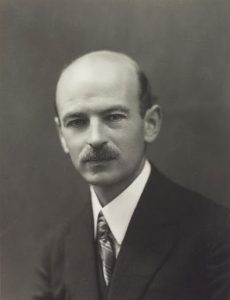
Georges Ribemont-Dessaignes - Poetry from Peter Brooke

Georges Ribemont Dessaignes

Peter’s first booklet embraces ‘Politics and Theology, a central piece of his life.  Peter is an artist, writer, and educationalist with a depth and breadth of knowledge that enables him to write and interpret extremely well for himself and others.

There are twenty-one poems in this slim booklet which cover a painting by Antonia Spowers to Little Children to Christian Love to The Book of Mormon to his final piece The Wrath of God.

I am not a poet, indeed generally I find poetry to be boring and of little relevance to me at all.  But each piece in this booklet has a line(s) that stop you and make you think.  They haven’t made me turn to ‘God’ as I feel that the god that churches and religion speak about is one made up by so many people as a way of comforting and also of controlling others.  But, you can read Peter Brooke’s prose, indeed dip into it, and think, and surely that is what any good writing should do.


Painting by Peter Brooke
Paintings by Peter Brooke

Paintings by Peter Brooke

Painting by Peter Brooke
Paintings by Peter Brooke

Now in his second booklet, “8 poems” Peter Brooke has gone back to his love of art and to his own love of Gleizes, a Cubist avant-garde artist who was a contemporary of Georges Ribemont-Dessagnes, and a solid member of the Dada movement.  So when reading these poems by Georges you have to align yourself to that time period and Dadaism which was an art movement of the European avant-garde in the early 20th century, with early centres in Zürich, Switzerland, at the Cabaret Voltaire (c. 1916). New York Dada began c. 1915,[2][3] and after 1920 Dada flourished in Paris. Dadaist activities lasted until c. the mid 1920s. (Wikipedia).


…‘What were you born of, poet? Of time and space,

Without beginning or end,…’


The ‘8 poems’ move through the origins of a poet, to childhood, to looking at (through) a mirror, youth, knowledge and old age / wax beauty.  They flow well in this interpretation by Peter, and I found these poems somewhat more reachable, but, yet again on a literal medium I can understand and interpret the words and they conjure up pictures, I still don’t know if the pictures being created are those that the poet was aiming for, and with that thought, I think I will have to accept that poetry is and can only be subjective to the reader.  I know what I like, exactly in the same way as you do, but we can agree to disagree and remain friends.

Links:

  • WikiArt – Dada Movement
  • WikiArt – Georges Ribemont-Dessaignes
  • MoMA – Georges Ribemont-Dessaignes
  • Wikpedia – Dada
  • Peter Brooke
  • Jack Clemo – Poet
  • Art by Peter Brooke – Cubism and Tradition
  • Charles Filiger as a young man in Paris, 1888 – a wonderful article by Peter


Filed Under: Editor to ACOMSDave, Poetry and Prose Tagged With: Arty by Peter Brooke, beginnings, Cabaret Voltaire, Charles Filiger, Dada, death, Georges Ribemont-Dessagnes, old age, Peter Brooke, religion, youth

Jack Larson

06/01/2016 By ACOMSDave Leave a Comment

by Paul

15364

Jack Larson (left) as “Jimmy Olsen” and George Reeves (r)| CNN | 15364

Gay Actor Jack Larson has died, age 87. Mr Larson became well known for playing Jimmy Olsen of “Superman” on American television in the 1950s. The Washington Post describes him as a gifted writer and gay man whose talents and personal struggles were overshadowed by his role as Superman’s flunky, “Jimmy Olsen”, which he commenced in 1951 age 18.

“I didn’t want to do it,” Larson said, ”but my agent said, ‘Look, you want to get to New York. You don’t have any money. Nobody will ever see this show so take the money and run.”’

Larson did. For $350 an episode, he completed the show and went to the Big Apple. And he was living there when the show he had dismissed became one of the most iconic in TV history — even though it was pretty bad. … “To me, it was a nightmare,” he said in 2006. “Everywhere I went, it was, ‘Jimmy! Jimmy! Hey, Jimmy, where’s Superman?’ Suddenly, I couldn’t take the bus or the subway anymore. It absolutely freaked me out.”

While in Hollywood, he became involved with screen legend Montgomery Clift, and met his future longtime companion, director James Bridges.

In the end, though, the Superman role became something he began to enjoy, and it made him famous.

“Everywhere I go, I get the warmest feelings from people about Jimmy,” he said. “They love him, and I grew to feel that I could never have done anything more special than be Jimmy Olsen.”

Jack Larson was born on February 8, 1928 and died on September 20, 2015. Gay History sends condolences to family, friends and colleagues.

http://www.washingtonpost.com/news/morning-mix/wp/2015/09/22/how-superman-ruined-a-gay-actors-life-then-saved-it-jack-larson-jimmy-olsen-dead-at-87/

Filed Under: Movie Reviews, TV programme reviews Tagged With: Actor, death, history, Movie History, Superman, TV hisotry

Book and Movie – LOVE AND DEATH ON LONG ISLAND

02/02/2015 By David McFarlane Leave a Comment


LOVE AND DEATH ON LONG ISLAND
by Gilbert Adair
138 pages
Published by Minerva
This novel might be described as a gay Lolita, or more properly a modern Death in Venice. The tile seems to hint at this connection, and while the main character does finally meet and speak to the object of his desire, the same fruitless ending follows.
Giles is a middle-aged writer who lives in near seclusion. On impulse he goes to the cinema complex to see a film of a Forster novel. He goes to the wrong cinema and sees instead Hotpants College II, and falles hopelessly in love with Ronnie Bostock, one of the stars.
Giles embarks on a search for details of his beloved. He discovers Teen Dream Boat and other fan magazines. He even enters the world of video rental. Then he finds himself pushed to buy Toy Boy and superimpose the head of Ronnie on the nakes bodies from the flesh mag. When he reads that Ronnie is to wed, he goes in desperation to the States to meet him. This he finally manages, and flatters Ronnie with an intellectual analysis of the crap films he stars in. When he does finally declare himself to Ronnie, he is rebuffed.
The novel is told in beautiful spare prose, and (contrary to what this brief outline might indicate) it is funny and amusing. Adair, who is an accomplished film commentator and author of Hollywood’s Vietnam, manages to filter the world of cinema through innocent eyes, and this shed new light on it.
the obsessive nature of love is superbly captured, and this (Gile’s declaration to Ronnie) captures the style:
I found myself clinging to his wrist, to his hand, holding him back to then, in a fierce whisper, forcing frommyself the inevitable,: irreplaceable words, hackneyed and sacre d’I love you!’
When Ronnie has left, he wonders:
Dear God, I said to myelf, what have I done?
This short book says more in its space than many an overweight ‘page-turner’. It will appeal for its fine handling of a gay theme with poise and humour, while not flinching from the pathos that lies at the heart of so much love.
AH

Filed Under: Book Reviews, Movie Reviews Tagged With: death, gilbert adair, long island, love, Minerva

DIY Funerals – all the rage from 'Soaps' to Co. Down

16/01/2014 By David McFarlane Leave a Comment

Reprinted from The Irish Times dated January 15, 2014
 
Written by:  Richard O’Leary
 
Viewers of Coronation Street have been intrigued by Roy Cropper’s plans for a “DIY” funeral for his terminally ill wife Hayley. Roy was seen searching on the internet for “do it yourself” funerals, and Hayley suggested they wouldn’t even need an undertaker. In the fictional world of Corrie, anything is possible, but is a DIY funeral a realistic option?
Last year I had to ask myself this same question. During the summer my partner of 25 years, Mervyn Kingston, was told he was terminally ill with bone cancer and had only weeks to live. Unlike Coronation Street’s Roy, who was initially reluctant to discuss funeral planning with his wife Hayley, I was fortunate that Mervyn openly discussed the subject with me. He told me of his wish for a DIY funeral, or as we preferred to call it, a “direct-it-yourself” funeral.
We both liked the idea of a simple, “not-for-profit” funeral consistent with our non-consumerist values. We were attracted by the possibility of increasing the contribution of our close friends and family to one of life’s main events, while minimising the involvement of strangers and professional funeral service providers. Furthermore, I retained a memory of my grandmother’s funeral in Co Cork. Granny was laid out at home by a neighbour who had known her for decades. She was waked in her own home. Those who knew her well transported her to the church for a simple funeral service.
Mervyn dictated instructions to me from his bed, as I typed up a list of all the tasks we could envisage being part of the funeral. We were fortunate that Mervyn had been a Church of Ireland clergyman until his retirement in 2007, meaning that he was well aware of the tasks involved. However, even without this experience, most people would be capable of drawing up the to-do list. I then contacted likely volunteers among our close friends and family, inviting them to carry out post-death tasks – transport, pall-bearing, flowers, catering.
Registering a death

First I familiarised myself with the legal requirement to register a death. There is no cost in Northern Ireland or the Republic of Ireland for registering a death. The only cost is for copies of death certificates (information on registration can be found atgroireland.ie or nidirect.gov.uk). Then we both prepared the draft death notice for later submission to The Irish Times. Even in the age of the internet, a newspaper death notice is an indispensable way of informing the wider community, especially older contacts, of a death.
Hayley in Coronation Street said, “I don’t want to waste good money on oak caskets and brass handles”. However, the alternative isn’t necessarily Roy’s self-assembly cardboard coffin. We sourced a sturdy and attractive wooden coffin for £420 (about €510) from a local undertaker in Co Down.
Although we had been told that some undertakers might be reluctant to sell a coffin on its own as part of an “a la carte” service without the full funeral package, that was not our experience. Our local undertaker was friendly and accommodating, advising us that this coffin from their brochure could be purchased with a simple phone call when required.
We knew we would need help when it came to preparing the body, and it appears that the days when this skill was available in the local community are gone. We made inquiries among district nurses, care workers and clergy as to who might be able to prepare the corpse. All our inquiries drew a blank. Fortunately, in advance of the death we agreed with the undertaking firm that sold us the coffin that it would prepare the corpse as well. We did not request embalming. The charge for the basic preparation was £75.
We had a preference for a church service for the funeral, so we advised in advance the relevant clergy of the expected death. I typed the service sheet in advance – including the hymns – ready to be photocopied once the date of death was inserted. We also had a preference for burial rather than cremation. We already had a family grave in a graveyard. I contacted the gravedigger.
Best-made plans 

“No man knoweth the day or the hour” (Matthew 24:36). Even the best-made plans for an impending death will need to be altered. Here is how it panned out for us.
Mervyn died peacefully at home with me by his side on Friday, August 2nd, at 6.20pm. We kept his body at home that night at a cool temperature. The following morning I phoned the funeral service to complete the purchase of the coffin and requested that the funeral service collect the corpse to prepare it before it was returned to our home.
I contacted the church and the clergyman to agree the date and time of the church service. I informed the gravedigger to ensure his availability on the same day. Normally an undertaker would attend to these tasks. Once these details were confirmed, the finalised death notice was emailed to The Irish Times and I alerted my list of volunteers that they should begin their tasks – providing the vehicles, flowers, photocopying of service sheets and catering.
The day before the funeral, a volunteer collected the death certificate from the GP’s surgery and registered the death at the registrar’s office. This must be done before the funeral can take place. We waked Mervyn at home that evening. We made one room in our house available for viewing of the coffin. Fortunately we remembered to choose a room into which a 6ft coffin could easily be carried. It felt right that mourners could say goodbyes to Mervyn and offer support to me in our own home.
On the morning of the funeral, instead of a black hearse, Mervyn’s close friend Percy used his estate car to transport the coffin to the church. A beautiful spray of flowers prepared by a friend from Mervyn’s favourite garden adorned the coffin. Six pre-arranged friends acted as pall-bearers. Instead of the unfamiliarity of a chauffeur-driven black limousine, I was driven by a close friend in his saloon car. After the church service, instead of going to a hotel, home-made refreshments were prepared and served by volunteers in the adjacent church hall.
 
Transported by friends
A smaller group of mourners drove to the graveyard. As I sat in the saloon car following the estate car containing Mervyn’s coffin, my sister remarked to me “how comforting it is that a dear friend of Mervyn’s is bearing his body to the graveyard”. At the cemetery one of the volunteers brought straps to assist the pall-bearers to lower the coffin into the open grave. This highlights the number of small tasks and items that can easily be forgotten and need to be included on the to-do list for your DIY funeral.
DIY funerals are not for everyone. There are many tasks to be undertaken at an emotional time in a short period. An anticipated death makes it easier, and detailed planning is essential. It requires the availability of reliable volunteers. Nevertheless, as our experience shows, a DIY funeral is achievable.
It is certainly more economical – a basic cost €600 (coffin plus preparation of corpse) compared with the typical funeral service’s basic package of €2,500. This difference is mainly accounted for by the saving on administration, personnel time and transport costs, which in our case were borne by volunteers.
Typically, there are additional expenses such as costs of newspaper death notices and the grave – the latter can sometimes be considerable.
We donated our savings from our DIY funeral to our favoured charity. However, as important as the economic advantage is, the personal satisfaction of directing it yourself is immeasurable. It felt more like my granny’s traditional funeral.
The contribution of family members and close friends, instead of strangers, transformed a very sad occasion into an unexpectedly positive experience.
 
Further reading (Inclusion is not a recommendation of any particular organisation or company):

  1. Natural Death Centre
  2. Funeral Inspirations
  3. The Funeral Helper

Filed Under: History Tagged With: death, DIY funerals, family, funerals, gay, LGBT, rememberance

Categories

Copyright ACOMSDave.com © 2026