
ACOMSDave

Community Journalist

  • Home
  • Community Journalist
  • Events
  • Media Page and Press Kit
    • Projects and Work
  • Resources & Documents
    • LGBTQ+ Support Groups and Documents
  • NIGRA
  • Archives
  • Contact

I Am Jazz: Teen Trans Advocate is published author

18/11/2014 By David McFarlane Leave a Comment

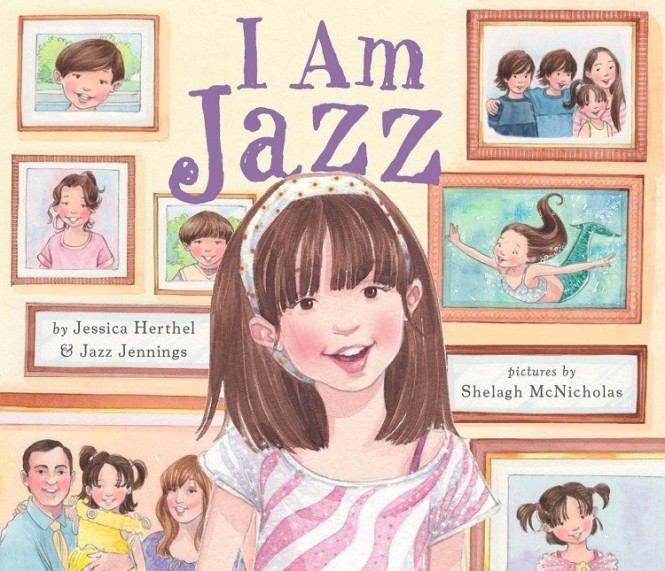
I am Jazz
  • On: November 14, 2014
By Ilyse Kramer
Thirteen-year-old Jazz-Jennings is a prolific trans advocate, recognized as the youngest person on The Advocate’s “40 under 40.” She has co-founded TransKids Purple Rainbow Foundation, which is committed to supporting and advocating for Trans children in their communities, shared her story on 20/20, 60 Minutes, the Oprah Winfrey Network, YouTube vlogs, and recently co-wrote an autobiographical picture book titled I Am Jazz.
In an interview with The Miami Herald, Jazz stated: “I wrote this book so we could help educate other transgender youth and families that it is OK to be different. It’s not just geared to LGBTQ people, but for everyone who is unique. And hopefully it can make a huge impact in letting everyone know that they have to accept each other because we’re all part of the same society.”
 

I Am Jazz: Teen Trans Advocate is published author

Filed Under: Anti-Bullying & Homophobia, Book Reviews Tagged With: LGBT, teen, trans, unique

World Book Day

12/11/2014 By David McFarlane Leave a Comment


The Belfast Book Festival was  launched at Crescent Arts Centre in May of this year, with principal funders Arts Council Northern Ireland and Belfast City Council, and generous supporters Nicholson Bass and Belfast Calling, a programme of almost 90 events in one week was celebrated.
 
Speaking at the launch, Keith Acheson, Festival Director said: “This year’s Festival is the biggest and best yet, having grown to encompass almost 90 events over the course of the week.
 
Following this wonderful festival, I had the opportunity to meet with Keith last week on Friday in the Centre to discuss how we can incorporate relevant books and DVDs in forthcoming events.  I was able to advise on the booklists and DVDs that NIGRA has published on its website, (NIGRA Booklists)


Filed Under: Book Reviews Tagged With: arts, Belfast, book, centre, crescent, day, world

Roger Casement: Controversies in Script and Image

26/01/2014 By David McFarlane Leave a Comment

Roger Casement: Controversies in Script and Image

by Jeffrey Dudgeon

QUB School of Creative Arts, Room 101, 12 University Square, Monday 22 April 2013

Jeff Dudgeon is known through his work within the LGBT Community, his courtcase against the British Government resulting in the law in Northern Ireland being brought in line with the rest of Great Britain, and this has been recognised by the award of an MBE from the Queen for his services.

He is also an author, and his book on Roger Casement has been quoted as being ‘a comprehensive view of the texts, with explanations for many of the cast of characters’


Copy of the Speech: Roger_Casement_Controversies_in_Script_and_Image_Jeffrey_Dudgeon_QUB_School_of_Creative_Arts_22_April_2013

Filed Under: Book Reviews, Movie Reviews Tagged With: Casement, Jeff Dudgeon, Queen's University. QUB, roger casement

J F Kennedy and his 'gay' friend were attractive men

16/01/2014 By David McFarlane Leave a Comment

JFK had a close 'gay' friend

JFK had a close ‘gay’ friend


jfk-and-lem-snow-2 jfk-and-lem-snow-3 jfk-and-lem-snow-4 jfk-and-lem-snow-5 jfk-and-lem-snow-6
 
A recently published book has highlighted a close relationship between President John F. Kennedy (known as ‘JFK’ or ‘Jack’), who was assassinated in Dallas on November 22, 1963, had a gay best friend named Lem Billings,
The book has been reviewed on the Daily Grind here :  [button_icon icon=”blogs” url=”http://www.thegailygrind.com/2013/11/23/john-f-kennedy-gay-best-friend-even-room-white-house/” blank=”true” colour=”red”]Daily Grind Review[/button_icon]
[Photo Credit: Greg In Hollywood]
A review from upstart publishing will be forthcoming soon.


Filed Under: Book Reviews Tagged With: book review, friend, gay, JFK, President

Do LGBT people use NI Libraries? If so, what are your views?

19/09/2013 By David McFarlane Leave a Comment

NIGRA Secretary, Dave McFarlane has been corresponding with Sean Beattie from Libraries NI about the the LGBT community’s use of the Library service. Sean is keen to meet with members of Northern Ireland’s LGBT community to discuss:

  • How often people who identify as LGBT use the library service?
  • What you use the library service for?
  • What you would look for when using the library (internet access, LGBT section etc)?

Sean is keen to carry out a survey across the LGBT community in Northern Ireland along the same theme.
LibrariesNIAnyone interested in meeting Sean and working to improve the LGBT provision in NI libraries, please contact Dave McFarlane directly using the form below:

Error: Contact form not found.

Enhanced by Zemanta

Filed Under: Book Reviews, Campaigns Tagged With: Authors, education, government, LGBT, LGBT books, LGBT community, libraries, Northern Ireland, Poets

Are Northern Ireland School Libraries failing our LGBT Youth?

05/08/2013 By David McFarlane Leave a Comment

Hmophobia is preventable in schoolOn a Wednesday evening during Belfast Pride I attended a Unison sponsored event ‘on whether our Northern Ireland School Libraries are failing our LGBT Youth?’
After a warm welcome by Fidelma Carolan, we were then given a wonderful presentation by Sally Bridge on the results of her research project undertaken whilst she was at university and completed in 2010.
The audience was actively involved, asking penetrating and supporting questions to expand and to add personal observations to what was already an exciting report.
The report highlighted the following areas of concern:

  • That the school library is seen as a safe haven, but librarians are not trained in providing this space and supporting it.
  • That 84% of schools either have no (52%) or don’t now (32%) if the school anti-bullying policies encompass homophobic bullying.
  • That 20% of libraries felt it was not appropriate to provide LGBT information in a school library; but of the 80% who were, 74% reported that they had no LGBT information in their library.
  • That the DENI circular on Relationships and Sexuality Education Policy in Schools has placed homosexuality in the middle of diseases and pornography, thus further seeming to stigmatized the LGBT community and its youth.
  • 76% of LGBT teenagers did not take part in any discussion about homosexuality whilst attending education.
  • School internal filtering software prevents access to positive LGBT information sites such as GlYNI, Rainbow etc; and as a consequence LGBT youth in education do not feel secure using school facilities in relation to their LGBT needs.

After the presentation the audience then moved into a more informal setting which enabled open discussion, and the exchanging of personal stories and observations.
The NI School LIbrary Service had very kindly organised for two librarians to be at the meeting, and they were in a position to answer some questions, and to expand on some of the findings.  The worrying factor is that it would seem that the School Library service is being run down, and that the role of the school librarian is disappearing with the service, where it will be run, being undertaken by untrained staff or overworked teachers – even dare I say school students who volunteer.
A full copy of the report can be viewed here:   [button_icon icon=”document-word” url=”https://www.google.co.uk/url?sa=t&rct=j&q=&esrc=s&source=web&cd=7&cad=rja&ved=0CFkQFjAG&url=http%3A%2F%2Fcadair.aber.ac.uk%2Fdspace%2Fbitstream%2F2160%2F5714%2F1%2FThesis.doc&ei=Lv3_Ub64EY2n0wWI0YHICQ&usg=AFQjCNF4JKGGrti_m3IOUCDxw9h9e6rR3Q&sig2=KpcSTaSLr12ATkUKm2hVpA&bvm=bv.50165853,d.d2k” blank=”true”]Are NI school libraries failing our LGB&T youth? [/button_icon]
At the end of the evening, it was agreed that a focus group/pressure group would be formed to monitor and to help schools and Government realise that LGBT youth need full support and protection in our schools, and that the school library is fundamental in the provision of this.
This presentation will also be provided during the Newry Pride – all will be welcome to the Unison sponsored presentation, and I hope you will attend.

Filed Under: Anti-Bullying & Homophobia, Book Reviews Tagged With: bi-sexual, gay, lesbian, LGBT youth, minorities, NI school libraries, Northern Ireland, school libraries, transgender

ESSAY IN DUBLIN REVIEW OF BOOKS (IN TWO PARTS) by Jeff Dudgeon

26/06/2013 By David McFarlane Leave a Comment

‘Casement Wars’ – DRB response to Angus Mitchell in Field Day Review Part II 4 June 2013 ‘Casement’s War’ – DRB response to Angus Mitchell in Field Day Review Part I 25 March 2013 Tralee Casement conference schedule October 2013
 
Part I, Casement’s War, Issue 31, 25 March 2013 [On Casement in Germany and the Easter Rising]
 
Part II Casement Wars, Issue 36, 4 June 2013 [On the Black Diaries’ authenticity controversy]
 
Responding to: FIELD DAY REVIEW 8. 2012
· ‘A Strange Chapter of Irish History’: Sir Roger Casement, Germany and the 1916 Rising by Angus Mitchell.
· Diary of Roger Casement, 1914–16, Part I: ‘My Journey to the German Headquarters at Charleville’, annotated by Angus Mitchell.
· ‘A last Page of My Diary,’ 17 March to 8 April 1916, with an introduction by Angus Mitchell.
· ‘Phases of a Dishonourable Phantasy’ by Angus Mitchell.
Also attached is the programme for the Casement conference in Tralee this October organised by Notre Dame University and Limerick University.
 
A Casement documentary archive, extensive diaries controversy material and a photograph gallery is at http://jeffdudgeon.com/

Filed Under: Book Reviews

Book Events at GAY'S THE WORD BOOKSHOP, London

18/04/2012 By David McFarlane Leave a Comment

Two major events on Gays The Word’s calendar are:

(i) ‘Declining Significance of Homophobia’ by Mark McCormack 26/04
(ii)’Goodbye to Soho’ by Clayton Littlewood 03/05
(i) The Declining Significance of Homophobia
(in British Schools)
Thursday April 26th 7pm – FREE
You are warmly invited to celebrate the publication of…
The Declining Significance of Homophobia: How Teenage Boys are Redefining Masculinity and Heterosexuality

Mark McCormacks new book: The Declining Significance of Homophobia: How Teenage Boys are Redefining Masculinity and Heterosexuality


The Declining Significance of Homophobia: How Teenage Boys are Redefining Masculinity and Heterosexuality
(published by Oxford University Press)
A book reading and discussion with author Mark McCormack
FREE – ALL WELCOME – Complimentary Refreshments – RSVP on Gay’s the Word’s Facebook Events Page https://www.facebook.com/events/401978959812946/ or just turn up! – doors 6.55pm Venue: Gay’s the Word
Can’t make the reading but would like a signed copy of the book? Simply e-mail sales@gaystheword.co.uk putting ‘signed Significance in the subject-header. HB copies available at £29.99 (rrp £32.50)
The book:
Research has traditionally shown secondary schools to be hostile environments for LGBT youth. Boys have used homophobia to prove their masculinity and distance themselves from homosexuality. Despite these findings over the last three decades, The Declining Significance of Homophobia tells a different story.
Drawing on fieldwork and interviews of young men in three British schools, Dr. Mark McCormack shows how heterosexual male students are inclusive of their gay peers and proud of their pro-gay attitudes. He finds that being gay does not negatively affect a boy’s popularity, but being homophobic does.
Yet this accessible book goes beyond documenting this important shift in attitudes towards homosexuality: McCormack examines how decreased homophobia results in the expansion of gendered behaviors available to young men. In the schools he examines, boys are able to develop meaningful and loving friendships across many social groups. They replace toughness and aggression with emotional intimacy and displays of affection for their male friends. Free from the constant threat of social marginalization, boys are able to speak about once feminized activities without censure.
The Declining Significance of Homophobia is essential reading for all those interested in masculinities, education, and the decline of homophobia.
Mark McCormack says, ‘The erosion of homophobia in these sixth forms is not just great news for lesbian, gay, bisexual and transgendered students. Heterosexual students benefit as well. By casting off the homophobia of previous generations, young men can cuddle, hug and love without fear of reprisal’.
Praise for The Declining Significance of Homophobia, by Mark McCormack:
“Despite the remarkable changes in attitudes towards homosexuality in recent years, a continuing stream of homophobia has often been detected, especially among young men. This important book demonstrates vividly that this need not be the case… This is a heartening book that charts the profound and positive transformation now taking place in young people’s culture, and makes one optimistic for the future.”
– Jeffrey Weeks, Emeritus Professor of Sociology, London South Bank University, and author of The Languages of Sexuality (2011)
 
Clayton Littlewood in Gays The Word Bookshop with his new book 'Goodbye to Soho'

Goodbye to Soho by Clayton LIttlewood


(ii) ‘Goodbye to Soho’ by Clayton Littlewood
Thursday, May 3rd, 2012 7pm FREE – doors 6.55pm
Venue: Gay’s the Word

Celebrating the publication of ‘Goodbye to Soho’; the follow-up to Clayton Littlewood’s hugely successful and excellent book, ‘Dirty White Boy’.
Dirty White Boy is back with more tales from the unforgettable cast of Soho characters
Business in London’s Soho is not going well and the designer menswear shop that Clayton Littlewood runs with his partner, Jorge Betancourt, is under threat.
Following on from his award-winning diary Dirty White Boy: Tales of Soho, Clayton Littlewood is back, watching the hookers, the gangsters, the rent boys and following the same strange characters who make up this strangest of villages.
Will eccentric artist Raqib Shaw continue on his path to artistic immortality? Can Sue and Maggie, the Soho madams, keep the law at bay? Will ageing queens Leslie and Charlie reignite their long-lost love? What will become of Chico, the imprisoned ex–Diana Ross impersonator? And what of the Prince of Soho himself, Sebastian Horsley? Will America welcome him to its shores? Goodbye to Soho is a snapshot of modern London— a Samuel Pepys diary for the Soho subculture.
RSVP Gay’s the Word Facebook Events page https://www.facebook.com/events/203745913069612/ (or just show up) – Refreshments available – All welcome –
please note this will be a mainly non-seated event.  If you require a seat for this reading please just let us know on the day! – doors 6.55pm
Venue: Gay’s the Word
Can’t make the reading but would like a signed copy of the book? Simply e-mail sales@gaystheword.co.uk putting ‘signed Soho’ in the subject-header; paperback £10.99 (£16.99 HB also available)

Advanced Reviews:

‘Clayton has been seduced by Soho’s sleazy magic and through him so are we.‘ — Marc Almond
‘As scurrilous and entertaining as ever.’ —Rupert Smith (Man’s World)
‘Like Isherwood’s Berlin, Littlewood’s Soho co
mes to life right off the page.’ —Jonathan Kemp (London Triptych)
‘Downright Dickensian…not simply a good writer but a great writer.’ —Polari Magazine
‘That dirty old whore Soho has no better pimp than Clayton Littlewood.’ —Tim Fountain (Resident Alien)
“Beautifully composed vignettes…observed by a ravenous, compassionate, amused voyeur of the first rank.” —Nicholas de Jongh (Plague Over England)
‘While the wider world may view them with fear or disdain, Clayton captures the beggar’s humanity and the hooker’s humour with warmth that can bring a lump to the throat or leave one roaring with laughter. It might sound strange to be comforted by the daily trials of prostitutes, trannies, prisoners and street sweepers, but that’s what Clayton does – brilliantly.’ (Stewart Who? Twisted)
Author Biog:

Gay’s the Word bookshop regular, Clayton Littlewood ran the Soho designer menswear store Dirty White Boy with his partner, Jorge Betancourt. His first book, Dirty White Boy: Tales of Soho (a Gay’s the Word bookshop recommended read), based on his diaries kept whilst at the shop and wrote the “Soho Stories” column for The London Paper, contributing regularly to BBC Radio London. In 2009 Clayton turned the book into a play which staged at the Trafalgar Studios in London’s West End alongside actor David Benson and singer Maggie K de Monde. The play returned for an extended run in 2010.
 

Future Readings:


Devil’s Wall: The Nationalist Youth Mission of Heinz Rutha

with author Mark Cornwall

working date: Thursday 24th May (date TBC)

~o~


 ‘All the Beauty of the Sun’

with novelist Marion Husband

(author of ‘The Boy I Love’)

Thursday 7th June 7pm


~o~


Lost Gay Classics Event

‘In the Making’ by G.F. Green

& ‘Vainglory: with Inclinations and Caprice’ by Ronald Firbank

an event with Richard Canning and Peter Parker

Friday 22nd June 7pm


Gay’s The Word Bookshop
66  Marchmont Street                    Opening Hours:
London                                          Mon-Sat 10am-6.30pm
WC1N 1AB                                    Sun 2pm-6pm
Tel: 0207 278 7654
www.gaystheword.co.uk         Join us on Facebook: www.facebook.com/gaystheword
sales@gaystheword.co.uk      Follow us on Twitter: www.twitter.com/gaystheword
‘Truly a fine example of how an independent bookshop should be’ – Time Out

Noncyp Ltd t/a Gay’s the Word
Reg No: 1315476
Reg Office: 22 Bedford Row London WC1R 4JS

Filed Under: Book Reviews

Gay humanist mag rises from the ashes of controversy

14/12/2008 By David McFarlane Leave a Comment

We’ll have a no-holds-barred policy, say editors

Gay & Lesbian Humanist, the magazine that suspended publication amid controversy in 2005, is back. And its editors have promised a no-holds-barred policy concerning political correctness.
G&LH‘s return has been warmly welcomed by Barry Duke, editor of Britain’s oldest freethought magazine, The Freethinker, who says it plays an important part in getting the message across.
The new online publication takes over from the print version, which had been publishing quarterly since 1981.
The magazine has, throughout its life, carried a lively mixture of in-depth feature articles, regular items, events newSeand general news on matters concerning humanists, lesbianSeand gays worldwide.
In a statement today, the magazine’s editors say: Many people will remember G&LH. Some may remember why it suspended publication following a protracted dispute about content.
After a period of change and restructuring within the PTT, the trustees decided to resume publication. In order to optimise the trust’s work and cost-effectiveness, and to reach a wider audience, it was decided to make G&LH an online publication.
On the magazine’s policy, the statement adds: Much is often said about the right-wing threat to our liberties, but far less attention is made of threats from the left wing and elsewhere. However, we will expose threats wherever we find them, without fear of or favour to any established dogma, and with chromatic indifference to the whole political spectrum.
If it stands for anything, G&LH stands for reason, free speech and open debate. There are no sacred cows or no-go areas. Full stop.
The editors’ statement says everyone has the right to free speech within the confines of the law. The only way to strengthen something is to question it, test it, they say.
Truth is not protected by never being challenged, but by always being challenged. Where there is no truth, there is no education. The educative process knows no bounds.
We hope that, by providing feature articles examining all aspects of humanism, sexuality, dogma, threats to free speech, we fill a gap not addressed by other publications.
Barry Duke, editor of the 127-year-old Freethinker, said today: As one who helped launch the Gay & Lesbian Humanist, then witnessed with enormous pride its development over the years, I am delighted that the magazine has resurfaced in electronic format.
I always believed that the magazine could play an important part in getting the message across that, not only was it good to be gay, it was even better to be a gay person free from the dreadfully debilitating and hugely harmful influences of religious belief.
I like to think that the magazine with its top-notch reportage and in-depth coverage of important and often controversial issues provided its readers with a vital and unique stepping-stone from the tyranny of religious dogma to the freedom of a guilt-free, rational lifestyle.
Welcome back!
And a former editor of G&LH, George Broadhead who is also secretary of the PTT had this to say: I was very sad that the previous print version of G&LH ceased publication. I am enormously pleased we will now be able to continue where we left off.
On arriving at the magazine’s website (http://www.gayandlesbianhumanist.org/) readers are greeted by a montage of covers from the print edition going back to the late nineties, when it began printing in colour. On clicking the Enter here button they are taken to a mixed content of serious articles, some more light-hearted material, a roundup of news from Britain and around the world, and an invitation to visit the magazine’s sister publication, the blog Pink Triangle (http://ptt-blog.blogspot.com/).
Note for editors:
Gay & Lesbian Humanist ceased publication amid a controversy over content that received widespread publicity, including articles in the Guardian, the Morning Star and several online outlets.
The Pink Triangle Trust is the only UK-based gay humanist charity and the only humanist organisation worldwide publishing an online magazine for lesbian and gay atheists, freethinkerSeand humanists.
The trust is named after the pink triangle that lesbianSeand gay men had to wear in the Nazi concentration camps. This registered charity (number 1015629) was set up in 1992 to advance the education of the public and particularly of lesbianSeand gay men, in the principleSeand practice of Humanism and to advance the education of the public, and particularly of Humanists, about all aspects of homosexuality. It may also assist individuals to obtain remedies under the law where they have suffered unlawful discrimination on account of their homosexuality or their Humanism.
Issued by:
The Pink Triangle Trust, 34 Spring Lane, Kenilworth, Warwickshire CV8 2HB
44 (0)1926 858450
http://www.pinktriangle.org.uk/
weblog: http://ptt-blog.blogspot.com/
Gay & Lesbian Humanist magazine: http://www.gayandlesbianhumanist.org
To read articles in previous issues of G&LH and find a list of contributors, go to http://www.pinktriangle.org.uk/glh/index.html.
For further information, contact Andy Armitage on 01994 419755 or by email at editor@pinktriangle.org.uk.

Filed Under: Book Reviews

Blasts From The Past

14/12/2008 By David McFarlane Leave a Comment

The Myth of Homophobia Revolutionary Gay Men’s Caucus

Kelson Publications 1.50

A radical Marxist analysis of the Gay movement and its development. This publication by the RGMC identifies the real reason for our oppression. Our campaigns have always been regarded as a struggle against our various enemies, which have been defined as ignorance, the law, the family, even ourselves, and these factors have been consolidated into something called homophobia’. The word homophobia itself, as the writer rightly points out, seems to suggest a hang-up in the minds of those responsible for legislation and those who have command of the state, nothing more that a misguided attitude, i. e. that homophobia’ is simply an optional’ form of oppression to racism sexism, etc.

Many people feel content to attack the special characteristics of the capitalist system in the hope that more liberated life-styles can be achieved. This pamphlet argues that we can never harmonise radical ideas with the capitalist system, and our presumption that homophobia’ is the root of our oppression, has blinded us from understanding why we are oppressed at all. Fighting for integration within a capitalist society it is argued, has achieved nothing, as there has been an increase in convictions of Gay men since 1967 when the law against us was reformed! Job discrimination still takes place, and the struggle to protect Gay rights at work has achieved little, as yet.

The main reason why a gay scene’ developed in our society is that the free labour market has permitted a sizeable minority of Gay people to congregate in capital citieSeand large towns. We therefore have formed communities which do not exist in many other countries, as their economies have developed differently.

During the 18th century, huge increases in wealth derived from exploitation of the agricultural system by individual capitalists led to the growth of wage-labour and industrial capitalism. Same-sex relationships were most common among those who were economically independent. To be useful to the capitalist system, workers were encouraged and socially pressurised into, family relationships. Unproductive’ relationships which did not seem in the interest of the economic system were frowned upon by the state.

The Caucus conclude that due to the nature of the development of our society, reformism’ cannot possibly make us more accepted within the system. What is needed are revolutionary ideas which challenge the economic order. The struggle of the working class is inseparable from that of Gay people. The Gay movement’ has acted against the interests of working people by integrating with the Gay bourgeoisie and becoming their clients. The only positive movement is the movement for working class unity against capitalist interests everywhere, and the Stalinist leadership in Eastern Europe.

Tim Clarke

eeeee

ANOTHER VIEW:

In this pamphlet, the RGMC have tried to challenge mainstream Gay politics by placing it in context with the rise of capitalist industrial states. Historically, there is evidence to suggest that homosexuality was largely ignored in rural economies which dominated before the industrial revolution. This was because for a working class individual it was virtually impossible to survive outside the family unit, and so homosexuality never became a threat to that society.

With the industrial revolution came a change in the labour structure, with working class people moving from working for survival to a system of wage labour where they found they could more than just survive. Thus, rural societies declined as their populations moved to the new industrial centres.

It is in the changes of the social structures of this period that the roots of much of our oppression is to be found. Within these changing structures individuals came to an awareness that sexuality was no longer necessarily tied to a need to procreate, thus weakening the family’s hold on each successive generation. But, with the change to an industrially-based economy, the basic structure of the working class family had become vital to the ruling classes, whose new-found profits depended on the continued reproduction of a socially-stable labour force. Thus, such aberrations’ as homosexuality ceased to be merely perversions punished, but became a direct threat to be condemned legally, morally and socially.

Since the industrial revolution, the working classes have become generally better educated and increasingly self-aware, enabling oppressed people to come to re-define themselves in relation to society; witness the Black and Women’s movements, and now the post-Stonewall Gay movement.

After the Stonewall riots, Gays for the first time directly confronted the Trade Union and Labour movements of Europe, including the UK, with the facts of our oppression only to be met with shock and bewilderment. This reinforced the pre-Stonewall line taken by Gay Rights campaigners that our oppression stems from ignorance and that by law-reform and education of the public we would be defeating oppression and prejudice.

It is here the RGMC differ from mainstream Gay politics, in that they argue that law reform and public education are only treatments for the symptoms of our oppression rather than cures for the disease itself, which they see a capitalism, and that while capitalism surviveSeany gains that we make can also be reversed, as witness the Holocaust in Nazi Germany.

To conclude, it must be said that whilst the points raised by RGMC are all valid, the alternative they offer seems a high price to pay for an uncertain result, in that it would require us to submerge our new-found sense of identity virtually completely, to the needs to unite with other oppressed groups against present day society. But they do not state what form society would take after the change, or how a new social revolution would be brought about.

Tom McAlister

Gay Star (No. 9, January 1983)


LInks to sites about Homophobia on the Web:Holding Me Together, by Duane Simolke

  1. Menstuff?« has compiled information, bookSeand resources on the issue of homophobia
  2. Teaching about Homophobia in Schools
  3. Homophobia and masculinities among young men (Lessons in becoming a straight man)

Filed Under: Book Reviews

  • « Previous Page
  • 1
  • …
  • 14
  • 15
  • 16
  • 17
  • 18
  • 19
  • Next Page »

Categories

Copyright ACOMSDave.com © 2026