
ACOMSDave

Community Journalist

  • Home
  • Community Journalist
  • Events
  • Media Page and Press Kit
    • Projects and Work
  • Resources & Documents
    • LGBTQ+ Support Groups and Documents
  • NIGRA
  • Archives
  • Contact

Impact of Book Bans on the LGBTQI+ Community in the UK

20/06/2025 By ACOMSDave Leave a Comment

Impact of Book Bans on the LGBTQI+ Community in the UK

Banned BooksOverview

In the UK, the issue of censorship and banned books targeting LGBTQI+ content is increasingly making headlines. While outright bans are less widespread than in some countries, recent developments highlight a concerning trend that affects young people, educators, and the broader community. These restrictions threaten access to vital stories and resources that support LGBTQI+ identities and well-being[1][2][3].

Key Effects

1. Mental Health and Wellbeing

– Increased Isolation: When LGBTQI+ books are removed from school libraries and classrooms, it sends a damaging message to young people that their identities are unwelcome or invalid. This can lead to feelings of loneliness and invisibility[1][2][3].

– Fear and Self-Censorship: Librarians and teachers often report feeling pressured or intimidated into removing LGBTQI+ literature, which results in self-censorship and limits access for students seeking representation[1][2].

– Loss of Support: Many young people rely on inclusive literature to see themselves reflected and to find reassurance. Banning these resources can harm their mental health, self-esteem, and sense of belonging[1][3].

2. Erasure of Identity and Representation

– Reduced Visibility: Censorship efforts diminish the presence of LGBTQI+ stories, history, and voices within educational environments, making it harder for young people to explore and understand their identities[1][2][3].

– Barriers to Understanding: Without access to diverse narratives, both LGBTQI+ youth and their peers miss opportunities to learn about different experiences, fostering ignorance and prejudice[1][2].

3. Societal and Educational Consequences

– Cultivating Intolerance: Targeted bans reinforce harmful stereotypes and can foster a climate of hostility, bullying, and intolerance within schools and local communities[1][2][3].

– Risks for Librarians and Educators: Those who resist censorship often face professional repercussions, including threats, job loss, or disciplinary action, discouraging the inclusion of LGBTQI+ materials[1][2].

– Chilling Effect: The absence of clear national guidance creates a climate of uncertainty, leading many librarians to avoid purchasing or displaying LGBTQI+ books altogether to prevent controversy[1][2][3].

Data and Trends

| Statistic/Trend | Source |
|———————————————————————————|————-|
| Over half (around 53%) of UK school librarians surveyed report being asked to remove books or being given a list of banned books, with many titles related to LGBTQI+ themes. | [1][2][3] |
| Requests for removal are primarily initiated by individual parents or community members, rather than official government directives, but they have a significant impact. | [1][2][3] |
| Commonly targeted titles include *This Book Is Gay* by Juno Dawson, *Julián is a Mermaid* by Jessica Love, and *ABC Pride* by Louie Stowell et al. | [2][3][4] |
| Many librarians have been instructed to remove all LGBTQI+ books after a single complaint; some have faced job insecurity for refusing. | [1][2][3] |
| There is no comprehensive UK database tracking the full scope of bans, but anecdotal evidence suggests the trend is growing. | [1][2][5] |

Voices from the Community

– Stonewall, the UK’s leading LGBTQI+ rights organisation, has called the increasing censorship “deeply troubling,” emphasising that access to inclusive resources is essential for young people’s well-being and self-acceptance[3].

– Many librarians and teachers express feeling unsupported and vulnerable. Some have resorted to discreet or off-the-record loans to ensure students can access banned books, despite risks[1][2][3].

Conclusion

The rising tide of book bans targeting LGBTQI+ content in the UK is having serious repercussions for young people and the wider community. These measures foster exclusion, erasure, and fear, undermining the vital educational and emotional support that diverse literature provides. Without clear guidance and backing from national authorities, many educators feel compelled to self-censor, further limiting access to inclusive stories. Advocacy organisations like Stonewall and professional bodies must continue to push for policies that safeguard the right to inclusive education and ensure every young person can see themselves reflected positively in the books they read[1][2][3].

—

References:
1. https://www.independent.co.uk/news/uk/home-news/lgbt-books-removed-uk-libraries-b2732791.html
2. https://www.indexoncensorship.org/2024/08/banned-school-librarians-shushed-over-lgbt-books/
3. https://www.independent.co.uk/news/uk/home-news/lgbt-books-ban-uk-schools-library-b2596374.html
4. https://www.thebookseller.com/news/school-libraries-censored-as-survey-reveals-28-librarians-asked-to-remove-books-from-shelves
5. https://www.lovereading4kids.co.uk/school-blog/censorship-more-than-half-of-school-librarians-asked-to-remove-books-from-their-shelves-6430

Links:

  • How Britain’s 1980s Anti-Gay Laws Impacted a Generation of Young LGBTQ Readers
  • A new wave of books celebrating queer spaces

Queer spaces are something which our community in Northern Ireland is loosing memory about.  When I first came out on the scene, there were at least 42 different event nights encompassing at least 20 different venues.  Today, there are many fewer, and with that comes less choice.  So far, I have written one in-depth article about ‘The Carpenter Club“, I am now about to start one on Delaney’s, so if you have any thoughts, news, titbits, pics that would be of use, please let me have them.
Filed Under: Anti-Bullying & Homophobia, Community Journalist, History Tagged With: censorship, censorship impact, inclusive books, LGBTQ+ rights, LGBTQI+ book bans, LGBTQI+ representation, school libraries, UK education, UK schools, youth mental health

The Lavender Scare Revisited

19/06/2025 By ACOMSDave Leave a Comment

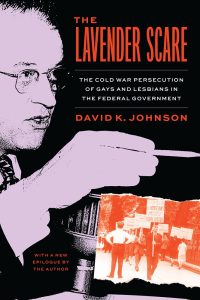
Lavender Scare


The Lavender Scare serves as a powerful reminder of the dangers of state-sanctioned discrimination against LGBTQI+ individuals and the profound impact it can have on lives and civil rights. While the UK has made notable progress since the deeply ingrained stigma of the mid-20th century, ongoing advocacy and awareness remain vital to achieving true equality and acceptance. Understanding this historical context is essential for recognising how far we’ve come and the work still ahead to fully support LGBTQI+ rights and inclusion.

The “Lavender Scare” describes a dark chapter in mid-20th-century history, mainly from the late 1940s through the 1960s, when gay men and lesbians working in the US federal government faced widespread dismissal and forced resignation because of their sexuality. This period of repression was closely linked to anti-communist fears and congressional investigations, which falsely painted LGBTQ+ individuals as security threats and potential communist sympathisers.


Key lessons from the Lavender Scare include:

  • Perception of vulnerability:   Homosexuality was heavily stigmatised, with the false belief that LGBTQ+ individuals were susceptible to blackmail, risking national security.
  • Anti-communist parallels:   This era coincided with the Red Scare and McCarthyism, where suspicion of communist ties led to widespread suspicion and persecution.
  • Dismissals and forced resignations:   Many federal employees were fired or compelled to leave their jobs solely based on their sexual orientation.
  • Absence of legal protections:   There were no laws safeguarding against discrimination based on sexual orientation during this time.
  • Social isolation and stigma:   Many affected individuals faced profound social rejection and lived in fear and silence.
  • Impact on civil rights:   The Lavender Scare fueled the broader fight for LGBTQ+ civil rights, highlighting the need for equality.
  • Legal progress:   Over time, legal battles and court rulings began to challenge and curb federal discrimination, laying the groundwork for future protections.

Reflecting on this history underscores both the resilience of the LGBTQI+ community and the ongoing necessity of activism and awareness to protect and advance their rights today.


Links:

  • Purging the Government: How the Lavender Scare Targeted LGBTQ+ Federal Employees
  • You’ve Probably Heard of the Red Scare, but the Lesser-Known, Anti-Gay ‘Lavender Scare’ Is Rarely Taught in Schools
  • The Lavender Scare from an Islamic Perspective: Is Islam to Blame?
  • The Seventies – A Breakthrough Decade for LGBT Rights
  • Cold War Timeline
  • YouTube – Time Magazine – The Lavender Scare – History You Didn’t Learn
  • LGBTQ+ Library Survey
  • Lavender 2.0
  • Violet delights: A queer history of purple
  • Queer Codes: Gay Men in the Civil Service


Filed Under: Editor to ACOMSDave Tagged With: anti-communist repression, civil rights movement, discrimination, government persecution, history of LGBTQ+, Lavender Scare, legal progress in LGBTQ+ rights, LGBTQ+ rights, LGBTQI+ history, US civil rights

Abysse – A Short Movie Review

15/06/2025 By ACOMSDave Leave a Comment


AbysseAbysse is about loss. Félix and Matthieu have been friends since childhood, bound by years of shared memories. When Félix returns to Bordeaux for the summer, it’s with the hope of reconnecting and reliving those carefree days. But one evening, Matthieu vanishes without a trace, leaving Félix haunted by unanswered questions. He plunges into a world of silence and confusion, embarking on a relentless, almost senseless quest to reclaim a friendship that feels lost forever.


A film crafted with care by writer and director Justin Berrocal.

Starring: Vincent Lambin, Baptiste Miremont, Romane Braud, Oscar Lalanne, Justin Berrocal

Director of Photography: Florian Gislier
Original Music: Paul Klein
Editing: Thomas Lescure
Sound Engineer: Florian Gislier
Colour Grading/Mixing: Florian Gislier

Length: 15.48 mins

Links:

  • YouTube – Abysse
  • I’m Not Gay (2020) – Gay Short Movie Review


Filed Under: Movie Reviews Tagged With: Bordeaux, childhood, cinematography, disappearance, drama, emotional, film, film review, friendship, Justin Berrocal, loss, music, mystery, search, silent quest

The Saint – Nothing New

14/06/2025 By ACOMSDave Leave a Comment

The SaintThis week, I picked up a copy of “The Saint Plays with Fire“, published originally in 1958.

To many, the Saint is either a radio series, a TV series featuring Roger Moore or Ian Ogilvy, or a film starring actors such as Val Kilmer.  However, the full flavour can only be understood by reading the original books.  There will be elements which are no longer acceptable in terms of comments and observations by the Saint, his friends and the ‘baddies’.  There is not a small degree of nostalgia for the somewhat gentile era that has long left us, but there is nothing wrong with dreams and nostalgia.

However, the reason I have put pen to paper about this book is because of this extract from the book:

“… to crush them like vermin, to destroy them like rats who would carry their plague germs through our fair land!  The blood of a million Frenchmen, dead on the fields of glory, cries out to you to show yourselves worthy of their sacrifice.  Rise up and arm yourselves against this peril that threatens you from within; stamp out these cowardly pacifists, these skulking traitors, these godless anarchists, these alien Jews who are betraying out country for a handful of gold … Sons of France, I call you to arms.   Fling yourselves into the fight with a song on your lips and glory in your hearts, for only in the blood and fire of battle will our nation be purified and find once ore her true soul!”


I write to warn you about the same thing that Leslie Charteris wrote about in 1958; the Far Right Parties that have reconstituted in Europe, these are not listed in any particular relevance, just a list:

1.        https://en.wikipedia.org/wiki/Conservative_People%27s_Party_of_Estonia
2.        https://en.wikipedia.org/wiki/Vox_(Spanish_political_party)
3.        https://en.wikipedia.org/wiki/Fidesz
4.        https://en.wikipedia.org/wiki/Our_Homeland_Movement
5.        https://en.wikipedia.org/wiki/Sweden_Democrats
6.        https://en.wikipedia.org/wiki/Lega_Nord
7.        https://en.wikipedia.org/wiki/Brothers_of_Italy
8.        https://en.wikipedia.org/wiki/Spartans_(Greek_political_party)


But, we are haemorrhaging under these ‘far right’ parties who are destroying our culture under the guise of protecting our future; the slow creeping of these parties taking a position in government, brain washing a proportion of the populace about the damage that minority groups are causing to their way of live in terms of wages, housing, safety is so reminiscent of a period in history that we have only just celebrated the end of with VE day.

History must not be allowed to repeat itself, either here in the UK, or in Europe; or in the USA which seems to have even its constitution under threat.


In the light of these pressures, I can and do encourage everyone who can vote to vote when given the opportunity to vote, don’t let our way of life be taken away because you have been disillusioned with politics or politicians! 

Links:

  • Wikipedia – List of active nationalist parties in Europe
  • BBC – Europe and right-wing nationalism: A country-by-country guide
  • Going Mainstream: Why extreme ideas are spreading, and what we can do about it
  • Going Dark: The Secret Social Lives of Extremists
  • Rogue Element in British Politics

Filed Under: Editor to ACOMSDave Tagged With: meta description, political awareness, urging voters to protect democracy and prevent history from repeating itself, warning against rising far-right parties in Europe and their dangers

Happy Pride Month

13/06/2025 By ACOMSDave Leave a Comment

Happy Pride MonthHappy Pride Month to everyone, whether you’re part of the LGBTQ+ community or simply here to celebrate diversity and inclusion. We can all join in the joy and solidarity!

I wanted to share some thoughts that have been circulating on social media, and I think they’re worth reflecting on. It’s a strange and somewhat unsettling time for the LGBTQ+ community. Over the years, many of us have become complacent, thinking the hard-fought battles are behind us. We tend to believe that professionals and advocates are handling everything, so we don’t need to be actively involved.

But the truth is, rights that many fought tirelessly for are gradually slipping away. Attitudes that shifted towards acceptance are now being pushed back. It’s a slow erosion, and it only takes one person in a position of power, such as a president with unchecked authority, to implement changes we will all regret.

This is a reminder: now more than ever, we need to look out for our friends and neighbours, regardless of their background. Because the truth is, any of us could find ourselves in the minority someday. Let’s stay vigilant, compassionate, and united, and have a Happy Pride Month.


Links:

  • College baseball player comes out, hopes he can help others accept themselves
  • How the graves of a legendary Australian outlaw and his sexy soulmate became a heritage site
  • Arizona swimmer came out as gay and everybody shrugged
  • 1991 A Belfast Pride to be remembered!
  • Gay beach volleyball pro says being out and proud is a privilege he’ll never take for granted


Filed Under: Community Journalist Tagged With: awareness, community solidarity, Diversity and Inclusion, equality, Human Rights, LGBTQ+ support, Pride Month, social awareness, social justice, standing together

Decoys & Ghosts – Art Exhibition – Golden thread Gallery, Belfast

08/06/2025 By ACOMSDave Leave a Comment

 Decoys & Ghosts - John Rainery 1Decoys & Ghosts. In April 2025, the Golden Thread Gallery in Belfast unveiled ‘Decoys and Ghosts,’ an ambitious exhibition that delves into two core themes that have shaped Rainey’s sculptural practice over the past decade: imitation and revisiting. Throughout his career, materials, their histories, and the processes they undergo have been fundamental to Rainey’s work, serving as a lens through which he explores these ideas.

Rainey’s approach to exhibition staging is particularly noteworthy. He crafts environments and designs experiences that encourage cultural interactions, transforming simple installations into dynamic spaces where groups of different cultures can forge relationships. In his hands, plinths transcend their traditional role, evolving into dioramas or becoming viewing platforms that invite audiences to engage physically—climb, explore, and immerse themselves.

‘Decoys and Ghosts’ Decoys & Ghosts - John Rainery 2at the Golden Thread Gallery (by John Rainey) presents a compelling mix of retrospective pieces and new works, anchored by a significant large-scale installation that epitomises these themes. This exhibition stands as Rainey’s most comprehensive survey to date, offering a rare opportunity to witness the evolution of his practice, highlighting recent innovations alongside the works that have shaped his journey thus far.

I was interested in the exhibition and visited on Wednesday 4th June 2026, but felt that I was missing something when I came away – I was looking for more interpretation of the work, but maybe that is just me.


Links:

  • Ed Reynolds – Artist – About Belfast
  • Golden Thread Gallery – Decoys & Ghosts

Filed Under: Community Journalist Tagged With: Art exhibition, Belfast, contemporary sculpture, cultural environments, Decoys and Ghosts, Golden Thread Gallery, imitation, large-scale installation, new works, Rainey, retrospective, revisiting

I’m Not Gay (2020) – Gay Short Movie Review

06/06/2025 By ACOMSDave Leave a Comment


I'm Not Gay I'm Not Gay I'm Not Gay I'm Not Gay

At first glance, ‘I’m Not Gay’ (2020) might seem like a title meant to grab attention, provocative, even. But underneath that boldness lies a subtle, layered film that explores the nuances of identity, repression, and masculinity. It’s a quietly powerful character study that challenges how we perceive others and, more importantly, how we confront our own truths when no one’s looking.

Plot Summary

The movie centres on Jake Donovan (Lucas Hedges), a college athlete from a conservative Midwest town where masculinity is rigid, emotions are hidden, and identity feels like it’s handed down rather than chosen. Jake appears to fit the mould: confident, straight, tough. But everything shifts when he befriends Adam (Justice Smith), an art student with a gentle spirit and an unapologetic authenticity that both intrigues and unsettles Jake.

What starts as late-night talks and shared secrets gradually morphs into something unspoken — a connection neither of them is ready to define. As rumours spread and external pressures mount from teammates, family, and community, Jake’s repeated insistence of “I’m not gay” becomes a shield, a way to cling to his constructed identity. But inside, his world is quietly unravelling. The real conflict isn’t just societal—it’s internal, a battle with fear, desire, and self-denial.

Artistic Approach

Directed by Eliza Hittman (*Beach Rats*), “I’m Not Gay” captures that tense silence of repression with intimate cinematography and a visual language that speaks volumes. The camera lingers on subtle gestures — a hesitant touch, a prolonged glance, the weight of unspoken words filling the space.

There’s a raw honesty to how scenes unfold — no melodramatic moments, just quiet internal struggles spilling over. The muted colour palette, soft lighting, and ambient sounds create an almost tactile sense of emotional discomfort. The score by Rob Simonsen delicately weaves piano and atmospheric textures, emphasising the emotional layers without overpowering the subtle storytelling.

Performances

Lucas Hedges delivers a deeply affecting performance. He’s not just playing a guy questioning his sexuality; he embodies the fear of losing himself, the denial wrapped around vulnerability. Every look, every hesitation, feels authentic — a layered portrayal of someone caught between who they are and who they’re supposed to be.

Justice Smith’s Adam is a quiet force — calm, genuine, fully realised. His presence serves as a mirror for Jake, pushing him to confront what he’s been avoiding. Their chemistry crackles with complexity, blending fear, tenderness, and confusion in a way that feels real and raw.

Supporting roles deepen the story — Cherry Jones as Jake’s emotionally distant mother adds a layer of generational tension and cultural context, underscoring the silent pressures that shape Jake’s world.

Emotional Depth

This film isn’t about easy answers or neat resolutions. It plunges into the discomfort — the kind that comes with feeling like you don’t fit into any box, craving connection but fearing the cost. It’s less about coming out and more about coming to terms with oneself in silence.

*I’m Not Gay* asks: what happens when we spend our lives trying to prove something, only to realise we’ve been trying to prove it to ourselves all along? Jake’s journey is painfully authentic, resonating with anyone who’s ever struggled with fear, denial, or the longing to be understood without judgment.

The final scene, a quiet moment of truth between two characters in a dimly lit room, speaks volumes in its silence, more than any dramatic confession ever could.

Tone and Rhythm

The film’s pace is slow and contemplative, mirroring the natural process of emotional change. It’s a deliberate, restrained storytelling choice — feelings don’t shift overnight, and repression isn’t broken in a single scene. Instead, the movie reflects the gradual, often painful, peeling away of armour, revealing the quiet bravery of facing oneself.

Final Thoughts

*I’m Not Gay* (2020) is a courageous, honest portrait of identity and repression. It’s less about labels and more about the universal human desire to be loved for who we are, not who we’re told to be. It lingers long after the credits, in unspoken words, lingering glances, and the hearts of those still trying to understand their truth.


Links:

  • IMDB – I’m Not Gay
  • Vimeo – I’m Not Gay
  • Scraps


Filed Under: Movie Reviews

Scraps – A Short LGBTQ Movie Review

29/05/2025 By ACOMSDave Leave a Comment

Scraps Experience the poignant coming-of-age story of SCRAPS, a gay romance skateboarding short film that captures the vibrant energy of skate culture intertwined with tender moments of self-discovery. Set against the rugged backdrop of rural 2003 Montana, this indie LGBTQ+ film follows a closeted teen artist as he falls for an openly skateboarding boy, confronting the fears of small-town judgment and the courage to embrace his identity. Featuring compelling performances by Dorian Giordano and Peder Lindell, SCRAPS echoes the emotional depth of films like Mid-90s, Call Me By Your Name, and The Perks of Being a Wallflower. It’s a heartfelt journey of love, vulnerability, and growth during a defining summer in a small town.


Links:

  • YouTube – Scraps
  • Lucky Blue – A Short LGBTQ Movie Review
  • Amazon – Scraps: A Gay Skateboarding Romance Novel

Filed Under: Movie Reviews Tagged With: 2003 Montana, coming of age, Dorian Giordano, heartfelt LGBTQ+ story, LGBTQ+ indie film, LGBTQ+ short film, LGBTQ+ youth, love and identity, Peder Lindell, rural Montana, skateboarding romance, small-town judgment, summer romance, teen love story

Brad Davis

29/05/2025 By ACOMSDave Leave a Comment


Brad DavisBrad Davis: The Untold Story of Love, Courage, and Hidden Battles


Brad Davis’s life was a tapestry woven with talent, resilience, and secrets he carried silently. Born Robert Creel Davis on November 6, 1949, in Tallahassee, Florida, he grew up amid the gentle hum of a middle-class Southern family. His father, Eugene Davis, was a dentist and navy officer, while his mother, Anne Creel Davis, was a homemaker with a passion for theater administration. From childhood, Davis exhibited a natural flair for storytelling and performance—an early sign of the star he would become. But beneath the surface, his world was tinged with emotional turbulence, questions of identity, and a restless search for belonging.

His teenage years saw him dabbling in music and singing before he realized his true calling lay on stage. Enrolling at Florida State University briefly, he soon shifted gears, seeking out Miami Dade Community College and eventually NYC’s prestigious American Academy of Dramatic Arts. There, he refined his raw talent, shaping the emotionally intense actor that audiences would come to admire.

In the early 1970s, Davis’s career began with theater, where his authentic, naturalistic style caught attention. He moved swiftly into television, guest-starring on shows like *Policewoman* and *Starsky & Hutch*. His early roles often portrayed troubled, passionate characters—misunderstood souls just waiting for their moment in the spotlight.

That moment arrived in 1978 with *Midnight Express*. As Billy Hayes, a young American imprisoned in Turkey for drug smuggling, Davis delivered a performance so visceral it shook viewers to their core. His portrayal was raw, physically demanding, emotionally piercing. It earned him the Golden Globe for Best Actor, catapulting him into Hollywood’s spotlight. Suddenly, he was seen as one of the most promising talents of his generation.

Following that breakthrough, Davis continued to impress. Films like *A Small Circle of Friends* (1980), set against the backdrop of the turbulent ’60s, and *Chariots of Fire* (1981), where he played Jackson Schultz, cemented his reputation. His participation in Larry Kramer’s *The Normal Heart* off-Broadway in 1982 was equally significant—his portrayal of Ned Weekes during the early AIDS crisis was both courageous and compassionate, reflecting his deep commitment to social justice.

Yet, behind the curtain, Davis faced personal demons. Substance abuse and health struggles cast shadows over his career. Despite this, he delivered memorable performances in projects like *A Rumor of War* and *Corell*, showcasing a resilience that belied his inner turmoil.

His personal life was equally complex. In 1976, he married Susan Bluestein, a talented casting director. Their union was more than romantic; it was a partnership rooted in mutual support and shared resilience. Susan was his anchor, supporting him through Hollywood’s fickle landscape and later, the devastating challenges of his health. When Davis was diagnosed HIV positive in 1985—during a time when fear and misinformation about the disease ran rampant—Susan stood unwaveringly by his side. They chose to keep his diagnosis private, fearing the devastating stigma and the impact on his career.

The secret weighed heavily. Despite his struggles, Davis continued working, hiding his illness from the public eye. The physical toll grew, and in 1991, at just 41, he made the heartbreaking decision to end his life through assisted suicide, with Susan at his side. Her devotion didn’t waver; she supported his choice, honoring his dignity and the love they shared.

In the years that followed, Susan became a fierce advocate for AIDS awareness and compassionate end-of-life choices. Her memoir, *After Midnight*, shed light on their private battles—his bisexuality, his pain, and the courage it took to face his mortality.

Davis and Susan had one child—Alex Blue Davis—who inherited his parents’ artistic spirit and resilience. Growing up amid whispers of his father’s struggles, Alex carved his own path into entertainment, becoming a well-respected actor and activist. His role as Dr. Casey Parker on *Gray’s Anatomy* was groundbreaking, as he portrayed a transgender man, contributing to vital representation in mainstream media. Alex openly discusses his journey, honoring his father’s legacy while forging his own identity rooted in authenticity and courage.

—

**A Hidden Love and the Shadows of Hollywood**

In a revelation that rocked Hollywood’s secret corridors, Davis later disclosed intimate details of his romantic entanglements with closeted stars of the golden era. His letters and journals, published posthumously, describe a world where love was cloaked in shadows—where the fear of losing everything kept many from living authentically.

He spoke of a mysterious, marble-jawed leading man from the 1950s, a figure whose silent tenderness left an indelible mark. But he named Anthony Perkins—star of *Psycho*—as someone he shared a passionate, if clandestine, affair with in the late ’70s. Perkins, haunted by his own struggles with identity, understood the weight of hiding. Davis also hinted at a playful, charged relationship with Rock Hudson, the legendary star who would tragically die of AIDS in 1985. Though he stopped short of claiming a full affair, Davis’s words reveal a mutual understanding—a silent acknowledgment of love in a world that demanded silence.

Their stories underscore a painful truth: Hollywood’s golden glow often cast long, dark shadows over its stars’ private lives. The emergence of AIDS shattered many illusions, with Hudson’s death marking a turning point in public awareness. That same year, Davis was diagnosed with HIV—a silent, deadly companion he kept hidden for years.

His decision to stay silent was driven by fear—fear of stigma, career ruin, and social rejection. Yet, in 1991, he chose to reveal his status publicly, a move that took immense courage. Susan’s memoir later detailed how Davis likely contracted HIV through past substance abuse—an echo of the turbulent life he led—and how he faced his final days with quiet dignity.

He wrote a haunting, unpublished manuscript about the pressures to hide his truth, revealing a man fighting not just illness, but the systemic silence that surrounded it. His death, and the secrets he kept, serve as stark reminders of a time when love, illness, and identity were buried behind layers of fear.

—

**Legacy of Courage and Compassion**

Brad Davis’s story is more than Hollywood trivia; it’s a testament to human resilience. His life, filled with triumphs and hidden battles, reflects the cost of authenticity in an era of repression and misinformation. His grave at Forest Lawn stands as a quiet monument to a man who gave everything on screen and endured so much behind the scenes.

Today, his journey reminds us of the importance of compassion, honesty, and the ongoing fight against stigma. Through the advocacy of his wife Susan and the work of his son Alex, Davis’s legacy endures—not just as a talented actor, but as a symbol of unyielding courage in the face of unimaginable adversity.


Link:

  • MUBI – Brad Davis
  • YouTube – Brad Davis
  • YouTube – Midnight Express
  • Teen Wolf Actor Charlie Carver Comes Out as Gay

Filed Under: Community Journalist Tagged With: Actor Biography, Actor Legacy, AIDS Crisis History, American Actor, Brad Davis, HIV/AIDS Awareness, Hollywood History, Hollywood Legend, Hollywood Legends, Hollywood Secret Lives, Horror Actor, LGBTQ+ History, Midnight Express, Personal Stories of Actors, Resilience and Courage, Rock Hudson Secret Love, Substance Abuse in Hollywood, Untold Hollywood Stories

Truth Recovery Process (TRP) – by Jeffrey Dudgeon MBE

20/05/2025 By ACOMSDave Leave a Comment

To Padraig Yeates
 
Truth Recovery Process (TRP)
 
Truth Recovery Process (TRP) - Kincora Boys' HomeI must respond to a series of newspaper articles reproduced in TRP based on the reissued Chris Moore book about the Kincora boys’ home, which are stated to be ‘deeply damaging’ to unionism.
 
The so-called revelations are in fact few and noticeable for lack of verification. The allegations of criminal misbehaviour attributed to Lord Mountbatten have been countered on many occasions, not least by members of his staff at Classiebawn Castle in Mullaghmore.
 
The new stories are, for the most part, hard to credit and essentially require one to believe in a conspiracy between the RUC and in turn, the Guards to turn a blind eye to the trafficking of boys across the border from Belfast to Sligo. One, Richard Kerr, is quoted as explaining that he and a friend “were driven by Kincora warden Joe Mains to the car park of the Manor House Country Hotel outside Enniskillen in August 1977. Two of Mountbatten’s security men then allegedly arrived in separate black Ford Cortinas to ferry the boys to Mullaghmore, 45 miles away. The teenagers were dropped off separately at Classiebawn Castle “before being taken individually from a guest reception room to the green boathouse where they were sexually assaulted and then returned to the Manor House.”
 
I understand there is no boathouse at the castle, while the Guards would not have crossed the border. Mountbatten would only have had RUC protection if he travelled into the north which he apparently rarely did. I imagine if he had asked the RUC for security advice they would have said do not go to the Republic, least of all to holiday there.
The problem with Richard Kerr is that he was long associated with Carl Beech and his fantasies about Ted Heath and other prominent political figures. Beech was jailed for 18 years in 2019 for perverting the course of justice and fraud.
The other new story, new to me anyway, is that an RUC detective “contacted by concerned social workers, secretly photographed VIPs visiting Kincora including NIO officials, lay magistrates, police officers and businessmen.” However no names of these recognisable visitors or indeed photographs have been produced. Why not?
The long Sunday Life extract from the book on Chris Moore’s meeting with William McGrath is remarkable for the absence of any substance. McGrath was a practised deceiver and determined homosexual who even misbehaved with a family member. Regardless of his later denials, he pleaded guilty in 1982 to a series of charges relating to boys at Kincora, as did two other staff who were less vicious. 
 
It is important to note that boys’ homes in Northern Ireland were cleaned up decades before those in England or the Republic. 
That the brother of Brian McDermott, the boy murdered and dismembered in Belfast in 1973, allegedly confessed to the crime was, of course, not mentioned when another name, that of a minor unionist figure, is suggested as the culprit with no back-up evidence.
Kincora was heavily investigated by Sir Anthony Hart’s public inquiry (the last of a series) which reported in 2017. It had a whole module devoted to the home whose many chapters are available on the internet.
 
The evidence around a VIP vice ring out of Kincora was forensically examined. Hart’s inquiry concluded they did not find “any credible evidence to show that there is any basis for the allegations that have been made over the years about the involvement of others in sexual abuse of residents in Kincora, or anything to show that the security agencies were complicit in any form of exploitation of sexual abuse in Kincora for any purpose.”
Kerr along with the three other main conspiracy theorists declined to give evidence at the inquiry and are fairly robustly treated in the report, with their various, often conflicting, statements on Kincora taken apart. 
 
On William McGrath, the report stated, “Based on our extensive examination of a very large number of files held by RUC Special Branch, by MI5, by SIS and by the Ministry of Defence, we are satisfied that McGrath was never an agent of the State, although he may have enjoyed creating an air of mystery about his activities, part of which may well have involved him hinting at, or implying in an oblique fashion, that he was an agent of the State.”
 
Journalists who, on the one hand, call for judicial public inquiries in legacy matters and then discount or ignore the findings, as with Hart, lose their credibility and can be seen instead as simply pushing a nationalist line to feed tabloid conspiracy theories.
 
Jeff Dudgeon
19 May 2025
 
Link:
  • A very British scandal… King’s uncle, MI5 and a sordid Kincora cover-up  –  Suzanne Breen, Sunday Life, June 18th, 2025
  • A revisit to the reporting by Sinn Fein on A SAVILE INQUIRY and Kincora!

    Jeff Dudgeon
    19 May 2025

Filed Under: Editor to ACOMSDave Tagged With: conspiracy theories, credible findings, Kincora Boy's Home, official investigations, Truth Recovery Process (TRP) examines Kincora abuse allegations, verified evidence

  • « Previous Page
  • 1
  • …
  • 7
  • 8
  • 9
  • 10
  • 11
  • …
  • 108
  • Next Page »

Categories

Copyright ACOMSDave.com © 2026