Why is the UK Government silent on Russian Anti-Gay Excesses?
Community Journalist


Tuesday Jun 9, 2015
(Source:Noah Berger/AP)



| BY JOE MORGAN

– See more at: http://www.gaystarnews.com/article/bloody-hell-britain-under-pressure-lift-gay-and-bisexual-blood-ban090615#sthash.NS5VeljR.dpuf

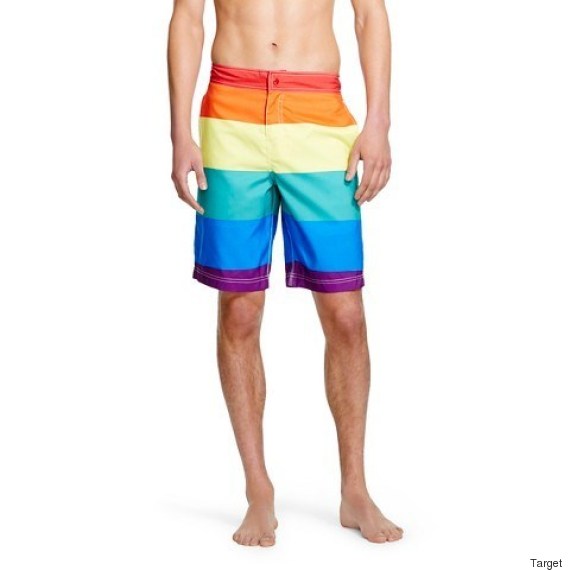

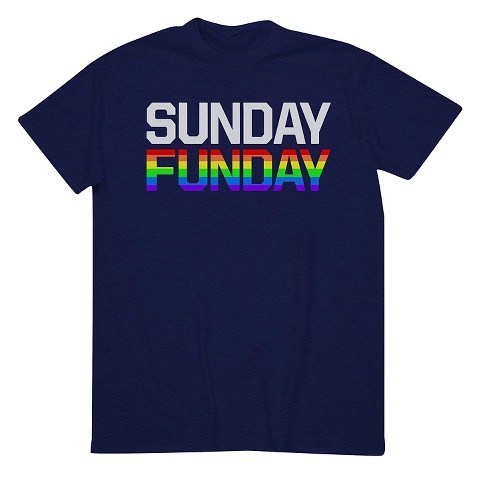
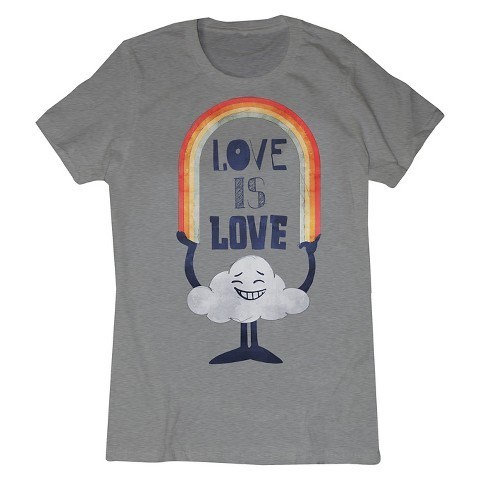
We’re making our message loud and clear: Target proudly stands with the LGBT community, both as a team member and team player through all that we do – from our volunteer efforts to our long-standing partnerships with groups likeFamily Equality Council and Gay, Lesbian & Straight Education Network, to the very products we carry in our stores and online.
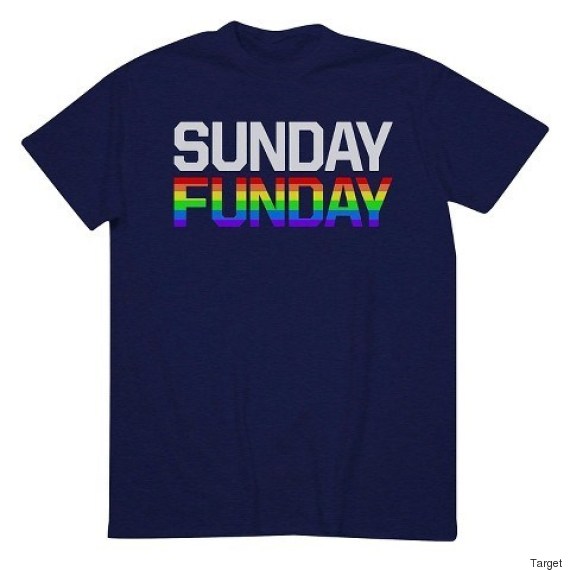
 Target
 Target
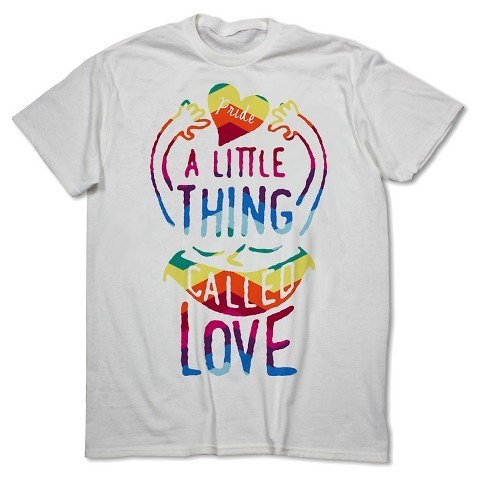
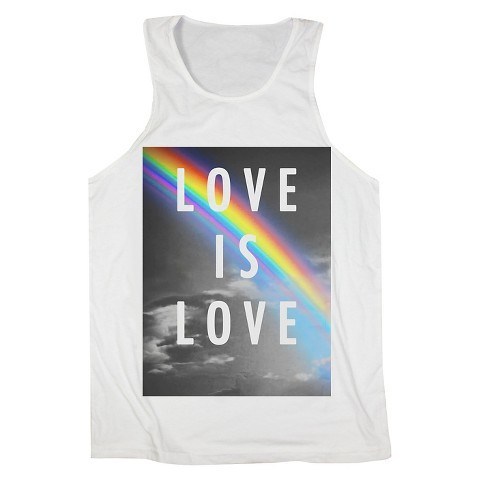 Target
 Target
 Target
 Target
 Target


In the criminal justice system on television, some portrayals of LGBT people are considered particularly heinous.
One exception, however, is TNT’s Major Crimes, a spin-off of the beloved series The Closer,created by openly gay writer James Duff. Major Crimes kicks off its fourth season tonight at 9 p.m. Eastern, and features the character Rusty Beck, portrayed by Graham Patrick Martin. Rusty made his debut in the series finale of The Closer and has been a central element ofMajor Crimes since its debut, acting as one of the principle narrative threads connecting the episodes. He’s been a homeless teen, the child of an addict, the witness to a murder and one of the most three-dimensional gay characters on television.
Ahead of tonight’s premiere, we spoke with Martin about the role and what’s ahead for Rusty in season four.
Towleroad: You joined this project during the series finale of The Closer. When you were first introduced to this character, what really interested you about Rusty?
Graham Patrick Martin: What’s great about this show, not to knock on other procedural shows, but what this show does‚ and The Closer did and now Major Crimes‚ is James Duff and the rest of the writing staff really writes these full characters, like even the people down to the one liners. It just feels like they have a full life, and that’s what I loved about Rusty going into it.
TR: What surprised you most about how the character developed over the years?
GM: What I really love about it is that Major Crimes has taken great care in writing and developing Rusty as a multi-faceted character where the emphasis is just as much on his humanity as it is on his sexual identity. They haven’t really short-changed or accelerated his story for purposes of effect or purposes of making the show more interesting. They’ve really sort of authentically allowed this character to grow into the man he’s becoming. He’s not quite there yet, but he’s on his way. It’s really fascinating because the story’s really unique in the sense that Rusty sold himself on the streets at the age of 15 years old. At that age, you know, James and I both talk a lot about this, sex is not, in that specific circumstance, sex is not an act of love; it’s an act of violence, really. That was really his first introduction into sex. So, sort of watching Rusty develop, watching Rusty now sort of assimilate himself into normal life has really been interesting, because it’s challenging, his introduction into his sexuality, viewing it as kind of a bad thing. When Rusty first came out to everyone, it was very hard for him because the only gay people he knew were bad people. It was kind of this shame he felt and this fear that there was something wrong with him that he couldn’t fix. He even says that at the end of, I believe, the end of season two. He said, “I can’t fix it, I can’t fix it.” So, watching him sort of come to terms with that and sort of really — with the help of the love and support of Captain Raydor, who’s his adopted mother, and the rest of theMajor Crimes team, really, with their support — come to terms with who he is and accepting it and really thriving in it has been the most interesting part of playing this character, I think.
GM: It’s so crazy every time. I live in Los Angeles, and people in LA are kind of too cool to approach you, so I don’t get approached that much in LA. But, if I do, like last night, my girlfriend and I were out to dinner, and some guy just walked by and was like, “You do good work.” And that was it. That’s like the most I get here. But I always say the second I pass the TSA checkpoint at LAX, when I leave LA, it’s like everybody in the world comes up to me. I get a wide range of reactions, specifically older women pinching my cheeks and viewing me like a son. They care so much about me, because they’ve been through a lot with me. They’ve been watching Rusty go through so much that they view me like a child to them. Then I’ve had other people send me messages on the Internet, because I read a lot of what fans write in. People have sent me messages and other cast-members messages and the writers messages saying like, “Hey, thank you so much for writing this Rusty character, because this is my story‚” or “This is my son’s story‚” or “This is my brother’s story,” and to see it being told just means a lot to people. I have one guy who just wrote me this really long message just saying, “Hey, Graham, I don’t want anything back from you. I don’t want a response from you. I don’t want you to send me a signed picture. I just want to tell you thank you, because Rusty’s story is my story, and seeing it told authentically is something that I’ve never witnessed before and means a lot to me.” The response that I get from people is a lot of gratitude. A lot of gratitude for this character, a lot of gratitude for being written and portrayed as sort of a real story and not so much a stereotype.
TR: In terms of your own understanding or exposure to these stories from the LGBT community, how has playing this role affected you personally?
GM: I mean, it’s definitely changed me a lot. I’m a straight guy. I have a girlfriend and this is a sort of world I’ve never really had a personal connection to. I’ve had a lot of gay friends, I’ve had gay family members, but this personal connection is something that I didn’t have before. I’ve really learned a lot. Specifically, I remember the episode where Rusty comes out to the squad. I got that script and I was like, “OK, I can play with this. I know Rusty well. This will be fine.” But I sort of realized I don’t know what it’s like to have to tell people a part of who I am and risk losing their love or their support or their friendship for it. I didn’t know what that’s like. That’s something that I, Graham, have never experienced, and I couldn’t fake. Because I’ve never experienced anything near that. I can’t imagine, for example, having to tell people that my hair is blonde‚ something that’s just a part of who I am, and that potentially meaning that I could lose those relationships or be judged for it or be rejected or disowned for it. I didn’t know what that was like, so I spoke to Phillip Keene, who is a castmate of mine, and asked him to lunch one day the week of shooting. I just asked him, “Hey man, if it’s ok with you sharing, what was your experience like?” I’m not going to get into it, because it’s personal for him, but hearing his side of it and really getting that personal connection to this experience that I have never had to go through, and I can’t imagine or fake going through, hearing that personal experience from him was really eye-opening and really powerful. I feel like we bonded, and I really sort of learned something new and was able to, I think, more authentically capture what that experience would be like.
GM: I’m really excited, because Rusty has this whole new storyline that’s unlike anything from previous seasons. It’s his first year of college and he’s really embraced journalism. Through this newfound passion, he’s taken the challenge to identify a teenage murder victim from last season who is a Jane Doe. She died last season, and her identity is not known. Rusty really takes it upon himself to start this vlog, this investigative vlog where he tries to find the identity of this girl who died a year ago without an identity. He can relate a lot to her, because she was a homeless teen, just like himself. In trying to locate her name, he’s also trying to locate himself, and trying to, I guess, sort of save her, save her identity in any way he can. I’m really excited about that. It’s a really awesome storyline. Also, I’m excited, I can’t give away too much, because we’re shooting these episodes right now, but Rusty’s first sort of real, I guess I’ll call it “an opportunity for a love interest.” That’s what I’ll call it as of now, because that’s something that’s really complex. As I’ve talked about before, Rusty’s experience with sex is not necessarily a positive one at all. We’re sort of getting to this place where he’s inching toward the idea of maybe, possible dating, and sort of the challenges that that brings. I’m excited for both of those.
Have you watched the new series of Major Crimes yet? If not why not?
This interview has been edited and condensed.
POSTED JUN 8, 2015 AT 7:30 PM EST BY BOBBY HANKINSON


We get to see Mr Put It Down
Did you miss it? Were you asleep or in a different country? Well you’ve got no excuse now because it’s online.
Ricky Martin performed his new single on The Tonight Show.
Mr Put It Down ft. Pitbull is the first single from Ricky’s upcoming English project which is arriving later this year.
He’s currently touring around America as part of his One World Tour.
So if you can’t see him live, check out this rather amazing performance of Mr Put It Down.


The Bravest Knight Who Ever Lived, the charming story of Cedric the pumpkin farmer — who shows courage, smarts and kindness as he grows to be a knight — may very well be the first children’s book to feature a hero who just happens to be gay.
Creating the tale was an act of bravery itself for writer Daniel Errico – who just happens to be straight.
The author of more than 100 children’s e-books, many of which are available on his website (FreeChildrenStories.com), Errico is widely known for his Barnes and Noble best-sellers The Journey of the Noble Gnarble and The Journey of the Marmabill.
So why would a straight, successful children’s author take on the risky challenge of creating a gay hero?
“I’m close friends with a gay couple, and when it comes to children’s literature, it was clear to me that they were being left out of the conversation,” Errico says. “There are some great children’s books about non-traditional families and gender non-conformity, but the biggest omission is gay heroes who kids can look up to and relate to.”
Errico faced resistance as soon as he began to develop the tale. “People who were close to me were concerned it might end my career,” he says. “They didn’t understand why I, as a straight man, would want to do it. But for me it’s a human rights issue. I can choose to be a part of this or not, which makes me even more determined to do it.”
The Bravest Knight Who Ever Lived was first published as an e-book, with sweetly droll illustrations by Danish artist Ida M. Schouw Andreasen. Having studied traditional fairy tales, Errico tells the story in charmingly witty verse that would make Oscar Wilde proud.
“I got amazing feedback from people who said they wish they’d had a book like this when they were growing up,” the author adds. But not all of the feedback was positive.
“There were conservative sites that said I was trying to brainwash kids and promote a gay agenda,” he says. “It was the first time in my career that people said, ‘I wouldn’t show this to my kids,’ even people who I considered liberal and gay allies. It changes for them when kids are involved. At the heart of it, some people are not fully convinced that their children’s sexuality cannot be influenced.”
Errico self-funded an animated eight-minute version of the story, which Andreasen then created. “I got unbelievably excited when Hulu decided to pick it up,” he says.
“We definitely recognized that The Bravest Knight is not for all audiences,” says Andrew Thomas, Hulu’s senior manager of content acquisition. “We wanted to be respectful and mindful of parents who are not ready to have a conversation with their kids about LGBT issues. But we hadn’t come across kids’ content that spoke to LGBT issues before. We’re in the business of telling great stories to kids, and this is such an adorable, sweet story. I feel very privileged that our whole team and our management is behind it.”
Hulu premiered The Bravest Knight Who Ever Lived on May 28, to kick off the site’s June Pride month initiative. And although it runs a mere eight minutes long, it is indeed a tale of which everyone can be proud.
Watch The Bravest Knight Who Ever Lived.
1 June 2015
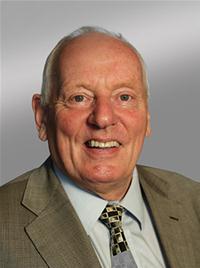 Cllr Jeffrey Dudgeon (UUP Balmoral)
I share the sheer joy of friends and comrades in the south at the referendum result.
Ireland, as someone has said, CAME OUT, and became a Republic of Freedom, perhaps for the first time.
Self-confident, modern, generous and tolerant.
Nothing illustrates that more than those hundreds who flew back into Dublin to vote.
It was not ever thus.
When they decriminalised in 1993, it was eleven years since I and a small band achieved the same in Northern Ireland. We had then a handful of non-gay supporters – Mary Holland the journalist, the poet John Hewitt and his wife, and another journalist still with us, Fionnuala O’Connor.
 It took the south another decade, David Norris following in my footsteps at the European Court of Human Rights.
Contrary social forces there were strong. Not so now.
Although four out of ten did find reasons to vote NO, the campaign was civilised and largely polite.
So why the change? What happened?
Gay people came out, and the world realised we were not what they were led to expect. That then became a geometric process. Everybody had a gay person in their family or one amongst their friends.
When we decriminalised in 1982, there was a small party in Belfast of a dozen people and later a celebratory disco, not a huge street party with global support.
There was still to be a series of uphill battles in Northern Ireland, to bring about an equal age of consent, a fair and non-discriminatory sexual offences law, and civil partnerships. All were achieved by and through Westminster, with the signal help of Kate Hoey MP in the age case.
Being realistic, most countries in Europe still do not have equal marriage laws.
And the fact remains that in communist and post-communist countries, in the Islamic world and in much of Africa there is prosecution, persecution and worse. A ray of hope – Mozambique has just decriminalised. London a recent opinion poll told us, worryingly, is twice as homophobic as anywhere else in Britain.
Now in Northern Ireland we are being asked to follow suit immediately in the matter of marriage.
I don’t want to be churlish, but decriminalisation in the 1980s was achieved without support from any political party in Northern Ireland.
When the going was tough, the tough were found wanting.
Even today the Alliance Party has an equal marriage policy but it does not discipline MLAs who defy the whip.
Sinn Fein who were not supportive of law reform when it was unpopular, still can’t celebrate or even recognise their most famous gay hero and martyr, Roger Casement.
I am living history and can only take the long view.
I also campaigned for civil partnership when that was the limit of what progressives in the Labour Party and LibDems were offering. I did not say then marriage was next.
We don’t want or need a referendum here. That is a silly notion. The Bill would still have to get through the Assembly where it would be vetoed.
I don’t think the proposers of this motion are showboating or trying to test those who have concerns about a change in the marriage law, but I am nervous of opponents getting demonised for opposing something that was common currency a few short years ago.
I have respect for those I know who cannot support this motion, either because of theological beliefs, or simply traditional views, but not for those in the DUP who would reverse the reforms achieved, even decriminalisation itself. I have said we need to be careful that the balance between the European Convention articles on freedom of conscience and the right to a private life do not get out of kilter. Equality law should not trump human rights.
In my own party there are differing views. We tend to hold to the status quo, and that I understand, but some have already voted for change and it cannot be said they have paid a political penalty – unlike Montgomery Hyde MP, the most prominent exponent in the House of Commons in the 1950s for enacting the Wolfenden report reforms. He lost the Ulster Unionist nomination for his North Belfast seat in 1959 for his courage.
To conclude, I got selected in South Belfast by the UUP for this august body, and elected in 2014, as an openly gay man, and have been treated with respect and courtesy by all the other members. This has warmed my heart like little else.
As to the matter in hand, I am not of the view that the legislative change sought will be achieved through Stormont, certainly for a number of years. This motion is not going to change many minds there. I rather expect my learned friends in the High Court and in Strasbourg will again be the vehicle of change.
jeffreydudgeon@hotmail.com
Motion re: Civil Marriage Provisions for Same Sex Couples – Cllr. Emmet McDonough-Brown (Alliance) to move (Seconded by Cllr. Jim McVeigh, Sinn Fein leader):“This Council believes that all couples in Belfast and across Northern Ireland, regardless of sexual orientation, should have the right to a civil marriage; that the rights of religious institutions to define, observe and practise marriage within their beliefs should be given legal protection; that faith groups which wish to marry same sex couples should not be prevented by the state from doing so; that all married couples of the same sex should have the same legal entitlement to the protections, responsibilities, rights, obligations and benefits afforded by the legal institution of marriage; and calls on the Minister of Finance and Personnel to introduce legislation to extend civil marriage provisions to same sex couples.” Passed by 38 to 13 with two abstentions.