
ACOMSDave

Community Journalist

  • Home
  • Community Journalist
  • Events
  • Media Page and Press Kit
    • Projects and Work
  • Resources & Documents
    • LGBTQ+ Support Groups and Documents
  • NIGRA
  • Archives
  • Contact

100 years of Northern Ireland: how has it gone?

21/03/2021 By ACOMSDave

100 years of Northern Ireland: how has it gone?

2021 is the hundredth anniversary of the formation of Northern Ireland. This Decade of Centenaries panel discussion, hosted by well-known local broadcaster, Tara Mills, Decade of Centenaries panel discussion: 100 years of Northern Irelandwill look at the last one hundred years from a range of different perspectives.

Panellists for the session are:

  • Lord Paul Bew, Chair of the Northern Ireland Office Centenary Historical Advisory Panel
  • Prof Mary E Daly, University College Dublin and Royal Irish Academy
  • Prof Thomas Hennessey, Professor of Modern British and Irish History, Canterbury Christchurch University
  • Dr Marie Coleman, School of History, Anthropology, Philosophy and Politics, Queen’s University Belfast
  • Dr Seán Byers, Researcher at Trademark Belfast and author of a number of pieces on trade unions, economic and political strategies

You can submit written questions to the panel during the event.

A sign language interpreter will be signing the event.


Links:
  • Belfast City Council- Events

Tagged With: Belfast City Council, Belfast Events, Centenary, history

BELFAST CITY COUNCIL EQUAL MARRIAGE MOTION

09/06/2015 By Dave McFarlane Leave a Comment

1 June 2015
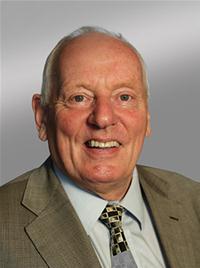
Cllr Jeffrey Dudgeon (UUP Balmoral)
I share the sheer joy of friends and comrades in the south at the referendum result.
Ireland, as someone has said, CAME OUT, and became a Republic of Freedom, perhaps for the first time.
Self-confident, modern, generous and tolerant.
Nothing illustrates that more than those hundreds who flew back into Dublin to vote.
It was not ever thus.
When they decriminalised in 1993, it was eleven years since I and a small band achieved the same in Northern Ireland. We had then a handful of non-gay supporters – Mary Holland the journalist, the poet John Hewitt and his wife, and another journalist still with us, Fionnuala O’Connor.
It took the south another decade, David Norris following in my footsteps at the European Court of Human Rights.
Contrary social forces there were strong. Not so now.
Although four out of ten did find reasons to vote NO, the campaign was civilised and largely polite.
So why the change? What happened?
Gay people came out, and the world realised we were not what they were led to expect. That then became a geometric process. Everybody had a gay person in their family or one amongst their friends.
When we decriminalised in 1982, there was a small party in Belfast of a dozen people and later a celebratory disco, not a huge street party with global support.
There was still to be a series of uphill battles in Northern Ireland, to bring about an equal age of consent, a fair and non-discriminatory sexual offences law, and civil partnerships. All were achieved by and through Westminster, with the signal help of Kate Hoey MP in the age case.
Being realistic, most countries in Europe still do not have equal marriage laws.
And the fact remains that in communist and post-communist countries, in the Islamic world and in much of Africa there is prosecution, persecution and worse. A ray of hope – Mozambique has just decriminalised. London a recent opinion poll told us, worryingly, is twice as homophobic as anywhere else in Britain.
Now in Northern Ireland we are being asked to follow suit immediately in the matter of marriage.
I don’t want to be churlish, but decriminalisation in the 1980s was achieved without support from any political party in Northern Ireland.
When the going was tough, the tough were found wanting.
Even today the Alliance Party has an equal marriage policy but it does not discipline MLAs who defy the whip.
Sinn Fein who were not supportive of law reform when it was unpopular, still can’t celebrate or even recognise their most famous gay hero and martyr, Roger Casement.
I am living history and can only take the long view.
I also campaigned for civil partnership when that was the limit of what progressives in the Labour Party and LibDems were offering. I did not say then marriage was next.
We don’t want or need a referendum here. That is a silly notion. The Bill would still have to get through the Assembly where it would be vetoed.
I don’t think the proposers of this motion are showboating or trying to test those who have concerns about a change in the marriage law, but I am nervous of opponents getting demonised for opposing something that was common currency a few short years ago.
I have respect for those I know who cannot support this motion, either because of theological beliefs, or simply traditional views, but not for those in the DUP who would reverse the reforms achieved, even decriminalisation itself. I have said we need to be careful that the balance between the European Convention articles on freedom of conscience and the right to a private life do not get out of kilter. Equality law should not trump human rights.
In my own party there are differing views. We tend to hold to the status quo, and that I understand, but some have already voted for change and it cannot be said they have paid a political penalty – unlike Montgomery Hyde MP, the most prominent exponent in the House of Commons in the 1950s for enacting the Wolfenden report reforms. He lost the Ulster Unionist nomination for his North Belfast seat in 1959 for his courage.
To conclude, I got selected in South Belfast by the UUP for this august body, and elected in 2014, as an openly gay man, and have been treated with respect and courtesy by all the other members. This has warmed my heart like little else.
As to the matter in hand, I am not of the view that the legislative change sought will be achieved through Stormont, certainly for a number of years. This motion is not going to change many minds there. I rather expect my learned friends in the High Court and in Strasbourg will again be the vehicle of change.
jeffreydudgeon@hotmail.com
Motion re: Civil Marriage Provisions for Same Sex Couples – Cllr. Emmet McDonough-Brown (Alliance) to move (Seconded by Cllr. Jim McVeigh, Sinn Fein leader):“This Council believes that all couples in Belfast and across Northern Ireland, regardless of sexual orientation, should have the right to a civil marriage; that the rights of religious institutions to define, observe and practise marriage within their beliefs should be given legal protection; that faith groups which wish to marry same sex couples should not be prevented by the state from doing so; that all married couples of the same sex should have the same legal entitlement to the protections, responsibilities, rights, obligations and benefits afforded by the legal institution of marriage; and calls on the Minister of Finance and Personnel to introduce legislation to extend civil marriage provisions to same sex couples.” Passed by 38 to 13 with two abstentions.

Filed Under: Anti-Bullying & Homophobia, History Tagged With: Belfast City Council, equal marriage, same sex marriage

Belfast City Council votes in favour of gay marriage

05/06/2015 By Dave McFarlane Leave a Comment

Erin Reddy, Dee Campbell and Helen McCarthy at the Central Count Centre in Dublin Castle, Dublin as votes are continued to be counted in the referendum on same-sex marriage.” data-title=”(left to right) Erin Reddy, Dee Campbell and Helen McCarthy at the Central Count Centre in Dublin Castle, Dublin as votes are continued to be counted in the referendum on same-sex marriage.

Belfast City Council has backed same-sex marriage. Councillors voted in favour of legalising gay marriage in Northern Ireland by 38 to 13.

The motion was proposed by Alliance’s Emmet McDonough-Brown after the Republic voted to adapt its constitution to allow same-sex marriage.
“The sky has not fallen in. All that happens is that people who want to commit to each other are able to,” he said.
Openly gay UUP councillor Jeff Dudgeon fought a long legal battle to decriminalise homosexuality here in the 1980s.
But he warned that some politicians would vote to have decriminalisation reversed if a bill allowing same-sex marriage is introduced at Stormont.
More than 60% of those who cast their votes ticked the ‘yes’ box, and the cross-party support in the south turned attention to Northern Ireland, the only part of the UK and Ireland where same sex couples cannot be legally married.
Cllr McDonough-Brown said the “sun shone” on the Republic of Ireland on 23 May, the day the referendum results were revealed.

  ‘ Irish gay marriage referendum – Belfast reaction to yes vote’

Supporting members of the lesbian, gay, bisexual, and transgender societies, he said: “Their contribution makes our society a more vibrant one.
“I look forward to Northern Ireland joining the list of countries that allows couples to say I do.
“The sky has not fallen in.  All that happens is that people who want to commit to each other are able to.”
Cllr McDonough-Brown described NI as a “backwater, an embarrassment” in its stance on gay marriage, but added that ministers should not be forced into enacting it.
“Alliance believe religious insitutions must be free to practice marriage as they see fit,” he explained.
The token motion, which would likely be defeated at the Assembly if proposed at Stormont, was seconded by Sinn Féin councillor Jim McVeigh.
Still wearing the ‘yes badge’ from the southern campaign, he said a mood of tolerance and mutual respect is infectious.
“This is the type of politics we should be talking about.  There’s a groundswell of goodwill sweeping across these islands,” he said.
“I remember when fire and brimstone dominated politics here.  This place is changing.”
The Lower Falls representative recalled the Save Ulster from Sodomy movement – started by Rev Ian Paisley – which Cllr McVeigh claimed was once the biggest campaign in Belfast.
“Now the second biggest rally in the city is Pride,” he added.
“Whether or not we manage to change the minds of the DUP, their position is only a matter of time.
“What an act of forward leadership to say this country belongs to everyone.”
“One of the ironies about this debate is that some of the people who opppose it say it undermines the insitution of marriage.  How does love undermine marriage?  I don’t understand how they feel it undermines it.  In fact, it’s quite the opposite.
“It’s time for this part of this island, of these islands, to support marriage equality,” added Cllr McVeigh.
Openly gay councillor Jeff Dudgeon also spoke up during the debate.  The UUP politician remembered back to 1982, when homosexuality was made legal in Northern Ireland, just over a decade before politicians in the Republic made the same change.
“There was a small party in Belfast of a dozen people, and then a disco.  Not a street party with global support,” he explained.
“Most countries in Europe still don’t have equal marriage.”
He also referred to how politicians voted at Stormont during a Sinn Fein proposal in April to allow same-sex marriage in Northern Ireland.
It led to questions over divisions among the SDLP and Alliance parties on their members’ stance on the issue.  Five SDLP MLAs did not turn up for the vote, while three Alliance party representatives abstained, despite official party line being to support gay marriage.
Cllr Dudgeon said: “Decriminalisaton in the 1980s was achieved without support from any political party.  The Alliance party doesn’t discipline its members that don’t abide the party whip.
“This bill would still hve to go through Stormont where it’ll be defeated, and I’m nervous of those being demonised for their stance.
“In my own party there are differing views, we hold the status quo, though some have already voted for change.”
Cllr Dudgeon was a trailblazer in making homosexuality legal in Northern Ireland, taking his case to the European Court of Human Rights.  Less than a decade later, David Norris also arrived at Strasbourg in a case that echoed Dudgeon’s.
The Unionist politician expressed fears that some politicians would vote to have the decriminalisation of homosexuality reversed.
“My colleagues at the High Court and at Strasbourg will once again be the agents for change.”
During the vote on Monday night, the motion was carried 38-13, with two no votes.

Filed Under: Anti-Bullying & Homophobia Tagged With: Belfast City Council, gay marriage, marriage equality, same sex marriage

Categories

Copyright ACOMSDave.com © 2026