ACOMSDave

Community Journalist

  • Home
  • Community Journalist
  • Events
  • Media Page and Press Kit
    • Projects and Work
  • Resources & Documents
    • LGBTQ+ Support Groups and Documents
  • NIGRA
  • Archives
  • Contact

Police hurt in Kiev gay march clash

07/06/2015 By Dave McFarlane Leave a Comment

Belfast Telegraph – 6th June 2015 –

Opponents of a gay rights march held in Ukraine’s capital threw smoke bombs and tear gas, and nine police officers were injured in the clash.

The Interior Ministry said 25 people were detained during the violence surrounding the march of an estimated 300 people. News reports said at least four of the marchers were injured.
One of the policemen was in a serious condition with a shrapnel would to his neck, the ministry said.
The march took place in the morning along the Dnipro River in Kiev. Helmeted riot police formed a cordon to keep marchers and opponents at a distance from each other.
The opponents threw smoke bombs and some tried to break through the cordon. Some demonstrators were attacked after the march dispersed.
As in other parts of the former Soviet Union, animosity to gay people persists. The tensions are aggravated by opponents’ claims that Ukraine’s political turn towards the West will promote gay marriage.

Filed Under: Anti-Bullying & Homophobia Tagged With: gay arches, Russian LGBT, Russian politics

‘Does Your Boyfriend Know You Are Here?': The Fight Against Casual Homophobia In English Soccer

05/06/2015 By Dave McFarlane Leave a Comment

ThinkProgress LogoBY TRAVIS WALDRON POSTED ON JUNE 2, 2015 AT 9:24 AM
 
Eight years in the Upton Park stands, and Jim Dolan had never heard anything like this.
A fan behind them spent most of the match showering players, the referee, the linesmen — anyone and everyone on the pitch, really — with homophobic abuse. Not merely slurs. “Vicious, horrible abuse.”
Dolan had listened before to his gay friends who said they stayed away from soccer matches because of that sort of behavior. But he never heard anything that made him reconsider his place at the match himself.
“For the first time, I felt helpless,” he recounted. If he challenged the screamer, “would everyone around me support me? Or would they join in with this guy?”
He fired off a few tweets. Across England, gay, lesbian, bisexual, and transgender fans of other clubs had organized supporters groups. Would any West Ham fans want to do the same?
I met Dolan at Upton Park on a chilly, windy Saturday afternoon at the end of February, a season after he sat through one fan’s abuse wishing he could do something.
By now, he has. The positive response to his initial tweets, with the help of an outside network that supports gay soccer fans, turned into a fledgling supporters’ group of gay and lesbian West Ham fans. On this day, before West Ham took the pitch to face Crystal Palace, the fans who call themselves Pride of Irons would become the latest LGBT group to earn the official support of the club they love. Pride of Irons swelled to more than 40 members by the time they met with club officials in December, and now West Ham welcomed the members onto the pitch, where club chairman David Gold joined them briefly to chat and take pictures.
The concept of organized fan groups is instrumental to English soccer — clubs like West Ham list dozens of supporters associations on their web sites. Gay and lesbian fans have surely been a part of them in the past. But after decades of watching the progress that has taken England to the world’s forefront of LGBT equality fail to expand its reach into the country’s most popular sport, LGBT fans have spent the last two years coming out.
Groups like Pride of Irons have sprouted at clubs across the country, taking a central role in the fight against anti-gay discrimination in soccer and blasting a simple message: We are fans too.
Members of Pride Of Irons meet with West Ham chairman David Gold (center) at the group's February launch event.
Members of Pride Of Irons meet with West Ham chairman David Gold (center) at the group’s February launch event.
CREDIT: TRAVIS WALDRON
“Does he take it up the arse?”
“Does your boyfriend know you’re here?”
“We can see you holding hands!”
Most of the chants that ring through the terraces of English stadiums and provide the cadence of a soccer match are innocent enough. They hail local heroes, become club anthems, or aim banter at rivals. It isn’t uncommon to hear obscenities in them, but they usually don’t rise to level of targeted discriminatory abuse.
Every now and then, though, they turn homophobic.
Fans of all types are eager to point out that the caricature of the English soccer hooligan that showed up in movies of the past does not accurately portray a typical fan today, thanks to concerted efforts from the British government, law enforcement, and the Football Association, the sport’s governing body in England, that long ago rooted out most violence. And fans both gay and straight say too that instances of outright homophobia are also rare, or at least far less common than they once were. It is relatively easy now to attend a match without hearing blatant discriminatory abuse leveled at other fans, officials, players, or coaches.
But even when homophobia isn’t orchestrated and obvious, even at the places where clubs have taken strong stances and discrimination rarely occurs, there are fears that gay fans cannot be open about who they are.

“If you’re going to The Emirates with your boyfriend or girlfriend of the same sex, would you hold hands?” 

asked Dave Raval, a media coordinator for the Gay Gooners, a group of LGBT supporters of Arsenal F.C. “Many people wouldn’t. Homophobia exists on many different levels. That’s why we’re taking a stand.”
If you’re going to The Emirates with your boyfriend or girlfriend of the same sex, would you hold hands?
The most glaring example of reticence to come out is Robbie Rogers, the American who was playing in England when he announced he is gay and promptly retired in 2013. Rogers thought it “impossible” to come out while playing, citing the potential for abuse from both other players and fans in his decision to quit (months later, hereturned to Major League Soccer, the American league). Rogers’ concerns were not restricted to English soccer, but fans there say the sort of abuse he feared has kept more gay fans from coming to soccer matches.
The Football Association now has taken a special interest in combating discrimination of all forms — namely, racism, homophobia, sexism, and the abuse of disabled people — throughout the sport, from the professional level to the grassroots, where the use of homophobic language is an even bigger problem, according to officials. The FA has a five-year action plan aimed at increasing diversity within the sport and at encouraging more reporting of discrimination. And in recent years it has expanded its efforts beyond the fines and suspensions it has issued players, managers, and other club and FA employees who exhibit discriminatory behavior.
The FA now uses education programs to show its members what discrimination looks like and how they can prevent it. It is currently developing online anti-discrimination training for its 327,000 coaches and referees and conducts field training and education sessions too. At every level of the sport, any player, coach, referee, or club official found to violate its policies must go through one-on-one education sessions.
“Fining people and suspending people is one thing,” said Chris Gibbons, an FA Inclusion Education Adviser, who came to the organization after working for Stonewall, the UK’s largest LGBT charity. “But what we want to do is change attitudes and behavior, and get people thinking differently about what they do, what they say, and how they treat people.”
Though racism and sexism may remain the most visible forms of discrimination in English soccer, homophobia is one of the FA’s key targets, and Gibbons has “been really impressed at the response we get from participants, whether at the grassroots or the pro level.” The organization has worked alongside clubs in the Premier League and the leagues below it to help them improve their own efforts (one example: it held a two-day training session in December for pro and grassroots clubs to educate them on how to promote LGBT inclusion in the sport). The FA has also updated its transgender policy to handle players who transition on a case-by-case basis rather than relying on a one-size-fits-all model.
But the Football Association, as governing bodies go, isn’t all that powerful — at the professional level, the clubs are strongest — and there is one major area of the game it lacks the jurisdiction to reach: the fans.
Policing fan behavior is largely left to clubs and other fans, who can report abuse through an app developed by Kick It Out, an FA-partnered anti-discrimination organization. Many of the clubs have taken action, but groups like Pride of Irons are filling the gaps, adopting the organized nature of soccer supporters’ groups to confront abuse simply by making themselves more visible. The hope is that this will push soccer to a more inclusive place.
Members of the Gay Gooners march at the London pride festival.
CREDIT: COURTESY OF THE GAY GOONERS
Before there was Pride of Irons or any of the other LGBT fan groups that have formed since, there were the Gay Gooners.
With more than 250 members, the Gay Gooners, whose name borrows a popular moniker for Arsenal fans, is the largest LGBT fan group in England. They earned Arsenal’s official sanction in the spring of 2013, when the club brought them onto the pitch before a match and unfurled a rainbow banner to hang from the stadium terrace. They have a direct working relationship with the club.
I was supposed to meet members of the Gay Gooners at The Rocket, a pub near Arsenal’s Emirates Stadium, before a match in early March. By the time I walked in — after showing the bouncer a just-bought Arsenal hat and a match ticket to prove I wasn’t an opposing fan searching for trouble — the place was packed. We never found each other.
I went back after the match in the off-chance I’d find them then, but instead, a fan who noticed my American accent asked why I was there and invited me to watch the League Cup final — Chelsea and Tottenham were tied nil-nil early on — with his friends.
“He’s a journo,” my new-found friend announced as we approached the table, “doing a story about gay footballers.”
Most at the table smiled and demurred. Jack Gilhooly did not.
“If he’s a good football player, I wouldn’t care,” Gilhooly, a 25-year-old Liverpool supporter from Kent, said. “If he’s shit, I’d say he’s shit. What do I care.”
And fans?
“It doesn’t bother me if anyone’s gay,” he said. “If they’re good at football, or a fan, or they support a team — support your team. It doesn’t matter what they do. That’s their private business. You’re just a football fan.”
Another, an Arsenal fan who only called himself Sunny, chimed in.
“I don’t care if they’re gay. The only thing they could be ashamed of is if they played for Tottenham,” he yelled, referencing Arsenal’s hated North London rival.

The Gay Gooners banner hangs inside Arsenal's Emirates Stadium.

The Gay Gooners banner hangs inside Arsenal’s Emirates Stadium. CREDIT: TRAVIS WALDRON


An impromptu discussion broke out between four fans — Sunny the Arsenal supporter, Gilhooly the Liverpool fan, a Chelsea supporter and a now-off-duty security guard, a Tottenham fan. They agreed that only “small-minded people” would care if a footballer or fan was gay. “There’s loads of gay players” already, Gilhooly reasoned.
The issue of gay fan groups, though, caused more contention and mystery, and hung on a simple question: if no one but the small-minded care, why do gay fans need to segregate themselves from the rest?
“We don’t self-segregate,” Raval, the Gay Gooners’ media coordinator, responded when we met later that week. “We self-identify.”
“Everybody asks, ‘When is a player going to come out?’” he continued. “But there are far more fans. When are the fans going to come out?”
Ask members of these groups why they exist and a common thread emerges.
For years, organized supporters’ groups have given fans of the same club a social outlet around the sport: people to go to the match with, people to drink with before the match, people to gather with inside and outside the grounds. At The Rocket, an Arsenal supporters’ group from Germany sat in one corner; at the Emirates, the terraces are lined with banners from supporters’ groups (like Arsenal America) from around the world.

Our message is, you’re welcome here. Football is ours as much as it is anyone else’s.

Gay, lesbian, bisexual, and transgender fans have surely long been a part of this culture too. But only recently have they organized together, to let other LGBT fans know that they are there, that football can be their game too.
“Our message is, any LGBT fan, you’re welcome here,” said Chris Paouros, a co-founder of Proud Lilywhites, the group for LGBT supporters of Tottenham Hotspur. “Football is ours as much as it is anyone else’s.”
“For me, it’s about awareness,” Dolan, of Pride of Irons, said. “It’s about, I’m a fan, you’re a fan, let’s be a family. It’s not your club, it’s not my club. It’s everybody’s. We want anyone who wants to come support football to know they’re not the only one.”
Providing that social outlet is the area, perhaps, where the fan groups have accomplished the most already.
Meet with six members of the Proud Lilywhites and they will, on first glance, appear to have little in common. The two dozen Pride of Irons members at their launch match were old and young, black and white, man and woman. But these groups provide their members a link that they’ve never had with other football fans.
“I came to the stadium one night for a match, and I just happened to look up and see the banner,” Jaime Wildman, a Gay Gooners member, told me. “I thought, ‘Way cool. I have to get in touch with them.’ Now I’m hooked.”
Chris Painter takes the train to London for Tottenham matches. Before he met members of Proud Lilywhites, he made the trip a couple times a season. This early-March match against Swansea City, he said after a quick calculation, brought him closer to a dozen this year.
“I’ve come much more often over the last two or three years because of this group,” he said. He doesn’t sit with other members in the stands — he has his own tickets — but they routinely meet for dinner or drinks before a match, as our group has at a diner down the street from White Hart Lane on this night. “I come more because I’ve got people I can socialize with. People like me.”

Members of the Gay Gooners and Proud Lilywhites together after a promotional match between the two groups.

Members of the Gay Gooners and Proud Lilywhites together after a promotional match between the two groups. CREDIT: COURTESY OF THE PROUD LILYWHITES


That sense of welcoming has shown early signs of progress for inclusion in the game. Between the launch of the Gay Gooners and Pride of Irons, similar groups sprouted across English soccer — at Everton, the Rainbow Toffees; at Manchester City, the Canal St. Blues; at Norwich City, the Proud Canaries, to name but a few — and today, LGBT fans are more visible in soccer than they have ever been before. Recent weeks brought the launch of new groups at Charlton Athletic and Leicester City, the club that completed a mad-dash escape from relegation to remain in the Premier League this season.
The groups themselves are a sign of growth from the earliest efforts to organize gay fans, as they have launched in large part with the help of the Gay Football Supporters Network, a social and advocacy organization that links more than 900 LGBT fans across the United Kingdom. GFSN, which formed in 1989 and long predates the rise of individual club fan groups, launched its Fangroup Coordination effort in 2014 to help form groups at different clubs. GFSN FC is often instrumental in helping connect burgeoning groups like Pride of Irons with the clubs those fans support.
Visibility alone isn’t the end goal of many of the fan groups. The biggest have also taken on an active and public role promoting equality inside and outside the sport. The two groups that support opposite clubs in London’s biggest soccer rivalry have worked together to do just that: in February, before Arsenal and Tottenham met on the field, the Gay Gooners and Proud Lilywhites played a five-a-side match and competed in a pub trivia contest as an effort to raise awareness of LGBT fans. The Gay Gooners have marched together in pride parades; Proud Lilywhites members are active in community education initiatives focused on LGBT inclusion.
Classic fan associations are not just social networks. They also provide the type of organization that gives supporters a voice within their club and the sport. At Cardiff City, for instance, fans have protested owner Vincent Tan’s efforts to change the club’s colors from blue to red. Liverpool supporters, in an increasingly common display across England, have challenged rising ticket prices outside their stadium. Newcastle United supporters, distraught with a second-half performance that nearly left the Magpies facing relegation, called on the team’s owner to sell the club and carried banners into the stands in its final matches, declaring, “We don’t demand a club that wins, we demand a club that tries!”
The LGBT groups have given gay and lesbian fans a similar voice, though many of them haven’t needed to be so adversarial. Many English clubs, working in concert with fan groups and outside organizations like Football v. Homophobia and the FA-supported Kick It Out, have undertaken efforts to promote LGBT equality and inclusion on the pitch and off.
Arsenal and Tottenham are again illustrative.
Arsenal has for years had an LGBT member on a fan committee that meets with the club multiple times a season, and in the past two years, its efforts to promote LGBT equality as part of its Arsenal For Everyone initiative have expanded and become even more prominent. Arsenal welcomed the Gay Gooners onto the pitch to unfurl a new banner this season during LGBT history month. Manager Arsene Wenger has spoken out in support of openly gay players, and last year, some of Arsenal’s most prominent players were featured in a pro-equality video that gained international attention.

At Tottenham, the club’s board meets with the Proud Lilywhites, which unlike the other groups is an official supporters’ association and thus an official part of the club, at least twice a year, and the club also held an event on the pitch to promote their launch (a Proud Lilywhites banner is also visible inside Tottenham’s White Hart Lane stadium). Both clubs have featured the groups’ messages in their match day programs. The Lilywhites just completed their first full season, and the expectation is that it will continue to grow and the partnership will only evolve.
“When we look back on our first full season and what we wanted to do, I think we’ll say we did a hell of a lot,” said Simon Gray, the organization’s communications director. Now, he added, the Lilywhites want to “increase membership, increase engagement, increase our presence. It’s where do we go next. You’re always pushing.”
Leviathen Hendricks, GFSN FC’s coordinator, pointed to Norwich City, Newcastle, and numerous teams at the non-league level, as examples of clubs that have also embraced inclusion proactively.
Clubs like Tottenham and Arsenal, where anti-discrimination activists say there is a “culture of inclusion,” might have taken up many of these efforts on their own. But there and elsewhere, the existence and visibility of the fan groups has no doubt amplified the message and made it easier to do more. And at times, the Gay Gooners and Proud Lilywhites have pushed the clubs and their fans farther and seen tangible results.
In 2013, when Arsenal traveled south to Brighton & Hove Albion for a cup match, its supporters collectively showered their opponents with homophobic abuse — a common occurrence at Brighton, the city known as Britain’s “gay capital.” Before Arsenal returned for another FA Cup match this year, the Gay Gooners coordinated with the club to put a stop to homophobic banter before it began. The week before the Brighton match, Arsenal published a message in its match program warning fans that it did not tolerate such abuse. Then it emailed every fan with an away ticket to reiterate the message. The Gay Gooners and the club worked with local police and Brighton stewards to urge them to take homophobia seriously.
“On the actual day, there were three or four incidents of one or two people chanting, but the stewards, with police behind them, immediately stomped it out,” Raval said. “So in two years, we went from 3,000 fans chanting to three or four. That’s massive.”
The Lilywhites have experienced a similar effect.
“If we stand back and don’t say anything” when abuse occurs at Spurs matches, said Gray, “more people now will come to our defense. That’s a powerful thing.”
Members of Pride Of Irons at a celebration event after they launched in March.

Members of Pride Of Irons at a celebration event after they launched in March. CREDIT: TRAVIS WALDRON


There is progress yet to make.
Younger fans like those I met at The Rocket may have no problem with gay fans or players, but Dolan, of Pride of Irons, observed that the chants that are common in Brighton have spread to other grounds too, perhaps in part because LGBT fans have made themselves more visible.
“This ultimately rides on the straight fan, to prove they’re larger than the vocal minority,” Dolan told me.
And there is, of course, still the question of when a player in top-flight English men’s soccer will come out publicly. Pinning all of the blame on fans is unfair, just as it was in the United States, where largely supportive crowds have greeted openly gay players in different sports (Arsenal Ladies and England international Casey Stoney came out as the first openly gay player in the English women’s league last year. In an email, she called it “one of the best decisions I’ve ever made” and said that the “overwhelming majority” of fans “have been very supportive”).
The Football Association seems committed to smoothing the path for an openly gay player. It is “working hard to create an environment where if they do decide to be open about their sexual orientation, they know they will have our full support, the support of their clubs, fans, and teammates,” Gibbons, the FA Inclusion Adviser, said of players who might consider coming out.
But given the instances of homophobic abuse that have come from fans in the past, the supporters’ groups remain a crucial part of the effort, which includes the FA’s work and the expansion of a network of gay soccer teams and players across the UK. If one of the goals is to make it easier for a gay player to come out, the overarching idea is to normalize the concept that LGBT people exist in all parts and at every level of soccer.
“We want to be there all the time, so there’s that continuous drip, drip, drip about gay football and gay football fans,” Raval said. “So people just get used to it, and it’s normal.”

Filed Under: Anti-Bullying & Homophobia Tagged With: England, homophobia, LGBT equality, LGBT sport, LGBT support groups, soccer

Belfast City Council votes in favour of gay marriage

05/06/2015 By Dave McFarlane Leave a Comment

Erin Reddy, Dee Campbell and Helen McCarthy at the Central Count Centre in Dublin Castle, Dublin as votes are continued to be counted in the referendum on same-sex marriage.” data-title=”(left to right) Erin Reddy, Dee Campbell and Helen McCarthy at the Central Count Centre in Dublin Castle, Dublin as votes are continued to be counted in the referendum on same-sex marriage.

Belfast City Council has backed same-sex marriage. Councillors voted in favour of legalising gay marriage in Northern Ireland by 38 to 13.

The motion was proposed by Alliance’s Emmet McDonough-Brown after the Republic voted to adapt its constitution to allow same-sex marriage.
“The sky has not fallen in. All that happens is that people who want to commit to each other are able to,” he said.
Openly gay UUP councillor Jeff Dudgeon fought a long legal battle to decriminalise homosexuality here in the 1980s.
But he warned that some politicians would vote to have decriminalisation reversed if a bill allowing same-sex marriage is introduced at Stormont.
More than 60% of those who cast their votes ticked the ‘yes’ box, and the cross-party support in the south turned attention to Northern Ireland, the only part of the UK and Ireland where same sex couples cannot be legally married.
Cllr McDonough-Brown said the “sun shone” on the Republic of Ireland on 23 May, the day the referendum results were revealed.

  ‘ Irish gay marriage referendum – Belfast reaction to yes vote’

Supporting members of the lesbian, gay, bisexual, and transgender societies, he said: “Their contribution makes our society a more vibrant one.
“I look forward to Northern Ireland joining the list of countries that allows couples to say I do.
“The sky has not fallen in.  All that happens is that people who want to commit to each other are able to.”
Cllr McDonough-Brown described NI as a “backwater, an embarrassment” in its stance on gay marriage, but added that ministers should not be forced into enacting it.
“Alliance believe religious insitutions must be free to practice marriage as they see fit,” he explained.
The token motion, which would likely be defeated at the Assembly if proposed at Stormont, was seconded by Sinn Féin councillor Jim McVeigh.
Still wearing the ‘yes badge’ from the southern campaign, he said a mood of tolerance and mutual respect is infectious.
“This is the type of politics we should be talking about.  There’s a groundswell of goodwill sweeping across these islands,” he said.
“I remember when fire and brimstone dominated politics here.  This place is changing.”
The Lower Falls representative recalled the Save Ulster from Sodomy movement – started by Rev Ian Paisley – which Cllr McVeigh claimed was once the biggest campaign in Belfast.
“Now the second biggest rally in the city is Pride,” he added.
“Whether or not we manage to change the minds of the DUP, their position is only a matter of time.
“What an act of forward leadership to say this country belongs to everyone.”
“One of the ironies about this debate is that some of the people who opppose it say it undermines the insitution of marriage.  How does love undermine marriage?  I don’t understand how they feel it undermines it.  In fact, it’s quite the opposite.
“It’s time for this part of this island, of these islands, to support marriage equality,” added Cllr McVeigh.
Openly gay councillor Jeff Dudgeon also spoke up during the debate.  The UUP politician remembered back to 1982, when homosexuality was made legal in Northern Ireland, just over a decade before politicians in the Republic made the same change.
“There was a small party in Belfast of a dozen people, and then a disco.  Not a street party with global support,” he explained.
“Most countries in Europe still don’t have equal marriage.”
He also referred to how politicians voted at Stormont during a Sinn Fein proposal in April to allow same-sex marriage in Northern Ireland.
It led to questions over divisions among the SDLP and Alliance parties on their members’ stance on the issue.  Five SDLP MLAs did not turn up for the vote, while three Alliance party representatives abstained, despite official party line being to support gay marriage.
Cllr Dudgeon said: “Decriminalisaton in the 1980s was achieved without support from any political party.  The Alliance party doesn’t discipline its members that don’t abide the party whip.
“This bill would still hve to go through Stormont where it’ll be defeated, and I’m nervous of those being demonised for their stance.
“In my own party there are differing views, we hold the status quo, though some have already voted for change.”
Cllr Dudgeon was a trailblazer in making homosexuality legal in Northern Ireland, taking his case to the European Court of Human Rights.  Less than a decade later, David Norris also arrived at Strasbourg in a case that echoed Dudgeon’s.
The Unionist politician expressed fears that some politicians would vote to have the decriminalisation of homosexuality reversed.
“My colleagues at the High Court and at Strasbourg will once again be the agents for change.”
During the vote on Monday night, the motion was carried 38-13, with two no votes.

Filed Under: Anti-Bullying & Homophobia Tagged With: Belfast City Council, gay marriage, marriage equality, same sex marriage

2015 Outfest Los Angeles LGBT Film Festival

05/06/2015 By Dave McFarlane Leave a Comment

Editorial: Will you be in Los Angeles and able to visit Outfest 2015 – if you are enjoy it, but do please let us knwo what you thought of it?

What To See At Outfest 2015

Tig Notaro Outfest

The full lineup of 166 queer movies has been released. What are the highlights?
OUT written BY HILTON DRESDEN
JUNE 04 2015 2:35 PM EDT
Outfest, the Los Angeles nonprofit committed to creating social change by bringing LGBT stories to the big screen, has released the complete programming lineup for its 2015 season. Hosted by HBO, the country’s premiere LGBT film festival will run from July 9 to July 19, 2015.
The festival will feature a mix of both seasoned filmmakers and debuting artists, with an incredible 28 new filmmakers listed in the lineup. There’s also six world premieres, and three U.S. premieres.
In addition to the much-anticipated re-release of 54: The Director’s Cut, there’s a documentary about closeted Hollywood hunk Tab Hunter, the hilarious must-see Do I Sound Gay?, and Tig Notaro‘s documentary Tig, which explores the comedian’s battle against cancer.
A few of our TV favorites will make noteworthy appearances in LGBT-friendly roles: Glee‘s Chord Overstreet (in Fourth Man Out) and Diana Agron (Bare) will be rubbing elbows with OITNB‘s Natasha Leone and Parks & Rec‘s Aubrey Plaza, who both star in Fresno.
See a select list below, and scroll down to see the Outfest 2015 trailer.
Kristen Wiig and Alia Shawkat (Nasty Baby)
Katherine Heigl, Alexis Bledel, Tom Wilkinson and Grace Gummer (Jenny’s Wedding)
Chord Overstreet, Parker Young and Kate Flannery (Fourth Man Out)
Dianna Agron and Paz de la Huerta (Bare)
Tab Hunter, Clint Eastwood, Robert Wagner, Debbie Reynolds, George Takei, John Waters and Portia De Rossi (Tab Hunter Confidential — Watch the trailer)
Victoria Justice and Pierson Fode (Naomi & Ely’s No Kiss List)
Judy Greer, Natasha Lyonne, Aubrey Plaza, Fred Armisen, Molly Shannon and Clea Duvall (Fresno)
John Lithgow, Kelsey Grammer, Gore Vidal, William F. Buckley, Christopher Hitchens and Noam Chomsky (Best of Enemies)
Dan Savage, Tim Gunn, Margaret Cho, David Sedaris and Don Lemon (Do I Sound Gay? — Watch the trailer)
Shirley Manson, Kurt Cobain, Carrie Brownstein, Mike McCready and Ben Gibbard, (The Glamour and the Squalor)
Tig Notaro, Sarah Silverman, Jason Sudeikis and Zach Galifianakis (Tig)
David Hockney (Hockney)
Mary Louise Wilson, Frances McDormand, Melissa Leo, Tyne Daly, Estelle Parsons, Charlotte Rae and Valerie Harper (She’s the Best Thing in It)
Ryan Phillippe, Salma Hayek, Mark Ruffalo, Neve Campbell (54: The Director’s Cut — Watch a clip).
Watch the Outfest 2015 Trailer below:

For more information and the complete lineup of films in the 2015 Outfest Los Angeles LGBT Film Festival, visit Outfest.org or call 213-480-7065.

Filed Under: Movie Reviews Tagged With: Do I Sound Gay, Los Angeles, Outfest, Tab Hunter

Music Review – Gagged by Violet Chachki

05/06/2015 By Dave McFarlane 2 Comments

Violet needs some attention… (NSFW!)

She’s a good housewife, but needs a hand…

Violet, or more formerly Violet Chachki, top three finalist of RuPaul’s Drag Race season seven, has released the first single from her debut EP Gagged.

We’ll cut right to the chase here, OK? Violet loves her fetish. And that means the video is NSFW.
“The album is dark, dance-y, fun but serious,” explains Violet of the five-track EP of hard-pounding, dynamic club tracks. “I wanted to create something as a sort of soundtrack to the visuals I create.”
She drew inspiration from her real life experience working in dungeons with songs that address gender roles and conformity, power play, exhibitionism, sex and confidence.
“I worked for a mistress,” she reveals. “She was the dominant type, hired to humiliate subservient men. She’d have me dress the men in drag and parade them in front of her friends.”
Blimey.
“Being a part of something that is essentially harmless fun can really give new meaning to someone’s otherwise humdrum life,” continues Violet. “I like the fetish world because the line between right and wrong is blurred in a controlled, safe way. Also, I love the fashion!”
No surprise then that one of the items in her new online store is a jawbreaker candy ball gag…

You can download the single and pre-order Gagged here.

Filed Under: Music Reviews Tagged With: Gagged, Violet Chachki

Duncan James joins cast of Priscilla – Queen of the Desert

05/06/2015 By Dave McFarlane Leave a Comment

A cock, in a frock, on a rock…

Former member of pop band Blue Duncan James is to join the upcoming UK tour of Priscilla – Queen of the Desert.

The singer is no stranger to the stage, having appeared previously opposite Sheridan Smith in Legally Blonde – The Musical in London’s West End.

James shares his role with Australia’s very own Jason Donovan in certain venues.
Based on the film of the same name, Priscilla follows the lives of three drag queens that embark on a road trip across the Australian outback.
The show features songs including It’s Raining Men, Hot Stuff, I Will Survive, Say A Little Prayer, Finally amongst many others.
Tour opens at Manchester’s Opera House on 14 August. Ticket information, touring locations and when Duncan James will be appearing in the show, can be found here.
Words William J Connolly, @wjconnolly

The Adventures of Priscilla, Queen of the Desert (1994) [DVD]Click picture to be taken to Amazon to buy the DVD

Filed Under: Theatre Reviews Tagged With: Duncan James, Jason Donovan, Manchester's Opera House, Priscilla - Queen of the Desert

Marriage Equality Round-Up – June 4th

05/06/2015 By Dave McFarlane Leave a Comment


Here’s ‘gayapolis’ daily round-up of the marriage equality / LGBT rights stories that don’t warrant a full posting on the blog, or that we didn’t have time to add. We’re able to get more news and analysis to you this way every day – enjoy!
POP CULTURE: A petition has been started asking the Olympic Committee to remove Caitlyn Jenner’s medals. full story
POP CULTURE: Jennifer Hudson has released a new song and video celebrating marriage equality. full story
POP CULTURE: E! released a preview of Jenner’s upcoming reality show–I Am Cait. full story
POP CULTURE: AT&T wants everyone living openly to share their stories by creating their own 15-second “This is Me” video to tell the world how they live proud every day. full story
AT&T Campaign
POP CULTURE: Skyy Vodka launched #ToastToMarriage and a new line of shirts to celebrate marriage equality. full story
#ToastToMarriage Skyy Vodka
POP CULTURE: On its Facebook page, American Airlines posted this Pride Month logo and wrote, “Proud to support the LGBT community and its allies.” full story
American Airlines
POP CULTURE: The radio host weighed-in on Caitlyn Jenner’s transition, arguing Republicans should reject Caitlyn Jenner, even if she agrees with them politically.full story
POP CULTURE: The Duggar parents appeared on Fox News to insist that their molester son was much better than those transgender pedophiles who want to enter public bathrooms. full story
INTERNATIONAL: Gay Star News has an overview of the state of LGBTI rights around the world. full story
INTERNATIONAL: U.S. officials on Tuesday insisted a U.S.-led pan-Pacific trade agreement has sufficient safeguards to ensure the rights of LGBT people and other marginalized groups in the countries that ratify it are protected. full story
ARGENTINA: Both of the Argentinean appeals court judges involved in the decision to reduce the sentence of a convicted child abuser because they claimed that his six-year-old victim was gay have now both resigned. full story
AUSTRALIA: A Catholic Bishop in South Australia has compared children of gay couples to children forcibly removed from Aboriginal families. full story
GERMANY: A German minister could be facing prosecution over her comments comparing gay marriage to incest and polygamy. full story
INDIA: The Delhi government has vowed to investigate a gay ‘cure’ racket in the city after a newspaper expose of the unethical practice triggered an avalanche of public outrage. full story
SOUTH KOREA: The Pride event in South Korea’s capital has been banned by police, but organisers have vowed to march regardless. full story =
UGANDA: NOM Chairman John Eastman hopes that Uganda reinstates the life sentence for homosexuality “in short order”. full story
UKRAINE: A campaign of billboards in Ukraine hopes to change the way people address LGBT issues, calling for people to “speak properly” and use the equivalent of “gay” instead of “faggot”. full story
UK: A group at Sheffield Hallam University are researching trans people’s access to toilets. full story
UK: Reverend Chris Newlands has called for the Church of England to catch up on trans issues. full story
UK, NORTHERN IRELAND: A city councillor in Belfast has said she tried to kill herself rather than come out as gay, because when her father did it “broke [her] mum’s heart.” full story
UK, NORTHERN IRELAND: Veteran actor Patrick Stewart has come out in favor of Ashers Bakery which was last month found guilty of discrimination for refusing to write “support gay marriage” on a cake. full story
USA: Media Matters for America cleverly debunks the right-wing claim that trans-inclusive school policies endanger students. full story
USA: The Department of Defense is celebrating gay pride month with a rainbow makeover. full story
DoD Pride
USA: As the Supreme Court prepares to issue a ruling on same-sex marriage, Sen. Mike Lee (R-Utah) is calling on Congress to protect the freedoms of religious institutions. full story
USA: Hillary Clinton’s campaign released a series of LGBT rights shirts. full story
Hillary gay rights shirt
USA, ALABAMA: State Supreme Court Chief Justice Roy Moore has suggested that some people in the marriage equality movement hope its legalization will destroy the United States
full story
USA, ALABAMA: Legislation that would take the state of Alabama out of the business of issuing marriage licenses died in the House of Representatives committee. full story
USA, CALIFORNIA: Bisexual Sonoma teen takes his own life after years of bullying. full story
USA, CALIFORNIA: The Intolerant Jackass Act filed by activist Charlotte Laws in late March got the go ahead to start collecting signatures. full story
USA, COLORADO: The school that barred a gay valedictorian from coming out during his commencement speech says it will investigate what happened but is defending itself against accusations of discrimination from U.S. Rep. Jared Polis. full story
USA, FLORIDA: Leesburg and Greenacres have passed LGBT civil rights ordinances for their communities expanding the number of towns with laws protecting sexual orientation to eleven. full story
USA, INDIANA: Governor Mike Pence issued a welcome to pride letter for Indianapolis that doesn’t mention gay people, or pride. full story
USA, IOWA: In a surprise move, a local Chick-fil-A franchise is catering an Iowa gay pride picnic. full story
USA, KANSAS: The Hobbit’s Gandalf the White and Harry Potter’s Professor Albus Dumbledore are getting married opposite The Westboro Baptist Church (WBC) next weekend in Topeka. full story
USA, MISSISSIPPI: The executive director of a Mississippi LGBT advocacy group has resigned after making a series of anti-trans comments on his social media pages. full story
USA, NEW JERSEY: A jury in northern New Jersey is scheduled to hear opening arguments in the fraud trial of a nonprofit that offers so-called “gay conversion” therapy. full story
USA, NORTH CAROLINA: Rachel Maddow looks at how the anti marriage equality bill could open the door to discrimination for other reasons. full story
USA, NORTH CAROLINA: The vote to try to override the Governor’s veto of the anti marriage equality bill has been delayed in the House, which ends its current session Friday. full story
USA, OKLAHOMA: The state’s Department of Corrections has halted all prison weddings — apparently to avoid having inmates enter same-sex marriages. full story
USA, TEXAS: Anti gay groups are calling on Governor Abbott to bring the legislature back for a special session to pass an anti marriage equality bill. full story
USA, TEXAS: Plans are underway in smaller cities around Texas for the Supreme Court’s Day of Decision of marriage equality. full story
USA, TEXAS: The state government is stalling plans to update marriage forms until the US Supreme Court rules, which could delay the start of same sex weddings in the state. full story
USA, TEXAS: Lambda Legal is warning government officials who defy the Supreme Court on marriage equality – they could be sued personally and might face punitive damages. full story
USA, UTAH: God bought two billboards in the state to proclaim his love for gays.full story

Filed Under: Anti-Bullying & Homophobia, History Tagged With: marriage equality, same sex marriage, USA, world

Trade Unions and LGBT Pride: We're not going away

05/06/2015 By Dave McFarlane Leave a Comment

 Thursday 4th JUne 2015
 

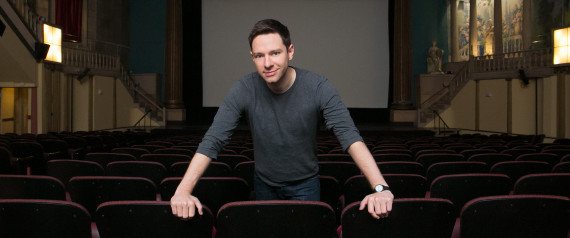
Despite tensions over sponsors, we urge you to march with Pride, writes PETER PURTON


THIRTY years ago, the National Union of Mineworkers (NUM) banners led the LGBT Pride parade in London. On June 27, NUM banners, a band from the Welsh valleys and the reconstituted Lesbians and Gays Support the Miners (LGSM) will lead the trade union section on Pride in London.
The TUC wants this to be the best and biggest trade union contribution ever to Pride. The reasons are simple: trade unions were champions of equality before, and their support continues to be vital today.
When LGSM was established to generate solidarity between two communities facing oppression, none of the rights now enjoyed by lesbian, gay, bisexual and trans people existed, and under the ruthless government of Margaret Thatcher it was hard to see any light at the end of this particular tunnel.
But the solidarity forged between a few LGBT activists and the year-long miners’ strike in 1985 was repaid by the votes and voices of the NUM at Labour and TUC conferences that year and opened the door to winning the victories for equality that would follow after Labour took office in 1997.
Trade unions were representing their LGBT members long before they had any legal rights against discrimination and trade unions were instrumental in pushing the first Blair government to introduce the first ever protection at work.
Trade unions were also instrumental in pushing the second Blair government to extend that protection to the area of goods and services. As recent legal cases have shown, that is an area of law vital to our equal place in society.
At a time when much of the movement against the infamous section 28 that killed off attempts to promote equality in schools had given up the protests and started to turn our annual Pride events into a party, the trade unions continued to fight the prejudices that remain widespread to this day.
At a time when the big corporations whose record on equality is shameful are now recognising the business benefits of celebrating diversity, the trade unions are still campaigning for the removal of the remaining legal discrimination faced by members of the community, such as the inequality in survivor pensions for same-sex couples or the “spousal veto” ruining the lives of many trans people who need to gain recognition in their new gender.
Two years ago, the largest ever scientific survey of workplace attitudes (carried out by the Manchester Business School) confirmed that ignorance, stereotyping and prejudice are rampant across workplaces in every sector of the British economy. The most alarming evidence was how many people could not see that their bullying behaviour was homophobic.
That it is still vital to challenge homophobia and transphobia in schools and that the national sport continues to be a “safe place” for the voicing of bigoted opinions shows how far there is to go before genuine social acceptance is achieved. Trade unions are essential to winning these battles.
The board of Pride in London, in its wisdom, has dropped the original proposal that LGSM should lead the parade with the trade unions behind.
Now the unions will be in Section C of the parade, and in solidarity, LGSM will join us there. No matter: what is important is the message of solidarity that LGSM encapsulates in its very existence, and the messages that will sound out loud and clear from the trade union section.
More than ever, we need trade unions to protect the interests of workers and of all sections of society that will be attacked by this government.
Governments change, the organisers of Pride London change (more frequently than governments do), but the trade unions have been, are, and will always be here to champion workers’ rights and equality for all.
That’s why the TUC calls on trade unionists to bring their banners and themselves to Baker Street on Saturday June 27 to join the trade union section of the Pride parade, and to use the occasion to explain our message of solidarity to LGBT people and their supporters on the parade, on the streets of London and finally in Trafalgar Square.

  • Peter Purton is the TUC’s LGBT policy officer.
  • The Lesbians and Gays Support the Miners (LGSM) will be leading the Birmingham Pride Parade (Photograph: Geoff Dexter)

Filed Under: Anti-Bullying & Homophobia, History Tagged With: Birmingham conference, LGBT Pride, National Union of MIners, NUM, trade inions, TUC

Lord Cashman Lends Support To Play Which Tackles Sexual Abuse

05/06/2015 By Dave McFarlane Leave a Comment

Lord Cashman Lends Support To Play Which Tackles Sexual Abuse And Cover Ups
By The Gay UK, Jun 3 2015 09:00AM
 
The cast of a new play called At Ease will be joined by Lord Michael Cashman, on Friday 5 June, during rehersals to lend his support to the play which tackles the issues surrounding historic sexual abuse and cover-ups.
Credit: Google Maps

Credit: Google Maps
Victims of historical physical and sexual army abuse are given a voice in a new play in rehearsal in Birmingham.
Lord Cashman appears as a character in the play.
At the centre of this highly unusual play is the correspondence between one-time Household Cavalryman, Alex Rees who was sentenced to life imprisonment for attempted murder, and Michael (Lord) Cashman, who was an intended target. Rees writes he was brutally tortured and raped while in the army in the 1970s. Rees, who died in 2002, identifies adults involved in the bullying and in the parties in which abuse took place. He also identifies army personnel involved in cover-ups. Rees is, at last, given an opportunity to put his story to the public via his extraordinary correspondence.
The bond between Rees and Cashman, a life-long campaigner for LGBT rights, is both strange and poignant.
In an attempt to right some wrongs, while contributing to the present debate around historical abuse by giving voice to Rees and others, theatre company DD Arts Birmingham is piloting its new play, AT EASE, from June 17, raising these issues, together with other contemporaneous accounts.
Pilot performances 17-20 June: Old Joint Stock Theatre, Birmingham. 0121 200 0946.

Filed Under: Theatre Reviews Tagged With: At Ease, Birmingham, Lord Cashman, The Old Joint Stock

Book Review – The Great American Whatever by Tim Federle

05/06/2015 By Dave McFarlane Leave a Comment

TIM FEDERLE

TIM FEDERLE

Tim Federle Reveals Cover For ‘The Great American Whatever,’ His New Young Adult Novel

Curtis M. Wong  curtis@huffingtonpost.com
Posted: 06/04/2015 11:06 am EDT

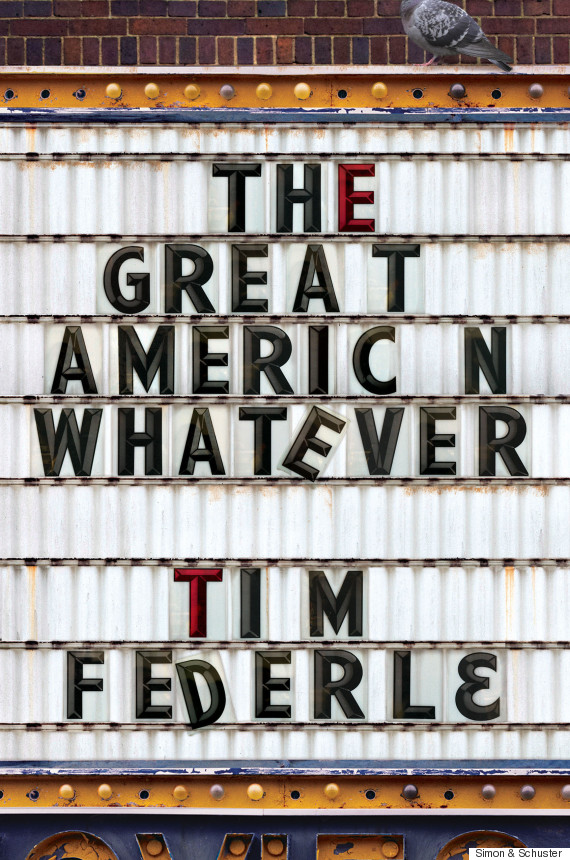
Tim Federle, the award-winning author of Better Nate Than Ever and Five, Six, Seven, Nate!, will release his first novel for young adults next year, and The Huffington Post has an exclusive first look at the cover.
Billed as “a wry, winning testament to the power of old movies and new memories,”The Great American Whatever follows Quinn Roberts, a gay, wisecracking 16-year-old with a weakness for Jolly Ranchers and cute boys, who dreams of becoming a Hollywood filmmaker. When his home life is beset by personal tragedy, Quinn embarks on a “laugh-out-loud sad” journey of self re-discovery with the help of his straight best friend, Geoff, and a new love interest.
Check out the cover below, then scroll down to keep reading.
great american whatever
Federle had a mature audience in mind when he began writing the book, originally titled Quinn, Victorious, five years ago, basing the plot on his personal experiences as seen through characters in their mid-20s. The success of the two Nate books, which are geared toward middle-grade readers, inspired him to trim 10 years off Quinn’s age and emphasize the character’s defining, post-adolescent moments instead – including brushes with self-doubt and an early sexual encounter.
Still, he hopes the new book, which is shades darker than Nate but no less droll, will resonate with grown-ups as well as young adults.
“So much of the teenage experience – particularly the complications in forging new identities and relationships – continues well into adulthood,” Federle told The Huffington Post. “I want people to read The Great American Whatever with a smile on their faces and maybe a couple tears in their eyes.”
In the two years since the release of Better Nate Than Ever, the 35-year-old Federle has established himself as a prolific scribe whose breezy wit isn’t bound to a single genre. The former Broadway dancer has also penned two bestselling cocktail recipe books, Tequila Mockingbird: Cocktails with a Literary Twist and Hickory Daiquiri Dock: Cocktails with a Nursery Rhyme Twist; his first picture book, Tommy Can’t Stop!, was released in April.
“I try to just let go and write from a place of honesty and humor,” he quipped. “And hunger – I write faster when I know there’s frozen Reese’s cups waiting as a reward.”
The Great American Whatever hits shelves March 29, 2016.

Filed Under: Book Reviews Tagged With: Tim Federle

  • « Previous Page
  • 1
  • …
  • 5
  • 6
  • 7
  • 8
  • 9
  • 10
  • Next Page »

Categories

Copyright ACOMSDave.com © 2026