
ACOMSDave

Community Journalist

  • Home
  • Community Journalist
  • Events
  • Media Page and Press Kit
    • Projects and Work
  • Resources & Documents
    • LGBTQ+ Support Groups and Documents
  • NIGRA
  • Archives
  • Contact

Archives for February 2026

The Robot Takeover Has a Timeline

26/02/2026 By ACOMSDave Leave a Comment

The Robot Takeover Has a Timeline — And It’s Closer Than You Think


Let’s stop tiptoeing around it: AI-driven robots are coming for human jobs, and now we finally have a timeline. Rob Garlick, former head of innovation, technology, and future of work at Citi Global Insights, just dropped a prediction that should jolt every worker — and policymaker — out of complacency. Over the next few decades, he warns, the number of moving robots will surpass the global working population. And when you add AI agents to the mix? It’s going to “explode.”

Garlick’s frank words to CNBC say it all: “Artificial intelligence will be able to do more and more, better and better, cheaper and cheaper — and that will substitute for people. Humans can’t compete on this basis.” That’s not dystopian fiction. That’s a former Wall Street insider who ran the numbers.

And what numbers they are. A 2024 Citi report led by Garlick projects that AI robots — from humanoids to autonomous vehicles to cleaning bots — will reach 1.3 billion by 2035, surging past 4 billion by 2050. More chilling? A $35,000 robot can pay for itself in under nine weeks when it replaces a worker earning $41 an hour. Nine weeks. That’s a fiscal quarter short of a fiscal quarter.

The Robot Takeover

The Robot Takeover – Right now, we’re watching the preview. Boston Dynamics’ Atlas robot is already deployed on the Hyundai factory floor near Savannah, Georgia. Tesla’s Optimus is slated for public sale in 2027. Companies like Amazon, Salesforce, and Accenture are already citing AI as justification for eliminating thousands of roles. Meanwhile, McKinsey now runs 20,000 AI agents alongside 40,000 human employees — up from just 3,000 agents a year ago. The pace is vertiginous.

The IMF’s Kristalina Georgieva describes AI as hitting the labour market “like a tsunami,” warning that most countries and most businesses simply aren’t prepared. She’s right. Policy is lagging catastrophically behind technology, and workers — particularly those in manual, repetitive, and lower-wage roles — are being set up to absorb the shock without a safety net.

To be fair, not every job is on the chopping block tomorrow. Leadership, creative work, emotional intelligence, complex judgment — these remain stubbornly human. And there’s a credible case that robots free people from dull, dangerous, and degrading labour. But that rosy scenario requires investment in retraining, social support, and political will that is, so far, largely absent.

The robot revolution isn’t a distant hypothetical. It’s a timed detonation. The countdown is running. The real question isn’t if your industry gets disrupted — it’s whether society will build the parachutes before the floor gives way.

Links:

  • Article developed from reporting by eWeek and supporting data from Citi Global Insights, CNBC, McKinsey, and the IMF.
  • Why the Three Laws of Robotics Fall Short in the Age of AI


#AIRobots #FutureOfWork #Automation #HumanoidRobots #JobDisplacement #AIRevolution #WorkforceDisruption #TechTrends2026 #RobotEconomy #ArtificialIntelligence

Filed Under: Editor to ACOMSDave Tagged With: AI and employment, AI labor disruption, ai robots replacing workers, Boston Dynamics Atlas, Citi AI report, future of work AI, humanoid robots timeline, job automation 2026, robot workforce 2035, Tesla Optimus robot

Humanities SOS: Jules Verne’s Warning & Our Future

15/02/2026 By ACOMSDave Leave a Comment

Jules Verne's WarningElif Shafak’s recent article in ‘The Observer’ really struck a chord with me. It’s a powerful reminder of why the humanities – literature, arts, history, philosophy – aren’t just nice-to-haves, but essential for a healthy society.

Shafak draws on Jules Verne’s forgotten dystopian novel, ‘Paris in the Twentieth Century’, where a poet is ridiculed for his “useless” skills in a world dominated by business and technology. Verne, known for his uncanny predictions, paints a bleak picture of a future devoid of human connection and empathy.

The article challenges the notion that the humanities are in decline, citing the steady readership of fiction worldwide. It emphasises the importance of “kairos” – deep time focused on meaning – over the fleeting “chronos” of our fast-paced world. Literature, Shafak argues, nourishes our need for meaning and connection, just like food and water.

However, the crux of the issue is that the humanities are under threat. Universities are shifting focus to “high-income disciplines,” devaluing subjects that foster critical thinking, empathy, and cultural understanding. As Shafak points out, cutting funding for culture has serious social and political consequences.

Empathy, that ability to “feel into” another’s existence, is crucial for a harmonious society. Literature allows us to step outside ourselves and connect with others, fostering understanding and breaking down barriers.

Shafak also connects the humanities to broader issues, such as climate change, water scarcity, and women’s rights, reminding us that everything is interconnected. A society that values only profit and technological advancement risks losing its sense of purpose.

Verne’s father wanted him to be a lawyer, but Verne’s heart was in storytelling. We need to encourage young people to pursue their passions, whether it’s law, math, or poetry. As the saying (often attributed to Verne) goes, we need to “dream with our eyes open,” combining imagination with knowledge and critical thinking.

The humanities aren’t a luxury; they’re a necessity. They equip us with the tools to navigate a complex world, connect with others, and build a more just and compassionate future. Let’s not let Verne’s dystopia become our reality.

 
  • The Observer -Jules Verne’s dystopia was a world without humanities. Don’t let his nightmare come true
  • Education Shortfalls – for better or poorer

Filed Under: Community Journalist, Editor to ACOMSDave Tagged With: critical thinking, culture, education, Elif Shafak, empathy, future, humanities, Jules Verne, literature, social commentary

Balloons

14/02/2026 By ACOMSDave Leave a Comment

BalloonsIsaiah Henderson’s “Balloons” isn’t just a short film; it’s a gut punch wrapped in eight minutes of raw emotion. If you’ve ever navigated the treacherous waters of a love that’s vibrant behind closed doors but shrouded in fear in public, this one will resonate deeply.
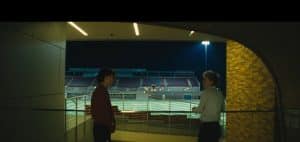

The film delicately peels back the layers of shame, first love, and the ache of losing someone before you could truly have them. Keller Kennedy and Braeden Steele deliver performances that are both vulnerable and captivating, drawing you into their intimate yet fragile world. The film doesn’t shy away from the complexities of internalised homophobia and the pain it inflicts.

Henderson’s direction is both poetic and unflinching, using visual storytelling to amplify the emotional weight of the narrative. Andrew Snakez’s music elevates the film’s atmosphere, underscoring the bittersweet beauty of the story.

“Balloons” is more than just a coming-of-age story; it’s a poignant reflection on the courage it takes to love openly, and the scars left by those who can’t. It’s a must-watch for anyone who appreciates queer cinema that dares to explore the messy realities of love and identity.Balloons


#BalloonsFilm #GayFilm #LGBTQ #QueerCinema #ShortFilm #LoveStory #GayLove #IndieFilm #FilmReview #EmotionalFilm


Links:

    • YouTube – Balloons


Filed Under: Movie Reviews Tagged With: Balloons film, Braeden Steele, coming of age, gay short film, internalized homophobia, Isaiah Henderson, Keller Kennedy, LGBT Film, love story, queer cinema

Sun-Drenched Innocence: A Review of Vincent Fitz-Jim’s ‘Daniel’

14/02/2026 By ACOMSDave Leave a Comment

Daniel - 2012Daniel (2012) is a short film that captures the ephemeral magic of first love with a gentle, poetic touch. Written and directed by Vincent Fitz-Jim, this coming-of-age story unfolds on a seemingly endless summer’s day, following a teenage boy as he experiences the intoxicating bloom of romance.

A Fleeting Encounter, Beautifully Rendered

Fitz-Jim crafts a narrative that feels both universal and deeply personal. The film avoids heavy-handed exposition, instead relying on subtle gestures, lingering glances, and the sun-drenched cinematography of Martijn Cousijn to convey the emotional landscape of its protagonist. Bas de Vries delivers a nuanced performance as Daniel, embodying the awkwardness and vulnerability of adolescence with authenticity. Eva Oosters shines as his captivating counterpart, radiating a natural charm that draws the viewer in. Frederik Stuut provides solid support, adding depth to the story.

Visual Poetry and Sonic Harmony

The film’s visual language is striking. Cousijn’s cinematography bathes the scenes in a warm, golden light, evoking a sense of nostalgia and idyllic beauty. The camera lingers onDaniel - 2012 -2 small details – the way sunlight filters through leaves, the gentle sway of grass – creating a dreamlike atmosphere that perfectly complements the story’s themes. The music, composed by The Album Leaf, is equally evocative, weaving a delicate tapestry of sound that enhances the film’s emotional resonance. The score is very effective.

A Moment in Time

Daniel isn’t a film about grand gestures or dramatic plot twists. Instead, it’s a quiet, introspective exploration of a fleeting moment in time. It captures the essence of first love – the excitement, the uncertainty, and the bittersweet awareness that it may not last. The film’s brevity is both a strength and a weakness. While it leaves you wanting more, it also perfectly encapsulates the transient nature of the experience it portrays.

Final Thoughts

Vincent Fitz-Jim’s Daniel is a gem of a short film. It’s a beautifully crafted and emotionally resonant coming-of-age story that lingers in the mind long after the credits roll. If you’re a fan of films that prioritize atmosphere, character, and visual storytelling, Daniel is definitely worth seeking out.

Verdict: Highly RecommendedDaniel

Where to Watch:

  • YouTube – Daniel (2012)
  •  
  • Review of “Oskar | A Coming-of-Age Short Film”

Filed Under: Movie Reviews Tagged With: Bas de Vries, coming of age, Daniel (2012), Eva Oosters, film review, first love, independent film, short film, The Album Leaf, Vincent Fitz-Jim

Gay Spies

12/02/2026 By ACOMSDave Leave a Comment

Secrets Out: When Queerness Was a National Security Threat

For decades, Western intelligence agencies treated queerness as a security risk, a stain on one’s character. From Cold War betrayals to rainbow flags over Langley and Vauxhall Cross, the story of gay spies is one of secrecy, shame—and a reckoning decades in the making.Gay Spies

The Cambridge Ring and the Lavender Scare

The infamous Cambridge Ring, including figures like Guy Burgess and Anthony Blunt, exploited their privileged backgrounds to infiltrate British intelligence. Their homosexuality, then a criminal offence, was seen as a vulnerability. This fueled the “Lavender Scare,” a mass purge of LGBTQ+ civil servants based on the fear of blackmail.

Gay SpiesAlan Turing, the brilliant mathematician who cracked the Enigma code, was prosecuted for being gay and stripped of his security clearance. Similarly, Jeremy Wolfenden, a journalist and MI6 asset, was blackmailed by the KGB because of his sexuality, leading to a tragic end. These cases highlight the systemic discrimination and paranoia that plagued intelligence agencies.

Changing Tides and Apologies

It wasn’t until the 1990s that attitudes began to shift. President Clinton’s executive order in 1995 ended the ban on security clearances based solely on sexual orientation. GCHQ publicly apologised in 2016 for barring gay recruits, acknowledging the nation’s loss. MI5 and MI6 followed suit, actively recruiting openly gay candidates and celebrating diversity.

The Rest of the World

While the Soviet Union ruthlessly exploited homosexuality as an espionage tool, countries like France and Israel had different experiences. France decriminalised homosexual acts early on, and Israel has long been liberal by Middle Eastern standards. However, the past is not forgotten, and declassified archives continue to expose the queer lives entangled in the intelligence game.

New Realities and Open Questions

Today, intelligence agencies vie to show inclusiveness, with the CIA posting LGBT recruitment messages and British intelligence celebrating LGBT History Month. While the door to the closet has been forced open, questions remain about the careers wrecked by the gay ban. The message is clear: love of country, not the gender of one’s partner, defines a good spy.


Links:

  • Gay 45 – Gay Spies in Intelligence Services
  • The Lavender Scare Revisited

Filed Under: Anti-Bullying & Homophobia, Community Journalist Tagged With: Alan Turing, CIA, Cold War espionage, gay spies, homophobia, Lavender Scare, LGBT rights, LGBTQ+ History, MI6, queer intelligence officers

Categories

Copyright ACOMSDave.com © 2026