ACOMSDave

Community Journalist

  • Home
  • Community Journalist
  • Events
  • Media Page and Press Kit
    • Projects and Work
  • Resources & Documents
    • LGBTQ+ Support Groups and Documents
  • NIGRA
  • Archives
  • Contact

Book Review: The Official History of the Campaign for Homosexual Equality and its times; Volume 1: A Space to Breathe, 1954–1973

06/04/2015 By David McFarlane Leave a Comment

A review of Amiable Warriors: The Official History of the Campaign for Homosexual Equality and its times; Volume 1: A Space to Breathe, 1954–1973 by Peter Scott-Presland
(Published by the Paradise Press, London, 2015) (£35.00 hardback, 640pp, illustrated)


Peter Scott-Presland is our amiable guide to this compelling, entertaining, informative and inspirational history of the formative years of the Campaign for Homosexual Equality. This “history of small things” is extraordinarily well-told, and engrosses our interest from start to finish despite its length. Extensive use of primary sources and numerous interviews bring the events alive and help us understand how a large social movement can grow from small local initiatives and individuals’ personal interests. A central theme of this history is the “bravery in small things”, as thousands of CHE members write letters to local newspapers, organise social events and discussion groups, come out to their families and their local communities, with their demands for equality slowly causing a sea-change in attitudes: both society’s attitudes to gays and gays’ attitudes to themselves.
CHE of course did not arise from nothing. Scott-Presland begins with a short review of the “homophile” movements in Germany and the Netherlands and the United States, as well as the early British sex-reformers such as Edward Carpenter. Many early figures from the 1950s also played their roles in the early reforming development of the movement: Peter Wildeblood, Rupert Croft-Cooke, and the setting-up of the Wolfenden Committee which in 1957 recommended the decriminalisation of sex between consenting men over 21 in private, which was to become law in 1967. Hence the overriding focus of the early history of the gay movement was upon law reform, public education, and counselling; the vaguer concept of “equality” and an end to “discrimination” were still inchoate concepts in the 1950s and 1960s.
The two great figures of this early history are Allan Horsfall and Antony Grey. The two men typify the split that was to bedevil the gay movement: the North West Homosexual Law Reform Committee in Manchester, run by Horsfall, and the Homosexual Law Reform Society in London (run by Grey). It was essentially a class divide: working-class Northerners versus middle-class Southerners. The HLRS in particular was obsessed by “respectability” and was constrained by the feeling that it should not advocate anything that would be perceived to be too radical by the honorary members listed on its letterhead. This often meant that it could not focus specifically upon homosexuality, but had to be inclusive of all sexualities. The force behind all this was the Albany Trust, run by Antony Grey, with prominent heterosexual sexologists on its board. The Trust had to maintain the fiction that it was broadly concerned with all sexualities in order to receive funding from institutional donors and prominent individuals, even though in fact it was almost exclusively directed towards gays. One might say that Antony Grey was rather canny in thus achieving the main purpose, but the fact that “Antony Grey” never used his real name – Edgar Wright – in the public forum is symbolic of his “behind the scenes” approach to reform. Allan Horsfall, in contrast, was a working-class son of a publican and a prospective Labour Party candidate, and always used his real name and even published his home address. Nevertheless, the membership of the NWHLRC was also predominantly heterosexual at the beginning.
Both organisations, early on, were especially focused on counselling, dealing with the problems of self-loathing homosexuals in the closet, who had no way to meet others. This lack of meeting places – especially social and not just sexual sites – was a central concern for the gay movement for many years.
This is a history of people rather than a history of ideas. Although Scott-Presland gives individual spotlight biographies to all the major players in the movement – including Leo Abse, Glenys Parry, Griffith Vaughan-Williams, Peter Norman, Ray Gosley – it is difficult not to form the view that this early history consists of the working out of the tensions between just two men, Horsfall and Grey, as they struggle for the control or independence of their two organisations. At times the documentation of this early history consists simply of incestuous letters between Horsfall and Grey congratulating themselves on how many letters they have written to the press and on how many speaking engagements they had performed, and swapping newspaper cuttings documenting their achievements. There is hardly any sense that other people were involved in their campaigns. Horsfall was sometimes naively idealistic but a powerehouse for action, while Grey was more politically astute but over-cautious. The early campaigning efforts were regularly dampened by people like Antony Grey and Leo Abse (the MP who had pushed the 1976 Sexual Offences Act through Parliament) urging Allan Horsfall not to rock the boat. Even while the heterosexual membership of the Homosexual Law Reform Society dwindled and it became a modern gay campaigning group, nevertheless it became just the Sexual Law Reform Society in 1970, with a solitary secretary: Antony Grey.
Ironically it was the passing of the law in 1967 that led to organisational chaos in both the NWHLRC and the HLRS (and Albany Trust), for neither knew quite what to aim for once the law reform had been achieved. A “gay space” became a major focus, and many years would be spent in trying – and failing – to set up CHE-owned social clubs as a more healthy alternative to the commercial gay pub and club scene. These were to be called Esquire Clubs, and to be organised along the lines of the COQ clubs in Denmark, but CHE never quite succeeded in getting a brewery on board, and never raised enough money to fund physical premises. There was also the problem that Leo Abse and the Home Office specifically objected to the emergence of gay social clubs, which they felt would be an unwanted result of legalisation – the ideal result in their view would be for homsoexuals to lead discreet private lives rather than be publicly visible and associating with others. This, they felt, would result in separation rather than integration. Antony Grey, who always felt that VIPs and leaders of Society were necessary for the success of any campaign, came down opposed to social clubs; as a result the NWHLRC severed its relations with the Albany Trust, and the power and influence of the Albany Trust gradually declined.
By 1969 the NWHLRC had become CHE – the Committee for Homosexual Equality – a significant change from “law reform” to the wider issue of “equality”. (Though it wasn’t until 1971 that “Committee” was changed to “Campaign”.) The great mover behind this phase was Paul Temperton, whose social political background was typical of early CHE members: he worked for the British Humanist Association, the Manchester Non-Violent Action Group, the National Council for Civil Liberties, and the Anti-Apartheid movement. Social activism came to the fore while the counselling focus of the old school receded. For this period from 1968 to 1973 Scott-Presland gives a very detailed study of press campaigns, newspaper advertisements for membership, complaints to the Press Council, and meetings with local councils and institutions.
The proliferation of local CHE organisations becomes almost overwhelming. Each regional group is given its proper focus, because each region was autonomous, and there were always very weak links between the regional groups and the national CHE executive. This was perhaps its main failure as a campaigning organisation, but also its strength at encouraging social solidarity. The origins of each group are carefully documented; they were almost always started by an individual person who became the convenor (or a pair of lovers who became joint convenors) and who worked to get together a critical mass of about twenty members. While there were very formal links between each region and the national executive, there were virtually no links at all between one local group and another local group. Every would-be member of a group was vetted by a representative appointed by national headquarters – usually the talented journalist Roger Baker. Liverpool and Manchester remained strong regional powerhouses, but gradually the working-class membership was superseded by a middle-class membership, for reasons not fully explained, perhaps not even explainable. Advertising in newspapers and journals reached mainly a middle-class audience, hence recruited more middle-class members, and as CHE became more professional, it also became more middle-class. Also, women’s issues did not much occupy CHE, and it increasingly lost its lesbian membership.
A lengthy chapter on London systematically goes through each of its thirteen groups, often with extracts from interviews with its first convenors – notably Roger Baker, Brian Sewell, Peter Robins, Peter Norman, and Jackie Forster. Because of geographical concentration, the London groups all associated with one another (unlike groups scattered across the country outside London), and from April 1971 all the London groups held “mass meetings” at which larger goals and strategies were proposed, and work towards shared aims was distributed among groups. However, everything was still highly bureaucratic and hence cumbersome. Rules of debate dissipated too much energy.
One important product of these pan-London activities was the formation of the counselling group FRIEND. Individual convenors had lacked the professional skill and funds necessary for really effective counselling, hence the use of formally trained volunteers was a great advance. Money was raised for training and for staffing a telephone service, and maintaining offices. By the end of 1972 they had 50 befrienders, plus 12 professional therapists, a Centre in London, with branches in Manchester, Liverpool, and several other cities. During all of FRIEND’s activities, there was the inevitable power struggle between Antony Grey and the leaders of FRIEND regarding the future of homosexual counselling services. The Albany Trust refused to accept the structure proposed by FRIEND and stopped supporting it financially. FRIEND became independent and grew, while the Albany Trust became marginalised. (However, FRIEND would formally split from CHE in 1975–6 in order to obtain charitable status and government money, which was not possible while it remained allied with a campaigning organisation – a problem the Albany Trust had faced earlier.)
CHE continued essentially as a social support provider rather than a campaigning organisation. Each group was in effect a discussion group rather than a campaign group; a number of speakers regularly went around the circuit giving their talks, e.g. Roger Baker talking on drag (on which he had written a book). In addition to the regular Discussion meetings, there were regular Winter Fairs, Winter Talks, Jumble Sales, Summer Balls, coach trips, Christmas parties, bingo and lotteries, and a host of events very similar to those organised by the ladies of the Women’s Institutes. As the London groups expanded, some became special interest groups for those interested in music, writing, film, sports, rambling, bird-watching, and so on. These were hardly political action groups. The long-lived London Monday Group met at the Chepstow Arms in Notting Hill for over 15 years, with a regular programme of well-known speakers and lively disccussions, followed by drinks and socilising. Many long-term friendships were formed there, but it might be hard to document any specific “social change” it might have achieved. Scott-Presland argues (not very convincingly in my view) that these special interest groups were an important factor in the development of gay identity, specifically the notion of “being gay” while engaged in non-gay activities. By mid-1973 London CHE had some 20 local groups plus 15 special groups, with 1,000 members; CHE across the country had a total of some 70 local groups with 3,500 members.
So by late 1973, although the Campaign for Homosexual Equality did not create a coherent national campaigning movement with a coherent ideology, it nevertheless had succeeded in its main objective: the creation of “a gay space” in which people with a shared sexual orientation could come together in a broadly social space rather than a narrow subculture whose main aim was sex. This is not to say that sex was not important to the development of the friendship networks formed within CHE, but the real aim was a modus vivendi, a way of life, for homosexuals within society rather than a separate twilight world on the margins of society. The community it had helped forge was an astonishing achievement and deserves the full and careful treatment it receives here. The development of an effective campaigning organisation after 1973 will be the subject of the next volume in this projected three-volume official history.

 
CHE_Alan_Turing_Award paul_ross Church_House_Manchester NHWLRC_plaque 1972 CHE canal cruise_page2_image1


Filed Under: Book Reviews Tagged With: campaign for homosexual equality, che, gay, history, homosexual, LGBT

For a lost soldier [1992] – Movie Review

24/03/2015 By David McFarlane 1 Comment

For A Lost Soldier [1992]

  • Studio: Strand Home Video
  • Actors: Maarten Smit, Andrew Kelley, Jeroen Krabbé, Freark Smink, Elsje de Wijn
  • Directors: Roeland Kerbosch
  • Writers: Roeland Kerbosch, Don Bloch, Rudi van Dantzig
  • Producers: Guurtje Buddenberg, Matthijs van Heijningen

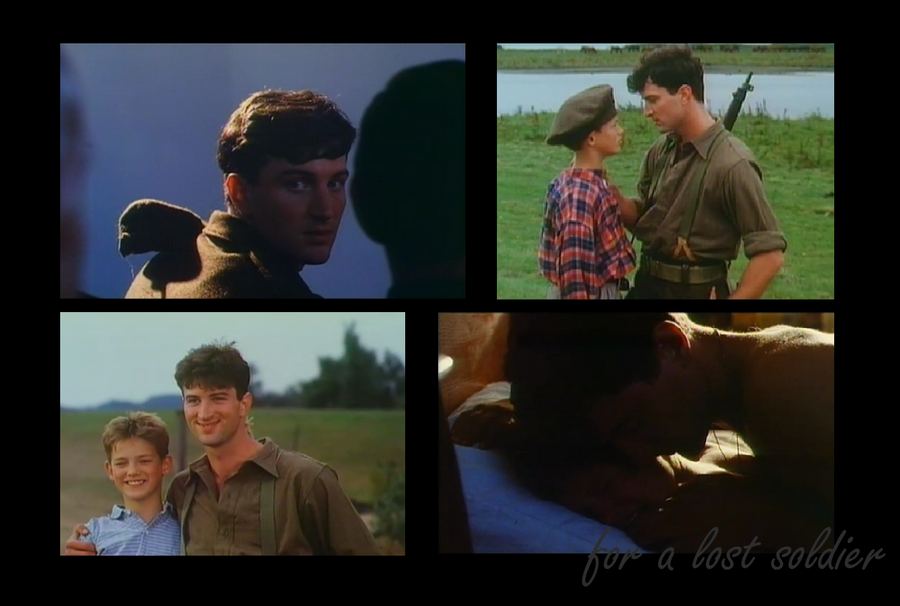
‘For a lost soldier‘  breaks all the barriers regarding male sex – a young boy reaching puberty introduced to the pleasure of love with an adult man.  A man who is a transient soldier,
 
Based during the Second World War in Holland when the Allies started liberating Europe, this film stirs something in everybody, whether it be loathing, liking or ambivalence.
I loved this film  The main characters, 12-year-old Jeroen (Marten Smit) and Walt (Andrew Kelley) are totally believable.  They both bring a spark of originality to what could have been a very low key, possibly boring story.
My only criticism is regarding the actor playing the adult Jeroen, he did not in my view do justice to the acting of the boy.  He did not convince me in his description of the dance moves, or in his part.  Possibly this could be the directing, but I do not feel so.
Please do not come to this film expecting excitement, blood or guts, you won’t get them.  This film is full of tenderness, love and the possibility of a happy-ever-after ending.
Get it out on DVD, or see it in the cinema, you won’t be disappointed.


Links:

  • You tube – For a lost soldier
  • Wikipedia – For a lost solider
  • You Tube – Voor een verloren soldaat (For a Lost Soldier) 1992 Full Movie
  • Video Review: ONE IN FIVE BRITISH GAY TEENS BULLIED IN SCHOOL BY TEACHERS OR OTHER ADULTS
  • Grief – 1993 (Movie Review)

Filed Under: Book Reviews, Movie Reviews Tagged With: Andrew Kelley, Elsje de Wijn, Freark Smink, Holland, Jeroen Krabbé, Maarten Smit, man boy love, Netherlands, Roeland Kerbosch, Strand Home Video

Roger Casement

21/03/2015 By David McFarlane Leave a Comment

“Historians in England will say I am a liar, but history is written by those who have hanged heroes.”

— Robert the Bruce, Braveheart

Remembering Casement’s patriotism, not his personal life

Reprinted from the Irish Examiner – Monday, February 23, 2015
By Ryle Dwyer
On the 50th anniversary of the repatriation of Roger Casement’s remains, Ryle Dwyer contends that perfection is not a requirement of patriotism.
TODAY is the 50th anniversary of the repatriation of the body of Roger Casement — more than 48 years after his execution.
His return reignited the controversy over his so-called Black Diaries, which have been an irrelevant distraction over the greater part of a century.
Casement was hanged for high treason after trying to enlist German help for the Easter Rebellion. Realising that the Germans were not going to provide sufficient military help, Casement returned home to call off the rebellion, which he believed was doomed.
From the Irish perspective he was striving for the independence of his native country, but the British saw his actions as treasonous. Yet they ultimately frustrated his efforts to undo what they considered his treasonous behaviour.
He confided in Robert Monteith — who accompanied him on the U-boat from Germany in April 1916 — that he wished to stop the rebellion.
Unfortunately, Casement became ill on the voyage. His condition was not helped by being dumped into the cold water from the small boat that he and his two colleagues used to get from the U-boat on that Good Friday morning. They were soaking wet, with no change of clothes, on reaching land.
Casement was in no condition to walk the 13km to Tralee, so he went into hiding in a ring fort overlooking the beach, while Monteith and Daniel Bailey went for help.
Monteith informed Austin Stack, the local republican commander, that Casement wished to stop the Rising.
“Monteith told me what purported to be the view of Sir Roger Casement with regard to the Rising,” Stack later wrote. “The attempt would be pure madness at the moment.”
Stack insisted on hearing this from Casement himself, but when they went to Banna to pick up Casement in a car, they found the area swarming with police. Casement was arrested in the early afternoon.
Although he could easily have been rescued from police custody in Tralee, Stack was unwilling to act, because Patrick Pearse had ordered that nothing should happened in Tralee prior to the planned landing of German arms at the nearby port of Fenit on Easter Sunday.
In desperation that Friday night, Casement requested to speak to a Catholic priest. He asked Fr Frank Ryan, from the nearby Dominican priory, to get an urgent message to the Volunteers, to call off the rising. Fr Ryan was reluctant to get involved.
He agonised over the weekend before passing the message to local republicans in Tralee on Monday morning.
By then, the rebellion was already beginning in Dublin.
Casement was moved from Tralee to Britain, via Dublin, on the Saturday. Admiral Reginald ‘Blinker’ Hall, head of British naval intelligence, questioned him in London on Easter Sunday.
Realising that Hall was aware of the planned rebellion, Casement asked to be allowed to appeal publicly for the rebellion to be called off in order to “stop the useless bloodshed”.
But Hall wished the rising to go ahead in order to provide British forces with an excuse for suppressing the rebels.
“It is better that a cankering sore like this should be cut out,” Hall told Casement.
The Easter Rising was the military disaster that Casement predicted. In its aftermath, the leaders were summarily executed. Casement went on trial for high treason on June 26, 1916, and he was convicted and sentenced to death three days later. His appeal was dismissed the following month, and he was duly hanged at Pentonville Prison on August 3, 1916.
Before his execution, there were calls for clemency, which were undermined by a whispering campaign about graphic evidence in Casement’s diaries suggesting he was gay.
The British Attorney General had tried to use the diaries against Casement, but they had nothing to do with the charge of high treason.
Although the Attorney General was unable to use that material at his trial, Basil Thompson, head of Scotland Yard’s Special Branch, began surreptitiously circulating salacious extracts to selected journalists. The purpose was clear — to depict Casement as a moral degenerate in order to undermine the clemency campaign.
This sparked another controversy over much of the ensuing century. In 1936 William J Maloney wrote The Forged Casement Diaries, contending that the British had forged the diaries. Maloney had never met Casement and never even saw the diaries. It is now widely accepted, after exhaustive forensic tests, that the diaries are authentic.
This controversy suited those who had tried to use the diaries to discredit Casement. Instead of concentrating on the miscarriage of justice in relation to his execution, the focus turned on the irrelevant issue of whether he was gay.
It seemed Irish people could not accept that a patriot could have human failings or imperfections. It is puerile to think that real heroes should fit conventional norms in every respect.
With the centenary of Casement’s death next year, surely the focus should be on his accomplishments and what he tried to do, not what some might have considered his human flaws.

© Irish Examiner Ltd. All rights reserved
 
“It is easy to rewrite history when the few who know the truth are unable to make themselves heard.”

—Phantom, Last Scenario


Further Reading:

  1. Wikipdeia – Roger Casement

Filed Under: Book Reviews, History Tagged With: Belfast Press, black diaries, Easter Rebellion, jeffrey dudgeon, Seamas O'Siochain, University College Dublin Press

Book Review: The Short History of a Prince

20/03/2015 By David McFarlane Leave a Comment


The Short History of a Prince
Jane Hamilton
Random House
 

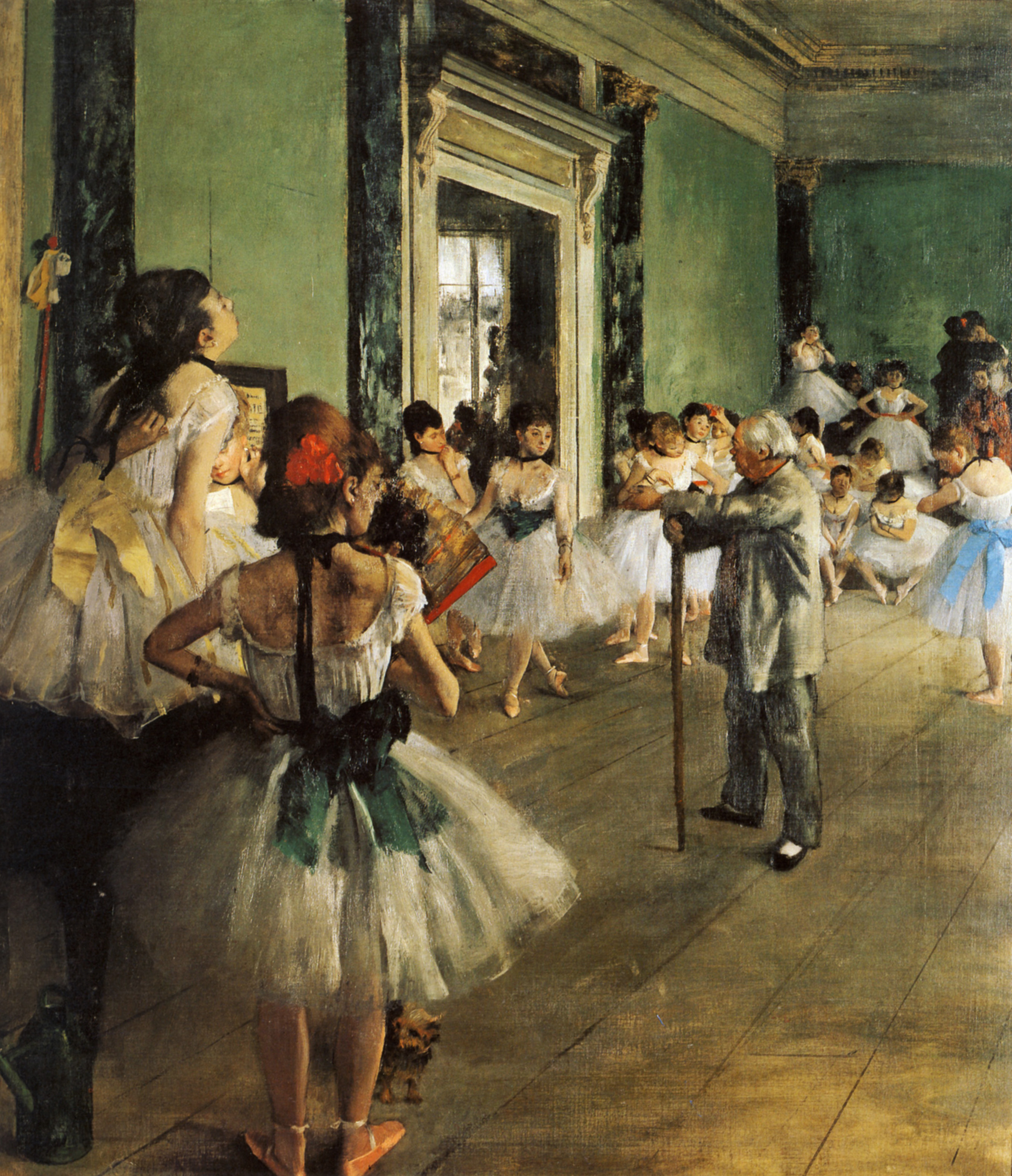
Classical bell tutus in The Dance Class by Degas, 1874

Classical bell tutus in The Dance Class by Degas, 1874


This well-told tale is about a wee poof called Walter (yes, quite) who is studying ballet and is an opera-lover (..).  His two friends from his small Midwestern town, with whom he travels to Chicago four times a week to classes, are Mitch (whom he lusts after) and Susan (who goes on to be a professional in a moderately important company.  Mitch vanishes midway through the narrative (he becomes a property developer in southern California).  Although his personality is filtered through Walter’s perceptions, he is potentially the most interesting character in the novel.  He engages in pretty heavy-duty (if low-level) sex with Walter.  They are in their very early teens, at this stage, and Susan has transferred her affections from Mitch to Walter’s dying brother, Daniel.  At a climatic (but not terribly convincing) scene, Mitch says to Walter “You’ll always be a homo”.  Why the “always”?  Walter suggests that Mitch – a brilliant performer – gives up on ballet because it is a “faggot world”.  Persons sure of their sexuality would not be fazed by such a situation – even though this was in the very early 1970s – before the ‘explosion’ of ballet companies all over the USA [a bit of social / cultural history will do yiz good].
It is difficult to understand why Ms Hamilton decided to make her central character gay.  Her approach to his sexuality is similar to the authors of 1960s pulp rubbish.  There’s a touch of cross-dressing (not “drag”, which liberals tend to find even more puzzling than do standard-issue straights), transsexualism – and our old friend mental-arrestation loiters about like a child-molester at a nursery gate. For a man who lived through two cultural revolutions (Gay Liberation in the ‘70s and the interminable AI>DS crisis), and in New York, Walter McCloud is a curiously old-fashioned figure.
It would be unfair to Ms Hamilton and her potential readers to concentrate on the book’s blemishes (which include the glutinous title), as she has the born story-teller’s knack of keeping the reader interested.  And, at heart, this is the story of a family and a house.
 
Reviewer:  Carmen O’Sugan
Reviewed in ‘upstart’ in November 2000

Filed Under: Book Reviews Tagged With: faggot ballet dancer, Jane Hamilton, opera lover, Random House

Book Review: Daring to Speak Love's Name

19/03/2015 By David McFarlane Leave a Comment


(A Gay and Lesbian Prayer Book)
Dr Elizabeth Stuart
Publisher: Hamish Hamilton
Reprinted from ‘upstart’ April 1993
 
First of all I understand the need for a book of this type but I personally can see it having only a limited use.
One of the main problems that I can see in the book is that it revolves too much around the main established churches and the Bible, and for the life of me I can’t understand why. We have all at one time or another felth the pain that the Church can cause either directly or indirectly. What would have been more useful and indeed thought provoking would have been people’s own words rather than the words of the Bible.
The title is also misleading: it should read A Christian Gay and Lesbian Prayer Book. What about the other faiths that make up the Gay communnity – Jew, Hundi, Muslim, Buddhist, and so on, or are we to believe that Christians have a monopoly?
I’m sorry I personally would have no need for this book, it is just to restricted in its outlook
Peter G Simms
 

Filed Under: Book Reviews Tagged With: Dr. Elizabeth Stuart, Hamish Hamilton, LGBT, prayer

Remembering Karl Heinrich Ulrichs

18/03/2015 By David McFarlane Leave a Comment


  by Robert Beachy  Publisher: Knopf Publishing Group
Karl Heinrich Ulrichs, an engraving taken from “Jahrbuch für sexuelle Zwischenstufen, (“Yearbook of sexual intermediates”), vol. 1″, 1899 | Geschichtswerkstatt | 15031
Karl Heinrich Ulrichs was a German writer and lawyer who played key roles both in defining homosexuality and establishing the movement for gay rights.
Hans Rollman, reviewing the book “Gay Berlin: Birthplace of a Modern Identity” by Robert Beachy, explains.
 
Amazon | 15032

A homosexual himself, his promising legal career was cut short when rumours began to spread about his sexual activities with other men. Shut out of the legal profession, he gradually rebuilt himself a career in journalism and writing. But as Beachy points out, he was a true product of the Protestant Reformation (his family were ardent Lutherans), with its drive to question accepted traditions in the search for truth. No matter which way he looked at it, he couldn’t find anything wrong with his sexual attraction to other men, and concluded that it was normal behaviour, and that some people are simply born homosexual.
All this was, of course, highly revolutionary for his time, as was his decision to begin campaigning for an end to the existing anti-sodomy laws and moral persecution which accompanied them. He first opened up a remarkable correspondence with his own family in what was essentially the first documented coming-out in history. He tested his own theories on them, and while they clearly disapproved and urged him to change, they didn’t reject him and even re-affirmed their love and support for him.
Thus bolstered, he began issuing a series of anonymous pamphlets, arguing that homosexuality, or ‘Urning’, as he called it, was natural behaviour. In 1867 he ratcheted things up a notch, giving an address to the Association of German Jurists where he presented his views and argued for revision of the sodomy laws. He was shouted down and unable to finish his speech, but he had opened the dialogue, and at the same time emerged as its public spokesperson. As he continued his courageous campaign, he also refined his theories of sexuality to embrace a diversity of sexual and gender identities.

Karl Heinrich Ulrichs was born on 28 August 1825 and died on 14 July 1895

Filed Under: Book Reviews Tagged With: gay history, Karl Heinrich Ulrichs, Knopf Publishing Group

Book Review: DAYS OF LOVE

12/03/2015 By David McFarlane Leave a Comment

Celebrates LGBT History One Love Story at a Time.


Days of Love: Celebrating LGBT History One Story at a Time


Paperback – 1 Jul 2014

by Elisa Rolle


There are sweeping changes being made across the world in respect of equality and with the increasing recognition of same sex marriage. Prolific LGBT writer and editor, Elisa Rolle, has brought together the personal stories of over 700 LGBT couples and celebrates these couples’ life-long relationships by telling their stories. Many of the contemporary couples, who share their stories talk about how they met, fell in love and share photographs from their wedding or of the families that they have started together.
Spanning 2,000 years of history, the book includes a number of interesting pieces of trivia, such as the fact that Sir Isaac Newton, who laid the foundation for modern physics, may have had a relationship with a Swiss mathematician, Nicolas Fatio de Duillier and that the author of 2001: A Space Odyssey
; Arthur C. Clarke; had a 23-year partnership with a Sri Lankan man, and that they are buried together?
The book also reminds us that in these times when equality is moving forward, there were a number of people who came before us, paving the way for LGBT rights to be crystallised, and the book also acts as an alternative cultural history of LGBT people. Elisa Rolle explains in the introduction to Days of Love why she decided to compile this book, “I have always liked love stories, and to me, even if you only spent one day in blissful happiness, then it was a love story. I see the following pages like a family photo album, the enlarged LGBT family sharing their memories: you will read about couples who managed to stay together for more than 70 years, but also those who were able to have only some days of happiness.”
Day of Love by Elisa Rolle is available to buy now from bookstores including www.amazon.co.uk:
 

Filed Under: Book Reviews Tagged With: CreateSpace Independent Publishing Platform, lgbt history

Five Gay Picture-Book Prodigies and the Difference They’ve Made

12/03/2015 By David McFarlane Leave a Comment

 Reprinted from the Horn Book Blog – with links to Amazon for the books at the end of the article.

MARCH 5, 2015 BY BARBARA BADER 1 COMMENT
depaola cover art
Andy Manley, a Scottish theater artist, travels the world putting on shows for children. In 2014, he was in New York doing My House, a “mostly wordless solo piece co-starring a cardboard box and a wayward melon,” according to theNew York Times. That one was designed for youngsters eighteen months to three years old.
“Do you have kids?” the Times reporter asked. “No,” Manley replied, “I’m gay.”
Two thoughts occur. First, being gay is less and less a barrier to fatherhood. But in any case it’s a rare father who, qua father, has Manley’s playful imagination, his creative reach: in sum, his ability to think big on a small child’s level.
That’s what a number of gay picture-book creators — distinctively, perhaps — have been doing for the past sixty years or so. Maurice Sendak, Arnold Lobel, James Marshall, Remy Charlip, and Tomie dePaola differ in just about every outward way, from the look and content of their books to the course of their lives and careers. But open the covers of those books and you’ll find tenderness, wit, and imagination as a common bond — qualities that they have in common with the unfettered young.
 

Maurice Sendak (1928–2012)

Sendak drew feelings — first and last, the feelings of small children. Over the years his subjects ranged from nursery-rhyme characters to life in a Polish shtetl to heroic nudes and portrait heads, but his work is grounded in 
the life force of the young, girls and boys alike.
AHoleIsToDig_straightenedUnisexism, or gender equivalence, showed its face — maybe for the first time on record — in A Hole Is to Dig (1952), where Sendak’s drawings illustrate Ruth Krauss’s collection of kids’ off-the-cuff definitions. Along with “A hole is to dig,” in multiple embodiments, we find the indelible “Eyebrows are to go over your eyes” and “The world is to have something to stand on.”
Think of that! On his first try, Sendak had girls and boys doing what each was “supposed” to do. Krauss, a progressive thinker, pointed out that young kids didn’t behave that way and, according to Sendak, he made a few changes to eliminate the stereotypes. Altogether, he did more than that: there are no sex roles whatever in the pair-ups or group scenes, and no pat tableaux as a consequence. In an independent jacket drawing, moreover, one little boy holds a bouquet of flowers for another to sniff.
A Hole Is to Dig, small but mighty, liberated little girls from dolls-and-doilies more than ten years before Betty Friedan’s Feminine Mystique touched off the second wave of American feminism — and, along the way, freed little boys from being he-men.
very far awayNow, a small boy could be desolate, feel rejected. In Very Far Away (1957), the second book Sendak himself wrote, Martin heads away from home, in an outsize cowboy hat, when his mother is too busy with the baby to answer his questions. His encounters with an old horse, an English sparrow, and a cat are fanciful, whimsical — and unrewarding. Martin heads home: maybe now Mama has time for him. Or he’ll count cars, and wait.
Martin, a timorous tyke depicted in a scratchy line and a light, almost neutral wash, is the first of the M-named Sendak surrogates.
His successor, the fierce and unrepentant Max of Where the Wild Things Are (1963), returns home after working his will over the Wild Things and finds his supper awaiting him, reassuringly, “still hot.” The illustration is at once vintage Neverland and, in the play of emotions across Max’s face, high cartoon drama.
Coming next: cartoons as an extension of child life.
in-the-night-kitchenMickey, the dream-traveler of In the Night Kitchen (1970), flies off, out of his nightclothes, into a graphic panorama of Sendak’s 1930s New York City childhood. Oliver Hardy triplets appear as the Sunshine Bakers and mix Mickey into the cake they’re baking; he pops out, molds the dough into a plane, plunges to the bottom of the milk bottle…and rises to the top where (in homage to King Kong atop the Empire State), he cries “COCK-A-DOODLE DOO,” his own little penis proudly on display. Time to return to bed, more than satisfied: sated.
Power trip, wet dream, whatever: Sendak had something to crow about, however he chose. By that time, he had illustrated the endearing Little Bear books and created the larky Nutshell Library. He’d become a world celebrity and won just about every possible award. On the domestic front, he was settled in with Eugene Glynn, a psychoanalyst, who would be his life partner.
The AIDS epidemic, in the early 1980s, was painful for Sendak, as it was for other gay men, and like many of them, he became more open about his sexuality. Those agonizing times, emotional and political, had creative issue in We Are All in the Dumps with Jack and Guy(1993), a virtual mural of social protest, panel by panel. An echo of Dickens in the backwash of Ronald Reagan.
No age range is indicated on the jacket, nor should there be. Sendak was no longer making the “kiddie books” that, he often grumbled, got no respect. But early childhood was still home ground. In a late press photo, the grizzled Sendak is seen snuggling up to a Wild Thing, his protector now.
 

Arnold Lobel (1933–1987)

With Lobel, less and less became more and more.
His first assignment, as an aspiring illustrator, was to draw a salmon for a Science I Can Read Book — the editor had spotted a realistic drawing of a cricket in his art-school portfolio.
That salmon swam, and Lobel’s career was launched. Science and history easy readers came to his hand; he took on stories of everyday childhood rigors by Charlotte Zolotow and Judith Viorst. But factual or fancy-free, his work had an identity of its own.
giant john photoBooks of his own came almost perforce. First, cartoonish stories: happy-go-lucky blends of the lovable and the ridiculous. Giant John (1964) sets out into the world to earn some money after he and his mother eat their last two potato chips. At a friendly castle, he’s a BIG help…until fairy music sets him a-dancing and the castle walls come tumbling down. Never fear: John rebuilds, after his fashion, and departs with gold and glory. He “promised to visit often and kissed the king and queen and princess and dog good-bye.” A GIANT display of affection, indeed.
With the success of his work, Lobel had less need to illustrate books by others, and more time to spend on books of his own, which quickly became more diverse and substantial, even traditional, in nature. Cartooning wouldn’t do: the illustration had to have the resonance of art.
You’d think Lobel would have taken to folklore, in high demand at the time, but he didn’t — with one exception, Hansel and Gretel (1971). In the galaxy of H & Gs, Lobel’s stands as the modest, intimate one: more the tale of two babes abandoned in the woods than the story of a brother and sister victimized by an evil stepmother.
It’s a motif that turns up repeatedly in Lobel’s work. A pair of children appears, for example, in many of his illustrations for Jack Prelutsky’s collection of monitory verses, Nightmares (1976) — a pair of small, imperiled children, helplessness incarnate, the nonsexist embodiment of Hansel and Gretel. Sometimes the boy is larger and leading, sometimes the roles are reversed.
frogandtoad1Frog and Toad Are Friends (1970): is there a more satisfying, more puzzling title in children’s lit? Friends pal around, have misunderstandings, make up; but a frog and a toad — strange. Lobel had watched frogs and toads and noticed their differences. He’d also learned that toads will overwinter in the city without ill effects; but you can’t coop up a frog. So we have energetic, adventurous Frog and his best friend and opposite number Toad, something of a sluggard and a bumbler. All told, an odd, appealing couple.
At a later, savvier time, a gay couple. Through a wide lens, the designation fits: Frog and Toad jousting, in what are essentially two-character skits, could be two old loving, teasing, mutually indulgent mates. Or they could simply be humanized animals in the tradition of Beatrix Potter et al., mimicking human behavior. Lobel may have thought of them as gay, or they may have developed as they did because he was gay.
Does it matter? Besides four additional Frog and Toad books, Lobel produced five other I Can Reads during the same years — individual books with no less individuality, perhaps more. The character studies Owl at Home (1975), Grasshopper on the Road (1978), and Uncle Elephant(1981) also reflect Lobel’s sensitivity to animal ways, and are also aptly titled. Those three idiosyncratic bachelors might well be gay, too.
One thing we know for certain: the more identities — ethnic, religious, racial, sexual — the richer life is for all.
 

James Marshall (1942–1992) & Remy Charlip (1929–2012)

No two author-illustrators could be more different than James Marshall and Remy Charlip. That’s just the point.
Marshall was an accidental illustrator. Texas born and bred, he was on track to be a professional violist, then injured his hand, took up teaching…and, as the origin story goes, lucked into picture books. Lying in a hammock one summer day, sketchpad in hand, he overheard the battling George and Martha, in Who’s Afraid of Virginia Woolf? on his sister’s TV, and — voilà! — conjured up the fondly parrying hippo couple of that name.
georgemartha_larger_colorfixedThe seven George and Martha books owe their acclaim to many factors. The spare illustration is flat-out brilliant, as the delicate line delineating the hippos’ bulk, a funny thing in itself, morphs into one sharp-witted, space-teasing composition after another. Take “Split Pea Soup,” the very first story. Martha keeps serving it to George, George keeps eating it reluctantly…until he doesn’t, and pours the remains of his bowl into his loafers under the dining table. The scene is tricky to picture, and a hoot as done: wit distilled to a pea-green pour.
Overleaf, George and Martha are sitting together at the table, close together, over a plate of chocolate chip cookies. Martha has caught him out: why didn’t he tell her he hated the split pea soup? “I didn’t want to hurt your feelings.” Back and forth, that’s the theme of the stories as a whole. The delicacy of the hippos’ feelings accords with the delicacy of the line, and it, too, contrasts with their bulk. Just any old animals, conventionally drawn, wouldn’t have done at all.
Once started, Marshall cultivated his talents and spread wicked glee in one high-colored, high-energy series after another. Top grades go, though, to the kindly camp of Miss Nelson and class.
Remy Charlip, on the other hand, was a serial initiator; an adventurer.
The son of immigrant New Yorkers, he studied art at Cooper Union, helped found the Merce Cunningham Dance Company, and — before filling his resume with performing, choreographing, and teaching stints — produced a picture book, Dress Up and Let’s Have a Party (1956), that’s also a performance, an improvisation.
Decked out in his mother’s pots and pans while she bakes a cake, John is inspired to ask his friends to come to his party in costume — and we wait with him to see what they’ll be wearing when, at the turn of the page, they come through the door. No dullards here: a carton on the street turns Hans into a special delivery package; a ball of string makes Vera a meatball covered with spaghetti. The final surprise comes when John carries in the cake, with the single word happy visible. In Charlip territory, nothing is all spelled out.
With Dress Up in his pocket, he got deeply into theater for young children — and for the rest of his life picture books and children’s theater figured in his career as corresponding “narrative forms.”
Every picture book was different from the others, its style chosen — 
conceived — to suit the subject matter. For The Dead Bird (1958), a brief text Charlip had plucked from a Margaret Wise Brown collection, he painted deep-toned primitivist tableaux. 
Fortunately (1964), the exuberant 
tale that seesaws between good and bad fortune, joggles accordingly between hot carnival colors and stark black-and-white. Each turn of the page — theater, to Charlip — brings a startling new composition, a new storytelling move.
charlip_arm in armArm in Arm (1969) brought Charlip’s genius for verbal play and pictorial invention to a peak. Verbal play and pictorial invention conjoined: “Two octopuses got married and walked down the aisle arm in arm in arm in arm in arm…” is exemplified by a fluorescent couple, long tentacles entwined, who could have come out of the Beatles flick Yellow Submarine.
Among the equivocal cartoons, visual puns, and other antic embodiments of the endless tales and other echolalia is many a rainbow — this, more than ten years before the AIDS epidemic and the gay community’s adoption of the rainbow flag as its emblem. Was Charlip a prophet, a visionary, a herald? When Arm in Arm was reissued in 1997, in a partially re-designed edition, it was out-and-proud: the white cover and endpapers became rainbow-hued all over, and Charlip himself appears on the last page in a rainbow-striped sweater.
 

Tomie dePaola (b. 1934)

Tomie dePaola, that most mild-
mannered of creative personalities, took the bull by the horns — gently, of course.
nana upstairs first ed_fixed2First, there was lots of freelance illustration; dePaola was a thoroughgoing pro. And there’d always be, along with the imperishable Strega Nona (1975), many other books of a folkish or religious nature. But dePaola was not long in addressing childhood joys and woes — foremost, the joys and woes of his own childhood.
Nana Upstairs & Nana Downstairs (1973), about his feeble great-grandmother and his bustling grandmother, came out at a time when the decline and death of a grandparent was a going topic in picture books, and endures when others have long vanished. For one, it’s not a demonstration model, it’s life — you couldn’t make this stuff up.
For Tommy, at four, Nana Upstairs, largely confined to her bed, is a fine companion, even a playmate and co-conspirator. On his visits they share candy mints from her sewing box and talk away about the Little People in the room’s shadowy recesses — sitting side-by-side, Nana Upstairs tied for safety into a big Morris chair, Tommy tied in his chair, too, at his own insistence. How, then, will he cope with her death? In a still, echoing picture, Tommy, who’s been told, rushes upstairs to Nana Upstairs’s room: “The bed was empty.” You may cry, too.
Oliver Button Is a Sissy (1979) is a spunky book about a spunky little boy with gay signifiers, Tommy/Tomie by another name. Oliver, in short, likes to do things that boys aren’t supposed to do — like reading and drawing pictures, even playing with paper dolls and dressing up, singing and dancing. No baseball for him, no kind of ball. So he’s sent to dancing school “for exercise,” and he thrives. Even when he’s tormented by the other boys for his tap shoes (and has to be rescued by the girls), he persists — and at the local talent show, he’s a star.
Not long before, kids might have gotten a very different message from another reputable book. In William’s Doll (1972), written by Charlotte Zolotow and illustrated by William Pène du Bois, William is taunted by the other boys for wanting a baby doll to take care of. His father, like Oliver’s, is ready with a basketball, and William, unlike Oliver, has nothing against playing ball; he just wants a baby doll too. Leave it to grandmother: he needs the doll, which she gets him, “so that he can practice being a father.”
Not, in 1972, a gay father.
26 fairmount 1DePaola was a brand, and beloved, before he returned to the story of that budding song-and-dance man, in 26 Fairmount Avenue (1999), and, in Tomie’s childhood voice, carried it forward. The ensuing series is partly a documentary, taking in the 1939 World’s Fair, the March of Dimes, Pearl Harbor…It’s partly a family sitcom, with cameos for a host of Irish and Italian relatives. But in its naive, confiding way, it’s also an object lesson: Tomie, a born performer and artistic wunderkind, is encouraged at home and at school; on holidays and other occasions, he dresses as Mae West and the Farmer’s Wife; at five, he puts on his mother’s makeup. Never does a child tease him or an adult look askance. It’s OK.
He’s OK. You are, too.
But all is not hunky-dory. In the last book of the series, For the Duration (2009), dePaola revisits Oliver Button Is a Sissy, with a less sanguine, more realistic outcome. A group of older boys, his brother Buddy’s friends, call him a sissy and seize his beloved tap shoes — and Buddy does nothing to help him. It may even be Buddy, Tommy/Tomie comes to realize, who has egged them on. (Resentment? Envy?) The sympathetic principal will tackle the problem (discreetly), but, she suggests to Tommy, it would be better if he brought the tap shoes to school “in a paper bag or something…”
Complexity: addressed by dePaola with tenderness, wit, and imagination — as Sendak, Lobel, Marshall, and Charlip themselves did time and again. They were gay, talented, and gifted also with insight.
From the March/April 2015 issue of The Horn Book Magazine.

Filed Under: Book Reviews Tagged With: gay, picture-books, readers

Book Review: This Day In June

12/03/2015 By David McFarlane Leave a Comment

This Day In June

Gayle E. Pitman (Author), Kristyna Litten (Illustrator)
Available in Kindle, Hardcover or Paperback format


In a wildly whimsical, validating, and exuberant reflection of the LGBT community, This Day In June welcomes readers to experience a pride celebration and share in a day when we are all united. Also included is a Reading Guide chock-full of facts about LGBT history and culture, as well as a Note to Parents and Caregivers with information on how to talk to children about sexual orientation and gender identity in age-appropriate ways. This Day In June is an excellent tool for teaching respect, acceptance, and understanding of lesbian, gay, bisexual, and transgender people.

Filed Under: Anti-Bullying & Homophobia, Book Reviews Tagged With: funny, Magination Press; pride parade

John Boyne writes about his life and abuse

11/03/2015 By David McFarlane Leave a Comment

John Boyne: ‘The Catholic priesthood blighted my youth and the youth of people like me’

John Boyne, author of The Boy in the Striped Pyjamas, grew up gay in Dublin. Now, after years of silence he is finally ready to write about sexual abuse within the church – and to talk about the effect it has had on his life

John Boyne  on the day of his confirmation with his younger sister.John Boyne on the day of his confirmation with his younger sister.
John Boyne  on the day of his confirmation with his younger sister.John Boyne aged fiveJohn Boyne as a teenager at Kylemore Abbey: “It’s not easy to be a young, gay teenager and to be told that you’re sick … particularly when you hear it from someone who groped you on your way to class”

John Boyne

Republished from Irish Times Fri, Nov 7, 2014, 15:25
 Over the course of my writing life, I’ve often been asked why I don’t set my novels in Ireland. To this question, I had a stock reply: that I didn’t want to write about my own country until I had a story to tell. Now, having written a book that takes the subject of child abuse in the Irish Catholic Church as its theme, I wonder if that answer was entirely honest.

I’ve spent the past two years recalling experiences from my childhood and teenage years that I would rather forget, reliving events that should never have taken place and recreating through fiction moments that seemed small at the time but that I’ve come to realise caused me great damage. Which makes me think that the real reason I never wrote about Ireland until now is explained in the opening sentence of my novel:

“I did not become ashamed of being Irish until I was well into the middle years of my life.”

When I was growing up in Dublin in the ’70s and ’80s, the parish priest lived in the house to my left while eight nuns lived in the house to my right. I was an altar boy, went to a Catholic school and was brought to Mass every Sunday. I knew there were Protestants in Dublin, and Methodists and Jews and Mormons, but I never laid eyes on any of them, and probably would have run a mile if I had. They were going to hell, after all, or so the priests told us. And as long as we learned our catechism by heart and lived good Catholic lives, we were not.

JOHNBOYNE4_WEB

The importance of church life in my parish during this era cannot be overstated. For a family not to attend Mass would have been to invite immediate exclusion from social circles. To have a priest to dinner was the dream and, if it happened, preparations would take place for weeks in advance. They say the queen thinks the world smells like fresh paint. Well the priests did too. The whole house needed a makeover before he came for his tea. And yet, for all the sycophantic behaviour that went on, it was rare to find true believers. Everyone knew which priests offered the shortest Masses and the briefest sermons, and no one ever told the truth at confession. I remember thinking that if I said what was really going on in my head, I would probably be excommunicated, arrested or both. And so I did what everyone else did: I made stuff up. Ordinary, decent sins.

I was a quiet, shy and well-behaved child and yet somehow, whenever I found myself in trouble, it was with the priests. As an eight-year-old altar boy, I was so terrified by the consequences of having shown up for the wrong Mass that I broke down in tears on the altar and had to be carried off. It sounds funny now but I can still recall the absolute panic at what would happen to me. I don’t think I’ve ever been so frightened, before or since.

At 13, I had the misfortune to be taught by a sadistic priest who carried a wooden stick up his sleeve with a metal weight taped to the end of it. He called the stick Excalibur and once beat me so badly that I was off school for two weeks. The pleasure he took as I crumbled before him was obvious.

Another priest conducted “fair trials”, where a boy – often myself – would be brought to the front for some infraction, tried by his classmates, inevitably found guilty and have his pants pulled down in front of everyone for a spanking.

JOHNBOYNE2_WEB

But it wasn’t just the priests. Lay teachers, fully aware of the accepted practices of their religious employers, could also be responsible for unpleasant acts. A teacher stood over my shoulder as I worked and reached his hand down the front of my trousers, keeping it there long enough for him to get his kicks before moving on to the next boy.

These things and more happened all the time and we never uttered a word of protest. We felt they had the right to do what they wanted because they wore a collar. And they wonder now why my generation has so little respect for them.

Once puberty and an independent mind kicked in, I began to feel more hostility towards the church. It’s not easy to be a young, gay teenager and to be told that you’re sick, mentally disordered or in need of electroshock therapy, particularly when you hear it from someone who groped you on your way to class the day before. I doubt any of them understood how, as they preached love and practised hatred, they blighted my youth and the youth of people like me, leading to the most unhealthy and troubling relationships once I became sexually active.

JOHNBOYNE6_WEB

Problems I have suffered in my life with depression – which have been ongoing and multitudinous and chemically alleviated – I put down to the fact that my priests and educators made me feel worthless, and disparaged and humiliated me at every turn. Which is ironic, considering that in all other facets of my life I had an extremely happy childhood.

Throughout my youth, as Pope John Paul II travelled the world in luxury, playing on his popularity to reinforce concepts that were not only outdated but also destructive and harmful, he basked in the applause of young people while making sure to cover up every single crime that was committed against them. And still, in behaviour that beggars belief, tens of thousands of people, many of them under 30, poured into St Peter’s Square earlier this year to celebrate his sanctification. Where is their compassion? Where is their humanity? And the more scandals that came to light over the years, the more I grew convinced that there was not a single good man to be found among their number and the sooner they disappeared from our lives, the better it would be for all.

When I started publishing novels 15 years ago, I knew that I couldn’t write about this until I was experienced enough to do so. And then one day a relation told me that he had seen a young priest lying prostrate before the grotto of Inchicore church, weeping hysterically, while a woman – apparently his mother – sat nearby in equal distress. Why he was there, I do not know, but I found myself greatly affected by the image. Was he a criminal, I asked myself? Probably. But how had he suffered when he was young? What had brought him to this place of personal devastation? And to my astonishment, I began to feel something that I had never expected to feel towards a priest: empathy.

A novelist looks for the stories that haven’t been told. It would be very easy to write a novel with a monster at the centre of it, an unremitting paedophile who preys on the vulnerable without remorse. The challenge for me was to write a novel about the other priest, the genuine priest, the one who has given his life over to good works and finds himself betrayed by the institution to which he has given everything. In doing so, I was trying to uncover goodness where I had spent a lifetime finding evil.

I interviewed many priests who will not venture out while wearing their habits in case they are spat at; others who are terrified of finding themselves alone with a child in case they are wrongfully accused. Their pain, and their compassion for the victims of abuse, moved me and forced me to confront my own prejudices.

In writing this novel I hoped that those who blindly defend the church against all critics might recognise the crimes that the institution has committed, while those who condemn it ceaselessly might accept that there are many decent people who have lived good lives within it. It’s a story that Irish writers have for the most part ignored but it’s not written in defence of the church – indeed, by the end of it, the reader has to consider the narrator’s complicity in the events that were taking place before him – but nor is it an outright attack. It is simply a novel that asks people to examine the subject from a broader perspective and to reconsider the lives of all those who have suffered, both within and without one of the fundamental pillars of Irish society.


Filed Under: Book Reviews Tagged With: abuse, doubleday publishers, Ireland, john boyne, priests

  • « Previous Page
  • 1
  • …
  • 11
  • 12
  • 13
  • 14
  • 15
  • …
  • 19
  • Next Page »

Categories

Copyright ACOMSDave.com © 2026