ACOMSDave

Community Journalist

  • Home
  • Community Journalist
  • Events
  • Media Page and Press Kit
    • Projects and Work
  • Resources & Documents
    • LGBTQ+ Support Groups and Documents
  • NIGRA
  • Archives
  • Contact

A New Kind of Fairytale Spotlights Gay Hero

09/06/2015 By Dave McFarlane Leave a Comment


BY ADAM SANDEL

JUNE 08 2015 6:00 AM ET


Hulu premieres a groundbreaking children’s tale with an out hero.


The Bravest Knight Who Ever Lived illustration by Ida M. Schouw Andreasen

The Bravest Knight Who Ever Lived illustration by Ida M. Schouw Andreasen

The Bravest Knight Who Ever Lived, the charming story of Cedric the pumpkin farmer — who shows courage, smarts and kindness as he grows to be a knight — may very well be the first children’s book to feature a hero who just happens to be gay.

ADVERTISING

Creating the tale was an act of bravery itself for writer Daniel Errico – who just happens to be straight.
The author of more than 100 children’s e-books, many of which are available on his website (FreeChildrenStories.com), Errico is widely known for his Barnes and Noble best-sellers The Journey of the Noble Gnarble and The Journey of the Marmabill.  
So why would a straight, successful children’s author take on the risky challenge of creating a gay hero?
“I’m close friends with a gay couple, and when it comes to children’s literature, it was clear to me that they were being left out of the conversation,” Errico says. “There are some great children’s books about non-traditional families and gender non-conformity, but the biggest omission is gay heroes who kids can look up to and relate to.”
Errico faced resistance as soon as he began to develop the tale. “People who were close to me were concerned it might end my career,” he says. “They didn’t understand why I, as a straight man, would want to do it. But for me it’s a human rights issue. I can choose to be a part of this or not, which makes me even more determined to do it.”
The Bravest Knight Who Ever Lived was first published as an e-book, with sweetly droll illustrations by Danish artist Ida M. Schouw Andreasen. Having studied traditional fairy tales, Errico tells the story in charmingly witty verse that would make Oscar Wilde proud.
“I got amazing feedback from people who said they wish they’d had a book like this when they were growing up,” the author adds. But not all of the feedback was positive.
“There were conservative sites that said I was trying to brainwash kids and promote a gay agenda,” he says. “It was the first time in my career that people said, ‘I wouldn’t show this to my kids,’ even people who I considered liberal and gay allies. It changes for them when kids are involved. At the heart of it, some people are not fully convinced that their children’s sexuality cannot be influenced.”
Errico self-funded an animated eight-minute version of the story, which Andreasen then created. “I got unbelievably excited when Hulu decided to pick it up,” he says.
“We definitely recognized that The Bravest Knight is not for all audiences,” says Andrew Thomas, Hulu’s senior manager of content acquisition. “We wanted to be respectful and mindful of parents who are not ready to have a conversation with their kids about LGBT issues. But we hadn’t come across kids’ content that spoke to LGBT issues before. We’re in the business of telling great stories to kids, and this is such an adorable, sweet story. I feel very privileged that our whole team and our management is behind it.”
Hulu premiered The Bravest Knight Who Ever Lived on May 28, to kick off the site’s June Pride month initiative. And although it runs a mere eight minutes long, it is indeed a tale of which everyone can be proud.
Watch The Bravest Knight Who Ever Lived.

 

Filed Under: Book Reviews, Movie Reviews Tagged With: Cedric, Daniel Errico, gay hero

Book Review – The Great American Whatever by Tim Federle

05/06/2015 By Dave McFarlane Leave a Comment

TIM FEDERLE

TIM FEDERLE

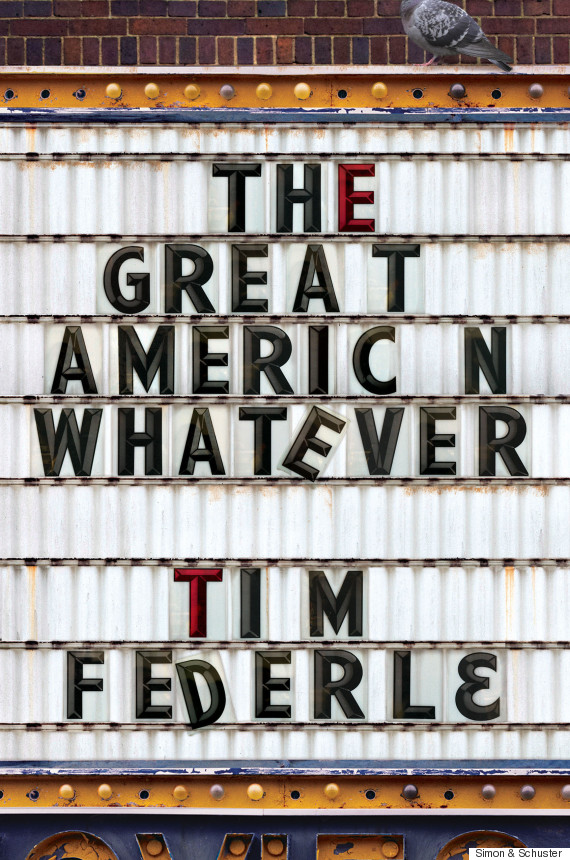
Tim Federle Reveals Cover For ‘The Great American Whatever,’ His New Young Adult Novel

Curtis M. Wong  curtis@huffingtonpost.com
Posted: 06/04/2015 11:06 am EDT

Tim Federle, the award-winning author of Better Nate Than Ever and Five, Six, Seven, Nate!, will release his first novel for young adults next year, and The Huffington Post has an exclusive first look at the cover.
Billed as “a wry, winning testament to the power of old movies and new memories,”The Great American Whatever follows Quinn Roberts, a gay, wisecracking 16-year-old with a weakness for Jolly Ranchers and cute boys, who dreams of becoming a Hollywood filmmaker. When his home life is beset by personal tragedy, Quinn embarks on a “laugh-out-loud sad” journey of self re-discovery with the help of his straight best friend, Geoff, and a new love interest.
Check out the cover below, then scroll down to keep reading.
great american whatever
Federle had a mature audience in mind when he began writing the book, originally titled Quinn, Victorious, five years ago, basing the plot on his personal experiences as seen through characters in their mid-20s. The success of the two Nate books, which are geared toward middle-grade readers, inspired him to trim 10 years off Quinn’s age and emphasize the character’s defining, post-adolescent moments instead – including brushes with self-doubt and an early sexual encounter.
Still, he hopes the new book, which is shades darker than Nate but no less droll, will resonate with grown-ups as well as young adults.
“So much of the teenage experience – particularly the complications in forging new identities and relationships – continues well into adulthood,” Federle told The Huffington Post. “I want people to read The Great American Whatever with a smile on their faces and maybe a couple tears in their eyes.”
In the two years since the release of Better Nate Than Ever, the 35-year-old Federle has established himself as a prolific scribe whose breezy wit isn’t bound to a single genre. The former Broadway dancer has also penned two bestselling cocktail recipe books, Tequila Mockingbird: Cocktails with a Literary Twist and Hickory Daiquiri Dock: Cocktails with a Nursery Rhyme Twist; his first picture book, Tommy Can’t Stop!, was released in April.
“I try to just let go and write from a place of honesty and humor,” he quipped. “And hunger – I write faster when I know there’s frozen Reese’s cups waiting as a reward.”
The Great American Whatever hits shelves March 29, 2016.

Filed Under: Book Reviews Tagged With: Tim Federle

Library group takes lead in promoting LGBT books

04/06/2015 By Dave McFarlane Leave a Comment


The Bay Area Reporter –

by Matthew S. Bajko

m.bajko@ebar.com

American Library Association's Peter Coyl

American Library Association’s Peter Coyl


Long a cheerleader for LGBT books, the American Library Association has increased its support for such literature by assuming oversight of GLBT Book Month, annually celebrated in June.
Originally established in the early 1990s by the Publishing Triangle as National Lesbian and Gay Book Month, this year marks the first commemoration of the 30-day promotion under the ALA’s auspices.
The association’s Office for Diversity, Literacy, and Outreach Services and its Gay, Lesbian, Bisexual, and Transgender Round Table are coordinating the initiative. It is promoting its Rainbow Books list for youth and its Over the Rainbow Books list for adults online and on twitter through the hashtag #GLBTBookMonth.
The promotion culminates at the ALA’s 2015 annual conference being held later this month in San Francisco with a number of events and programs focused on LGBT issues and services.
“The Publishing Triangle, which has been a leader in positioning GLBT books at the forefront of literature, had the foresight to initiate this event almost a quarter century ago, and we are very proud to continue this important observance,” stated ALA President Courtney Young , the head librarian and an associate professor of women’s studies at Penn State University’s Greater Allegheny Campus. “We are incredibly appreciative of the historic work and brave first steps taken by many authors and publishers over the past 50 years to bring recognition to GLBT literature.”
Karen Sundheim, the program manager for the James C. Hormel Gay and Lesbian Center at the San Francisco Public Library, told the Bay Area Reporter that the ALA bringing its “love of books” to focus on LGBT literature is sure to have positive impacts.
“I think it will really help to have the library association promoting its GLBT Book Month. We are talking about libraries all over the United States, not just in San Francisco,” said Sundheim, who will be taking part in a number of panels and events at the ALA’s conference. “In that way the ALA taking it over will mean a much bigger reach and it is very exciting.”
For five decades now the ALA has supported and promoted quality LGBT literature. In 1971 it launched its Stonewall Book Awards, yearly honors for the very best in LGBT books, including adult literature, non-fiction, and children’s and young adult titles.
The oldest such library association, the ALA is known as “the voice of America’s libraries.” By marshaling its 56,000 members to celebrate GLBT Book Month, the ALA believes it can attract far greater attention among the public to the annual event.
“We can have more of a reach in terms of our exposure among librarians who do a lot of book reading, purchasing, and recommending,” said Peter Coyl, 35, a gay man who is the incoming chair of the ALA’s GLBT Round Table. “Because of the unique work we do with a wide population and the type of people we reach, we can give it more exposure.”
The district manager for the Dallas Public Library, Coyl said marking GLBT Book Month is “pretty new” for the Texas city’s libraries. Through its Twitter account @DallasLibrary, it is tweeting out a book suggestion each day in June.
So far it has recommended Prelude to Bruise, Saeed Jones‘ 2014 book of poetry, and the 2014 children’s picture book This Day in June by Sacramento-based author Gayle E. Pitman. The book’s cover illustration by Kristyna Litten has been turned into a poster to promote this year’s GLBT Book Month.
As librarians, “we are unbiased in terms of what we recommend,” said Coyl. “We are able to recommend or suggest books to readers that maybe other groups wouldn’t be able to because of their focus.”
Even as LGBT issues gain more prominence in the culture and growing public acceptance, censorship of LGBT titles continues to be an issue. Over the past decade, 361 challenges due to “homosexuality” were reported to the ALA’s Office for Intellectual Freedom.
In third place on its 2014 top ten list of most frequently challenged books was And Tango Makes Three, a 2005 children’s picture book that features two male penguins raising a chick. Among the reasons the book is flagged, according to the ALA, is because it “promotes the homosexual agenda.”
“I think some people are naive. They take for granted the freedoms they enjoy in the Bay Area. But actually banned books is a serious problem in many places, including as you say California,” said Sundheim, who has overseen the Hormel Center’s collection of 10,000 titles since 2007.
Support among publishers and booksellers for diverse books, whether by LGBT authors or people of color, also remains an issue. It sparked the creation last year of the We Need Diverse Books campaign to promote a wider array of titles for children and young adults.
Ilene Gregorio, a founding member of the campaign and its vice president of development, said promotions like GLBT Book Month can help to raise awareness about books that may not receive the same marketing attention as titles by established authors.
“Writers can write diverse books but publishers have to buy them and sales teams have to know how to sell them so they are available. The lifecycle of a book is very short; if it doesn’t sell well the first month it will be off the shelves,” said Gregorio, who this spring published her first novel, None of the Above, inspired by an intersex youth she met while attending Stanford’s medical school.
The ALA’s Coyl said one of the main purposes for GLBT Book Month is to ensure librarians and others are made aware of the wide variety of literature out there that deals with sexual orientation or gender identity, especially for young readers.
“I think it is important for libraries, no matter what kind, to have a wide variety of material available for their customers. Libraries, even school libraries, serve a wide variety of students with different backgrounds,” said Coyl. “A student may question their sexual orientation or gender identity, or may have parents of the same gender. They come to the library looking for things about them or about their life and that reflect their experiences.”
For more information about GLBT Book Month, visit http://www.ala.org/glbtrt/glbt-book-month.
 

Lesbian Berkeley city manager resigns

More than three years after Christine Daniel became the first lesbian and the first woman hired as Berkeley’s city manager, she is stepping down to take a job with the city of Oakland.
In a letter dated June 2 Daniel informed Berkeley officials that she would resign effective July 24. She will be working in the administration of Oakland’s new mayor, Libby Schaaf , as an assistant city administrator.
“It has been an honor to have served as your city manager for the last three and one-half years, and to have spent 15 years of my professional career with this very special community,” wrote Daniel, who was first hired by the Berkeley City Attorney’s office.
Daniel left to work for the city attorney of Fremont and then returned to Berkeley to work for Phil Kamlarz, the city’s longtime city manager who retired in the fall of 2011. Having been groomed for the job, Daniel was named to replace Kamlarz that October.
“Berkeley is filled with creative, passionate people who are not afraid to try something new or to challenge conventional wisdom, while at the same time remaining committed to preserving the unique character of this wonderful place,” wrote Daniel. “It has been a pleasure to work with so many.”
In an email to the B.A.R. announcing the news, gay Berkeley City Councilman Kriss Worthington‘s office said it “was sad to report” Daniel’s decision to step down but was heartened “that she will continue her service in the East Bay.”

Filed Under: Book Reviews Tagged With: all ages, LGBT books

Book Review: Hold Still by Nina LaCour

29/05/2015 By Dave McFarlane Leave a Comment

Review: Hold Still by Nina LaCour

by Vee

reviewed by Marie Hagen of MarietheLibrarian

Hold Still by Nina Lacour

Hold Still by Nina Lacour

Hold Still | Nina LaCour | 231 pages | Paperback | With illustrations
Genres: Young Adult, Contemporary, Realistic fiction
Themes: Death, friendship, loss, suicide
Goodreads rating: 3.99
Synopsis: Hold Still tells the story of Caitlin who recently lost her best friend Ingrid, to suicide. Ingrid and Caitlin shared everything together, and Caitlin is facing an unknown life without her best friend to laugh, cry and share her secrets with. One day Caitlin finds Ingrids journal under her bed, and through her journal, Caitlin gets to see another different, darker side of Ingrid. The journal becomes sort a guide to Caitlin as she deals with returning to school, forging new friendships and falling in love for the very first time, without her best friend to share it with.
My thoughts:
You may wonder why I chose to review this book for the GAY YA, and that’s because the author is not only gay, but Hold Still features a queer girl character. But I’ll talk a bit more about this later.
The reason I read this book was because I had heard so much raving about Nina LaCour’s newest book, Everything Leads to You. I was buying books for my library and the only book they had available for purchase was Hold Still. I bought it, received it, read it and here I am, an emotional mess because of this beautiful book.
First off, I want to talk about LaCour’s beautiful writing style. IT IS SO BEAUTIFUL AND MY HEART JUST MELTED! She writes so poetically and full of emotions and it just hits me right in the heart. Her tone is funny, sarcastic and very realistic. Her metaphors are easy to understand and relate to, and it makes me feel as though I am the one grieving the loss of my best friend to a suicide. It takes talent to write that well.
Second, the characters. Oh my god, the characters. The characters are so well-written and well-rounded. All of them come to life in my head and I really feel like I am a part of this book. Caitlin’s grief, her struggle to find new friends, her relationship with her parents, teachers and her old classmates. Caitlin’s new friends are written beautifully and they all have depth and emotion to them. Every character in this book has a purpose and they all bring something new to the story about Caitlin and Ingrid. My favorite character is, of course, the queer girl and Caitlin’s friend, Dylan. She has gone through some of the same stuff that Caitlin has been through and their friendship turns out to be one of the realest ones I have read.
Thirdly, I absolute loved, adored, and devoured this book. It left me speechless and I cried many times. I love how this book is about grief, but it is not one of those immensely sad books that you get depressed after reading. No, this book has humor, love and carrying on as important subjects. It also shows how art or doing what YOU love can help you get through even the hardest of times. Like I said earlier, the main reason I wanted to review this book for the GAY YA is because it features a very realistic f/f relationship and it also shows how completely normal a friendship between a straight and queer girl can be. I love Dylan and Caitlin’s honesty with each other, and I love how Caitlin can ask Dylan about relationship advice without it being cheesy. I also loved that Caitlin has male friends that she’s not attracted to and that she still manages to be their friend. This book just displays some simply amazing and wonderful relationships of all kinds.
Final thoughts: Read this book if you want to laugh and cry. Read this book if you want to read a book with good and strong friendships. Read this book if you want a queer girl character. Read this book if you want to read a beautifully. Just read this book. IT IS SO BEAUTIFUL.

Click me to buy me

Favorite quote:

“Instead, every muscle in her whole body seems to lose all tension, her step forward resembles a skip, and she lets out a hey that might as well say; I love you, you are so beautiful, no one in the world is as amazing as you are.”

This is how Caitlin describes Dylan when she sees her girlfriend, and I just died from the beauty of it.
My rating: 5 stars
Thank you for reading and thank you to Vee at @thegayya for allowing me to write this weird review. It is not a review per ce, but my thoughts and feelings and rambles about this stunning book.

Filed Under: Book Reviews Tagged With: Hold Still, Nina LaCour

Book Reviews for gay Teens and Young Adults

29/05/2015 By Dave McFarlane Leave a Comment

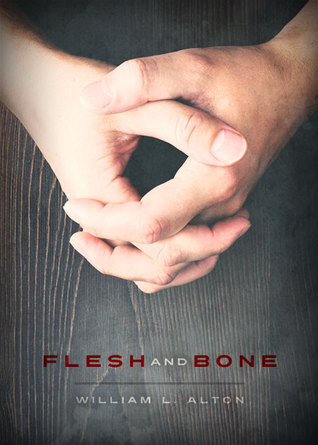
Flesh and Bone (Luminis Books, 2015)

Flesh and Bone (Luminis Books, 2015)

Flesh and Bone by William Alton — (G,Q)
Goodreads Summary: “A literary novel for young adults that deals with a despairing teen uncertain about his sexual preferences who turns to drugs, alcohol, and unreliable friends for solace.
Told in a series of images and fragments, Flesh and Bone is a raw and real portrayal of a teen struggling to find love in his life. When Bill’s father leaves and he and his mother move far away to live with her parents, his whole world implodes. His grandparents are cold and distant, his mom is distant both physically and emotionally as she deals with her own struggles, and his dad is just gone. Bill explores his sexuality with multiple partners as he searches for love and compassion and turns to drugs and alcohol to dull the pain of loneliness. Flesh and Bone is a powerful tale that sheds light on the dark places of the soul.”
Amazon
May 5th (USA)
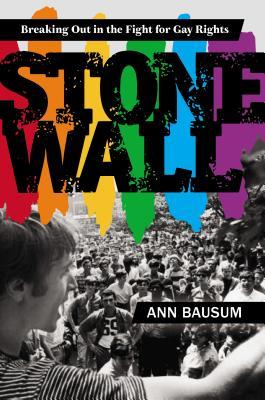
Stonewall: Breaking Out in the Fight for Gay Rights by Ann Bausum — (NON-FICTION, Q)
Goodreads Summary: “That’s the Stonewall. The Stonewall Inn. Pay attention. History walks through that door.
In 1969 being gay in the United States was a criminal offense. It meant living a closeted life or surviving on the fringes of society.

Stonewall (Viking Books for Young Readers, 2015)

Stonewall (Viking Books for Young Readers, 2015)

People went to jail, lost jobs, and were disowned by their families for being gay. Most doctors considered homosexuality a mental illness. There were few safe havens. The Stonewall Inn, a Mafia-run, filthy, overpriced bar in New York City’s Greenwich Village, was one of them.
Police raids on gay bars happened regularly in this era. But one hot June night, when cops pounded on the door of the Stonewall, almost nothing went as planned. Tensions were high. The crowd refused to go away. Anger and frustration boiled over.
The raid became a riot.
The riot became a catalyst.
The catalyst triggered an explosive demand for gay rights.
Ann Bausum’s riveting exploration of the Stonewall Riots and the national Gay Rights movement that followed is eye-opening, unflinching, and inspiring.”
Amazon
May 7th (USA)
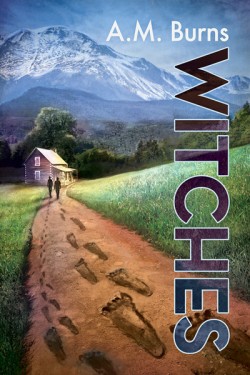
Witches by A.M. Burns — (G)

Witches (Harmony Ink Press, 2015)

Witches (Harmony Ink Press, 2015)

Goodreads Summary: “Thom Woodmen, a bigfoot or Oh Mah, who lives in a human world, is bonded to Ben Steele, an average teenager. Thom has barely adjusted to his new status as a Guardian when he discovers others working against him and there’s a price on his head. Then an intruder appears in his family’s territory, and he senses strange energies coming from Ben.
While they struggle to find out who wants Thom dead, Ben is tested to confirm Thom’s suspicions—Ben has magic. Ben shows promise, but he just wants to stay the normal human within their group of friends. After more attacks, Ben begins to see how magic might help him protect Thom—if only he can learn enough before the witch who is hunting them closes in for the kill.”
 Amazon
May 7th (UK)
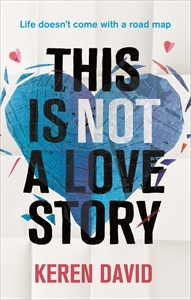
This is Not a Love Story by Keren David  — (B)

This is Not a Love Story (Atom, 2015)

This is Not a Love Story (Atom, 2015)

Goodreads Summary: “Kitty dreams of a beautiful life, but that’s impossible in suburban London where her family is haunted by her father’s unexpected death. So when her mum suggests moving to Amsterdam to try a new life, Kitty doesn’t take much persuading. Will this be her opportunity to make her life picture perfect?
In Amsterdam she meets moody, unpredictable Ethan, and clever, troubled Theo. Two enigmatic boys, who each harbour their own secrets. In a beautiful city and far from home, Kitty finds herself falling in love for the first time.
But will love be everything she expected? And will anyone’s heart survive?”
Amazon
May 12th (USA)
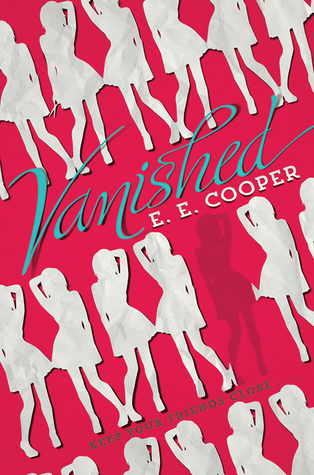
Vanished by E. E. Cooper — (B)

Vanished (Katherine Tegen Books, 2015)

Vanished (Katherine Tegen Books, 2015)

Goodreads Summary: “Gone Girl meets Pretty Little Liars in this fast-paced psychological thriller full of delicious twists and turns.
Friendship. Obsession. Deception. Love.
Kalah knows better than to fall for Beth Taylor . . . but that doesn’t stop her from falling hard and falling fast, heart first into a sea of complications.
Then Beth vanishes. She skips town on her eighteenth birthday, leaving behind a flurry of rumors and a string of broken hearts. Not even Beth’s best friend, Britney, knows where she went. Beth didn’t even tell Kalah good-bye.
One of the rumors links Beth to Britney’s boyfriend, and Kalah doesn’t want to believe the betrayal. But Brit clearly believes it–and before Kalah can sort out the truth, Britney is dead.
When Beth finally reaches out to Kalah in the wake of Brit’s suicide, Kalah wants to trust what Beth tells her. But she’s swiftly realizing that nothing here is as it seems. Kalah’s caught in the middle of a deadly psychological game, and only she can untangle the deceptions and lies to reveal the unthinkable truth.”
Amazon
May 14h (USA)
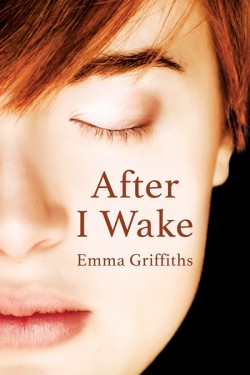
After I Wake by Emma Griffiths — (L)

After I Wake (Harmony Ink, 2015)

After I Wake (Harmony Ink, 2015)

Goodreads Summary: “Award-winning teen poet Carter Rogers has made a lot of bad choices in her life, one of which led to losing her hand to frostbite. After a failed suicide attempt, Carter wakes up and takes a hard look at the person she’s become. As her disappointment over her botched effort fades, she begins to accept herself and look forward. Righting past wrongs won’t be easy, but armed with the support of her mother and her friends, and with a new perspective on life, Carter sets out to fix her relationships with the people she cares about and the world of poetry.”
 Amazon
May 14h (USA)


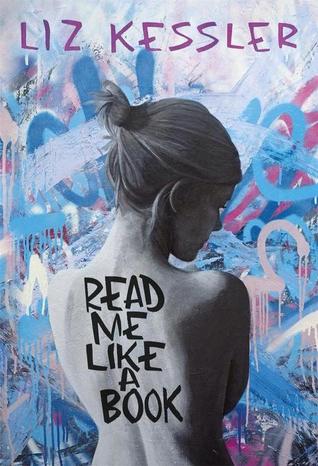
Read Me Like a Book (Indigo, 2015)

Read Me Like a Book (Indigo, 2015)

Read Me Like a Book by Liz Kessler  — (L,B)
Goodreads Summary: “Ashleigh Walker is in love. You know the feeling – that intense, heart-racing, all-consuming emotion that can only come with first love. It’s enough to stop her worrying about bad grades at college. Enough to distract her from her parents’ marriage troubles. There’s just one thing bothering her . . .
Shouldn’t it be her boyfriend, Dylan, who makes her feel this way – not Miss Murray, her English teacher?
A thought-provoking coming out story from a highly skilled author.”
Amazon
May 19th (USA)
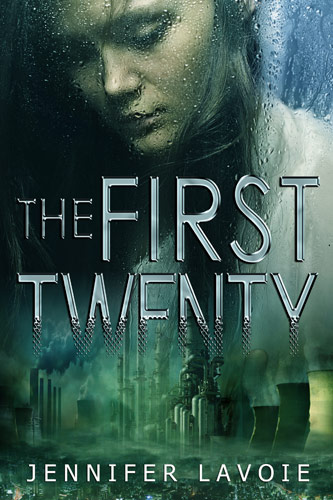
The First Twenty by Jennifer Lavoie  — (L)

The First Twenty (Bold Strokes Books, 2015)

The First Twenty (Bold Strokes Books, 2015)

Goodreads Summary: “Humanity was nearly wiped out when a series of global disasters struck, but pockets of survivors have managed to thrive and are starting to rebuild society. Peyton lives with others in what used to be a factory. When her adopted father is murdered by Scavengers, she is determined to bring justice to those who took him away from her. She didn’t count on meeting Nixie.
Nixie is one of the few people born with the ability to dowse for water with her body. In a world where safe water is hard to come by, she’s a valuable tool to her people. When she’s taken by Peyton, they’ll do anything to get her back. As the tension between the groups reaches critical max, Peyton is forced to make a decision: give up the girl she’s learned to love, or risk the lives of those she’s responsible for.”
 Amazon
May 21th (USA)

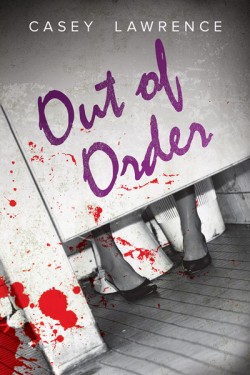
Out of Order (Harmony Ink, 2015)

Out of Order (Harmony Ink, 2015)

Out of Order by Casey Lawrence  — (B)
Goodreads Summary: “Corinna “Corey” Nguyen’s life seems perfectly average for a closeted bisexual whiz kid with her eyes on college and a budding romance with her friend Kate. Sixteen and navigating senior year with her tight-knit group of best friends through crushes, breakups, and pregnancy scares, Corey mistakenly believes that running for valedictorian and choosing the right college are the worst of her worries. That is, until prom night, when she’s left alone and in shock, hiding inside a diner restroom, the only witness to a multiple homicide.
With graduation looming, the pressure is on for Corey to identify the killer and ensure that the crime that has changed her life forever will not go unpunished.”
 Amazon
May 26th (USA)
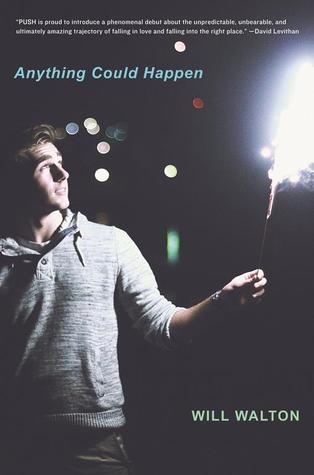
Anything Could Happen by Will Walton — (G)
Goodreads Summary: “When you’re in love with the wrong person for the right reasons, anything could happen.

Anything Could Happen (Push, 2015)

Anything Could Happen (Push, 2015)

Tretch lives in a very small town where everybody’s in everybody else’s business. Which makes it hard for him to be in love with his straight best friend. For his part, Matt is completely oblivious to the way Tretch feels – and Tretch can’t tell whether that makes it better or worse.
The problem with living a lie is that the lie can slowly become your life. For Tretch, the problem isn’t just with Matt. His family has no idea who he really is and what he’s really thinking. The girl at the local bookstore has no clue how off-base her crush on him is. And the guy at school who’s a thorn in Tretch’s side doesn’t realize how close to the truth he’s hitting.
Tretch has spent a lot of time dancing alone in his room, but now he’s got to step outside his comfort zone and into the wider world. Because like love, a true self can rarely be contained.
ANYTHING COULD HAPPEN is a poignant, hard-hitting exploration of love and friendship, a provocative debut that shows that sometimes we have to let things fall apart before we can make them whole again. ”
Amazon 
May 26th (USA)

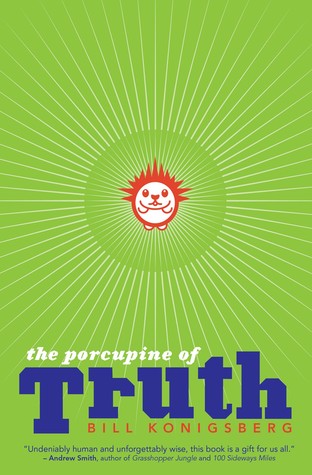
The Porcupine of Truth by Bill Konigsberg (Arthur A. Levine, 2015)

The Porcupine of Truth (Arthur A. Levine, 2015)

The Porcupine of Truth by Bill Konigsberg — (G)
Goodreads Summary: “The author of OPENLY STRAIGHT returns with an epic road trip involving family history, gay history, the girlfriend our hero can’t have, the grandfather he never knew, and the Porcupine of Truth.
Carson Smith is resigned to spending his summer in Billings, Montana, helping his mom take care of his father, a dying alcoholic he doesn’t really know. Then he meets Aisha Stinson, a beautiful girl who has run away from her difficult family, and Pastor John Logan, who’s long held a secret regarding Carson’s grandfather, who disappeared without warning or explanation thirty years before. Together, Carson and Aisha embark on an epic road trip to find the answers that might save Carson’s dad, restore his fragmented family, and discover the “Porcupine of Truth” in all of their lives.”
Amazon 
May 28th (USA)
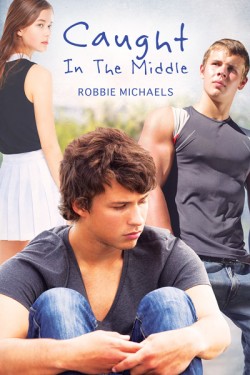
Caught in the Middle (Caught in the Act #2) by Robbie Michaels — (G)

Caught in the Middle (Harmony Ink, 2015)

Caught in the Middle (Harmony Ink, 2015)

Goodreds Summary: “After a rocky start to the school year, Ben and Adam are getting their feet on solid ground, despite a lot of obstacles. Amelia, Ben’s former girlfriend, isn’t willing to let Ben go so easily. At Christmas, Amelia delivers a bombshell that keeps Adam and Ben apart over the holiday. When Adam returns from seeing his family, Ben, who avoids conflict at all cost, will not talk to him.
Adam figures out Amelia’s scheme, and when he confronts her, she retaliates by arranging an ambush in the school parking lot one night.
Ben is horrified when he sees Adam lying battered in the hospital. Adam is more than physically broken. His spirit is wounded, and he sees only the negative, the struggle ahead, and Ben’s betrayal. Healing, both in body and mind, is a long arduous road.
It’s up to Ben to convince Adam that there is still good in life and that he’ll be there to help Adam every step of the way. If Adam will let him.”
Amazon

Filed Under: Book Reviews Tagged With: book reviews, LGBT teens, LGBT young adults

Belfast Books

24/05/2015 By ACOMSDave Leave a Comment

Today I was talking to the owner of Belfast Books (www.belfastbooks.co.uk ), a used/new book shop at 112 York Road, who asked if I knew of anyone or any groups that had any LGBT-themed books they would sell or donate. He is interested, due to familial connections to the LGBT community and through social conscience, in selling these amongst his varied collections. He is interested in books across multiple genres –  topical, fiction, auto-/biographicals, academic and pop culture etc, and would ideally like to have enough to fill a bookshelf or two.
As I’m sure you can appreciate, it’s not easy finding these when you’re not sure what you’re looking for.
If anyone is interested in helping out, please contact John using the below details:
email: enquiries@belfastbooks.co.uk
Tel: 028 9075 1466
Many thanks
Liam

Filed Under: Book Reviews Tagged With: Belfast Books, LGBT

Closet Queens by MIchael Bloch

18/05/2015 By ACOMSDave Leave a Comment

Reprinted from The Guardian

Michael Bloch
Saturday 16 May 2015 08.00 BST Last modified on Monday 18 May 2015 11.43 BST


Double lives – a history of sex and secrecy at Westminster

There are now 32 openly gay MPs, but for much of the 20th century many politicians were forced to lead complex, clandestine sexual lives. Michael Bloch tells their stories and salutes their powers of subterfuge

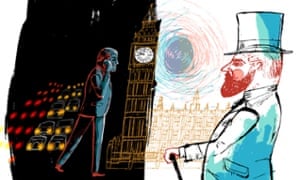
Closet Queens cover image

Westminster’s ‘closet queens’ were past masters when it came to keeping secrets, and taking calculated risks Illustration: Robin Heighway-Bury@goodillustration.com


Westminster’s ‘closet queens’ were past masters when it came to keeping secrets, and taking calculated risks.

From 1885, when the Labouchere amendment created the new offence of gross indecency, until 1967, when the recommendations of the Wolfenden committee were enacted, all homosexual behaviour was illegal in Britain. It continued to attract intense social disapproval for long after that: as late as 1993, according to the annual British Social Attitudes survey, most people still considered it to be “always wrong”. In this cruel and illiberal atmosphere, politicians with gay inclinations had to keep them secret from the public at large, and ran enormous risks. They were obliged either to repress their sexual feelings and lead celibate lives, or else to lead double lives, indulging their tastes clandestinely while outwardly conducting conventional, heterosexual existences, often married with children.
Yet paradoxically, “closet queens” (to use an expression that came into vogue in the 1960s) often made effective politicians. They were past masters when it came to keeping secrets, and taking calculated risks; they were also actors on life’s stage, with a strong sense of showmanship, and a flair for intrigue and subterfuge. And there was probably a far higher proportion of homosexuals in politics than in most other walks of life, partly because, as actors and risk-takers, they were drawn to the profession, and also because 20th-century British politicians were often educated at all-male boarding schools, which fostered intense (often sexual) friendships among their pupils, and provided unintentional training in the art of breaking the rules and getting away with it.
The quiet revolution: why Britain has more gay MPs than anywhere else
Read more
I became aware of this aspect of British political life when I wrote the biography (published after his death last year) of Jeremy Thorpe, the charismatic Old Etonian who led the Liberal party from 1967 to 1976. Always gallant with “the ladies”, Thorpe married twice, and fathered a son; but he led a hair-raising promiscuous gay life behind the scenes. When it came to both sex and politics he was a master of intrigue, exhibited outstanding seductive qualities and got a kick out of his risk-taking. He was eventually obliged to resign as Liberal leader when a former male model revealed that they had conducted an affair many years earlier, when it was still illegal; and he was subsequently tried at the Old Bailey for having allegedly conspired to have the man in question murdered – though he was acquitted, the revelations of his sex life and his efforts down the years to cover it up left him a discredited figure.

Jeremy Thorpe in 1977.

Jeremy Thorpe in 1977. Facebook Twitter Pinterest Jeremy Thorpe in 1977. Photograph: PA/PA wire ***


Many years earlier, two other Old Etonian Liberal politicians had found their careers ruined when they were hounded by men who claimed to have proof of their homosexual activities – the 5th Earl of Rosebery, prime minister in the 1890s, and the 7th Earl Beauchamp, a government minister from 1905 to 1915, subsequently Liberal leader in the House of Lords. They were cousins, who partly owed their early success to handsome looks; both were offered high positions in their 20s and joined the cabinet in their 30s. Both married fabulously rich heiresses – Rosebery, Hannah de Rothschild; Beauchamp, the sister of the 2nd Duke of Westminster. Rosebery’s marriage produced four children, Beauchamp’s no fewer than seven – but both were drawn emotionally to their own sex. (Both seem to have been infatuated by their handsome younger sons, by whose early deaths they were devastated.)
Rosebery had a liking for personable private secretaries. One of these was Francis, Viscount Drumlanrig, heir to the 9th Marquess of Queensberry, by whose qualities Rosebery was so taken that he arranged for him to be made a junior member of the government at the age of 26. This incensed “the mad marquess”, who was convinced that Rosebery was having an affair with his eldest son, just as he believed that Oscar Wilde was conducting one with his youngest son, Lord Alfred “Bosie” Douglas. Queensberry’s accusations were at first regarded as the ravings of a madman, but received some credence when in the autumn of 1894 – Rosebery having meanwhile become prime minister – Drumlanrig shot himself. Soon afterwards Rosebery suffered a breakdown and went into a state of seclusion: he was said to be terrified that his name would be raised in the libel case that Wilde brought against Queensberry. In 1895, less than a month after Wilde had been sentenced to two years’ hard labour for gross indecency, Rosebery tendered the resignation of his government (though it still commanded a parliamentary majority and no election was due).
 
Lord Rosebery speaking at the Foreign Office, c1900.

Lord Rosebery speaking at the Foreign Office, c1900. Photograph: Hulton Archive/Getty Images


Whereas Rosebery had a (possibly platonic) taste for secretaries, Beauchamp’s (by no means platonic) penchant was for footmen and grooms. He continued these escapades for decades without being exposed, and might have done so indefinitely but for a vendetta by the Duke of Westminster, who was resentful that Beauchamp had, through his marriage to Westminster’s sister, produced three sons, while Westminster’s sole male heir had died aged four. In 1930, Westminster’s agents obtained statements from former servants of what he termed his “bugger-in-law”, testifying to his peccadilloes; confronted with this evidence, Beauchamp resigned and fled into exile. His story provided the background for Evelyn Waugh’s novel Brideshead Revisited: Lord Marchmain, the distinguished peer obliged to live abroad, is based on Beauchamp, while his son, the beautiful but wayward Sebastian, is based on Beauchamp’s adored younger son Hughie, with whom Waugh had been intimate at Oxford.
***
As a young cavalry officer, the Old Harrovian Winston Churchill was accused of having “participated in acts of gross immorality of the Oscar Wilde type” with fellow cadets at Sandhurst; but he successfully sued his accuser for libel, and there is no evidence that, as an adult, he engaged in physical homosexual relationships. Yet he was far from being straightforwardly heterosexual. Although he worshipped his beautiful American mother, he showed a lifelong aversion to women. (In Churchill’s only novel Savrola, the obviously autobiographical hero has a purely chaste relationship with the heroine, obviously based on Churchill’s mother.) He seems to have had a low sex drive, and married rather cold-bloodedly, aged 33, for social and dynastic reasons, just after being appointed to Asquith’s cabinet. Though he came to depend on his “Clemmie” in many ways, she was often exasperated by his emotional unresponsiveness and treatment of her as a child-bearer and housekeeper, and more than once considered leaving him.
 
Winston Churchill c1900.

Winston Churchill c1900. Photograph: Everett/Rex Shutterstock


While he never showed much interest in women other than his wife, Churchill’s life was marked by a series of close platonic relationships with attractive young men. Prominent among these were Eddie Marsh, a civil servant who served devotedly for 25 years as his private secretary, whom Churchill described as “a friend I shall cherish and hold on to all my life”; Archie Sinclair, a cavalry officer, whom he chose as his second in command on the western front in 1916, as his personal assistant as war secretary and colonial secretary in 1919-22, and finally (after Sinclair had become leader of the Liberal party) as air minister in 1940; Bob Boothby, the youngest and handsomest MP, whom Churchill, as chancellor of the exchequer in the 1920s, appointed his PPS despite the bumptious Boothby having criticised his policies; and Brendan Bracken, a young man on the make whom Churchill (to the horror of his family) effectively adopted in the 1920s and who served as his right-hand man during the 1930s, finally becoming information minister during the second world war. (Of these four, Marsh, who developed crushes on young writers and actors, and Boothby, who had a taste for “rough trade” from the criminal underworld, were certainly predominantly homosexual, and Bracken, though he cloaked his private life in impenetrable secrecy, probably, too.) Like Rosebery and Beauchamp, Churchill seems to have had feelings towards his son, Randolph, that verged on the amorous (another factor that estranged him from his wife, who disliked the boy from birth) – though these feelings cooled as Randolph lost his looks owing to excessive drinking, and became a coarse womaniser. Arguably, the intensely narcissistic and exhibitionistic Churchill was romantically drawn to men rather than women, even if his relations with them stopped short of the physical.
Advertisement
***
The long parliament of 1935-45 contained a clandestine fraternity of homosexual and bisexual politicians who knew each other well, were aware of each other’s tastes and often met socially. Boothby featured prominently in this circle, as did his friend the leftwing MP Tom Driberg, who was addicted to having sex with strangers in lavatories (including those of the House of Commons). Another friend of Boothby was the National Labour MP and wartime minister Harold Nicolson; Nicolson was an active homosexual married to a lesbian, as was the Conservative MP Viscount “Hinch” Hinchingbrooke. Nicolson had two sons by his wife, the writer Vita Sackville-West, while Hinch’s artist wife Rosemary bore him seven children before leaving him to live with a female companion. Also in the circle were two Conservative MPs and close friends, the American-born Henry “Chips” Channon and the Churchill protege Alan Lennox-Boyd, who married sisters, Guinness heiresses, but enjoyed riotous homosexual adventures behind the scenes. Lennox-Boyd had a distinguished ministerial career in several governments, while Channon achieved posthumous fame with his racy diaries (from which any hint of his gay sex life was expunged when they were published in the 1960s). Other MPs in the coterie included the outrageously camp millionaire aesthete Sir Philip Sassoon, who as undersecretary for air befriended young airmen and seems to have had a close relationship with at least one of them; the rich and handsome Sir Paul Latham, who in 1941 became the only serving MP of modern times to go to prison for homosexuality, after attempting to seduce his batman; and Malcolm Bullock, a balletomane and former guards officer on close terms with the royal family. All these men undoubtedly enjoyed the sensation of belonging to a secret society, as well as the thrill of danger that their illegal sex-lives involved (though this should not blind us to the fears, disappointments and lack of self-fulfilment suffered by most gay men, including politicians, until recent times).
Bob Boothby, photographed for the Picture Post in 1949.

Bob Boothby, photographed for the Picture Post in 1949. Photograph: Haywood Magee/Getty Images


Boothby is an interesting case, for while continuing relationships with young men he also pursued a long affair, which was common knowledge at Westminster, with Lady Dorothy Macmillan, wife of a fellow Conservative MP, the future prime minister Harold Macmillan; it was she who seduced Boothby and made the running throughout the affair. (When asked what he saw in her, Boothby replied that she reminded him of a caddie he had once met on the links at St Andrews.) The affair, and the impression it gave that Boothby was “a ladies’ man”, provided a smokescreen for his homosexual activities, and also proved helpful when, in 1953, he pressed the home secretary, Sir David Maxwell Fyfe, to set up a body to reconsider the law relating to homosexuality. Maxwell Fyfe was a vicious homophobe, then organising the unprecedented national persecution of homosexuals; and it is curious that he went out of his way to get the cabinet (which was far from keen on the idea) to appoint a committee to examine the matter, chaired by the former public school headmaster John Wolfenden.
When, in 1957, Wolfenden reported in favour of decriminalising homosexual acts performed between adult males in private, Maxwell Fyfe, now Viscount Kilmuir and lord chancellor, declared that he was “not going down in history as the man who made sodomy legal”. The Conservative government, now led by Macmillan, shared his view, refusing to lay the Wolfenden proposals before parliament; and a long campaign began to get them enacted – which they finally were in 1967, thanks to several courageous parliamentarians who sponsored the necessary legislation, notably the charismatic bisexual Welsh Labour MP Leo Abse. The Labour government that then held office was no keener to be associated with the reform than its Conservative predecessor – though time was allowed for a private member’s bill thanks to the efforts of two ministers who, though they had become thoroughly heterosexual, had enjoyed homosexual adventures as Oxford undergraduates: the home secretary, Roy Jenkins, who had been in love with his future cabinet colleague Tony Crosland; and the leader of the House of Commons, Richard Crossman, who had had an affair with the poet WH Auden.
***
It is ironic that the Macmillan cabinet that resisted implementing Wolfenden seems to have contained more “closet queens” than any other of the century. During the years 1959-60, for example, it contained the following homosexual or bisexual members: the chancellor of the exchequer, Derick Heathcoat-Amory, who narrowly avoided scandal after engaging in frolics with “teddy boys” at Margate; the foreign secretary, Selwyn Lloyd, who was in love with his handsome godson and personal assistant Jonathan Aitken; and the colonial secretary, Alan Lennox-Boyd, who though married with three sons conducted a longstanding relationship with a major in the Coldstream Guards.
The cabinet also included the health secretary, Enoch Powell, who as a classics professor in Australia before the war had written to his parents about his infatuation with his male students; and the minister of labour, the unmarried and misogynistic Edward Heath.
Three junior members of the government were obliged to resign owing to homosexual scandal: the Foreign Office minister Ian Harvey, who in 1958 was caught with a guardsman in St James’s Park; the Home Office minister Charles Fletcher-Cooke, who in 1961 was found to be living with a former borstal boy; and the science minister Denzil Freeth, whom Lord Denning, during his inquiry into the Profumo affair in 1963, discovered to have “attended a party of a homosexual character and there engaged in homosexual conduct”. It was even rumoured that Macmillan himself had been expelled for homosexuality from Eton (where his elder brother Daniel certainly had a “reputation”; his lovers including the future economist John Maynard Keynes) – though his latest biographer believes it more likely that he was “removed” from the school by his parents when they discovered that he was being “used” by older boys.
Edward Heath after his election victory in 1970.

Edward Heath after his election victory in 1970. Photograph: Peter Kemp/AP


Heath, who became Conservative leader and prime minister, seems to have repressed his sexual nature totally in order to realise his political ambitions. He came from modest social origins, which he never tried to conceal: he was not close to his father, a former carpenter who ran a small building firm, but he worshipped his mother, who had a certain refinement, having worked as a lady’s maid in a country house. She adored her “Teddie”, and pressed him to achieve great things. Inspired by her, Heath was the star of his grammar school and won a scholarship to Balliol College, Oxford, where he became president of both the Union and the Conservative Association. Unlike his Oxford contemporary and future rival, Harold Wilson, Heath was not brilliant, but an intelligent and dedicated plodder. Following distinguished war service, in which he rose to be a colonel in the artillery, he was elected to parliament in 1950 and spent the ensuing decade as a whip, a role to which his personality – upright, thorough, affable but aloof – was ideally suited. That as government chief whip he managed to keep the party together after the Suez debacle of 1956 was a considerable achievement.
The Conservatives elected Heath as their leader in 1965 believing he would help them shed their elitist image, but he was an odd choice, awkward in his behaviour and lacking “the common touch”. It caused surprise when he defeated the charismatic Wilson to become prime minister in 1970. In 1975, after his administration been brought down by union militancy, he was replaced as leader by Margaret Thatcher, whom he regarded with an intense loathing that he never tried to conceal. (“When I look at him and he looks at me,” she once remarked, “it doesn’t feel like a man looking at a woman, more like a woman looking at another woman.”) Heath (like his hero, Churchill) was notoriously averse to women, and barely managed to be polite even to the wives of colleagues, but he does not seem to have been close to any men either, and was a self-absorbed, friendless figure.
Apart from Arthur Balfour, Conservative prime minister from 1902 to 1905 (who, though a narcissistic dandy, was in fact heterosexual and enjoyed sado-masochistic relationships with sophisticated women), Heath is modern Britain’s only bachelor premier, and his unmarried state gave rise to widespread rumour to the effect that he was actively gay – though no reliable evidence has emerged to suggest that he ever had a sexual or even a platonic relationship with anyone. Only in old age did he unbend to the extent of developing flirtatious friendships with some younger gay Tory MPs such as Alan Duncan and Matthew Parris, as well as with the gay couple who decorated his house in Salisbury. During his later years he also supported the lowering of the age of consent for homosexuality from 21 to 18 and then 16, whereas during his active political career he had studiously avoided showing interest in homosexual law reform.
***
Norman St John Stevas in 1950.

Norman St John Stevas in 1950. Photograph: Personalities/AP / TopFoto


Clandestine homosexuality also flourished in the Labour party; here two contradictory influences were at work. A strain in the party’s development (epitomised by the Fabian Society, and Edward Carpenter’s philosophy of “the dear love of comrades”) preached sexual toleration and the rejection of bourgeois morals; but the party was also deeply rooted in the fierce evangelical Christianity that spearheaded the crackdown on homosexuality during the Victorian era. The Old Etonian Hugh Dalton, a leading figure in the Labour movement and a senior cabinet minister throughout the 1940s, was in love with Rupert Brooke as a Cambridge undergraduate, and later became intimate with several younger Labour politicians whose careers he helped, notably the bisexual Hugh Gaitskell and Tony Crosland. There were also some Labour-supporting peers who, while continuing to “live like lords”, shocked their families by flaunting both their socialism and their homosexuality, such as Oliver Baldwin, son of the Conservative statesman Stanley Baldwin and successor to his earldom, who, appointed a colonial governor by Attlee, barely concealed his “married” relationship with another man; and Gavin Henderson, 2nd Baron Faringdon, who had a penchant for firemen, and turned Buscot, his country house in Oxfordshire, into a venue for party meetings. These men were relaxed about their sexuality; but it was quite otherwise with a man of working-class origins such as the Welsh Labour politician George Thomas, speaker of the House of Commons from 1976 to 1983 (in which role he succeeded another “closet queen”, Selwyn Lloyd), who lived in terror of the exposure of his guilty secret. His homosexuality was revealed after his death by his friend and fellow MP Leo Abse, who had on several occasions helped extricate him from blackmail situations involving young men.
***
At the end of the 20th century, two of the most colourful figures in British public life, whose ambiguous sexual natures had recently been made public, were the Conservative Michael Portillo and Labour’s Peter Mandelson (“Polly” and “Mandy”). Despite their political differences, there were some remarkable similarities in their backgrounds. Both were born in 1953, the youngest in families of boys; both had strong-willed mothers, who had married husbands with foreign ancestries of whom their families disapproved. (Portillo’s mother, daughter of a Scottish linen tycoon, married an eminent Spanish refugee professor; Mandelson’s mother, daughter of the Labour statesman Herbert Morrison, married the descendant of Russian revolutionaries who had sought sanctuary in Australia.) Both had suburban London upbringings, became prefects at their excellent local grammar schools, and took part in amateur theatricals. Portillo went to Peterhouse, Cambridge, where he fell under the influence of the rightwing historian Maurice Cowling, while Mandelson went to St Catherine’s College, Oxford, becoming a protege of the leftwing historian Alan Bullock. Portillo, recommended by Cowling, began his career in the Conservative Research Department, while Mandelson, recommended by Bullock, started as a researcher at the TUC. Both subsequently had a spell working in television – in the early 1980s, Portillo was a researcher on Channel 4’s The Week in Politics, Mandelson a producer on LWT’s Weekend World.
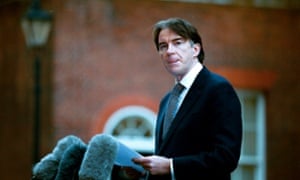
Peter Mandelson announcing one of his resignations, in 2001.

Peter Mandelson announcing one of his resignations, in 2001. Photograph: David Sillitoe


Their careers then diverged in two respects. Portillo, whose party was in power throughout the years 1979-97, became a cabinet minister in his late 30s, just after Mandelson had entered parliament as a backbench MP. And whereas Portillo was famously the most swaggery politician of his generation (especially after John Major had appointed him defence secretary in 1995), Mandelson was the ultimate scheming “backroom boy”, whose achievement was to engineer Tony Blair’s succession as Labour leader and steer the “New Labour” brand to its great electoral triumph in 1997. (Mandelson worshipped Blair much as Portillo had worshipped Thatcher.) Both performed great services for their parties while becoming widely unpopular: Portillo’s loss of his supposedly safe London seat was the great shock of the 1997 election, while Mandelson, regarded by many as “a prince of darkness”, was twice made to resign from the cabinet during Blair’s first term of office owing to minor transgressions. Both made comebacks: Portillo (having experienced a Damascene conversion and become a “compassionate Conservative”) returned to parliament in 1999 and was appointed shadow chancellor by William Hague, whom he was widely expected to succeed as Conservative leader; while Mandelson, having become an EU commissioner in 2004, was recalled to the cabinet with a peerage by Gordon Brown in 2008, showing brilliance as a strategist during Labour’s last two years of office. (Though effectively retired from frontline politics, both made their voices heard during and after the recent election campaign.)
Both Portillo and Mandelson enjoyed the company of women. In his late 20s, Portillo married the girlfriend of his teenage years, Carolyn Eadie; Mandelson shared a flat with Neil Kinnock’s press secretary, Julie Hall. However, it was widely known that Portillo, though enjoying relationships with women, had homosexual interests, while Mandelson was frankly gay. Portillo was attached during his 20s to two institutions in which homosexuality flourished, Peterhouse and the Conservative Research Department, and he did not hold himself entirely aloof from the opportunities offered. Mandelson had two longstanding close relationships, first with a fellow researcher at the TUC, later with the Brazilian Reinaldo da Silva, who was some years younger than himself. Within the space of a year, both their private lives were made public in a spectacular fashion. In 1998, Mandelson, not yet in the cabinet but wielding great (and, in the view of some, sinister) influence behind the scenes as the eminence grise of the Blair government, was inadvertently “outed” on the BBC’s Newsnight by the journalist and former MP Matthew Parris. And in 1999, Portillo, about to stand for re-election to Parliament, admitted in an interview with the Times that he had had “some homosexual experiences as a young person” – whereupon a businessman named Nigel Hart declared in the Mail on Sunday that they had had an affair lasting eight years. Although these revelations do not seem to have harmed Portillo’s standing with the public, concern among fellow Conservative MPs about possible further embarrassing disclosures undoubtedly contributed to his narrow failure to win the party leadership when Hague stood down after the Tory defeat in the 2001 general election.
Michael Portillo listens to Stephen Twigg's victory speech in Enfield Southgate in the 1997 general election.

Michael Portillo listens to Stephen Twigg’s victory speech in Enfield Southgate in the 1997 general election. Photograph: Kevin Lamarque/Reuters


The climate for gay politicians showed some dramatic swings during the last quarter of the 20th century. Despite her Methodist upbringing and strait-laced image, Margaret Thatcher, who became prime minister in 1979, was quite tolerant of homosexuality: she was one of the few Tories consistently to support Wolfenden, chose many gay men to serve her, and appointed the flamboyant Norman St John Stevas as one of her leading ministers (though she became irritatated by his love of gossip and sacked him after less than two years). However, the espousal of gay rights by some elements of the left, and the Aids epidemic, resulted in much public disquiet about homosexuality during the 1980s. In the Bermondsey byelection of 1983, the openly gay Peter Tatchell managed to lose the supposedly safe Labour seat to the Liberal Simon Hughes (who later admitted to having gay relationships). In this atmosphere, no MP felt able to “come out” – with the brave exception of Chris Smith, Labour MP for Islington South and Finsbury. In 1988, Section 28 of the Local Government Act provided that a local authority “shall not intentionally promote homosexuality or publish material with the intention of promoting homosexuality”. Though heterosexual, John Major, who succeeded Thatcher in 1990, was favourable to the cause of gay equality. He lifted the ban on homosexuals in “high security positions”, and in 1994 the age of consent was reduced from 21 to 18. However, the great terror for gay MPs in the 1990s was of being “outed” by the press, something which would scarcely have been imaginable in previous decades. The decision of the Murdoch press to launch a “morality crusade” against the Major administration led to the resignation of several gay Tory MPs from minor government positions, and reinforced the impression that the regime was mired in “sleaze”. Meanwhile the militant gay organisation Outrage! targeted MPs it believed to be gay who failed to support gay equality, one of whom, the Ulster Unionist Sir James Kilfedder, died of a heart attack after learning of his “outing”.
New Labour, elected in 1997, promised a new era of “diversity” and “inclusiveness”. Labour candidates who triumphed in former Tory strongholds included two openly gay men, Stephen Twigg in Enfield Southgate (where he unseated Michael Portillo) and Ben Bradshaw in Exeter (where he won a large majority in the face of a homophobic Conservative campaign). Chris Smith became culture secretary and the first openly gay cabinet minister, his male partner being included in such official occasions as Buckingham Palace garden parties. Great strides were made in reforming the law. The ban on homosexuals in the armed forces was lifted; the age of consent was reduced to 16; Section 28 was repealed; civil partnerships were introduced, giving gay couples the same legal privileges as married couples; and a series of measures made it illegal to discriminate against people, or “incite hatred” against them, on the grounds of their sexual orientation.
Chris Smith at the Tate Modern in 2000.

Chris Smith at the Tate Modern in 2000. Photograph: Martin Argles for the Guardian


Yet in 1998 the Blair government witnessed one of the most bizarre gay scandals of the century, when Ron Davies, secretary of state for Wales, resigned after what he termed “a moment of madness” on Clapham Common, which had led to his being robbed at knifepoint and relieved of his wallet, phone, car and Commons pass. And the Conservative-Liberal Democrat coalition that took office in 2010, which was equally committed to the cause of gay equality and legislated for “gay marriage”, similarly suffered the loss of a cabinet minister when the Lib Dem David Laws resigned as chief secretary to the Treasury after the Daily Telegraph revealed that he had claimed parliamentary expenses for London accommodation belonging to his “long-term partner and secret lover”, a situation disallowed by the expenses rules; he explained that he had wished to keep his sexuality secret out of respect for the feelings of his mother. It seems the age of the political closet queen may not be quite dead yet.
***
Is a study of this subject historically or politically relevant? I believe it is, because until recently many politicians (possibly more than one might imagine, for the men in question usually did their utmost to ensure that no details of this aspect of their lives emerged) were obliged to keep secret something important about themselves. And this inevitably affected the way they operated as politicians: apart from inculcating quick wits and sharp antennae, it tended to foster skills in several areas – tact and discretion; acting and showmanship; the “dark arts” of presentation and manipulation; awareness and management of risk. Following the election, Westminster now boasts 32 openly gay MPs and while one must be thankful that, in Britain, official homophobia is a thing of the past, and that gay men and women, in politics as elsewhere, can now be honest about their sexuality, the necessity for homosexuals in public life to hide their nature, though in itself deplorable, did not, perhaps, exercise an entirely negative influence on the 20th-century political scene.
• Michael Bloch’s Closet Queens is published by Little, Brown this month.

Filed Under: Book Reviews Tagged With: book review, British politics, Closet Queens, history, LGBT rights, Michael Bloch, sexuality

Jack Andraka, at 13, provides cancer cure!

15/05/2015 By ACOMSDave Leave a Comment


GT Books


 Teenager creates a new cancer detection method

Come along to Jack Andraka’s book launch

When Jack Andraka was 13 he was being bullied for being gay, a close family friend was dying of cancer and he felt like a constant outsider.

But instead of giving up Jack used his passion for science to try and make a difference, with a brand new cancer detection system.
After conducting two years of research and being denied help from hundreds of Universities and companies, Jack’s experiment worked!
Jack’s test for pancreatic, lung and ovarian cancers now has the potential to be over four hundred times as effective as current medical solutions. And to top it off, it only costs a fraction of the price.
Breakthrough is a book that celebrates the perseverance and ingenuity of this remarkable teenager. It aims to push readers to pursue their dreams and to never stop learning.
Not only an inspirational teenage success story, Jack’s journey helped him conquer his depression and overcome bullying.
Gay’s The Word will be hosting a free book event for Breakthrough, which will take place in London on 24 May.
For more information on the event head to Facebook
Words Christopher McParlan, @chrismcparlan

Filed Under: Anti-Bullying & Homophobia, Book Reviews Tagged With: cancer, cancer cure, Jack Andraka, science

Belfast Book Festival 2015

12/05/2015 By ACOMSDave Leave a Comment

The Belfast Book Festival has come around again with a richness far beyond its small title.

A Sneak Peak

at the 2015 Belfast Book Festival line up.

The Belfast Book Festival is back from the 8 – 14 June with more on offer than ever before!   Click here to visit the website.

DERMOT BOLGER
8 June | 13:00 | £5
One of Ireland’s best known writers. His eleven previous novels include The Journey Home, The Family on Paradise Pier, A Second Life and The Fall of Ireland.
Click HERE to find out more.
CARPET BURNS: MY LIFE WITH INSPIRAL CARPETS
Mon 8 June | 20:00 | £6/£5
Tom Hingley’s book Carpet Burns: My Life with Inspiral Carpets, is an account of his life as lead singer of Inspiral Carpets. The event includes a live acoustic set from Tom.
Click HERE to find out more.
THE BELFAST BOOK FESTIVAL POETRY SLAM
Sat 13 June | 21:30 | £4 
Purely Poetry presents:
‘The Belfast Book Festival Poetry Slam 2015’.
Open to all poets, we invite you to ‘take the mic’ and enter our annual poetry slam competition. Share your work in front of a live and lively audience, with new readers always welcome.
Click HERE to find out more.
LITERARY LUNCHTIMES: SARA BAUME
Wed 10 June | 13:00 | £5
Spill Simmer Falter Wither is Sara Baume`s debut novel.  This quietly powerful story is told through the eyes of a man speaking to his only companion, a rescue dog he calls One-Eye.
Click HERE to find out more.
KARIM MISKE: ARAB JAZZ
Tues 9 June | 20:30 | £6/£4 
With Malachi O’Doherty
In Arab Jazz, his debut novel, Karim Miské demonstrates a sharp eye for character and an evocative sense of place, moving seamlessly between the sensual streets of Paris and the synagogues of New York to reveal the truth behind a horrifying crime.
Click HERE to find out more.
TOM HARTLEY: RESEARCHING PAST LIVES, WRITTEN IN STONE
Tues 9 Jun | 18:15 | £6/£4
Local historian Tom Hartley will take you on a journey through the graveyards of Milltown and Belfast City cemeteries and talk about his research into the lives of those buried there: priests and nuns, architects and footballers, businessmen and poets, hurlers and harp makers, British Army soldiers and IRA volunteers.
Click HERE to find out more.
OGGY BOYTCHEV
8 June | 18:15 | £6/£4 | 16+ yrs
Oggy Boytchev, the author of ‘Simpson & I’ has spent his career working as a journalist in the most dangerous places on earth. Oggy will be illustrating his talk with two short films.
Click HERE to find out more.
LITERARY LUNCHTIMES: VOICES FROM SCOTLAND
Tues 9 June | 13:00 | £5
The showcase will feature Margaret Montgomery, (“Beauty Tips for Girls”), Kate Tough, (“Head for the Edge, Keep Walking”) and Nicola White, (“In the Rosary Garden”).
Click HERE to find out more.
BRIAN PATTEN: THE ACCESSIBLE MUSE
Wed 10 June | 20:30 | £10/£8
One of the UK’s most distinctive and popular poets, Brian Patten has been delivering scrupulously crafted, heartbreakingly honest, funny and uplifting poems for nearly five decades. A master of performance – genuine and generous – his readings are always memorable.
Click HERE to find out more.
LITERARY LUNCHTIMES: KELLY CREIGHTON
Thurs 11 June | Ticketed FREE event | 13:00
In conversation with Jan Carson
Belfast Book Festival presents Kelly Creighton in conversation and reading from her debut novel ‘The Bones of It’.
Click HERE to find out more.
HELEN LEDERER: LOSING IT
Sat 13 June | 19:00 | £8/£6 
Helen Lederer, best known for her role as dippy Catriona in Absolutely Fabulous has published her debut comedy novel: Losing It. Her unique wit and observational humour means that as well as writing and performing her own material, Helen has starred in many top TV comedy and radio shows.
Click HERE to find out more.
LAURENCE DONAGHY: BUILDING BETTER TOYBOXES
Wed 10 Jun | 18:15 | £6/£4
There is a huge and passionate fanfic community out there. In “Building Better Toyboxes” Laurence will talk about his take on fanfic, explore why it has a place in the wider writing world as a springboard for those too intimidated to construct their own worlds, and talk about his own journey from fanfic dabbler to published author.
Click HERE to find out more.
More events will be announced shortly
 
www.belfastbookfestival.com
Copyright © 2015 Crescent Arts Centre, All rights reserved.
You are receiving this email because you opted in at our website.Our mailing address is:

Crescent Arts Centre

2-4 University Road

Belfast, Antrim BT7 1NH

United Kingdom

Filed Under: Book Reviews Tagged With: Belfast Book Festival, book festival, The Crescent Arts Centre

Book Review: Just good friends: why a gay/straight friendship is at heart of The Organised Criminal

11/05/2015 By ACOMSDave Leave a Comment

After two gay-themed novels, Jarlath Gregory is happy that his latest, about family and crime in south Armagh, can have a gay character without feeling that he’s smuggled him in

Reprinted from The Irish Times –

Jarlath Gregory

Tue, May 5, 2015, 15:11

First published:Tue, May 5, 2015, 15:11
Jarlath Gregory: “Boom and bust aside, one major social change which has happened  is the almost total sweeping aside of casual homophobia amongst the younger generation”Jarlath Gregory: “Boom and bust aside, one major social change which has happened is the almost total sweeping aside of casual homophobia amongst the younger generation”

In 2007, having previously published two gay-themed novels, I applied for a modest Arts Council literature bursary, and began working on a literary thriller set in south Armagh. I felt that I’d said all I had to say, for the time being, about the gay male experience of my peers.

My first novel, Snapshots, explored the doomed erotic obsession of a student for the closeted object of his affections, against the backdrop of the Troubles. My second novel, G.A.A.Y One Hundred Ways to Love a Beautiful Loser, was a romantic comedy about an inner-city Dublin boy-band wannabe who falls for his sister’s ambiguously bisexual English Muslim boyfriend. Popular culture was catching up with lived experience, and the representations of LGBT characters in fiction, on television, and online were exploding and becoming more complex and nuanced. Crucial to this was the increasing number of people, particularly younger people, coming out and demanding to have their voices heard.

I had, in my own small way, added some gay representation to Irish fiction. Oisin and Jude in Snapshots were ordinary and laddish, their problems a reflection of the repressed and violent society they grew up in. Anto in G.A.A.Y was working-class, cute, and confident, a character with many stereotypically gay traits, but with the crucial difference of having an inner life, and not being merely the Gay Best Friend of a straight girl looking for a boyfriend. He was in love with a black, foreign religious minority. He turned the tables on his bullies. He got a happy ending – not something which happens often in fiction, even now.

Gay duty done, I was interested in exploring the dramatic possibilities of a fictional family who run a smuggling business in my native Crossmaglen. We read a lot of journalism about organised crime in south Armagh. The facts and figures are a matter of public record. But why not use the borderlands as the backdrop for a family drama? I began with something elemental, classic – the prodigal son returning home after a long absence, a wealthy but dangerous father who offers him one shot at redemption, a betrayal – knowing that I’d like to take the characters on a journey through the fallout of economic corruption, to an unexpected twist at the end. And then a strange thing happened right at the time I sat down to begin work on The Organised Criminal: the recession.

One of the truisms being bandied about at the time was that books were recession-proof. It soon became apparent to anyone working in a bookshop or a publishing house that this was not true. The simple fact was that books, to most people struggling through the unexpected financial meltdown, were a luxury which they could live without, get for free from their local library, or buy second-hand online for a few cent (although the cost of postage and packaging has, predictably, increased hugely in recent years).

I was fortunate enough to keep my job in the independent Chapters Bookstore, while chainstores such as Waterstone’s closed their doors in Dublin. On the other hand, it soon became clear that the book I’d written during the first throes of the recession was not a fashionable commodity. It was too political. It was too depressing. It was too Northern Irish. Readers wanted escapism. Publishers were not taking risks on edgy fiction. Publishers, it seemed for a very long time, were not taking anything – until the wealth of issues thrown up by our post-Celtic Tiger reality became the very lifeblood of our current literary renaissance.

Interestingly, it has been the independent publishers such as Lilliput, Liberties and Tramp who have relished the challenge of finding books which best express how we live now. After what seemed like an inordinately long time, but was actually the new average for an industry weathering the financial storm, Liberties offered to publish my novel and, as I sat down once again to edit it before a final submission, I asked myself if the book still had contemporary relevance.

Luckily, I felt that it did. While many new novels had tackled the recession as it affected the Republic of Ireland, this was very much a story of economic corruption in Northern Ireland, which, thanks in part to television shows like The Fall and Game of Thrones, has become slightly less uncool than it used to be. What struck me most upon rereading it, however, was a human aspect of the story which had grown organically as I wrote it, becoming an integral part of the tale without my consciously engineering it so.

At the heart of the book is the friendship between Jay O’Reilly, the narrator, a straight university student whose father is the most successful smuggler in south Armagh, and Martin Furey, his slightly younger friend, a tradesman who happens to be gay. The sexualities of these friends is wholly incidental to the plot. There are no love interests and no sex scenes – the book does not require them. Their sexualities are a subject of banter between them, a part of who each man is, but largely irrelevant to their friendship.

It came as a shock, even to me, to realise that to write about a friendship like this would not have been wholly credible 10 or 15 years ago – but it is now. Boom and bust aside, one major social change which has happened in that time is the almost total sweeping aside of casual homophobia amongst the younger generation. You need only look as far as the current marriage equality movement to see how far we have come since homosexuality was decriminalised in 1993. Record numbers of young voters have found an issue they passionately support. DCU and Cork Institute of Technology have suspended exams for the afternoon of May 22nd to allow students the chance to vote, while Trinity is holding only one exam, for fewer than 10 students. It seems the vast majority of students have pledged to vote Yes in favour of extending marriage rights to same-sex couples. USI president Laura Harmon has said that “polls consistently show that the large majority of young people are in favour of marriage equality in Ireland and the student vote cannot be underestimated”.

The most heart-warming aspect of the LGBT Pride parade in recent years has been the incredible upswell of support it has enjoyed from younger people, of all sexualities and gender identities. The labels which once separated us are still meaningful, but no longer mean that we can’t be friends. It’s rapidly becoming the norm that being lesbian, gay, bisexual or trans is not a barrier to staying friends with the straight pals you might once have frightened off by coming out – and that’s great for everyone.


Filed Under: Book Reviews Tagged With: friendship, Jarlath Gregory, snapshots, the organised criminal

  • « Previous Page
  • 1
  • …
  • 9
  • 10
  • 11
  • 12
  • 13
  • …
  • 19
  • Next Page »

Categories

Copyright ACOMSDave.com © 2026