For those who didn’t spot this article, or who have missed the wonderful video slide shows produced by Wayne Brighton.

Community Journalist

For those who didn’t spot this article, or who have missed the wonderful video slide shows produced by Wayne Brighton.

Posted: Updated:
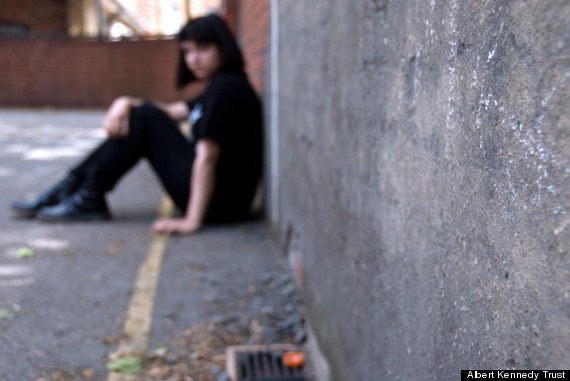
We live in a country where same sex couples can legally marry and gay pride festivals wind through streets, so why are there so many youths sleeping rough on the streets after being rejected by the families for their sexual orientation?
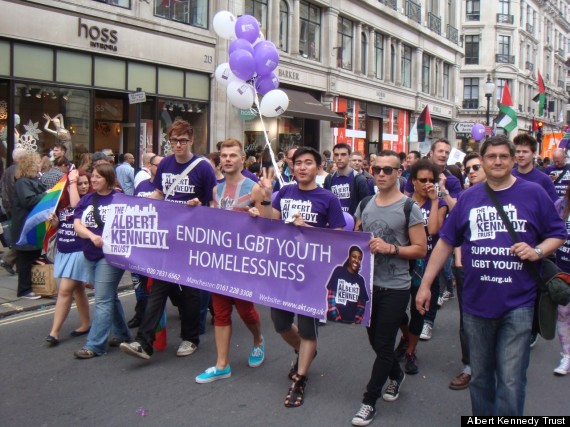
The Albert Kennedy Trust (ABK) provided 8,000 nights off the streets for young LGBT people with nowhere else to turn in 2014, a 160% increase on last year.
One teenager couldn’t return his family because of abuse. His parents, Jehovah’s Witnesses, didn’t accept his sexuality and social services initially refused to help.
“We had to employ solicitors to approach the High Court to request that he was made Ward of Court,” says Tim Sigsworth, chief executive of AKT.
But the teenager is just one example of the 1,500-plus youths who have called the AKT in need of help. More than half resulted in direct long-term case work and support.
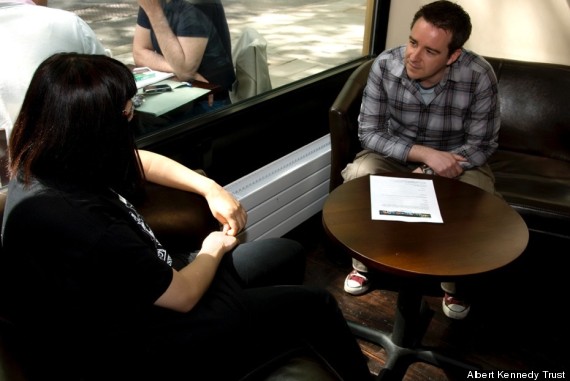
“Two weeks into my job as CEO I met a young person at AKT who had spent one night on the streets after being rejected by his parents; during that one night he had been forced to have unprotected sex to secure a bed for the night,” Tim recalls.
“Shortly after this, his first sexual experience, he was diagnosed as HIV positive.”
The charity is named after a young man, Albert Kennedy who, whilst supported by his family, experienced homophobic abuse from strangers, which led him to take his own life in 1989.
Founded in the same year by Cath Hall, who was inspired to help young Lesbian, Gay, Bisexual and Trans (LGBT) people through her role as a foster carer, it provides accommodation, advocacy, mentoring and support for 16 to 25 year olds who are either homeless or at risk of homelessness.
The charity, which works in three cities across the UK, hears many stories from young people who have experienced homophobia, biphobia or transphobia, or ignorance of their needs from mainstream service providers.
“We also advocate for young people who have mental, physical health problems, self-harm and have substance misuse problems to obtain housing through the local authority,” Tim continues. “Sadly this is often a very long-winded process as these young people are likely to be turned away. Many young people come to us already living on the streets as their families have turned them away for coming out.”
One 19-year-old woman came to AKT after her devout Evangelical Christian parents kicked her out of her home when she came out to them as a lesbian. They also forced her to leave her child behind with them – a child conceived to cover up her sexuality. She spent the next few months sleeping in stairwells and selling her body to buy food.
![]()
If you need help, AKT’s London, Manchester and Newcastle offices are staffed 10am – 4:30pm Mon-Fri.
London: 020 7831 6562
Manchester: 0161 228 3308
Newcastle-upon-Tyne: 0191 281 0099
If you need help at other times, call:
Shelter Housing Advice Line: 0808 800 4444 (8am-midnight every day)
LGF Helpline: 0845 330 30 30 (10am-10pm every day)
London Lesbian & Gay Switchboard: 0300 330 0630 (calls at local rate)
Samaritans: 08457 90 90 90 (24hrs)

Former Northern Ireland Health Minister Edwin Poots’ ban on gay men giving blood was branded ‘irrational’ by the High Court last year. Northern Ireland retains the ban but the region is still able to accept blood supplies from the rest of UK
However, some restrictions will remain, as the FDA said it favours replacing the blanket ban with a new policy barring donations from men who have had gay sex in the previous year.
Some gay activists have responded to the announcement by complaining it is unrealistic and stigmatises the LGBT community.
Having examined scientific evidence surrounding blood donation for men who have sex with men, the FDA said in a statement that it will recommend a change to the blood donor deferral period from indefinite to one year since the last sexual contact.
The current rule has been in place for 31 years and dates from the first years of the AIDS crisis, and was intended to protect the US blood supply from exposure to the little-understood disease.
Under the policy, blood donations are barred from any man who has had sex with another man at any time since 1977 — the start of the AIDS epidemic in the US.
But medical groups, including the American Medical Association, say that the policy is not supported by science, given advances in HIV testing.
Last month, a panel of blood safety experts convened by Department of Health and Human Services voted 16-2 in favour of ditching the lifetime ban, and recommended barring donors who have had male-on-male sex during the previous 12 months.
In the US, all donated blood is tested for HIV, however, the test only detects the virus after it’s been in the bloodstream about 10 days – allowing a brief window when the virus that causes AIDS can go undetected.
If the new advice is put into place, US law will be put in line with other countries including the UK (except Northern Ireland), Australia and Japan.
Patient groups that rely on a safe blood supply, including the National Hemophilia Foundation, have also voiced support for dropping the ban.
But LGBT campaigners say it does not go far enough.
“Some may believe this is a step forward, but in reality, requiring celibacy for a year is a de facto lifetime ban,” the organisation Gay Men’s Health Crisis, a New York-based nonprofit that supports AIDS prevention and care, said after the announcement.
The FDA will publish its advice in draft guidelines early next year, and will move to finalise them after taking comments from the public, officials said.
FDA Deputy Director Dr Peter Parks declined to give a deadline for the process but said, “we commit to working as quickly as possible on this issue.”
According to government figures, men who have had sex with other men represent about 2 percent of the US population, yet account for at least 62 percent of all new HIV infections in the US.
The recommendation is the culmination of a push for new policy which gained momentum in 2006, when the Red Cross, the American Association of Blood Banks, and America’s Blood Centers called the ban “medically and scientifically unwarranted.”
Belfast Telegraph:
Additional reporting by AP
A far-right English Democrats activist has claimed Premier League football team Liverpool FC had performed less well last season because they openly ‘promoted’ homosexuality.
Former UKIP candidate Paul Rimmer came under fire on Tuesday for posting comments on social media about the football club’s alleged support of homosexuality.
Rimmer, who was previously an activist for the British National Party (BNP), posted quotes from the Bible accompanied by a damning report of Liverpool’s recent performances, saying they would not improve unless they “repented.”
“From the Bible, Sodomy defiles a Nation. Those who promote it will be punished & vomited out of the Land. Lev.18.23. In 2012 Liverpool FC sponsored the City’s Gay Pride Parade. Unless they repent they will be under a continual curse,” the post read.
This was followed by a comment about the unacceptability of homosexuality.
“Everyone knows homosexuality is wrong, but now we have to pretend it’s nice & normal and anyone who points out it’s a perversion is evil. This is a deep moral & spiritual sickness in our nation,” he added.
His other social media posts include criticism of the BBC for being “totally unpatriotic, anti-Christian & anti-white,” worshipping “sodomy & blackness” and pushing “pro-Moslem propaganda.”
Paul Rimmer (Image from liveraf.wordpress.com)
He has further labeled feminists who criticized his remarks as “feminazis.”
UKIP described Rimmer’s comments as “idiotic” while Liverpool FC Supporters’ Committee LGBT representative Paul Amman called Rimmer “inaccurate.”
Amman said he was proud of the work the club had achieved to reduce homophobic discrimination.
“The club has got a proud record of tackling discrimination and fighting inequality and has done some fantastic work,” he said.
“LFC has never sponsored Liverpool Pride but has marched at the event for three years in succession. Members of the women’s team, staff, club officials, supporters, ambassadors and directors have taken part, showing their support and recognizing the wider LFC family.”
He clarified that having an active LGBT Supporters group does not hinder the sporting prowess of a top Premiership club.
“Also, Manchester City has a lively LGBT Supporters group called Canal Street Blues, which hasn’t stopped them from topping the table,” he added.
Rimmer, who gained a degree in politics from Cambridge University, defended his statements, telling the Liverpool Echo they were not his opinions, but the word of God.
“Basically it says in the Bible that certain forms of behavior go against the laws of God and therefore God will react to them and he will curse those who willfully disobey him.”
“I am only repeating what is said in the Bible – it’s not my opinion, it’s what the Bible says.”
“It’s just to make people aware God has a law and if you infringe this law there will be consequences,” he said.
“If people get upset by this it’s up to them. Christ calls on us to repent and believe.” he added.
Rimmer was arrested in 2012 while challenging a rainbow flag hung at Toxteth police station in Liverpool.
Republished from RT – Question More
Douglas Pretsell and Peter Gloster formalised their marriage in SydneyScotland’s new law on same-sex marriages has come into effect.
Existing civil partnerships can now be converted to a marriage and other same-sex couples can give notice of their intention to wed.
The new legislation was used for the first time shortly after midnight when one couple upgraded their civil partnership at the British consulate in Sydney.
The first gay weddings in Scotland will take place on Hogmanay.
Because Australia is 11 hours ahead, Douglas Pretsell, from Edinburgh, and Peter Gloster, from Melbourne, completed the paperwork to formalise their marriage hours before registrars open for business in Scotland.
The couple have been together for seven years and had their civil partnership in August 2010 at Fenton Tower in North Berwick, East Lothian.
‘It’s official’
Mr Pretsell told BBC Radio’s Good Morning Scotland programme: “It was kind of coincidental. we weren’t originally intending to be the first at all.
“We sent an email to the consulate asking how long after the weddings came in that we would be able to change our certificate.
“We got an email back from them, asking if we would be able to come in at 11am on the 16th and saying we would probably be one of the first in the world.”
Leanne and Marie Banks were one of the first gay couples in Scotland to become marriedThe couple earlier said: “We always considered our civil partnership to be our marriage, but in the eyes of the law and society it wasn’t held in the same regard.
“Prior to today, same-sex couples were deliberately treated as though our relationships were inferior and not worthy of the same recognition or respect.
“Well, from today it’s official, we are married and we have the certificate to prove it.”
‘Day of celebration’
One of the first gay couples to become married in Scotland were Leanne and Marie Banks.
They were at Dundee Registrars’ office at 08:45 to sign the documents.
A number of other Scots couples, already in civil partnerships, are also planning to make the conversion.
Others wishing to become married must give the normal 15-day notice period, meaning the first weddings can take place on 31 December.
Tom French, from the Equality Network, which ran the campaign for equal marriage in Scotland, said: “Today is both a day of celebration and a hugely important step forward for LGBTI rights in Scotland, both in terms of equality in the law and the way in which same-sex relationships are viewed in society.
“In recent years Scotland has become a leading light on LGBTI equality, with one of the most progressive equal marriage laws in the world, helping to create the fair and equal society we all want to see.”
The first gay weddings in Scotland will take place on 31 DecemberColin Macfarlane, director of Stonewall Scotland, said: “Many of the couples celebrating today and in the weeks and months ahead have been together for decades and in a civil partnership since they were introduced in 2005.
“While there is still lots to do before the lived day-to-day experience of many lesbian, gay, bisexual and transgender people is truly equal in Scotland, this is a day of celebration and we know these ceremonies will be a wonderful early Christmas present for many couples, their friends and families.’
The law on same-sex marriages has already changed in England and Wales.
The change in Scotland comes as a survey revealed a huge rise in support for same-sex marriage over the past 12 years.
More than two-thirds of people (68%) agreed that gay couples should have the right to marry, according to the figures from the Social Attitudes Survey, which tracks public opinions on a range of subjects.
The figure compares with just two-fifths of the public (41%) in 2002.
The 2014 survey suggested fewer than a fifth (17%) of Scots were against same-sex marriage, compared to 29% in 2002.
Younger people were more likely to believe gay couples should be allowed to wed than older Scots, with 83% of 18 to 24-year-olds in favour compared to 44% of those aged 65 and above.
MSPs approved the Marriage and Civil Partnership Act at Holyrood earlier this year.
The Scottish government said the move was the right thing to do, but Scotland’s two main churches – the Catholic Church and Church of Scotland – are opposed.
The legislation will see religious and belief bodies opting in to perform same-sex marriages, and ministers have stressed that no part of the religious community would be forced to hold such ceremonies in churches
http://www.bbc.co.uk/news/uk-scotland-scotland-politics-30486804
One report cites a tenfold increase in homophobic attacks since Russia’s 2013 gay propaganda lawThis year’s QueerFest in St Petersburg was the most controversial in the festival’s history.
At the opening show, a crowd turned up to intimidate and shout insults, spraying coloured antiseptic from syringes, in a kind of cleansing.
There were sudden bomb scares and protests, and venues cancelled events at the last minute. Anti-gay activists plastered places with stickers: “Say no to Sodom.”
“The atmosphere now is scary, we feel that it’s dangerous,” one of the organisers, Polina Andrianova, told the BBC, describing the harassment as the worst since the LGBT (Lesbian, gay, bisexual and transgender) festival began six years ago.
Anti-gay protesters sprayed coloured antiseptic from syringes at QueerFestHer experience is one of those recorded in a new report by the US-based group Human Rights Watch, which documents a rise in homophobic rhetoric, actions and violence in Russia. It blames a law passed last year banning the promotion of “non-traditional lifestyles” among minors.
“All people understand from this law is that something is wrong with gay people. That they are dangerous for children, and information about them is harmful,” Ms Andrianova argues.

Irina Shumilova and Alyona Fursova talk about their recent wedding
“It reinforces the view of gay people as second-class citizens and it gives a green light to more violence and more aggression,” she says.
It’s why there is extra security now at Coming Out, the LGBT support group where Polina works. A stark sign beside the new, reinforced metal door warns visitors that security cameras have been installed.
Anti-gay provocateurs have infiltrated discussion sessions here in the past and disrupted them.
Another group recorded over 300 homophobic attacks this year, a more than tenfold rise.
A security notice warns of security cameras in the office at the Coming Out support group“We were just having coffee, harming no-one, when men in masks broke-in,” Ivan Surok says of one incident, last November. At least one of the attackers was wielding a pellet gun and shot a man in the eye, blinding him; a girl was wounded in her back.
No-one has yet been prosecuted, part of what Human Rights Watch calls a culture of “widespread impunity”. In the cases it documented between 2012 and 2014 only three were brought to court and two led to convictions.
Since the attack he witnessed, Ivan has carried a pepper spray for protection but no longer feels safe.
“Homophobes feel like they have a legal basis for their hatred now,” Ivan says of the gay propaganda law. “They feel they can beat someone for being gay and they’re protected.”
The law – an amendment to child protection legislation – was introduced in several regions before being adopted nationwide.
Its chief sponsor in Russia’s second city is Vitaly Milonov, a local deputy whose office at the palatial City Hall is filled with religious paraphernalia. Russian icons cover the walls and shelves beside a black flag bearing a skull and cross-bones. Another black banner proclaims “Orthodoxy or Death” in Greek.
Mr Milonov justifies the law with reference to Russia’s traditional, Christian values. He insists that homosexuality is a sin and homosexuals an enemy within, backed by a perverted West.
This giant iPhone was taken off the streets after Apple boss Tim Cook revealed he was gayHomophobic attacks, he claims, are fabricated.
But Vitaly Milonov is no political extremist – he represents the United Russia party of President Vladimir Putin.
“I want to protect my kids and my family from this dirt going from the homosexuals,” the politician told the BBC.
“They can do whatever they want in their homes, in the special ‘garbage’ places called gay night clubs. They can kill themselves with their viruses as fast as possible. But they’re not allowed to do it in the streets. Because it is not polite and it’s uncomfortable for people.”
Such is the mood of intolerance that even a giant model iPhone was removed from the streets of St Petersburg after Apple boss Tim Cook revealed he was gay. A few trailing cables are all that remain at the spot the statue once occupied, in the yard of an IT university.
Vitaly Milonov claims he got rid of his own iPhone 6 following Tim Cook’s announcement, because it was “smelling with gay stuff”, although he still has a Mac laptop on his desk.
Vitaly Milonov introduced anti-gay measures in St Petersburg before national laws were passedHuman Rights Watch calls for an end to such hate-speech and for a new message of tolerance from Russia’s authorities. It urges the government to repeal the anti-gay law.
“It’s like the law has ignited fear,” says Alexey Zalensky, who’s worried that LGBT people in Russia, already nervous about revealing their sexuality, are now retreating into the closet.
Many couples are even scared to hold hands in public now, he says.
“They say we are sick, and need to be healed,” he explains, softly. “I feel that’s the position supported by the government and I don’t know how to live with it.”
Rising intolerance is emboldening some activists to fight harder for their rights. But there is an overwhelming sense that such a fight is futile. LGBT support groups say people are increasingly asking their advice on how to emigrate.
Both Alexey and Ivan are among them.
They’re joining the growing wave of Russians who no longer believe they can be themselves in their own country, and be safe.
15 DECEMBER 2014, EUROPE
02 NOVEMBER 2014, BUSINESS
http://www.dailymail.co.uk/femail/article-2830068/Is-Russia-s-gay-wedding-Legal-loophole-allows-lesbian-couple-marry-one-born-man.html#v-3154710088001
– See more at: http://www.gaystarnews.com/article/ireland-sets-date-gay-marriage-vote161214#sthash.cxiCFqIY.dpuf
BY CLAIRE CROMIE – 17 DECEMBER 2014

The Democratic Unionist Party wants to introduce a new clause in Northern Ireland’s equality laws that would allow businesses to refuse services to a customer if it is against their religious beliefs.
Critics have reacted angrily, claiming it is legalising discrimination, and a petition has been set up to stop the Freedom of Conscience Bill being passed.
And now it has received support from an influential backer – the gay presenter, comedian and writer Stephen Fry.
He tweeted on Wednesday: “Please sign this: once again the religious right twisting truth to present themselves as victims. Sick.”
Fry has repeatedly expressed his opposition to organised religion, and has attacked church teachings on sexuality.
The Freedom of Conscience Bill was prompted by the threat of legal action against a Belfast Christian bakery business, which became
So if you haven’t already, please sign this petition to ‘Stop the Conscience Clause Bill’:
The Belfast Telegraph editorial said:
09 DECEMBER 2014
This newspaper will always defend the right of people to hold and practise their religious beliefs. We recognise that even though the secular world continues to gain ground apace, religion plays a hugely important part in very many people’s lives in Northern Ireland. We also acknowledge the positive contribution made by the churches in attempting to create a more peaceful and understanding society here.
That said, we nevertheless contend that there is no place for the conscience clause legislation proposed by DUP MLA Paul Givan in a modern society. Religion may give us the moral template in which we wish to live our lives, but it should not – and cannot – be exempted from the duly created civil laws of the country.
Equality legislation has been hard won in this society and it is there to protect all the people from discrimination. Mr Givan may argue that his conscience clause legislation is a protection for people with deep religious convictions, but it is an illogical and ill-thought out proposal.
For, no matter what he argues, what this proposal would do if passed into law would be to allow discrimination against gay people. It is as simple as that and as wrong as that.
Quite rightly it would be challenged at every turn in the courts and almost inevitably overturned at every challenge
One immediate obstacle is which religions would benefit from such a clause? How would the law define religion and what about people who have no religious convictions? Would they just have to accept current equality legislation or lump it?
This all stems from the refusal of a bakery to produce a cake with a slogan endorsing same-sex marriage. It was found to be in breach of equality laws. Perhaps this case could have been handled differently, but creating laws on the back of one exceptional instance is never a recipe for good, stable legislation.
To use an unfortunate phrase, this conscience clause has all the hallmarks of a Trojan horse, designed to impose a moral authority on society at the expense of accepted legislation. There is no indication of any overwhelming public demand for religion to be given an opt out option when it comes to equality legislation. The churches, mosques or synagogues are the proper places for people to practise or discuss their religious convictions, and that is where such debates should remain.
By Michael S Martin on Dec 16 2014, 8:34a 27
Michael Martin, an all-state goalie, slow danced with the guy who gave him the courage to be himself. Inspired by Robbie Rogers, Martin now hopes to inspire others.
It was something I thought I’d never do — dance a slow dance with the homecoming king at his high school.
I am an 18-year-old senior all-state high school soccer goalie for Musselman High School in West Virginia. I also have been on the school’s football, tennis and swim teams. And I am openly gay. Growing up in rural West Virginia, it’s not the easiest place to be a gay teenager and it took me a long time to come out to myself and others.
Yet there we were, Jem and I, on an October night this fall, slow dancing with each other. We attend schools in different counties and met through friends and I was thrilled that he asked me to his dance so we could be together. He was wearing his gray vest and pink bow tie while I had on my black shirt with a gold tie. We danced to “Love Story” by Taylor Swift, which was a perfect song for my first dance with a guy.
We both started the dance with our female friends who were our “dates.” The final song came on and Jem and I danced for a brief time. It was my first school event where I was with another guy, even though we came to the dance separately. I held his hand when we went to get refreshments and when we took breaks from dancing. It was a weird feeling for me, since I had just barely started coming out. I was nervous yet excited. After the dance we went to his house. That is where I asked him to be my boyfriend. I posed the question by writing it on the dry erase board on his wall. He quickly said yes.
My homecoming dance at Musselman — two weeks after the dance at Jem’s school — was the big moment I revealed being gay to my school. Jem was the date of girl at Musselman and her outside guest for the dance, while I went “alone.” The girl knew Jem and I were together. I was on the homecoming court, which was a big honor and something I never thought would happen. Only some people knew about me before the homecoming, so it was a shocker for some seeing me dance with another guy.
Jem and I danced all night to the most popular pop songs. But it was the slow dance that I most remember that night at the school cafeteria — “Remember When” by Alan Jackson. It was the best night ever. Jem and I got asked a lot if we were together and we said yes. “That is so cute!” some girls said. It made us felt accepted.
Word quickly spread and the following week I sensed that some guys were looking at me differently. My friends even told me people were talking about me in a negative way in different classes. “He is a faggot now,” I was told some people said. My friends courageously stood up for me and I am so proud to call them my friends.
Michael Martin won All-State honors this year. (Photo by Andrew Martin).
Dancing with another guy in front of my fellow students would have seemed like the last thing I would ever do when I started high school. When I was a freshman I knew I was not like other guys on the Musselman High varsity soccer team. They were always talking about their girlfriends and I always felt that I could never say anything about my sexuality. I was just a freshman, and I was scared of being mocked by my teammates when I was just trying to fit in. The team threw around the words “gay” and “faggot” a lot. I felt I would never be safe if I did come out.
Musselman High School is located in Inwood, W. Va. The school is named for the Musselman applesauce company and we are called the Applemen. Inwood is only about two hours from Washington, DC, and Baltimore but culturally is far from city life. Inwood is a pretty conservative town. The students, however, are very diverse in their culture and beliefs; the range runs from rednecks to foreign exchange students. I live in isolated mountain area, so I didn’t have any kids to hang around with when I was younger. I was alone but even at a young age I knew I didn’t like girls and found boys attractive instead. I could never tell anyone since my family is really conservative and religious.
(Photo by Jeremiah Carver)
I was silent about my sexuality until my junior year when I told my best friend, Ben, who was a senior at the time and on the soccer team. I waited until after the soccer season so I wouldn’t have to worry about him telling any of my teammates.
The cold winter air and the campfire at Ben’s house that night made it the perfect environment in which to tell him my news. I was scared to death, but summoned up the courage and was direct: “I hope this doesn’t change our friendship but I am gay.” His response was simple but it meant the world to me: “There is nothing that can change our friendship.” Thankfully, Ben accepted me (he said he had suspected) and promised to not tell anyone until I was ready.
My junior year was a strange time for me. I played football and soccer in the fall (in West Virginia they are in the same season). I punted for the football team, but never felt comfortable. I was always scared about my sexuality on the team, surrounded by a bunch of country boys and jocks who would definitely make fun of me if they knew I was gay. I felt useless, which is why I dropped the sport in the senior year and focused solely on soccer.
Things were better in my favorite sport. My coach for my traveling soccer team laid down the law that there was not going to be any racism or discrimination based on sexuality, which made me feel safe. I still did not have the guts to tell anyone I was gay. My travel coach never knew that I was gay nor did I tell him but he was determined to create a safe environment on the team. We were a very diverse team that played well together and were a state finalist three years in a row.
The experience of coming out was very rough for me to do but it really took off this fall. When I started to talk with Jem I was comfortable with myself and wasn’t ashamed like I was in years past. For me to be happy, though, I needed to come out. I didn’t want to hide how I really was any more. I didn’t want to live every day with a secret hanging over my head. I told my team before my own parents. My family was not accepting at first but is starting to come around and support me. I just had to keep telling them that I can’t change who I am and that I am the same teenager that I was before.
I came out to my soccer team one step at a time. Since I was dating Jem, I decided to become truthful with everyone. I never held a team meeting. Instead, I told some players and then they told others and these people asked me for confirmation. They couldn’t believe that I was gay, because they said “I always acted so straight.”
Teammates were curious and I got a lot of questions. I also got teased by my teammates closest to me making jokes or saying sexual things, but I know they were just kidding. Actually, their joking told me they were OK with things. I also knew that even if someone did say something negative that a lot of my teammates would have my back. Recently I was named captain for the Musselman swim team. They all know about my sexuality and gratefully are accepting.
Despite my fears, I feel very safe at my school when comes to LGBT issues; we even have a Gay Straight Alliance Club. I have made a lot new friends and my previous friends who are girls love me more and we have become better friends. I still get told that girls have crushes on me, before someone then breaks the news to them that I am gay.
As I am graduating next spring, I have been talking to several college coaches about playing soccer at their schools. That will be a whole new level, a whole new school, group of friends, and new teammates. But I won’t be afraid of being myself since I am proud to play as an athlete who happens to be gay.
Michael Martin was inspired to come out by Robbie Rogers (Photo by Andrew Martin).
I try to prove myself in sports not just for myself but for other gay athletes. I want to show everyone that I am just as good as anyone else in my sport. Being a two-time goalkeeper of the year for my conference, making the All-State team and being two-time M.V.P for Musselman and defender of the year makes me proud.
I remember a playoff game with the varsity when I was only a freshman. We were playing our rivals and lost 1-0 on a goal with 10 minutes left. The goal was on a perfect shot in the upper corner, but it was so depressing for me. I felt like I let the team down but I kept my head up. It motivated me to become a better player the next three years.
One athletic highlight for me and one that showed I could play on a high level came when I had a tryout for the West Virginia’s Olympic development soccer team. I was very nervous during the tryout and I felt like did well. My training paid off and I made the team. It was a great exposure to quality soccer for me and it feels good to say that I was a part of that team.
My soccer hero and the man who inspired me to come out is Robbie Rogers of the Los Angeles Galaxy. I loved how he announced he was gay and did not quit playing soccer. He gave me hope and confidence to be true to myself. Once he came out I started to contemplate doing the same myself and being proud of who I am. He recently published a book, “Coming Out to Play,” which my friend Ben got me for my birthday. I can tell you that after reading the book, Robbie should be every soccer player’s idol, gay or straight. I am so proud that he recently won a MLS Cup with the Galaxy.
I have learned that being gay does not mean you are a lesser of a human being. If I can come out in a small town in West Virginia and be accepted, and dance with the homecoming king, it shows things are changing. I hope my performances and story help inspire other gay teens to show their true colors and not be afraid to play the sport they love.
Michael Martin, 18, is a senior at Musselman High School in Inwood, West Virginia, and is goalie for his school’s soccer team; he was named All-State this season. His hobbies include photography and the outdoors. His career dreams include owning historic hotels or producing sustainable foods. He can be reached via email at soccer4h96@gmail.com or on Twitter @martinofcompany. You can also check out his photography on Instagram (@wvnatureboy).
Story editor: Jim Buzinski