ACOMSDave

Community Journalist

  • Home
  • Community Journalist
  • Events
  • Media Page and Press Kit
    • Projects and Work
  • Resources & Documents
    • LGBTQ+ Support Groups and Documents
  • NIGRA
  • Archives
  • Contact

UK armed forces recruits to be asked if they are gay

12/01/2015 By David McFarlane Leave a Comment

Move introduced in bid to foster greater tolerance within the military, but recruits will be allowed to ‘prefer not to say’
  • Press Association
  • The Guardian, Sunday 11 January 2015 08.28 GMT
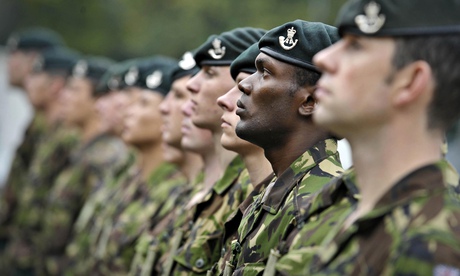
British troops
The British armed forces only allowed gay soldiers to openly serve in 2000. Photograph: Ben Birchall/PA Archive/Press Association Ima
Recruits to the British armed forces will be asked whether they are gay in a move to improve diversity in the military.
Details of the service personnel’s sexual preference will be stored, and recruits will have the option to “prefer not to say”. The measure has been introduced in a bid to foster greater tolerance within the armed forces, which have allowed gay soldiers to openly serve since 2000.
Recruits will also be invited to provide additional information on how open they feel they can be regarding their sexual orientation. The information will not be visible on individual personal records or to chain of command or managers, and will be anonymised before being collated to ensure no one can be identified by their personal diversity information.
A Ministry of Defence (MoD) spokesman said: “The MoD proudly encourages diversity at all levels. Service personnel are now encouraged to declare their sexual orientation. Although this is not mandatory, collecting this data will give us a better understanding of the composition of our armed forces and help ensure our policies and practices fully support our personnel.”
This move to encourage recruits to declare their sexual orientation was introduced last November. The armed forces said it believed the new policy would shed new light on its workforce and help create a more inclusive organisation.

Filed Under: History Tagged With: armed forces, gay, recruits, UK

Watch teaser: First gay local high school drama to hit Australian screens

28/12/2014 By David McFarlane Leave a Comment

Producers expect to show the pilot episode at festivals next year with hopes of a TV pick-up later in 2015

27 DECEMBER 2014
Cast of Subject to Change

Photo: Subjecttochange.com.au
An independent coming-of-age drama featuring same-sex attracted lead characters at a suburban Australian public high school is expected to hit local and international screens next year.
‘Through its coming-of-age narrative, Subject to Change will confront the harsh difficulties faced in suburban Australia by following these young adults as they deal with their complex and conflicting emotions. It will be a rocky road to love and inclusion through their final years of high school,’ the website reads.
Creator and executive producer by Daniel Mercieca said, ‘We’re setting it in a suburban Australian public high school, well outside the inner city comfort zone of rainbow flags and wear-it-purple days.’
‘It’s going to be a rough, homophobic experience for young same sex attracted students.’
The independently produced pilot episode of the television program is currently in post production and producers hope to show it at festivals next year.
A thirteen episode series of 22-25 minute episodes is currently in development.
Mercieca added that they currently have no development funding and are seeking discussions with interested co-producers in the new year.

– See more at: http://www.gaystarnews.com/article/watch-teaser-first-gay-local-high-school-drama-hit-australian-screens271214#sthash.szOL5S6s.dpuf

Filed Under: Anti-Bullying & Homophobia Tagged With: Australia, gay, teen, tv drama

Russia's gay community in fear as homophobic attacks increase

19/12/2014 By David McFarlane Leave a Comment

By Sarah RainsfordBBC News, St Petersburg

Gay activists in "march against hatred" in November 2014 in St PetersburgOne report cites a tenfold increase in homophobic attacks since Russia’s 2013 gay propaganda law

This year’s QueerFest in St Petersburg was the most controversial in the festival’s history.

At the opening show, a crowd turned up to intimidate and shout insults, spraying coloured antiseptic from syringes, in a kind of cleansing.
There were sudden bomb scares and protests, and venues cancelled events at the last minute. Anti-gay activists plastered places with stickers: “Say no to Sodom.”
“The atmosphere now is scary, we feel that it’s dangerous,” one of the organisers, Polina Andrianova, told the BBC, describing the harassment as the worst since the LGBT (Lesbian, gay, bisexual and transgender) festival began six years ago.

Man spraying coloured antiseptic at QueerFestAnti-gay protesters sprayed coloured antiseptic from syringes at QueerFest

Her experience is one of those recorded in a new report by the US-based group Human Rights Watch, which documents a rise in homophobic rhetoric, actions and violence in Russia. It blames a law passed last year banning the promotion of “non-traditional lifestyles” among minors.
“All people understand from this law is that something is wrong with gay people. That they are dangerous for children, and information about them is harmful,” Ms Andrianova argues.

The couple are cheered on by their friends and family as they celebrated their wedding over the weekend at a beautiful registry office in Russua

Irina Shumilova and Alyona Fursova talk about their recent wedding

“It reinforces the view of gay people as second-class citizens and it gives a green light to more violence and more aggression,” she says.
It’s why there is extra security now at Coming Out, the LGBT support group where Polina works. A stark sign beside the new, reinforced metal door warns visitors that security cameras have been installed.
Anti-gay provocateurs have infiltrated discussion sessions here in the past and disrupted them.
Another group recorded over 300 homophobic attacks this year, a more than tenfold rise.

Russian security noticeA security notice warns of security cameras in the office at the Coming Out support group

“We were just having coffee, harming no-one, when men in masks broke-in,” Ivan Surok says of one incident, last November. At least one of the attackers was wielding a pellet gun and shot a man in the eye, blinding him; a girl was wounded in her back.
No-one has yet been prosecuted, part of what Human Rights Watch calls a culture of “widespread impunity”. In the cases it documented between 2012 and 2014 only three were brought to court and two led to convictions.
Since the attack he witnessed, Ivan has carried a pepper spray for protection but no longer feels safe.
“Homophobes feel like they have a legal basis for their hatred now,” Ivan says of the gay propaganda law. “They feel they can beat someone for being gay and they’re protected.”
The law – an amendment to child protection legislation – was introduced in several regions before being adopted nationwide.
Its chief sponsor in Russia’s second city is Vitaly Milonov, a local deputy whose office at the palatial City Hall is filled with religious paraphernalia. Russian icons cover the walls and shelves beside a black flag bearing a skull and cross-bones. Another black banner proclaims “Orthodoxy or Death” in Greek.
Mr Milonov justifies the law with reference to Russia’s traditional, Christian values. He insists that homosexuality is a sin and homosexuals an enemy within, backed by a perverted West.

giant iphoneThis giant iPhone was taken off the streets after Apple boss Tim Cook revealed he was gay

Homophobic attacks, he claims, are fabricated.
But Vitaly Milonov is no political extremist – he represents the United Russia party of President Vladimir Putin.
“I want to protect my kids and my family from this dirt going from the homosexuals,” the politician told the BBC.
“They can do whatever they want in their homes, in the special ‘garbage’ places called gay night clubs. They can kill themselves with their viruses as fast as possible. But they’re not allowed to do it in the streets. Because it is not polite and it’s uncomfortable for people.”
Such is the mood of intolerance that even a giant model iPhone was removed from the streets of St Petersburg after Apple boss Tim Cook revealed he was gay. A few trailing cables are all that remain at the spot the statue once occupied, in the yard of an IT university.
Vitaly Milonov claims he got rid of his own iPhone 6 following Tim Cook’s announcement, because it was “smelling with gay stuff”, although he still has a Mac laptop on his desk.

Vitaly MilonovVitaly Milonov introduced anti-gay measures in St Petersburg before national laws were passed

Human Rights Watch calls for an end to such hate-speech and for a new message of tolerance from Russia’s authorities. It urges the government to repeal the anti-gay law.
“It’s like the law has ignited fear,” says Alexey Zalensky, who’s worried that LGBT people in Russia, already nervous about revealing their sexuality, are now retreating into the closet.
Many couples are even scared to hold hands in public now, he says.
“They say we are sick, and need to be healed,” he explains, softly. “I feel that’s the position supported by the government and I don’t know how to live with it.”
Rising intolerance is emboldening some activists to fight harder for their rights. But there is an overwhelming sense that such a fight is futile. LGBT support groups say people are increasingly asking their advice on how to emigrate.
Both Alexey and Ivan are among them.
They’re joining the growing wave of Russians who no longer believe they can be themselves in their own country, and be safe.

More on This Story

Related Stories

  • Russia ‘ignoring’ anti-gay attacks

    15 DECEMBER 2014, EUROPE

  • ‘Same-sex’ couple marry in RussiaWatch

    15 DECEMBER 2014, EUROPE

  • Where are all the gay chief executives?

    02 NOVEMBER 2014, BUSINESS

http://www.dailymail.co.uk/femail/article-2830068/Is-Russia-s-gay-wedding-Legal-loophole-allows-lesbian-couple-marry-one-born-man.html#v-3154710088001

Filed Under: Anti-Bullying & Homophobia Tagged With: community, fear, gay, homphobia, legal terrorism, Russian

Naked For The First Time

17/12/2014 By David McFarlane Leave a Comment

Republished from The Huffington Post  |  By James Nichols

Posted: 12/15/2014 2:08 pm EST Updated: 12/15/2014 2:59 pm EST
A fun way to get to know your best mate.

What’s it like to see your buddy naked for the first time after knowing him for years?
Buzzfeed tackled this question over the weekend in one of their latest videos, aptly titled “Guy Friends See Each Other Naked For The First Time.” In the clip, which you can view above, men in a variety of close relationships strip down and bare it all for one another.
The brilliant (and fun) breaking down of traditional expectations of masculinity through shamelessness at play here makes this one of our favorite videos we’ve seen from Buzzfeed… for more reasons than one.

Filed Under: History Tagged With: first time, gay, naked, straight

Egyptian TV crew criticised over police raid on Cairo bath house

15/12/2014 By David McFarlane Leave a Comment

At least 25 men arrested in raid, in latest example of crackdown on gay community and of collaboration between media and state
  • Patrick Kingsley in Cairo
  • The Guardian, Tuesday 9 December 2014 15.42 GMT – link
Men relaxing at a steam room or hammam in Cairo
Men relaxing at a steam room or hammam in Cairo Photograph: Asmaa Waguih/Reuters
A year-long crackdown on Egypt’s gay community continued this week with the arrest of at least 25 men at a bathhouse in central Cairo in a sting operation apparently initiated by a television crew.
The men were dragged half-naked into police trucks in the late night raid, which was filmed by a private television crew headed by presenter Mona Iraqi.
Iraqi and her colleagues later claimed on Facebook and in a YouTube video that they had led the police to the bathhouse on the unsubstantiated suspicion that its customers were a potential source of Aids.
“Watch the bold Mona Iraqi reveal in a series of investigative episodes the secret behind the spreading of Aids in Egypt,” stated a trailer for their programme, which was presented as a journalistic scoop and a tie-in with World Aids Day.
“For the first time in the history of Egyptian and Arabic media, we lead the morality police to storm the biggest den for male group sex in the heart of Cairo.”
Iraqi posted pictures of the raid on her Facebook page, including one of herself filming the men on a smartphone. She accompanied the photos with a since-deleted blogpost, explaining that her crew had “managed to make a filmed investigation to prove incidents of group perversion and record the confessions of the owners of this den”.
Her words largely attracted condemnation. “You see the picture of you filming with your phone?” replied Hossam Bahgat, a journalist and former head of a prominent rights group. “Your picture will be spread for years to come with every article, investigation or book on the collapse of Egyptian media ethics.”
The raid was the latest example of a crackdown on homosexuality and of collaboration between Egypt’s media and government. In November,eight men were jailed after being accused of taking part in a marriage-like ceremony on the river Nile. This year, there have been a number ofraids on private properties, street arrests targeting Egypt’s LGBT community and a surge in homophobic media coverage of gay life in Egypt.
Scott Long, the author of widely cited research on earlier crackdowns, wrote on Monday: “I hadn’t believed tensions around sexuality and gender could rise higher in Egypt. But they have. A brutal campaign of arrests continues, and the media incitement steadily intensifies.”
Homosexuality is not illegal in Egypt, but it is a social taboo and allegedly gay men have historically often been arrested on charges of immorality. In the largest case,
52 allegedly gay men were seized from a floating disco on the Nile in 2001 and charged with immorality.
Activists speculate that the recent rise in arrests is linked to the government’s desire to prove that it can be as socially conservative as the Muslim Brotherhood, which was ousted from power in July 2013.
Independent newspapers and channels have largely become cheerleaders for Abdel Fatah al-Sisi’s administration, with the editors of some of Egypt’s leading publications joining forces last month to jointly reject criticism of the army, police and judiciary.
• Additional reporting by Manu Abdo

Filed Under: Anti-Bullying & Homophobia Tagged With: cairo, egypt, gay, homophobia, intolerance, police, tv crew

YouTube star Connor Franta comes out as gay in video

15/12/2014 By David McFarlane Leave a Comment

NIGRA has reposted this from the Guardian – we send our support and wish Connor a wonderful Christmas and New |Year.
 
Vlogging star tells fans that he is gay, saying he has accepted who he is and is ‘happy with that person’
connor franta
 
connor franta
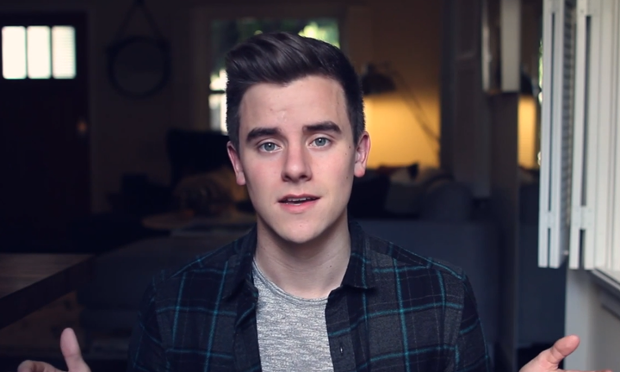
Connor Franta, who told fans his sexuality does not define him. Photograph: YouTube
Hannah Jane Parkinson
Tuesday 9 December 2014 17.39 GMT
YouTube vlogger Connor Franta, who has more than 3.6m subscribers and upwards of 156 million views, has told fans that he is gay.
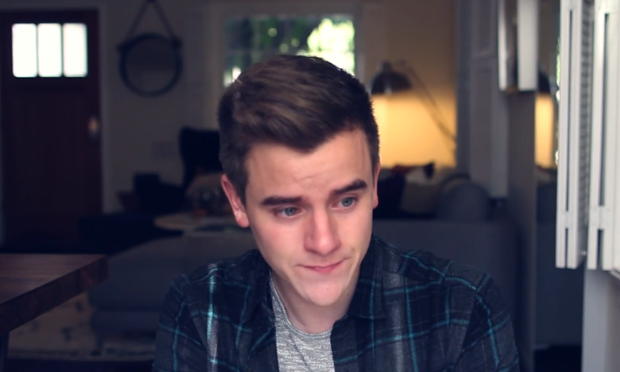
In a video entitled simply “Coming Out”, the 22-year-old discussed working through his sexuality and telling family and friends, before deciding to share the news with his online audience.
“I’m sitting here with no script, no plan, no fancy editing, and I’m just gonna be really honest,” he said. “2014 is truly the year that I have accepted who I am and become happy with that person.”
Franta said he had first thought he might be gay when he was 12, but the idea “terrified” him because he was from the Midwest and that was “not a normal thing there”.

Franta’s emotional coming out video to his fans.
Franta dated girls during high school, but said he “felt nothing”, and even became mentally unwell as a result of hiding his feelings. “I thought about it so much that I became obsessed with it … and became depressed.”
The comedian, who makes lifestyle videos including “Living Alone” and “Walking Around Naked”, said his family and friends had been supportive of his coming out and urged others struggling with their sexuality to do so, saying it would “be OK”.
connor franta coming out
Franta becomes emotional at times during the coming-out video. Photograph: YouTube
He also spoke about the information he had sought online from other vloggers and bloggers when he was struggling with his sexuality, and wanted to give others similar advice. “You are who you are and you should love that person,” he said.
Advertisement
His coming out video has already had more than 2 million views and attracted 100,000 comments.
The majority of comments were positive, and conveyed pride, respect and support for Franta, but not all. “Personally I dont support/like gay. But that just my opinion [sic]”, read one of the negative ones.
More than 430,000 people have “liked” the video, while 3,299 have given it the thumbs down.
Franta is the latest high-profile figure to come out on YouTube. Last year the British Olympic diver Tom Daley announced last year that he was bisexual in a short video entitled “Something I want to say …”. It has since been viewed more than 11 million times. In April he declared he was happy to call himself “a gay man now”.

Filed Under: Anti-Bullying & Homophobia Tagged With: coming out, connor franta, gay, YouTube

The Beautiful Game – Gay rugby world cup to be held in Tennessee

27/11/2014 By David McFarlane Leave a Comment

The Beautiful Game –

Gay rugby world cup to be held in Tennessee

The next Bingham Cup – known as the gay rugby world cup – will be held in Tennessee.
The cup – named after rugby star Mark Bingham, who died onboard a plane during the 9/11 attacks – is an inclusive gay rugby tournament, often known as the gay rugby world cup, held every two years.
This year’s event was held in Sydney, Australia – and won by home team the Sydney Convicts.
However, the event is heading somewhere not many people would have expected in 2016 – Nashville, Tennessee.

The Bingham Cup will be held in Tennessee

The Bingham Cup in Tenessee


The International Gay Rugby association announced last week that the Cup would be hosted in the southern state, which is not known for its progressive attitude to gay rights.
Tennessee does not currently recognise same-sex relationships in any way, bans gender recognition for transgender people, has no state-wide discrimination protection, and only limited hate crime laws.
The Nashville Grizzlies beat out the Chicago Dragons for the right to host the competition.
IGR chairman Jeff Wilson said: “On behalf of the IGR board and trustees, I would like to thank both clubs for their dedication and level of professionalism demonstrated in the bids and during the bidding process.
“Following in the footsteps of Bingham Cup 2014 in Sydney, both bidding organizations realized that the bar had been set even higher for the next tournament.
“Both Chicago and Nashville responded with comprehensive plans that not only provided for excellent rugby, but an opportunity to raise the visibility of our sport and our mission to another level.
“We look forward to joining with all of our rugby brethren in a city synonymous with hospitality in May 2016.”
24 teams from 15 countries around the world competed in this year’s tournament, with thousands of spectators, including US Ambassador John Berry.

Filed Under: Anti-Bullying & Homophobia, History Tagged With: bingham cup, gay, rugby, tennessee

This is a Book for Parents of Gay Kids: A Question-and-Answer Guide to Everyday Life

27/11/2014 By David McFarlane Leave a Comment

Life for gay teens has changed, but advice books for parents have lagged behind – until now. Zoe Schlanger meets the authors of a manual that even ‘cool’ parents should read
When Kristin Russo came out at the age of 17, her Catholic mother withdrew – for a short spell, anyway. This was in 1998. Like many parents of gay kids, Rose Russo was struggling to reconcile her daughter’s sexuality with her own religious life. Extended family referred Rose to Bible passages. She spoke with her priest, who advised her that “under no circumstances should she close her door to her daughter or anyone else important in her life”, Russo remembers her mother recounting. It helped, but Rose was still grasping for perspective. After a while, she sought advice from a few gay people she found through family and friends.
“My mum would just corner lesbians and just be like: ‘I don’t understand, how did you do this, are you having kids?’ She would ask them a hundred questions, and that was her only information about how my life might turn out,” Russo says. For nearly a decade, any trip Russo took home from college and later New York City ended with her mother bursting into tears. “I think she was just wanting it to go away,” Russo says.
As far as Russo, who is now 33, knows, in those pre-Google days Rose never went to the library to find books on parenting gay teens. Even if she had, the few books available may have made her mother feel worse, not better. Their approach was largely clinical and gloomy, and they escorted parents through a grieving process and toward acceptance, as if their child had been diagnosed with a disease.

Now, in 2014, the internet is awash in parenting blogs. Dozens of books are published each year on raising children and teens, but the literature landscape for parents of gay kids is virtually unchanged. A handful of books, mostly updates of editions written in the 1970s, 1980s and 1990s, relate stories of parents struggling to come to terms with their children’s sexuality.
Popular culture has undergone a revolution in attitudes toward LGBT people in the past five or so years. A generation is coming out younger, and parents are more willing to embrace them. But resources for those parents have lagged behind. That is, until September, when Russo and her co-author Dannielle Owens-Reid, 28, released a remarkably simple book.
Kristin Russo, left, and Dannielle Owens-Reid
 
 
Kristin Russo, left, and Dannielle Owens-Reid
This Is a Book for Parents of Gay Kids is for parents who want to be accepting, but “maybe they aren’t right now and maybe they’re really uncomfortable, and maybe they think their kid is going to hell”, Owens-Reid says. But it is also for a “new breed of parent”, as Russo puts it: those who are so eager to be accepting that they fail to recognise the difference of their child’s experience. “I see it so often,” Russo says. “These parents are so cool with their kid being gay that they don’t ask any questions, either because they think it would betray that they are indeed struggling, or because they think they don’t have any.Their kid is gay, they still love them, case closed.”
Of course, that support is a great start. But, Russo says: “It kind of forecloses the way that you can love your kid if you can’t let yourself ask any questions. It is different to walk down the street as a queer person than it is to walk down the street as a straight person. I think there is a real danger in saying no one is different.”
The book consists of a big, blunt Q&A: “How should I handle sleepovers?”; “How do I talk to my child about safe sex?”; “Who should I tell?”. A glossary in the back decodes the mystifying constellation of words – heterosexism, FTM, queer, genderqueer – that a straight parent is likely to hear for the first time. Personal stories are sprinkled throughout, from kids and parents everywhere on the experience spectrum – gay, bisexual, transgender, religious, bullied, the parent who always knew, the kid who threw everyone for a loop. It is such a necessary resource, it is hard to believe it didn’t already exist. Then again, Russo and Owens-Reid are the duo behind the websiteEveryoneIsGay.com and its corresponding YouTube channel, known to LGBT teens on the internet as the place to go for straightforward advice.
On video, the pair lip-synch to pop songs and respond to questions from viewers, such as “How do I get the person I’m interested in to know I’m queer?” or “I want to talk to the other gay girl at my school without being awkward. Help?” Other questions illuminate darker worries: there’s the caller who is worried she might be going to hell for being gay, or the guy who isn’t sure how to come out, because his sister already came out as gay and their parents turned out not to be accepting.
Even when the advice gets serious – when addressing questions about homophobic parents, for example – there is still humour.
“We still keep things very light-hearted. Because I think before you talk about anything, it feels so heavy. But once you do it, you’re getting over that little hump,” Owens-Reid says.
Russo and Owens-Reid never really meant to start an LGBT advice empire. In fact, their site began as something of a joke. At the time, in 2010, Owens-Reid was stocking a Tumblr called “Lesbians Who Look Like Justin Bieber” with, yes, photos of lesbians whose aesthetic and swoopiness of hair resembled those of the boyish pop star. The blog attracted attention from media outlets such as the New York Post, and from lesbians who were offended.
“There were people who were fans of the site who would be asking me questions about love and heartbreak, and then there were a huge chunk of people telling me I was stereotyping the community and making lesbians look bad,” Owens-Reid tell me. They began EveryoneIsGay.com in 2010 as a place to respond to the Bieber Tumblr criticism. “We didn’t really have any intention of doing anything past, like, sassily talking back to some people and answering some advice that was funny and very light-hearted,” Russo says. The first request was “How do I know if my dog is gay?” It was submitted by Russo’s sister.
Soon, the requests for advice came pouring in, and they weren’t all light-hearted. “It was like, ‘Oh, this person is afraid to come out to their family because they might get thrown out of their house’. That was a turning point for us. And so we sort of looked at each other and decided to try it,” Russo remembers.
In the autumn of 2010, within a matter of weeks, four American teens between the ages of 13 and 18 killed themselves after enduring harassment from peers for being gay. The news shed new light on the pressures faced by gay teens. By 2011, colleges and schools began asking Russo and Owens-Reid to speak in their classrooms and auditoriums. Bullying of gay students had gone unaddressed for so long. Now, schools knew they had to talk about it, but didn’t know how. The pair have been to more than 100 schools to date.
Meanwhile, Russo and her mother, Rose, have come a long way. Rose, 61, now accepts and embraces her daughter, and her daughter’s wife. “I don’t know exactly what happened. The only thing I can tell you is that in 2001, I was very sick,” says Rose. “A gall bladder operation went wrong. I could have died. You have these near-death experiences, and afterward you reflect. Kristin was my biggest reflection. I didn’t know if she would have known how much I loved her, if I passed away.”
Rose recalls feeling deep regret for the years of strife. “I was like, ‘Oh my God, how could I have done that to her?’ I’m almost ashamed of how I was. I thought, ‘This is my child; if I can’t accept her for who she is, I’m not such a good mum’. I just didn’t care any more what people thought. That totally changed things for me.”
It was a number of years before Russo felt that her mother had fully come around. Six years ago – 10 years after Russo came out – she says she could tell for the first time that Rose felt comfortable around Russo’s then-girlfriend. “I would say 27 was the age,” Russo says. “That was when I could go home without her sitting me down and bursting into tears.”
But now, Rose says she’s proud of Russo and Owens-Reid’s work with LGBT youth, and wishes something like This Is a Book for Parents of Gay Kids could have existed then.
“I was struggling so badly then with her being gay, and I didn’t know if I could ever overcome that. Now, I look back and can’t believe I went through all that turmoil,” Rose says. “She’s a wonderful girl. She really is. To me, the book is a wonderful thing. It’s all coming full circle.”
(c) Newsweek, Inc. All rights reserved.

Filed Under: Book Reviews Tagged With: book, gay, instruction manual, kids, parents

‘Now and Yesterday’ by Stephen Greco

21/11/2014 By David McFarlane Leave a Comment

Fresh out of college, Peter moved to New York City in 1975. Wide-eyed and
Posted on 20. Nov, 2014 by James McDonald in Fiction, Reviews – See more at: Lamda Literary
</iframe>determined to make it as a poet, he and his boyfriend, Harold, moved into a place in Brooklyn, ready to face whatever hurdles came their way. Fast-forward to 2012, Peter is a bigwig at an advertising agency and Harold has long since died of AIDS, along with dozens more of their friends. The city has changed; Peter has changed, but he still longs for fulfillment, for family and for love. Is that too much to ask for at 59? In Now and Yesterday, Stephen Greco richly details gay life in New York  City, providing a nuanced account of how it’s changed throughout the decades. And by splitting the narrative between the 28-year-old literary hopeful, Will, and the aging Peter, Greco explores generational issues often overlooked within this “Peter Pan” gay culture of ours. Peter first met Will at a party his friend Jacob was throwing. Will was the bartender, and while Peter stood out for his looks and physique among an aging crowd of New York City gay socialites, the recognition was not mutual. A relatively successful journalist back in San Francisco, Will learned quickly that this eastern metropolis was not an easy place to make one’s way. There were the challenges of establishing oneself on a career path, of manoeuvring through a cityscape built upon the foundations of drugs, sex, and money. Peter, too, had had to learn to navigate the scene, and while there were certainly differences, the struggle to remain true to oneself  amidst a sea of superficiality was central to both of their concerns. When Jacob recommends Will for a party Peter is throwing, the two meet properly, and a friendship begins to grow that surprised them both. Yet as feelings unfurl and make themselves known, the specifics of their circumstance begin to confuse. Peter isn’t looking to be a “daddy,” and he doesn’t want to just fool around. His feelings for Will are deep and ever growing, but he fears making a move. Is he too old for Will to see him as sexual, as desirable? The longer we live, the more learn to endure, but one is never too old to be afraid. The fear of being kindly rejected because of his age, the shame of having to watch Will squirm as he explains he’d rather be friends, prevents Peter from expressing his true feelings. As young as Peter may feel, their generational differences stand out stark against an otherwise placid background New York is a haven of gay culture and society–and it has been for a long time–but it’s easy for this present generation to forget that these streets were once a battleground. The same density of people that allowed the gay arts to flourish ensured that AIDS would ravish a generation. Those who lived though it, like Peter, carry the loss they experienced with them. Death, which made itself known in such a dramatic way, is always just beneath the surface. And especially as his fellow survivors begin to age, death returns in new and frightening manifestations. Jacob who, like Peter, survived his partner’s death, is diagnosed with an aggressive form of cancer. To have been conscious of one’s own mortality for decades breeds a unique approach to life–and the closer they move towards death, the more nuanced their understanding becomes. The weight of his past is something that Will can see in Peter, but not fully understand. It’s a burden that Peter doesn’t realize is inhibiting his future. By allowing the spectre of Harold to remain so absolutely, he ensures that there isn’t space for anyone to truly fill the void he left. It took many years, and the love of a guy as special as Will, to show him that he needed to move on from his loss, not merely survive it. At its heart, this is a novel about love. By focusing largely on the insecurities of Peter, Greco allows his internal dialogue, which does come off as slightly sophomoric at times, to highlight the universality of our approaches to romance. Increased age does not carry with it a lessened desire for companionship. At 59, Peter doesn’t want to settle for a boy-toy– he’s still after the romance of his life. Greco’s novel shares the important message that even within a community that idealizes youth, it’s never too late to find true happiness, and it’s not wrong to want it. Now And Yesterday richly details the cultural evolution and history of New York’s gay scene and its attention to the AIDS crisis, in particular, makes it an important addition to the canon of gay literature. The fact that the history of HIV isn’t included in most school curricula, coupled with the generational barriers that the gay community has yet to properly dismantle, makes this a uniquely accessible and relevant piece of work that educates as much as it enchants. – See more at: http://www.lambdaliterary.org/reviews/11/20/now-and-yesterday-by-stephen-greco/?utm_source=Lambda+Literary+Review+November+14th%2C+2014&utm_campaign=Newsletters&utm_medium=email#sthash.ARZRWvrc.dpuf

Filed Under: Book Reviews Tagged With: Fiction, gay, James McDonald, Kensington Books, Now and Yesterday, Stephen Greco

The Gathering – Gay Spiritual Group

18/11/2014 By David McFarlane Leave a Comment


Carols_2014The Gathering, Gay Men’s Spiritual Group, extend a warm invite to you and your friends and family to the annual “Community Christmas Carols by Candlelight” Service, on Thursday 11th December 2014, in All Soul’s Church, Elmwood Avenue, Belfast, BT9 at 7:30pm.
 
We are delighted that Pádraig Ó Tuama has agreed to be our speaker this year.  Pádraig is a Community Leader at Corrymela, a poet and theologian amongst other things and we are looking forward to his sharing with us.
 
The collection this year will be for the DEC Ebola appeal.
 
This is a great way to start the festive season and we warmly welcome all who genuinely want to share with us at this time.  Refreshment will be served afterwards.


Filed Under: Anti-Bullying & Homophobia, Music Reviews Tagged With: Belfast, carols, Christmas, gathering, gay, group, spiritual

  • « Previous Page
  • 1
  • …
  • 4
  • 5
  • 6
  • 7
  • 8
  • 9
  • Next Page »

Categories

Copyright ACOMSDave.com © 2026