
ACOMSDave

Community Journalist

  • Home
  • Community Journalist
  • Events
  • Media Page and Press Kit
    • Projects and Work
  • Resources & Documents
    • LGBTQ+ Support Groups and Documents
  • NIGRA
  • Archives
  • Contact

Belfast City Council votes in favour of gay marriage

05/06/2015 By Dave McFarlane Leave a Comment

Erin Reddy, Dee Campbell and Helen McCarthy at the Central Count Centre in Dublin Castle, Dublin as votes are continued to be counted in the referendum on same-sex marriage.” data-title=”(left to right) Erin Reddy, Dee Campbell and Helen McCarthy at the Central Count Centre in Dublin Castle, Dublin as votes are continued to be counted in the referendum on same-sex marriage.

Belfast City Council has backed same-sex marriage. Councillors voted in favour of legalising gay marriage in Northern Ireland by 38 to 13.

The motion was proposed by Alliance’s Emmet McDonough-Brown after the Republic voted to adapt its constitution to allow same-sex marriage.
“The sky has not fallen in. All that happens is that people who want to commit to each other are able to,” he said.
Openly gay UUP councillor Jeff Dudgeon fought a long legal battle to decriminalise homosexuality here in the 1980s.
But he warned that some politicians would vote to have decriminalisation reversed if a bill allowing same-sex marriage is introduced at Stormont.
More than 60% of those who cast their votes ticked the ‘yes’ box, and the cross-party support in the south turned attention to Northern Ireland, the only part of the UK and Ireland where same sex couples cannot be legally married.
Cllr McDonough-Brown said the “sun shone” on the Republic of Ireland on 23 May, the day the referendum results were revealed.

  ‘ Irish gay marriage referendum – Belfast reaction to yes vote’

Supporting members of the lesbian, gay, bisexual, and transgender societies, he said: “Their contribution makes our society a more vibrant one.
“I look forward to Northern Ireland joining the list of countries that allows couples to say I do.
“The sky has not fallen in.  All that happens is that people who want to commit to each other are able to.”
Cllr McDonough-Brown described NI as a “backwater, an embarrassment” in its stance on gay marriage, but added that ministers should not be forced into enacting it.
“Alliance believe religious insitutions must be free to practice marriage as they see fit,” he explained.
The token motion, which would likely be defeated at the Assembly if proposed at Stormont, was seconded by Sinn Féin councillor Jim McVeigh.
Still wearing the ‘yes badge’ from the southern campaign, he said a mood of tolerance and mutual respect is infectious.
“This is the type of politics we should be talking about.  There’s a groundswell of goodwill sweeping across these islands,” he said.
“I remember when fire and brimstone dominated politics here.  This place is changing.”
The Lower Falls representative recalled the Save Ulster from Sodomy movement – started by Rev Ian Paisley – which Cllr McVeigh claimed was once the biggest campaign in Belfast.
“Now the second biggest rally in the city is Pride,” he added.
“Whether or not we manage to change the minds of the DUP, their position is only a matter of time.
“What an act of forward leadership to say this country belongs to everyone.”
“One of the ironies about this debate is that some of the people who opppose it say it undermines the insitution of marriage.  How does love undermine marriage?  I don’t understand how they feel it undermines it.  In fact, it’s quite the opposite.
“It’s time for this part of this island, of these islands, to support marriage equality,” added Cllr McVeigh.
Openly gay councillor Jeff Dudgeon also spoke up during the debate.  The UUP politician remembered back to 1982, when homosexuality was made legal in Northern Ireland, just over a decade before politicians in the Republic made the same change.
“There was a small party in Belfast of a dozen people, and then a disco.  Not a street party with global support,” he explained.
“Most countries in Europe still don’t have equal marriage.”
He also referred to how politicians voted at Stormont during a Sinn Fein proposal in April to allow same-sex marriage in Northern Ireland.
It led to questions over divisions among the SDLP and Alliance parties on their members’ stance on the issue.  Five SDLP MLAs did not turn up for the vote, while three Alliance party representatives abstained, despite official party line being to support gay marriage.
Cllr Dudgeon said: “Decriminalisaton in the 1980s was achieved without support from any political party.  The Alliance party doesn’t discipline its members that don’t abide the party whip.
“This bill would still hve to go through Stormont where it’ll be defeated, and I’m nervous of those being demonised for their stance.
“In my own party there are differing views, we hold the status quo, though some have already voted for change.”
Cllr Dudgeon was a trailblazer in making homosexuality legal in Northern Ireland, taking his case to the European Court of Human Rights.  Less than a decade later, David Norris also arrived at Strasbourg in a case that echoed Dudgeon’s.
The Unionist politician expressed fears that some politicians would vote to have the decriminalisation of homosexuality reversed.
“My colleagues at the High Court and at Strasbourg will once again be the agents for change.”
During the vote on Monday night, the motion was carried 38-13, with two no votes.

Filed Under: Anti-Bullying & Homophobia Tagged With: Belfast City Council, gay marriage, marriage equality, same sex marriage

Hundreds turn out in support of gay marriage in Northern Ireland just days after the Republic's historic referendum

31/05/2015 By Dave McFarlane Leave a Comment

Belfast Live – 20:02, 30 MAY 2015  BY LISA SMYTH

 
The rally outside Belfast City Hall is just the latest event calling for equal rights for the lesbian, gay, bisexual and transgender community in Northern Ireland
Up to 400 people have taken part in a rally calling for same sex marriage in Northern Ireland.
It comes after last week’s overwhelming yes vote to allow gay people to get married in the Republic of Ireland and just days before Belfast City Council debates the subject.
Speakers at the event outside Belfast City Hall included People Before Profit Alliance councillor Gerry Carroll, Green Party councillor Ross Brown, Malachi O’Hara from the Rainbow Project and the outspoken Rev Chris Hudson from All Souls Non-Subscribing Presbyterian Church on Elmwood Avenue in south Belfast.
He hit out angrily at the position of churches across Ireland in relation to same sex marriage.
“They advised the Irish people to vote no as it went against their teachings and the Irish people said, ‘If you don’t mind reverend gentlemen and reverend ladies, we won’t take your advice on this one”, and they went out and showed absolute solidarity with the LGBT community by voting yes.
“This is not an issue between people of faith and the LBGT community and don’t let any fundamentalist Christians tell you that’s true.”
The event was organised by 17-year-old Padraigin Mervyn.
She explained: “I decided to organise this event because I had seen that our Irish brothers and sisters had won their referendum.

PAUL FAITH/AFP/Getty ImagesA couple watch the count at a count centre in Dublin
“I knew that there was hype up North so I discussed with my political party, People Before Profit, and decided while momentum was high I would get an event page set up on Facebook.
“The aim of this event is to begin a wave of protests in attempt to challenge our government, and raise awareness that the LGBT community will no longer sit back and be oppressed.
“No longer do we want to be regarded as second class citizens, it’s time for the people of Northern Ireland to fight back.”
Meanwhile, Amnesty International, the Rainbow Project and Irish Congress of Trade Unions are organising a march calling for same sex marriage to be implemented in Northern Ireland at Writer’s Square in Belfast at 2.30 pm on June 13.

Filed Under: Anti-Bullying & Homophobia Tagged With: gay marriage, Irish politics, LGBT equality, marriage equality

Gay marriage vote is food for thought for unionists

27/05/2015 By ACOMSDave Leave a Comment

Younger voters are strongly in favour of gay marriage
 

News Letter – 10:11 Tuesday 26 May 2015

Is the Republic more British than Northern Ireland?

After last week’s overwhelming popular vote in favour of equal civil marriage in the Republic, Northern Ireland is now the only part of the British Isles in which it is illegal for gay people to marry.

John McCallister

John McCallister

Gay couples can marry in Cardiff, Dublin, Edinburgh and London – but not Belfast.

For unionists, this should at least give pause for thought. An enduring theme in unionist political thought has been – in the words of the Ulster Covenant of 1912 – “our cherished position of equal citizenship in the United Kingdom”. It is why unionists opposed Home Rule: the fear that rights and liberties would be eroded in a Home Rule Parliament dominated by one narrow theological perspective.

That probably sounds a bit ironic now. Now it looks as if Northern Ireland, out of step with the British mainstream, is the last part of the British Isles in which a narrow theological agenda holds sway in politics.

This is not about excluding people of faith and faith communities from the public square. After all, the referendum campaign in the Republic included vibrant, lively debates within faith communities about equal civil marriage, with some faith leaders backing the Yes vote.
It is also obvious that very many people of faith voted Yes, and did so on the basis of their values of respecting the dignity of all people.
This gives us a sense of what this issue is actually about. It is about respect. It is about pluralism. It is about recognising that all citizens, irrespective of sexual orientation, have rights and liberties. It is about recognising that widening marriage to include gay and lesbian couples strengthens both marriage and our society.
And that is why there is equal civil marriage everywhere else in the United Kingdom – because central to British values has been a progressive widening of the scope of liberty, to strengthen the bonds that unite us as a society.
For political unionisim to opt out and oppose this, raises some difficult questions about how unionism sees its future. Pro-Union politics should be about promoting a vision of Northern Ireland fully sharing in the freedoms, opportunities and pluralism of the modern United Kingdom – not being a place apart, embarrassed about mainstream British values.
I know some unionist politicians vote against equal civil marriage on the assumption that it is the only politically ‘safe’ thing to do. I have two words in response to this – Danny Kinahan.
The Ulster Unionist MP for South Antrim was one of only four unionist MLAs – I was one of them – to vote in favour of equal civil marriage in the recent Assembly debate. Danny did so in the midst of his campaign in South Antrim. And he won the Westminster seat. The lesson? Pro-Union voters don’t fear equal civil marriage.
Unionism needs to have a serious conversation about not the next 10 months, but about the next 10 years. Younger voters are strongly in favour of equal civil marriage. They see it as normal and routine everywhere else in the British Isles.
They cannot understand why if marriage is good for society, it can’t be legal for their brothers, sisters, mothers, fathers, aunts, uncles who are gay.
And when it comes to deciding whether to vote or not, they will not be able to understand why unionism, which says it is serious about Northern Ireland being a full part of the United Kingdom, believes in equal citizenship for some, but not for all.
• John McCallister is an independent MLA for South Down

Filed Under: Anti-Bullying & Homophobia Tagged With: gay marriage, Irish politics, John McAllister MLA, marriage equality

Northern Ireland is now the odd one out on same-sex marriage

24/05/2015 By ACOMSDave Leave a Comment

PinkNews

  • 23rd May 2015, 7:58 PM
  • LAST UPDATED AT 9:07 PM
  • Nick Duffy

Following the victory of same-sex marriage in the Republic of Ireland, Northern Ireland has grown increasingly isolated on the issue.

The Republic of Ireland yesterday held a referendum on a proposal to introduce civil same-sex marriage.

Despite fears that a strong turnout among older, religious voters could sway the referendum against equality, it was announced today that the vote passed by 62.1% to 37.9%.
However, in Northern Ireland the Democratic Unionist Party government continues to block all LGBT rights legislation including same-sex marriage – with the measure rejected by Stormont for a fourth time last month despite popular support.
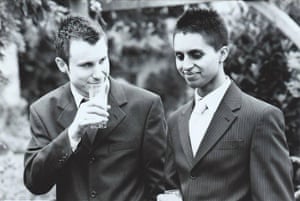
The DUP has dismissed calls to follow the Republic of Ireland in holding a referendum – but Northern Ireland is now very much isolated in Northern Europe on the issue.
In Europe, same-sex marriage is now legal in Belgium, Denmark, Finland, France, Iceland, Ireland, Luxembourg, the Netherlands, Norway, Portugal, Spain and Sweden – as well as Scotland, England and Wales inside the United Kingdom.
The Crown Dependencies of Jersey, Guernsey and the Isle of Man are also still to introduce equality – but have a much smaller population than Northern Ireland’s 1.8 million.
Sinn Féin’s Martin McGuinness has previously called for a referendum in Northern Ireland following roadblocks in Stormont, saying: “What would be very interesting for me, would be to gauge whether or not on the issue of equality, in regard to the rights of people in LGBT community, the assembly actually is representative of people here in the north and I think it would be very interesting if we had a referendum.
“In fact I would advocate that we should have a referendum.
“This is a matter of whether or not we want to live in a modern progressive society that respects minorities, and as far as I’m concerned the LGBT community for far too long have been discriminated against and I believe that they are entitled to be treated as equals and treated with respect.”

Filed Under: Anti-Bullying & Homophobia Tagged With: gay marriage, Irish politics, marriage equality, same sex marriage

Irish gay marriage referendum: Pressure to build on Northern Ireland’s politicians to allow vote on gay marriage

24/05/2015 By ACOMSDave 5 Comments

Belfast Telegraph

BY ED CARTY – 23 MAY 2015

Charles McQuillan/Getty Images

Charles McQuillan/Getty Images

Pressure is set to build on Northern Ireland’s politicians to allow a popular vote on gay marriage after the resounding victory in the Republic.

Sinn Fein said the equality rights for same-sex couples must be shared by citizens in the north and it will continue to campaign for the reform.
Caitriona Ruane, the party’s Stormont Assembly Member for South Down, said the referendum shows change is possible and inevitable when people fully engage in politics.
“The marriage equality rights that will be enjoyed by Irish citizens in the south must be shared by citizens in the north,” she said.
“Sinn Fein will continue to campaign for marriage equality for all in the North and to end the discrimination against our LGBTI community.”
Northern Ireland is the only part of the UK which does not have gay marriage.
Northern Ireland’s Deputy First Minister Martin McGuinness welcomed the emerging success of the marriage equality vote.
Mr McGuinness said: “Today we can all rightfully be proud to be Irish and part of an increasingly tolerant, pluralist and outward-looking Ireland.
“Politicians, particularly in the north need to reflect on this progress.
“The world is moving on and Ireland is taking the lead. Pride in Ireland has taken on a whole new meaning.”
Unionists earlier this year rejected a proposal from Deputy First Minister Martin McGuinness to hold a referendum on the issue similar to Republic.

Sinn Fein also said the influx of emigrants returning home to vote in the day before polling yesterday highlights the need to tackle the issue of voting rights for the Irish diaspora and for Irish citizens in Northern Ireland.

“I’m delighted the people have voted overwhelmingly in favour of marriage equality for all,” she said.

“This referendum was all about equality, inclusion and respect for our LGBTI brothers and sisters.

“The campaign energised and engaged a whole new generation of young people in the democratic process.

“This result shows when people fully participate in the political process that change is not only possible but inevitable.”

Filed Under: Anti-Bullying & Homophobia Tagged With: gay marriage, Irish politics, marriage equality

Thousands in Northern Ireland are demanding referendum on gay marriage

29/04/2015 By ACOMSDave Leave a Comment

Reprinted from Belfast Live: Exclusive: Thousands in Northern Ireland are demanding referendum on gay marriage

19:29, 28 April 2015 By Jilly Beattie

Three people a minute are signing an online petition calling for the public to have the final say on the future of civil marriage

Chris Torbitt

Chris Torbitt


Three people a minute are signing an on-line petition calling for a referendum on gay marriage in Northern Ireland.
More than 5,000 people already signed up to the change.org petition created by Newtownabbey man Chris Torbitt in its first 24 hours, and the figure is rising fast.
The Northern Ireland Assembly yesterday rejected a proposal calling for the introduction of gay marriage, after debating the issue for a fourth time.
A total of 96 MLAs took part in the vote and 49 voted against the Sinn Féin motion calling for civil marriage equality for all. An other 47 were in favour and of 53 unionists, only four voted yes.
Sinn Féin, SDLP and five Alliance MLAs supported the motion. The DUP opposed it and the Ulster Unionists were given a free vote on the issue.

Now Chris says the people of Northern Ireland should be given the chance to decide.
The 26-year-old, who came out to his mum 13 years ago, told Belfast Live: “Equality is not a luxury, it is a right and at the moment in Northern Ireland civil marriage is not open to everyone therefore people are not being treated with equality.
“I want this to change, thousands of people want this to change and now I am asking people to sign a petition on-line to see how many people feel strongly about this. Our world needs to change, and only we can change it for the better.
“Being gay is not a crime or a choice. I came out to my mum 13 years ago and told my dad two years ago. He shook my hand and hugged me and they both told me I am their son first and foremost and anything else comes after their love for me. I wish there were more people like them and I think many people would support civil marriage for all if they were given the chance.
“Today the people of Northern Ireland have the power to effect change here.
“We have the ability right now to show our support to not only our LGBT family and friends but to all LGBT people throughout Northern Ireland, the United Kingdom and the Republic of Ireland.”
Chris spoke to Deputy First Minister Martin McGuinness on a live radio show and asked him if he feels the time has come for the NI electorate to supersede the Assembly and vote through a referendum on the LGBT civil marriage issue.
Deputy First Minister Martin McGuinness

Deputy First Minister Martin McGuinness


Deputy First Minister Martin McGuinness
He said: “His response to this was that he would be in support of a Northern Ireland referendum around this issue as he believes it would be successful.
“So now I’m asking people to send a message to Europe and the rest of the world that Northern Ireland is not the backward, bigoted, sectarian, stuck-in-the-past country that we are perceived to be.
“Instead we can be seen as a nation of people that will stand up for what’s right, stand up for equality, support one another and welcome all people of difference to our shore.
“Let’s show our politicians that it’s not up to them, we the people demand to be heard.
“For more than 30 years this little country has been plagued by bitter, bigoted, sectarian issues that even today are still unfortunately finding roots.
“Thankfully in today’s society this is a considerable minority as most of the inhabitants here want to move beyond to a bright and prosperous Northern Ireland where everyone is treated with respect, dignity and equality.
“This is not a political issue. This is not ‘orange and green’. This is simply about people who love one another so much that they would like to spend the rest of their lives together.
“Some may ask why they need to get married – can’t they just live together and share their life together or even get civil partnered? Won’t this change the definition of marriage?
“Civil Partnership does not provide the same protections to a spouse that Civil Marriage would. It is not the same thing.
“Marriage is something that everyone contemplates growing up. By not allowing LGBT people access to this they are being treated like second-class citizens; unworthy of the same legal standing as heterosexual couples.
“This in turn tells young people that it is wrong to be LGBT and therefore encourages a negative environment in which they feel they are abnormal and there is something wrong with them. This can have serious ramifications on mental health and physical wellbeing.
“Why shouldn’t they have the opportunity to get married the same as heterosexual couples? LGBT couples should be able to live life the same as heterosexual couples, make similar plans.
“Northern Ireland is the only part of the United Kingdom that does not have equal marriage legislation in place.
“The Republic of Ireland will vote through referendum to accept or reject equal marriage legislation. Polls currently indicate that equal marriage will pass in the ROI referendum.

The change.org petition is attracting huge support
“Civil Marriage will not change the definition of marriage to the detriment of what it currently represents. If we really look at what marriage is about then there is no reason to exclude LGBT people.
“The very essence of marriage is about love. Love between two people that want to spend the rest of their life together. Religious institutions will not be forced to provide same-sex ceremonies.
“Churches, mosques, temples etc will not be used for services celebrating same-sex ceremonies unless welcomed by that institution/organisation. Various protections will be built into equal marriage legislation for religious institutions/organisations.
“We need to do this, we need to look forward and move forward together.”

Filed Under: Anti-Bullying & Homophobia Tagged With: Chris Torbitt, gay marriage, Martin McGuinness, referendum, Stormont

Even Kids Are Saying Yes To Gay Marriage in Ireland

24/04/2015 By ACOMSDave Leave a Comment

By The Gay UK, Apr 21 2015 06:54PM
The folks behind the “YES” Campaign in Ireland’s Referendum for Marriage Equality are doing such an amazing job.
Hot on the trail of the Video we shared with you the other day comes another wee heartwarming film about what children think of it all. If this doesn’t move those voters who are still sitting on the fence on the issue, then nothing will.

Filed Under: Anti-Bullying & Homophobia Tagged With: eire, election, gay marriage, marriage equality, Southern Ireland, vote

American Chuck Feeney the key backer for gay marriage in Ireland

20/04/2015 By ACOMSDave Leave a Comment

Reprinted from Irish Central – James O’Shea @irishcentral April 20,2015 01:47 AM
 
""
Irish American philanthropist and billionaire Chuck Feeney is the key funder of themarriage equality drive in Ireland which will come to a head with a referendum on the right to marry for same sex couples on May 22.
Current polling points to a convincing victory for the same sex marriage side, but experts warn Irish referendums can be decided very late and voters swing wildly.
Feeney’s Atlantic Philanthropies have committed $475,000 to Marriage Equality Ltd the main group dealing specifically with the issue.
Feeney, the New Jersey-born billionaire, is giving away all of his money, an estimated $7.5 billion, through Atlantic.
A proud Irish American Feeney earmarked over $1 billion of that to be spent on educational, human rights and other projects in ireland. He also played a major role in bedding down the Irish peace process in Northern Ireland.
In addition to funding Marriage Equality, Atlantic has funded the main LGBT lobbying group, the Gay and Lesbian Equality Network (GLEN), to the tune of $2.5 million over the past few years.
Atlantic and Feeney identified equality in marriage as one of the key human rights issue they wished to focus on. Their funding helped pass the civil partnership act of 2010. On its website and in a video Atlantic cites other major advances including:
– Secured public referendum on civil marriage, which is scheduled for 2015
– Government creation of a Gender Recognition Advisory Group, the role of which is to make recommendations on how to proceed toward legal frameworks for gender recognition for transgender people
– Secured numerous significant changes in public policy and services to better reflect the needs of LGBT people in areas such as mental healthcare provision and bullying in the education system
– Increased capacities of the LGBT sector

Feeney, 82, a New Jersey native now resident in California, made his money as co-founder of DFS, the largest duty free empire in the world
The working class Irish kid from Elizabeth, NJ has surpassed the Rockefellers and Andrew Carnegie when it comes to charitable giving.
He invented “giving while living,” which is now all the rage. His example directly inspired Bill Gates and Warren Buffett to give it all away too.
One of his most important legacies is that he has convinced so many powerful people there are “no pockets in a shroud” and helping in the here and now is preferable to dribs and drabs over decades.
“Chuck has been an inspiration to both of us for many years and was living the Giving Pledge long before we launched this project,” Bill and Melinda Gates said recently.
“He’s a true innovator and example to anyone who seeks to make the world a better place,” Buffett said.

Filed Under: Anti-Bullying & Homophobia Tagged With: Chuck Feeney, equality vote, gay marriage, Southern Ireland

Mirror Website: Majority back gay marriage laws

29/03/2015 By David McFarlane Leave a Comment

Majority back gay marriage laws – except for those who support UKIP

  • 23:18, 28 March 2015
  • By Nigel Nelson
The latest People’s Panel poll in the lead-up to the General Election reveals that a majority of all other party supporters backed the change in the lawSix in ten Sunday People readers back the change in the law allowing gay and lesbian couples to marry

Cameron vindicated: Majority back the change in the law allowing gay and lesbian couples to marry

Six in ten Sunday People readers back the change in the law ­allowing gay and lesbian couples to marry.
The latest results from the People’s Panel, which is letting you have your say on key issues every week in the run-up to the May 7 polls , also reveal 33% of you strongly support the move.
It was most popular among ­women with 69% in favour ­compared with 50% of men.
UKIP voters were alone among the major parties in having more readers opposing the change than backing it – a vindication for David Cameron, who stuck his neck out to give same-sex couples the same rights as heterosexual ones.

People's Panel. Pictured - To what extend do you support or oppose the law change allowing gay and lesbian couples to marry?
People’s Panel. Pictured – To what extend do you support or oppose the law change allowing gay and lesbian couples to marry?

One reader said: “There are more important things for the Government to deal with than gay and lesbian marriages.”
Another added: “Everyone should have a chance of happiness.”
As the People’s Panel focused on equality this week, it also emerged that more than three in five readers believe 16 should ­remain the age of consent – ­although 14% said it should be raised to 18, as in Turkey.

People's Panel. Pictured - What should the UK age for consent for sex be?
People’s Panel. Pictured – What should the UK age for consent for sex be?

More than six in ten want to keep the voting age at 18 and only 7% thought it should be lowered to 17, and 1% to 15. Some 18% favour 16, as ­proposed by Ed Miliband.
The Labour leader was ­persuaded to press for a change by the high turnout of 16-year-olds in last year’s Scottish referendum.

38 days 22 hours 27 minutes 37 seconds

He felt that having been given the right to vote once, 16 and 17-year-olds should not be denied it in future. The voting age was lowered to 16 for local elections in the Isle of Man, and Channel Islands Jersey and Guernsey.
In the US, 19 states allow 17-year-olds to vote in primary elections as long as they will be 18 on polling day.
In Japan the voting age is 20 and in Italy it is 25 for Senate elections.

People's Panel. Pictured - What should be the minimum voting age for general elections?
People’s Panel. Pictured – What should be the minimum voting age for general elections?

More than half of the People’s Panel did not feel governments have gone far enough in closing the gender pay gap. That rose to 65% among women voters.
A third of the 18-54 group, ­compared with 15% of the 55-plus, felt changes needed to bring about equality have been made.
One reader told us: “Women should be paid the same as men – but nurses should be paid more.”
Regarding childcare provision, only one in ten thought it should fall to mothers alone
Nearly one in three felt it should be shared equally with nine per cent more men holding that view than women. But more than half said divvying up childcare should depend on the circumstances of the parents..

People's Panel. Pictured - How should childcare be divvied up between fathers and mothers?
People’s Panel. Pictured – How should childcare be divvied up between fathers and mothers?
Equality polls. Pictured - Have governments done enough in the past 10 years to secure genre pay equality

Filed Under: Anti-Bullying & Homophobia Tagged With: age of consent, age to vote, child care, Elections, gay marriage, gender pay equality, LGBT

My boyfriend killed himself because his family couldn’t accept that he was gay

25/03/2015 By David McFarlane Leave a Comment

Nazim Mahmood jumped to his death from a balcony seven months ago after coming out to his parents. His partner of 13 years, Matthew Ogston, talks to Sarfraz Manzoor
Matthew Ogston Nazeem Mahmood
Nazim Mahmood and Matthew Ogston in Iceland in 2008.
Sarfraz Manzoor
Saturday 21 March 2015 05.59 GMT Last modified on Monday 23 March 2015 15.32 GMT
In the spring of last year, Matthew Ogston and Nazim Mahmood moved into their dream home. The apartment, on the top floor of a mansion block in north-west London, offered stunning panoramic views of London. Nazim was a doctor who ran three London clinics, Matthew a web designer.
The life Nazim enjoyed seemed a world away from the working-class traditional Muslim community in which he had been raised. It was that world – conservative and closed – that he had left behind for a new life. In their first week in the flat, the two men stood on the balcony as London glittered in front of them. Matthew looked at Nazim and said, “Darling, I think we’ve finally made it.” They both smiled. Four months later, Nazim jumped off the edge of that same balcony to his death. He was 34.
Nazim was 21 when he met Matthew in November 2001. Matthew was at a gay nightclub in Birmingham, when Nazim approached with the words, “Excuse me, may I sit here?” Something about Nazim’s shy demeanour appealed to Matthew. They started talking. “There was an instant connection,” he recalls.
We are in the living room of the apartment. It is more than seven months since Nazim’s death but the condolence cards are still on display. This is the first time Matthew has agreed to talk openly, and during the hours we talk, words tumble and tears flow. It was only minutes after first meeting him that Nazim had said to Matthew: “I’m a Muslim, is that going to be a problem?”
Matthew Ogston
Matthew Ogston Facebook Twitter Pinterest
Matthew and Nazim with their dog Charlie in 2007.
The two were soon inseparable. Matthew was working as a web designer and Nazim was a medical student. Their families did not know they were gay. After a year they bought a house. It had two bedrooms so their families might assume they were just housemates. “We used to have to keep the window blinds in our front room closed so no one would see us,” says Matthew. “When we walked down the street we made sure there was some distance between us just in case a family member of his spotted us together.”
They grew tired of looking over their shoulders and wanted to stop hiding, so when Nazim was offered a job at a London hospital in 2004 they seized the opportunity to move to the capital. They would be far from their families, in a city where they knew no one and could fashion a new life together. “In London we felt free,” Matthew says. “We didn’t have to worry about bumping into our parents.”
They made friends and created a social world that reflected the people they were. Of necessity, this new life was founded on sadness and deceptions. Nazim was leading a double life: his family had barely met Matthew and thought he was merely an investor in their son’s flat. On the rare occasions they visited London, Matthew had to spend the night in a bed and breakfast. “We had to ‘de-gay’ the house,” says Matthew. “That meant putting pictures of Kylie into the cupboard, Cher too – and any photo or memento that suggested a relationship had to go.”
Nazim didn’t like to talk about his family. He had left Birmingham and felt that to talk about pain or sadness or guilt would have infected the new life they had created in London – he was resigned to playing the dutiful Muslim boy to his family in Birmingham when, in fact, he was a happily gay man in London.
To celebrate the 10th anniversary of their first meeting, Matthew and Nazim threw a party at a London club. Nazim was now a GP as well as running his own business – three London clinics that offered Botox treatments – and Matthew was doing well working for a software company. During the party, Matthew asked the DJ to lower the music. He led Nazim into the DJ booth, got down on one knee and proposed. “He looked at me and his face was just lit up,” says Matthew.
The following year, Matthew came out to his parents, who were loving and accepting of both of them, but for Nazim, whose family were culturally conservative Muslims, the only strategy was to keep the solid borderlines between the old life in Birmingham and the new life in London.
On the last Saturday of July 2014, Nazim and Matthew drove north to Birmingham. It was a strange time: a close friend had died and they had to be back in London on the Monday for his memorial service. It was also the weekend of Eid, the Muslim festival.
When he arrived, Nazim’s family were annoyed that he was late for the Eid celebrations and planned to leave early for the memorial. Things were said – Matthew does not know what, exactly – that left Nazim distraught. “I am a good person,” Nazim said, weeping. “Why can’t people accept me for who I am?”
“Is it because you like men?” his mother had asked him, out of the blue. And Nazim, who had spent years hiding and pretending, to protect his relationship with Matthew, did something he had never expected to do: on the spur of the moment, he told them everything.
Matthew Ogston
Matthew and Nazim at a friend’s wedding in 2005.
Nazim was in a state of shock as he drove back to London. It emerged at the inquest in December 2014 that he had told his mother he was gay and had been in a relationship with a man for 13 years, and planned to marry him. Her response was to tell Nazim to consult a psychiatrist with a view to being “cured”.
The coroner, Mary Hassell, ruled that Nazeem killed himself. She said: “It seems incredible that a young man with so much going for him could have taken his own life. But what I’ve heard is that he had one great sadness which was the difficulty his family had in accepting his sexuality.”
Nazim had never planned to reveal his sexuality and found it hard to process his mother’s extreme reaction.
The couple went to the service for their dead friend that evening and a second ceremony the following day, but Matthew recalls Nazim being distant, but trying to put on a brave face. On Tuesday evening, Nazim helped with paperwork for the new job Matthew would start the following morning and then they retired to bed.
In the office next day, Matthew got a text from his sister, saying simply “call me now”. It was early evening on Wednesday 30 July. He rang her and was told to go home immediately; she would not say why. It couldn’t be Nazim – they had talked at lunchtime and Nazim had called again at just after 3pm and then twice after 5pm, but it was Matthew’s first day in a new office and he had been too busy in meetings to take the calls, though he had tried to call Nazim back. Had there been a bomb scare at the flat?
As he left West Hampstead station Matthew began to run. “It was like I was running for my life,” he recalls.
As he speaks, he is clutching himself tightly, right hand gripping his biceps. “I was pushing people out of the way and as I came round the corner I saw flashing blue lights and police cordon tape, then I saw this red blanket on the floor covering something up.”
He began to scream. He was bundled into a police car as friends started to show up, faces grey with shock.

A TV interview with Matthew about the problems faced by many Asian men in coming out to their families.
Matthew arrived at Handsworth cemetery early on the day of Nazim’s funeral. In the aftermath of the death, Matthew had met Nazim’s family but the encounters were tense and uncomfortable. It appears that they did not want to have to deal with what they considered the shame of having had a gay son, and a gay son with a non-Muslim lover. Out of respect for Nazim’s mother’s plea not to make a scene at Nazim’s burial, Matthew agreed not to ask for a major role at the funeral, which was due to take place at 3.30pm.
With less than half an hour to go, nobody else had arrived and Matthew began to worry. In the distance he could see a burial taking place. “I went over and asked one of the officials where Nazim was being buried,” he said. “She said, ‘I’m really sorry – they have already buried him.’”
He ran out and saw Nazim’s family pouring dirt on to the coffin. “I was so angry,” Matthew tells me, tears streaming down his face, “I could not move. My arms and legs were just clenched. I felt completely betrayed.”
Nazim’s family had apparently given him the wrong time for the funeral.
He returned to London feeling desperately low. “I wanted to end it all,” he says quietly. “Follow Naz and leap off the balcony.”
His friends ensured he always had at least three people with him round the clock. “Every time I tried to get to the edge of the balcony, my friends would stop me. I couldn’t find a reason to stay alive.”
Then, in his distress, Matthew recalls: “I heard Naz’s voice.”
He is convinced that Nazim spoke to him, telling him to set up a foundation to help other young gay men and women driven to depression because of religious homophobia. He had a reason to go on at last.
The Naz and Matt Foundation was announced at a special service held in London for Nazim, two weeks after his funeral. The service featured contributions from a gay Muslim, gay Hindu, a gay vicar, a trainee Rabbi and a lesbian interfaith minister. Matthew has been seeing a psychotherapist but he doubts any counsellor can help to liberate him from the questions that haunt him. “I don’t have answers to the questions I have and I can’t find peace of mind because there are no answers.”
Who does Matthew blame for Nazim’s death? “I blame a community that is so closed minded to allow these bigoted views that make families believe that their honour is more important than loving their children,” he says. “The respect and honour of the family is more important than the happiness of the children they gave birth to. How sick is that?”
The purpose of the Naz and Matt Foundation is to confront and challenge these views. Matthew says the foundation has given him a reason to stay alive but he is still finding it hard to come to terms with Nazim’s death. “I am on medication for sleep and anxiety,” he says. “I can’t face going to sleep because I know I will have to wake up and face more sadness, because he’s not there.”
Nazim is gone but in the home they shared he is everywhere. A large painting of him rests against one wall, photographs arranged around the room. The condolence cards read “With deepest sympathy”, and “So sorry for your loss” and so on.
We have talked for more than five hours and Matthew looks emotionally exhausted as I prepare to leave. A digital picture frame has settled on an image from the party where Matthew proposed to Nazim. They were engaged for three years but didn’t marry. “I have applied to have my name changed by deed poll to the name I would have adopted when we got married,” he says.
Why didn’t they get married? “Naz said it would not feel right to marry without being able to invite his mother,” says Matthew. “He wanted the unconditional love of his mum – that was all he had ever wanted: love and acceptance.”
nazandmattfoundation.org
@sarfrazmanzoor
Samaritans: 08457 909090 (24-hour national helpline)
 
Read more: http://www.theguardian.com/lifeandstyle/2015/mar/21/my-boyfriend-killed-himself-because-his-family-couldnt-accept-that-he-was-gay

Filed Under: Anti-Bullying & Homophobia Tagged With: Bereavement, Birmingham, Death and dying, Doctors, family, gay marriage, homophobia, Islam, LGBT rights, Parents and parenting

  • « Previous Page
  • 1
  • 2
  • 3
  • 4
  • Next Page »

Categories

Copyright ACOMSDave.com © 2026