Saying yes to tourism

It may be September before same-sex marriage can take place in Ireland, but tourism chiefs have lost little time inviting LGBT couples to celebrate their weddings here.
Community Journalist


It may be September before same-sex marriage can take place in Ireland, but tourism chiefs have lost little time inviting LGBT couples to celebrate their weddings here.

After last week’s overwhelming popular vote in favour of equal civil marriage in the Republic, Northern Ireland is now the only part of the British Isles in which it is illegal for gay people to marry.

Gay couples can marry in Cardiff, Dublin, Edinburgh and London – but not Belfast.
For unionists, this should at least give pause for thought. An enduring theme in unionist political thought has been – in the words of the Ulster Covenant of 1912 – “our cherished position of equal citizenship in the United Kingdom”. It is why unionists opposed Home Rule: the fear that rights and liberties would be eroded in a Home Rule Parliament dominated by one narrow theological perspective.
This is not about excluding people of faith and faith communities from the public square. After all, the referendum campaign in the Republic included vibrant, lively debates within faith communities about equal civil marriage, with some faith leaders backing the Yes vote.
It is also obvious that very many people of faith voted Yes, and did so on the basis of their values of respecting the dignity of all people.
This gives us a sense of what this issue is actually about. It is about respect. It is about pluralism. It is about recognising that all citizens, irrespective of sexual orientation, have rights and liberties. It is about recognising that widening marriage to include gay and lesbian couples strengthens both marriage and our society.
And that is why there is equal civil marriage everywhere else in the United Kingdom – because central to British values has been a progressive widening of the scope of liberty, to strengthen the bonds that unite us as a society.
For political unionisim to opt out and oppose this, raises some difficult questions about how unionism sees its future. Pro-Union politics should be about promoting a vision of Northern Ireland fully sharing in the freedoms, opportunities and pluralism of the modern United Kingdom – not being a place apart, embarrassed about mainstream British values.
I know some unionist politicians vote against equal civil marriage on the assumption that it is the only politically ‘safe’ thing to do. I have two words in response to this – Danny Kinahan.
The Ulster Unionist MP for South Antrim was one of only four unionist MLAs – I was one of them – to vote in favour of equal civil marriage in the recent Assembly debate. Danny did so in the midst of his campaign in South Antrim. And he won the Westminster seat. The lesson? Pro-Union voters don’t fear equal civil marriage.
Unionism needs to have a serious conversation about not the next 10 months, but about the next 10 years. Younger voters are strongly in favour of equal civil marriage. They see it as normal and routine everywhere else in the British Isles.
They cannot understand why if marriage is good for society, it can’t be legal for their brothers, sisters, mothers, fathers, aunts, uncles who are gay.
And when it comes to deciding whether to vote or not, they will not be able to understand why unionism, which says it is serious about Northern Ireland being a full part of the United Kingdom, believes in equal citizenship for some, but not for all.
• John McCallister is an independent MLA for South Down

Humanist Brian McClinton
It encompassed some of the basic values at the heart of liberal democracy.
Contrary to the view of evangelical Christians, the verdict, like the gay marriage referendum in the Republic, was a triumph for both freedom and equality.
Ashers argued that the message on the cake was against their freedom of conscience. But it was nothing of the kind. Freedom of belief is an empty concept if we deny our opponent the same freedom we demand for ourselves. As George Orwell put it, “if liberty means anything at all, it means the right to tell people what they do not want to hear”.
Is it not also being intolerant to wish to suppress an opinion you dislike? Is the bakery’s ‘freedom of conscience’ not really a euphemism for the freedom to be intolerant? And is it not also fundamentally unChristian in that the Golden Rule of doing unto others as you would want them to do unto you is an alternative form of the principle of showing respect and tolerance for opposing views?
Fundamentalist Christianity and its associated political parties do not have a good record of supporting freedom of opinion here. During the period of Stormont rule they censored plays and films, and they were still doing it recently when they sought to ban a play in Newtownabbey and a painting in Banbridge. Freedom of conscience was in reality a euphemism for religious privilege.
Ashers also discriminated against the customer on grounds of sexual orientation and political opinion. Essentially, people owning businesses which provide public services cannot pick and choose their customers on these grounds. In this way the judgment struck a blow for both sexual and political equality.
In the Irish Republic 62 per cent of voters have just given their support for gay marriage. Like the Ashers ruling, this too enhances freedom and equality. It means that gay people who love each other can now choose if they wish to marry – a freedom which in no way inhibits a straight couple’s similar right. It also means that they will no longer be treated as second-class citizens and thus it entrenches their sexual equality.
In short, it establishes the Irish Republic as a truly pluralist democracy.
Northern Ireland is now the only part of the British Isles that still prohibits gay marriage, and the fact that a gay man had to bring a court case merely to establish his right to put a political message on a cake demonstrates how far it has to go.
The Archbishop of Dublin has stated that the Catholic Church needs a reality check. Clearly, all the main churches on the island need to examine the reasons why they seem to show less Christian tolerance and generosity of spirit than the mass of Irish people.
As for Northern Ireland, the question that has to be asked is whether the exclusive Old Testament conception of Christianity that has long dominated this society is seriously out of touch with the open and inclusive values of the modern world.
• Brian McClinton is a director of the Humanist Association of Northern Ireland

Huff Post – Posted:
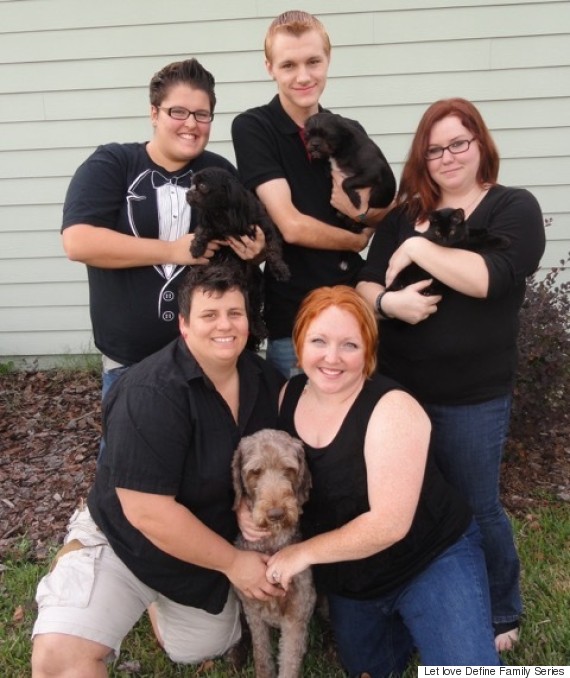
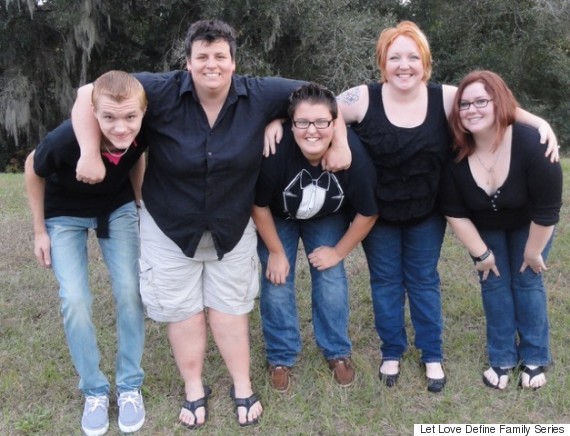
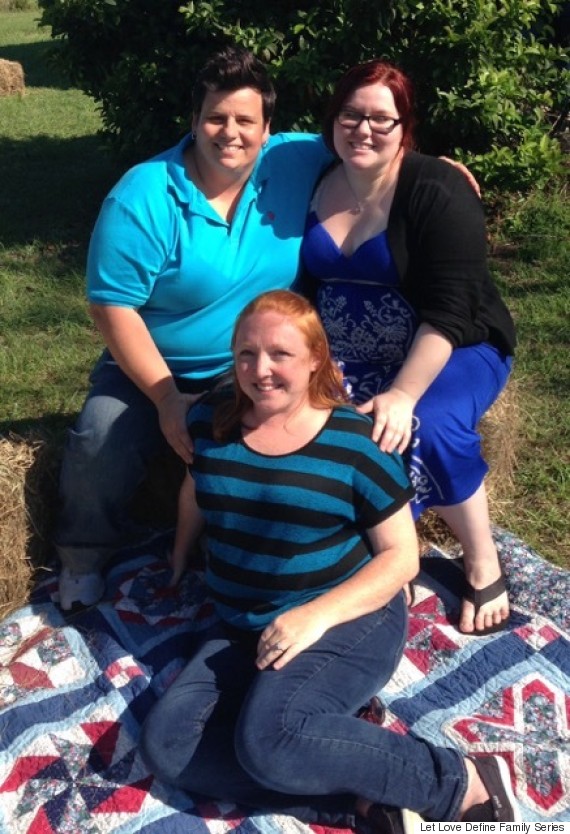
In North Central Florida, two women are busy helping local teens in foster care by welcoming them in to a home and family built on simple principles of love, respect, and equality. Contributing writer Beth Hallstrom shares their story in this week’s Huffington Post Gay Voices RaiseAChild.US “Let Love Define Family™” series installment during National Foster Care Month.
Amanda Williams and Deena Ruth, foster parents for the past four years and adoptive mothers of two, are passionate advocates for those they consider the most discriminated against and under-served in the foster care system: teenagers, especially teens in the LGBTQ community.
According to Amanda, “LGBTQ teens in general have a great need for support and guidance in the world, but especially in foster care. Often, there aren’t people to turn to or a place to feel safe and many of them won’t come out until they have left the foster care system.”
![]()
“We focus on gay or questioning kids so they have a positive, functioning gay couple as a role model,” she said. Deena added, “But we fight for all teens, gay or straight. We’re gay, but that’s not all we are.”
Engaged for four and a half of the five years they’ve been together, Amanda, 32 and a medical social worker, and 37-year old Deena, who is the only female field technician for a telecommunications company, live in Alachua, Florida, a small town outside Gainesville.
They are currently fostering an 11-year old, whom they describe as funny, intelligent and a writer with plans to publish a book about vampires. They are also adoptive parents to daughter Caia, 20, and son Cade, who is 18. Both adopted children are among the 23 foster children welcomed to their home since 2011.
Deena said initially adoption wasn’t their plan, but when Caia moved in as a foster child at age 17, they felt an instant connection.
Amanda continued, “Over the next six months we all fell in love and, one night after dinner, we were talking about long-term medical decisions and Caia said, as a joke, we should just adopt her then. We had never thought of adoption, since Caia was almost 18, but in that moment we realized we weren’t complete without her. A year later, we met Cade, a strong willed, head strong 17-year old boy. His charm and easy manner won us over and, before long, he was also adopted.”
In addition to a busy home life because of, as Amanda and Deena put it, “fostering anyone who comes through our door,” the two are very active in both the Florida and Alachua County Foster and Adoptive Parent Associations. Amanda is president of the county organization. She co-chairs a statewide task force that focuses on recruiting and retaining new foster parents for teens and is also a Teen Independent Living Advocate for the FFAAPA.
![]()
“We try to be a resource both to the teens and to the system as a whole as it reaches out and becomes more diverse,” Amanda noted.
The couple’s fervent support of teens in foster care is deeply personal, especially for Deena, who went to live with neighbors when she was 15 years old.
“When I was a kid, my family was not united. I moved in with caring neighbors and was able to graduate from high school with their love and support. I decided that, if I could, someday I would help teens. I always wanted to give back those feelings of support and love that they gave me,” Deena explained.
Amanda, as a foster parent and licensed clinical social worker, said she often sees the discrimination against teens and their profound needs.
“Most teens go to group homes. Teenagers in foster homes is not the norm,” she explained. “That’s one reason I’m so committed to teens, because sometimes all they need is that one person who stands up for them to make all the difference.”
As Amanda and Deena encourage new foster parents, they also encourage their recruits to turn to support groups like the Alachua County FAAPA.
![]()
“It’s definitely a way for foster parents to connect with others who are having similar experiences. Most new foster parents don’t get involved until the second year or so of fostering, but it’s always the first year that’s the hardest. It’s great to have people who can help you realize you are doing it right and what you think it crazy is perfectly normal,” Amanda said.
According to Deena, “Getting involved with an association is terrific for support and advice about dealing with the special situations of fostering and the trauma the kids went through before you got them,”
The women said they aren’t ruling out more adoption, but they definitely will continue to be foster parents because they feel they are meeting a need and making a difference.
“It’s very rewarding if you’re realistic and are prepared to do the work. It’s satisfying to know you’re giving the kids a different way to live, another perspective and, hopefully, a better future.”
RaiseAChild.US is the nationwide leader in the recruitment and support of LGBT and all prospective parents interested in building families through fostering and adopting to meet the needs of the 400,000 children in the foster care system.RaiseAChild.US recruits, educates, and nurtures supportive relationships equally with all prospective foster and adoptive parents while partnering with agencies to improve the process of advancing foster children to safe, loving and permanent homes. For information about how you can become a foster or adoptive parent, please visit www.RaiseAChild.US.

A couple embraces after the Referendum result

Ballot boxes are emptied in Dublin for counting of votes in the referendum on same-sex marriage.The support for the proposal south of the border will come north of the border too. Photo: Brian Lawless/PA Wire
In These Times with liberty and justice for all – WEB ONLY / FEATURES » MAY 19, 2015

In the 1980s and 1990s, debates over the humanities were a major component of American political discourse. On the one side were conservative traditionalists who believed that all American college students should read the Western Canon—the greatest books of the Western mind since Aristotle—as a foundation for democratic living. On the other side were academic multiculturalists who believed that a humanities education should be more comprehensive and should thus include texts authored by minority, female, and non-western writers.
Those debates of the ‘80s and ‘90s were heated. Indeed, they were a major front in what came to be known as “culture wars” between merciless foes. Yet all sides in these culture wars believed a humanities education—history, literature, languages, philosophy—was inherently important in a democratic society. In short, the humanities were taken for granted. In our current age of austerity, this is no longer the case. Many Americans no longer think the humanities worthy of public support. This is especially true of conservatives, who in their quest to cut off state support to higher education have abandoned the humanities entirely.
Take the state of Wisconsin, for example. In early February, Governor and Republican presidential hopeful Scott Walker drafted a draconian state budget that proposed to decrease the state’s contribution to the University of Wisconsin system by over $300 million over the next two years. Beyond simply slashing spending, Walker was also attempting to alter the language that has guided the core mission of the University of Wisconsin over the last 100 years or more, known as the “Wisconsin Idea.” Apparently Walker’s ideal university would no longer “extend knowledge and its application beyond the boundaries of its campuses” and would thus cease its “search for truth” and its efforts to “improve the human condition,” as his proposed language changes scrapped these ideas entirely; the governor’s scaled-back objective was for the university to merely “meet the state’s workforce needs.”
When a draft of Walker’s proposed revisions to the Wisconsin Idea surfaced, outraged Wisconsinites (including some conservatives) compelled the governor to backtrack. Yet Walker’s actions are consistent with recent trends in conservative politics. Republicans today are on the warpath against education—particularly against the humanities, those academic disciplines where the quaint pursuit of knowledge about “the human condition” persists.
In 2012, Florida Governor Rick Scott proposed a law making it more expensive for students enrolled at Florida’s public universities to obtain degrees in the humanities. As Scott and his supporters argued, in austere times, they needed “to lash higher education to the realities and opportunities of the economy,” as Florida Republican and State Senate President Don Gaetz put it. In other words, a humanities degree, unlike a business degree, was a luxury good. Even President Obama joined this chorus when he half-joked recently that students with vocational training are bound to make more money than art history majors.
Such anti-intellectualism, a strong animus against the idea that learning about humanity is a worthy pursuit regardless of its lack of obvious labor market applicability, has deep roots in American history. President Theodore Roosevelt advised that “we of the United States must develop a system under which each individual citizen shall be trained so as to be effective individually as an economic unit, and fit to be organized with his fellows so that he and they can work in efficient fashion together.” Contemporary conservatives are thus merely following the crude utilitarian logic that has informed many politicians and educational reformers since the nation’s first common schools.
But it was not always thus. During the 1980s and 1990s, prominent conservatives like William Bennett, who served in the Reagan administration as chair of the National Endowment for the Humanities and then as Secretary of Education, argued that every American should have an education grounded in the humanities. This surprising recent history is largely forgotten, and not only because most conservatives now dismiss the value of the humanities. It is forgotten because the arguments forwarded by Bennett and his ilk came in the context of the traumatic culture wars, when left and right angrily battled over radically different visions of a humanities education.
Few people are nostalgic for those culture wars because they were a fight between implacable foes. But in retrospect, perhaps we would do well to remember a time when all sides of a national debate believed that a humanities-based education was crucial to the survival of a democracy.
As a leading conservative culture warrior, Bennett held a traditionalist vision of the humanities. He believed the Western canon—which he defined in the terms of Matthew Arnold as “the best that has been said, thought, written, and otherwise expressed about the human experience”—should be the philosophical bedrock of the nation’s higher education.
“Because our society is the product and we the inheritors of Western civilization,” Bennett matter-of-factly contended, “American students need an understanding of its origins and development, from its roots in antiquity to the present.”
Most academics in humanities disciplines like English and history, in contrast, took a more critical stance towards the Western canon. They believed it too Eurocentric and male-dominated to properly reflect modern American society and thus revised it by adding books authored by women and minorities. Toni Morrison was to sit alongside Shakespeare. As literary theorist Jane Tompkins told a reporter from The New York Times Magazine in 1988, the struggle to revise the canon was a battle “among contending factions for the right to be represented in the picture America draws of itself.”
Many college students agreed with the canon revisionists. In 1986, Bill King, president of the Stanford University Black Student Union, formally complained to the Stanford academic senate that the university’s required Western Civilization reading list was racist. “The Western culture program as it is presently structured around a core list and an outdated philosophy of the West being Greece, Europe, and Euro-America is wrong, and worse,” he contended, “it hurts people mentally and emotionally in ways that are not even recognized.” Stanford students opposed to the Western Civilization curriculum marched and chanted, “Hey hey, ho ho, Western culture’s got to go,” and the academic senate approved mild changes to the core reading list that they hoped would satisfy the understandable demands of their increasingly diverse student body.
A sensationalist media made Stanford’s revisions seem like a proxy for the death of the West. Newsweek titled a story on the topic “Say Goodbye Socrates.” University of Chicago philosopher Allan Bloom wrote a letter to the Wall Street Journal editor in 1989—two years after his book, The Closing of the American Mind, made a rigorous if eccentric case for a classic humanities education rooted in the Western canon—in which he argued the Stanford revisions were a travesty: “This total surrender to the present and abandonment of the quest for standards with which to judge it are the very definition of the closing of the American mind, and I could not hope for more stunning confirmation of my thesis.”
Bloom believed that a humanities education should provide students with “four years of freedom,” which he described as “a space between the intellectual wasteland he has left behind and the inevitable dreary professional training that awaits him after the baccalaureate.” Liberals and leftists might have been sympathetic to such an argument had Bloom not dismissed texts authored by women, minorities, and non-westerners as lacking merit compared to the great books authored by those like Socrates who composed the Western canon.
In retrospect, these culture wars over the humanities are rather remarkable artifacts of a history that feels increasingly distant. Whether Stanford University ought to assign John Locke or the anticolonial theorist Frantz Fanon, a debate that played out on The Wall Street Journal editorial page in 1988, would be nonsensical in today’s neoliberal climate marked by budget cuts and other austerity measures. Now Locke and Fanon find themselves for the first time on the same side—and it’s looking more and more like the losing one. On the winning side? Well, to take but one example, Winning, General Electric CEO Jack Welch’s breezy management book, which is widely read in American business schools. Sadly, even the almighty Western canon, revised or not, seems feeble up against Winning and the cult of business. Conservative defenders of the humanities are voices in the wilderness. The philistines are on the march.
The culture wars over the humanities that dominated discussion of higher education in the 1980s and 1990s had enduring historical significance. Shouting matches about academia reverberated beyond the ivory tower to lay bare a crisis of national faith. Was America a good nation? Could the nation be good—could its people be free—without foundations? Were such foundations best provided by a classic liberal education in the humanities, which Matthew Arnold described as “the best that has been thought and said”? Was the “best” philosophy and literature synonymous with the canon of Western Civilization? Or was the Western canon racist and sexist? Was the “best” even a valid category for thinking about texts? Debates over these abstract questions rocked the nation’s institutions of higher education, demonstrating that the culture wars did not boil down to any one specific issue or even a set of issues. Rather, the culture wars often hinged on a more epistemological question about national identity: How should Americans think?
But in our current age of austerity, Americans are not asked to think about such questions at all. Neoliberalism is fine with revised canons—with a more inclusive, multicultural vision of the humanities. But neoliberalism is not fine with public money supporting something so seemingly useless. American conservatives have abandoned their traditionalist defense of the Western canon in favor of no canon at all.
Andrew Hartman will be discussing his new book A War for the Soul of America: A History of the Culture Wars with In These Times Associate Editor Micah Uetricht at 2040 N. Milwaukee in Chicago on Thursday, May 21 at 7pm.
Nick Duffy
Ofcom has refused to grant permission for Lancashire community radio station Chorley FM to drop its
focus on the LGBT community.
The station, which was launched full-time in 2006, currently has commitments as part of its community radio licence to target young people and local lesbian, gay, bisexual, transgender people.
Earlier this year, the station filed a request with broadcast regulator Ofcom to shift to a more universal appeal – explaining that the current remit “infers the station is ‘exclusively for’ rather than ‘inclusive of’ the LGBT community”.
However, Ofcom has today rejected the request – citing concern after the station “proposed to remove every reference to the LGBT community” from its targets.
The Ofcom report said: “Ofcom considered that the cumulative effect of the changes would represent a substantial departure from the character of the service of Chorley FM.
“While Ofcom recognises that it is possible for a community radio station to broaden or otherwise modify the way it defines its target community and still provide an appropriate, if not better, service to its stated target community, it did not consider that this would be the case in respect of the changes requested by Chorley FM.
“This was because, in particular, the Committee noted that Chorley FM proposed to remove every reference to the LGBT community, and all but one reference to youth/young people, from its Key Commitments.
“This made it difficult for the Committee to conclude that the changes would not have the potential to be detrimental in terms of the service provided to the target community.
“While the Committee recognised that the station could be inclusive of young people and the LGBT community within the context of a broadened target community, the proposed changes could not be seen as guaranteeing that Chorley FM would be able to ‘better serve’ the youth and LGBT communities.
“The conclusion of the BLC [broadcast licensing committee], therefore, was that the proposed changes should be rejected.”
Chorley FM said previously: “The intention was to be inclusive, providing a service for this group, without excluding and discriminating against the wider population. That is not how this statement reads. The proposed change of wording allows us to be inclusive and serve all our listeners without being discriminatory.
“It is still our intention to serve the LGBT community with the successful and well regarded news and entertainment show ‘Breakout’ and other specialist shows when possible.
“It was a mistake to assume the taste of our audience was linked to their age. The wording infers the station is ‘exclusively for’ rather than ‘inclusive of’ the LGBT community.”
Above: Sylvia’s Place, a homless shelter for LGBT youth in New York.
There is a crisis facing the LGBT communities, as pressing as teen suicide, as complicated as substance abuse, and as critical to our collective futures as the fight to end HIV, and it is intrinsically bound up in all three. Homelessness among LGBT youth has become endemic in the United States, and if we don’t act soon the ramifications will haunt queer communities for generations.
The number of LGBT youth living on the streets is staggering. The Williams Institute put out a report several years ago that estimated a full 40% of all homeless youth are LGBT. This figure is widely agreed upon, but as Mark Erwin, director of community development at the Ruth Ellis Center, near Detroit, says, “…no one truly knows how many LGBTQ youth are experiencing homelessness for two important reasons: Youth may not identify as homeless, or want you to know, even if they qualify under HUD’s definitions, or youth may not disclose their sexual orientation or gender identity.”
But the exact number is almost irrelevant. LGBT individuals make up somewhere between 4% and 10% of the national population; even if only 20% of homeless youth were queer, the number would still be hugely disproportional to the general population.
We have a moral obligation to rescue our queer siblings from this dangerous situation, coupled with the practical consideration that the longer these kids are on the streets, the more likely they will have been exposed to drugs, crime, and HIV.
So when I came across an article in the Edmonton Journal with the nerdishly intriguing title “Giving Homeless Youths Transit Passes Brings Stability to Their Lives, Study Finds,” my interest was piqued. And while “Routes to Homes,” the study cited, did shed some light on the interplay between homelessness and access to transportation, it wasn’t as rigorous or elegant as it could have been — and its usefulness suffers as a result.
The study sought to assess the impact of public-transit assistance on the lives of homeless youth. It took 40 young people (ages 15 to 22) without stable or consistent housing situations and randomly assigned them into one of two groups, with the first receiving monthly bus passes and the second an allotment of bus tickets.
At the beginning and the conclusion of the study, participants answered questionnaires detailing demographic information as well as “questions on previous housing and services, and involvement with transit and city police; and, completed a short exploratory survey” dealing with the participants’ perception of their own support systems, support seeking, community belonging, and safety. In addition, those participants who completed the study participated in group interviews that focused on the intervention’s perceived impact, participant satisfaction, and recommended changes to the program.
The study’s authors conclude that the impact of free access to mass transit on these youth was “overwhelmingly positive” and that the results “indicate that transportation is a critical component of an integrated program to move street youth towards homes and employment.”
But how critical a component? How much benefit did the participants gain from the training program? How much good would the passes have done by themselves? The study indicates that receiving counseling, etiquette training, and free access to public transit improved the lives of several homeless kids living in Canada, but not a lot beyond that. Its structure robs us of the ability to make any kind of serious cost-benefit analysis beyond noting that monthly passes are marginally better for homeless kids than bus tickets.
The authors of “Routes to Homes” freely admit that their study faced a number of limitations, most notably that it was a small study with limited funds and retention — 40% of the initial participants didn’t complete the final survey or attend the group exit interview despite the $20 awaiting them upon completion.
A control group composed of individuals randomly selected to receive neither transit assistance nor public transportation skills and etiquette training would have benefited the study by giving a baseline of success to measure the other two groups against, without significantly increasing the cost of the program. And less involvement from the Community Advisory Committee would probably have benefited the study’s general applicability as well.
But for all its shortcomings, “Routes to Homes” presents a tantalizing possibility; a more rigorously designed study, properly focused, and adequately funded — could go a long way toward ending the shameful epidemic of homelessness facing the most vulnerable members of our communities.

In symbolic terms, the signing of the 1998 Good Friday Agreement and the Belfast Agreement marked the beginning of the end of sectarian violence by mainstream republican and loyalist paramilitaries.
And while sectarianism still looms large in Northern Ireland, statistics from the Police Service of Northern Ireland show an overall downward trend in sectarian incidents and crimes. Meanwhile, recent research by Paula Devine shows that the majority of both Catholics (71%) and Protestants (70%) would prefer to live in a mixed-religion neighbourhood.
Although there is still a long way to go in terms of eradicating sectarianism, these statistics offer a sign of optimism and improvement. But sectarianism’s sideways move on the political agenda has only made space for other social issues in the same hateful part of the spectrum.
Two issues in particular have caught the attention of NI Assembly members and local councillors, especially those from the Democratic Unionist Party (DUP), in recent years. On the one hand, sexual citizenship – gay rights, abortion and reproductive rights – and on the other, sexual commerce: the sale and consumption of adult goods and sexual services.
The attitudes of individual politicians and political parties, and, more importantly, the policy responses to issues of sexual citizenship and sexual commerce have taken on a deeply conservative and fervently activist bent. Northern Ireland has become a hotbed for what we might term “sextarianism” – a politicised dislike of those whose sexual identities, beliefs and practices are non-heteronormative, “deviant”, or commercialised.
Sextarianism revolves around religious and patriarchal ideas, beliefs, practices and policies that stigmatise, physically harm, and criminalise members of sexual minority groups, and deny them their human and labour rights.
Whereas civil and political sectarianism is about various religious and nationalist/republican and unionist/loyalist factions fighting one another, sextarianism sees civil society and politicians from both sides of the old sectarian divide coming together to fight common “enemies”.
An indication of the extent and scale of violent sextarianism can be gleaned from data on “hate motivated” incidents and crimes: year-on-year, the number of recorded homophobic incidents increased by 20% in 2013/14.
And in terms of political sextarianism, there has been considerable controversy, about a local bakery refusing to make a gay-themed cake for an LGBTQ customer. The case over the bakery’s refusal ended up in the High Court.
And while the bakery ultimately lost, related battles are being fought on other fronts.
Political sextarianism has seen Northern Ireland consumed by a range of sexual rights issues, among them gay adoption, gay marriage and gay blood donation. On these issues, there has been particularly strong opposition from the DUP.
The nationalist political parties, SDLP and Sinn Fein, have expressed some measure of support for gay marriage – but in the recent NI Assembly vote on it, a number of SDLP members “missed” the vote, and as such, the motion failed.
The undercurrent of hostility that greets gay rights periodically comes to the surface. Recent homophobic comments by the then minister for health Jim Wells, who claimed that children were more likely to be abused within same-sex households, resulted in him stepping down.
Sex shops are another bone of contention. Belfast City Council recently ruled that the number of sex shops in the Gresham Street area, where one of the first two sex shops in Northern Ireland opened in the early 1980s, should be zero. The argument was that “the presence of such premises would have an adverse impact upon the current and envisaged character of the area.” This resolution was moved by Tim Attwood, a councillor from the SDLP, a nationalist political party, but seconded by Alderman Guy Spence from the DUP.
Protests by religious groups, mainly the Free Presbyterian Church, were a common feature outside Belfast’s one and only lap dance club, the Movie Star Café, back in the early 2000s. This adult entertainment venue was also vehemently opposed by Belfast City Council, which sought to refuse a renewal of the club’s licence. The lap dance club closed within about a year of opening. There have been no clubs since.
More recently, Marie Stopes, which opened its first abortion advice centre and clinic in Belfast in late 2012, has been the subject of regular protests from both Protestant and Catholic religious groups as well as some women’s groups. The founder of one of the most vociferous pro-life organisations, Bernadette Smyth from Precious Life, was issued with a five-year banfrom approaching the Marie Stopes offices after being found guilty of harassing its recently departed director, Dawn Purvis.
But one of the starkest incidents of political sextarianism was the saga of the Human Trafficking and Exploitation (Further Provisions and Support for Victims) Bill by the NI Assembly in late October 2014.
The Bill, due to become law on June 1 2015, will introduce a version of the so-called “Nordic Model”, which criminalises the purchase of sexual services but not the sale of them. It was supported by 81 out of 91 NI Assembly members, spanning the ethno-sectarian divide.
As part of its “research” on different ways to regulate sex work, the NI Justice Committee visited Finland and Sweden to examine their much-ballyhooed models close up. This fact-finding fly-by does not represent a considered inquiry; it was clear at the committee’s hearings that many members had made up their minds in favour of the so-called Nordic model before all the evidence had been tendered.
If the committee were sincere in gathering as much evidence as possible about how best to regulate sex work and ensure the safety and well-being of sex workers, it would have bothered to look beyond the Nordic countries, and would have engaged properly with sex workers and sex worker organisations in Northern Ireland, the Republic of Ireland, and the rest of the UK.
The suspicion and harsh questioning that greeted the one and only current sex worker, sex work support organisations and academics researching sex work showed that there was little if any interest in being genuinely analytical of the Nordic model. Conversely, the Catholic and women’s organisations from the Republic of Ireland who gave oral evidence were welcomed with open arms, strange given Unionist politicians’ longstanding distrust of all things Irish.
This shows the sheer power of sextarianism. This sort of political alliance between Protestants and Catholics would have been virtually unimaginable about ten years ago. But since both Catholic and Protestant politicians have both long laid claim to the moral high ground on sex and sexuality, the human trafficking bill created the perfect conditions for a sextarian marriage of convenience – another sign of how nothing heals old wounds like a new enemy.


Despite fears that a strong turnout among older, religious voters could sway the referendum against equality, it was announced today that the vote passed by 62.1% to 37.9%.
However, in Northern Ireland the Democratic Unionist Party government continues to block all LGBT rights legislation including same-sex marriage – with the measure rejected by Stormont for a fourth time last month despite popular support.
The DUP has dismissed calls to follow the Republic of Ireland in holding a referendum – but Northern Ireland is now very much isolated in Northern Europe on the issue.
In Europe, same-sex marriage is now legal in Belgium, Denmark, Finland, France, Iceland, Ireland, Luxembourg, the Netherlands, Norway, Portugal, Spain and Sweden – as well as Scotland, England and Wales inside the United Kingdom.
The Crown Dependencies of Jersey, Guernsey and the Isle of Man are also still to introduce equality – but have a much smaller population than Northern Ireland’s 1.8 million.
Sinn Féin’s Martin McGuinness has previously called for a referendum in Northern Ireland following roadblocks in Stormont, saying: “What would be very interesting for me, would be to gauge whether or not on the issue of equality, in regard to the rights of people in LGBT community, the assembly actually is representative of people here in the north and I think it would be very interesting if we had a referendum.
“In fact I would advocate that we should have a referendum.
“This is a matter of whether or not we want to live in a modern progressive society that respects minorities, and as far as I’m concerned the LGBT community for far too long have been discriminated against and I believe that they are entitled to be treated as equals and treated with respect.”