ACOMSDave

Community Journalist

  • Home
  • Community Journalist
  • Events
  • Media Page and Press Kit
    • Projects and Work
  • Resources & Documents
    • LGBTQ+ Support Groups and Documents
  • NIGRA
  • Archives
  • Contact

EastEnders kiss shows us how far we've come

04/06/2015 By Dave McFarlane Leave a Comment


GT talks to the original gay soap couple

The kiss between EastEnders characters Ben Mitchell and newcomer Paul Coker reminded us how far British TV has come over the years, and how far it has to go.

With soaps featuring LGBT characters, shows like RuPaul’s Drag Race becoming a worldwide phenomenon and a same-sex couple set to dance on Strictly the landscape of TV has never been so inclusive.
Before we got to this point though, there was was Colin and Barry on EastEnders – the first major gay couple in British soap history.
Homophobic headlines branded them ‘evil’, ‘poofters’ and ‘scum’, and they were even assaulted in the streets.
We dug out our interview from the GT archives when we reunited actors Gary Hailes and Lord Michael Cashman to discuss the pitfalls and pressures of playing gay on primetime TV in the 1980s

Have you both stayed in touch over the years?
Gary: We did until I lost all my phone contacts ten years ago. One of the many jobs I do is drive a black cab in London, because sensibly, as an actor, you need something to pay the mortgage. One night I picked a couple of guys up and as we were driving along, slowly the penny started to drop it was Michael and his partner. So I started giving them hints as to who their driver was.
Michael: He made me work before I got it right. It was so brilliant, better than anything we could’ve organised. Gary refused to accept a payment and as I left, I tried to hug him through the window. Anyone who went past must have thought, “That bloke’s trying to give Barry from EastEnders a homophobic bashing!”
Michael, what were you told about Colin before you started in EastEnders?
Michael: I got a call to meet EastEnders’ producers, who told me Colin was gay and a graphic designer; his boyfriend’s called Barry and they showed me the storyline for the next two years. I had to talk to my partner Paul and my family because, at the time, the media representation of anything gay was frenzied and hysterical and all wrapped up in AIDS, or the ‘gay plague’ as they called it. I knew as a gay man the press would intrude on my life, so I needed my family to say yes too. They did, and it wasn’t long before the onslaught started.
Were you nervous about what was to come?
M: I was aware of what could happen, but I parked it in my head. Then someone tipped off the press and before I’d even been on screen, a headline in The Sun read ‘EastBenders.’ The News of the World asked to do my life story for £15,000 and I said no thank you. But I was more nervous about getting the job right than the reaction a gay character would get. I was playing a working class older man with a younger lover who, at 20, was under the legal age of consent, which broke taboos.
Four months later, Barry joined Albert Square. As a straight man Gary, did you have reservations about playing a gay character?
G: Like Michael, I met with producers and they told me I needed to go away and think about it. My dad and my brother said, ‘You’re not going to do it are you?’ and I didn’t understand why. It didn’t occur to me it would be a problem, I thought of it as just a job. I’d been acting since I was 11 and had been around gay people all that time – I only found it strange that other people thought of gay people as unusual.
What was the reaction when you first appeared on screen?
G: There’d been crap in the press that I’d ignored, but then the day after I first appeared, I left the house and the builders on the opposite side of the road started hurling abuse at me. Before that we’d had weeks of friendly banter, so that was my wake-up call. I laughed, but it was kind of scary how they could change their whole view of me.
M: People saw the ordinariness of the relationship as a threat.
G: But the positive response from viewers who wrote to me far outweighed the negatives. I still get letters to this day saying it was us who became the reason they came out, which is amazing.

How did the gay community treat you, Michael?
M: Well for the first three months, you didn’t know if Colin was Arthur or Martha until he slipped up to Angie Watts. That moment around the country there was a collective scream from all the queens going ‘We knew! We knew!’ But the gay community was really positive. There was some flack from the gay media who complained Colin was ‘so middle class’ but I think they loved Barry because he was more fun and in your face.
How did your straight friends react to you playing a gay man, Gary?
G: A couple of people were slightly negative about it, but I didn’t give a fuck.
M: I’ve never asked you this Gary, but being gay and playing a gay part was easy. Was it harder for you?
G: No, because I wasn’t representing anything that was personal like you were. I could detach myself from the character. We lived in a time when it was okay to gay bash and it still is the last acceptable prejudice, to be homophobic. And I’ll always pick someone up on it if I hear them say something homophobic.
What kind of abuse did you receive from the public?
G: I was in a car at a petrol station when a pissed guy started saying some homophobic shit to me and banged on my window. I closed it, but he opened the car door and the next thing I know, he had his hands around my throat. I couldn’t breathe but I managed to get my leg between us enough so that his hands came off my neck, so he went for my eyes and took a little nick out of one of them. I pushed him into the backseat and the car – which was moving by then – crashed into some bushes. I got out and grabbed a crow bar from the boot. I wanted to kill him. But he walked away and as luck would have it, a police van pulled into the station, so I reported it. The attacker had dropped his diary in my car so they had his work address. It turned out he was doing a sensible job earning £40,000 a year, but after he was arrested, he was sacked and pleaded guilty to an assault charge.
M: They’d shout at me from building sites and I had a brick thrown through my window that day the News of the World printed my home address. Once I walked though Sloane Square and this voice shouted at me, ‘AIDS carrier.’ I turned around to see a guy being beaten by his girlfriend for saying it. Later I had another couple of bricks through the windows and my car was scratched, but apart from that, the public was mainly good.
Your first gay kiss was just a peck – and not even on the lips – but it caused outrage…
G: There was a national uproar. But when I read in the script there’d be a kiss I don’t remember giving it much thought.
M: There were questions in Parliament as to why this was happening on a family show with AIDS and HIV in society. There were headlines in newspapers with words like ‘filth’ and ‘poofter.’ I was staggered to learn years after I left that they kept all the worst letters sent to EastEnders away from me. That was mad because knowing what people think makes you stronger when you’re out on the street; not knowing makes you more vulnerable. I was even put on the National Front’s hit list – if you attacked me, you’d get points for it. It was interesting being in the middle of a storm and not realising it.
Michael, was it important to you that Barry was under the age of consent, which at the time was 21, so it highlighted the differences in the equality of gay and straight relationships?
M: No, it was just a good story that what Colin and Barry were doing was illegal. It was a brilliant way of getting something on to the screen that a lot of people wouldn’t have been aware of. Only once did I fall out with the BBC, when Barry came out to his dad, who then stormed out of the Queen Vic and I wanted to hug Barry because that’s what Colin would do. The producer said absolutely no way so I stormed off the set. In later years, concern about external criticism had started to creep in with certain producers.
Colin had a health scare and feared it was HIV, but it turned out to be multiple sclerosis. Was it ever planned to give him HIV?
M: No, it always going to be MS and it was going to be Barry who developed it. Then they thought it would be more interesting if it was the older man who went though this whole paranoia thing, because he’d had a longer sexual history. I’d have been firmly against him having HIV because it would’ve conformed to a stereotype portrayed by the mass media. When Mark Fowler got it, people entered the life of a straight man with HIV who could’ve been ‘one of them’ and not one of ‘the other.’
Why did you decide to leave the soap?
G: I remember the scenes with Barry’s father that Michael mentioned, and then new producers would start cutting and changing stuff and I felt disappointed at the risks we weren’t taking. A lot of things were cop-outs and I lost interest.

How did playing Barry and Colin affect the rest of your acting careers?
G: I was going to present a kids TV show, but it got pulled at the last minute because the producers didn’t want someone who’d played a gay character. Ironically the person who replaced me was actually gay! But I’ve done tours and shows I wouldn’t have done had I not been in EastEnders, because they liked to use the ‘from EastEnders’ tag. If I could go back and change anything, I would absolutely not; It was a phenomenal experience and I’m now aware of the importance of it.
M: I was up for a lead in the West End musical Me and My Girl, but some key people involved in production said no, it was family show and I was gay and associated with a gay character.
Was there a point after you’d left when you realised how much your characters had changed people’s perception of gay men and same sex couples?
G: I’m constantly amazed when people say that, because it’s not something I give much thought to. It’s only when people bring it to my attention that I spend a few minutes thinking ‘that’s actually really cool, we did achieve something.’ Russell T Davies once wrote an article referring to us and how much we inspired him.
M: I find it incredible when people come up to me and say how much it meant to them. Looking back with a politician’s eye, our characters occurred in a hostile political and media environment. They challenged perceptions and stereotypes in a quiet and ordinary way. If it hadn’t been for Colin, I wouldn’t have founded Stonewall or ended up in European Parliament. There was a real interest in those characters that there wouldn’t be now because our country’s attitudes have changed. But how brilliant it is that we’ve moved on?
Words John Marrs
Image Robert Gershinson/BBC
 
Gay Times – EastEnders

Filed Under: Anti-Bullying & Homophobia Tagged With: eastenders, Gary Hailes, gay kiss, Lord Michael Cashman, Russell T Davies

Three gay activists jailed after Moscow rally

02/06/2015 By Dave McFarlane Leave a Comment

AFPBy AFP | AFP 

Gay and LGBT rights activist Nikolai Alexeyev (R) holds a flare as he rides a quad-bike during an unauthorized gay rights activists rally in central Moscow on May 30, 2015. Moscow city authorities turned down demands for a gay rights rally. AFP PHOTO/DMITRY SEREBRYAKOV (Photo credit should read DMITRY SEREBRYAKOV/AFP/Getty Images)

Gay and LGBT rights activist Nikolai Alexeyev (R) holds a flare as he rides a quad-bike during an unauthorized gay rights activists rally in central Moscow on May 30, 2015. Moscow city authorities turned down demands for a gay rights rally. (Dmitry Serebryakov/AFP/Getty Images)

The organiser of an unauthorised gay pride rally in Moscow was jailed for 10 days on Monday along with two other activists for disobeying police.

The event’s main organiser, Nikolai Alexeyev, was jailed after being detained by police at Saturday’s brief protest outside the Moscow mayor’s office.
“The court hearing was a farce!” he wrote on Twitter.
Two other activists, Yevgeny Gerasimov and Vadim Gruzdev were also sentenced to 10 days in police cells, reported OVD-Info website, which monitors detentions  of activists.
On Saturday Alexeyev rode past  the mayor’s office on the main Tverskaya Street on a quad bike decked with a rainbow flag and waving an orange smoke flare. The mayor’s office had refused permission for a rally and a court rejected activists’ appeal.
Police detained around a dozen people at the rally after some 30 nationalist counter-demonstrators in camouflage clothing and football fans hurled eggs at the activists and attacked them.
Gays in Russia face regular harassment and requests to hold pride parades have been consistently rejected by authorities in the capital.
In  2013, President Vladimir Putin approved legislation banning the dissemination of “gay propaganda” among minors.
The law has been widely condemned in the West as stoking intolerance.
Human Rights Watch last December sounded the alarm over a rising number of homophobic attacks in Russia, saying that the ban on “gay propaganda” effectively legalised discrimination.

Police officers detain gay rights activists as they gathered near the State Duma, Russia's lower parliament chamber, in Moscow, Russia, on June 11, 2013.  AP PHOTO/IVAN SEKRETAREV

Police officers detain gay rights activists as they gathered near the State Duma, Russia’s lower parliament chamber, in Moscow, Russia, on June 11, 2013. AP PHOTO/IVAN SEKRETAREV

Russia decriminalised homosexuality in 1993, and only stopped classifying it as a mental illness in 1999.

Filed Under: Anti-Bullying & Homophobia, History Tagged With: gay activists, LGBT, Moscow

Westminster MPs call for action on same-sex marriage

02/06/2015 By Dave McFarlane Leave a Comment

 PinkNews – 1st June 2015, 5:09 PM  – Nick Duffy

The rally outside Queen's University

The rally outside Queen’s University

MPs table cross-party motion calling for action on same-sex marriage in Northern Ireland

MPs from a number of parties in Westminster have signed an early-day motion calling on the government to take action to support same-sex marriage in Northern Ireland.
Same-sex couples are allowed to marry in England, Wales and Scotland and the Republic of Ireland this week passed the measure by a landslide public vote, but it continues to be blocked in Northern Ireland by the DUP.
The Democratic Unionist Party has blocked same-sex marriage a number of times by filing a ‘petition of concern’ in the Stormont assembly.
Today, a cross-party group of MPs have filed an EDM congratulating Ireland for its move – and calling for Northern Ireland to follow suit.
The bill’s sponsors include Conservative MP Sir Peter Bottomley, Labour’s Emily Thornberry, Paul Farrelly and Conor McGinn, , and Northern Irish SDLP’s Alasdair McDonnell.
Signatories include the Scottish National Party’s Mhairi Black – who at 20 is the youngest LGB MP to ever sit in Parliament.
The motion states: “That this House congratulates the Republic of Ireland on becoming the first country in the world to endorse the call for marriage equality in a popular vote.
“[This house] believes that Ireland has fulfilled the aspirations of equality campaigners by winning majority support in virtually every parliamentary constituency and concluding the referendum process with a decisive 62 per cent result.
“[This house] notes the remarks of Taoiseach Enda Kenny that those who voted in the privacy of the ballot box made a very public statement in the spirit of generosity, compassion, inclusion, love and equal marriage; recognises the support given by LGBT Irish in Britain, many of whom got the boat or flew back to participate on the day
“[This house] further believes that the Irish vote can serve as a beacon of hope for those still facing oppression; and urges the Government to support LGBT equality around the world, most immediately in Northern Ireland, the only part of the UK and the island of Ireland where same-sex couples will still be barred from availing of their civil liberties.”
Islington South and Finsbury MP Emily Thornberry said: “I’m delighted to have tabled one of the first Early Day Motions of the new Parliament, celebrating this historic victory for equality.
“It’s a sign of remarkable progress that, just 14 years after the Netherlands became the first country in the world to legalize marriage for same sex couples in 2001, Ireland has now increased to 22 the number of countries where full marriage equality is the law of the land.
“But while we celebrate this result, it’s important also to remember that equality cannot be taken for granted across the world, or even within the UK.
“Northern Ireland is now the only part of the British Isles where LGBT couples lack the legal protections and the social recognition that marriage affords, so as advocates of LGBT equality we should all now redouble our efforts to make marriage a right, not a privilege that depends on where you live.”

Filed Under: Anti-Bullying & Homophobia Tagged With: Irish politics, mariage equality, same sex marriage, Westminster

Out From The History Books – Celebrating Our Past

01/06/2015 By Dave McFarlane Leave a Comment

The Second National Festival of LGBT History – February 2016

Following the success of the First National Festival of LGBT History in Manchester earlier this year, plans are under-way to make the next festival in February 2016 even bigger and even better.  And this time it will be truly nationwide.
As well as the academic conference being held again in Manchester, an additional four ‘hubs’ are being developed to celebrate the contribution of British LGB and T people throughout history. These will be in Shrewsbury,York, London and Bristol. Each hub will be liaising with a member of the Schools OUT UK steering committee to enable their popular event to remain in keeping with the ethos of LGBT History Month. The theme for History Month 2016 will be Religion, Belief and Philosophy.
Schools OUT’s Academic Director Jeff Evans is inviting individuals and groups to put forward their ideas for popular events showcasing the histories of LGBT groups, events and individuals in their local area. The formal announcement of the full programmes of events will be this autumn.
This year’s festival included talks and exhibitions relating to queer histories in the north of England and Manchester, including: “We were born in the 1980’s: History of the Joyce Layland Centre (Manchester)”, “Anne Lister: A Life”, “Press for Change & Trans History”, and “21 years and more: BiPhoria and Bisexuality in Manchester”.
The first National Festival of LGBT History this year attracted speakers of calibre: Stuart Milk, LGBT activist and nephew of assassinated pioneer Harvey Milk, veteran campaigner Peter Tatchell, Linda Bellos and history Professor Charles Upchurch, who flew in from Florida especially for the event.  The highlight of the weekend was the three-part immersive theatre production A Very Victorian Scandal, which dramatised the events of Britain’s own Stonewall event, which happened in Hulme in 1880.
The closing date for festival submissions is 30th June 2015.
We are also delighted to announce the call for papers for the ‘What is & How to Do LGBT History: Methods, Subjects and Approaches’ academic conference and we are expecting submissions as last year from round the world.
For more information contact Jeff Evans:  academics@schools-out.org.uk
To submit presentations, the online form is here:http://lgbthistorymonth.org.uk/call-for-presentations/

Filed Under: Anti-Bullying & Homophobia Tagged With: lgbt history, schools-out.org

LGBT History Month 2016 Badge

01/06/2015 By Dave McFarlane Leave a Comment


Here it is at last – The Official LGBT History Month 2016 Badge!
Gareth Marshall (left), 1st year Design student at The University of Bedfordshire in Luton, wins our £250 prize for this simple yet dynamic piece.

All the students found the Religion, Belief and Philosophy brief quite a challenge, made even harder by our decision not to favour by inclusion, any specific religious iconography.
Gareth was inspired, he says, by the idea of ‘the leap of faith’ common in many religious beliefs, which he also felt was analogous with the idea of Coming Out.
The badges will be on sale at our stall in Trafalgar Square on 27th June.

Filed Under: Anti-Bullying & Homophobia Tagged With: Gareth Marshall, LGBT Badge, LGBT History Month, University of Bedfordshire

Councils Call For Marriage Equality

31/05/2015 By Dave McFarlane Leave a Comment

Published on logo 29/05/2015
News Image


Belfast, Newtownards and North Down Councils are calling for all couples in Northern Ireland, regardless of sexual orientation, to have the right to civil marriage.
Councillors are set to lead key debates on the equality issue in June.
The move follows the yes vote for equal marriage during the referendum in Ireland last week and is the latest action by Alliance in moving the debate forward in Northern Ireland.
Alliance Councillor Emmet McDonough-Brown said: “Ireland’s result last week has left Northern Ireland out of step on equality issues. As it stands a same sex couple can now legally marry in all other parts of the UK and Ireland and the LGBT community should also have the same rights here.
“The Alliance Party is committed to delivering a shared society for everyone, based on civil and religious liberty and equality for all – regardless of age, gender, disability, race, ethnicity or sexual orientation – and has continually led the way on LGBT issues, including adoption and tackling homophobic bullying in schools.
“Alliance supports the extension of state provided civil marriage to same sex couples, while recognising protections are needed for those faith groups that wish to continue to observe and practise marriage within their beliefs.”
(CD/MH)

Filed Under: Anti-Bullying & Homophobia Tagged With: Irish politics, marriage equality, same sex marriage

Hundreds turn out in support of gay marriage in Northern Ireland just days after the Republic's historic referendum

31/05/2015 By Dave McFarlane Leave a Comment

Belfast Live – 20:02, 30 MAY 2015  BY LISA SMYTH

 
The rally outside Belfast City Hall is just the latest event calling for equal rights for the lesbian, gay, bisexual and transgender community in Northern Ireland
Up to 400 people have taken part in a rally calling for same sex marriage in Northern Ireland.
It comes after last week’s overwhelming yes vote to allow gay people to get married in the Republic of Ireland and just days before Belfast City Council debates the subject.
Speakers at the event outside Belfast City Hall included People Before Profit Alliance councillor Gerry Carroll, Green Party councillor Ross Brown, Malachi O’Hara from the Rainbow Project and the outspoken Rev Chris Hudson from All Souls Non-Subscribing Presbyterian Church on Elmwood Avenue in south Belfast.
He hit out angrily at the position of churches across Ireland in relation to same sex marriage.
“They advised the Irish people to vote no as it went against their teachings and the Irish people said, ‘If you don’t mind reverend gentlemen and reverend ladies, we won’t take your advice on this one”, and they went out and showed absolute solidarity with the LGBT community by voting yes.
“This is not an issue between people of faith and the LBGT community and don’t let any fundamentalist Christians tell you that’s true.”
The event was organised by 17-year-old Padraigin Mervyn.
She explained: “I decided to organise this event because I had seen that our Irish brothers and sisters had won their referendum.

PAUL FAITH/AFP/Getty ImagesA couple watch the count at a count centre in Dublin
“I knew that there was hype up North so I discussed with my political party, People Before Profit, and decided while momentum was high I would get an event page set up on Facebook.
“The aim of this event is to begin a wave of protests in attempt to challenge our government, and raise awareness that the LGBT community will no longer sit back and be oppressed.
“No longer do we want to be regarded as second class citizens, it’s time for the people of Northern Ireland to fight back.”
Meanwhile, Amnesty International, the Rainbow Project and Irish Congress of Trade Unions are organising a march calling for same sex marriage to be implemented in Northern Ireland at Writer’s Square in Belfast at 2.30 pm on June 13.

Filed Under: Anti-Bullying & Homophobia Tagged With: gay marriage, Irish politics, LGBT equality, marriage equality

Old Shoebox Gives Glimpses Into A Gay Man's Life In 1940s-'60s Vancouver

29/05/2015 By Dave McFarlane Leave a Comment

Huffpost Gay Voices – Kevin Dale McKeown – Posted: 05/28/2015 6:07 pm EDT
 
joe selsey vancouver
I have a new guy in my life. His name is Joseph, but his friends and family called him Joe so I will too.
I met Joe a few months ago through Don Stewart, the proprietor of MacLeod’s Books where I was in browsing one Saturday morning when Don suggested I take a look at a shoebox full of papers and photos that he thought might interest me.
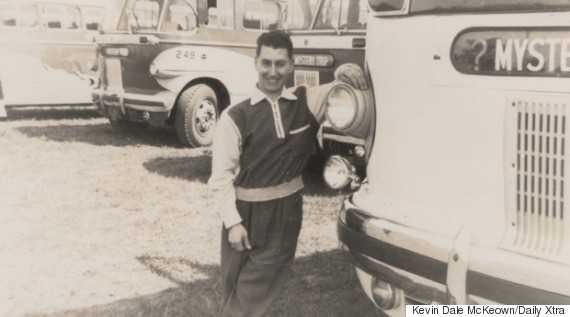
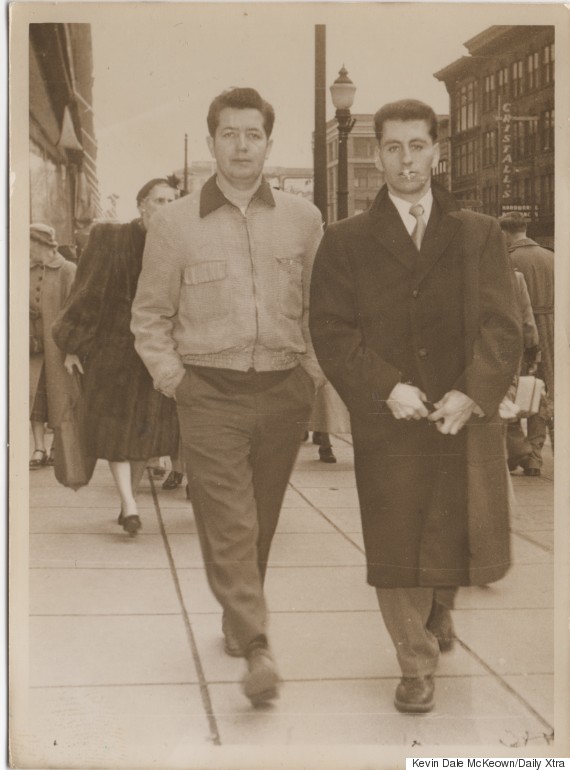
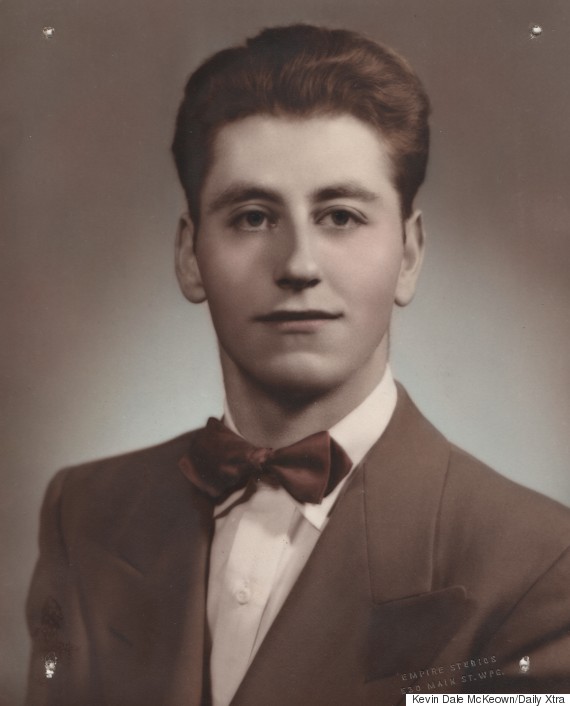
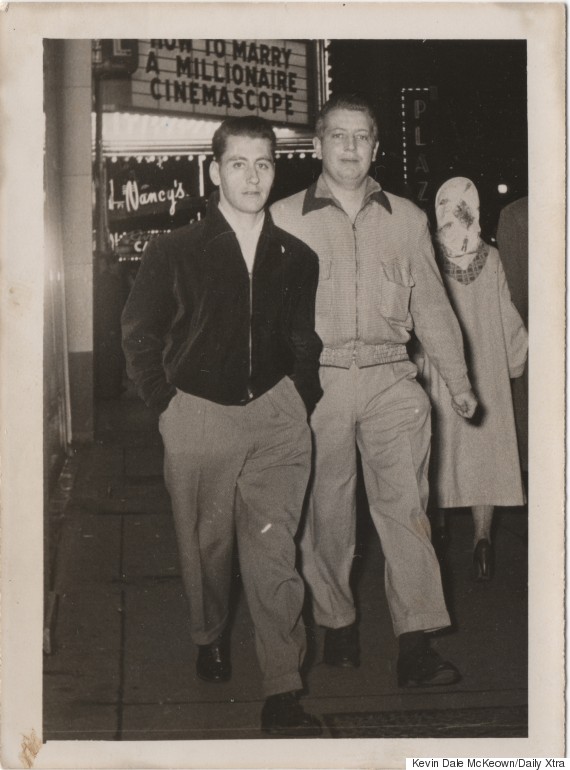
The contents of the box proved to be memorabilia of the life of one Joseph R. Selsey, late of Vancouver’s West End. The reason that Don thought I might want to see these discards, retrieved by a savvy binner from where they’d been dropped next to a dumpster, was that several pieces of this collection indicated that Joe was a gay man living in our neighbourhood in the 1940s, ’50s, and ’60s; decades for which we have few records of our community’s existence.
Don’s first clue might have been the paperback copy of Richard Amory’s Song of the Loon, an interracial and intergenerational gay love story from the early ’60s, before either of those loaded terms had been coined.
Or the flyers from Trojan Book Service offering such titles as America’s Homosexual Underground by Antony James (quote: “The good-looking boy with lily-white skin was husky but the man sensed a kind of effeminacy as he watched the boy leaning against the stair steps with his crotch bulging.”).
Or the handbill from International Nudist Sun, boasting “frontal nude photographs” of hunky young “body builders.”
Certainly the Tom of Finland-style greeting card with three studs, naked except for toques and scarves and boots, carolling in the snow, was a clear giveaway.
Yeah, Joe was a friend of Dorothy’s, and I quickly scooped up the remains of his days for a closer look, and perhaps some clues to the lives of that generation of gay men who lived their youth in the years before Stonewall.
joe selsey vancouver
I have spent many pleasant hours with this material, wondering what kind of life we might imagine for Joe from these crumbs.
Much of it was lived at 1031 Harwood St., according to the handsome leather baggage tag with Joe’s name and address.
A well-dressed, happy, busy life with good friends, if the many photos of Joe and pals are any indication. And a life not entirely in the closet, hints a card signed “Merry Xmas to Joe from Kitty & Bob. PS: And a gay New Year!” Nor a life of rejection by family, according to several notes and photos inscribed “To Uncle Joe” from various wholesome looking children.
Joe’s wallet revealed that he had been born on March 19, 1927 in Saint Norbert, Manitoba, and that during his Vancouver years he was a joiner. He held membership cards to several establishments and organizations, most intriguingly to something called The Happytime Social Club, at 1022 Davie St. If that address sounds familiar, it might be because you gave it to the cab driver the last time you were dropped off atCelebrities.
I wonder what was going on in the Happytime Social Club in 1956? Was this a gay club after its turn as The Embassy Ballroom and before it became the notorious ’60s rock palace, The Retinal Circus?
Joe also had quite a number of passes to a Palm Springs Health Spa at 2405 West Broadway, which in the late ’50s offered, for a $2-surcharge, the “Complete Guest Treatment.”
joe selsey vancouver
This time capsule also held a tiny key on a string (but nothing to open with it), a miniature silver keychain charm toaster, and a ratty rabbit’s foot. Does the collection of little sewing kits gathered from various hotel rooms suggest that our Joe might have been good with a needle?
Would the bolo tie with the bull and matador woggle indicate a butch streak, or does the baby blue cord of the tie suggest otherwise?
The stick of dried-out Wrigley’s chewing gum hints at less than fastidious housekeeping (really Joe!) and the little bundle of Irish Sweepstakes tell us that Joe liked a flutter on the ponies.
Most poignant among the scraps was a simple black and white, business-card sized piece, with a psychedelic pattern enclosing the words “You Are Not Alone.”
I admit to having qualms about outing Joe, even several years after his demise, until I found his Vancouver Sun obituary online. Noting his death at Vancouver General Hospital on April 26, 2007, aged 80, the obit proudly stated that Joe was “survived by his loving companion of 27 years, Ralph Gotell.”
Having weathered the challenges of life as a gay man in the 1940s and ’50s and ’60s, Joe was lovingly partnered and proudly out at the end. I don’t think he’d mind our spinning this little tale around these bits and bobs his life.
So far my digging has turned up no further records of the lives of either Joe or Ralph.
joe selsey vancouver
I share these random musings about Joe Selsey and how he might have lived his life as a gay man in the Vancouver of his day for two reasons: To help us realize that there is at least two generations worth of local, verifiably gay history that is slipping beyond our grasp; and to ask you, gentle reader, to share this story and these photos with any friends you may have of Joe’s generation.
Ask if they knew him, and if they recall the Happytime Social Club, and can tell us just how happy those times were?
Even if they didn’t know Joe or Ralph, perhaps something of these notes will jog a memory and stir up a story that we should add to our rich history. Before it’s too late.
If you have such friends, and they’re willing to chat, coffee’s on me!
You can contact the writer at stillqq@dailyxtra.com.
(This column first appeared on Daily Xtra.)

Filed Under: Anti-Bullying & Homophobia, History Tagged With: 1940s, history, lgbt history, shoebox

Ground breaking findings for those affected by HIV

29/05/2015 By Dave McFarlane Leave a Comment

New study finds earlier treatment is beneficial

Those affected by HIV stand a “considerably lower risk” of developing AIDS or other serious illnesses if antiretroviral drugs are administered earlier, according to a new study conducted by the International Network for Strategic Initiatives in Global HIV Trials – INSIGHT.

The START – Strategic Timing of Antiretroviral Treatment – trial is the first large scale randomised clinical trial to figure out if taking HIV medication earlier than currently recommended is beneficial.
At the moment, the World Health Organisation HIV treatment guidelines recommend that people infected with HIV begin antiretroviral therapy when their CD4+ cell count – white blood cells – drop to 500 cells/mm3 or less.
The new trial is “clear cut proof” according to NIAID – National Institute of Allergy and Infectious Diseases – Director Anthony S. Fauci, that starting treatment regardless of white blood cell count per mm3, is massively beneficial.
During the study, people were randomised and put into one of two groups. One group were given treatment when their CD4 count was above 500, and the other waited until their count was below 350.
According to Ibase, one of the biggest surprises was that even at very high CD4 counts, treatment was shown to reduce the risk of AIDS and other serious illnesses.
Jens Lundgren, M.D., of the University of Copenhagen said: “This is an important milestone in HIV research. These results support treating people irrespective of CD4+ T-cell count.”
Dr Rosemary Gillespie, Chief Executive at Terrence Higgins Trust, said on the study:
“This ground-breaking research adds to the growing body of evidence that shows there should be no delay in starting HIV treatment. Early diagnosis and treatment mean that people living with HIV can expect to live long and healthy lives, and can also reduce the chances of HIV being passed on unwittingly. They are key tools in our efforts to stop the spread of HIV in the UK
The results have been released earlier than expected. They were due to be concluded in 2016 – the trial will still continue until then – after having started in 2011; however the Data and Safety Monitoring Board found on 13 May this year that the results were so clear that they recommended the study be changed and all participants now have the option to change to the early treatment.
Until now, large database tests had not managed to find benefits of starting treatment early and because the START study was randomised, it makes the results very unlikely to be by chance.
The findings are ground breaking and a massive help for those affected by HIV.
More detailed results from the study are expected to be released at the International AIDS Conference in Vancouver in July.
Words Paul Greenough, @paulsgreenough

Filed Under: Anti-Bullying & Homophobia Tagged With: early treatment, HIV, LGBT

FOI Man’s Guide to Making FOI Requests

29/05/2015 By Dave McFarlane Leave a Comment

LogoReproduced from the Foiman site.


How to make responsible and effective FOI requests

The Freedom of Information Act 2000 (FOI) and Environmental Information Regulations 2004 (EIR) introduced a right to information held by public authorities which came fully into force in 2005. However, like all rights, it should be used responsibly by those who exercise it.
Here, FOI Man, a public sector employee with several years’ experience of advising on and answering FOI and EIR requests, outlines the best way to make sure you get the most out of both regimes without creating unnecessary burdens on public authorities.
Except where otherwise specified below, FOI is used to denote both pieces of legislation.
Why should I care?
FOI is a right. Full stop. You absolutely have the right to ask a public authority for any information that you like. Unless your request is invalid, vexatious, covered by one of the exemptions, or the authority doesn’t hold it, they have to make the information available to you. To an extent, you’re even allowed to dictate in which format they should provide it to you. So you have the power.
But should you use that power? And if you do use it, should you consider the impact it might have on the public authority concerned? In these times of cuts and mass redundancies, is it right that scarce resources are spent digging around for information that you might have lost interest in by the time you get a response? And if you’re a campaigner, trying to engage your local politicians, do you really want to risk getting on the wrong side of them through your use of FOI? Is it a Pyrrhic victory if you get your information at the cost of officials’ time that could have been spent on doing the things you’re campaigning for?
And there could be implications further down the road if we don’t use FOI responsibly. In other countries where FOI has been in place for years, enthusiastic early adoption has often led to a backlash from politicians and the courts. In Ireland, a prohibitive fees regime was introduced; in New Zealand, the courts considering appeals began to interpret exemptions restrictively. Over here, we’ve seen an attempt by politicians to remove themselves from FOI (thankfully rewarded with contempt from all sides), and there are regular calls from senior officials in various parts of the public sector for their particular area to be excluded from the legislation.
It’s really easy to fire off an email asking for information. You can even send it to several thousand public authorities in one go. But be aware of the resource and other implications of that simple act. Here are my ten top tips on how to make effective, responsible use of FOI.

FOI Man’s Ten Top Tips on Making Responsible and Effective FOI Requests

1.  Count to ten before clicking ‘Send’

Or better still, sleep on it. Consider if you really do want the information, and if you do, whether you have asked the right questions.

2. Do your research

Is the information already available on the authority’s website, perhaps in their Publication Scheme? Is there information there that could be used to make your question(s) more relevant or incisive? Has the question been asked before? There may be a ‘Disclosure Log’ on their website, or failing that, you could check WhatDoTheyKnow.com.

3. Take care when making ‘round robin’ requests

Remember that the more organisations you send your request to, the more public money will be spent on answering your request. And use your research to weed out authorities that the request isn’t relevant to.

4. Try an informal approach first if possible

You may already have a professional relationship with somebody within the public authority. Alternatively, the authority may publish direct contact details for the department that deals with the issue you’re concerned about. Try contacting them first to sound them out. At the very least they may be able to advise you as to what to ask for, and occasionally, they may even be able to give you more information than you would be entitled to under FOI.

5. Be specific

If you do decide to make a FOI request, cite the Act in your request (you don’t have to but it can help to avoid confusion). Make your request as clear as possible. Don’t be ambiguous. You can’t blame a public authority for misinterpreting your request if you’ve not specified clearly what you want.

6. Don’t be greedy

It’s tempting to throw everything including the kitchen sink into your request. Don’t. Keep your request short and to the point. You can always make other requests later if you want more information.

7. Be polite

Try not to assume that the person reading your request is determined to avoid answering your question(s). It’s likely that members of your own family, perhaps some of your friends, are public servants. Would you feel content to send them your request?

8. Be patient

Your request isn’t the only request that will be received by the authority. The people who have to answer your request will also have a number of other responsibilities to meet. Try to be patient and accept that you may not get an answer as quickly as you would like. In the vast majority of cases you will get a response before the statutory deadline of 20 working days (and note that phrase, ‘working days’ – in effect, organisations have a month to respond, give or take a couple of days).

9. Read the response carefully, and if necessary, use the Appeal process

A lot of effort goes into answering FOI requests, even (often especially) when your request is refused. Make sure you’ve understood the response.
Accept that in some cases, the authority just does not hold the information you’ve asked for. You may think they should, but if they haven’t, you can’t use FOI to force them to create it. Often the authority will explain why they don’t hold it – try to read their explanation with an open mind.
If your request has been refused using one of the exemptions (FOI) or exceptions (EIR), the authority should have provided you with an explanation of which ones apply and how. Where a public interest test has been applied, they should have explained the arguments for and against disclosure.
Try to take a step back and consider whether their arguments make sense. For instance, although you might like to have access to information about employees, you probably understand that some of that information is protected by the Data Protection Act. Whilst you may not be happy with the response, it may be that the Act has been applied correctly.
If the arguments don’t make sense or you disagree with them, and you still want the information, use the authority’s Internal Review process. The authority should have sent you details of this process with their response. All you really need to do though is to write to them, asking for an internal review. It will help your case if you set out the reasons why you think the exemptions/exceptions don’t apply. Where a public interest test has been applied, you can put forward your own arguments for disclosure if you don’t think these have been considered.
Again, be patient whilst waiting for a response, and when you do receive it, read it carefully. If you are still dissatisfied with it, consider contacting the Information Commissioner and asking him to review the response. Bear in mind that this may take some time – though turnaround times at the Commissioner’s Office have improved considerably in the last year.

10. Use the information you receive responsibly

If you want to use the information you’ve been sent, do so responsibly. One example of this is asking for permission if you want to reproduce a document that’s been sent to you (or at the very least acknowledging the source). Even though you’ve been sent the information, the copyright will normally still belong to the authority concerned or whoever gave it to them.
If you’re reporting on the information disclosed, try to provide context. Often the response will include an explanation of why, for instance, so much was spent on the particular activity you’ve asked about, or how spending compares with other similar organisations. Even if it doesn’t, it will often be a straightforward task to find contextual data or background. Whilst it may not make for as spectacular a story, excluding these facts could distort the impression given to your audience. This impression may well be convenient in the short term, but it could damage your reputation with the organisations that provide information to you, and ultimately with your audience if they learn that they are being misled.

Other resources you may find useful

Information Commissioner’s guide to making FOI requests
Information Commissioner’s Charter for Responsible FOI Requests
Information Commissioner’s guidance on appealing decisions
NCVO guide to using FOI for campaigning

Filed Under: Anti-Bullying & Homophobia Tagged With: FOI, Freedom of Information Act, Information

  • « Previous Page
  • 1
  • …
  • 38
  • 39
  • 40
  • 41
  • 42
  • …
  • 72
  • Next Page »

Categories

Copyright ACOMSDave.com © 2026