ACOMSDave

Community Journalist

  • Home
  • Community Journalist
  • Events
  • Media Page and Press Kit
    • Projects and Work
  • Resources & Documents
    • LGBTQ+ Support Groups and Documents
  • NIGRA
  • Archives
  • Contact

The same-sex marriage referendum has transformed Ireland before it’s even begun

19/05/2015 By ACOMSDave Leave a Comment

The Guardian – Sunday 17 May 2015 15.04 BST Last modified on Monday 18 May 2015 08.29 BST
Una Mullally

As a gay Irish woman, the campaign for equal rights has tested me to breaking point. But it has also been a time of wonderful solidarity

Rally in support of same-sex marriage in Dublin

‘For the yes campaign, the final week before the referendum on same-sex marriage is about galvanising support.’ Photograph: Robin English/Demotix/Corbis


Last week, Ursula Halligan, the well-known and much liked political editor of TV3, came out in the Irish Times. Halligan wrote that she had been resigned to going to her grave with the secret of being gay, until the referendum campaign for same-sex marriage in Ireland began.
If carried this Friday, Ireland will be the first country in the world to pass marriage rights for same-sex couples by popular vote. “For me, there was no first kiss; no engagement party; no wedding,” wrote Halligan. “And up until a short time ago no hope of any of these things. Now, at the age of 54, in a (hopefully) different Ireland, I wish I had broken out of my prison cell a long time ago.”
The yes campaign has largely been fought with personal stories. I recently wrote my Irish Times column about how I had stuttered while naming my girlfriend as next of kin in hospital, while being diagnosed with stage three cancer in March. For me, the referendum is the most important thing to happen in my lifetime in Ireland. A yes vote would mean being equal to my brother and my sisters, and finally accepted as such in Irish society. A no vote is almost too devastating to imagine.
The referendum has been divisive in debate, but unifying in people power
Ireland’s most respected columnist, Fintan O’Toole, has also drawn on his personal life to advocate a yes vote. Last week he wrote about the vasectomy he had 25 years ago, and how, given his marriage is no longer “open to life”, his union falls down on what the no campaign holds up as an ideal.
O’Toole cut to the heart of the no campaign’s problem. With posters saying “children deserve a mother and a father”, they have not just offended gay people, but also single parents, unmarried parents, people who were adopted, and so on. “In order to find an apparent principle on which it can reasonably deny equality to gay men and lesbians,” O’Toole wrote of the no campaign, “it has to tell huge numbers of other people that their relationships are just not up to scratch.”
Advertisement
For the yes campaign, this final week is about galvanising support. And the no campaign is also throwing everything they have at it. At masses around Ireland over the weekend, letters were read out from bishops arguing against a yes vote. The no campaign has fought personal stories with abstract arguments, and become increasingly hardened in its messaging. Its latest poster reads: “Two men can’t replace a mother’s love.”
The referendum has been divisive in debate, but unifying in people power. On Saturday, the yes camp saw crowds of people canvassing across the country. Fundraising concerts and club nights have pulled in thousands of euros. The yes campaign is buoyed by support from children’s charities and an almost endless stream of unexpected voices, including Irish football captain Robbie Keane and the epitome of genteel rural Ireland, singer Daniel O’Donnell.
But there is anxiety as well as optimism. “Look at what happened in England,” came a warning to canvassers, called down a driveway by a woman in the suburbs of Dublin last week. Where Britain had shy Tories, campaigners here wonder about shy no voters.
The latest newspaper polls show between 53% and 67% in support of a yes vote. The Irish Times poll showed the yes side at 58%, no at 25%, and undecideds at 17%. Excluding those undecideds, the yes side is at 70% and no at 30%. As comfortable as it might look, that call down the driveway echoes. Polling for referendums is notoriously unreliable here. Six months before Ireland held a referendum allowing for divorce in 1995, support for a yes vote was at nearly 72%. The referendum passed by 0.6%.
Everything rests on those who say they support the issue turning out to vote. For me and many other gay people, the campaign has tested us almost to breaking point. But it has also been a time of wonderful solidarity. Whatever the outcome, there has been a real and irrevocable change in Irish society.

Filed Under: Anti-Bullying & Homophobia Tagged With: Irish politics, marriage equality, same sex marriage, voting

Minister’s vow on gay blood ban

19/05/2015 By ACOMSDave Leave a Comment

Belfast Telegraph
 

Simon Hamilton (right) and Edwin Poots (left) have been at the centre of controversy over the issue of blood donations

18 MAY 2015

Northern Ireland’s new health minister has said he will be guided by science and patient safety when deciding whether to lift the ban on blood donations from gay men.

The prohibition was lifted in England, Scotland and Wales in 2011 and replaced with rules allowing them to donate a year after their last sexual encounter with another man.
Former DUP health minister Edwin Poots kept the lifetime deferral in operation in Northern Ireland, citing “blood safety” issues.
Current minister Simon Hamilton said: “I will be guided by the science and medical evidence.
“There is an emerging body of evidence…I will monitor that, I will examine it, I will look at it carefully.”
He added: “This is a matter of patient safety. We must have an assurance.”
Mr Poots lost a judicial challenge to his ban and inferred he would not get a fair hearing from a court should he appeal against the decision.
Responsibility rests with the UK Health Secretary and an appeal has been taken to try establish authority in Northern Ireland, Mr Hamilton said.
In 2013 a judge said Stormont’s health minister did not have the power to keep an “irrational” lifetime ban on gay men giving blood in Northern Ireland.
The High Court also found that Mr Poots had breached the ministerial code by failing to take the issue before the Stormont Executive.
The ex-minister maintained the ban in Northern Ireland on the basis of ensuring public safety. But a gay man granted anonymity due to his perceived vulnerability launched a judicial review challenge to Mr Poots’ position.
The judge heard claims that the minister had displayed apparent bias that went beyond religious beliefs and into the realms of prejudice.
Sinn Fein Stormont assembly member Caitriona Ruane told Mr Hamilton it was an equality issue.
“I was glad to hear him say, however, that he will be guided by science and medical evidence, which is to be welcomed given the fact that his two predecessors based their stance on faith.
“The minister now needs to stand up and signal his intent to overturn this discriminatory ban.”

Filed Under: Anti-Bullying & Homophobia Tagged With: gay blood ban, health minister, politics, Simon Hamilton, Stormont

Morgan Freeman’s Take on Homophobia

19/05/2015 By ACOMSDave Leave a Comment

MorganFreemanonHomophobia.png.jpg

Filed Under: Anti-Bullying & Homophobia Tagged With: homophobia, Morgan Freeman

YouTube Star Joey Graceffa Comes Out As Gay In Magical Music Video

19/05/2015 By ACOMSDave Leave a Comment

Joey Graceffa has come out as gay in his new music video, and it’s nothing short of a fairy tale.
On May 16, the YouTube star released the video for “Don’t Wait,” which flashes between reality and a magical world. The video features goblins, a witch and, of course, a prince who turns out to be Graceffa’s love interest. At the end, the two share a happily-ever-after kiss in the woods.
After the video went live, Graceffa’s fans and other YouTubers took to Twitter to share their love and support.

Filed Under: Anti-Bullying & Homophobia Tagged With: coming out, Joey Graceffa, YouTube

Watch: United Nations Free and Equal campaign launches new video

18/05/2015 By ACOMSDave Leave a Comment

  • In: Carousel, GLBT News, Media Of Note
  • On: May 17, 2015
By John Mack Freeman
Free-and-EqualThis week, the United Nations Free and Equal campaign released a new video encouraging people to see past labels. The video played all day in Times Square on May 14. Here is the video and description:

This video from the United Nations Free & Equal campaign celebrates the contributions that millions of lesbian, gay, bisexual, transgender and intersex people make to families and local communities around the world. The cast features “real people” (not actors), filmed in their workplaces and homes — among them, a firefighter, a police officer, a teacher, an electrician, a doctor and a volunteer, as well as prominent straight ally and UN Secretary-General Ban Ki-moon
https://youtu.be/JosMsjRNznM

Filed Under: Anti-Bullying & Homophobia Tagged With: free and equal, LGBT, Pride, united nations

ILGA – New report shows homosexual criminalizing countries dropping from 92 to 76 in last decade

18/05/2015 By ACOMSDave Leave a Comment

  • In: Carousel, GLBT News
  • |
  • On: May 17, 2015
By John Mack Freeman
ilgaA new study from ILGA shows that the number of countires that criminalize homosexuality has dropped from 92 to 76 from 2005 to 2015. Some of the top sheet results include:

  • there are 117 countries (UN Members) where same sex sexual acts between adults in private are legal. Mozambique and Palau have decriminalised same-sex acts in 2014 and Lesotho in 2010.
  • there are 76 countries where same-sex sexual acts are still illegal. Chad introduced a new Penal Code in 2014, punishing anyone who has sex with persons of the same sex.
  • In relation to death penalty, eight States officially legislate for it, but only five (Mauritania, Sudan, Iran, Saudi Arabia and Yemen) actually implement it, but a sixth State, Iraq, although not in the civil code, clearly has judges and militias throughout the country that issue the death sentence for same-sex sexual behaviours. Further, some provinces in Nigeria and Somalia officially implement the death penalty. We are also aware that in the Daesh(ISIS/ISIL)-held areas the death penalty is implemented (although a non-State actor, it is listed in the report). Brunei Darussalam is due to activate the death penalty for same sex sexual acts in 2016, but it seems likely that like Pakistan, Afghanistan and Qatar although it is on the statute, it will not be implemented.
  • Regarding the recent legal practice, emerging from Russian provinces first in 2006, to criminalise the ‘propaganda of homosexuality’, it is with some relief that we note that in fact to date only four countries actually appear to have adopted this on their statute books: Algeria, Lithuania, Nigeria and Russia.
  • Discrimination in employment based on sexual orientation is now prohibited in 63 countries, including Chile (2012), Samoa (2013), Namibia (2004) and city of Buenos Aires in Argentina (2015).
  • A total of 7 countries have a constitutional prohibition to discrimination based on sexual orientation, including Mexico (2011) and Virgin Islands (2007) – associate of the United Kingdom
  • Hate crimes based on sexual orientation are considered an aggravating circumstance in 34 countries. Laws in this respect have been identified in several European countries, including Andorra (2005), parts of Bosnia and Herzegovina (2013), Iceland (2004), Kosovo (2013), Lithuania (2009), Montenegro (2010), Norway (1994), Serbia (2012), Slovakia (2013), Slovenia (2008).
  • Incitement of hatred based on sexual orientation is prohibited in 31 countries. Austria has introduced such law in 2011, Hungary in 2013, Montenegro in 2010 and Switzerland in 2015.
  • Marriage is open for same-sex couples in 18 countries, including in Luxembourg and Slovenia, both in 2015. The state of Coahuila in Mexico and 19 further states in the United States of America have passed same-sex marriage laws in 2014, bringing the total number of states legislating for marriage equality to 37 (plus the District of Columbia). Finland approved a marriage equality law in 2015 that will come into force in 2017, while Estonia approved a similar law in 2014, to come into force in 2016.
  • Joint adoption by same-sex couples is legal in 19 countries. It was legalised in Luxemburg and Malta in 2014, and in Austria , Ireland and Slovenia in 2015.

Filed Under: Anti-Bullying & Homophobia Tagged With: death penalty, homophobia, ILGA, politics, propagand, Russia, study

Gay-Themed Picture Books for Children

18/05/2015 By ACOMSDave Leave a Comment

Editorial:  I belong to the American Librarian Association and regularly get updates on books being published on a wide range of areas.  However this resource for gay-themed picture books for children (which obviously means that parents or adults will be buying them) is much needed and I have no hesitation in giving details here for our readers, including LGBT families:
 
Picture books for children about the experience of knowing or having a gay parent, family member, or friend, as well as books for gender nonconforming kids.
 

    Click the book pile to get to the lists


Filed Under: Anti-Bullying & Homophobia Tagged With: book lists, gay-themed, gay-themed books, picture-books

Queer Quest 10 – Superqueeros?

18/05/2015 By ACOMSDave Leave a Comment

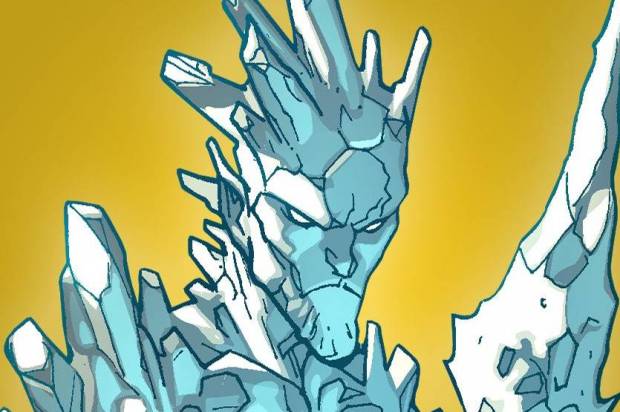
Iceman
reprinted from GLBT News – By Ashley R. Lierman
First of all, I’d like to begin by apologizing to everyone for the title of this column (Queer Quest 10 – Superqueeros?). Sorry. I have no excuse for myself.
With that said, this blog has reported a number of times over the last two years on developments involving queer characters in superhero comics. And with Avengers: Age of Ultron out last week, I think it’s a good time for a review. Last year, in my first column, I noted the 2013 introduction of the first openly transgender character in mainstream superhero comics: Alysia Yeoh, Barbara Gordon’s roommate at the time in Gail Simone’s run of Batgirl. This past March, this blog reported on a same-sex kiss in issue 39 of the current Catwoman run, written by Genevieve Valentine, that confirmed Selina Kyle as bisexual. And just recently, we reported that Brian Michael Bendis’s All New X-Men #40 outed Robert Drake, or Iceman, as gay. Clearly it’s been a busy few years for LGBT characters in comics, even in the most mainstream (and therefore often most conservative) domain of superhero comics. Surely this should be cause for celebration, right?
Well… yes and no. Of course there’s no question that more representation is a good thing, and it’s always a bit of good news to see part of the world of superhero comics change for the better. The only trouble is, by the very nature of superhero comics, it’s sometimes very difficult – if not impossible – to make those changes stick.
We’ve all heard people call comics “graphic novels” when they’re trying to make it sound like comics are actually worth serious consideration and study. Not only does that reveal a lot about the speaker’s personal prejudices when it comes to media, it’s technically incorrect (a graphic novel is its own thing, quite distinct from a serial comic book; I assume I’m preaching to the choir in this column, but if you’re confused, you can read more about the distinction here) – and, I’d argue, very misleading. Although comics constitute a print medium, comics in general and superhero comics in particular are most closely analogous not to novels, but to television series. Even leaving the visual piece aside, like a TV show, comics often run over a span of years or decades (indeed, depending on the title, often much longer than many TV shows), and tend over the course of their lives to be written by many different people, either as a team or consecutively. In fact, superhero comics tend to get even less consistency in this area than TV shows. While television writing is generally guided by a head writer and at least tends to retain some of the original creative talent from beginning to end, superhero comics writers and teams tend to swap out entirely on a fairly regular basis, and while they do also generally have management from a head writer at the label level, even within individual titles authors can branch off in pretty dramatically different directions.
And that can be a real issue (so to speak), because there are other characteristics of superhero comics that just exacerbate this creative splintering. Between spin-offs, reboots, competing canons, alternate timelines, and more, there’s kind of no such thing as a single, sole “canon” for a superhero comic in their current form. What’s done in one issue of one title can just as easily be undone, or redone in different contradictory ways, in half a dozen others. Indeed, at least within the Big Two of Marvel and DC, this seems to be used as a vital failsafe that can keep equilibrium even through the illusion of major, shocking, hype-worthy change: perhaps the most famous (and formative) case being the 1992 “Death of Superman” storyline. (For a hilarious and also insightful recap of that narrative arc and how it “broke death” in superhero comics, see Max Landis’s Death and Return of Superman, although be warned of plenty of not-safe-for-work language.) A revelation about a character that may seem huge – like, for example, their sexual or gender identity – can end up absent from the overarching story like it never happened, a mere hundred or twenty or two issues later.
With some of these developments I’ve listed, in fact, we can already see this happening. This past December, less than two years from the exciting news of a groundbreaking trans character, Batgirl’s new writing team faced outrage over their offensive, transphobic depiction of a villain in the comic. Almost as troubling, though, it was pointed out, was the fact that in their run, Alysia Yeoh herself seemed to have been reduced to little more than a footnote. In many ways, the title’s total progress in the direction of representation looks like one step forward, two steps back. Similarly, even outside of the accomplishments listed here, back in 2013 excitement about Kate Kane/Batwoman’s proposal to her girlfriend Maggie Sawyer was quickly squashed when DC refused to allow the same-sex wedding to occur on-panel. This decision was partly responsible for the creative team’s eventual departure, and in December 2014 the title – much valued for featuring what was at the time DC’s most prominent gay superhero – was cancelled altogether.
“Oh, come on,” some of you may be starting to think by this point, and not unfairly so, “at least it still happened! Isn’t any representation ever good enough for her?” And I’ll admit, I can be pretty demanding, especially in a media culture where it’s rare enough to see any queer characters at all. I’m not trying to burst into Iceman’s (or anyone else’s) coming out party yelling “JUST WAIT UNTIL THE OTHER SHOE DROPS!” (For one thing, at the very least, the other shoe is unlikely to be on Bendis’s foot, and bless him for that.) Of course it’s a good thing, and an important thing, to see queer characters of all kinds appearing increasingly in these mainstream, popular titles, no matter what may happen later down the road. Future writers may be able to rewrite the current story of what’s going on with a superhero, but they can’t erase the old issues, or turn back the tide of mounting acceptance and even welcome for diversity in the industry these new developments represent. As long as we still have Simones, Valentines, Bendises, and others like them out there in the industry, and more on the way, there’ll still be people pushing to make positive changes, and to support those with marginalized voices who are trying to break their way in and tell stories of their own.
So make no mistake, iffy track record aside, it’s still going to put a smile on my face every time I see a story about another queer character or same-sex kiss in mainstream superhero comics, and I’ll keep sharing them with you on this blog when they come along, for as long as I’m able. They do mean something, even if only as a barometer reading the current weather in popular geek culture. But I hope you’ll understand if, at the same time, my cheerleading may be a little muted when it comes to any one new development or another, at least as far as this particular genre of comics goes. I’m still reserving my enthusiasm for when the Big Two can show by their actions that they really are ready to be agents of change… and to actually make those changes last.

Filed Under: Anti-Bullying & Homophobia Tagged With: comics, queer characters, USA comics

10 examples of gender bias you may encounter in the workplace

18/05/2015 By ACOMSDave Leave a Comment

Reprinted from Tech Republic – By Jack Wallen in 10 Things, May 7, 2015, 12:00 PM PST // jlwallen

Does your company suffer from gender bias? If your answer is “no,” are you certain? Here are 10 kinds of gender bias that can pop up in the workplace–some subtle, some not so subtle.
hero
Image: iStockphoto.com/Gajus

Gender equality is a hot issue. And in a profession such as IT, where an overwhelming number of workers are male, it’s easy to overlook gender biases. When these biases occur, the workplace can become tense and lawsuits can follow. But lawsuits aside, one must remember this: Gender bias is a form of prejudice and discrimination and it has no place in business. With that said, when you’re a part of a mostly male-dominated profession, how do you spot those biases so they can be addressed? Although it shouldn’t be too much of a challenge, it’s surprising how often these things go unnoticed.
Let’s take a look at 10 kinds of gender bias you might encounter in the workplace and what you can do to prevent them. These occurrences range from the simple to the complex, and with the complex, you may not find the solution here. But getting the dialog started is often half the battle.

1: Unequal pay

This one is obvious, but it’s a challenge to solve. Why? Because the issue of pay equity between genders goes all the way up the flagpole to United Kingdom government.  In fact, this is often a hot button issue during political debates. The good news is you don’t have to be a part of the issue. If you hire engineers and/or administrators, make sure you base their pay not on gender, but on performance and experience. The moment you allow gender to play a part in pay, you become part of the problem.

2: Interview questions

This is a subtle one. Ask yourself one simple question: Do you interview men and women differently? Do you ask women questions like “Do you have children?” or “Do you plan on having children?” Both of those inquiries have zero business in an interview. Questions about family and family life should be out of bounds–and in some cases, they’re illegal. Whether a woman has or plans to have children does not affect her skills any more than it does a man’s. Once hired, if the issue of childbirth comes up, deal with it in the moment. Do not predicate the hiring or firing of potential employees on the idea that they may require maternity leave.

3: Diminished responsibilities

When you’re unloading boxes of servers from a truck, if a woman wants to help, let her. Don’t offhandedly say, “We got this sweetums.” You might be surprised to discover that some of the women in your department can deadlift more than the men. This is the kind of subtle gender bias that shows employees that inequality is accepted. The same holds true with standard positional responsibilities. If you have two equally qualified administrators, one male and one female, give them equal responsibilities. Period.

4: Restrooms

This one, I have found, is usually far less than subtle. I’ve worked in a couple of IT-related gigs where it is clear that the majority of employees are men. To find this out, all you have to do is step foot in the restroom. I actually worked in a place where the bathrooms were so disgusting, I’d walk down the block to use another company’s facilities. First and foremost, do not let your restroom reach this state. Second, if you do… do not expect the women to clean them! The female admins and engineers are not your maids or your mothers.

5: Conversations

Consider how you converse with your employees. Do you speak differently to the men and the women? If you’re unsure, the next time you are addressing the entire staff, take note–or record yourself. Then, the next time you speak with a female staff member compare how you speak to her versus how you addressed the entire team. What is different (if anything)? If you find that your style differs between conversations with men and with women, make adjustments. This doesn’t necessarily mean you should start speaking to everyone as if you are speaking to a man. But if you find your style of conversation is really suited only for male company, that is what you need to address. While in the workplace, adopt a gender-neutral style of conversation.

6: Glass ceilings

Can your male and female employees climb equally high on the ladder of opportunity? If not, why? What makes a male or female better qualified to climb higher in your company? If there is no justifiable reason for this (and there probably isn’t), remove that glass ceiling. Each employee, regardless of gender, should have the same opportunity. All things being equal, men and women should be able to reach as high as possible, given their skills and performance.

7: Positional bias

What makes a woman better suited to be a secretary or receptionist? Why shouldn’t a man fill that position? Why shouldn’t a woman serve as your first line of security? This type of gender bias is rampant in all types of businesses. Don’t fall into the stereotype nightmare; otherwise, you might miss out on hiring the best-suited applicant for the job. If you get a male and female applying for the same position–be it secretary or security–hire based on who you believe can perform best based on skills and past experience, not gender. Be open to men working in roles traditionally filled by women and women placed in positions typically held by men.

8: Terminations

What are your reasons for terminating an employee? Have you ever fired a female employee for asking to be treated equally? Have you ever NOT fired a male employee who was involved in sexual harassment? The termination of employees needs to be handled without bias. If you fire XX for A, you’d better be sure that XY would be fired for A as well. Rules and policies should apply for both genders–across the board.

9: Outdated views

Let’s face it. Society has changed a great deal over the last decade. If you’re still holding onto views that were popular in the nineties (or earlier), you are way behind. Consider this: I was once associated with a company that required women to wear dresses and pantyhose. The men? There was no dress code–it was assumed they would all wear khakis and button down shirts. The notion that women should adhere to some outdated fashion standard–and similar kinds of obsolete thinking–should be eradicated from the workplace. Women can be professional without dresses and hose just as men can be professional without a tie.

10: Sexual harassment

I would be remiss if I did not mention sexual harassment with regard to gender bias. It amazes me that this type of behavior still occurs in the workplace. There is a reason why companies have had to implement policies regarding sexual harassment. And because IT is such a male-dominant profession, harassment is often either overlooked or not even perceived. This is the danger zone of gender bias. Not only can it cause serious issues with your staff, it can come back to haunt your company legally and in the court of public opinion. There are no circumstances where sexual harassment should be permitted. None.

Have you seen gender bias in your job?

Gender bias can sometimes be hard to spot and in some instances, even harder to purge. But if you look carefully, especially with a nod to what I’ve listed here, you might start seeing these biases popping up. Do everything you can to prevent them and your business will be a much happier and healthier environment.
Have you ever witnessed gender bias at work? Share your experiences with us at NIGRA or contact us if you need advice.

Filed Under: Anti-Bullying & Homophobia Tagged With: gender bias, workplace bias

Newry Rainbow Community Dropin

15/05/2015 By ACOMSDave Leave a Comment

Newry Rainbow Community drop-in centre’s new location, opening hours and contact details.
 

NRC drop-in Centre opening hours

  Click Here for PDF of opening hours


Filed Under: Anti-Bullying & Homophobia Tagged With: community, Newry, Opening HOurs, Rainbow

  • « Previous Page
  • 1
  • …
  • 42
  • 43
  • 44
  • 45
  • 46
  • …
  • 72
  • Next Page »

Categories

Copyright ACOMSDave.com © 2026