
1 June 2015
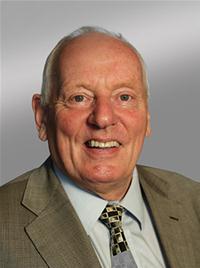 Cllr Jeffrey Dudgeon (UUP Balmoral)
I share the sheer joy of friends and comrades in the south at the referendum result.
Ireland, as someone has said, CAME OUT, and became a Republic of Freedom, perhaps for the first time.
Self-confident, modern, generous and tolerant.
Nothing illustrates that more than those hundreds who flew back into Dublin to vote.
It was not ever thus.
When they decriminalised in 1993, it was eleven years since I and a small band achieved the same in Northern Ireland. We had then a handful of non-gay supporters – Mary Holland the journalist, the poet John Hewitt and his wife, and another journalist still with us, Fionnuala O’Connor.
 It took the south another decade, David Norris following in my footsteps at the European Court of Human Rights.
Contrary social forces there were strong. Not so now.
Although four out of ten did find reasons to vote NO, the campaign was civilised and largely polite.
So why the change? What happened?
Gay people came out, and the world realised we were not what they were led to expect. That then became a geometric process. Everybody had a gay person in their family or one amongst their friends.
When we decriminalised in 1982, there was a small party in Belfast of a dozen people and later a celebratory disco, not a huge street party with global support.
There was still to be a series of uphill battles in Northern Ireland, to bring about an equal age of consent, a fair and non-discriminatory sexual offences law, and civil partnerships. All were achieved by and through Westminster, with the signal help of Kate Hoey MP in the age case.
Being realistic, most countries in Europe still do not have equal marriage laws.
And the fact remains that in communist and post-communist countries, in the Islamic world and in much of Africa there is prosecution, persecution and worse. A ray of hope – Mozambique has just decriminalised. London a recent opinion poll told us, worryingly, is twice as homophobic as anywhere else in Britain.
Now in Northern Ireland we are being asked to follow suit immediately in the matter of marriage.
I don’t want to be churlish, but decriminalisation in the 1980s was achieved without support from any political party in Northern Ireland.
When the going was tough, the tough were found wanting.
Even today the Alliance Party has an equal marriage policy but it does not discipline MLAs who defy the whip.
Sinn Fein who were not supportive of law reform when it was unpopular, still can’t celebrate or even recognise their most famous gay hero and martyr, Roger Casement.
I am living history and can only take the long view.
I also campaigned for civil partnership when that was the limit of what progressives in the Labour Party and LibDems were offering. I did not say then marriage was next.
We don’t want or need a referendum here. That is a silly notion. The Bill would still have to get through the Assembly where it would be vetoed.
I don’t think the proposers of this motion are showboating or trying to test those who have concerns about a change in the marriage law, but I am nervous of opponents getting demonised for opposing something that was common currency a few short years ago.
I have respect for those I know who cannot support this motion, either because of theological beliefs, or simply traditional views, but not for those in the DUP who would reverse the reforms achieved, even decriminalisation itself. I have said we need to be careful that the balance between the European Convention articles on freedom of conscience and the right to a private life do not get out of kilter. Equality law should not trump human rights.
In my own party there are differing views. We tend to hold to the status quo, and that I understand, but some have already voted for change and it cannot be said they have paid a political penalty – unlike Montgomery Hyde MP, the most prominent exponent in the House of Commons in the 1950s for enacting the Wolfenden report reforms. He lost the Ulster Unionist nomination for his North Belfast seat in 1959 for his courage.
To conclude, I got selected in South Belfast by the UUP for this august body, and elected in 2014, as an openly gay man, and have been treated with respect and courtesy by all the other members. This has warmed my heart like little else.
As to the matter in hand, I am not of the view that the legislative change sought will be achieved through Stormont, certainly for a number of years. This motion is not going to change many minds there. I rather expect my learned friends in the High Court and in Strasbourg will again be the vehicle of change.
jeffreydudgeon@hotmail.com
Motion re: Civil Marriage Provisions for Same Sex Couples – Cllr. Emmet McDonough-Brown (Alliance) to move (Seconded by Cllr. Jim McVeigh, Sinn Fein leader):“This Council believes that all couples in Belfast and across Northern Ireland, regardless of sexual orientation, should have the right to a civil marriage; that the rights of religious institutions to define, observe and practise marriage within their beliefs should be given legal protection; that faith groups which wish to marry same sex couples should not be prevented by the state from doing so; that all married couples of the same sex should have the same legal entitlement to the protections, responsibilities, rights, obligations and benefits afforded by the legal institution of marriage; and calls on the Minister of Finance and Personnel to introduce legislation to extend civil marriage provisions to same sex couples.” Passed by 38 to 13 with two abstentions.
A Look At The Complicated Politics Of The Word 'Lesbian'

Posted: 06/08/2015 | Edited: 06/08/2015 05:09 PM EDT
After Ellen Editor-In-Chief Trish Bendix opened up about the complicated politics of the word “lesbian” in a HuffPost Live interview this week.
Sounding off on reports that “lesbian” was being phased out in favor of more inclusive terms, Bendix noted, “It’s scary because I feel like I’m erasing my identity, and a lot of other women’s identities.”
She went on to note, “We need to figure out a better way to also keep our identity in check and in place while also making sure to be touching all the bases that we want to be. …We still need to be able to have some term that gets us to say, ‘This is who we are and this is what we want and this is what we deserve.”
Bendix’s site emphasizes pop culture in the lesbian and bisexual community, with a “fun, feminist perspective” on everything from Hollywood to sports.
The topic has been a hot one as of late, after San Francisco’s Lexington Club, which is dedicated to a lesbian clientele, closed at the start of 2015 after 18 years of operation.

'The Fosters' Creator Peter Paige Addresses That History-Making Same-Sex Kiss

Posted:
Lauren Duca lauren.duca@huffingtonpost.com
“The Fosters” made history in March when the TV drama aired the youngest ever same-sex kiss on TV. At a panel for the show at ATX Television Festival in Austin, Texas, on Sunday, co-creator Peter Paige again addressed the controversy surrounding the episode and discussed how the relationship between Jude and Connor will evolve in Season 3.
“That’s never been done on television before, seeing two 13-year-olds navigate young love and they both happen to be boys,” Paige said. “Gay adults start as gay kids. … Now they’ve got to figure out how to be with each other and be with family, friends and the communities at school. So, there’s a lot for them to navigate this season.”
When the kiss was first met with backlash, Paige and co-creator Bradley Bredeweg stood staunchly by their choice. “It was time to see this, time to put this up for the world,” Bredeweg told the The Wrap.
In a sit-down interview with The Huffington Post Saturday, Paige said he was met with no hesitation from the ABC Family network prior to the episode and saw all resulting “controversy” as a small minority of particularly loud people.
“99.5 percent of people [said], ‘Oh my god, it’s so beautiful, I can’t believe it happened! I’m team Jonnor!,'” he said over drinks at the Roaring Fork restaurant. “It was one half of 1 percent of people who were disgusted.”
Paige elaborated at the panel. “The first time we received controversy was with the Jonnor kiss,” he said. “That was the first time we received backlash, and I submit again: How old were you when you had your first kiss?”
One audience member asked when Paige knew Jude would be gay, how the actors dealt with the scene and whether their real-life parents had been okay with it.
“That goes back to before he was cast,” Paige said. “Everyone who came in to test for it, it was made very, very clear where we wanted to take the story. Same with Connor. We knew all along that some version of these stories [was] going to be told and we needed people who were on board with helping us tell them.”
Lauren Duca is currently covering the ATX Television Festival for The Huffington Post. Follow her on Twitter @laurenduca and expect much more to come!
Andrew Christian Models Share Their Coming Out Stories
Posted: Updated:
We can hardly believe it ourselves, but Pride month is already here.
In recognition of Queer Pride 2015, underwear designer Andrew Christian sat down with a group of his models to reflect on their own personal coming out stories and journeys to living as their authentic selves. From growing up in religious households to losing and gaining relationships, these stories are sure to resonate with any queer person who has gone through the coming out process.
“For this year, we decided to share our own stories of how we came to have so much Pride,” the video’s description notes. “The road may not always be easy but it is always worth while to come out, be free, and find the love in the world. Hopefully by sharing our stories we are able to further inspire others and continue to help, as the song says, change the world.”
Plus… it’s male models in their underwear… kind of hard to get angry about that, right?
eyeWitness app launches to help document and verify atrocity crimes
The new project from the International Bar Association is aimed at prosecutions ‘first and foremost’ but will work with the media to verify and raise awareness of crimes
 Posted: 8 June 2015 By: Alastair Reid

Credit: By James Cridland on Flickr. Some rights reserved.
The International Bar Association has today released a mobile app for capturing and submitting eyewitness media, specifically designed to bring the perpetrators of ‘atrocity crimes’ to justice.
The eyeWitness app lets users capture images, video or audio before sending a secure version of the file to a central hub to be verified.
“The issue we’re trying to address is primarily a verification issue,” Wendy Betts, director of the eyeWitness project at the International Bar Association (IBA), told Journalism.co.uk.
“So much ends up on social media without the metadata to authenticate footage, so very little can be done from there.”
First and foremost our mandate is for accountabilityWendy Betts, eyeWitness project
Time, date, location, pixel count and device movement data are all among the metadata automatically embedded in media files captured through the app and saved in a “virtual evidence locker” of cloud storage.
This is all stripped out of the image kept on the user’s phone after it is uploaded, however, as one of many security features to keep users safe in dangerous situations.
“Part of the reason we’ve done that is so they don’t have a metadata rich image on their device and are not going to upload an image that could give away their location or other data,” Betts said.
Other features include a panic-delete button to remove the app entirely; a selection of icons to disguise the app on the homescreen; and a secret upload gallery only accessible using a ‘swipecode’ on the camera screen, which are all aimed to ensure users’ security.
Users can choose to upload footage to social media should they wish, but a secure and verifiable copy is kept only on the eyeWitness project servers.
This feature is potentially at odds with newsrooms, many of which want to report on the events eyeWitness is designed to capture and have been building verification and sourcing of social media content into their workflows in recent years.
“First and foremost our mandate is for accountability,” said Betts, “and with these types of atrocity crimes, if we got enough footage to identify that something is going on, [giving footage to] legal authorities may be more appropriate.”
We would like to disseminate this to people on the ground who are often the first and only witnessesWendy Betts, eyeWitness project
Perpetrators of war crimes, genocide, crimes against humanity and torture – the four so-called ‘atrocity crimes’ under public international law – have traditionally been difficult to prosecute as cases rely on witness testimony and other evidence that can be easily challengeable in court.
By including many guidelines on how users can stay safe and capture the most useful footage, the IBA hopes to change this trend, but will put the interests of the courts above those of news outlets.
The eyeWitness team will work with news organisations if they are approached, however, to confirm the veracity of images or events found on social media, for example, but the media strategy will largely be taken on a case-by-case basis.
“We certainly don’t want to be sitting on information that nobody knows about,” she said. “Part of accountability is raising awareness and understanding of what is going on.”
eyeWitness joins a growing market for verifying footage from eyewitnesses, as the huge amount of content uploaded to social networks purporting to show newsworthy events becomes more and more difficult to manage.
Social newswires like Storyful have become multi-million pound businessesbased on skills in finding and verifying news on social media, while last week Verifeye Media launched its own app to help freelance photographers and citizen journalists license footage to news organisations.
“There are so many use cases for this type of technology that it’s not possible to have a one-size-fits-all app,” Betts said. “I anticipate there are multiple different target audiences and use cases and that we can complement each other in that way.”
For now, the app is freely available for Android and has been distributed to journalists, activists and organisations working in areas of the world where human rights abuses are a major concern.
“We would like to disseminate this to people on the ground who are often the first and only witnesses,” Betts said. “So give them a tool to increase the impact of what they’re already doing.”
The World's Gayest Doll Gets His Own Website After Twenty Years Of Proudly Showing Off His Massive Shlong

By The Gay UK, Jun 7 2015 11:03AM
To celebrate and document their conceptual artwork Billy, also known as Billy – The World’s First Out and Proud Gay Doll, artists John McKitterick and Juan Andres have launched a new website

The newly launched official website www.thebillyconcept.com illustrates completely the Billy phenomenon with images and text, documenting the history of the Billy concept from the years 1993 to 2003.
It is over twenty years since Billy was first exhibited as a sculpture at a London Arts Benefit for Aids in November 1994, in what was a highly politicised period in gay history. A conceptual artwork created by artists John McKitterick and Juan Andres, the Billy concept championed diversity, gay visibility, safe sex and Aids awareness. Originally 1200 limited editions of the Billy sculpture were created, garnering media attention on all five continents, in 32 countries and in ten languages.
Following the great success of the sculpture, John McKitterick and Juan Andres kept firmly to the original concept and three years later Billy was purposely introduced to the mass market as Billy – The World’s First Out and Proud Gay Doll. Over the next decade Billy became the world’s first and most famous, gay product, a beautifully executed, technically advanced, mass produced doll, punching high above his height of 13 inches / 32cms.
After his US debut in 1997 Billy instantly became a iconic figure and saw himself in over 800 stores worldwide and the Billy concept developed to include his own website ‘Billyworld’, his boyfriend Carlos, his best friend Tyson, the soda ‘Billy Pop’, the music CD ‘Out and About With Billy’, himself dressed by Alexander McQueen and sixty five other designers and artists for the major exhibition and auction ‘Billy Opens His Closet’ at The New Museum of Contemporary Art in Soho, New York, the movies ‘Billy 2000 – Billy Goes Hollywood’ and ‘Jeffrey’s Hollywood Screen Trick’, the photographic book and exhibition ‘Big Fun With Billy’, himself in the Andy Warhol Museum and the Keith Haring Foundation, himself in the Science Museum’s permanent exhibit ‘Making The Modern World’ and himself as ‘16 Feet Billy’ in an art exhibition in London.
Billy was honoured alongside Lady Diana, Ellen DeGeneres and Elton John as one of the ’12 People of 1997’. With a single event in 1998 he raised over $425,000 for a major AIDS charity and articles have been written in major publications such as The Sunday Times, The New York Times, Time Magazine, The Guardian and El Pais, acknowledging Billy as a cultural phenomenon.
By 2004 John McKitterick and Juan Andres believed that the Billy concept had succeeded in its aims and objectives and began work on new art projects. Today Billy is highly sought after with editions commanding considerable prices at exhibition and auction. After six years in the jungles of Central America researching and developing new artworks, John McKitterick and Juan Andres returned to Europe to continue their art practice using the artistic name ‘oneandtwo’. Their most recent work can be seen on their website www.oneandtwo.eu
DC Comics has posted a video celebrating its LGBT history.
The DC All Access episode hosted by The Advocate’s Jase Peeples arrives to mark Pride Month and the arrival of Midnighter #1.
The video gives a nod to the troubled past of LGBT characters in comics, and attempts to rehabilitate early gay superhero Extraño.
Other characters mentioned include Batwoman, Constantine, Catwoman and Rene Montoya.
The Batwoman series in particular has been honoured in the past at the GLAAD Media Awards.
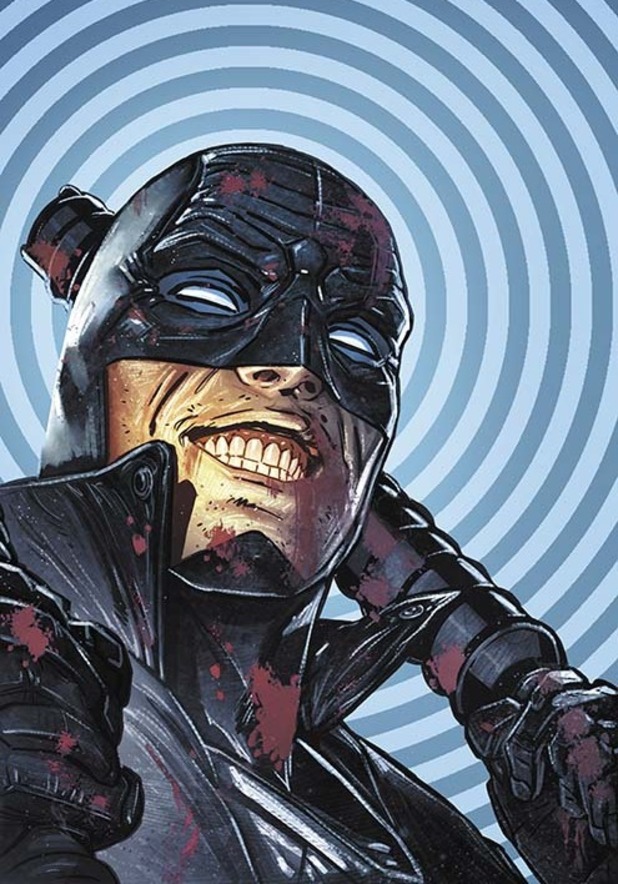
Midnighter #1
© DC Comics
Starring the character from The Authority, Midnighter is billed as DC’s first comic to be headlined by a gay male superhero.
Written by Steve Orlando and illustrated by Aco, Midnighter #1 arrived last week.
Broken Frontier attracts top comics creators to its anthology Kickstarter
DC superhero Midnighter gets on Grindr
DC Comics drops New 52, launches 25 series in line-wide shakeup
Read more: http://www.digitalspy.co.uk/comics/news/a651713/dc-celebrates-its-lgbt-history-in-a-new-video.html#ixzz3cYFZqGvJ
Follow us: @digitalspy on Twitter | digitalspyuk on Facebook
Man claims attack on Belfast house is gay hate crime

Paul Finlay-Dickson meets Lord Mayor of Belfast, Nichola Mallon, over the campaign of homophobic attacks on his house in north Belfast. Mr Finlay-Dickson recently lost his husband Maurice to cancer
 BY NEVIN FARRELL – 08 JUNE 2015
A man has claimed that an attack on a house he was due to move in to in north Belfast was a homophobic hate crime.
Paul Finlay-Dickson said he has been the victim of a series of attacks and death threats and is now too scared to go to the property in the mainly loyalist Tiger’s Bay.
He said: “I am being attacked because of my sexual orientation. I am not the only gay man in Northern Ireland.
“This is a homophobic hate crime attack and something needs to be done about it because I can’t take much more,” he told the BBC.
At 2.10am on Saturday it was reported to police that a gang of men, one carrying a sledgehammer, were attacking a house in Cosgrave Heights. Damage was caused to a door and a number of windows were smashed. There was nobody in the house at the time.
Earlier this year a gay rights movement ‘Rainbow’ flag due to be placed on the coffin of Mr Finlay-Dickson’s deceased civil partner, who died of cancer, was covered in faeces by attackers.
Vodafone blocks LGBT website and redirects to ad for ‘flirty’ dating service
PinkNews Exclusive.
Mobile phone network Vodafone has restricted access to an LGBT community website to over-18s – instead showing ads for a “flirty” dating website.
A PinkNews reader spotted that the website lgbt.co.uk – which provides information on services for the LGBT community in the UK – appeared to be blocked by the provider.

A standard message received when trying to access the website states: “You are not able to access this service because VodafoneContent control is in place. If you’re 18 years or over, you can easily remove Vodafone Content control by going to the ‘About Content control’ link below for further information and details about how to remove it.”
The network requires people to prove their identity with a credit card and another form of ID in order to de-activate the filters.
Despite the perfectly child-friendly website only being accessible to over-18s, ironically the filtering page itself shows a number of ads for over-18 dating websites that remain unblocked.
When PinkNews attempted to view the page, Vodafone message was above an ad for raunchy-sounding dating site “FlirtFinder” – which was unfiltered despite its terms and conditions banning users 17 and under.
Another user received an ad for Match.com – also unfiltered – which operates a strict over-18s policy.

Peter Burnett of lgbt.co.uk told PinkNews: “We started the site in 2006 to deal with prejudice that was built into the tax and pensions system, as well as to campaign for civil partnership and equal marriage. We also discuss holidays and investments, as well as financial ideas for couples, which is our speciality.
“Of course, we haven’t got anything at all barely even saucy on the site, but because we use the terms lgbt, gay and transgender, for example, in our site metadata, providers and others sometimes block us.
“It is incredibly infuriating, not because we’re being blocked, but because it is exactly the sort of prejudice we dislike the most – instiutional assumptions made about millions of people, and not based on reason.”
He added: “Being blocked by Vodafone is careless and prejudiced use of metadata, with their engineers assuming that because our market is LGBT, we must be peddling porn, or something, I don’t know what. It’s so offensive.
“To be honest, any of many LGBT sites are at risk of this, and that is an ugly thought.
“I’m talking about forums, advice sites, clothing sites, news sites, help and information sites, and Vodafone should do their job and examine each site they block. There are also lists of adult sites they can consult, and we wouldn’t be on any of these.”
“Except that we are now on theirs, I am sad to say. I have challenged them of course to find any adult content on the site, which offers financial advice, and I await their response.”
Other LGBT-focussed websites including PinkNews and Stonewall appeared to still be accessible.
A Vodafone spokesperson told PinkNews: “Vodafone UK, along with the rest of the UK mobile operators use the British Board of Film Classification (BBFC) to define which content is unsuitable for customers under the age of 18.
“We use a third party supplier to provide automated technology to block sites which are unsuitable under that rating system and have recently changed our supplier, which clearly has slightly different categories than those of the provider we used before.
“We believe that the new automated system blocked this site by mistake and we have gone back to our supplier to ensure it is unbarred with immediate effect.”
UK minister comes out as gay after 29-year secret affair

UK minister comes out as gay after 29-year secret affair Nick Gibb said he will marry Michael Simmonds, the chief executive of the Populus polling organization, in November, having just last week come out to his family as gay.
The Times India | Jun 7, 2015, 12.28 AM IST
LONDON: Britain’s schools minister has announced he would be tying the knot with his male partner after a nearly 29-year secret affair.
Nick Gibb said he will marry Michael Simmonds, the chief executive of the Populus polling organization, in November, having just last week come out to his family as gay. Gibb told The Times that he and Simmonds had enjoyed a “wonderful life” together but said the forthcoming wedding had necessitated the “practical” step of informing his 79-year-old mother and other relatives.
“If one of us was ill and had to go to hospital it would be awful if we couldn’t be there for each other,” he said.
The 54-year-old told the newspaper that he and his partner had met and fell in love in a “different era”, but that both had been comfortable keeping their relationship a secret.
“We realised very quickly we had an interest in common and it was pretty rapid. We fell in love very quickly,” he said.
“It was harder then. [Homosexuality] was only made legal in 1967. There was discrimination in industry and professions. It was easier to have a relationship that wasn’t known about. It didn’t really bother us, we both had successful careers. We just got on with life.”
Of his announcement, he added: “I think my mother was initially shocked — that’s an age thing — but then very supportive and what she wants is for me to be happy. We are close, so to her being a loving family is more important than anything else.”
- « Previous Page
- 1
- …
- 36
- 37
- 38
- 39
- 40
- …
- 72
- Next Page »