


“Little Game is Benny’s debut single and music video as a dark alternative pop narrative on gender roles and gender equality. The video demonstrates the skewed enforcement of falling into masculine and feminine archetypes.
Country Star Ty Herndon: ‘I’m an Out, Proud and Happy Gay Man’

11/20/2014
 Five years ago, country singer Ty Herndon finally recognized that he had a very important story to share.
“During an Anthony Robbins seminar, I realized I had an incredible story that could possibly help someone’s son or daughter or grandchild’s life not be as difficult as mine has been,” he tells PEOPLE. “Maybe they wouldn’t have to go through as much pain and suffering. It’s time to tell my truth.”
That “truth” is about a part of himself he has kept secret for his entire career: “I’m an out, proud and happy gay man,” the Nashville artist revealed to PEOPLE during a sit-down in New York Tuesday. (Herndon appears on Entertainment Tonight Thursday at 7 p.m. ET, his first TV interview about his journey.)
The revelation was many years in the making for the 52-year-old singer, who first wondered if he was gay when he was about 10 years old and then began coming out to close family members at 20.
Keep up with your favorite celebs in the pages of PEOPLE Magazine by subscribing now.
“My mother probably knew I was gay before I did. I remember sitting down with her and having the conversation,” recalls Herndon, noting his career path in country worried her. But, ultimately, “she was more concerned about me having a happy life. You have to be able to do that in your own skin, and [my family] has seen me struggle with being gay my whole career.”
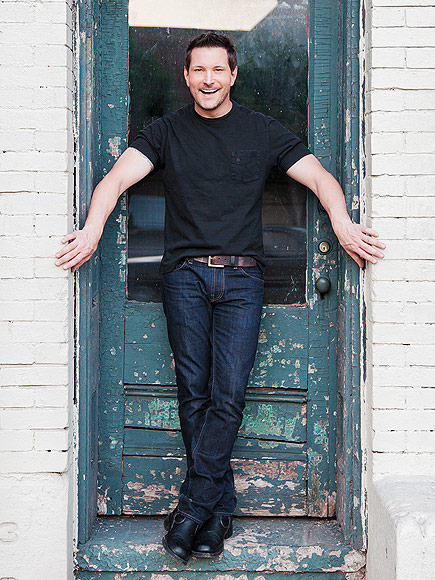
Ty Herndon
Valeisha Kelly-Pedigo
Some Early Snags
While his professional start was promising (he was earning steady airplay with hit singles including “What Mattered Most,” “Living in a Moment” and “It Must Be Love”), the singer hit some snags along the way – including an indecent exposure charge for allegedly exposing himself to a police officer in 1995 (the charge was later dropped in a plea bargain) and subsequent time in rehab for drug addiction.
“I have made a lot of mistakes in my life. They’ve been my mistakes, and I own them,” says Herndon, who was married to women twice before coming to terms with his sexuality. (He says both ex-wives knew he was gay.) “I’ve done a lot of work around forgiveness with people that I’ve hurt and people I’ve not been honest with because of my sexuality.”
Herndon’s revelation follows fellow country artist Chely Wright‘s coming out to PEOPLE in 2010.
Longtime Partner
Wright, a close friend of his, played a big part in his coming out – as did his longtime partner, Matt. A mutual friend introduced the couple, and they spoke on the phone for six months before meeting. As a one-year anniversary and Christmas present, Matt brought them to that fateful Anthony Robbins seminar in 2009 that reminded him of his own struggle – and his wish to spare others that pain.
“I was 10, sitting in church and horrified that I might be a homosexual. Whatever that word meant, I knew that I probably was one,” Herndon recalls. “And I know there’s a lot of those kids still out there. Telling my story is an opportunity to help just one of them,” says Herndon.
“They can be loved by God, they can be married one day, they can have a family, they can give their parents grandkids,” Herndon adds. “And they’re not broken, they’re not sinners and they’re perfectly beautiful.”
Both the singer and his partner are practicing Christians, and Herndon says it’s taken time to reconcile his faith with his sexuality. But he’s getting there.
“I sit on the tailgate of my pickup truck, and I meditate, and I talk to God,” he says. “That’s really all I need to know. I have a connection to something bigger than myself, and no one’s going to tell me that I can’t have it. We get to choose who we love, and that includes God, and he loves us back.”
Aside from religion, Herndon has had to redefine his place in another establishment: the country music community. As he sees it, the genre has made great strides, which was again demonstrated when Kacey Musgraves won top honors at the CMAs for her LGBT-approving hit “Follow Your Arrow.”
“There’s never been a song more affirmative of that in country music, and it’s our CMA Song of the year,” says Herndon, who “welled up in tears” during that moment.
“I felt so proud of my city. I hope that trend continues; I pray it does.”
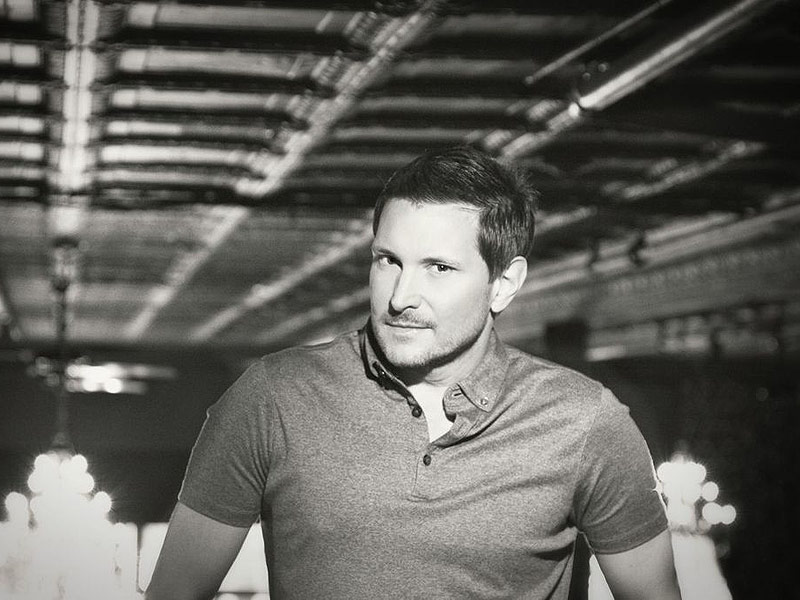
Ty Herndon
Valeisha Kelly-Pedigo
Upcoming Plans
Herndon, who is in the midst of his return to the industry, clearly is part of that trend. Last year, he released the autobiographical Lies I Told Myself and he’s been touring with fellow singers Jamie O’Neal and Andy Griggs. He plans to release a solo album next year.
Though he understands his revelation is a big one, he views it as a beautiful starting point for the next chapter of his life.
“[Being gay] is just an addendum. I’m a gay man, and I’m looking forward to living the rest of my life authentically and happy,” Herndon says.
Now that he’s out, there are a lot of uncertainties ahead, from how fans will react to where his career will go. But “I’m feeling very blessed,” Herndon says.
“I just want to show up for the causes that I believe in. And be able to walk down the street and hold this man’s hand that will be my husband one day, and I know we’ll have kids one day,” he adds.
“I’m still the same person. Fans just know a little more about me now.”
Country Singer Billy Gilman Comes Out As Gay in Personal YouTube Video
 By Colin Stutz

Country singer Billy Gilman came out as gay online Thursday, hours after fellow country act Ty Herndon revealed he was gay as well.
The former child country star — best known for 2000’s tender “One Voice” — broke the news in a personal video posted to YouTube, addressing his fans with a clear nervousness.
“Today a fellow country artist and friend made it easier for me to make this video,” he says in the clip. “And I wanted my fans who have stuck by me for many, many years to know.”
Gilman tells a story of being caught by a reporter in Rhode Island at a local fall festival while he was there with his partner — “somebody who I am now, happily, sharing my life with,” he says. “And this reporter took a picture of us and it was in that moment that I knew that I’d rather it be from me than you reading it somewhere else and probably filled with not-truth.”
The singer continues, with an explanation of how difficult it is to be a gay country singer and how he has felt prejudice in Nashville based on rumors over his sexuality.
Billy Gilman Grows Up: From ‘One Voice’ to ‘Say You Will’
“Being a gay male country artist is not the best thing,” he says. “If people don’t like your music, that’s one thing. But after selling over 5 million records, having a wonderful life in the music industry, I knew something was wrong when no major label wanted to sit down and have a meeting and listen to the new stuff. … It’s difficult for me to make this video, not because I’m ashamed to be a gay male artist, or a gay artist, or a gay person, but it’s pretty silly to know that I’m ashamed of doing this knowing that because I’m in a genre in an industry that is ashamed of me for being me.”
Gilman thanks Herndon as well, who he says he’s “known and been a fan of, and congratulations on such a courageous effort.”
“I’ve been going back and forth on how to approach this and rather than do it on some talk show, I thought I’d do it in front of a simple camera, very personal,” Gilman says. “I’ve been an advocate for so many things in my life I thought now why not be an advocate for me and for the cause that I believe in with my whole heart.”
Coming Out to Play by Robbie Rogers with Eric Marcus
Coming Out to Play
by Robbie Rogers with Eric Marcus
Penguin Books
Paperback, 9780143126614, 240 pp.
Jason Collins. Michael Sam. Robbie Rogers. Over the past few years, these men have been some of the first  openly gay men to play in major league sports in America. Of course there have been those who have paved the way before them. In the past, players have come out after their sports careers have ended or have played in lesser-known and/or solo sports. However, these men were able to come out and remain playing their respective sports. The twin barriers these men faced were the machismo culture of sports and potential gay panic of their teammates. (Some might argue that these are two sides of the same coin, but I digress). Football–I mean, soccer–doesn’t have as a pronounced culture surrounding it in the United States the same way other sports do. However, it is a major sport worldwide, especially in Europe. (Other things popular in Europe that the U.S. has yet to adopt: the metric system, reasonable vacation/parental leave and the continually slept-on Marina and the Diamonds.) One can simply search “hooliganism” to see the level of destructive macho passion that the sport can inspire, it’s roughly on the same level as ice hockey and American football in the States. I don’t write the above to dismiss the fun and joy of soccer and other sports, but to explain importance of Robbie Rogers’ decision. With the messaging of this culture ever present in the back of players’ heads it is easy to understand other soccer players’ reluctance to come out and Rogers’ initial hesitation to do so. In choosing to come out and (continuing to) play, he is the second soccer player on an English team to come out (the first one to come out was the late Justin Fashnau) and the first openly gay player to play on a North American team. The memoir begins by diving into Robbie’s life head-on, literally. It starts with him getting a concussion at a game and then moves through pivotal periods in the sportsman’s life. Robert Hampton Rogers III was born to somewhat conservative and Catholic family in Rancho Palos Verdes, California. Early in his life Robbie is seen as a sports prodigy, known for his ‘explosive’ speed, not only playing soccer but also judo. His parents, two lawyers raising five athletic kids in the suburbs, seem to have a perfect life in young Robbie’s eyes, but end up divorcing. He also comes to believe that he is less than picture perfect as well, as he comes to realize that he is gay. It starts with his father’s angry reaction after seeing him play with dolls. As he grows older his family’s reactions to gay and lesbian celebrities, the taunting and pressure to conform from his school peers, and his church’s teachings have him bury his feelings and attractions. While struggling internally, Robbie’s athletic career was on the rise. Robbie spends only one school year at University of Maryland, much to the chagrin of his mother who wanted her son to receive a college education. He spends the following summer playing in the Netherlands which has him feeling isolated, due to language barriers and distance from his family. He returns to the states to play for the Columbus Crew, but years later he takes the chance to play for Leeds United. After the aforementioned concussion and other injuries, he takes a break, by playing on a lower tiered team, working on his fashion line and interning at a fashion PR agency. Robbie’s decision to start coming out begins as an accident: he randomly tells a woman at bar. From there he builds up the courage to tell his family and friends and to start dating. When a coach uses a slur during practice, it’s the tipping point for Robbie to leave the sport. Soon, Robbie decides to come out publicly through a blog post which is met with a volume of responses from a variety of people, organizations and media outlets. From there it’s a whirlwind of interviews and speaking engagements, including a GLSEN & Nike event for high school students in Portland. It is during this Q&A session that he is inspired by the teenagers in the audience, those fighting against discrimination from very young age, to reconsider his choice to leave the sport. He’s able to work out a deal to play for LA Galaxy, who he’s been playing for ever since. Raised in a Mets and Islanders household, I never really enjoyed sports. I was the boy in the outfield occasionally picking at daisies or daydreaming, only participating because my father was my little league coach. Start talking statistics and my eyes glaze over. However, if you take me to a game and not only will I enjoy it, I’ll be able to follow along. I write this to explain the brief bit of anxiety I had when I started to read this memoir. “How much of this was going to be a sports story?” I wondered. Would this book interest me beyond his life as a gay man? My introduction to Robbie was not a soccer game but an issue of Hello Mr. magazine. While there were dry parts for me, mostly when he has to explain the minutiae of pro soccer, it’s still an interesting story. I bring this up because this book knows it must cater to a variety of readers: those simply curious about him, those interested in sports writing and those adults and kids looking to learn. Sometimes Coming Out To Play stretches to cover things; Robbie tries to explain himself on his own terms while also doing Gay 101. It also has to navigate Robbie Rogers the person and Robbie Rogers the public figure both in and then out of the closet. The need to be various things to various people rang true to me as a gay man. With Robbie it is magnified exponentially by being a public figure. Towards the end of the book, he pulls back the curtain somewhat on what being a celebrity entails. His family was initially frustrated with his sudden decision to come out publicly, not because they were ashamed, but because they had no prior warning about the media attention it would bring them. He also gives glimpses behinds the scenes of his post-coming out ‘press tour’ and working with LGBTQ organizations and major brands. Where Coming Out To Play is at its best is when it situates what’s going on in Robbie’s life with current events at the time. Robbie’s rising career is happening during a period of time where there is an increasing focus on LBGTQIA issues. Robbie’s thoughts about being gay and coming out are placed alongside him hearing about Tyler Clementi and watching movies like Brokeback Mountain and A Single Man. It helps the reader to feel like they are alongside him. The worst I can say about Coming Out To Play is that it gets the job done and not much else. The book is less concerned with telling a story and more about allowing Robbie to control his narrative and to express his feelings. (In a sweet and interesting move, Robbie will occasionally let his mother or a sister provide their perspective.) But Robbie’s plain-spoken prose is charming in its own right. If you’re interested in learning about Robbie, his memoir will satisfy and do a good job of providing a sense of who he is. I, for one, was delighted to learn that he loved A Single Man. Hey, Robbie, if you’re reading this: I did my graduate thesis on Christopher Isherwood. Let’s chat. – See more at: http://www.lambdaliterary.org/features/oped/12/10/the-q-factor-robbie-rogers-coming-out-to-play/?utm_source=Lambda%20Literary%20Review%20December%2011th%2C%202015&utm_campaign=Newsletters&utm_medium=email#sthash.zCAmPcXu.dpuf
Holly Woodlawn – Transgender Artist

Holly Woodlawn | Getty Images | 15479
Holly Woodlawn, the transgender actress made famous by Andy Warhol and Paul Morrissey in their 1970s films Trash and Women in Revolt, has died after a battle with cancer at the age of 69 in Los Angeles. Holly was born Haroldo Santiago Franceschi Rodriguez Danhakl in Juana Diaz, Puerto Rico, in 1946.
At the age of 15, she took on the name Holly Woodlawn after running away from home and hitchhiking to New York City, where she became one of Warhol’s drag queen ‘superstars’.
These were a collection of New York personalities who appeared in Warhol’s artworks and accompanied him on social outings.
Holly’s story was immortalized in the first lines of the Lou Reed song Walk on the Wild Side.
‘Holly came from Miami, F.L.A. Hitchhiked her way across the U.S.A. Plucked her eyebrows on the way. Shaved her legs and then he was a she. She says, “Hey, babe, take a walk on the wild side.”‘
She took her first name from Holly Golightly, the heroine in Truman Capote’s novel Breakfast at Tiffany’s. The last name came from the Woodlawn Cemetery.
Holly Woodlawn, actress, born October 26, 1946, Juana Díaz, Puerto Rico, died December 6, 2015, Los Angeles.
WOMEN IN REVOLT (Paul Morrissey, 1971) (NSFW) from Spectacle Theater on Vimeo.
Here’s What It’s Like To Go Through Gay Conversion Therapy In Australia

Conversion therapy is all but dead in Australia – but what will it take to kill it?

“Please take this from me, I don’t want to be gay.”
Brisbane man Johann De Joodt knows first hand the horrors of gay conversion therapy.
A participant in numerous programs designed to purge his homosexuality during his twenties and thirties, De Joodt adopted a traumatising routine of church, sin and repentance that looped on repeat every week for 15 years.
“Sunday, I was going up to the altar, crying out to God,” he said. “Monday, I would sin by having sex with another man, and then beat myself up to a pulp so by Saturday I was suicidal. I’d manage to get myself to church on Sunday and then do it again, every week.”
“That was basically my life.”
“When a church leader says being gay is an abomination, people say, ‘you’re talking about my uncle who I love very much.’”
The question of whether conversion therapy works was answered long ago: it doesn’t. Leading psychological associations in Australia and around the world have denounced therapy that attempts to change sexual orientation. Earlier this year, a report from the UN High Commissioner for Human Rights called for nations to ban the practice, describing it as “unethical, unscientific and ineffective and, and may be tantamount to torture”.
Partly as a result of these strident denouncements, the prevalence of such therapy has significantly declined in Australia. Around 40 providers across the country in 2000 have dwindled to just a handful still in action today.
“There’s very little left. It’s in disarray,” says former pastor Anthony Venn-Brown. Venn-Brown, who has himself been through reparative therapy, is the most prominent voice on conversion therapy in Australia. He now works as the founder and CEO of Ambassadors and Bridge Builders International (ABBI), a group that works to combat ignorance and hostility between the LGBT community and churches.
Anthony Venn-Brown. Hadden Motion Pictures
Speaking to BuzzFeed News at a cafe in Waterloo, Sydney, Venn-Brown suggests another part of the decline is due to a growing acceptance of gay people in wider society – which, of course, includes churches too.
“More people are out, churchgoers have got gay sisters, brothers, colleagues, friends,” Venn-Brown says.
“When a church leader says being gay is an abomination, people say, ‘you’re talking about my uncle who I love very much.’”
The most thriving ex-gay programs are in Queensland, where Liberty Incorporated runs alongside the smaller Triumphant Ministries Toowoomba. Sydney-based Living Waters, one of Australia’s longest-running ex-gay programs, closed down last year.
There are also groups that advertise themselves as providing pastoral counselling on dealing with same-sex attraction, but clarify they do not attempt to change sexual orientation. These groups include Liberty Christian Ministries in NSW, and Renew Ministries in Victoria.
However, perhaps due to the stigma now attached to conversion therapy, there is little public information available about the funding, treatment methods and numbers of clients for each of these organisations. While Venn-Brown estimates that the programs would get “very few referrals” these days, their relative invisibility serves as a shield to such information. “We’ll never know the exact numbers,” he says.
At the heart of religious conversion therapy is “a strong belief in an all powerful God”, says Venn-Brown. Programs use a number of methods to exploit this belief, convincing participants that homosexuality is not what God wants for them. Venn-Brown went through dramatic exorcisms, where he convulsed on the floor for hours as pastors gathered around him, screaming for the demon of homosexuality to exit his soul.
Other methods include group and personal counselling, where homosexuality is posed either as a shameful habit that can be broken or an affliction, harking back to the days when it was considered a mental illness.
Brendan Hoffman / Getty Images
Johann De Joodt bristles at the description of gay conversion therapy as “nearly dead”.
“Conversion therapy hasn’t ended in Australia,” he says. “It is alive and well.”
De Joodt came to Australia from Sri Lanka in 1984. A few years later, he found himself heavily involved in the Assemblies of God Pentecostal church movement – now known as Australian Christian Churches – and struggling with his sexuality.
“I went to confess my sin of homosexuality to my pastors,” he says. “I was pretty involved in church life, and the pastor recognised that there were a few other people in the church who were struggling with their sexuality as well.”
De Joodt started the Living Waters ex-gay program in 1990. This was the first of many programs he went through, and when his weekly routine of church, sin, and self-loathing began. It wouldn’t end until 2005.
For years, De Joodt prayed the gay away as various pastors attempted to cast the demons of homosexuality from his soul. He was told his sexuality was a habit that could be broken and changed, that he was gay because he had been sexually assaulted as a child and lacked a decent father figure. He enrolled in courses on self-esteem, and learning how to say no, and did hours of counselling. He prayed, week after week after week.
Unsurprisingly, Johann stayed gay. But the years he spent in therapy ate away at him in other ways. “My health…” Johann starts, then pauses. “I am on antidepressants. Everything I’ve been through has stuffed up my mental health.”
“You were either Christian and heterosexual or you were gay and going to go to hell”
Since 2000, twelve peer-reviewed, primary research studies have found conversion therapy is harmful to mental health. A Columbia Law School project collating conversion therapy research found that among people who had undergone the treatment, there was a prevalence of depression, anxiety, social isolation, decreased capacity for intimacy, and suicidal thoughts and behaviours. “There is powerful evidence that trying to change a person’s sexual orientation can be extremely harmful,” the researchers concluded.
“People have taken their lives, they are now on pensions because they can’t function in everyday life,” says Venn-Brown. “There are PTSD issues, they’ve been harmed mentally, they’re traumatised.”
This manifest trauma and pain is why Venn-Brown has devoted his life to combating ignorance between the LGBT and faith community through ABBI. His daily grind is a softly-softly approach that coaxes people of faith and the LGBT community closer together. “The biggest challenge is fear,” he says without hesitation.
In the past – and in conversion therapy – being gay and being a Christian were seen as incompatible. Venn-Brown says that when he was going through therapy in the 1970s and ‘80s, there was “nobody who believed there was such a thing as a gay Christian”.
“You were either Christian and heterosexual or you were gay and going to go to hell,” he explains. “The gay Christian movement was just beginning to grow then.” After coming out in 1991, he left the Christian faith for six years – but then returned to it after realising being a gay Christian was possible. “There are things [in Christianity] that I can take, that are very real for me,” he says. “Forgiveness, sowing and reaping, having purpose.”
As attitudes have changed and churches become more permissive, many LGBT Christians have been able to reconcile their faith with their sexuality and gender identity. However, a damaging rift still exists between the two communities, with years of betrayal from religious organisations leaving LGBT people fearful and unwilling to engage. Those hurt most by the hostility are LGBT Christians, who are often left feeling as though they belong in neither camp.
“Just as Christians have stereotyped all LGBT people, some LGBT people have stereotyped all Christians,” says Venn-Brown. “We get called perverts, abominations, they get called bigots and haters. And that doesn’t get us anywhere, just sitting back in our camps, our tribes, throwing barbs at each other.”
It’s obvious the division is unhelpful – but is being called a pervert really on par with being called a bigot? Venn-Brown pauses before answering, in short, no.
“It’s about the perception – we will often hear, a Christian like [Australian Christian Lobby Managing Director] Lyle Shelton or [Christian Democrats leader] Fred Nile say ‘I am not homophobic’. But everything that comes out of their mouth is completely homophobic. They just don’t understand what homophobia is, because they’ve never experienced it,” he says.
“We come from our own hurt, and our own pain. And we react, as any human would, when cruel and nasty and insensitive things are said by these people.” He switches into the second person, speaking directly to those who have hurt him. “You don’t know what that does to us, because you’ve never experienced that. You don’t know what it feels like.”
But matters of blame and hostility aside, Venn-Brown is convinced his approach of “dialogue and respect” is best. He knows both the LGBT and the faith community intimately, and says church communities do not respond to “aggressive” activism.
“I introduced [Hillsong Pastor] Brian Houston to a guy in his church who had been referred to somebody [for conversion therapy],” says Venn-Brown. “I got him and his parents to write a letter, Brian met with him.”
Later, it emerged that Houston had issued a directive to all Hillsong staff to never refer anyone to these programs.
“I’ve talked with people who are major religious leaders in Australia. It’s been a journey of ten years for some of them,” Venn-Brown says. “I’ve seen progress, but not where I would want it to be. In every human rights movement, it’s taken decades to shift. If you’re not in it for the long haul, it’s not going to work.”
However, politicians involved in LGBT law reform say a legal approach to ending conversion therapy is complex.
“There’s not much that can be done to target these organisations specifically at a federal level, other than continuing to tighten anti-discrimination legislation and look at the applicability of consumer law,” Greens senator Robert Simms tells BuzzFeed News.
If providing the therapy was considered a breach of the Sex Discrimination Act, it’s likely that the religious exemptions in the Sex Discrimination Act would protect conversion therapy providers. Under Australian consumer law, the religious and not-for-profit aspects of most conversion therapy programs would mean they are not considered “commercial in nature”. While such laws could be tweaked, says Simms, it’s unlikely they could be used as a mechanism to eradicate the therapy altogether.
Graham Perrett, a co-chair of the Parliamentary Friends of LGBTI People Working Group, says a federal law banning conversion therapy may be unconstitutional.
“In terms of section 51 on the powers of the parliament, I can’t see any head of power that would give the federal parliament any capacity to make gay conversion therapy illegal in Australia,” he says.
There are some legal avenues under state and territory law as well, with acts in all jurisdictions outlawing advertising of health services that are deceptive or misleading. It could also be possible to lodge a complaint with the Australian Psychological Society that their code of ethics has been breached.
However, there is no black and white policy solution to immediately ending conversion therapy.
“It’s all just prejudice welded onto quackery packaged by a religious organisation,” says Perrett.
“I think education is the best antidote.”
Sebastien Bozon / AFP / Getty Images
De Joodt’s conversion journey reached a fork in 2005. His conversion counsellor at the time, CEO of Liberty Incorporated Paul Wegner, told him “I can help you suppress your sexual desires, but I can’t help you change your sexual orientation”.
“I was like, ‘Well, what’s the point?” says De Joodt. “If you take a ball and try to push it in a bucket of water and let go, it’s going to eventually pop up.”
He came out, lost “a lot of people”, and left his Pentecostal church. He went to the LGBT-friendly Metropolitan Community Church for a few years, and then stopped that, too. But God is still in his life.
“I have days where I feel like a Christian, and there are other days where I feel like I hate God,” he says.
“I think I’ve resolved my sexuality with my faith. If people want to be so small-minded as to think that you have to be straight to get into heaven then I think they’re going to get a big shock when they do get to heaven.”
A pause, and then: “I think God is bigger than the box you put God into.”
It’s because of this new understanding of faith, says De Joodt, that he doesn’t relapse into wanting to be straight again. “I’ve come to a point where I believe I need to be honest before myself, and before my God.”
“There’s a famous saying, isn’t there?” He thinks aloud. “Change what you can change and leave the rest to God? Or something like that. Accept the things you can’t change?”
A quick Google search later, it becomes apparent De Joodt was trying to recall the words of the Serenity Prayer, brought into popular culture by its widespread use in Alcoholics Anonymous meetings:
God, grant me the serenity to accept the things I cannot change / The courage to change the things I can / And the wisdom to know the difference.
It took years of anguish, but finally, De Joodt has been granted that serenity. He knows the difference, too.
“If God wanted just another heterosexual, God could have created one, but instead God created me fabulous,” he says.
“My sexual orientation is something I cannot change.”
A spokesperson for Liberty Christian Ministries declined a request to be interviewed for this piece. Requests sent to Liberty Incorporated and Triumphant Ministries Toowoomba were not responded to.
Lane Sainty is a reporter for BuzzFeed News and is based in Sydney, Australia.
Contact Lane Sainty at lane.sainty@buzzfeed.com.
Here’s What It’s Like To Grow Up Gay And Indigenous In Australia
Indigenous people who identify as LGBT are more likely to suffer from some form of mental illness.
“At 16 the boys would call me abo, faggot, poofter. That was really detrimental to my psychological health and really played a huge role in my depression”, says Matthew Shields, 30.
Shields, a successful actor, dancer and registered nurse has suffered from chronic depression for years.
“When I was 14, the gay thing was kept a secret in me. I didn’t tell anyone. It was absolutely terrifying. I mean it was [the NSW country town of] Walgett 15 or 16 years ago, when homosexuality wasn’t even accepted in mainstream culture, imagine being in a small country town in western NSW,” he says.
Shields says homophobia and racism crippled him emotionally, and he often turned to self-harm.
“I felt extremely isolated. I used to self-harm a bit, just placing the pain somewhere else. I didn’t cut myself. I would, for example, walk along the wall and scrape my hand on the wall or punch the wall to place the pain somewhere else”.
Shields credits finding a supportive group of friends with helping him to overcome depression, but says he still has dark days.
“For me living with depression is an exhausting journey that feels like you’re in a dark place, and it’s really exhausting and constant sadness.”
Indigenous people coming to terms with their sexuality are often told that being gay is not a part of traditional culture, a notion that experts say is incredibly dangerous.

Gregory Phillips (Photo by John Couch)
“When I was coming out and trying to reconcile being gay with my Aboriginal culture I was told by an elder very close to me that being gay didn’t exist traditionally. He told me it’s bad and all these awful things would happen to me,” Gregory Phillips tells Buzzfeed News.
Phillips is the author of Addictions and Healing in Aboriginal Country and an academic specialising in Indigenous health. He says it’s dangerous for the mental health of young people to hear that homosexuality has no place in their culture.
“Homophobia and stigma within our community are the biggest problem and the myth that homosexuality is a white man’s thing, well actually, homosexuality is a part of every culture and homosexuality appeared here before colonisation”.
Homophobic attitudes within the Indigenous community can be largely attributed to Christian missionaries who forbade Aboriginal and Torres Strait Islanders living under the church’s care, under government orders, from practicing traditional culture. It was from this period that the idea of homosexuality being sinful became a common view within the Indigenous community – one that still prevails today.
In 2013, boxer Anthony Mundine created controversy when he expressed disgust about the plot of ABC drama Redfern Now, which featured a homosexual Aboriginal relationship.
“Watching Redfern Now and they [sic] promoting homosexuality! (Like it’s ok in our culture) that ain’t in our culture and our ancestors would have their head for it! Like my dad told me God made Adam and Eve not Adam and Steve,” he wrote on Facebook.
“Mundine’s comments are completely ill-informed and he’s confused about his own identity and religion. Mundine is quoting the bible while he is a Muslim all while presenting as a traditional Aboriginal, so I don’t know what he’s doing, it’s rubbish and damaging,” Phillips says.
As a young Aboriginal boy growing up in the small town of Deniliquin in regional New South Wales, Steven Ross always knew he was different.

Steven Ross (Stelios Papadakis)
“On this particular summer day, after my father had been looking after me (I sat in the corner of the local TAB while he bets on the horses), we arrived back home to discover he’d left the house keys inside. He ordered me to climb through the window to open the door, but I refused,” Ross wrote in a personal essay for Archer Magazine last year.
“His response was to verbally abuse me. For the first time in my life I was called a ‘poofter’. I didn’t know what this word meant, but considering the tone of its delivery, I knew it couldn’t be a good thing,”
“When I came out to my father, he told me he used to bash people like me. Whenever we fought, homophobic insults were not off limits”.
It was Ross’s mother who allowed him to be proud of his sexuality.
“I really think racism and homophobia are just colonial processes, to be honest. They are social diseases and I felt like I had people around me immune to that,” Ross tells BuzzFeed News.
Ross hopes his writing will inspire other young gay Aboriginal people and believes it’s essential to raise awareness of the damage homophobia can cause.
“Like most cultures we [Indigenous people] are able to change and recognise difference, and I believe that gay identity has always been part of Aboriginal culture,” Ross says.
“It defies logic that there were no gay Aboriginal people before 1788. It might not look like what the LGBT community looks like now. The stigma can be devastating and lead to high suicide rates and depression”.
Steven’s sister Laura Ross is a mental health worker in regional NSW, she says the health system is ill-equipped to deal with the Aboriginal LGBT community in remote and regional areas.

Laura Ross (Supplied)
They grim reality is suicide, depression, drug and alcohol abuse and risky sexual behaviours are much higher amongst the Indigenous LGBT community experts say.
“You never really know what the response is going to be from your treating team. There are still old-fashioned views out there and if you couple that with being Indigenous and from the country and gay or transgender you are really on the back foot,” Laura tells BuzzFeed News.
Laura, who is also gay, says that in some cases people seeking help in the bush are slipping through the cracks.
“If a client was to disclose that they were transgendered or gay the resources we have in the community are just never going to meet the needs of these clients,” Laura says.
Casey Conway, 30, is the first Aboriginal male model to lead a campaign for swimwear label Sluggers. He’s now proudly, openly gay, but as a teenager all he wanted to do was suppress his sexuality.

Casey Conway in the Sluggers campaign (Sluggers Swimwear)
“I was probably in my late teens and finishing up high school and I was with a really nice girl for a couple of years and I felt something wasn’t quite right,” Conway tells BuzzFeed News.
“When I started to realise that I was sexually attracted to guys it really did freak me out and I went through a phase where it was going to be my big dark secret forever”.
Conway would go on to become a successful rugby league player, but was plagued with worry about the potential backlash he would receive if he came out as gay.
Today Conway is a not only a model but also a youth worker advocating for open and honest discussion around mental health issues within the Indigenous community. He says that encouraging young people to be proud of their identity and sexuality is imperative.
“Working in the youth sector I see a lot of kids, both Indigenous and non-Indigenous trying to come to terms with it and I always say to them, “there is always someone to help you if you reach out and there have been people who have walked this path before you, you’re not alone.”
To learn more about depression, check out the resources at BeyondBlue Australia or ReachOut. If you are dealing with thoughts of suicide, you can speak to someone immediately at Lifeline Australia on 13 11 14.
If you are based in
Northern Ireland
You are not alone, if you want to talk to someone then you can contact:
-
Carafriend Telephone –
 0808 8000 390 FREE – Free from landlines and most mobiles: 3, EE, O2, Virgin and Vodafone
-
NIGRA – 07719576524 and we will ring you back to take the call charges
United Nations claims homophobia costs global economies billions (VIDEO)


United Nations claims homophobia costs global economies billions (VIDEO) · PinkNews
The United Nations anti-LGBT discrimination campaign ‘Free & Equal’ has released some startling statistics that show that homophobia and transphobia are still major problems across the world.
The video, titled ‘The Price of Exclusion’, focuses on the cost of global discrimination financially and to the people who suffer under social and legal discrimination due to their sexual and gender identities.

Openly gay Star Trek actor Zachery Quinto narrates the video, and reveals the uncomfortable reality of being LGBT in the world today, including how 40% of homeless youth in major US cities identify as LGBT.
Bullying and family rejection are cited as some of the causes of this high rate of LGBT homelessness.
“For the individuals in question, these are personal tragedies,” Quinto says in the video.
“For the wider community they represent an enormous waste of human potential, of talent, of creativity and productivity that weighs heavily on society and the economy”.
Citing a world bank pilot study, the video claims that global LGBT discrimination could cost a country the size of India $32 billion a year.
On top of this, the video also says that young lesbian, gay and bisexual people are four times more likely to attempt suicide, with the number rising to ten times more likely for young transgender people.
The Office of the United Nations High Commissioner for Human Rights has said that the video aims to “challenges the myth that the impact of LGBT discrimination is small, or marginal, or confined to only a small part of the community.
“It’s not only LGBT people who pay the price; we all do. Every trans kid thrown out of home or forced out of school is a loss for society. Every gay or lesbian worker denied work or driven to emigrate is a lost opportunity.”

The ‘Free & Equal’ campaign was first launched by the United Nations Human Rights office back in 2013 and has released a number of videos in the past including a Bollywood style LGBT equality music video.
Back in August, the members of the UN stripped LGBT eqaulity from its historic global developement goals agreement.
Watch the video below.
BBC suspends gay journalist

Read more: http://www.dailymail.co.uk/news/article-3354120/BBC-suspends-gay-journalist-said-ashamed-work-refused-axe-Tyson-Fury-Sports-Personality-shortlist-homophobic-views.html#ixzz3u0Hqn1KV
Follow us: @MailOnline on Twitter | DailyMail on Facebook
… who said he was ‘ashamed’ to work there after they refused to axe Tyson Fury from Sports Personality shortlist over homophobic views
- Television journalist Andy West claims he has been suspended by BBC
- Made Facebook post voicing disgust at Tyson Fury’s award nomination
- ‘Ashamed’ at employer shortlisting boxer who voiced homophobic views
- Petition to have Fury’s award nod withdrawn has reached 131,000 names
- See full news coverage from the BBC at www.dailymail.co.uk/bbc
The BBC has suspended a gay news reporter who said he was ‘ashamed’ to work for the company after homophobic boxer Tyson Fury was nominated as their Sports Personality of the Year.
Award-winning television journalist Andy West claims he has been ordered off work after voicing his opinion against the World Heavyweight champion’s inclusion on the contest’s shortlist.
West posted on Facebook voicing his ‘hurt’ that his employer had even considered Fury for the prestigious annual award.

Andy West (pictured, receiving an award from BBC anchor Huw Edwards) claims he has been suspended by the company for saying he was ‘ashamed’ Tyson Fury is nominated as Sports Personality of the Year

In a post made on Twitter, the BBC Northern Ireland presenter said: ‘I can’t say more but, as of yesterday, I am suspended by the BBC pending investigation. ‘I made my bed now I have time to lie in it!’
In a post made on Twitter, the BBC Northern Ireland presenter said: ‘I can’t say more but, as of yesterday, I am suspended by the BBC pending investigation.
‘I made my bed now I have time to lie in it!’

West, like many others, was speaking out after taking offence to homophobic and sexist remarks made by Fury (pictured) during an interview with the Mail on Sunday. Speaking to Oliver Holt, the towering fighter linked homosexuality and paedophilia, suggesting it should be made illegal

West (pictured) posted on Facebook voicing his ‘hurt’ that his employer had even considered Fury for the prestigious annual award
Kellie Maloney says Tyson Fury should be picked up on his controversial comments about women and homosexuality”}”>
Kellie Maloney: Tyson Fury should say sorry for remarks
“:”Boxing promoter Kellie Maloney says Tyson Fury should be picked up on his controversial comments about women and homosexuality”}”>
According to the Belfast Telegraph, West originally wrote on Facebook: ‘My employer is hurting me and other gay people by celebrating someone who considers me no better than a paedophile and who believes homosexual people are helping to bring about the end of the world.
‘It’s tempting to see him for the laughable idiot he is but sadly there are many other idiots who will be inspired and encourage by his naive, juvenile bigotry.
‘I am ashamed to work for the BBC when it lacks bravery to admit it is making a mistake.
‘I criticise the BBC for offering him as an idol to be celebrated and admired not just for his sporting achievements but also his ‘personality’.’

The Sports Personality awards bash is to be held in Belfast on December 20, with BBC Northern Ireland – West’s employer – heavily involved in covering it
West, like many others, was speaking out after taking offence to homophobic and sexist remarks made by Fury, 27, during an interview with the Mail on Sunday.
Speaking to Oliver Holt, the towering fighter linked homosexuality and paedophilia, suggesting it should be made illegal.
His controversial comments were brought to the fore after he defeated Wladimir Klitschko to become World Heavyweight champion last month and was then put on the Sports Personality shortlist days later.
Mr West says he has written to the BBC director general, Tony Hall, over Fury’s nomination. He is expected to be questioned about the boxer’s award nod by the culture, media and sport select committee next week.
More than 131,000 people have signed a petition asking for Tyson’s name to be removed from the list.
Greater Manchester Police have confirmed they are investigating hate crime allegations against the boxer.
The glitzy Sports Personality awards bash is to be held in Belfast on December 20, with BBC Northern Ireland heavily involved in covering it.
A BBC spokesperson said: ‘We do not routinely comment on individual staff matters.’
World news: Gay refugees; hashtags; Siberian princess; trans candidate

Special to the online edition of Windy City Times
by Andrew Davis, Windy City Times
2015-12-08
Gay refugees at an asylum center in Amsterdam have allegedly had to move because of homophobic attacks by other residents, the UK Metro reported. Fellow asylum seekers reportedly spat on them and attacked them to the point they were afraid to go outside. Five gay men—three from Syria, one from Iran and one from Iraq—moved to separate accommodations; at the beginning of next year, gay refugees will be given their own wing in a refugee center.
#MarriageEquality was the third most popular Twitter hashtag of 2015, spiking in May and June, when Ireland and the United States, respectively, legalized same-sex marriage, according to Gay Star News. #JeSuisCharlie and #PrayForParis, showing solidarity with the victims of the terrorist attacks on the French capital in January and November, were the most popular hashtags among Twitter’s 320 million global users. Caitlyn Jenner’s coming-ut tweet was also in the top 10, with the top three spots all going to boy band One Direction.
A Siberian princess buried 2,500 years ago may have been intersex or transgender, according toNewNowNext.com . The site for “Black Beauty,” as the individual has been dubbed, contained amulets for female fertility, among other things. However, a new report co-authored by the Institute of Cytology and Genetics and the Russian Academy of Sciences cites “reliable molecular genetic data” indicating the body belonged to someone with XY chromosomes—suggesting she was either gender-nonconforming or possibly intersex.
Tamara Adrian is running for Venezuelan parliament, making her the first transgender candidate running for office in Venezuela, Business Insider reported. Adrian is the first transgender person to run for a major office in any South American country ( although she’s forced to run under her birth name, Thomas ). As well as being a lawyer and professor, she is a human-rights advocate with a focus on freeing political prisoners. On top of being the first election featuring a transgender woman, it is also the first election in 17 years in which opposition parties might win.
LGBT activists in Northern Ireland are calling on a municipal official to apologize after saying gay people can be “cured” by prayer, but so far he hasn’t done so, according to Advocate.com . Thomas Kerrigan, the deputy mayor of Kerry and Strabane who’s a member of the Democratic Unionist Party, said that lack of church attendance left young people vulnerable to “being gay” as well as developing addiction to alcohol or drugs, but that if “people relied more on prayer it could cure a lot of these problems.”
The lower house of Ireland’s parliament passed a bill banning religious schools from discriminating against LGBTI teachers, Gay Star News reported. It has already passed the Senate and will now go to the president for signing. The bill amends Section 37 of the Employment Equality Act.
An international student studying psychology at the University of Winnipeg is afraid he could face persecution if he is forced to go home to Malaysia, CBC.ca reported. Hazim Ismail says he is openly gay and an atheist, and is afraid he could be targeted if he returns home. Homosexuality is a criminal offense in Malaysia, he said. And his family, who is Muslim, have disowned him and stopped paying for his education in Canada.
Hundreds of gay-rights activists danced to drum beats and held colorful balloons as they marched in a parade in New Delhi, India, celebrating what they call the diversity of gender and sexuality, The Japan Times noted. Organizers said that while the gay pride parade celebrated the gains India’s LGBT community has made in recent years, they also wanted to highlight the continuing discrimination it faces. The Delhi Queer Pride Committee also demanded the repeal of the Indian Penal Code’s Section 377, which criminalizes homosexual acts.
An Atlanta gay couple is poised to make history if their effort to overturn an ambiguous Bermuda marriage law restricting access to same-sex couples is successful, The Georgia Voice reported. Ijumo Hayward, 46, a native Bermudian and his partner Clarence Williams III, 40, have begun the legal process to obtain a Bermudian marriage license. A dual citizien, Hayward said it’s important for him to be married in the place where he grew up and calls home. Lawyer and former Bermuda Attorney General Mark Pettingill filed a notice of their intent to marry with the registrar of Bermuda on Nov. 30 and is representing the couple.
In the United Kingdom, Liberal Democrat leader Tim Farron has come out strongly in favor of the recently announced review of the ban on gay and bisexual men donating blood, PinkNews reported. At present in England, Wales and Scotland, men who have sex with men are deferred from giving blood for 12 months; a permanent ban remains in place in Northern Ireland. In part, Farron said that the current ban is “scientifically and socially outdated, deeply and unjustly stigmatising, and urgently needs to change.”
Trent Zimmerman, a member of Australia’s Liberal Party, won the North Sydney by-election—becoming the first-ever elected out gay MP in the continent’s lower house, according to Gay Star News. The 47-year-old replaces former treasurer and former boss Joe Hockey, who resigned from Parliament and his MP seat that he has held for 20 years. LGBTI members of the Upper House include Labor Party’s Penny Wong, the Liberals’ Dean Smith and the Greens’ Bob Brown.
The manager of a prominent Vancouver gay nightclub admits he hired private investigators to infiltrate a crowded sex party organized by a rival and leaked their findings—including shadowy images of participants—to a local newspaper, The National Post reported. Odyssey nightclub owner Bijan Ahmadian said he made the arrangements regarding the Vancouver Arts and Leisure Society’s ( VAL’s ) parties to publicize what he says is an “inconsistent enforcement of liquor regulations and capacity laws in the city.” VAL published a lengthy riposte in the gay news website Xtra, claiming “the current media firestorm” ignited by Ahmadian “is an attack on alternative, artist-run event spaces [and] on the morality of gay men, gay culture and queer events.”
In Thailand, a gay man was apparently stabbed after his controlling boyfriend imprisoned him, PinkNews noted. Suttipong Toolrat was stabbed by his lover, Phubet Patnee, after Toolrat attempted to escape their home. Local reports claim Patnee was “extremely jealous and controlling” of his partner, often subjecting him to emotional and physical abuse.
The twins who own a “controversial” cereal cafe in London have revealed they are both gay—and called for equal marriage in their native Northern Ireland, PinkNews reported. Alan and Gary Keery own Shoreditch’s Cereal Killer Cafe, which has been the epicentre of arguments about gentrification. The eatery boasts more than 120 different kinds of cereal from around the world, along with 30 different varieties of milk and 20 different toppings. Same-sex marriage is legal in England, Scotland, Wales and the Republic of Ireland—but not in Northern Ireland.
The Austrian city of Linz has removed crossing lights put up earlier this year depicting same-sex couples holding hands, according to NewNowNext.com . The red and green signals, intended to promote tolerance throughout the country, were first introduced in the country’s capital, Vienna, to coincide with the Eurovision Song Contest in May. Due to their overwhelming popularity, the cities of Salzburg and Linz followed suit.
Reports claim that soccer superstar Cristiano Ronaldo is dating a Moroccan kickboxer, Gay Star News noted. Reports have alleged the Real Madrid star is regularly flying off on his private jet to Morocco after training for “cuddles” with friend Badh Hari. When asked if he was gay a few years ago, Ronaldo said, “I’m at ease with my sexuality so it’s not a problem for me.”
Russia’s edition of Maxim published an article featuring a list of gay men that they “respect” and “forgive” for their sexual orientation, according to Attn.com . Some of the people listed are British comedian Stephen Fry, Queen frontman Freddie Mercury, Irish novelist Oscar Wilde ( whom Fry portrayed in a biographical film ), Fight Club writer Chuck Palahniuk, French actor Jean Maiais and U.S actor Neil Patrick Harris.
- « Previous Page
- 1
- …
- 43
- 44
- 45
- 46
- 47
- …
- 108
- Next Page »