ACOMSDave

Community Journalist

  • Home
  • Community Journalist
  • Events
  • Media Page and Press Kit
    • Projects and Work
  • Resources & Documents
    • LGBTQ+ Support Groups and Documents
  • NIGRA
  • Archives
  • Contact

New in November: Andy Cohen, Shelly Oria, Barbara Smith, D.A. Powell, Hubert, and Marie Caillou

21/11/2014 By David McFarlane Leave a Comment

New month, new books! November is upon us, and so are a slew of new and noteworthy LGBT books.
Love in the modern age is anything but easy. Author Shelly Oria explores the joys and pitfalls of contemporary relationships in her debut short story collection New York 1, Tel Aviv 0 (FSG Originals).
From FSG:

Enter the world of New York 1, Tel Aviv 0, where the characters are as intelligent and charming as they are lonely. A couple discovers the ability to stop time together; another couple lives with a constant loud beeping in their apartment, though only one of them can hear it. A father leaves his daughter in Israel to pursue a painting career in New York; a sex worker falls in love with the Israeli photographer who studies her.
Together these stories explore the tension between an anonymous, globalized world and an irrepressible lust for connection—they form an intimate document of niche moments between characters who are so brilliantly, subtly, and magically rendered by Shelly Oria’s capable hands.

This month, writer Hubert and illustrator Marie Caillou explore the emotional fraught world of gay adolescence in the beautifully rendered graphic novel Adrian and the Tree of Secrets (Arsenal Pulp Press Books).

Adrian isn’t very happy these days. He lives in a small town and goes to a Catholic high school. He wears glasses, secretly reads philosophy books, and wishes he had more muscles. He’s dogged by a strict mother, bullied by fellow players on the soccer field, and chastised by the school principal, who considers gay rumors about Adrian as a sign that he is “ill.” But Jeremy, the coolest kid at school, thinks otherwise; he takes Adrian on scooter trips, where they end up in Jeremy’s secret treehouse stealing kisses. Adrian finds himself falling in love, until Jeremy’s girlfriend rats them out, sending Jeremy into a tailspin of embarrassment for being different than the rest. What will become of him?
Adrian and the Tree of Secrets is a poignant, beautifully illustrated graphic novel about first love, growing up, and having the courage to be true to yourself.

The new collection Ain’t Gonna Let Nobody Turn Me Around Forty Years of Movement Building with Barbara Smith (SUNY Press) delves into the cultural work of iconic writer and activist Barbara Smith.

As an organizer, writer, publisher, scholar-activist, and elected official, Barbara Smith has played key roles in multiple social justice movements, including Civil Rights, feminism, lesbian and gay liberation, anti-racism, and Black feminism. Her four decades of grassroots activism forged collaborations that introduced the idea that oppression must be fought on a variety of fronts simultaneously, including gender, race, class, and sexuality. By combining hard-to-find historical documents with new unpublished interviews with fellow activists, this book uncovers the deep roots of today’s “identity politics” and “intersectionality” and serves as an essential primer for practicing solidarity and resistance.

This month, Knopf is publishing Gay Berlin: Birthplace of a Modern Identity by Robert Beachy, a detailed accounting of pre-Wiemar Berlin.

An unprecedented examination of the ways in which the uninhibited urban sexuality, sexual experimentation, and medical advances of pre-Weimar Berlin created and molded our modern understanding of sexual orientation and gay identity.
Known already in the 1850s for the friendly company of its “warm brothers” (German slang for men who love other men), Berlin, before the turn of the twentieth century, became a place where scholars, activists, and medical professionals could explore and begin to educate both themselves and Europe about new and emerging sexual identities. From Karl Heinrich Ulrichs, a German activist described by some as the first openly gay man, to the world of Berlin’s vast homosexual subcultures, to a major sex scandal that enraptured the daily newspapers and shook the court of Emperor William II—and on through some of the very first sex reassignment surgeries—Robert Beachy uncovers the long-forgotten events and characters that continue to shape and influence the way we think of sexuality today.

What happens when a “shallow” personality goes deep? The Andy Cohen Dairies: A Deep Look at a Shallow Year (Henry Holt and Company ) offers a self reflective look at the comings and goings of a pop culture savant.

A year in the whirlwind life of the beloved pop icon Andy Cohen, in his own cheeky, candid, and irreverent words
As a TV Producer and host of the smash late night show Watch What Happens Live, Andy Cohen has a front row seat to an exciting world not many get to see. In this dishy, detailed diary of one year in his life, Andy goes out on the town, drops names, hosts a ton of shows, becomes codependent with Real Housewives, makes trouble, calls his mom, drops some more names, and, while searching for love, finds it with a dog. We learn everything from which celebrity peed in her WWHL dressing room to which Housewives are causing trouble and how. Nothing is off limits – including dating. We see Andy at home and with close friends and family (including his beloved and unforgettable mom). Throughout, Andy tells us not only what goes down, but exactly what he thinks about it. Inspired by the diaries of another celebrity-obsessed Andy (Warhol), this honest, irreverent, and laugh-out-loud funny book is a one-of-a-kind account of the whos and whats of pop culture in the 21st century.

D.A. Powell fans rejoice! This month sees the publication of Repast (Graywolf Press), a collection that assembles “D. A. Powell’s landmark trilogy of Tea, Lunch, and Cocktails […]” into one handsome volume.
As always, if we missed an author or book, or if you have a book coming out next month, please email us.

Fiction

  • The Book of I by Jorge Armenteros, Jaded Ibis Press
  • Miracle Girls by MB Caschetta, Engine Books
  • McGlue by Ottessa Moshfegh, Fence Books
  • The Melody of Light by M.L Rice, Bold Strokes Books
  • Miracle Girls by MB Caschetta, Engine Books
  • New York 1, Tel Aviv 0 by Shelly Oria, FSG Original
  • This Charming Man (A Queen City Boys Book) by Ajax Bell, Jugum Press
  • That Savage Water: Stories by Matthew R. Loney, Exile Editions


Nonfiction

  • Ain’t Gonna Let Nobody Turn Me Around Forty Years of Movement Building with Barbara Smith edited by Alethia Jones and Virginia Eubanks with Barbara Smith, SUNY Press
  • Gay Berlin: Birthplace of a Modern Identity by Robert Beachy, Knopf
  • Gay Novels of Britain, Ireland and the Commonwealth, 1881–1981 by Drewey Wayne Gunn, McFarland
  • The Gay Gospel: A Survival Guide for Gay 20somethings by Justin Luke Zirilli, Justin Luke Zirilli
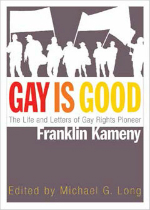
  • Gay is Good: The Life and Letters of Gay Rights Pioneer Franklin Kameny edited by Michael Long, Syracuse University Press
  • Modern Brides & Modern Grooms: A Guide to Planning Straight, Gay, and Other Nontraditional Twenty-First-Century Weddings by Mark O’Connell, Skyhorse Publishing
  • Namibia’s Rainbow Project: Gay Rights in an African Nation by Robert Lorway, Indiana University Press
  • Speaking OUT: Queer Youth in Focus edited by Rachelle Lee Smith, Graeme Taylor, and Candace Gingrich, PM Press
  • The Passion of Christ: A Gay Vision by Kittredge Cherry (author) and Douglas Blanchard (artist), Apocryphile Press
  • Winning Marriage: The Inside Story of How Same-Sex Couples Took on the Politicians and Pundits – and Won by Marc Solomon and Deval Patrick, Fore Edge 



 LGBT Studies

  • Bisexual Perspectives on the Life and Work of Alfred Kinsey by Ron Suresha, Routledge
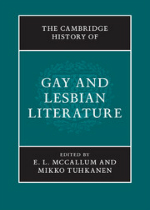
  • The Cambridge History of Gay and Lesbian Literature edited by E. L. McCallum and Mikko Tuhkanen, Cambridge University Press 
  • The Feminine Subject by Susan Hekmant, Polity
  • Lesbian Lives in Soviet and Post-Soviet Russia: Post/Socialism and Gendered Sexualities (Genders and Sexualities) by Francesca Stella, Palgrave Macmillan
  • Lost Causes: Narrative, Etiology, and Queer Theory by Valerie Rohy, Oxford University Press
  • The Psychobiology of Transsexualism and Transgenderism: A New View Based on Scientific Evidence by Thomas Edward Bevan, Lexington Books
  • Man to Man: Desire, Homosociality, and Authority in Late-Roman Manhood by Mark Masterson, Ohio State University Press
  • The Other Orpheus: A Poetics of Modern Homosexuality by Merrill Cole, Routledge
  • The Queerness of Native America Literature by Lisa Tatonetti, University of Minnesota Press 
  • Queer Christianities: Lived Religion in Transgressive Forms by Kathleen T. Talvacchia and by Michael F. Pettinger, NYU Press 
  • Sexual Orientation and Rights (The International Library of Essays on Rights) by Nicholas Bamforth, Ashgate Publishing Company 
  • Unbought and Unbossed: Transgressive Black Women, Sexuality, and Representation by Trimiko Melancon, American Literature Initiative


Romance

  • Against Doctor’s Orders by Radclyffe, Bold Strokes Books
  • Blue Hydrangeas by JJ Wallingford, Bella Books
  • The Bones of You by Laura Stone, Interlude Press
  • Courtship by Carsen Taite, Bold Strokes Books
  • Don’t Bang the Barista! by Leigh Matthews, Leigh Matthews
  • Café Eisenhower by Richard Natale, Bold Strokes Books
  • Falling by Rebecca Swartz, Bella Books
  • Never Too Late by Julie Blair, Bold Strokes Books
  • Running Back by JJ Green, Bella Books
  • Small Time Secrets by Riley Scott Witt, Bella Books
  • A Spark of Heavenly Fire by Kathleen Knowles, Bold Strokes Books
  • Starstruck by L.A. Witt, Riptide Press
 

Erotica

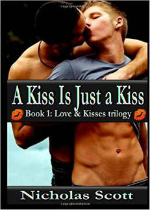
  • A Kiss Is Just a Kiss (Love & Kisses) (Volume 1) by Nicholas Scott, 26 Letters Productions
  • Let It Snow by Heidi Cullinan, Samhain Publishing


 9781590215784

Speculative Fiction/Horror

  • Bitter Waters by Chaz Brenchley, Lethe Press
  • Daughters of an Emerald Dust (Reprint) by Katherine V. Forrest, Bella Books
  • Daughters of the Amber Moon (Reprint) by Katherine V. Forrest, Bella Books
  • The Devil You Know by Marie Castle, Bella Books
  • Gabriel’s City: A Tale of Fables and Fortunes by Laylah Hunter, Riptide Press
  • Town and Train by James Moran, Lethe Press
  • Twisted Echoes by Sheri Lewis Wohl, Bold Strokes Books
  • The Void (Witching Savannah Book 3) by J.D. Horn, 47North
  • Werecat: The Trilogy by Andrew J. Peters, Vagabondage Romance


Mystery/Thiller

  • Balls & Chain by Eric Andrews-Katz, Bold Strokes Books
  • The Best Corpse for the Job by Charlie Cochrane, Riptide Press
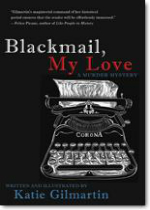
  • Blackmail, My Love: A Murder Mystery by Katie Gilmartin, Cleis Press
  • Criminal Gold by Ann Aptaker, Bold Stokes Books
  • Love Lives Bleeding by Remmy Duchene, Wilde City Press
  • Out of Whack by Susan-X-Meagher, Brisk Books,
  • Nine Nights on the Windy Tree by Martha Miller, Bold Strokes Books
  • Widow by Martha Miller, Bold Strokes Books
 9781627792288  

Bio/Memoir

  • The Andy Cohen Dairies: A Deep Look at a Shallow Year by Andy Cohen, Henry Holt and Company
  • Coming Out to Play by Robbie Rogers and Eric Marcus, Penguin Books
  • David Hockney: The Biography, 1975-201 by Christopher Simon Sykes, Nan A. Talese
  • Nights at Rizzoli by Felice Picano, OR Books
  • Porn Again: A Memoir by Josh Sabarra, JSB Books
  • Wishbone by Julie Marie Wade, Bywater Books


Poetry

  • Mature Themes by Andrew Durbin, Nightboat Books
  • Repast by D.A. Powell, Graywolf Press

ART BOOKS/GRAPHIC NOVELS

  • Adrian and the Tree of Secrets by Hubert and illustrated by Marie Caillou, Arsenal Pulp Press
  • James Bidgood (Taschen’s 25th Anniversary Special Edition) introduction by Bruce Benderson, Taschen
  • Second Avenue Caper by Joyce Brabner and illustrated by Mark Zingarelli, Farrrar Strauss Giroux

– See more at: http://www.lambdaliterary.org/features/11/05/new-in-november-2/?utm_source=Lambda+Literary+Review+November+14th%2C+2014&utm_campaign=Newsletters&utm_medium=email#sthash.Re6eAnXj.dpuf

Filed Under: Book Reviews Tagged With: all genres, booklists, LGBT, november

Edited by Wendell Ricketts, ‘Blue,Too: More Writing By (For or About) Working-Class Queers’

21/11/2014 By David McFarlane Leave a Comment

Repost from Lambda Literary Posted on 18. Nov, 2014 by Mitch Kellaway in Anthology, Reviews – See more at:
 

The story of Wendell Ricketts’ one-of-a-kind anthology Blue, Too: More Writing By (For or About) Working-Class Queers is that of so much literature that examines intersections of marginalized identities: An initial dead-end. His predecessor to this book, Everything I Have Is Blue: Short Fiction by Working-Class Men About More-Or-Less Gay Life, encountered a whopping 57 rejections before it found a publisher–and it was a press that eventually shuttered its doors. So what’s the difference with Blue, Too? Why didn’t it get added to the heap of rejected concepts that are just too “much” or too complexifying or too honest to fit into marketing paradigms? Well, it’s mostly just the fact Ricketts kept pushing until he had the means to publish on his own terms — something he considers a distinctly working-class ethos. This year, he established FourCats Press, and finally he was able to create the book he’s always envisioned. In so doing, Blue, Too represents much more than a sequel–it is a reinvention of what a “collection of creative writing by working-class queers” can be. In sharing the book’s genesis in the foreword, Ricketts reveals why he needed to start anew in a tale that’s deeply telling about of this collection’s necessity. While trying for years to find a publisher who thought readers would be interested in writing that explored the intersection of queerness and class, and even while finally finding a publisher in the now-defunct Suspect Thoughts Press, he discovered that readers–or, at least, the ones reviewing Everything I Have Is Blue–still didn’t get it. He explains: More than a few reviewers missed the point entirely. Take one who wrote “Lend [thebook] to the cute guy who delivers bottled water to your office every month. Or your hunky garbage man. Basically anyone hot with a blue collar.” Because, of course, “hot and hunky” blue collar guys probably wouldn’t buy their own books, and it might help you–you big, bottled-water drinking corporate exec, you–get laid. The field of working-class studies politely ignored the book, as did queer and gay studies programs[.] Armed with that knowledge and the clear vision that working-class queer voices still matter, Ricketts’ expanded upon Everything in every way: in size and scope, in accepting more gender and sexual minorities than solely gay men, and in commenting on the importance of closely reading working-class queer narratives by providing detailed “reading guides” for each of the twenty stories anthologized. Further, one-third of the 486-page volume is taken up by an annotated bibliography about working-class queers in all cultural mediums and an extensive analytical essay titled “Class/Mates: Further Outings.” Blue, Too is, without a doubt, the authority on working-class queer writing in the English language. So let’s hope that a decade after Ricketts’ first attempt, this anthology isn’t still ahead-of-its time. At the very least, its long-overdue presence begs some consideration: What is so dangerous about this writing? The answers, of course, could be endless, but one thing becomes apparent quickly: Blue, Too shakes up both mainstream, straight, cisgender expectations of queers and queers’ expectations of queers.In a similar vein to Mattilda Bernstein Sycamore’s Why Are Faggots So Afraid of Faggots?: Flaming Challenges to Masculinity, Objectification, and the Desire to Conform, albeit in a more understated fashion, Blue, Too interrogates an aspect of queer communities that is often the source of invisibility and discomfort as LG(BT) people gain rights and social acceptance: Some queers are working-class, some are working-poor, and some are even downright impoverished. Our shiny, happy visions of who “queer” people are, especially in mainstream media, often can’t acknowledge that, to quote the oft-used activist slogan, “We Are Everywhere.” Rather, “working-class” and “queer” have come to seem almost like a antonyms because of the other specters that “working-class” raises. So what are the cultural associations with “working-class” complicating queer identity that find illumination in Blue, Too? Immediately, we see the theme of non-white racial identities emerge in C. Baird Cole’s “Flowers, Flames” and Rane Arroyo’s “My Blue Midnights.” In Marcel Devon’s “There Are No Pretty Girls at the Tabernacle,” we feel the threat of fundamentalist religion.Rick Laurent Feely’s “Skins” and Timothy Anderson’s “Hooters, Tooters, and the Big Dog” we get rough, coarse language, hints of violence and rougue-ish criminality–“class-less” behavior. And in Keith Banner’s “Lowest of the Low,” Robby Nadler’s “Austin,” Wendell Ricketts’ “Financial Aid,” and Rigoberto Gonzalez’s “Men Without Bliss” we feel the limitations of fore-shortened educations and dead-end jobs. All of these things scare queers seeking assimilation–and a couple, like violence and poverty, seem to be rightfully frightening, as they portend our extinction. But all of these things also scare queers for the wrong reasons–they disrupt a clean, palatable vision of queerness that could slip seamlessly into an affluent, white-dominant mainstream. Blue, Too is an intervention into queer culture that demands we look at what homogenizing “LGBT” discourses–which are often, in truth, only really about the “G” and maybe the “L”–leave out. Yet, it’s worth noting, Ricketts’ call of “We exist too!” is anything but self-pitying. The writing in Blue, Too is fierce, forthright, and often exquisitely brutal while being tender and deeply real. Highlights include Banner’s “Lowest of the Low,” Feely’s “Skins,” Carter Sickel’s “Saving,” Dean Durber’s “Bleeding Toy Boys,” and Judy Grahn’s “Boys at the Rodeo.” These stories bring up the kinds of questions without easy answers that multiply marginalized folks face daily. How do I feel whole when I must choose between being “out” and making enough money to survive? How do I find belonging when I enter contexts where class and sexual expectations shift? If my queerness and my class seem to be at odds, how can I find a sense of rootedness or “home”? – See more at: http://www.lambdaliterary.org/reviews/11/18/bluetoo-more-writing-by-for-or-about-working-class-queers/?utm_source=Lambda+Literary+Review+November+14th%2C+2014&utm_campaign=Newsletters&utm_medium=email#sthash.nnpSB13g.dpuf

Filed Under: Book Reviews Tagged With: Anthology, Blue Too: Writing By (For or About) Working-Class Queers, FourCats Press, LGBT Anthology, Mitch Kellaway, secondary, Wendell Ricketts

‘Now and Yesterday’ by Stephen Greco

21/11/2014 By David McFarlane Leave a Comment

Fresh out of college, Peter moved to New York City in 1975. Wide-eyed and
Posted on 20. Nov, 2014 by James McDonald in Fiction, Reviews – See more at: Lamda Literary
</iframe>determined to make it as a poet, he and his boyfriend, Harold, moved into a place in Brooklyn, ready to face whatever hurdles came their way. Fast-forward to 2012, Peter is a bigwig at an advertising agency and Harold has long since died of AIDS, along with dozens more of their friends. The city has changed; Peter has changed, but he still longs for fulfillment, for family and for love. Is that too much to ask for at 59? In Now and Yesterday, Stephen Greco richly details gay life in New York  City, providing a nuanced account of how it’s changed throughout the decades. And by splitting the narrative between the 28-year-old literary hopeful, Will, and the aging Peter, Greco explores generational issues often overlooked within this “Peter Pan” gay culture of ours. Peter first met Will at a party his friend Jacob was throwing. Will was the bartender, and while Peter stood out for his looks and physique among an aging crowd of New York City gay socialites, the recognition was not mutual. A relatively successful journalist back in San Francisco, Will learned quickly that this eastern metropolis was not an easy place to make one’s way. There were the challenges of establishing oneself on a career path, of manoeuvring through a cityscape built upon the foundations of drugs, sex, and money. Peter, too, had had to learn to navigate the scene, and while there were certainly differences, the struggle to remain true to oneself  amidst a sea of superficiality was central to both of their concerns. When Jacob recommends Will for a party Peter is throwing, the two meet properly, and a friendship begins to grow that surprised them both. Yet as feelings unfurl and make themselves known, the specifics of their circumstance begin to confuse. Peter isn’t looking to be a “daddy,” and he doesn’t want to just fool around. His feelings for Will are deep and ever growing, but he fears making a move. Is he too old for Will to see him as sexual, as desirable? The longer we live, the more learn to endure, but one is never too old to be afraid. The fear of being kindly rejected because of his age, the shame of having to watch Will squirm as he explains he’d rather be friends, prevents Peter from expressing his true feelings. As young as Peter may feel, their generational differences stand out stark against an otherwise placid background New York is a haven of gay culture and society–and it has been for a long time–but it’s easy for this present generation to forget that these streets were once a battleground. The same density of people that allowed the gay arts to flourish ensured that AIDS would ravish a generation. Those who lived though it, like Peter, carry the loss they experienced with them. Death, which made itself known in such a dramatic way, is always just beneath the surface. And especially as his fellow survivors begin to age, death returns in new and frightening manifestations. Jacob who, like Peter, survived his partner’s death, is diagnosed with an aggressive form of cancer. To have been conscious of one’s own mortality for decades breeds a unique approach to life–and the closer they move towards death, the more nuanced their understanding becomes. The weight of his past is something that Will can see in Peter, but not fully understand. It’s a burden that Peter doesn’t realize is inhibiting his future. By allowing the spectre of Harold to remain so absolutely, he ensures that there isn’t space for anyone to truly fill the void he left. It took many years, and the love of a guy as special as Will, to show him that he needed to move on from his loss, not merely survive it. At its heart, this is a novel about love. By focusing largely on the insecurities of Peter, Greco allows his internal dialogue, which does come off as slightly sophomoric at times, to highlight the universality of our approaches to romance. Increased age does not carry with it a lessened desire for companionship. At 59, Peter doesn’t want to settle for a boy-toy– he’s still after the romance of his life. Greco’s novel shares the important message that even within a community that idealizes youth, it’s never too late to find true happiness, and it’s not wrong to want it. Now And Yesterday richly details the cultural evolution and history of New York’s gay scene and its attention to the AIDS crisis, in particular, makes it an important addition to the canon of gay literature. The fact that the history of HIV isn’t included in most school curricula, coupled with the generational barriers that the gay community has yet to properly dismantle, makes this a uniquely accessible and relevant piece of work that educates as much as it enchants. – See more at: http://www.lambdaliterary.org/reviews/11/20/now-and-yesterday-by-stephen-greco/?utm_source=Lambda+Literary+Review+November+14th%2C+2014&utm_campaign=Newsletters&utm_medium=email#sthash.ARZRWvrc.dpuf

Filed Under: Book Reviews Tagged With: Fiction, gay, James McDonald, Kensington Books, Now and Yesterday, Stephen Greco

A Fresh Perspective on the Genre Fiction Debate, ‘James Baldwin and the Queer Imagination,’ and More LGBT News

21/11/2014 By David McFarlane Leave a Comment

Posted on 19. Nov, 2014 by Alec Johnsson in Features, News


This week in the LGBT-themed arts:
Jaswinder Bolina writes an essay for the Poetry Foundation on the vulnerability of MFA candidates to classist isolation, and the fallacies of believing that poetry is less relevant today.
Slate chronicles the brief but influential (and possibly romantic) relationship between the two most crucial English gay poets of World War I: Siegfried Sassoon and Wilfred Owen.
On December 2, the New York Public Library is hosting a talk with Ayana Mathis and Matt Brim about the latter’s forthcoming book James Baldwin and the Queer Imagination.
Joshua Rothman offers a fresh perspective on the current conflation of literary fiction and genre fiction, using Emily St. John Mandel’s novel Station Eleven as his jumping-off point.
The Cut interviews avant-garde fashion designer Jeremy Scott about coming of age, controversies, celebrities and his new book, which has a cover that uniquely employs the Droste effect.
Slate has posted an exclusive excerpt from Philip Gefter’s new biography on Sam Wagstaff, the foremost patron and boyfriend of groundbreaking late photographer Robert Mapplethorpe.
There is also an excerpt, on Vulture, from gay director Justin Simien’s companion book to his film Dear White People, about how reality television perpetrates stereotypes.
The Poetry Foundation also discusses this year’s Miami Book Fair International–which will also feature a commemoration of James Baldwin–with co-organizer Adam Fitzgerald.
The Hollywood Reporter covers the recent reunion–in Orange County, California–of Stephen Sondheim and the original cast of Into the Woods, which debuted in San Diego in 1987.
This past week saw this year’s annual Bent-Con, an LGBT-flavored science fiction and comic book convention in Los Angeles. Here’s a photo essay of the event.
Dan Schulman and Dana Goldstein reveal the process that their books went through from original conception, through development, to the bestseller list.
Joan Allen, William H. Macy, and Brie Larson are among the actors set to star in a Lenny Abrahamson-directed adaptation of Emma Donoghue’s novel Room.
Dave Holmes, TV personality and  columnist for Vulture, is at work on his first book, an autobiographical comedy tentatively titled Party of One.
– See more at: http://www.lambdaliterary.org/features/11/19/a-fresh-perspective-on-the-genre-fiction-debate-james-baldwin-and-the-queer-imagination-and-more-lgbt-news/?utm_source=Lambda+Literary+Review+November+14th%2C+2014&utm_campaign=Newsletters&utm_medium=email#sthash.DsOFJnGf.dpuf

Filed Under: Book Reviews Tagged With: Adam Fitzgerald, Alec johnsson, Ayana Mathis, Bent-Con, Dan Schulman, Dana Goldstein, Dave Holmes, Dear White People, Emily St. John Mandel, Emma Donoghue, Into the Woods, James Baldwin, Jaswinder Bolina, Jeremy Scott, Joshua Rothman, Justin Simien, Matt Brim, MFA, miami book fair, Philip Gefter, primary, reality tv, Robert Mapplethorpe, Room, Sam Wagstaff, Siegfried Sassoon, Station Eleven, Stephen Sondheim, Wilfred Owen

The Imitation Game

18/11/2014 By David McFarlane 4 Comments

The Imitation Game: Homophobia is still with us 60 years after the death of Alan Turing

To combat anti-gay bullying, education against all prejudice should be a mandatory subject in every school, says Peter Tatchell

By Peter Tatchell

10:32AM GMT 14 Nov 2014


Movies rarely make me cry, but I cried when I watched The Imitation Game. Released today, it stars Benedict Cumberbatch and Keira Knightly, telling the heroic and tragic story of the British wartime code breaker, mathematical genius and computer pioneer, Alan Turing.
As well as decrypting Nazi military codes, shortening the war by two years and saving millions of lives, the entire modern digital age of computers, mobile phones, email, internet and space exploration is based on the principles he elaborated. Although Turing arguably possessed one of the greatest minds in history – on a par with Newton and Einstein – he was nevertheless prosecuted and hounded to his death in 1954 for being gay.
Upon conviction, Turing was given a stark choice: two years’ jail, or chemical castration via a hormone therapy that was uncannily similar to the Nazi “cures” for homosexuality that were used on gay men in Buchenwald concentration camp.
Unable to cope with the ghastly side effects of castration treatment, he committed suicide at the age of 41 – depriving humanity of future knowledge and inventions he might have pioneered had he lived.
I wept as I watched this film. I wept not only for Turing’s terrible personal suffering, but also for the estimated 50,000-100,000 other gay and bisexual men who were convicted in Britain under the same or similar anti-gay laws. Unlike Turing, most of them were given no choice. They were jailed and often brutally abused on the inside.

Filed Under: Anti-Bullying & Homophobia Tagged With: crying, history, homophobia, LGBT, persecution, The Imitation Game

The Gathering – Gay Spiritual Group

18/11/2014 By David McFarlane Leave a Comment


Carols_2014The Gathering, Gay Men’s Spiritual Group, extend a warm invite to you and your friends and family to the annual “Community Christmas Carols by Candlelight” Service, on Thursday 11th December 2014, in All Soul’s Church, Elmwood Avenue, Belfast, BT9 at 7:30pm.
 
We are delighted that Pádraig Ó Tuama has agreed to be our speaker this year.  Pádraig is a Community Leader at Corrymela, a poet and theologian amongst other things and we are looking forward to his sharing with us.
 
The collection this year will be for the DEC Ebola appeal.
 
This is a great way to start the festive season and we warmly welcome all who genuinely want to share with us at this time.  Refreshment will be served afterwards.


Filed Under: Anti-Bullying & Homophobia, Music Reviews Tagged With: Belfast, carols, Christmas, gathering, gay, group, spiritual

Manchester library unveils public LGBT archives

18/11/2014 By David McFarlane Leave a Comment

LGFUK Logo

Manchester library unveils public LGBT archives

  • In: Carousel, GLBT News
  • |
  • On: October 30, 2014
By John Mack Freeman
The Manchester Libraries have teamed with the Lesbian and Gay Foundation to make the Foundation’s holdings more publicly accessible. Via PinkNews:

The LGF’s history collection – made available at Central Library in Manchester – includes a comprehensive catalogues of LGB magazines, including Mancunian Gay, Outnorthwest, Gay Times, Diva, and several grassroots publications.
The collection, housed in the Libraries Archives+ Centre, also includes several historic documents about early Pride celebrations, Manchester’s gay movement, and literature from the AIDS crisis.
Heather Williams of the LGF said: “We are delighted to be working with Manchester Central Library to make our archives accessible to the public.
“These archives contain valuable records of the development of LGBT rights and changing attitudes in society, and now the people of Manchester will be able to discover and celebrate the history of the North West’s LGBT communities.”

Filed Under: Campaigns Tagged With: archives, LGBT, library, manchester

Oscars’ Foreign Language Preview: Gay Contenders Come Out With Pride

18/11/2014 By David McFarlane Leave a Comment

Oscar Contenders Gay Cinema
Oscars’ Foreging Language Preview
 
NOVEMBER 12, 2014 | 10:00AM PT

Peter Debruge

Chief International Film Critic@AskDebruge

At last year’s Cesar Awards, three of the top contenders for France’s top film prize — specifically, “Blue Is the Warmest Color,” “Stranger by the Lake” and “Me, Myself and Mum” — centered on LGBT issues. Compare that with the Oscars, where just one of the nine best picture nominees — “Dallas Buyers Club” — even so much as acknowledged homosexuality as a part of human existence.

SEE MORE: Awards: The Contenders

What gives? It’s not merely a question of France being more progressive than the U.S. (It’s not, judging by widespread protests against marriage equality seen in Gaul over the past year.) Other countries, including several we think of as more conservative than the States, are also getting behind gay-themed pics.
Study the list of submissions for the upcoming Oscar foreign language prize — always an interesting indicator, since selection committees from each country are allowed only one film to represent them at the Academy Awards — and it’s clear that the U.S. lags in its willingness to make, much less celebrate, films dealing with homosexual themes.

SEE MORE:Oscars: The Foreign-Language Contenders

Brazil picked Daniel Ribeiro’s “The Way He Looks,” a coming-out story centered on a blind teen.
Portugal went for Joaquim Pinto’s first-person documentary “What Now? Remind Me,” in which the HIV-positive helmer reflects on living with the virus. It was awarded the Fipresci prize at the Locarno film fest.
Switzerland’s selection, “The Circle,” from director Stefan Haupt, blends scripted reenactment and non-fiction interview segments to convey a sense of the country’s nascent post-war gay scene.
Finally, France is sending Bertrand Bonello’s “Saint Laurent,” a Cannes-anointed biopic on the influential fashion designer that doesn’t shy away from its subject’s sexual proclivities.
(One could also count Canadian submission “Mommy,” from openly gay director Xavier Dolan, whose flamboyant protagonist isn’t identified as gay, per se, but certainly defies Hollywood’s heteronormative paradigm in nearly all respects.)
Past Is Prologue
Considering the Academy’s historical reluctance to reward films with queer content (exceptions being “Boys Don’t Cry,” “Brokeback Mountain” and “Milk”), it’s surprising to see five countries submit pics that, were they competing in other categories, show little precedent for nominations. Such a move suggests that regardless of how Oscar voters might feel, a group of key influencers in each country sincerely believes these films are the best they have to offer.
It’s hard to imagine an American committee deciding to throw its support behind a “gay movie.” But then, Americans seem uniquely inclined to pigeonhole films according to the sexual persuasion of their protagonists, whereas foreign directors have been far more successful in achieving mainstream success with human-interest stories in which the characters happen to be gay — though it hardly goes for all countries, with serious cultural obstacles in Russia, Iran, the Middle East and Japan.
Meanwhile, in the U.S., cinematic representations of homosexual identity are typically relegated to one of two categories: either “gay movies” (typically low-budget fare made for LGBT auds and released, often directly to homevid, by a handful of specialty distribs) or as side characters in mainstream movies (a relatively recent phenom for pics looking to score PC points, often revealing the news as a third-act surprise, a la “ParaNorman’s” gay jock).
Rare Crossover Success
This year brings an interesting exception in Ira Sachs’ “Love Is Strange,” a sweet, low-key romantic drama centered on a longtime gay couple, finally allowed to marry, who find themselves kicked out of their New York apartment and forced to rely on family and friends for housing — essentially a same-sex twist on Leo McCarey’s 1937 “Make Way for Tomorrow.” Sachs’ film was a rare crossover success, overcoming the obstacles one imagines facing a film in which the characters are not only gay, but gray (that is, well past the age of the average American moviegoer). This, of course, is what filmmakers want: for their work to appeal beyond the rigidly defined demographic of the characters themselves.
“If you look at the bulk of the work coming out of other countries, they’re still making human dramas about everyday life that are not being made here,” says Sachs, who deliberately — and somewhat defiantly — chose to tell stories centered on gay lead characters (first “Keep the Lights On” and now “Love Is Strange”) after a gap of 15 years.
The vast majority of independent helmers responsible for making the landmarks of American queer cinema — Todd Haynes, Gus Van Sant, Kimberly Peirce, Gregg Araki — have subsequently gravitated toward more mainstream (i.e. straight) subjects in order to sustain their careers and court a wider audience. Sachs blames the system, not the filmmakers, since American distribs remain gun-shy about supporting directors who incorporate that aspect of their identity into their work.
“If there’s no economic incentive or possibility of sustaining a career as an American filmmaker making strictly personal, human films, there’s no way for those filmmakers to develop or become better over time,” notes Sachs, whose freedom comes from working outside the system. “I’ve built a community (of individual investors) around me that has supported my own personal filmmaking.”
Alternative to Hollywood
In other countries, where big-budget Hollywood tentpoles make it tough for local cinema to compete, there remains a wide gap for relatively inexpensive adult dramas, which have all but disappeared from American studios’ diet.
That creates an opportunity for foreign directors working to tackle stories not being done bigger and better by Hollywood — which is where gay-themed pics stand to shine and be recognized in their respective countries. The phenomenon is hardly limited to LGBT stories either: In Germany, a modest, black-and-white portrait of a twentysomething slacker called “Oh Boy” (retitled “A Coffee in Berlin” for U.S. release) connected in a big way, winning six Lolas.
The same was true in France of “Blue Is the Warmest Color,” “Stranger by the Lake” and “Me, Myself and Mum”: All three connected with audiences because they presented mature, human-interest portraits seen lacking among the flashier American imports.
Ironically, the most commercially successful — Guillaume Gallienne’s “Me, Myself and Mum,” about an effeminate young mama’s boy who’s the last to accept himself as gay, whereas his entire family has long since accepted his identity — has yet to find distribution in the U.S., where it has two big strikes against it: The film is not only perceived as “gay,” but it’s also foreign to boot (whereas “Blue Is the Warmest Color” and “Stranger by the Lake” had a more sexually explicit hook, landing distribution from Sundance Selects and Strand Releasing, respectively).
Just because a film is submitted by its country to compete for the foreign-language Oscar doesn’t mean it’s assured a U.S. release. Of the five pics mentioned, only “Saint Laurent” (Sony Pictures Classics) and “Mommy” (Roadside Attractions) stand to do much business in the U.S. But they also represent what pics like “Love Is Strange” and British-made Alan Turing biopic “The Imitation Game” got right: They tell compelling human-interest stories in which the characters’ sexuality is acknowledged, but not the pic’s sole focus.
“People are always asking me, ‘Don’t you think this is a great time for gay cinema?’ And I think, what about Visconti, Fassbinder, Chereau? There’s a history that I feel connected to, that American cinema has forgotten, that existed of gay filmmakers making films that were not culturally positioned: They were part of art cinema in a larger way,” says Sachs.
Granted, there is more gay representation on American screens than ever before, but it’s been pushed to the margins: supporting characters and niche pics. However progressive its politics, the U.S. could stand to learn from other countries, where such stories are getting the treatment — and recognition — they deserve.
 
Variety – http://variety.com/2014/film/spotlight/oscar-race-foreign-gay-themed-pics-coming-out-with-pride-1201353064/

Filed Under: Movie Reviews Tagged With: film, foreign, Ira SachsMommySain LaurentThe CircleThe Way He LooksWeekly OnlineWhat Now? Remind Me gay, Language, movie, oscars

Outburst Queer Arts Festival

18/11/2014 By David McFarlane Leave a Comment

The Outburst Queer Arts Festival runs from the 14th to 22nd November 2014.  It’s programme is wide ranging and will have something for everyone, so please do try and get to at least one event and support a cracking organisation and series of events

Click HERE to be taken to their website check out the events

Filed Under: History Tagged With: arts, Belfast, festival, outburst, queer

Nick Jonas and Ellen DeGeneres

18/11/2014 By David McFarlane Leave a Comment

Tired of taking his shirt off, Nick Jonas takes his pants off for Ellen DeGeneres instead

Singer drives talk show host’s audience wild

13 NOVEMBER 2014 | BY GREG HERNANDEZ
Nick_Jonas and Ellen_DeGeneres

Photo: EllenTube
Nick Jonas has got it and he’s going to flaunt it.
The singer, doing a publicity blitz for his new self-titled album, appeared on The Ellen DeGeneres Show this week and pulled down his pants for her screaming audience.
DeGeneres set the mood when she began to show the audience photos of a shirtless Jonas from a shoot he did for Flaunt magazine.
When the talk show host remarked that Jonas had put on a lot of muscle weight for his role on the TV series Kingdom and that she wanted to ask him to take his shirt off, Jonas drew the line.
‘I’m done taking my shirt off,’ he said.
The audience expressed their disappointment.
Then, the payoff.
‘However I did get some really great underwear from you and now I’ll take my pants off.’

– See more at: http://www.gaystarnews.com/article/tired-taking-his-shirt-nick-jonas-takes-his-pants-ellen-degeneres-instead131114#sthash.vmBgIiqg.dpuf

Filed Under: TV programme reviews Tagged With: ellen degeneres, nick jonas, reveal, shirtless, underwear

  • « Previous Page
  • 1
  • …
  • 17
  • 18
  • 19
  • 20
  • 21
  • …
  • 41
  • Next Page »

Categories

Copyright ACOMSDave.com © 2026