ACOMSDave

Community Journalist

  • Home
  • Community Journalist
  • Events
  • Media Page and Press Kit
    • Projects and Work
  • Resources & Documents
    • LGBTQ+ Support Groups and Documents
  • NIGRA
  • Archives
  • Contact

Archives for 2016

Stephen Bourne looks at the relationship between the police and the gay community

11/01/2016 By ACOMSDave Leave a Comment

We’ve delved into the GT vault this festive season, to give you some holiday reading.


30th December 2015

boysinblue1

Boys in blue.


The relationship between the police and the gay community has always been a difficult one. It’s taken tragic incidents, like the 1999 bombing of The Admiral Duncan pub in London’s Soho, to encourage the police to work more closely with us in ways that would’ve been unthinkable before that event happened.
For example, the Gay London Police Monitoring Group, the Gay Police Association and the Metropolitan Police’s LGBT Advisory Group must take some of the credit for helping to build bridges. But enough recognition is given to individual community advisers who’ve worked, voluntarily, up and down the country, on the front line of our communities.
For the last two decades, I’ve been active in the London Borough of Southwark as a voluntary independent adviser or ‘critical friend’ to the police. In the 90s, I realised it was easy to stand on the sidelines and criticise the police without doing anything constructive to change the relationship. So, in 1995, I put my head above the parapet – and into the lion’s cage – and set up one of the first locally-based forums to bring together members of the LGBT community and the police to specifically address homophobic hate crime. I focussed on building trust and confidence with local officers and, gradually, I found willingness on their part to talk about the issues that needed to be addressed.
Meanwhile, in 1990, a group of gay police officers met in secret at the home of an officer based at Battersea Police Station in South West London. They had to meet in secret because, even as recent as 1990, they risked persecution and being thrown out of the force if they were found out to be gay. The meeting marked the beginning of the Lesbian and Gay Police Association, which later changed its name to the Gay Police Association. This group committed itself to offering advice and support to fellow officers. Three years later, in 1993, Marc Burke, a former police officer, wrote his landmark book Coming Out of the Blue, which exposed the homophobia that lesbian and gay officers faced on a daily basis. However, with the exception of PC Harry Daley’s autobiography, This Small Cloud, published posthumously in 1987, hardly any documentation exists that informs us about the lives of gay police officers before Daley died in 1971.
boysinblue2
In the days when gay officers had to hide in the closet, Daley, who served with the Metropolitan Police from 1925 to 1950, was an exception. In 1930, wearing his uniform, his portrait was painted by the gay artist Duncan Grant. Around the same time he began a love affair with the novelist EM Forster, but Daley was too indiscreet for the closeted Forster. The risk of being found out and imprisoned alarmed Forster to such a degree that he terminated the relationship. Until he retired from the force and joined the merchant navy, Daley happily continued to engage in unlawful acts while upholding the law. As the ‘human face’ of the British bobby in BBC radio broadcasts in the 1930s, he may have inspired the writer Ted Willis to create PC George Dixon, the friendly copper who pounded the beat in BBC TV’s popular Saturday night drama Dixon of Dock Green, from 1955 to 1976.
When I was growing up in Peckham, in South East London, in the 1970s, if I saw a policeman I didn’t ask him the time, I ran for it! If the copper happened to be PC Cole, there wasn’t any point in running away because he’d know who you were and where you lived. For 30 years, from 1953 to 1983, PC Cole walked the beat in South East London. He never moved from his base – the notorious Carter Street Police Station, situated off Walworth Road. Legend has it that villains used to beg their arresting police officers to take them anywhere but Carter Street. Now and again, PC Cole visited my school – a rough secondary modern – and spoke to us at morning assemblies. Though PC Cole was more approachable than his colleagues, in those days in South East London, almost everyone feared and mistrusted Lily Law.
After I left school in 1977, PC Cole became well known as the bobby who wrote a series of best-selling books, in which he related his experiences of walking the beat. This entertaining collection offers insights into an interesting and eventful life. When he died in 2008, our borough commander described him as ‘a talented man with a tremendous sense of humour. His books did much to enhance the reputation of the police service – his amusing anecdotes showed the other side of policing – the human side. He had a real sense of loyalty and passion for policing and for Southwark borough.’
When I read PC Cole’s book, Policeman’s Story, published in 1985, I was intrigued by his brief reference to PC Jimmy Davenport – not his real name – a ‘homosexual’ officer he befriended when he joined the police in 1953. Curious about PC Davenport, in 2004 I tracked down the then retired Harry Cole to find out more. What transpired was a revealing insight into attitudes towards a gay serving police officer in London in the 50s.
Harry informed me that his publisher insisted that he cut the references he made to Jimmy’s gay life, so Harry revealed what was left out of Policeman’s Story: ‘I met Jimmy when we arrived that first day for training at Peel House. Jimmy was in the next bunk to me and we became quite friendly. When we were at the training school, Jim was always singing in the shower. One of his favourite songs was Marlene Dietrich’s ‘Good for nothin’ men are good for nothin’’. Then Jim and I were posted to Carter Street, on the same shift and on the same beat. I liked walking with Jim because he was such a good-looking fella, and all the girls would always be looking at us. He was a tall, upright bloke. He had a baby face. And the funny thing was he had very big hands! But he never seemed to know what to do with them!”
boysinblue3
Everyone at Carter Street knew Jimmy was gay, but Harry said this didn’t create any problems, even at the height of the ‘homosexual witch hunt’. This intensified in Britain in the 50s around the time Harry and Jimmy worked together as police officers. Up and down the country, gay men were hounded, persecuted and imprisoned because, at that time, there was a perception that homosexuality was morally reprehensible and also politically dangerous. The medical attitude was that it was an illness, that if treated successfully, homosexuals would become ‘normal’. Police officers were encouraged to arrest any gay men they encountered, and gay men were often arrested and prosecuted after they unwittingly made advances to plain clothes police officers. These were known as agent provocateurs, French for ‘inciting agent’. And yet, in South East London, PC Jimmy Davenport avoided detection and carried on with his career as a police officer throughout the ‘witch hunt’ of the 50s. Harry explained, ‘If you have 15 policemen in a shift, in that 15 there’s going to be one you could kill, some you avoid, some you like intensely, others you don’t mind. And Jim was on the good side, if you like. If you have to work with another officer, you want them to be someone you like and get on with. Jim fitted in. Though we guessed he was a homosexual, it wasn’t an issue.’
Harry remembered that Jimmy used to visit a local gay ‘character’ called Maurice who owned a chemist shop in Westmoreland Road, off Walworth Road: ‘Maurice was as queer as a nine bob note, and he had these parties, for homosexuals, but we turned a blind eye. And if a bobby was wandering by, on his beat, especially on a cold winter’s night, Maurice invited him in: ‘Come in, dear boy. Come and have a drink.’ Everyone knew what Maurice was like. He was like a Wild West doctor. Abortion was illegal then but women, whose young daughters got pregnant, went to Maurice and he sorted them out. And there was always a copper who’d put some girl in the family way, so we’d tell him to take her to Maurice. And then, when the Richardson gang started up, if any of them got injured and couldn’t risk going to a hospital, they’d blag Maurice into helping them. He was around for years.’
PC Jimmy Davenport was stationed at Carter Street for several years and then he was transferred to Wimbledon, because his ‘other secret’ came out. In his spare time Jimmy was singing in a pub and getting paid for it! Harry explained, ‘A police officer didn’t earn much in those days, so money was always tight. Jimmy was discovered moonlighting. That wasn’t allowed. It was frowned upon. Things were very strict then. Some years later, it must’ve been in the 60s, I went with a mate to a club in Old Compton Street. When the show started, to my surprise, it was Jim who came on stage and sang! He had such a good voice. And that was the last I saw of him. After that, other officers said they recognised Jim in various West End shows. So he must’ve left the police and pursued a career in showbusiness.’
What PC Harry Cole didn’t tell me was that homophobia was rife in the police service – and if an officer was discovered to be gay, it could lead to instant dismissal. When I interviewed a gay inspector who’d joined the service – outside of London – in 1978, at a time when gay officers remained firmly in the ‘closet’, he told me: ‘You can’t imagine how racist, homophobic, and sexist the police was. If homosexuality was mentioned, it was always about perverts and poofs. Gays were a dirty minority who frequented gay pubs and haunted toilets. I never saw a copy of Gay News. I never heard about the Gay Liberation Front. I never heard about Gay Pride marches until 1986. I knew there were gay pubs in London, but I had no desire to visit them because, as a police officer, I was terrified of being found out and blackmailed. Gays weren’t tolerated in the police and I bitterly resented that, but there was nothing I could do about it.’ I also interviewed a detective constable who’d joined the Metropolitan Police in 1979. He said: ‘We were a police force, not a service. It was very disciplined. We learned nothing about blacks, homosexuals, religion or domestic violence. We had women officers, but they were expected to make the tea. In those days, the Met was made up of a lot of ex-servicemen, so it was a very macho environment.’ He added that the terms used to describe gay men were all offensive: ‘Queer, homo, poof, bender – they were all used in a derogatory manner. In the old days, because we believed we were the finest police force in the world, we thought we could do everything on our own, but we couldn’t. At first we resented people telling us how to do our work. But not now. That’s changed. We no longer see community advisers as busy bodies but as useful allies.’
In 2003 Stephen Bourne was named Volunteer of the Year by the Metropolitan Police for his pioneering work on tackling homophobic crime in the London Borough of Southwark and for his independent advice on critical incidents.
Words Stephen Bourne

Filed Under: Book Reviews Tagged With: community relations, history, police, Stephen Bourne

LGBT+World Congress of Families

11/01/2016 By ACOMSDave Leave a Comment

Editorial:  Previously I have written about the World Congress of Families, and about their ability to use vast funding to covertly influence the governments of many western governments, and also on a further field in Africa.

I am continuing our watching brief to bring you this article on Dr. Everett Piper, who has been selected by U.S. Sen. James Lankford to join him at President Barack Obama’s State of the Union address in Washington on Jan. 12th.

Now you may well ask why is this important to LGBT people in the UK?  The reason is that in the US it is estimated that 3.8% of the population (9,083,558 m) are LGBT, whilst HM Treasury and the Department of Trade and Industry in 2005 concluded that there were 3.6 m gay people in the UK – approximately 6% of the total population.

Obviously these numbers are voters, yet, Sen Lankford (and his running mate now Dr Piper) seem to want to ostracize them – indeed to end up treating them as third class citizens.

The Congress of Families, and indeed similar bodies with the same aims, have tried repeatedly to organise both in the UK and in Ireland, and we need to be on our guard that they don’t try to suborn our politicians to repeal the rights that we have fought long and hard to obtain.


lankfordpiper

(Left) Oklahoma Wesleyan University President Dr. Everett Piper and U.S. Sen. James Lankford.


OKLAHOMA CITY – Outspoken Oklahoma Wesleyan University president, Dr. Everett Piper, in Bartlesville, was selected by U.S. Sen. James Lankford to join him at President Barack Obama’s State of the Union address in Washington on Jan. 12th.
According to an Associated Press story, published Wednesday, Piper has made news in recent months by criticizing college students as “narcissistic” and is now wanting his college to get a religious exemption from Title IX requirements because transgender people are a “human fabrication” who can be “discriminated” against because they are somehow scientific aberrations.
Piper’s views have been embraced by Lankford, who has made numerous anti-gay statements in recent years, saying sexual orientation is a “choice.”
And with hard-right fundamentalist Christians bristling at the mere thought of gay marriage or LGBT rights of any kind, they have twisted the notion of “religious freedom,” claiming, somehow, that their religious beliefs are being threatened.
Notes the AP article about Lankford’s love of Piper: “A first-term Republican from Edmond, Lankford praised Piper’s “stand for religious freedom.”
That’s code for “I am a fundamentalist Christian and should be able to discriminate against the gays and their ‘agendas.'”
Piper, a regular columnist for the conservative Oklahoma news website Forty Six News, arrogantly boasted in his latest column – “Title XI Exemption and I’m Proud of It” – that “the transgender agenda” is out to “insult” men and women.
America’s leading lesbian, gay, bisexual and transgender advocacy organization, the Human Rights Campaign, released a statement Wednesday in a piece by Liz Halloran headlined “Oklahoma Wesleyan University president says he is ‘proud’ to discriminate against transgender people,” saying that “(Piper defended) the university’s decision to request an exemption to existing civil rights law in order to discriminate against LGBT students on religious grounds, Piper used the same bigoted and hateful language that is his stock-in-trade: referring to transgender people as a “human fabrication,” and non-discrimination efforts as “misogyny.”
Halloran also quotes HRC President Chad Griffin, who said: “Mr. Piper’s assertions are despicable, but, sadly, not surprising, given his track record of working with anti-LGBT organizations like the World Congress of Families. Piper, meanwhile, sarcastically responded to this criticism by writing a response titled “I spoke to a hate group last week.” Piper actually embraces his role as hate leader for the Christofascist right.
HRC’s Griffin continued, adding: “Piper should be ashamed. Imagine what it feels like to be a young LGBT student at Oklahoma Wesleyan University and hearing the president of your school publicly disparage you in this way. His astonishingly callous response to revelations that he sought the right to discriminate against his own students is not only stomach-turning, but anathema to the role of an educational leader.”
We agree. And we are also disappointed that Sen. Lankford, who is elected to represent all Oklahomans, is comfortable palling around with the likes of loud-mouthed, reactionary bigots like Everett Piper. However, given Lankford’s record, we’re not all that surprised.
This is an opinion piece from Red Dirt Report editor Andrew W. Griffin


Filed Under: Anti-Bullying & Homophobia Tagged With: LGBT rights, USA politics, World Congress of Families, world politics

Steven Universe: Cartoon Network censor same sex scene in UK version of show

11/01/2016 By ACOMSDave Leave a Comment

Jack Shepherd @JackJShepherd Friday 8 January 2016

A petition to ‘End Homophobic Censorship of Steven Universe’ has been signed by over 4,000 people

Steven-Universe
Cartoon Network’s cartoon series Steven Universe was released to critical praise, with many commentators complimenting the show for bringing gender to the forefront of a children’s show, with clear, positive LGBT+ themes throughout.
However, according to reports the network’s European division has decided to censor one of the episodes in the UK, removing a scene in which two female characters kiss.
The scene in question, which takes place in the episode ‘We Need To Talk’, has caused outrage online, with a petition having been started entitled ‘End Homophobic Censorship of Steven Universe’. It has been signed by over 4,000 people as of the 7 January.
You can see the cut for yourself in the clip below, the characters Pearl and Rose Quartz embracing at around the 1.59 mark.
As you can see, their non-offensive kiss is replaced by a shot of a young man staring on, strumming his guitar.
READ MORE
Netflix ‘moving quickly’ on globally accessible content
Since the petition gained attraction, Cartoon Network has responded to the outcry, writing on Facebook: “Cartoon Network (in Europe) often shows amended versions of programs from US originals.
“The US broadcast system requires that shows are marked with a rating –in this case PG (parental guidance necessary). In the UK we have to ensure everything on air is suitable for kids of any age at any time.
“We do feel that the slightly edited version is more comfortable for local kids and their parents.”
This response has, in itself, caused yet more outrage, with viewers asking why a sexual/romantic interaction between a male and female character in the same episode was no censored.
“So heterosexual relationships are somehow more suitable for young people than same-sex relationships?” wrote one disgruntled viewer on Facebook, while another wrote: “Censoring at this point is still very unnecessary, there is nothing offensive about the scene you censored.”
READ MORE
Facebook censors feminist blogger for blogging about periods
Playwrights ‘censor their own work to avoid losing funding’
Magic Mike XXL poster ‘censored’ in Australia
‘The UK becoming the world leader in censorship’, says lawyer
Pink News, who were one of the first to notice the change, noted that the BBFC’s ‘Universal’ rating allows for characters to “be seen kissing or cuddling and there may be references to sexual behaviour. However, there will be no overt focus on sexual behaviour, language or innuendo”, a condition the censored scene does not break.
Steven Universe’s former producer Ian Jones-Quarterly has previously confirmed that two of the female characters, Ruby and Sapphire, are “in a romantic relationship and I don’t believe any different”. How and if Cartoon Network are going to censor that relationship as well is currently unknown.

Filed Under: Anti-Bullying & Homophobia Tagged With: censor, gender bias, homosexual bias, LGBT kiss cut

Senior Christians asks church for better treatment of LGBT people

11/01/2016 By ACOMSDave Leave a Comment

Gay Times Logo10th January 2016

by Max Ramsay

churchAn open letter to the Archbishops of Canterbury and York has been signed by 105 senior Anglicans…

The letter asks the Archbishops to accept the church has mistreated LGBT people and to “repent” at a meeting of worldwide Anglican church leaders.
Those who signed the letter hope Justin Welby and Dr John Sentamu, the Archbishops, will take “an unequivocal message” to the meeting.
The letter is critical of the church. “We have made [LGBT Christians] feel second-class citizens,” it says.
“We, the Church, need to apologise for our part in perpetuating rather than challenging ill-informed beliefs about LGBTI people, such as the slanderous view that homosexuals have a predisposition to prey on the young.”
The meeting of Primates is a gathering of the chief Anglican bishops from each of the 38 church regions around the world, including countries with a poor record on LGBT rights.
On this issue, the letter says: “We understand that the Primates come from a variety of contexts with differing ways of interpreting the Scriptures, but we urge you to be prophetic in your action and Christ-like in your love towards our LGBTI sisters and brothers.”
There are fears church ministers from Kenya and Uganda will walk out over disagreements about LGBT acceptance in the church, BBC religious affairs correspondent Caroline Wyatt has reported.
The letter was organised by Jayne Ozanne, former director of the Accepting Evangelicals group which campaigns for LGBT Christians’ rights.
“It was time to stand tall and actually call the Church back to its roots to reminding them about the fact that we are there to welcome and serve all,” she said to BBC News.
“We have not treated the gay community as equal members. We’ve actually vilified them.”
Journalist Patrick Strudwick was critical of the church’s continued failure to uphold LGBT equality:

Filed Under: Anti-Bullying & Homophobia Tagged With: church members, church organisers, LGBT christians

City Law School students to compete in inaugural LGBT Moot

11/01/2016 By ACOMSDave Leave a Comment

City University of London
First published Friday, 8th January, 2016 • by John Stevenson (Senior Communications Officer)


Two teams will be participating in the UK’s first-ever LSE-Featherstone Sexual Orientation and Gender Identity Moot 2015-16.

 
Two teams of City Law School students will be participating in the UK’s first ever Lesbian, Gay, Bisexual and Transgender (LGBT) mooting competition organized by the London School of Economics and Political Science (LSE).
LGBT Moot The LSE-Featherstone Sexual Orientation and Gender Identity Moot 2015-16, takes place at LSE’s New Academic Building on Lincoln’s Inn Fields, from March 5th to 6thand is the first of its kind dedicated to considering areas of sexual orientation and gender identity law. The competition is named in honour of Baroness Lynne Featherstone, a campaigner for LGBT rights and the architect of the UK’s equal marriage legislation in England & Wales. Baroness Featherstone also commissioned the first ever UK Government’s transgender action plan. Academic Programmes Moot Director, Emily Allbon, said: “It’s fantastic for City students to be participating in the LSE Moot. I knew there would be significant interest in the opportunity from our students and we’re pleased to have selected participants from across our LLB, GDL and BPTC programmes. Our teams are very much looking forward to competing”.
The LSE-Featherstone Sexual Orientation and Gender Identity Moot 2015-16 is inspired by the Williams Institute Moot Court Competitionheld annually at the University of California Los Angeles (UCLA) School of Law, now in its 12th year.
City Law School Lecturer, Dr Grietje Baars, who is preparing the students for the Moot, said:
“I’m extremely excited at the opportunity this moot affords students to think through impact of law on LGBTQIA identity and community and our ability to live queerly in the UK today. The LSE Moot, moreover, promises to connect students with other LGBTQIA students, scholars and practitioners as well as allies from around the country through a series of lectures, events and workshops. Our call for participants received a huge response and I can’t wait to start working with our two teams.”

Filed Under: History Tagged With: law students, LGBT Moot, London University

Chinese Court Takes Historic Step Toward Advancing Same-Sex Marriage

10/01/2016 By ACOMSDave Leave a Comment

Nation of Change
By Samantha Cowan –
January 6, 2016
china-same-sex

A court decision regarding one man’s right to marry his partner could come down in the next six months.

|With the U.S. Supreme Court’s decision to legalize same-sex marriage in June, more than 20 countries across the Americas, Europe, and Africa now recognize unions between two men or two women. Yet not a single Asian nation has joined them. That may be about to change.
Movement within China’s court system indicates that the world’s most populous country could be the first in Asia to join the ranks.
Advertisement
A Chinese court has agreed to hear a case that could grant a same-sex couple the right to marry, Reuters reports.
Sun Wenlin, a 26-year-old gay man hoping to marry his partner, filed a complaint against the Changsha Furong District Civil Affairs Bureau, which denied his request to register the marriage, in Hunan province in December. Sun told Reuters that a local court agreed on Tuesday to hear his case.
Whether the court sides in Sun’s favor, even the decision to hear the case is a step toward LGBT equality.
Related
These Same-Sex Couples Couldn’t Get Married in China, So They Came to America
“In China, courts often reject politically sensitive cases, so the fact that the lawsuit is accepted signals some official willingness to address discrimination against LGBT people, which is encouraging,” Maya Wang, a China researcher at Human Rights Watch, told Reuters. “But we will need to see if they actually win the case. If they do, it’d be a truly watershed moment for LGBT rights in China.”
China decriminalized homosexuality in the late 1990s and took it off the list of official mental disorders in 2001. Since then, the unofficial attitude toward homosexuality is what’s known as “the three nots” approach: “not encouraging, not discouraging, and not promoting.”
Sun states that after he filed the complaint, police attempted to investigate his home and approached family members. He told the Global Times that the police officers who came to his home emphasized the importance of having a child and carrying on the family name, reflecting the nation’s more traditional values. LGBT people living in China are banned from adopting a child and are not protected under antidiscrimination laws, according to international organization Out Right.
Sun is confident in his case, telling Reuters that China’s marriage law “says there is the freedom to marry and gender equality.” He also notes that national laws describe marriage as being between a “husband and a wife” rather than a “man and woman,” and that such labels could be applied to homosexual couples.
This article was originally published on TakePart.
http://www.nationofchange.org/news/2016/01/06/chinese-court-takes-historic-step-toward-advancing-same-sex-marriage/

Filed Under: History Tagged With: chinese, courts, equal marriage, marriage, politics, same sex

John Gielgud’s little porn play

10/01/2016 By ACOMSDave Leave a Comment

 
15408
John Gielgud, pictured in 1950 | Jane Bown | 15408
A gay porn film based on a screenplay written by the late Sir John Gielgud has finished production, despite opposition from his estate. Trouser Bar is set in a menswear shop where an orgy takes place and stars Nigel Havers and Julian Clary as passersby. The screenplay was secretly written by Gielgud – known for his roles in Julius Caesar and Arthur – for Peter de Rome. David McGillivray, the producer, told The Guardian:

“Pornography is still a stigma in this country, but Sir John loved porn and, in his letters, he talks about visiting gay cinemas,” he said. “I was shocked when the trust didn’t give me permission. We stuck to Sir John’s script very tightly when we made the film a couple of weeks ago. He was very specific about the clothes he wanted the actors to wear.”
The script, written in the late 1970s, was passed on from de Rome to McGillivray before his death last year. The low-budget feature now risks a legal battle before finding an audience. “They have come down heavily on me,” McGillivray said. “They are using intellectual copyright as an excuse.”

The late actor’s estate are trying to block the film.
The actor and theatre director Sir Arthur John Gielgud, OM, CH was born on 14 April 1904 and died on 21 May 2000. With Ralph Richardson and Laurence Olivier, he was one of the trinity of actors who dominated the British stage for much of the 20th century. He was born into a large theatrical family, one of his brothers, Val, securing a job at the BBC as head of BBC radio drama. Sir John’s acting career began in 1921.
Wikipedia notes

After his return from America in February 1937 Gielgud starred in He Was Born Gay by Emlyn Williams. This romantic tragedy about French royalty after the Revolution was quite well received during its pre-London tour, but was savaged by the critics in the West End.

On the evening of 20 October 1953, Gielgud, just knighted, usually highly discreet about casual sex, was arrested in Chelsea for cruising in a public lavatory. Gielgud was fined.
http://www.theguardian.com/film/2015/oct/28/john-gielgud-scripted-gay-porn-film-still-faces-estate-opposition

Filed Under: Movie Reviews Tagged With: gay history, Julian Clary, menswear, Nigel Havers, porn movie, Trouser Bar

Could Therapy Save Your Life?

10/01/2016 By ACOMSDave Leave a Comment

By The Gay UK, Jan 8 2016 02:52PM
As a psychotherapist, the current news around suicide, immigration, and HIV transmission, troubles me greatly.
CREDIT: kwest / Depositphotos.com

CREDIT: kwest / Depositphotos.com
It is only a matter of months since we heard that Vikki Thompson, despite being known to be at serious risk in custody, was sent to a male prison anyway, resulting in her making the upsetting decision to end her life. The reverberations around the country have been vast – people are now engaging in dialogue about suicide, considering the fate of transgender men and women in the prison estate, alongside considering the wider concerns around the risk of suicide to the LGBTF community. For those of us who are part of this community, the concerns are real, and significant. But what are, roughly, the facts?
In terms of stats, you are all probably aware that the majority of suicides are male (of the 6,233 reported suicides in the UK during 2013, 4,858 of those were men, and 1,375 were women (Samaritans’ Report, 2015). Males – and usually white males – between the ages of 49 and 65 were particularly at risk, especially professionals such as doctors, social workers, and solicitors. In addition, suicide amongst the LGBT youth is notable, with LGBT teens and young adults having one of the highest rates of suicide attempts in comparison with the rest of the population. The situation is truly disturbing for us, our families, and our friends. For those left behind when someone ends their life, recovery can be arduous at best. Even more sadly, the lack of a therapist who shares the same sexual identity can significantly impact the quality of the therapeutic relationship from developing at all. But what can we do about it?
The statutory services are often less than helpful. Without casting ‘shade’ on my Health colleagues, who work hard under very difficult circumstances, waiting lists remain high, the quick fix agenda is still rampant, and getting a therapy which will actually do what it sets out to do is rarely available, despite promises otherwise. Rather unconventionally, in a country where we expect to be treated for everything for free, my humble suggestion would be for anyone with a need for some emotional support, is to consider paying for the therapy yourself. Here are some things to think about in order to help your decision:
• There are often no waiting lists in private practice.
• Choice actually means something. If your therapeutic alliance is not working, find someone else.
• An hour’s therapy costs the equivalent of a meal out, or a pair of jeans.
• Your happiness is priceless.
* Therapy can take as long as you need it to, not just six sessions.
• Many therapies are available online, i.e. Skype, meaning you don’t even need to go out of your home.
• Confidentiality is more meaningful, as there will be no trace on your health record. At all.
The thing is, research supports the idea that therapy can be really helpful. For myself (yes, therapists are required to complete their own therapy) the therapy was life-changing. Therapy can help alleviate difficult feelings to the point where, for example, with depression, the impact can rival anti-depressants, and the effects can be felt for much longer afterwards. Some people report that therapy has been profound, with many people wishing they’d made the decision much earlier. Isn’t it about time you considered trying therapy for yourself?
About Andrew Smith:
Andrew is the clinical director of TherAppUK Ltd, an organisation based in Greater Manchester that provides a range of therapeutic solutions to individuals, families, and groups. He is also a doctoral researcher at the University of Huddersfield, and lives in the Calder Valley with his partner, Nigel, their son, a neurotic Chihuahua called Chicky, and two cats. If you have any urgent concerns about your own or someone else’s emotional health, please call 999 or NHS Direct. If this is a matter that can wait until one of our therapists can call you back, please email Andrew on andrew.smith@therapp.org
Provided Content by Andrew Smith (What does this mean?)

Filed Under: Anti-Bullying & Homophobia Tagged With: happiness, life, medical, Therapy

Teacher to be compensated over comments on gay son

06/01/2016 By ACOMSDave Leave a Comment

Logo for Irish TimesTue, Jan 5, 2016, 01:00
Carl O’Brien

Bernie Marron says principal made critical comments about her son’s sexual orientation

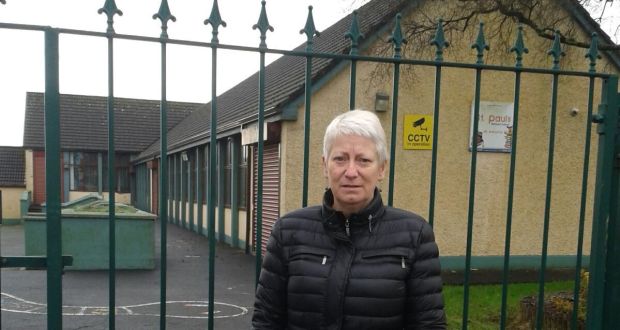
 Bernie  Marron told the Equality Tribunal she was looking for an acknowledgment that what had happened to her was wrong and sought no financial compensation.

Bernie Marron told the Equality Tribunal she was looking for an acknowledgment that what had happened to her was wrong and sought no financial compensation.


 A primary school has been ordered to compensate a teacher after the Equality Tribunal found she had been harassed on religious grounds and discriminated against because her son was gay.

Resource teacher Bernie Marron took the case against the board of management of St Paul’s, a Church of Ireland primary school in Collooney, Co Sligo, which is under the patronage of the Bishop of Tuam.

Ms Marron (53), who worked at the school for seven years, said the principal made a series of critical comments about her son’s sexual orientation, saying a “normal boy” would not spend an afternoon shopping for clothes.

She said the principal also raised her son’s speech and attire at a valedictory service at a local secondary school. She told the tribunal he said her son’s pink blazer was not appropriate and questioned what kind of mother Ms Marron was to have a son like that.

Negative effects

Ms Marron said the principal – who denied the allegations – also made a series of comments which were critical or discriminatory towards Catholics.

She said the principal criticised the behaviour of Catholics in church, commented on the negative effects of Catholics joining a local Church of Ireland secondary school and referred to Church of Ireland members as “our children” and the “right people”.

Ms Marron, a non-practising Catholic, said she felt repeatedly undermined by the principal and complained to the school in September 2013. The issues, however, were not dealt with properly by the school.

The chair of the board of management, however, told the tribunal it responded to the allegations “as best they could”.

The principal of St Paul’s denied Ms Marron’s allegations and expressed shock that they had been made.

Regarding Ms Marron’s son’s speech, the principal said she herself had been upset by the boy’s comments about his classmates, which included her own daughter. The principal denied making any statement about the complainant’s son shopping for clothes.

The principal said she was shocked to learn of the allegations and said she had never discriminated against the complainant and had sought to include her at all events involving the school.

In its finding, the Equality Tribunal found as fact that the principal made the derogatory comments attributed to her by Ms Marron.

The tribunal found the principal’s use of the words “us” and “our” in relation to children and adults of different religions amounted to harassment.

Comments on the sexual orientation of Ms Marron’s son and her parenting undermined her dignity at work and amounted to discrimination by association.

Ms Marron told the tribunal she was looking for an acknowledgment that what had happened to her was wrong and sought no financial compensation.

The tribunal, however, ordered the school to award her €3,000 on the basis that the case would attract a significant award of damages in the ordinary course of events.

Equality training

It also ordered that the school undertake equality training to cover discrimination and harassment.

Ms Marron told The Irish Times she took the case in order to challenge a culture that allowed personal opinion and beliefs to override other people’s human rights.

“I was hurt and angry by the experience. No one should be subjected to judgment about their parenting or their son’s right to be themselves,” she said.

She also said the case raised the wider issue of the lack of an effective complaints-handling mechanism

Filed Under: Anti-Bullying & Homophobia, History Tagged With: Church of Ireland primary, compensation, education, equality tribunal, gay son

Congratulations LGBT Cookstown

06/01/2016 By ACOMSDave Leave a Comment

Snap 2016-01-06 at 17.08.50Michael McGlade

michael.mcglade@jpress.co.uk

First meeting of LGBT youth group in Cookstown


  • Meeting organised by Cara-Friend, an LGBT service running throughout NI
  • Thursday, January 7 from 6-8pm in Cookstown Leisure Centre
  • Focusing on a safe space mentality for those who identify as lesbian, gay, bisexual or transgender

A new group to help young people in the Cookstown area who may be lesbian, gay, bisexual or transgender, will meet for the first time this Thursday.
The youth group has been set up by Cara-Friend, which is an LGBT service running throughout NI.
Representatives of CaraFriend NI
The first meeting will be held on Thursday night from 6-8pm in Cookstown Leisure Centre.
Declan Meehan, who is the youth development manager said rural areas like Mid Ulster left many young people feeling isolated.
“Isolation of young LGBT people, particularly in rural areas, can be very damaging to young people’s mental health and as such, tackling it is a priority for Cara-Friend,” he said.
“It is a peer support and guidance service that focuses on a safe space mentality for those who identify as lesbian, gay, bisexual or transgender; and for those who might be questioning either their sexuality or gender identity,” said Declan.
 

Isolation of young LGBT people, particularly in rural areas, can be very damaging to young people’s mental health
Declan Meehan

“The new youth group will provide a social outlet for young LGBT people in the wider Cookstown area, as well as a safe space in which they can learn about personal development and meet other like minded young people who may be going through a similar process as themselves.
Read more: http://www.tyronetimes.co.uk/news/health/health-news/first-meeting-of-lgbt-youth-group-in-cookstown-1-7145135#ixzz3wU8tVR8H


Filed Under: Anti-Bullying & Homophobia Tagged With: CaraFriend, LGBT Cookstown, LGBT support

  • « Previous Page
  • 1
  • …
  • 9
  • 10
  • 11
  • 12
  • Next Page »

Categories

Copyright ACOMSDave.com © 2026