ACOMSDave

Community Journalist

  • Home
  • Community Journalist
  • Events
  • Media Page and Press Kit
    • Projects and Work
  • Resources & Documents
    • LGBTQ+ Support Groups and Documents
  • NIGRA
  • Archives
  • Contact

Archives for 2015

Gay Parenting

21/03/2015 By David McFarlane Leave a Comment

Dear Heather Barwick, Don’t Blame the Gay Community

Republished from Huffpost Gay Voices

Posted: 03/20/2015 9:02 am EDT Updated: 03/20/2015 9:59 am EDT
SIDNEYSWITZERMOMSONETIMEUSE
Gay community, I am also your daughter. My moms raised me from birth. The only dad I had was a sperm donor who was anonymous. I was raised in a wonderful family. The only ignorance I have faced was from those who felt a father is necessary in raising a child. I have worked for years educating the gay and straight community alike that my family structure is just as good for raising children as any other, so I feel the need to respond to Heather Barwick, a daughter of gay moms, who believes her family structure (my family structure) was detrimental to her upbringing.
In her article on The Federalist, Heather explains that her mom left her dad when she was 3. Not only does she openly admit that her father “wasn’t a great guy,” but she says that he abandoned her after the divorce, and that her mother’s new same-sex partner didn’t fill the spot of her father.
I want to first say that her feelings about her father are legitimate. However, they are not relevant to the argument that she needed a father in her upbringing. As with many children of divorced parents, she didn’t feel like the new replacement for her old parent was suitable. Regardless of gender, she wouldn’t have felt like the new person dating her mother would have been what she needed. What she felt she needed wasn’ta dad but her dad.
As for Heather’s mother, I do agree that she made a mistake in failing to consider her daughter’s feelings. But this has nothing to do with her sexual orientation. Heather was surrounded by negative man haters. She also had a mother who didn’t make her feel like she could talk about her feelings. Had her mother been heterosexual and acted this way, it would have been equally detrimental to her child. The environment her mother put her in, the people and attitudes she exposed her to, and her failure to acknowledge her child’s needs are likely the causes of her detriment.
At the age of 12, I joined a travel softball team. Having experienced hateful comments on a previous team, I asked my moms if it would be OK to keep the gay thing under wraps. Though they’d been out of the closet for nearly 20 years, they were full-heartedly supportive and gave me my time to “come out of the closet.” They admitted years later that they were secretly hurt by my wanting to hide them, but they knew that they had been given time to come out, so I should be given the same courtesy. They listened to their daughter’s insecurity about having gay parents and supported me. It wasn’t long until I got some self-confidence and stopped being upset by negative comments. I just needed some time and understanding parents.
When Heather’s mother and new same-sex partner made her feel like her feelings were wrong and she didn’t have a voice, it was not poor gay parenting. It was poor parenting, period.
Parents, gay and straight alike, parent poorly sometimes. Kids who come from heterosexual parents may have parents who, they feel, don’t listen to them. They may even have parents who are abusive. Heather had an experience with a messy divorce, a dad who left her, and less-than-adequate parenting that happened to be done by two women. She’s now seeing a great parent in her husband and assuming that his great parenting can only be done by a male.
Heather, you may be looking at your lovely family and think that your husband is an amazing father, and I’m sure he is. This doesn’t mean that you can discount my family structure because of the lack of structure you were raised in. There are plenty of dysfunctional families led by a mother and a father, and there are plenty of wonderful families led by single parents, grandparents, same-sex parents, etc.
I have no hole to fill. I am lucky to have two wonderful parents who love me. I don’t “desperately need a daddy,” because mine didn’t leave me. My parents support me and have surrounded me with a great community of LGBT and heterosexual people who are positive role models. There were no man haters in my community. My parents listen to my concerns and do their very best to help me. I have two loving parents who taught me about the ignorant people who will hold up those “Gods Hates Fags” signs and didn’t let me worry about it, because I was taught that those people were closed-minded, ignorant, full of hate, and in no way worth my tears. I was encouraged to be patient and educate, but not to be bothered by them. I have two parents who raised my two brothers and me as independent thinkers who have their own voices.
So please, Heather, in regard to your less-than-adequate upbringing, don’t play the “gay card.” Your parents may not have supported you, but do not put the blame on my family’s, or any other LGBT family’s, structure. Your family being dysfunctional had nothing to do with your mother being gay. It had everything to do with having a father, a mother and a stepmother who all failed you as parents in some way or another.
You are right in that there are hard topics that need to be talked about. Divorce is a hard topic. A parent leaving you is a hard topic. Being surrounded by negative role models is a hard topic. As a young girl, you were abandoned and raised in a negative, man-hating environment where you felt you couldn’t speak, but this does not give you the right to strike out at the gay community as a whole.
Talk about how your parents didn’t parent correctly to whatever excess you please, but do not make a blanket statement about gay parenting simply because your family is dysfunctional and an abandoned little girl inside you is hurt.
2015-03-19-1426784491-7604551-18691_10151189133311482_1757713230_n.jpg

Filed Under: Anti-Bullying & Homophobia Tagged With: families, gay parenting, same sex marriage, straight kids

Roger Casement

21/03/2015 By David McFarlane Leave a Comment

“Historians in England will say I am a liar, but history is written by those who have hanged heroes.”

— Robert the Bruce, Braveheart

Remembering Casement’s patriotism, not his personal life

Reprinted from the Irish Examiner – Monday, February 23, 2015
By Ryle Dwyer
On the 50th anniversary of the repatriation of Roger Casement’s remains, Ryle Dwyer contends that perfection is not a requirement of patriotism.
TODAY is the 50th anniversary of the repatriation of the body of Roger Casement — more than 48 years after his execution.
His return reignited the controversy over his so-called Black Diaries, which have been an irrelevant distraction over the greater part of a century.
Casement was hanged for high treason after trying to enlist German help for the Easter Rebellion. Realising that the Germans were not going to provide sufficient military help, Casement returned home to call off the rebellion, which he believed was doomed.
From the Irish perspective he was striving for the independence of his native country, but the British saw his actions as treasonous. Yet they ultimately frustrated his efforts to undo what they considered his treasonous behaviour.
He confided in Robert Monteith — who accompanied him on the U-boat from Germany in April 1916 — that he wished to stop the rebellion.
Unfortunately, Casement became ill on the voyage. His condition was not helped by being dumped into the cold water from the small boat that he and his two colleagues used to get from the U-boat on that Good Friday morning. They were soaking wet, with no change of clothes, on reaching land.
Casement was in no condition to walk the 13km to Tralee, so he went into hiding in a ring fort overlooking the beach, while Monteith and Daniel Bailey went for help.
Monteith informed Austin Stack, the local republican commander, that Casement wished to stop the Rising.
“Monteith told me what purported to be the view of Sir Roger Casement with regard to the Rising,” Stack later wrote. “The attempt would be pure madness at the moment.”
Stack insisted on hearing this from Casement himself, but when they went to Banna to pick up Casement in a car, they found the area swarming with police. Casement was arrested in the early afternoon.
Although he could easily have been rescued from police custody in Tralee, Stack was unwilling to act, because Patrick Pearse had ordered that nothing should happened in Tralee prior to the planned landing of German arms at the nearby port of Fenit on Easter Sunday.
In desperation that Friday night, Casement requested to speak to a Catholic priest. He asked Fr Frank Ryan, from the nearby Dominican priory, to get an urgent message to the Volunteers, to call off the rising. Fr Ryan was reluctant to get involved.
He agonised over the weekend before passing the message to local republicans in Tralee on Monday morning.
By then, the rebellion was already beginning in Dublin.
Casement was moved from Tralee to Britain, via Dublin, on the Saturday. Admiral Reginald ‘Blinker’ Hall, head of British naval intelligence, questioned him in London on Easter Sunday.
Realising that Hall was aware of the planned rebellion, Casement asked to be allowed to appeal publicly for the rebellion to be called off in order to “stop the useless bloodshed”.
But Hall wished the rising to go ahead in order to provide British forces with an excuse for suppressing the rebels.
“It is better that a cankering sore like this should be cut out,” Hall told Casement.
The Easter Rising was the military disaster that Casement predicted. In its aftermath, the leaders were summarily executed. Casement went on trial for high treason on June 26, 1916, and he was convicted and sentenced to death three days later. His appeal was dismissed the following month, and he was duly hanged at Pentonville Prison on August 3, 1916.
Before his execution, there were calls for clemency, which were undermined by a whispering campaign about graphic evidence in Casement’s diaries suggesting he was gay.
The British Attorney General had tried to use the diaries against Casement, but they had nothing to do with the charge of high treason.
Although the Attorney General was unable to use that material at his trial, Basil Thompson, head of Scotland Yard’s Special Branch, began surreptitiously circulating salacious extracts to selected journalists. The purpose was clear — to depict Casement as a moral degenerate in order to undermine the clemency campaign.
This sparked another controversy over much of the ensuing century. In 1936 William J Maloney wrote The Forged Casement Diaries, contending that the British had forged the diaries. Maloney had never met Casement and never even saw the diaries. It is now widely accepted, after exhaustive forensic tests, that the diaries are authentic.
This controversy suited those who had tried to use the diaries to discredit Casement. Instead of concentrating on the miscarriage of justice in relation to his execution, the focus turned on the irrelevant issue of whether he was gay.
It seemed Irish people could not accept that a patriot could have human failings or imperfections. It is puerile to think that real heroes should fit conventional norms in every respect.
With the centenary of Casement’s death next year, surely the focus should be on his accomplishments and what he tried to do, not what some might have considered his human flaws.

© Irish Examiner Ltd. All rights reserved
 
“It is easy to rewrite history when the few who know the truth are unable to make themselves heard.”

—Phantom, Last Scenario


Further Reading:

  1. Wikipdeia – Roger Casement

Filed Under: Book Reviews, History Tagged With: Belfast Press, black diaries, Easter Rebellion, jeffrey dudgeon, Seamas O'Siochain, University College Dublin Press

Book Review: The Short History of a Prince

20/03/2015 By David McFarlane Leave a Comment


The Short History of a Prince
Jane Hamilton
Random House
 

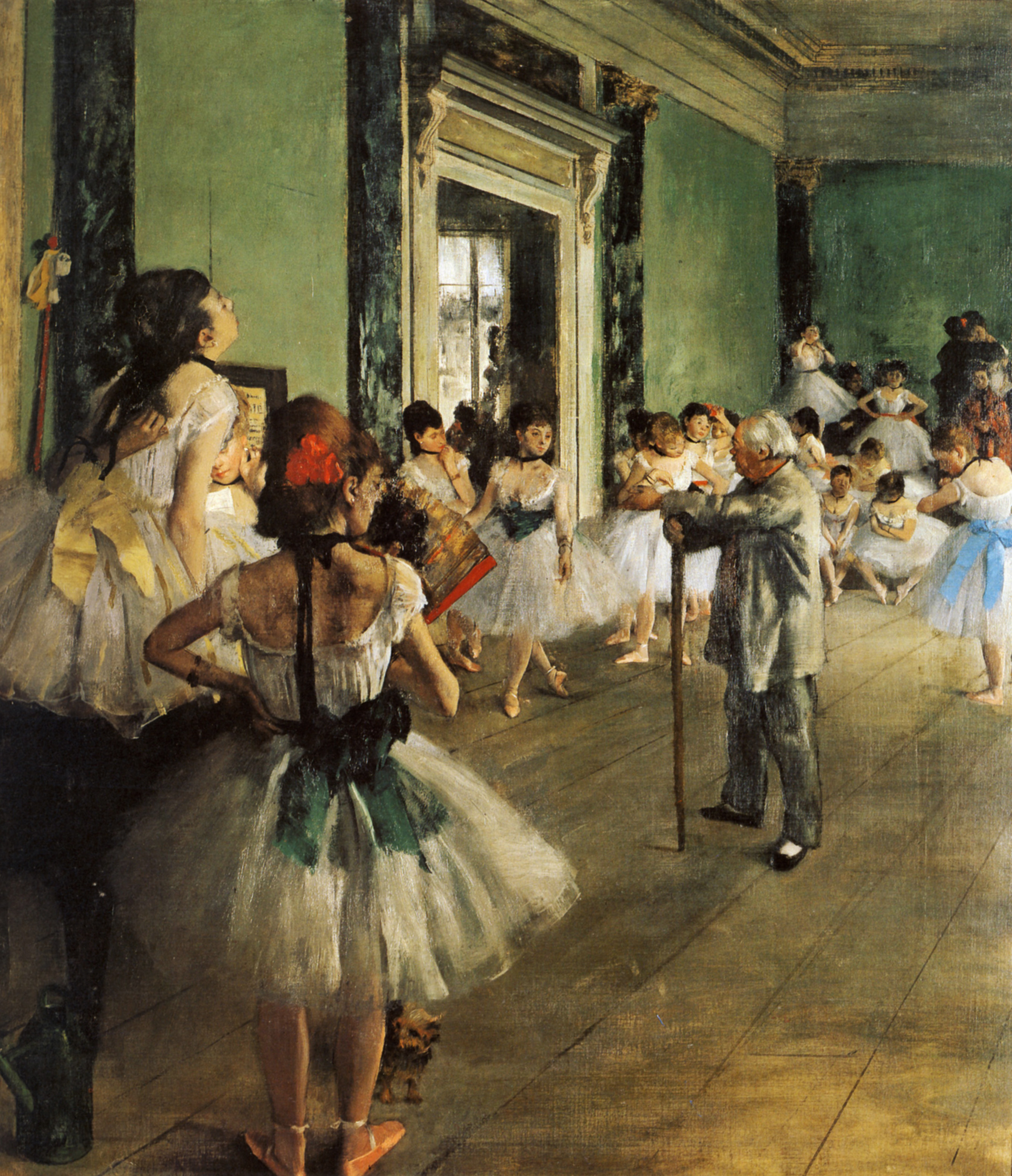
Classical bell tutus in The Dance Class by Degas, 1874

Classical bell tutus in The Dance Class by Degas, 1874


This well-told tale is about a wee poof called Walter (yes, quite) who is studying ballet and is an opera-lover (..).  His two friends from his small Midwestern town, with whom he travels to Chicago four times a week to classes, are Mitch (whom he lusts after) and Susan (who goes on to be a professional in a moderately important company.  Mitch vanishes midway through the narrative (he becomes a property developer in southern California).  Although his personality is filtered through Walter’s perceptions, he is potentially the most interesting character in the novel.  He engages in pretty heavy-duty (if low-level) sex with Walter.  They are in their very early teens, at this stage, and Susan has transferred her affections from Mitch to Walter’s dying brother, Daniel.  At a climatic (but not terribly convincing) scene, Mitch says to Walter “You’ll always be a homo”.  Why the “always”?  Walter suggests that Mitch – a brilliant performer – gives up on ballet because it is a “faggot world”.  Persons sure of their sexuality would not be fazed by such a situation – even though this was in the very early 1970s – before the ‘explosion’ of ballet companies all over the USA [a bit of social / cultural history will do yiz good].
It is difficult to understand why Ms Hamilton decided to make her central character gay.  Her approach to his sexuality is similar to the authors of 1960s pulp rubbish.  There’s a touch of cross-dressing (not “drag”, which liberals tend to find even more puzzling than do standard-issue straights), transsexualism – and our old friend mental-arrestation loiters about like a child-molester at a nursery gate. For a man who lived through two cultural revolutions (Gay Liberation in the ‘70s and the interminable AI>DS crisis), and in New York, Walter McCloud is a curiously old-fashioned figure.
It would be unfair to Ms Hamilton and her potential readers to concentrate on the book’s blemishes (which include the glutinous title), as she has the born story-teller’s knack of keeping the reader interested.  And, at heart, this is the story of a family and a house.
 
Reviewer:  Carmen O’Sugan
Reviewed in ‘upstart’ in November 2000

Filed Under: Book Reviews Tagged With: faggot ballet dancer, Jane Hamilton, opera lover, Random House

OUTRAGE AT UK VISIT BY UGANDAN ANTI-GAY PENTECOSTAL REVEREND

20/03/2015 By David McFarlane Leave a Comment

Reprinted from O-blog-dee-o-blog-da Blog

Simon preacher Ugandan banPlease sign the Petition below
By Melanie Nathan, March 18, 2015
A Pentecostal reverend, a major anti-gay protagonist, who called homosexuals evil, is set to speak at St James Church, Gerrards Cross in Buckinghamshire, in the United Kingdom and activists are outraged.
The controversial preacher, Rev. Simon Peter Emiau,  General Superintendent of the Pentecostal Assemblies of God (PAG) in Uganda,  was a critical partner to the American homophobic Evangelical preachers such as Lou Engle and Scott Lively who led the anti-gay crusade in Uganda,  and now he will be speaking in the United Kingdom at St James Church on the 23 March 2015.

In 2001, Emiau complained of homosexuals  “invading Mbale District.” “Our cities have become like the biblical Sodom and Gomorrah. There is a lot of immorality and homosexuals increasing in number even in our town, Mbale,” he said.

He encouraged  the Ugandan government and the people to fight the ‘vice’ before it was too late to control. And what followed his rhetoric was an escalation of anti-LGBT persecution, culminating in the call for the Kill The Gays Bill, its eventual passage, its invalidation and now further calls for the return of a similar Bill in the Uganda Legislature.
The crusade in which Emiau has participated caused incalculable damage and persecution, not only for Uganda’s gays, but also others around Africa, giving credence to the USA preachers who spewed the hate in the name of their brand of Christianity.
It is believed that Rev Emiau, with his Co preachers, did a lot of campaigning and lobbying to the president and MP’s as well as campaigning on radio and in church to actively lobby for the anti-gay law, which it is believed he continues to do at this time..
On 24 February 2014, President Museveni signed the AHA bill into law, toughening penalties for gay people.  It included life sentences for gay sex and same-sex marriage.
Soon after the Bill was signed Rev Simon Peter Emiau, Pastor Ssempa and other religious leaders held a rally in Uganda cheering the new law and exalting the lawmakers and President Museveni who ensured its full enactment. Thirty thousand people attended the rally, all supporters of this brand of Christianity.
While speaking at the event, Rev Simon Peter Emiau, representing three organizations of evangelical churches, compared Museveni’s stand for the Anti-Homosexuality Act to his “courage” in overthrowing the regimes that preceded him in power. “Your excellency demonstrated yet courage by signing this bill,” Emiau said.
And Quoting David Bahati (the Lawmaker who Sponsored the bill):

“Today, we come here again [to celebrate] sovereignty and freedom … [and] to take charge of our destiny. ~ Bahati.”

Rev. Simon Peter Emiau is fully aware that his actions have caused countless LGBTI people to go underground or into exile to escape the brutal persecution engendered by the call for such legislation and its ultimate passage. He is also aware that he has caused direct harm to health services needed for LGBTI people due to immobilized NGO’s and human rights defenders. This horrifying impact hurts all Ugandans.
Commenting on Rev. Simon Peter’s invitation to preach at St James Church in the UK, a gay man from Uganda Isaac Kawesi noted:

“This is totally an insult to the LGBTI community. I left Uganda because of people like Rev. Simon Peter who made my life a living hell. We will do whatever it takes to stop this man from preaching in England and if our effort fails, we are ready to hold a demo to show him and St James Church how unhappy we are”.

Rev. Simon Emiau, should be prevented from entering any Western Country that subscribes to the Universal Declaration of Human Rights, least of all be given platform in a country which expounds equality and basic human rights for LGBT people. The United Kingdom sees many asylum seekers seeking refuge from Ugandan because of this man and the harm he has caused. Ban him now!
SIGN PETITION TO INDICATE YOUR OUTRAGE HERE.
Simon preacher Ugandan ban

Filed Under: Anti-Bullying & Homophobia Tagged With: anti-gay, Hate crime, pentecostal

Conscience clause: 'No anti-gay law' billboard tours Northern Ireland

20/03/2015 By David McFarlane Leave a Comment

All-Out's billboard against the 'conscience clause' Bill

All-Out’s billboard against the ‘conscience clause’ Bill

Reprinted from Belfast Telegraph – 19 MARCH 2015

A huge pink billboard objecting to the DUP’s “conscience clause” Bill has been touring around Northern Ireland in an attempt to convince Paul Givan to drop his proposed legislation.

The van has been paid for by a crowdfunding campaign among people around the world, who believe the MLA is introducing an anti-gay law that will legalise discrimination.
Mr Givan Private Member’s Bill was sparked by a case involving Ashers Bakery, whose Christian owners rejected an order for a cake iced with a message supporting same-sex marriage.
Ashers is facing a court battle over its decision to refuse to make the cake. The Equality Commission, which has taken the case against the business on behalf of the customer whose order was declined, has alleged the bakery’s stance was in breach of equality legislation.
But Mr Givan said he believed this was wrong and wants the law to be “rebalanced”.
Last month, 230,000 people signed a petition by gay rights campaign group All Out against his Bill.
Following this, 900 members crowdfunded the billboard van – paying for it to drive around Belfast and in Paul Givan’s constituency, Lagan Valley.
It parked up outside Stormont, Titanic Belfast and St Anne’s Cathedral, displaying the message “230,000 say no anti-gay law in Northern Ireland”.
All Out co-founder Andre Banks said: “The DUP’s anti-gay amendment would make it legal for businesses to refuse to serve lesbian, gay and bi people, just because of who they love. 230,000 All Out members signed our petition to make it clear that this just isn’t OK.  Not in Northern Ireland – not anywhere.
“Hundreds of thousands of voices opposing the proposed anti-gay amendment were taken straight to politicians in Northern Ireland. More than 900 of us chipped in a small donation, so a giant billboard van with our message for equality could drive non-stop around Belfast and Paul Givan’s constituency, to push him to drop his anti-gay plan.”

What does the proposed bill mean?

  • Paul Givan says the focus of his Northern Ireland Freedom of Conscience Amendment Bill is “making space for rights that clash”. He says it aims to “make space for providers” and proposes that businesses may refuse a situation where they feel they are required to “endorse, promote or facilitate a same-sex sexual relationship in violation of his/her faith identity”.
  • For example, a Catholic adoption agency could refuse to place a child with a same-sex couple, a Muslim printer could refuse to print a book promoting same-sex sexual relationships and an evangelical photographer would not be required to choose between taking photographs at a civil partnership ceremony and losing their livelihood.
  • But, Mr Givan says, an evangelical grocer could not refuse to sell an apple to a gay man, or a Muslim printer could not refuse to print a brochure publicising coffee tables made by a lesbian cabinet maker.
  • The Rainbow Coalition, which supports gay rights, has claimed that under the Bill restaurants could deny a same-sex couple, a mortgage provider could deny a mortgage to a same-sex couple, and hoteliers could deny a room to a same sex couple as all could be seen as endorsing or facilitating same-sex relations.
  • The draft Bill has been published on the DUP website. The party is inviting responses about its contents to be submitted to its headquarters on Dundela Avenue in east Belfast. The consultation will close at 5pm on Friday, February 27.

All-Out's billboard against the 'conscience clause' Bill

All-Out’s billboard against the ‘conscience clause’ Bill


Filed Under: Anti-Bullying & Homophobia Tagged With: anti-gay law, conscience clause, crowfunding, Stormont

The White, the Gold and the Gangrene

19/03/2015 By David McFarlane Leave a Comment

The White, the Gold and the Gangrene
Terry Eagleton
Dubbeljoint Theatre Company
Old Museum Arts Centre
 
(Reprinted from upstart April 1993)

 
This oddly named play is about James Connolly’s last few hours in the condemned cell.  The greater part of the talk – there is very little action other than Connolly (Tim Loane) hobbling about the cell or being forced to crawl about it by two warders.
These latter are given to high talk, gnomic utterances and aimless cruelty.  Given that “Connolly” appears for much of the play to be deep in untroubled sleep one might feel more sorry for their plight than for Connolly’s: he is going to fulfil his destiny.  They represent a world that is passing; at least that is what they say – at great length.
Eagleton has in the past in Saint Oscar and the novel Saints and Scholars messed about with chronology.  Here he has Connolly receiving letters from one V I Lenin in charge in Moscow – more than a year before he arrived there!  And from W B Yeats, offering to become “Fuhrer”.  Yeats’s ghost is treated to severe abuse; he deserves it for calling Thomas Moore a “cringing firblog”.
There’s a lot of surface glitter in this play, but little depth.  Sitting through it does not enhance one’s life.  I felt a riot coming on!  Eagleton insults nearly all the rest of the 1916 leaders, Pearse coming in for a good deal of condemnation – naturally enough.  (not to mention some rather off-colour remarks about his alleged sexuality, plus an unpleasant pantomime presumably sanctioned by Eagleton and the producer Pam Brighton which I found offensive and gratuitously anti-Gay).  Although it is all from the Warders, McDaid (Dan Gordon), implicitly a Prod, and Mather (Anthony Brophy) a genuine cringing firbolg, Connolly never puts another point of view.  McDaid is given a fair number of good speeches attacking what the insurgents in Dublin were up to in Easter Week.
This play says more about Eagleton, than it does about James Connolly.  A piece in the programme describes Connolly as “…Ireland’s greatest socialist theorist and organiser.”.  At the end of the action Connolly simply vanishes, not unlike a certain [other] JC, who is supposed to have vanished from a tomb around about Easter.
This play was written for people who can spot the smart-alecky references peppering the text, who may be the same people who roared at every crude word and gesture at the OMAC.  It’s a bad play, the language while quite funny in parts, does not illuminate anything.  The production was pared down to the minimum, throwing all weight onto the text, which collapsed under the pressure into “more words”.
Eagleton the lapsed Marxist attempted to make his play relevant to a living political situation by having them performed on the Falls Road – and Hampstead, among other places.  Judging by the deafening silence after the circus left town, the Falls wasn’t impressed; neither was I.  The constant references to homosexuality in Eagleton’s texts is nearer in spirit to the semi-pornographic sensationalist pulp fiction of the 1940s, ‘50s and early ‘60s than to the post-Gay Liberation idea of a “Gay sensibility”.
 
Reviewer:  SMC

Filed Under: Theatre Reviews Tagged With: Anthony Brophy, Dan Gordon, Dubbeljoint Theatre Company, james connolly, Pam Brighton, Terry Eagleton, WB Yeats

Orlando

19/03/2015 By David McFarlane Leave a Comment


Orlando
UK/Rus/France/Germany co-production
Director/Screenplay: Sally Potter
Cert: PG
93 mins
OrlandoThe notion that there is a Gay sensibility has been controverted by some people but this film seems to me to be in a Gay mode – the word ‘tradition’ is too strong at present. Some of the set-pieces at the beginning of Orlando’s adventures in Elizabethan England reminded one of Paradjanov’s films specially Colour of Pomgranates. Not in their look but in the tretment of the screen as a ‘picture’ (that films started out as “motion pictures” is something that western European and especially British Isles film-makes have tended to forget). The ‘picture’ here were like those Tudor-period pictures where the subjects all look out at the viewer. The welcome for Queen Elizabeth I to Orlando’s parents house is clearly based on such paintings – the skating scenes where Orlando waxes rather too familiar with Sasha the Muscovite princess is a bit sneaky, it is more like a Victorian genre painting than the genuine Elizabethan article.
Paradjanov (whose name was Paradjanian, it’s an Armenian name, but he was born in Moscow! – the joys of [federal] union!) based his images on the art of the Christian Caucasian peoples and also to some extent on Islamic art – his images are static like icons; they are also stunningly beautiful. This film might not be quite so overwhelming for people who live in these isles but it has been very popular in American (and it probably will be in Europe).
So far as the narrative itself is concerned, it is handled quite straight, so the oddities in the Orlandooriginal novel by Virginia Woolf are simply taken for granted. And they are very odd oddities, Orlando is granted immortality and in the middle of the eighteenth century changes gender! This is after a period where the “male” Orlando’s realtionship with the local Indian Rajah was less than entirely heterosexual (it is not implied that they were “at it” – but even for the period it is pictured as … unrestrained).
Having become a female, Orlando is dragged through the law courts because she cannot be the owner of the stately pile we first saw in the 1500s, this last lasts somewhere in the region of 200 years … Orolando meets a number of Georgian intellectuals, Steele, Swift, Goldsmith and drinks tea with them. A hundred years later she has a fling with Shelmerdine, a Byronic freedom fighter, played by the beautiful Billy Zane. The last few scenes do not ring true – the action is updated to the 1990s, it should have been left in the 1920s.
The director of Orlando is Sally Potter who did Oranges Are Not The ONly Fruit for the BBC. As well as the high art mentioned in the first sentence she also employs other aspects of Gay sensibility – camp, for example. Orlando talks straight to the audience like a character from one of the Carry On films and we also have Jimmy Somerville as an Elizabethan castrato and a 1990s angel!
Tilda Swinton’s performance as Orlando is amazing, if only because she is not in the least believeable as a woman, or as a man.
Orlando is a lovely film to look at, it is funny and sad, has some great performances, and engrossing story and the viewer is not required to gawp at acres of flesh – I wouldn’t have minded a bit more of Billy Zane’s, though!
 
Reviewer: RL.  Published in ‘upstart’ April 1993

Filed Under: Movie Reviews Tagged With: artificial eye studio, billy zane, movie review, review, sally potter, tilda swinton

Book Review: Daring to Speak Love's Name

19/03/2015 By David McFarlane Leave a Comment


(A Gay and Lesbian Prayer Book)
Dr Elizabeth Stuart
Publisher: Hamish Hamilton
Reprinted from ‘upstart’ April 1993
 
First of all I understand the need for a book of this type but I personally can see it having only a limited use.
One of the main problems that I can see in the book is that it revolves too much around the main established churches and the Bible, and for the life of me I can’t understand why. We have all at one time or another felth the pain that the Church can cause either directly or indirectly. What would have been more useful and indeed thought provoking would have been people’s own words rather than the words of the Bible.
The title is also misleading: it should read A Christian Gay and Lesbian Prayer Book. What about the other faiths that make up the Gay communnity – Jew, Hundi, Muslim, Buddhist, and so on, or are we to believe that Christians have a monopoly?
I’m sorry I personally would have no need for this book, it is just to restricted in its outlook
Peter G Simms
 

Filed Under: Book Reviews Tagged With: Dr. Elizabeth Stuart, Hamish Hamilton, LGBT, prayer

30 Years On, Miners Take Pride Again

18/03/2015 By David McFarlane Leave a Comment


30 years on, miners take pride again,  with their first meeting immortalised on the silver screen, Welsh miners will be reunited tonight with their lesbian and gay supporters.
Twenty-seven members of Lesbians and Gays Support the Miners (LGSM), led by Mark Ashton, travelled from London to Onllwyn miners’ welfare hall on October 26 1984.
That night of “dancing in Dulais” sparked the famous solidarity story told in Bafta-winning blockbuster Pride…


LGSM activists return to Wales for another ‘dance in Dulais’

Reprinted from : The Morning Star
 
 Saturday 14th Mar 2015  posted by Luke James in Britain

…Many of the miners and LGSM members there from the outset will be among more than 250 people packed into a sold-out celebration at Onllwy’s Palace of Culture tonight.
The special event is being staged after both LGSM and the Neath, Dulais and Swansea Valleys Miners Support Group reformed in the wake of the film’s success.
Hywel Francis, the historian and local miners’ support group leader turned Labour MP, will launch a new edition of his book History on Our Side at the event.
Speaking to the Star yesterday he said: “It will be almost as if we were back 30 years ago.
“It’s a sense of reminding ourselves of the struggle and also renewal for the future.”
Pride was the catalyst for Dr Francis to take a fresh look at the consequences of the miners’ dispute in 1984-85.
He said that the “valuable alliance” built between miners and LGSM is part of the legacy that have helped coalfield communities endure in the face of industrial devastation.
“There were resources of hope that came out of that, including a tremendously strong sense of community and a sense of responsibility to one and other,” said the MP.
“That message, that eternal message, is still there and in that sense, despite the defeat, we feel that history is on our side.”
Pride actor Bronwen Lewis will join miners and their supporters, who are coming from across Britain and Europe, to attend the Onllwyn miners’ welfare hall tonight.
In a foreword for Dr Francis’s new book, LGSM secretary Mike Jackson describes his fateful first visit in 1984 “as one of the most memorable experiences of my life.”
He recalls: “As we walked through the double swing doors the level of the conversations dropped for a moment.
“Then someone started clapping and the rest followed.”

30 years on, miners take pride

File:Photo of plaque commemorating the life of Mark Ashton 02.jpg – Wikimedia Co

Links:

  • Still fighting for equality: So So Gay speaks to Lesbians & Gays Support the Miners

Filed Under: Anti-Bullying & Homophobia, Campaigns, Community Journalist, Movie Reviews Tagged With: Gays The word, Mark Ashton, Pride, Support the Miners

Remembering Karl Heinrich Ulrichs

18/03/2015 By David McFarlane Leave a Comment


  by Robert Beachy  Publisher: Knopf Publishing Group
Karl Heinrich Ulrichs, an engraving taken from “Jahrbuch für sexuelle Zwischenstufen, (“Yearbook of sexual intermediates”), vol. 1″, 1899 | Geschichtswerkstatt | 15031
Karl Heinrich Ulrichs was a German writer and lawyer who played key roles both in defining homosexuality and establishing the movement for gay rights.
Hans Rollman, reviewing the book “Gay Berlin: Birthplace of a Modern Identity” by Robert Beachy, explains.
 
Amazon | 15032

A homosexual himself, his promising legal career was cut short when rumours began to spread about his sexual activities with other men. Shut out of the legal profession, he gradually rebuilt himself a career in journalism and writing. But as Beachy points out, he was a true product of the Protestant Reformation (his family were ardent Lutherans), with its drive to question accepted traditions in the search for truth. No matter which way he looked at it, he couldn’t find anything wrong with his sexual attraction to other men, and concluded that it was normal behaviour, and that some people are simply born homosexual.
All this was, of course, highly revolutionary for his time, as was his decision to begin campaigning for an end to the existing anti-sodomy laws and moral persecution which accompanied them. He first opened up a remarkable correspondence with his own family in what was essentially the first documented coming-out in history. He tested his own theories on them, and while they clearly disapproved and urged him to change, they didn’t reject him and even re-affirmed their love and support for him.
Thus bolstered, he began issuing a series of anonymous pamphlets, arguing that homosexuality, or ‘Urning’, as he called it, was natural behaviour. In 1867 he ratcheted things up a notch, giving an address to the Association of German Jurists where he presented his views and argued for revision of the sodomy laws. He was shouted down and unable to finish his speech, but he had opened the dialogue, and at the same time emerged as its public spokesperson. As he continued his courageous campaign, he also refined his theories of sexuality to embrace a diversity of sexual and gender identities.

Karl Heinrich Ulrichs was born on 28 August 1825 and died on 14 July 1895

Filed Under: Book Reviews Tagged With: gay history, Karl Heinrich Ulrichs, Knopf Publishing Group

  • « Previous Page
  • 1
  • …
  • 77
  • 78
  • 79
  • 80
  • 81
  • …
  • 89
  • Next Page »

Categories

Copyright ACOMSDave.com © 2026