
ACOMSDave

Community Journalist

  • Home
  • Community Journalist
  • Events
  • Media Page and Press Kit
    • Projects and Work
  • Resources & Documents
    • LGBTQ+ Support Groups and Documents
  • NIGRA
  • Archives
  • Contact

Lost Language of Cranes: The Devil’s Advocate – gay movie review

13/12/2008 By David McFarlane Leave a Comment

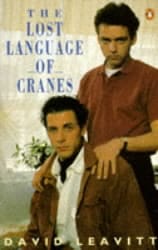
Lost Language of Cranes
I sat down to write a review of “The Lost Language of Cranes in the middle of the night. And on the telly came a movie to which I was immediately attracted because there was a rather nice young man in it, who took his clothes ff quite a lot. He did this for an English painter who had gone to Italy to paint landscapes but had discovered the local attraction of greater interest, to wit: our young friend.

But – there’s more, his brother (the painter’s that is, who in another sub-plot is the model’s father) did something heroic against the Nazis In the war, and there is a move afoot to have him beatified (made a saint). The Catholic Church has sent a rather dowdy English priest to stop this cult because the painter’s brother although a great man was politically “difficult”

The first job our priest sets himself, however, is to disrupt the love between the painter and his model, preaching Catholic rhetoric at them.  He succeeds in this and promptly sets about undermining the notion that the painter’s war-hero brother is a saint. Here he comes a cropper, he discovers that the war hero was better than himself and the Church, and goes through a realisation that his role in the life of the village is really quite destructive. When he gets back to his Italian bosses he doesn’t recommend the war hero as a saint as a slight to the Church.

There was far more to this story that I have described, and the characters were far greater in their roles than the story demanded. When one turns one’s mind to the Lost Language of Cranes this was noised about by the media as being noteworthy, one realises in comparison the above-mentioned movie (The Devil’s Advocate – a 1980 West German Religious Drama starring John Mills) with what a load of bogus pomp it was – full of vacuous ambiguity which has been misread as art.

[Patrick James]


Director

  • Nigel Finch

Writers

  • Sean Mathias  (screenplay)
  • David Leavitt   (based on the novel by)

Stars

  • Brian Cox
  • Eileen Atkins
  • Angus Macfadyen


Links:

  • Wikipedia – Lost Language of Cranes
  • IMDB – Lost Language of Cranes
  • Amazon – Lost Language of Cranes
  • Making Love – A Gay Movie

Filed Under: Movie Reviews, Reviews, TV programme reviews Tagged With: Angus Macfadyen, Brian Cox, David Leavitt, devil's advocate, Eileen Atkins, lost language of cranes, Nigel Finch, Sean Mathias

No Sex Please – We're Cuban

13/12/2008 By David McFarlane Leave a Comment

Strawberry and Chocolate

  • Actors: Jorge Perugorr a, Vladimir Cruz, Mirta Ibarra, Francisco Gattorno, Joel Angelino
  • Directors: Tom s Gutierrez Alea, Juan Carlos Tab o

Strawberry & Chocolate [1994] (REGION 1) (NTSC)
Coming to this film without any preconceptions, I found it a charming love-story. The Gay, bourgeois Diego (Jorge Perugariia) bets his camp, sculptor friend that he can pick up the sweet-faced David, a serious-minded young Communist. He doesn’t (quite) but a cagey relationship develops, where David (Vladimir Cruz) shares his interest in verse with Diego, who, in return, gets him into Scotch whisky, Marboro, Art and suppressed elements of Cuba’s cultural identity. (By no means all of it suppressed by the Castro regime). It iSean asexual version of the role of homosexual as mentor praised by, for example, Bryan Magee, in his 1957 book One in Twenty.
Diego places himself in an awkward position by complaining to Ministry of Culture about the aborting of a dissident art exhibition he had arranged with help from foreign embassies. He tries to prevent the disappointed artist from smashing his sculptures. These are gigantic representations of Catholic repository tat-art. This is the nearest the film gets to substantiating Diego’s claim to be “religious”.
David, in the meantime, has to stonewall (as in Jackson, not the zeatlot who shares his university accomodation. David is study ing engineering for social/socialist reasons. He gets [most of] his kit of at this juncture, and very satisfying it is too. The way he behaves, the way he allows his macho friend’s presuppositions to work to his advantage means that David is behaving like a closeted gay man. Contrasting with Diego who is right in-your-face.
As the film proceeds Diego becomes softer, as in less brittle and David’s presence. Eventually they embrace after Diego has escorted David around the dying Havana (looking stunning in this episode) “one of the most beautiful cities in the world”, prior to Diego going into unwanted, but inevitable exile.
This film was the object of a lengthy and ill-tempered review in , Sound, the high-brow answer TVQuick. The reviewer took the Director (Tomas Gutierrez Alea)* to task for making ‘a film of the sort that was made, on the subject of homosexuality, in the UK in the 1960Seand in the USA in the ’70s. Given the sexual culture of Cuba and Spanish America in general, that means that this film is more “advanced” than say, Victim [UK, 1962] or practically anything from the States before 1982’s Making Love.
Diego, despite what the above reviewer thought, isn’t a reactionary, or even a mere snob. He is a Cavalier. David is a Roundhead, Castro is Cuba’s Cromwell. That is why there is ambiguity about him in the Cuban population. He is leading them down a Via Dolorosa: but it is being paved by Uncle Sam. When Diego rails at his beloved Havana disintegrating into “the shit”, he is not only, (or even) railing at the Revolution, but at America which will not allow a bag of cement – or baby-food – into the Republic of Cuba.
* Alea was a very distinguished director, of Memories of Under -development for example, he was dying of cancer in the course of the making of this film. He was helped by another director called Carlos, Tabio – upstart
upstart has no view on the current regime in Cuba. But when the German Democratic [?] Republic allowed a Gay-themed film to be made the state collapsed! )
[Sean McGouran]

Filed Under: Movie Reviews

PRIEST

13/12/2008 By David McFarlane Leave a Comment

  • Actors: Linus Roache, Tom Wilkinson, Robert Carlyle, Cathy Tyson, Lesley Sharp
  • Directors: Antonia BirdPriest [1994] (REGION 1) (NTSC)

This film is set in a Merseyside parish whose parish priest lives with the house-keeper, a parishioner defends (in confession) his incestuous relationship with his daughter, and the central character is homosexual. Standard family entertainment, in other words. The night I attended, the cinema was crowded – so, I was told, had the previous showing been.
It’s not a very good film, mainly because it has too many stories to tell. If the writer (Jimmy McGovern) had the time span of a television series, he might have been able to work out the three main story-lines (and the host of sub-plots) without resorting to melodrama.
“Father Greg” (played by Linus Roache, who is a bit a wooden-top aSean actor) is a smug – and clearly middle-class product of a seminary. He is sent to a heavily working-class parish run by a Guardian-reading pinko – this character has all the substance of a cardboard cut-out, but Tom Wilkinson plays him so well (he’s even the right shape!) that he is almost the centre of gravity of the film.
Roache’s character comes to terms with his superior’s domestic arrangements a piece too quickly to be believable – a real “Father Greg” would have gone running to the bishop. His transformation into a leather-jacket-clad disco-bunny is also utterly unbelievable. We had been prepared by advance publicity; but if this had been a standard, un-hyped movie, most people would have sniggered at this point: it was as subtly modulated as a poke in the eye.
The narrative isn’t really important, the film passes a number of hours, and the end is meretricious, not say a mite tasteless. The script sets up a number of problems in modern (Roman) Catholic culture and morality, and the director resolves them with melodramatic crudity.
One couldn’t help noticing some aspects of modern manners. The parish priest and the house-keeper are seen only in cosy domesticity, whereas Father Greg and his lover (played by Robert Carlysle) are shown naked. And the choreography leaves nothing to the imagination. I don’t think they were engaging in safer sex – could a young priest brought up in the shadow of the Polish Pope use a condom, one wonders? (Robert Carlysle manages to be beautiful and sexy without his clothes, a very difficult task).
I am afraid the best description of this film is that it is a curate’s egg: good in parts. Or, to be more precise, it is flawed by a disparity in the talents of the people who made it.
[Richard Lyttle – 1995]

Filed Under: Movie Reviews

Trainspotting

13/12/2008 By David McFarlane Leave a Comment

Cover for Trainspotting
Trainspotting, despite the fact that it has been hyped as a walk on the wild side of Edinburgh’s drug scene is, in fact, a fairy tale, at the end of which the good guys live happily ever after. Mark Renton, the central figure, scarpers with the proceeds of a big drug deal (leaving a whack of the loot for Spud, his mate). The others involved in the deal are, ‘Sick Boy’ (played by Jonny Lee Millar – my current lust object – who manages to look rather porky, despite being a smack-addict) and the drunken hard-chaw, Begbie (Robert Carlysle). One of the remarkable things about this picture is the complete absence of Gay people.
Some years ago, I was listening to a programme on R TE (Radio I) about the AIDS/HIV problem in Edinburgh. A stream of “well-kent” people came on and claimed that the Health authorities had done all the work which I knew quite well had been done by SAM (Scottish AIDS Monitor, a Gay community body) long before any money was forthcoming from the state. This included the discovery of the “needle-man”, who took a needle for mainlining (inject ing into the vein) heroin. Sometimes upward of a hundred people used the one needle – is it any wonder the town was’ an AIDS disaster area? Our community took the sometimes heavily-macho, straight, PWAs under its wing, at a time when Thatcher’s government could only exhort such people to pull themselves together. Trainspotting has the same eerie effect, one character, played by Kevin McKidd (seen gratuitously naked at one point, and very nice it is too) dies of full-blown AIDS. He is found in his picturesquely squalid flat, some time after his death. His kitten is still very well-fed looking, but we are spared the consequences of the sight of all of this.
The film has been accused of romanticising drug-taking, the shots of people mainlining are surreal, sixties -pysedelic, poetic and issue avoiding. It is really a ‘kail yaird’ farce with some modern trimmings: the novel on which it is based may be different.
Scotland, like the Republic will have to be careful that its entry into the consciousness of world cinema does not trap it into a mixture of tartanry and would-be gritty, but essentially soft-centred “modernity” – admitting there are queers in Jessieburgh, of all places, would be a start.
We in NornIrl, will be cursed with the ‘Troubles’ play/ film/novel/thriller – not to mention fucking textbooks in every fake-academic discipline you care to mention – for generations.

Filed Under: Movie Reviews

CONSENTING ADULT

13/12/2008 By David McFarlane Leave a Comment

Consenting Adult by Laura Z HobsonAuth: Laura Z Hobson
Pub: Warner Books, 1975

Consenting Adult is ‘a warm-hearted mother-and-son novel with a significant difference: this is about a mother and a homosexual son’ (John Barkham review).

The novel is written to cover the 1960s: that period of the homosexual revolutionary explosion, both in terms of the fight for rights and (more importantly) the medical fraternity’s acceptance that being homosexual is (and was) not a ‘medical problem.’

Though I did not read this book until the 1980s, its importance to me, a child (now a man) who grew up in that time frame cannot be expressed. This book brought home to me the problems I had had while growing up and allied to this the horrors of growing up without having access to information about being gay – the repression that 1 had as a personality, and its effect on my whole development.

It may well be that people will ask what relevance this book has, in these times of enlightenment and information. I believe it is of vital importance, as the government has denied access to information in schools for gays, and in other ways. Also, the local campaign by some factions to stop counselling centres from opening, shows that bigots still abound, and ignorance on homosexual matters persists.

This book should be on the shelves of every school and local library, and also on the shelf of every reputable counsellor!

I also recommend it without reservation to every homosexual, whether in or out: it is a riveting read.


Links:

  • Amazon – Consenting Adult Kindle Edition
  • Consenting Adult (1985) TV Movie
  • Eustace Chisholm and the Works and A Domestic Animal – two book reviews
  • Book Reviews for gay Teens and Young Adults

Filed Under: Book Reviews, Movie Reviews Tagged With: 1960s, book review, Consenting Adult, counselling, education, gay rights, homosexuality, John Barkham, LGBTQ awareness, LGBTQ literature, literature recommendation, medical acceptance, mother and son, novel, repression

  • « Previous Page
  • 1
  • …
  • 15
  • 16
  • 17

Categories

Copyright ACOMSDave.com © 2026