ACOMSDave

Community Journalist

  • Home
  • Community Journalist
  • Events
  • Media Page and Press Kit
    • Projects and Work
  • Resources & Documents
    • LGBTQ+ Support Groups and Documents
  • NIGRA
  • Archives
  • Contact

Russian police detain 17!

19/05/2015 By ACOMSDave Leave a Comment

Russian police detain 17 activists

MOSCOW (Reuters) – Russian police detained 17 protesters on Sunday as they gathered in central Moscow to release colourful balloons into the air to mark the International Day Against Homophobia, Transphobia and Biphobia, an organiser of the failed flashmob said.

Some 50 people assembled on a square outside a Moscow theatre but crowd control police drove up a bus and started shoving the protesters inside before they managed to unfurl any banners or chant any slogans.
One of the organisers, Andrei Obolensky, said later that he and others were still detained at a police station, and only one of them had so far been released.
The LGBT community has come under increased pressure in Russia as President Vladimir Putin has charted a more conservative course since starting his third term in 2012.
A 2013 law against gay “propaganda” sparked an outcry among Russian rights activists and in the West. But partly reflecting the influence of the Orthodox church, many Russians back the law or have negative feelings towards gays.
A similar event took place undisturbed in Russia’s second city of St Petersburg on Sunday, with activists waving rainbow flags and releasing scores of balloons while police looked on.
“It’s tough, members of the LGBT community face lots of discrimination in their lives, at work, at school… people are faced with violence in the streets,” said protester Nika Yuryeva.

(Reporting by Genna Novik and Alexander Chizhenok, Writing by Gabriela Baczynska; Editing by Mark Trevelyan)

Filed Under: Anti-Bullying & Homophobia Tagged With: gay activists, homophobia, Russian police, Russian politics

Zoo Pride: The first of it’s kind in the UK

19/05/2015 By ACOMSDave Leave a Comment

Are you the next king of the jungle?

Bristol Zoo is excited to be working with Bristol Pride to proudly host an over-18s evening of fun-filled entertainment.

Bring your friends and colleagues along to join 2000 other people from the LGBT community and beyond to an event that is a first of its kind in the UK. Taking place on Saturday 1st August, revel in the wide range of entertainment as the Zoo transforms into a festival of fun.
The event’s entertainment includes a silent disco, fabulous face painting, live art performances by the enthralling Tom Marshman, comedy from the award-winning, all-female improv group the Short & Girlie Show, live music from Wildflowers who supported Robert Plant and The Sensational Space Shifters last summer and South Wales’ favourites Best Supporting Actors.
An area of the Zoo will also be dedicated to all things circus with a burlesque show, stilt walking, juggling, acrobatics and more by Circus Uncertainty.
As if this wasn’t enough, the Zoo’s animal houses will be open, guests can check out animal talks and feeds and a return Zoo ticket is included in the ticket price.
Guests won’t go hungry or thirsty with gourmet street food and both alcoholic and soft drinks being served around the grounds throughout the night.
The Zoo’s main lawn will be under-cover in a big tent so this is a unique event not-to-be-missed whatever the weather. Gates open from 6:30pm with the event finishing at 10:30pm.
But have no fear, for the real party animals Zoo Pride continues at a special night safari at the Queenshilling on Frogmore Street. Gaydio’s DJ Craig Law will have the night roaring with club classics, funky house and anthemic grooves – free entry to everyone with a Zoo Pride ticket.
For more information or to buy tickets, visit: Zoo Pride
The event is sponsored by Gloden tanning & beauty, which will be at the event offering temporary tanning treatments and more.
All guests must be 18+ (valid ID required)

Editorial:  One wonders if Belfast Zoo would be willing to undertake a similar event, or if they would even be allowed by our politicians?

Filed Under: Anti-Bullying & Homophobia, History Tagged With: Belfast Zoo, Bristol Zoo, Irish politics, zoo pride

James Corden plays dodgeball with One Direction

19/05/2015 By ACOMSDave Leave a Comment

Republished from Gay Times

he 1D boys prepare for the match of their lives

he 1D boys prepare for the match of their lives

Sporting matching team vests, ‘Corden’s Angels’ take on the Ball Busters in one of the funniest dodgeball games we’ve ever seen.

The One Direction boys run around in skimpy red sports while balls are rapidly fired at them by their feisty opponents.
You really need to see it for yourself. Watch the full video below to see how they faired in the game…

Words Christopher McParlan, @chrismcparlan

Filed Under: TV programme reviews Tagged With: dodgeball, James Corden, One Direction, video

The same-sex marriage referendum has transformed Ireland before it’s even begun

19/05/2015 By ACOMSDave Leave a Comment

The Guardian – Sunday 17 May 2015 15.04 BST Last modified on Monday 18 May 2015 08.29 BST
Una Mullally

As a gay Irish woman, the campaign for equal rights has tested me to breaking point. But it has also been a time of wonderful solidarity

Rally in support of same-sex marriage in Dublin

‘For the yes campaign, the final week before the referendum on same-sex marriage is about galvanising support.’ Photograph: Robin English/Demotix/Corbis


Last week, Ursula Halligan, the well-known and much liked political editor of TV3, came out in the Irish Times. Halligan wrote that she had been resigned to going to her grave with the secret of being gay, until the referendum campaign for same-sex marriage in Ireland began.
If carried this Friday, Ireland will be the first country in the world to pass marriage rights for same-sex couples by popular vote. “For me, there was no first kiss; no engagement party; no wedding,” wrote Halligan. “And up until a short time ago no hope of any of these things. Now, at the age of 54, in a (hopefully) different Ireland, I wish I had broken out of my prison cell a long time ago.”
The yes campaign has largely been fought with personal stories. I recently wrote my Irish Times column about how I had stuttered while naming my girlfriend as next of kin in hospital, while being diagnosed with stage three cancer in March. For me, the referendum is the most important thing to happen in my lifetime in Ireland. A yes vote would mean being equal to my brother and my sisters, and finally accepted as such in Irish society. A no vote is almost too devastating to imagine.
The referendum has been divisive in debate, but unifying in people power
Ireland’s most respected columnist, Fintan O’Toole, has also drawn on his personal life to advocate a yes vote. Last week he wrote about the vasectomy he had 25 years ago, and how, given his marriage is no longer “open to life”, his union falls down on what the no campaign holds up as an ideal.
O’Toole cut to the heart of the no campaign’s problem. With posters saying “children deserve a mother and a father”, they have not just offended gay people, but also single parents, unmarried parents, people who were adopted, and so on. “In order to find an apparent principle on which it can reasonably deny equality to gay men and lesbians,” O’Toole wrote of the no campaign, “it has to tell huge numbers of other people that their relationships are just not up to scratch.”
Advertisement
For the yes campaign, this final week is about galvanising support. And the no campaign is also throwing everything they have at it. At masses around Ireland over the weekend, letters were read out from bishops arguing against a yes vote. The no campaign has fought personal stories with abstract arguments, and become increasingly hardened in its messaging. Its latest poster reads: “Two men can’t replace a mother’s love.”
The referendum has been divisive in debate, but unifying in people power. On Saturday, the yes camp saw crowds of people canvassing across the country. Fundraising concerts and club nights have pulled in thousands of euros. The yes campaign is buoyed by support from children’s charities and an almost endless stream of unexpected voices, including Irish football captain Robbie Keane and the epitome of genteel rural Ireland, singer Daniel O’Donnell.
But there is anxiety as well as optimism. “Look at what happened in England,” came a warning to canvassers, called down a driveway by a woman in the suburbs of Dublin last week. Where Britain had shy Tories, campaigners here wonder about shy no voters.
The latest newspaper polls show between 53% and 67% in support of a yes vote. The Irish Times poll showed the yes side at 58%, no at 25%, and undecideds at 17%. Excluding those undecideds, the yes side is at 70% and no at 30%. As comfortable as it might look, that call down the driveway echoes. Polling for referendums is notoriously unreliable here. Six months before Ireland held a referendum allowing for divorce in 1995, support for a yes vote was at nearly 72%. The referendum passed by 0.6%.
Everything rests on those who say they support the issue turning out to vote. For me and many other gay people, the campaign has tested us almost to breaking point. But it has also been a time of wonderful solidarity. Whatever the outcome, there has been a real and irrevocable change in Irish society.

Filed Under: Anti-Bullying & Homophobia Tagged With: Irish politics, marriage equality, same sex marriage, voting

Minister’s vow on gay blood ban

19/05/2015 By ACOMSDave Leave a Comment

Belfast Telegraph
 

Simon Hamilton (right) and Edwin Poots (left) have been at the centre of controversy over the issue of blood donations

18 MAY 2015

Northern Ireland’s new health minister has said he will be guided by science and patient safety when deciding whether to lift the ban on blood donations from gay men.

The prohibition was lifted in England, Scotland and Wales in 2011 and replaced with rules allowing them to donate a year after their last sexual encounter with another man.
Former DUP health minister Edwin Poots kept the lifetime deferral in operation in Northern Ireland, citing “blood safety” issues.
Current minister Simon Hamilton said: “I will be guided by the science and medical evidence.
“There is an emerging body of evidence…I will monitor that, I will examine it, I will look at it carefully.”
He added: “This is a matter of patient safety. We must have an assurance.”
Mr Poots lost a judicial challenge to his ban and inferred he would not get a fair hearing from a court should he appeal against the decision.
Responsibility rests with the UK Health Secretary and an appeal has been taken to try establish authority in Northern Ireland, Mr Hamilton said.
In 2013 a judge said Stormont’s health minister did not have the power to keep an “irrational” lifetime ban on gay men giving blood in Northern Ireland.
The High Court also found that Mr Poots had breached the ministerial code by failing to take the issue before the Stormont Executive.
The ex-minister maintained the ban in Northern Ireland on the basis of ensuring public safety. But a gay man granted anonymity due to his perceived vulnerability launched a judicial review challenge to Mr Poots’ position.
The judge heard claims that the minister had displayed apparent bias that went beyond religious beliefs and into the realms of prejudice.
Sinn Fein Stormont assembly member Caitriona Ruane told Mr Hamilton it was an equality issue.
“I was glad to hear him say, however, that he will be guided by science and medical evidence, which is to be welcomed given the fact that his two predecessors based their stance on faith.
“The minister now needs to stand up and signal his intent to overturn this discriminatory ban.”

Filed Under: Anti-Bullying & Homophobia Tagged With: gay blood ban, health minister, politics, Simon Hamilton, Stormont

Morgan Freeman’s Take on Homophobia

19/05/2015 By ACOMSDave Leave a Comment

MorganFreemanonHomophobia.png.jpg

Filed Under: Anti-Bullying & Homophobia Tagged With: homophobia, Morgan Freeman

Gay Country Band Indiana Queen Releases ‘With You,’ Inspired By Lead Singer’s Real-Life Relationship

19/05/2015 By ACOMSDave Leave a Comment

Gay alt-country band Indiana Queen just released their newest music video for the song “With You” from the album “This I Do Carry Unto The End.” The video is a melancholy yet hopeful love story shot and edited entirely on iPhones. The video features lead singer Kevin Thornton and his real-life partner.
“We found each other in our 40s,” Thornton says. “We had both given up on love in some ways. The video shows two people like that who have been beat up by love and life. Gay or straight, that’s something anyone can relate to.”
The band has been stirring things up in Nashville since the release of their new album. “We are starting to get lots of messages,” says Thornton. “Gay people out there telling us how much it means to them to see themselves represented in country music.”
Indiana Queen will be headlining Nashville Pride in June.

Filed Under: Music Reviews Tagged With: album, INdiana Queen, This I Do Carry Unto The End, video, With You

Physiotherapy can transform the NHS and lives of older adults

19/05/2015 By ACOMSDave

The Guardian – Wednesday 13 May 2015 16.15 BST Last modified on Wednesday 13 May 2015 16.18 BST


There are three million falls annually among older people, and the cost to the health service is estimated to be £2.3bn a year


Dean Metz

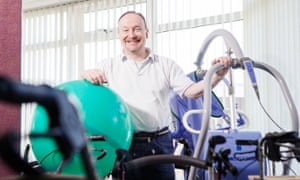
Physiotherapist Dean Metz says that falls in old age are not inevitable. Photograph: Dan Prince Kate Murray

Starting an exercise regime in your 70s or 80s may sound unusual. But for a growing number of older people it could help them hold on to their independence for longer, and reduce the pressure on families, carers and the health and social care system.

“There is a lot of evidence that physical activity and exercise are valuable however old you are, and that frail, older people gain the most benefit,” says Louise McGregor, vice-chair of the Agile professional network for physiotherapists working with older people. “You are really never too old. We now have a lot more people who live into their 100s and they can still benefit from the right type of exercise.”

Prescribing more activity for older people is part of a more proactive approach by physiotherapists to prevent a loss of mobility and independence.
But first, says McGregor, we need to challenge some of the beliefs about ageing among older people, their carers and even some health professionals: “When people start to slow down, it’s not necessarily a part of normal ageing.

“We have to dispel the myth that nothing is reversible, when actually for many people problems of balance and muscle weakness can be addressed even when you’re in your 90s.”

The impact of a carefully tailored physiotherapy regime can be significant, in some cases, according to McGregor, a relatively small input can “transform lives”.

However, with an ageing population putting a strain on the NHS and social care – over-65s now account for 70% of bed days in hospital – there is also a real financial pay-off. There are three million falls annually among older people, and the cost to the NHS is estimated to be £2.3bn a year.

The Chartered Society of Physiotherapy believes that almost 200,000 of those falls could be prevented annually through physiotherapy-led prevention services, which would save £275m.

When people slow down, it’s not necessarily a part of normal ageing
Louise McGregor
One notable success story is in the north-east, where a multi-disciplinary falls prevention service at South Tyneside district hospital offers a “one-stop” clinic with joint assessments by a nurse and a physiotherapist to identify what may be causing patients’ falls and what can be done to help prevent them in future.

Dean Metz, falls specialist physiotherapist at the hospital, explains that the process includes everything from blood pressure and vision tests, to a full balance-and-strength assessment with follow-up programmes devised to help.

“As a child, when we develop, we learn to do things like stand on one leg. Often, as older adults, we need to relearn those skills, so we will do that with them in a safe environment,” he says.

Metz believes it is important to challenge the belief that falls are inevitable in older age. “A lot of older adults feel it’s just a natural part of getting older, they’ll say: ‘Oh, I fell over, I’m getting on,’” he says.

“And there’s a big amount of fear. Older adults don’t necessarily want to tell anyone in case people say maybe they shouldn’t be living on their own or maybe it’s time for them to go into a home.

“We want to encourage them to have that discussion as it’s important when it could be something simple to address.”

The programme has had some impressive results: 81% of patients reported a decrease in falls in the six months after visiting the service, although Metz says the real figure may be lower as patients were self-reporting. However, he says that he can see for himself the difference the service makes: “It’s wonderful to see one of my patients out and about.

“They are so grateful that they have got such an important part of their life back and they no longer feel prisoners in their own home.”

Another area where physiotherapy can have a real benefit is with people with dementia, where physiotherapists can play a key part in assessing a patient’s needs and ensuring high-quality care.

McGregor, who is also an allied health professional therapist consultant, older people rehabilitation, at St George’s NHS trust in London, says she often supports those with dementia and their carers, and is passionate about the difference physiotherapy can make.

“Working with people with dementia, you have to be a lot more adaptable and more creative. You have to be flexible – an older person with dementia would still benefit from exercise, but may not remember to do those exercises,” she says.

“However, getting to know the person can really help – finding out what they used to do can be helpful in finding a way to communicate. Then you can get really good results.”

Filed Under: Editor to ACOMSDave Tagged With: Dan Metz, dementia, physiotherpay

YouTube Star Joey Graceffa Comes Out As Gay In Magical Music Video

19/05/2015 By ACOMSDave Leave a Comment

Joey Graceffa has come out as gay in his new music video, and it’s nothing short of a fairy tale.
On May 16, the YouTube star released the video for “Don’t Wait,” which flashes between reality and a magical world. The video features goblins, a witch and, of course, a prince who turns out to be Graceffa’s love interest. At the end, the two share a happily-ever-after kiss in the woods.
After the video went live, Graceffa’s fans and other YouTubers took to Twitter to share their love and support.

Filed Under: Anti-Bullying & Homophobia Tagged With: coming out, Joey Graceffa, YouTube

Bradford leads the way in fight against dementia

19/05/2015 By ACOMSDave

Bradford Telegraph and Argus Last updated 14:09 Monday 18 May 2015 by Claire Wilde, City Hall Reporter

Bradford leads the way in the fight against dementia
Bradford Telegraph and Argus: Photograph of the Author by Claire Wilde, City Hall Reporter

A PIONEERING project looks set to put Bradford at the forefront of the battle against dementia.
Bradford Council has teamed up with a host of organisations, including two of the country’s top three universities, on what is being described as the most comprehensive study of its kind ever carried out by a local authority.
In an 18-month project, public health bosses, academics, hospitals and GPs, voluntary groups, patients and their families have come together to show how dementia affects people’s lives in Bradford.
The work shines a light on the current picture in the district, as well as looking forward to what the problem might look like in five years’ time.
It will also set out an action plan of what health bosses and others will need to do to help prevent people developing dementia, improve the lives of those with the condition and ease the burden it places on families.
The findings will be revealed today, but are expected to show that the number of people with dementia is predicted to rise by an estimated 15 per cent by 2020, to around 5,750.
And to mark the beginning of dementia awareness week today, those involved are unveiling a new five-year dementia strategy for the district.
Dr Andrew O’Shaughnessy, consultant in public health for Bradford Council, is one of those who has been leading the project.
He said dementia was “one of the greatest, if not the single greatest, health and social care challenge we are currently dealing with”.
He said: “People are living longer. It’s basic arithmetic to say we are going to get more dementia, because it is predominantly – but not exclusively – a disease of old age.
“We don’t have a way of curing dementia. I know people are working on it but it is not something we can afford to look at because it is not on our radar. It is not on anybody’s radar.
“What we want to do is we want people to live well with dementia.”
Dr O’Shaughnessy said another important aspect of the work was looking into how people’s lifestyles affected the likelihood they would develop the condition in the first place.
He said: “One in three cases of dementia is the result of bad lifestyle choices.
“Quitting smoking, improving your diet and getting enough exercise at a younger age could help prevent people getting dementia in the first place.
“We’re also looking at how we can improve the quality of life for those with the disease by allowing people with dementia to stay in their own homes for as long as possible and further improving the care they get.”
In one groundbreaking strand of the work, health bosses have teamed up with world-class academics from Oxford University and the London School of Economics on a five-year research project funded by the Health Foundation.
The research, which is now under way, aims to measure the cost-effectiveness of every £1 spent on dementia projects in the district, so funding can be ploughed into the most value-for-money schemes.

YOUR VOTE
Do you think enough is done to help dementia sufferers and their carers?
Yes:
Bradford Telegraph and Argus: results 10%
No:
Bradford Telegraph and Argus: results 90%
Thanks for voting – this ballot is now closed

Dr O’Shaughnessy said throughout the project they had been working very closely with Bradford University’s School of Dementia Studies, keen to harness the expertise on their doorstep.
And he said Bradford was now leading the way with work to create dementia-friendly communities.
The new five-year strategy sets out five main aims for the district’s health and care services.

They are:
– To keep people with dementia in their homes for as long as possible;
– To increase the focus on dementia in care homes;
– To increase awareness of prevention of dementia through healthy lifestyles;
– To provide high-quality end-of-life care for people with dementia;
– To enable people to live well with dementia.

Councillor David Green, council leader and chairman of the district’s Health and Wellbeing Board, said: “The welfare of vulnerable people is a priority for the district and addressing health inequalities.
“Bradford district is leading the way in developing a number of dementia-friendly programmes and the actions that come from this strategy will make a real difference to people’s lives.
“The work being carried out in Bradford is pioneering and at the forefront of dementia research, which will enable other local authorities to develop their own strategies.”

Filed Under: Editor to ACOMSDave Tagged With: Bradford, dementia, local government

  • « Previous Page
  • 1
  • …
  • 91
  • 92
  • 93
  • 94
  • 95
  • …
  • 108
  • Next Page »

Categories

Copyright ACOMSDave.com © 2026