ACOMSDave

Community Journalist

  • Home
  • Community Journalist
  • Events
  • Media Page and Press Kit
    • Projects and Work
  • Resources & Documents
    • LGBTQ+ Support Groups and Documents
  • NIGRA
  • Archives
  • Contact

Chinese Court Takes Historic Step Toward Advancing Same-Sex Marriage

10/01/2016 By ACOMSDave Leave a Comment

Nation of Change
By Samantha Cowan –
January 6, 2016
china-same-sex

A court decision regarding one man’s right to marry his partner could come down in the next six months.

|With the U.S. Supreme Court’s decision to legalize same-sex marriage in June, more than 20 countries across the Americas, Europe, and Africa now recognize unions between two men or two women. Yet not a single Asian nation has joined them. That may be about to change.
Movement within China’s court system indicates that the world’s most populous country could be the first in Asia to join the ranks.
Advertisement
A Chinese court has agreed to hear a case that could grant a same-sex couple the right to marry, Reuters reports.
Sun Wenlin, a 26-year-old gay man hoping to marry his partner, filed a complaint against the Changsha Furong District Civil Affairs Bureau, which denied his request to register the marriage, in Hunan province in December. Sun told Reuters that a local court agreed on Tuesday to hear his case.
Whether the court sides in Sun’s favor, even the decision to hear the case is a step toward LGBT equality.
Related
These Same-Sex Couples Couldn’t Get Married in China, So They Came to America
“In China, courts often reject politically sensitive cases, so the fact that the lawsuit is accepted signals some official willingness to address discrimination against LGBT people, which is encouraging,” Maya Wang, a China researcher at Human Rights Watch, told Reuters. “But we will need to see if they actually win the case. If they do, it’d be a truly watershed moment for LGBT rights in China.”
China decriminalized homosexuality in the late 1990s and took it off the list of official mental disorders in 2001. Since then, the unofficial attitude toward homosexuality is what’s known as “the three nots” approach: “not encouraging, not discouraging, and not promoting.”
Sun states that after he filed the complaint, police attempted to investigate his home and approached family members. He told the Global Times that the police officers who came to his home emphasized the importance of having a child and carrying on the family name, reflecting the nation’s more traditional values. LGBT people living in China are banned from adopting a child and are not protected under antidiscrimination laws, according to international organization Out Right.
Sun is confident in his case, telling Reuters that China’s marriage law “says there is the freedom to marry and gender equality.” He also notes that national laws describe marriage as being between a “husband and a wife” rather than a “man and woman,” and that such labels could be applied to homosexual couples.
This article was originally published on TakePart.
http://www.nationofchange.org/news/2016/01/06/chinese-court-takes-historic-step-toward-advancing-same-sex-marriage/

Filed Under: History Tagged With: chinese, courts, equal marriage, marriage, politics, same sex

John Gielgud’s little porn play

10/01/2016 By ACOMSDave Leave a Comment

 
15408
John Gielgud, pictured in 1950 | Jane Bown | 15408
A gay porn film based on a screenplay written by the late Sir John Gielgud has finished production, despite opposition from his estate. Trouser Bar is set in a menswear shop where an orgy takes place and stars Nigel Havers and Julian Clary as passersby. The screenplay was secretly written by Gielgud – known for his roles in Julius Caesar and Arthur – for Peter de Rome. David McGillivray, the producer, told The Guardian:

“Pornography is still a stigma in this country, but Sir John loved porn and, in his letters, he talks about visiting gay cinemas,” he said. “I was shocked when the trust didn’t give me permission. We stuck to Sir John’s script very tightly when we made the film a couple of weeks ago. He was very specific about the clothes he wanted the actors to wear.”
The script, written in the late 1970s, was passed on from de Rome to McGillivray before his death last year. The low-budget feature now risks a legal battle before finding an audience. “They have come down heavily on me,” McGillivray said. “They are using intellectual copyright as an excuse.”

The late actor’s estate are trying to block the film.
The actor and theatre director Sir Arthur John Gielgud, OM, CH was born on 14 April 1904 and died on 21 May 2000. With Ralph Richardson and Laurence Olivier, he was one of the trinity of actors who dominated the British stage for much of the 20th century. He was born into a large theatrical family, one of his brothers, Val, securing a job at the BBC as head of BBC radio drama. Sir John’s acting career began in 1921.
Wikipedia notes

After his return from America in February 1937 Gielgud starred in He Was Born Gay by Emlyn Williams. This romantic tragedy about French royalty after the Revolution was quite well received during its pre-London tour, but was savaged by the critics in the West End.

On the evening of 20 October 1953, Gielgud, just knighted, usually highly discreet about casual sex, was arrested in Chelsea for cruising in a public lavatory. Gielgud was fined.
http://www.theguardian.com/film/2015/oct/28/john-gielgud-scripted-gay-porn-film-still-faces-estate-opposition

Filed Under: Movie Reviews Tagged With: gay history, Julian Clary, menswear, Nigel Havers, porn movie, Trouser Bar

Could Therapy Save Your Life?

10/01/2016 By ACOMSDave Leave a Comment

By The Gay UK, Jan 8 2016 02:52PM
As a psychotherapist, the current news around suicide, immigration, and HIV transmission, troubles me greatly.
CREDIT: kwest / Depositphotos.com

CREDIT: kwest / Depositphotos.com
It is only a matter of months since we heard that Vikki Thompson, despite being known to be at serious risk in custody, was sent to a male prison anyway, resulting in her making the upsetting decision to end her life. The reverberations around the country have been vast – people are now engaging in dialogue about suicide, considering the fate of transgender men and women in the prison estate, alongside considering the wider concerns around the risk of suicide to the LGBTF community. For those of us who are part of this community, the concerns are real, and significant. But what are, roughly, the facts?
In terms of stats, you are all probably aware that the majority of suicides are male (of the 6,233 reported suicides in the UK during 2013, 4,858 of those were men, and 1,375 were women (Samaritans’ Report, 2015). Males – and usually white males – between the ages of 49 and 65 were particularly at risk, especially professionals such as doctors, social workers, and solicitors. In addition, suicide amongst the LGBT youth is notable, with LGBT teens and young adults having one of the highest rates of suicide attempts in comparison with the rest of the population. The situation is truly disturbing for us, our families, and our friends. For those left behind when someone ends their life, recovery can be arduous at best. Even more sadly, the lack of a therapist who shares the same sexual identity can significantly impact the quality of the therapeutic relationship from developing at all. But what can we do about it?
The statutory services are often less than helpful. Without casting ‘shade’ on my Health colleagues, who work hard under very difficult circumstances, waiting lists remain high, the quick fix agenda is still rampant, and getting a therapy which will actually do what it sets out to do is rarely available, despite promises otherwise. Rather unconventionally, in a country where we expect to be treated for everything for free, my humble suggestion would be for anyone with a need for some emotional support, is to consider paying for the therapy yourself. Here are some things to think about in order to help your decision:
• There are often no waiting lists in private practice.
• Choice actually means something. If your therapeutic alliance is not working, find someone else.
• An hour’s therapy costs the equivalent of a meal out, or a pair of jeans.
• Your happiness is priceless.
* Therapy can take as long as you need it to, not just six sessions.
• Many therapies are available online, i.e. Skype, meaning you don’t even need to go out of your home.
• Confidentiality is more meaningful, as there will be no trace on your health record. At all.
The thing is, research supports the idea that therapy can be really helpful. For myself (yes, therapists are required to complete their own therapy) the therapy was life-changing. Therapy can help alleviate difficult feelings to the point where, for example, with depression, the impact can rival anti-depressants, and the effects can be felt for much longer afterwards. Some people report that therapy has been profound, with many people wishing they’d made the decision much earlier. Isn’t it about time you considered trying therapy for yourself?
About Andrew Smith:
Andrew is the clinical director of TherAppUK Ltd, an organisation based in Greater Manchester that provides a range of therapeutic solutions to individuals, families, and groups. He is also a doctoral researcher at the University of Huddersfield, and lives in the Calder Valley with his partner, Nigel, their son, a neurotic Chihuahua called Chicky, and two cats. If you have any urgent concerns about your own or someone else’s emotional health, please call 999 or NHS Direct. If this is a matter that can wait until one of our therapists can call you back, please email Andrew on andrew.smith@therapp.org
Provided Content by Andrew Smith (What does this mean?)

Filed Under: Anti-Bullying & Homophobia Tagged With: happiness, life, medical, Therapy

Teacher to be compensated over comments on gay son

06/01/2016 By ACOMSDave Leave a Comment

Logo for Irish TimesTue, Jan 5, 2016, 01:00
Carl O’Brien

Bernie Marron says principal made critical comments about her son’s sexual orientation

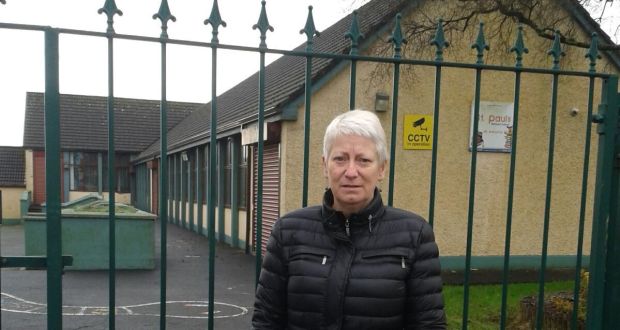
 Bernie  Marron told the Equality Tribunal she was looking for an acknowledgment that what had happened to her was wrong and sought no financial compensation.

Bernie Marron told the Equality Tribunal she was looking for an acknowledgment that what had happened to her was wrong and sought no financial compensation.


 A primary school has been ordered to compensate a teacher after the Equality Tribunal found she had been harassed on religious grounds and discriminated against because her son was gay.

Resource teacher Bernie Marron took the case against the board of management of St Paul’s, a Church of Ireland primary school in Collooney, Co Sligo, which is under the patronage of the Bishop of Tuam.

Ms Marron (53), who worked at the school for seven years, said the principal made a series of critical comments about her son’s sexual orientation, saying a “normal boy” would not spend an afternoon shopping for clothes.

She said the principal also raised her son’s speech and attire at a valedictory service at a local secondary school. She told the tribunal he said her son’s pink blazer was not appropriate and questioned what kind of mother Ms Marron was to have a son like that.

Negative effects

Ms Marron said the principal – who denied the allegations – also made a series of comments which were critical or discriminatory towards Catholics.

She said the principal criticised the behaviour of Catholics in church, commented on the negative effects of Catholics joining a local Church of Ireland secondary school and referred to Church of Ireland members as “our children” and the “right people”.

Ms Marron, a non-practising Catholic, said she felt repeatedly undermined by the principal and complained to the school in September 2013. The issues, however, were not dealt with properly by the school.

The chair of the board of management, however, told the tribunal it responded to the allegations “as best they could”.

The principal of St Paul’s denied Ms Marron’s allegations and expressed shock that they had been made.

Regarding Ms Marron’s son’s speech, the principal said she herself had been upset by the boy’s comments about his classmates, which included her own daughter. The principal denied making any statement about the complainant’s son shopping for clothes.

The principal said she was shocked to learn of the allegations and said she had never discriminated against the complainant and had sought to include her at all events involving the school.

In its finding, the Equality Tribunal found as fact that the principal made the derogatory comments attributed to her by Ms Marron.

The tribunal found the principal’s use of the words “us” and “our” in relation to children and adults of different religions amounted to harassment.

Comments on the sexual orientation of Ms Marron’s son and her parenting undermined her dignity at work and amounted to discrimination by association.

Ms Marron told the tribunal she was looking for an acknowledgment that what had happened to her was wrong and sought no financial compensation.

The tribunal, however, ordered the school to award her €3,000 on the basis that the case would attract a significant award of damages in the ordinary course of events.

Equality training

It also ordered that the school undertake equality training to cover discrimination and harassment.

Ms Marron told The Irish Times she took the case in order to challenge a culture that allowed personal opinion and beliefs to override other people’s human rights.

“I was hurt and angry by the experience. No one should be subjected to judgment about their parenting or their son’s right to be themselves,” she said.

She also said the case raised the wider issue of the lack of an effective complaints-handling mechanism

Filed Under: Anti-Bullying & Homophobia, History Tagged With: Church of Ireland primary, compensation, education, equality tribunal, gay son

Congratulations LGBT Cookstown

06/01/2016 By ACOMSDave Leave a Comment

Snap 2016-01-06 at 17.08.50Michael McGlade

michael.mcglade@jpress.co.uk

First meeting of LGBT youth group in Cookstown


  • Meeting organised by Cara-Friend, an LGBT service running throughout NI
  • Thursday, January 7 from 6-8pm in Cookstown Leisure Centre
  • Focusing on a safe space mentality for those who identify as lesbian, gay, bisexual or transgender

A new group to help young people in the Cookstown area who may be lesbian, gay, bisexual or transgender, will meet for the first time this Thursday.
The youth group has been set up by Cara-Friend, which is an LGBT service running throughout NI.
Representatives of CaraFriend NI
The first meeting will be held on Thursday night from 6-8pm in Cookstown Leisure Centre.
Declan Meehan, who is the youth development manager said rural areas like Mid Ulster left many young people feeling isolated.
“Isolation of young LGBT people, particularly in rural areas, can be very damaging to young people’s mental health and as such, tackling it is a priority for Cara-Friend,” he said.
“It is a peer support and guidance service that focuses on a safe space mentality for those who identify as lesbian, gay, bisexual or transgender; and for those who might be questioning either their sexuality or gender identity,” said Declan.
 

Isolation of young LGBT people, particularly in rural areas, can be very damaging to young people’s mental health
Declan Meehan

“The new youth group will provide a social outlet for young LGBT people in the wider Cookstown area, as well as a safe space in which they can learn about personal development and meet other like minded young people who may be going through a similar process as themselves.
Read more: http://www.tyronetimes.co.uk/news/health/health-news/first-meeting-of-lgbt-youth-group-in-cookstown-1-7145135#ixzz3wU8tVR8H


Filed Under: Anti-Bullying & Homophobia Tagged With: CaraFriend, LGBT Cookstown, LGBT support

Boy, Sets Himself On Fire Because Of Anti-Gay Bullying

06/01/2016 By ACOMSDave Leave a Comment


By The Gay UK, Jan 5 2016 09:37AM

A 15-year-old student in India has set himself on fire because of anti-gay bullying after being caught being intimate with boyfriend.

CREDIT: tomwang / Depositiphotos.com

CREDIT: tomwang / Depositiphotos.com

A student in Madia Katra, Agra, at the top of his class, set fire to himself after being caught by neighbours being intimate with a friend. He was relentlessly bullying and harassed the boy’s father has told the media in India.

The unnamed boy dowsed himself in stolen diesel on Sunday and set fire to himself. Family and neighbours quickly put out the flames, but he sustained 40% burns to his chest and legs.

Speaking to The Times Of India, the father said,

“‘He is unable to speak properly. The doctors say he is out of danger but I will only believe it when my son will talk to me,”

“The news spread and a some people started teasing and harassing him”.

The father added,

“Upset, he locked himself in the room for two days. He suddenly ran outside the house on Sunday afternoon and set himself afire by pouring diesel on himself.”

Same-sex activity is currently illegal in India and holds a penalty of up to life imprisonment. In December 2015 Shashi Tharoor, a member of the Indian National Congress party, introduced a bill to decriminalise homosexuality. The house rejected the bill by a vote of 71-24. Tharoor is planning to reintroduce the bill

Filed Under: Anti-Bullying & Homophobia Tagged With: gay bullying, India, justice system, politics

Jack Larson

06/01/2016 By ACOMSDave Leave a Comment

by Paul

15364

Jack Larson (left) as “Jimmy Olsen” and George Reeves (r)| CNN | 15364

Gay Actor Jack Larson has died, age 87. Mr Larson became well known for playing Jimmy Olsen of “Superman” on American television in the 1950s. The Washington Post describes him as a gifted writer and gay man whose talents and personal struggles were overshadowed by his role as Superman’s flunky, “Jimmy Olsen”, which he commenced in 1951 age 18.

“I didn’t want to do it,” Larson said, ”but my agent said, ‘Look, you want to get to New York. You don’t have any money. Nobody will ever see this show so take the money and run.”’

Larson did. For $350 an episode, he completed the show and went to the Big Apple. And he was living there when the show he had dismissed became one of the most iconic in TV history — even though it was pretty bad. … “To me, it was a nightmare,” he said in 2006. “Everywhere I went, it was, ‘Jimmy! Jimmy! Hey, Jimmy, where’s Superman?’ Suddenly, I couldn’t take the bus or the subway anymore. It absolutely freaked me out.”

While in Hollywood, he became involved with screen legend Montgomery Clift, and met his future longtime companion, director James Bridges.

In the end, though, the Superman role became something he began to enjoy, and it made him famous.

“Everywhere I go, I get the warmest feelings from people about Jimmy,” he said. “They love him, and I grew to feel that I could never have done anything more special than be Jimmy Olsen.”

Jack Larson was born on February 8, 1928 and died on September 20, 2015. Gay History sends condolences to family, friends and colleagues.

http://www.washingtonpost.com/news/morning-mix/wp/2015/09/22/how-superman-ruined-a-gay-actors-life-then-saved-it-jack-larson-jimmy-olsen-dead-at-87/

Filed Under: Movie Reviews, TV programme reviews Tagged With: Actor, death, history, Movie History, Superman, TV hisotry

Bayard Rustin and Walter Neagle – Married or adopted?

06/01/2016 By ACOMSDave 2 Comments

The Gay History site has published a very interesting article, drawing on an article published by the New York Times,  on how gay couples prevented from marrying choose another route to try and ensure their partner’s rights – that of adopting their partner!

Here I have reprinted the article and then afterwards a editorial piece submitted by Sean McGouran for NIGRA – 


by Paul

15399

Bayard Rustin and Walter Naegle | NPR | 15399

The New York Times have been delving into the history of gay men who could not marry, so one partner adopted the other partner, instead.

Adult adoption by gays and lesbians has only been quietly discussed, both in or outside the gay community, for fairly obvious reasons; there isn’t an easy way to tell your friends and family that the man or woman with whom you share a bed is, legally, your son or father, or your daughter or mother. Consequently, there are no reliable data — or even flimsy data — as to the number of such adoptions, and experts in the field are unwilling to hazard a guess. The practice seems to have taken hold amid the tumult of the 1970s and 1980s, during rampant discrimination and the onset of the AIDS crisis.

Some famous people got round the lack of an option to get married by one adopting the other, it seems. Bayard Rustin and Walter Naegle, pictured, used the legal dodge to protect their interests.

Naegle and Rustin were attracted to each other immediately — they kissed for the first time that day — and became a couple thereafter. During their 10 years together, marriage was not discussed; it simply wasn’t imaginable. .. Rustin wanted to ensure that Naegle — who, at 37 years his junior, would surely outlive him — would inherit his estate, he availed himself of the least-bad option: adoption… Naegle recalled the adoption process: First, his biological mother had to legally disown him. Then a social worker was dispatched to the Rustin-Naegle home in Manhattan to determine if it was fit for a child. “She was apprised of the situation and knew exactly what was happening,” Naegle told me. “Her concern, of course, was that he wasn’t some dotty old man that I was trying to take advantage of, and that I wasn’t some naive young kid that was being preyed upon by an older man.”

The adoption proved a shrewd decision. Naegle, as next of kin, had visiting privileges when Rustin was hospitalized for a perforated appendix and peritonitis and was eventually executor of the will. Despite the oddness of the arrangement, it was, all things considered, legally seamless.

http://www.nytimes.com/2015/10/19/magazine/the-lost-history-of-gay-adult-adoption.html?_r=0

Editorial by Sean McGouran:

Fascinating stuff, for some reason Bayard Rustin is disliked by the (US) far left. He was a member of the Communist Party of the USA, and queer.  The CPUSA (The Communist Party USA) told him to keep both matters under his hat, but it is difficult to know what the Lefties want[ed].  Rustin  was a great organisation-man, he planned Dr. Marin Luther King’s Southern Christian Leadership’s great 1966 ‘March on Washington’.  

 Tantamount to an invasion by about a million (mostly ‘Black’ / African Americans) by car, coach, rail, air – from all States (including Hawaii, so far as I can figure out.  It became a State of the Union in 1958.  Was Alaska ten years later?).  It was  wonderful achievement for an organisation with practically no employee.  That was where King gave his “Free at last!  Free at last!” speech, which led to the (very speedy) passage of the Civil Rights Act.  Even the reddest of red-necks realised that such organisational genius could be put to other uses, like possibly organising an underground army (‘Blacks’ in the Southland already were arming themselves).

   The Klan invaded an all-Black village in North Carolina (for about the thousandth time) but this time the “Niggers” shot back!

Filed Under: Anti-Bullying & Homophobia Tagged With: black rights, Communist Party USA, Naegle, Rustin

Coming out is never easy. But in Sri Lanka and much of surrounding South Asia it’s dangerous

03/01/2016 By ACOMSDave Leave a Comment

Gay Times Logo

31st December 2015 by GT

13:00 31st December 2015 by GT

BEST-REAL-Sri-Lank-Temple

We’ve delved into the GT vault this festive season, to give you some holiday reading

Closet culture.

Coming out is never easy. But in Sri Lanka and much of surrounding South Asia it’s dangerous

Sri Lanka in the Middle East
Sri Lanka
 
Coming out is never easy. But in Sri Lanka and much of surrounding South Asia – wherehomosexual acts are outlawed – it’s dangerous. How can LGBTIQ people fight for their rights when homophobia begins at home? GT investigates…
It was night time, and right the way down the street the lights had gone out. Power cuts are common in Sri Lanka’s capital city, Colombo, but this wasn’t a power cut. When four men arrived at Kiru Thurairajah’s house, she knew her girlfriend’s stepfather had sent them. He was unhappy with his stepdaughter being in a lesbian relationship and had already sent threats to Kiru.
As the men started throwing stones at the house, Kiru had a decision to make. Should she call the police, or would this just put her in more danger? Countless numbers of people have to ask themselves this question when they are harassed or even attacked because of their sexuality in Sri Lanka.
Articles 365 and 365a of Sri Lanka’s Penal Code, originally introduced by British colonists in 1886, have been used to criminalise homosexual acts which are said to be “against the order of nature” or to amount to “gross indecency”. Similar laws remain in place in India, Bangladesh, Bhutan and Pakistan, nearly 50 years after they were revoked in Britain.
“I was going to call the police but then I started thinking,” Kiru tells us, “if I called the police, I’d have to tell the whole story about who sent the thugs, and that I had a relationship with his stepdaughter.”
There’ve been no convictions for Article 365 or 365a since Sri Lanka gained independence in 1948, but the law means most LGBTIQ people avoid seeking protection from the police or justice from the courts, even when threatened with physical harm.
Luckily for Kiru, her aunt worked in politics and was able to send some policemen who didn’t ask any questions, but she decided not to file a complaint against her girlfriend’s stepfather. She eventually found out that he’d convinced the municipal council to switch off the electricity on her street.
Although Kiru thinks the laws need to change, she doesn’t see it as the biggest barrier gay people face.
“No one worries about the law in Sri Lanka,” she said. “If society was OK with who we are, we’d be OK.
“Social acceptance is improving, but only in urban areas, so I’m in a much better situation than other people. One person I know went through ‘corrective rape’; her father told her cousin to rape her, thinking that this would make her straight.”
Deepthi Tadanki is directing a film about corrective rape, which she started working on after speaking to a young man in Bangalore, whose own mother attempted to rape him.
BEST-REAL-Sri-Lanka-Street
The Indian filmmaker told us: “In the LGBT community, everybody knows somebody who’s experienced corrective rape, but nobody talks about it because of the shame. The parents don’t see it as rape, they see it as their duty, and they think that it’ll benefit their kid’s future.”
Cases of corrective rape have been reported as far and wide as Uganda and Ecuador, but in South Asia, according to Deepthi, this issue is “beyond taboo”. Deepthi’s team have been threatened with an acid attack if they continue production.
Corrective rape isn’t talked about because homosexuality isn’t talked about, which is why families often have limited understanding of what homosexuality is. Some parents, so afraid of the stigma their child will suffer if word gets out, decide to carry out the abuse themselves.
Understandably, many people think it’s safer to hide their true identities, often bowing to immense pressure to marry.
Shan* hides his sexuality from everyone in his life except for a select few.
“Forget about LGBT rights, society is not ready to accept single people yet. You have to get married for acceptance. So whether they like it or not, most LGBT people do.”
Koluu Ranawake, celebrity chef, is one of the most open and flamboyant gay people in Sri Lanka. Having come out to his own mother at 17, he often hears from young people on Facebook who’re afraid to come out to their families.
“I encourage them, I say, ‘Why are you scared to tell your parents?’ I know some parents who’re quite happy about it,” he said.
But other activists, like Shan, advise caution: “In Sri Lanka, your identity and the level of its expression depends on your socio-economic status.”
When Kiru told her mother and father that she is a lesbian they both threatened to kill themselves, cutting their hands to prove they meant it. “It was very emotional for us,” she said. “We all cried for hours. It was the first time I’d seen my father cry. In Sri Lankan culture, men don’t cry, especially fathers.”
Other parents react by seeking ‘cures’. In rural areas, witch doctors – kattadiyas – offer remedies for homosexual urges, from herbal teas to hanging magnets from the patient’s testicles. Some psychologists continue to treat homosexuality as a mental illness. Kiru remembers when a friend was told she could be ‘cured’ through female genital mutilation.
Because of issues like these, LGBTIQ non-profit Equal Ground run programmes to ‘sensitise’ people; teaching them what homosexuality really is.
Last year, following representations from Equal Ground, the UN Human Rights Committee put pressure on the government to discuss the legal status and protections offered to LGBTIQ people. In a written response the government said Article 12 of the Constitution – the right to equality – “protects persons from stigmatisation and discrimination”.
It was an important milestone, but Equal Ground’s executive director, Rosanna Flamer-Caldera, didn’t think it was enough: “The fact of the matter is that law enforcement agencies often violate people’s rights based on these old laws.”
In 2009, an Indian High Court declared the country’s similarly outdated laws unconstitutional, as they violated equal rights. It was a historic success, but just four years later the Supreme Court overturned that judgment, saying it should be left for legislators to decide.
Speaking about this ruling, Sri Lankan Human Rights Commissioner, Prathiba Mahanamahewa, said: “Incidents like these really affect Sri Lanka because we share a similar culture, ideology and philosophy.”
Aware of statistics from the National STD/AIDS Control Programme, indicating the number of new HIV cases has doubled in just six years, Prathiba is trying to open up a dialogue with civil society about the law. “There’s a veil of silence in this country, and we need to open this veil so we can protect people.”
But even within the Human Rights Commission of Sri Lanka, there was significant “debate” over openly discussing the issue of gay rights, because of concerns over protecting “Sri Lankan values”, according to Prathiba. This echoes issues across largely conservative South Asia, where power and religion have strong links.
Rosanna explains: “There’s a huge faction of homophobic politicians who’re constantly whipping up sentiment with their lies about what homosexuality is.”
In 2013 Norway’s Ambassador Grete Løchen brought her wife with her to Sri Lanka. In reaction to this, President at the time Mahinda Rajapaksa, meeting with an ultra-conservative Buddhist organisation said the country’s “Buddhist identity would come to an end if we allow these actions.” Rajapaksa’s argument is ubiquitous and flawed; there’s nothing within Buddhist texts which prohibits homosexuality.
“These bigots use one tiny thing from Buddhism, saying if something is bad for society then it should be stopped, in just the same way they pluck certain things from the Bible.
“The argument so many people put out is that homosexuality is against our culture, but if any culture violates somebody’s human rights, that culture needs to change,” says Rosanna from Equal Ground.
Parliamentary elections will be held this month, and Rosanna hopes this will lead topositive action from Parliament. “It’s time for politicians to come out of their closets and speak up,” she said.
If this happens it could cause a chain reaction, with more and more people coming out across Sri Lanka and South Asia.
Damith* explained how things would change for him if Article 365 and 365a were revoked. “If the law changed I’d definitely marry. Then I’d be very happy to introduce my family to my boyfriend. I’d be ready to come out and face disaster.”
*Some names have been changed by request.
Words Jo Eckersley

Filed Under: Anti-Bullying & Homophobia Tagged With: culture, Middle East, Sri Lanka, travel

Celebrity support for first UK LGBT clothing brand

03/01/2016 By ACOMSDave Leave a Comment

Penarth Times Logo

Anthony Lewis, Penarth Times reporter / Saturday 2 January 2016 / News

elmapparel-1
 
CELEBRITIES have given their support to the first UK LGBT clothing brand which has been set up by a woman from Penarth.
 

Rugby legend Gareth Thomas and Ian ‘H’ Watkins from the band Steps shared an image of themselves on social Gareth Thomas and Ian 'H' Watkinsmedia wearing items from Fern Coslett’s debut collection.
Miss Coslett, 20, launched Elm Apparel with backing from the Vale of Glamorgan council’s young entrepreneur bursary scheme.
It features a range of androgynous casual wear inspired by the culture and issues of people in the lesbian, gay, bisexual and transgender community.
Miss Coslett’s mum, Angela Coslett, made the suggestion to get in contact with the Welsh icons, as they are currently starring in Aladdin at the New Theatre in Cardiff.
Inspired by the idea Miss Coslett quickly packaged the items she though would be best suited to the stars, selecting the very popular geometric bear design for Gareth Thomas and the festive ‘Make The Yuletide Gay’ sweater for Ian ‘H’ Watkins, who recently announced he and his partner, Craig Ryder, are expecting twins via surrogate.
Shortly after delivering the packages to the New Theatre,
Miss Coslett received a message via twitter from Ian, thanking her and confirming he and Gareth looked forward to modelling items with both stars later tweeting an excited image of them wearing the products, to their thousand of followers online.

Miss Coslett said: “Its a dream come true to have such iconic people in the Welsh gay community wearing Elm products, because they’re so influential and help inspire so many people across Wales and beyond, to embrace who they are.”
Both Mr Thomas and Mr Watkins have been recognised as two of the most influential LGBT people in Wales, with the former also previously being crowned Stonewall’s Hero of The Year.
The Geometric Bear sweater, Christmas jumper and much more are available online at elmapparel.com.

Filed Under: History Tagged With: Elm Apparel, gay clothing label, Penarth, Wales, Welsh government support

  • « Previous Page
  • 1
  • …
  • 40
  • 41
  • 42
  • 43
  • 44
  • …
  • 108
  • Next Page »

Categories

Copyright ACOMSDave.com © 2026