ACOMSDave

Community Journalist

  • Home
  • Community Journalist
  • Events
  • Media Page and Press Kit
    • Projects and Work
  • Resources & Documents
    • LGBTQ+ Support Groups and Documents
  • NIGRA
  • Archives
  • Contact

Archives for June 2015

The World's Gayest Doll Gets His Own Website After Twenty Years Of Proudly Showing Off His Massive Shlong

09/06/2015 By Dave McFarlane Leave a Comment

TheGayUK Logo

By The Gay UK, Jun 7 2015 11:03AM
To celebrate and document their conceptual artwork Billy, also known as Billy – The World’s First Out and Proud Gay Doll, artists John McKitterick and Juan Andres have launched a new website
The newly launched official website www.thebillyconcept.com illustrates completely the Billy phenomenon with images and text, documenting the history of the Billy concept from the years 1993 to 2003.
It is over twenty years since Billy was first exhibited as a sculpture at a London Arts Benefit for Aids in November 1994, in what was a highly politicised period in gay history. A conceptual artwork created by artists John McKitterick and Juan Andres, the Billy concept championed diversity, gay visibility, safe sex and Aids awareness. Originally 1200 limited editions of the Billy sculpture were created, garnering media attention on all five continents, in 32 countries and in ten languages.
Following the great success of the sculpture, John McKitterick and Juan Andres kept firmly to the original concept and three years later Billy was purposely introduced to the mass market as Billy – The World’s First Out and Proud Gay Doll. Over the next decade Billy became the world’s first and most famous, gay product, a beautifully executed, technically advanced, mass produced doll, punching high above his height of 13 inches / 32cms.
After his US debut in 1997 Billy instantly became a iconic figure and saw himself in over 800 stores worldwide and the Billy concept developed to include his own website ‘Billyworld’, his boyfriend Carlos, his best friend Tyson, the soda ‘Billy Pop’, the music CD ‘Out and About With Billy’, himself dressed by Alexander McQueen and sixty five other designers and artists for the major exhibition and auction ‘Billy Opens His Closet’ at The New Museum of Contemporary Art in Soho, New York, the movies ‘Billy 2000 – Billy Goes Hollywood’ and ‘Jeffrey’s Hollywood Screen Trick’, the photographic book and exhibition ‘Big Fun With Billy’, himself in the Andy Warhol Museum and the Keith Haring Foundation, himself in the Science Museum’s permanent exhibit ‘Making The Modern World’ and himself as ‘16 Feet Billy’ in an art exhibition in London.
Billy was honoured alongside Lady Diana, Ellen DeGeneres and Elton John as one of the ’12 People of 1997’. With a single event in 1998 he raised over $425,000 for a major AIDS charity and articles have been written in major publications such as The Sunday Times, The New York Times, Time Magazine, The Guardian and El Pais, acknowledging Billy as a cultural phenomenon.
By 2004 John McKitterick and Juan Andres believed that the Billy concept had succeeded in its aims and objectives and began work on new art projects. Today Billy is highly sought after with editions commanding considerable prices at exhibition and auction. After six years in the jungles of Central America researching and developing new artworks, John McKitterick and Juan Andres returned to Europe to continue their art practice using the artistic name ‘oneandtwo’. Their most recent work can be seen on their website www.oneandtwo.eu
Filed Under: Anti-Bullying & Homophobia Tagged With: Billy, gayest doll, John McKitterick, Juan Andres

DC Comics has posted a video celebrating its LGBT history.

09/06/2015 By Dave McFarlane Leave a Comment

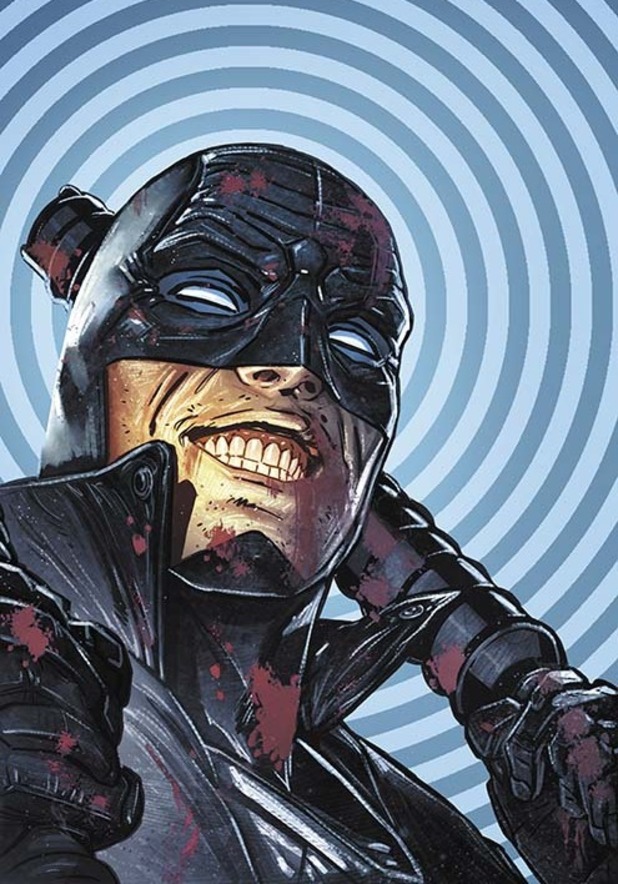
The DC All Access episode hosted by The Advocate’s Jase Peeples arrives to mark Pride Month and the arrival of Midnighter #1.

The video gives a nod to the troubled past of LGBT characters in comics, and attempts to rehabilitate early gay superhero Extraño.
Other characters mentioned include Batwoman, Constantine, Catwoman and Rene Montoya.
The Batwoman series in particular has been honoured in the past at the GLAAD Media Awards.
Midnighter #1
Midnighter #1
© DC Comics
Starring the character from The Authority, Midnighter is billed as DC’s first comic to be headlined by a gay male superhero.
Written by Steve Orlando and illustrated by Aco, Midnighter #1 arrived last week.
Broken Frontier attracts top comics creators to its anthology Kickstarter
DC superhero Midnighter gets on Grindr
DC Comics drops New 52, launches 25 series in line-wide shakeup
Read more: http://www.digitalspy.co.uk/comics/news/a651713/dc-celebrates-its-lgbt-history-in-a-new-video.html#ixzz3cYFZqGvJ
Follow us: @digitalspy on Twitter | digitalspyuk on Facebook

Filed Under: Anti-Bullying & Homophobia, Movie Reviews Tagged With: comic history, DC Comics, gay characters

Man claims attack on Belfast house is gay hate crime

09/06/2015 By Dave McFarlane Leave a Comment

Paul Finlay-Dickson meets Lord Mayor of Belfast, Nichola Mallon,  over the campaign of homophobic attacks on his house in north Belfast. Mr Finlay-Dickson recently lost his husband Maurice to cancer

Paul Finlay-Dickson meets Lord Mayor of Belfast, Nichola Mallon, over the campaign of homophobic attacks on his house in north Belfast. Mr Finlay-Dickson recently lost his husband Maurice to cancer

Belfast TelegraphBY NEVIN FARRELL – 08 JUNE 2015

A man has claimed that an attack on a house he was due to move in to in north Belfast was a homophobic hate crime.

Paul Finlay-Dickson said he has been the victim of a series of attacks and death threats and is now too scared to go to the property in the mainly loyalist Tiger’s Bay.
He said: “I am being attacked because of my sexual orientation. I am not the only gay man in Northern Ireland.
“This is a homophobic hate crime attack and something needs to be done about it because I can’t take much more,” he told the BBC.
At 2.10am on Saturday it was reported to police that a gang of men, one carrying a sledgehammer, were attacking a house in Cosgrave Heights. Damage was caused to a door and a number of windows were smashed. There was nobody in the house at the time.
Earlier this year a gay rights movement ‘Rainbow’ flag due to be placed on the coffin of Mr Finlay-Dickson’s deceased civil partner, who died of cancer, was covered in faeces by attackers.

Filed Under: Anti-Bullying & Homophobia Tagged With: gay hate crime, LGBT hate crime, north belfast

Vodafone blocks LGBT website and redirects to ad for ‘flirty’ dating service

09/06/2015 By Dave McFarlane Leave a Comment

PinkNews Exclusive.

  • 8th June 2015, 3:01 PM
  • LAST UPDATED AT 6:16 PM
  • Nick Duffy

Mobile phone network Vodafone has restricted access to an LGBT community website to over-18s – instead showing ads for a “flirty” dating website.
A PinkNews reader spotted that the website lgbt.co.uk – which provides information on services for the LGBT community in the UK – appeared to be blocked by the provider.

A standard message received when trying to access the website states: “You are not able to access this service because VodafoneContent control is in place. If you’re 18 years or over, you can easily remove Vodafone Content control by going to the ‘About Content control’ link below for further information and details about how to remove it.”
The network requires people to prove their identity with a credit card and another form of ID in order to de-activate the filters.
Despite the perfectly child-friendly website only being accessible to over-18s, ironically the filtering page itself shows a number of ads for over-18 dating websites that remain unblocked.
When PinkNews attempted to view the page, Vodafone message was above an ad for raunchy-sounding dating site “FlirtFinder” – which was unfiltered despite its terms and conditions banning users 17 and under.
Another user received an ad for Match.com – also unfiltered – which operates a strict over-18s policy.

Peter Burnett of lgbt.co.uk told PinkNews: “We started the site in 2006 to deal with prejudice that was built into the tax and pensions system, as well as to campaign for civil partnership and equal marriage. We also discuss holidays and investments, as well as financial ideas for couples, which is our speciality.
“Of course, we haven’t got anything at all barely even saucy on the site, but because we use the terms lgbt, gay and transgender, for example, in our site metadata, providers and others sometimes block us.
“It is incredibly infuriating, not because we’re being blocked, but because it is exactly the sort of prejudice we dislike the most – instiutional assumptions made about millions of people, and not based on reason.”
He added: “Being blocked by Vodafone is careless and prejudiced use of metadata, with their engineers assuming that because our market is LGBT, we must be peddling porn, or something, I don’t know what. It’s so offensive.
“To be honest, any of many LGBT sites are at risk of this, and that is an ugly thought.
“I’m talking about forums, advice sites, clothing sites, news sites, help and information sites, and Vodafone should do their job and examine each site they block. There are also lists of adult sites they can consult, and we wouldn’t be on any of these.”
“Except that we are now on theirs, I am sad to say. I have challenged them of course to find any adult content on the site, which offers financial advice, and I await their response.”
Other LGBT-focussed websites including PinkNews and Stonewall appeared to still be accessible.
A Vodafone spokesperson told PinkNews: “Vodafone UK, along with the rest of the UK mobile operators use the British Board of Film Classification (BBFC) to define which content is unsuitable for customers under the age of 18.
“We use a third party supplier to provide automated technology to block sites which are unsuitable under that rating system and have recently changed our supplier, which clearly has slightly different categories than those of the provider we used before.
“We believe that the new automated system blocked this site by mistake and we have gone back to our supplier to ensure it is unbarred with immediate effect.”

Filed Under: Anti-Bullying & Homophobia Tagged With: homophobia, LGBT, Vodafone

Get ready for Pride Edinburgh

08/06/2015 By Dave McFarlane Leave a Comment

Get ready for Pride Edinburgh

Hi Everyone

Saturday 20th June is Pride Edinburgh! – Can you volunteer to help Equality Network?
The Equality Network will be out in force at Pride Edinburgh in Edinburgh on Saturday 20th June and we are looking for volunteers to help promote our campaigns and wider work for LGBTI equality to the thousands of people who will attend.
This year we are marching for trans and intersex rights in the parade from the Scottish Parliament, up the Royal Mile, to Bristo Square. Once there we need volunteers to help by distributing information and shaking buckets.
If you can spare some time on Saturday 20th June or in the days before pride and want to support LGBTI equality please let us know by filling out the online volunteer form.
If you’re not able to volunteer but are attending Pride make sure you pop by the Equality Network stall and say hi!

Yours for equality,
Scott Cuthbertson
Development Coordinator
Equality Network
Nominations are open for the first Scottish LGBTI Awards! Nominate across twelve categories at www.equality-network.org/nominate.
What are your priorities for LGBTI equality? Over 400 people have already responded to our consultation on the next priorities for LGBTI equality in Scotland. Let us know your views today: www.equality-network.org/sp16
Share
Tweet
Forward
Facebook
Facebook
Twitter
Twitter
Website
Website
Copyright © 2015 Equality Network, All rights reserved.
You are receiving this email as a member of the Equality Network mailing list.
Our mailing address is:

Equality Network

30 Bernard Street

Edinburgh,ScotlandEH6 6PR

United Kingdom

Filed Under: History Tagged With: Edinburgh, equality network, Pride, Pride Edinburgh

UK minister comes out as gay after 29-year secret affair

07/06/2015 By Dave McFarlane Leave a Comment

Living in the shadow

UK minister comes out as gay after 29-year secret affair Nick Gibb said he will marry Michael Simmonds, the chief executive of the Populus polling organization, in November, having just last week come out to his family as gay.


The Times India  |  Jun 7, 2015, 12.28 AM IST
LONDON: Britain’s schools minister has announced he would be tying the knot with his male partner after a nearly 29-year secret affair.
Nick Gibb said he will marry Michael Simmonds, the chief executive of the Populus polling organization, in November, having just last week come out to his family as gay. Gibb told The Times that he and Simmonds had enjoyed a “wonderful life” together but said the forthcoming wedding had necessitated the “practical” step of informing his 79-year-old mother and other relatives.
“If one of us was ill and had to go to hospital it would be awful if we couldn’t be there for each other,” he said.
The 54-year-old told the newspaper that he and his partner had met and fell in love in a “different era”, but that both had been comfortable keeping their relationship a secret.
“We realised very quickly we had an interest in common and it was pretty rapid. We fell in love very quickly,” he said.
“It was harder then. [Homosexuality] was only made legal in 1967. There was discrimination in industry and professions. It was easier to have a relationship that wasn’t known about. It didn’t really bother us, we both had successful careers. We just got on with life.”
Of his announcement, he added: “I think my mother was initially shocked — that’s an age thing — but then very supportive and what she wants is for me to be happy. We are close, so to her being a loving family is more important than anything else.”

Filed Under: Anti-Bullying & Homophobia Tagged With: gay marriage, marriage equality, Nick Gibb

Police hurt in Kiev gay march clash

07/06/2015 By Dave McFarlane Leave a Comment

Belfast Telegraph – 6th June 2015 –

Opponents of a gay rights march held in Ukraine’s capital threw smoke bombs and tear gas, and nine police officers were injured in the clash.

The Interior Ministry said 25 people were detained during the violence surrounding the march of an estimated 300 people. News reports said at least four of the marchers were injured.
One of the policemen was in a serious condition with a shrapnel would to his neck, the ministry said.
The march took place in the morning along the Dnipro River in Kiev. Helmeted riot police formed a cordon to keep marchers and opponents at a distance from each other.
The opponents threw smoke bombs and some tried to break through the cordon. Some demonstrators were attacked after the march dispersed.
As in other parts of the former Soviet Union, animosity to gay people persists. The tensions are aggravated by opponents’ claims that Ukraine’s political turn towards the West will promote gay marriage.

Filed Under: Anti-Bullying & Homophobia Tagged With: gay arches, Russian LGBT, Russian politics

‘Does Your Boyfriend Know You Are Here?': The Fight Against Casual Homophobia In English Soccer

05/06/2015 By Dave McFarlane Leave a Comment

ThinkProgress LogoBY TRAVIS WALDRON POSTED ON JUNE 2, 2015 AT 9:24 AM
 
Eight years in the Upton Park stands, and Jim Dolan had never heard anything like this.
A fan behind them spent most of the match showering players, the referee, the linesmen — anyone and everyone on the pitch, really — with homophobic abuse. Not merely slurs. “Vicious, horrible abuse.”
Dolan had listened before to his gay friends who said they stayed away from soccer matches because of that sort of behavior. But he never heard anything that made him reconsider his place at the match himself.
“For the first time, I felt helpless,” he recounted. If he challenged the screamer, “would everyone around me support me? Or would they join in with this guy?”
He fired off a few tweets. Across England, gay, lesbian, bisexual, and transgender fans of other clubs had organized supporters groups. Would any West Ham fans want to do the same?
I met Dolan at Upton Park on a chilly, windy Saturday afternoon at the end of February, a season after he sat through one fan’s abuse wishing he could do something.
By now, he has. The positive response to his initial tweets, with the help of an outside network that supports gay soccer fans, turned into a fledgling supporters’ group of gay and lesbian West Ham fans. On this day, before West Ham took the pitch to face Crystal Palace, the fans who call themselves Pride of Irons would become the latest LGBT group to earn the official support of the club they love. Pride of Irons swelled to more than 40 members by the time they met with club officials in December, and now West Ham welcomed the members onto the pitch, where club chairman David Gold joined them briefly to chat and take pictures.
The concept of organized fan groups is instrumental to English soccer — clubs like West Ham list dozens of supporters associations on their web sites. Gay and lesbian fans have surely been a part of them in the past. But after decades of watching the progress that has taken England to the world’s forefront of LGBT equality fail to expand its reach into the country’s most popular sport, LGBT fans have spent the last two years coming out.
Groups like Pride of Irons have sprouted at clubs across the country, taking a central role in the fight against anti-gay discrimination in soccer and blasting a simple message: We are fans too.
Members of Pride Of Irons meet with West Ham chairman David Gold (center) at the group's February launch event.
Members of Pride Of Irons meet with West Ham chairman David Gold (center) at the group’s February launch event.
CREDIT: TRAVIS WALDRON
“Does he take it up the arse?”
“Does your boyfriend know you’re here?”
“We can see you holding hands!”
Most of the chants that ring through the terraces of English stadiums and provide the cadence of a soccer match are innocent enough. They hail local heroes, become club anthems, or aim banter at rivals. It isn’t uncommon to hear obscenities in them, but they usually don’t rise to level of targeted discriminatory abuse.
Every now and then, though, they turn homophobic.
Fans of all types are eager to point out that the caricature of the English soccer hooligan that showed up in movies of the past does not accurately portray a typical fan today, thanks to concerted efforts from the British government, law enforcement, and the Football Association, the sport’s governing body in England, that long ago rooted out most violence. And fans both gay and straight say too that instances of outright homophobia are also rare, or at least far less common than they once were. It is relatively easy now to attend a match without hearing blatant discriminatory abuse leveled at other fans, officials, players, or coaches.
But even when homophobia isn’t orchestrated and obvious, even at the places where clubs have taken strong stances and discrimination rarely occurs, there are fears that gay fans cannot be open about who they are.

“If you’re going to The Emirates with your boyfriend or girlfriend of the same sex, would you hold hands?” 

asked Dave Raval, a media coordinator for the Gay Gooners, a group of LGBT supporters of Arsenal F.C. “Many people wouldn’t. Homophobia exists on many different levels. That’s why we’re taking a stand.”
If you’re going to The Emirates with your boyfriend or girlfriend of the same sex, would you hold hands?
The most glaring example of reticence to come out is Robbie Rogers, the American who was playing in England when he announced he is gay and promptly retired in 2013. Rogers thought it “impossible” to come out while playing, citing the potential for abuse from both other players and fans in his decision to quit (months later, hereturned to Major League Soccer, the American league). Rogers’ concerns were not restricted to English soccer, but fans there say the sort of abuse he feared has kept more gay fans from coming to soccer matches.
The Football Association now has taken a special interest in combating discrimination of all forms — namely, racism, homophobia, sexism, and the abuse of disabled people — throughout the sport, from the professional level to the grassroots, where the use of homophobic language is an even bigger problem, according to officials. The FA has a five-year action plan aimed at increasing diversity within the sport and at encouraging more reporting of discrimination. And in recent years it has expanded its efforts beyond the fines and suspensions it has issued players, managers, and other club and FA employees who exhibit discriminatory behavior.
The FA now uses education programs to show its members what discrimination looks like and how they can prevent it. It is currently developing online anti-discrimination training for its 327,000 coaches and referees and conducts field training and education sessions too. At every level of the sport, any player, coach, referee, or club official found to violate its policies must go through one-on-one education sessions.
“Fining people and suspending people is one thing,” said Chris Gibbons, an FA Inclusion Education Adviser, who came to the organization after working for Stonewall, the UK’s largest LGBT charity. “But what we want to do is change attitudes and behavior, and get people thinking differently about what they do, what they say, and how they treat people.”
Though racism and sexism may remain the most visible forms of discrimination in English soccer, homophobia is one of the FA’s key targets, and Gibbons has “been really impressed at the response we get from participants, whether at the grassroots or the pro level.” The organization has worked alongside clubs in the Premier League and the leagues below it to help them improve their own efforts (one example: it held a two-day training session in December for pro and grassroots clubs to educate them on how to promote LGBT inclusion in the sport). The FA has also updated its transgender policy to handle players who transition on a case-by-case basis rather than relying on a one-size-fits-all model.
But the Football Association, as governing bodies go, isn’t all that powerful — at the professional level, the clubs are strongest — and there is one major area of the game it lacks the jurisdiction to reach: the fans.
Policing fan behavior is largely left to clubs and other fans, who can report abuse through an app developed by Kick It Out, an FA-partnered anti-discrimination organization. Many of the clubs have taken action, but groups like Pride of Irons are filling the gaps, adopting the organized nature of soccer supporters’ groups to confront abuse simply by making themselves more visible. The hope is that this will push soccer to a more inclusive place.
Members of the Gay Gooners march at the London pride festival.
CREDIT: COURTESY OF THE GAY GOONERS
Before there was Pride of Irons or any of the other LGBT fan groups that have formed since, there were the Gay Gooners.
With more than 250 members, the Gay Gooners, whose name borrows a popular moniker for Arsenal fans, is the largest LGBT fan group in England. They earned Arsenal’s official sanction in the spring of 2013, when the club brought them onto the pitch before a match and unfurled a rainbow banner to hang from the stadium terrace. They have a direct working relationship with the club.
I was supposed to meet members of the Gay Gooners at The Rocket, a pub near Arsenal’s Emirates Stadium, before a match in early March. By the time I walked in — after showing the bouncer a just-bought Arsenal hat and a match ticket to prove I wasn’t an opposing fan searching for trouble — the place was packed. We never found each other.
I went back after the match in the off-chance I’d find them then, but instead, a fan who noticed my American accent asked why I was there and invited me to watch the League Cup final — Chelsea and Tottenham were tied nil-nil early on — with his friends.
“He’s a journo,” my new-found friend announced as we approached the table, “doing a story about gay footballers.”
Most at the table smiled and demurred. Jack Gilhooly did not.
“If he’s a good football player, I wouldn’t care,” Gilhooly, a 25-year-old Liverpool supporter from Kent, said. “If he’s shit, I’d say he’s shit. What do I care.”
And fans?
“It doesn’t bother me if anyone’s gay,” he said. “If they’re good at football, or a fan, or they support a team — support your team. It doesn’t matter what they do. That’s their private business. You’re just a football fan.”
Another, an Arsenal fan who only called himself Sunny, chimed in.
“I don’t care if they’re gay. The only thing they could be ashamed of is if they played for Tottenham,” he yelled, referencing Arsenal’s hated North London rival.

The Gay Gooners banner hangs inside Arsenal's Emirates Stadium.

The Gay Gooners banner hangs inside Arsenal’s Emirates Stadium. CREDIT: TRAVIS WALDRON


An impromptu discussion broke out between four fans — Sunny the Arsenal supporter, Gilhooly the Liverpool fan, a Chelsea supporter and a now-off-duty security guard, a Tottenham fan. They agreed that only “small-minded people” would care if a footballer or fan was gay. “There’s loads of gay players” already, Gilhooly reasoned.
The issue of gay fan groups, though, caused more contention and mystery, and hung on a simple question: if no one but the small-minded care, why do gay fans need to segregate themselves from the rest?
“We don’t self-segregate,” Raval, the Gay Gooners’ media coordinator, responded when we met later that week. “We self-identify.”
“Everybody asks, ‘When is a player going to come out?’” he continued. “But there are far more fans. When are the fans going to come out?”
Ask members of these groups why they exist and a common thread emerges.
For years, organized supporters’ groups have given fans of the same club a social outlet around the sport: people to go to the match with, people to drink with before the match, people to gather with inside and outside the grounds. At The Rocket, an Arsenal supporters’ group from Germany sat in one corner; at the Emirates, the terraces are lined with banners from supporters’ groups (like Arsenal America) from around the world.

Our message is, you’re welcome here. Football is ours as much as it is anyone else’s.

Gay, lesbian, bisexual, and transgender fans have surely long been a part of this culture too. But only recently have they organized together, to let other LGBT fans know that they are there, that football can be their game too.
“Our message is, any LGBT fan, you’re welcome here,” said Chris Paouros, a co-founder of Proud Lilywhites, the group for LGBT supporters of Tottenham Hotspur. “Football is ours as much as it is anyone else’s.”
“For me, it’s about awareness,” Dolan, of Pride of Irons, said. “It’s about, I’m a fan, you’re a fan, let’s be a family. It’s not your club, it’s not my club. It’s everybody’s. We want anyone who wants to come support football to know they’re not the only one.”
Providing that social outlet is the area, perhaps, where the fan groups have accomplished the most already.
Meet with six members of the Proud Lilywhites and they will, on first glance, appear to have little in common. The two dozen Pride of Irons members at their launch match were old and young, black and white, man and woman. But these groups provide their members a link that they’ve never had with other football fans.
“I came to the stadium one night for a match, and I just happened to look up and see the banner,” Jaime Wildman, a Gay Gooners member, told me. “I thought, ‘Way cool. I have to get in touch with them.’ Now I’m hooked.”
Chris Painter takes the train to London for Tottenham matches. Before he met members of Proud Lilywhites, he made the trip a couple times a season. This early-March match against Swansea City, he said after a quick calculation, brought him closer to a dozen this year.
“I’ve come much more often over the last two or three years because of this group,” he said. He doesn’t sit with other members in the stands — he has his own tickets — but they routinely meet for dinner or drinks before a match, as our group has at a diner down the street from White Hart Lane on this night. “I come more because I’ve got people I can socialize with. People like me.”

Members of the Gay Gooners and Proud Lilywhites together after a promotional match between the two groups.

Members of the Gay Gooners and Proud Lilywhites together after a promotional match between the two groups. CREDIT: COURTESY OF THE PROUD LILYWHITES


That sense of welcoming has shown early signs of progress for inclusion in the game. Between the launch of the Gay Gooners and Pride of Irons, similar groups sprouted across English soccer — at Everton, the Rainbow Toffees; at Manchester City, the Canal St. Blues; at Norwich City, the Proud Canaries, to name but a few — and today, LGBT fans are more visible in soccer than they have ever been before. Recent weeks brought the launch of new groups at Charlton Athletic and Leicester City, the club that completed a mad-dash escape from relegation to remain in the Premier League this season.
The groups themselves are a sign of growth from the earliest efforts to organize gay fans, as they have launched in large part with the help of the Gay Football Supporters Network, a social and advocacy organization that links more than 900 LGBT fans across the United Kingdom. GFSN, which formed in 1989 and long predates the rise of individual club fan groups, launched its Fangroup Coordination effort in 2014 to help form groups at different clubs. GFSN FC is often instrumental in helping connect burgeoning groups like Pride of Irons with the clubs those fans support.
Visibility alone isn’t the end goal of many of the fan groups. The biggest have also taken on an active and public role promoting equality inside and outside the sport. The two groups that support opposite clubs in London’s biggest soccer rivalry have worked together to do just that: in February, before Arsenal and Tottenham met on the field, the Gay Gooners and Proud Lilywhites played a five-a-side match and competed in a pub trivia contest as an effort to raise awareness of LGBT fans. The Gay Gooners have marched together in pride parades; Proud Lilywhites members are active in community education initiatives focused on LGBT inclusion.
Classic fan associations are not just social networks. They also provide the type of organization that gives supporters a voice within their club and the sport. At Cardiff City, for instance, fans have protested owner Vincent Tan’s efforts to change the club’s colors from blue to red. Liverpool supporters, in an increasingly common display across England, have challenged rising ticket prices outside their stadium. Newcastle United supporters, distraught with a second-half performance that nearly left the Magpies facing relegation, called on the team’s owner to sell the club and carried banners into the stands in its final matches, declaring, “We don’t demand a club that wins, we demand a club that tries!”
The LGBT groups have given gay and lesbian fans a similar voice, though many of them haven’t needed to be so adversarial. Many English clubs, working in concert with fan groups and outside organizations like Football v. Homophobia and the FA-supported Kick It Out, have undertaken efforts to promote LGBT equality and inclusion on the pitch and off.
Arsenal and Tottenham are again illustrative.
Arsenal has for years had an LGBT member on a fan committee that meets with the club multiple times a season, and in the past two years, its efforts to promote LGBT equality as part of its Arsenal For Everyone initiative have expanded and become even more prominent. Arsenal welcomed the Gay Gooners onto the pitch to unfurl a new banner this season during LGBT history month. Manager Arsene Wenger has spoken out in support of openly gay players, and last year, some of Arsenal’s most prominent players were featured in a pro-equality video that gained international attention.

At Tottenham, the club’s board meets with the Proud Lilywhites, which unlike the other groups is an official supporters’ association and thus an official part of the club, at least twice a year, and the club also held an event on the pitch to promote their launch (a Proud Lilywhites banner is also visible inside Tottenham’s White Hart Lane stadium). Both clubs have featured the groups’ messages in their match day programs. The Lilywhites just completed their first full season, and the expectation is that it will continue to grow and the partnership will only evolve.
“When we look back on our first full season and what we wanted to do, I think we’ll say we did a hell of a lot,” said Simon Gray, the organization’s communications director. Now, he added, the Lilywhites want to “increase membership, increase engagement, increase our presence. It’s where do we go next. You’re always pushing.”
Leviathen Hendricks, GFSN FC’s coordinator, pointed to Norwich City, Newcastle, and numerous teams at the non-league level, as examples of clubs that have also embraced inclusion proactively.
Clubs like Tottenham and Arsenal, where anti-discrimination activists say there is a “culture of inclusion,” might have taken up many of these efforts on their own. But there and elsewhere, the existence and visibility of the fan groups has no doubt amplified the message and made it easier to do more. And at times, the Gay Gooners and Proud Lilywhites have pushed the clubs and their fans farther and seen tangible results.
In 2013, when Arsenal traveled south to Brighton & Hove Albion for a cup match, its supporters collectively showered their opponents with homophobic abuse — a common occurrence at Brighton, the city known as Britain’s “gay capital.” Before Arsenal returned for another FA Cup match this year, the Gay Gooners coordinated with the club to put a stop to homophobic banter before it began. The week before the Brighton match, Arsenal published a message in its match program warning fans that it did not tolerate such abuse. Then it emailed every fan with an away ticket to reiterate the message. The Gay Gooners and the club worked with local police and Brighton stewards to urge them to take homophobia seriously.
“On the actual day, there were three or four incidents of one or two people chanting, but the stewards, with police behind them, immediately stomped it out,” Raval said. “So in two years, we went from 3,000 fans chanting to three or four. That’s massive.”
The Lilywhites have experienced a similar effect.
“If we stand back and don’t say anything” when abuse occurs at Spurs matches, said Gray, “more people now will come to our defense. That’s a powerful thing.”
Members of Pride Of Irons at a celebration event after they launched in March.

Members of Pride Of Irons at a celebration event after they launched in March. CREDIT: TRAVIS WALDRON


There is progress yet to make.
Younger fans like those I met at The Rocket may have no problem with gay fans or players, but Dolan, of Pride of Irons, observed that the chants that are common in Brighton have spread to other grounds too, perhaps in part because LGBT fans have made themselves more visible.
“This ultimately rides on the straight fan, to prove they’re larger than the vocal minority,” Dolan told me.
And there is, of course, still the question of when a player in top-flight English men’s soccer will come out publicly. Pinning all of the blame on fans is unfair, just as it was in the United States, where largely supportive crowds have greeted openly gay players in different sports (Arsenal Ladies and England international Casey Stoney came out as the first openly gay player in the English women’s league last year. In an email, she called it “one of the best decisions I’ve ever made” and said that the “overwhelming majority” of fans “have been very supportive”).
The Football Association seems committed to smoothing the path for an openly gay player. It is “working hard to create an environment where if they do decide to be open about their sexual orientation, they know they will have our full support, the support of their clubs, fans, and teammates,” Gibbons, the FA Inclusion Adviser, said of players who might consider coming out.
But given the instances of homophobic abuse that have come from fans in the past, the supporters’ groups remain a crucial part of the effort, which includes the FA’s work and the expansion of a network of gay soccer teams and players across the UK. If one of the goals is to make it easier for a gay player to come out, the overarching idea is to normalize the concept that LGBT people exist in all parts and at every level of soccer.
“We want to be there all the time, so there’s that continuous drip, drip, drip about gay football and gay football fans,” Raval said. “So people just get used to it, and it’s normal.”

Filed Under: Anti-Bullying & Homophobia Tagged With: England, homophobia, LGBT equality, LGBT sport, LGBT support groups, soccer

Belfast City Council votes in favour of gay marriage

05/06/2015 By Dave McFarlane Leave a Comment

Erin Reddy, Dee Campbell and Helen McCarthy at the Central Count Centre in Dublin Castle, Dublin as votes are continued to be counted in the referendum on same-sex marriage.” data-title=”(left to right) Erin Reddy, Dee Campbell and Helen McCarthy at the Central Count Centre in Dublin Castle, Dublin as votes are continued to be counted in the referendum on same-sex marriage.

Belfast City Council has backed same-sex marriage. Councillors voted in favour of legalising gay marriage in Northern Ireland by 38 to 13.

The motion was proposed by Alliance’s Emmet McDonough-Brown after the Republic voted to adapt its constitution to allow same-sex marriage.
“The sky has not fallen in. All that happens is that people who want to commit to each other are able to,” he said.
Openly gay UUP councillor Jeff Dudgeon fought a long legal battle to decriminalise homosexuality here in the 1980s.
But he warned that some politicians would vote to have decriminalisation reversed if a bill allowing same-sex marriage is introduced at Stormont.
More than 60% of those who cast their votes ticked the ‘yes’ box, and the cross-party support in the south turned attention to Northern Ireland, the only part of the UK and Ireland where same sex couples cannot be legally married.
Cllr McDonough-Brown said the “sun shone” on the Republic of Ireland on 23 May, the day the referendum results were revealed.

  ‘ Irish gay marriage referendum – Belfast reaction to yes vote’

Supporting members of the lesbian, gay, bisexual, and transgender societies, he said: “Their contribution makes our society a more vibrant one.
“I look forward to Northern Ireland joining the list of countries that allows couples to say I do.
“The sky has not fallen in.  All that happens is that people who want to commit to each other are able to.”
Cllr McDonough-Brown described NI as a “backwater, an embarrassment” in its stance on gay marriage, but added that ministers should not be forced into enacting it.
“Alliance believe religious insitutions must be free to practice marriage as they see fit,” he explained.
The token motion, which would likely be defeated at the Assembly if proposed at Stormont, was seconded by Sinn Féin councillor Jim McVeigh.
Still wearing the ‘yes badge’ from the southern campaign, he said a mood of tolerance and mutual respect is infectious.
“This is the type of politics we should be talking about.  There’s a groundswell of goodwill sweeping across these islands,” he said.
“I remember when fire and brimstone dominated politics here.  This place is changing.”
The Lower Falls representative recalled the Save Ulster from Sodomy movement – started by Rev Ian Paisley – which Cllr McVeigh claimed was once the biggest campaign in Belfast.
“Now the second biggest rally in the city is Pride,” he added.
“Whether or not we manage to change the minds of the DUP, their position is only a matter of time.
“What an act of forward leadership to say this country belongs to everyone.”
“One of the ironies about this debate is that some of the people who opppose it say it undermines the insitution of marriage.  How does love undermine marriage?  I don’t understand how they feel it undermines it.  In fact, it’s quite the opposite.
“It’s time for this part of this island, of these islands, to support marriage equality,” added Cllr McVeigh.
Openly gay councillor Jeff Dudgeon also spoke up during the debate.  The UUP politician remembered back to 1982, when homosexuality was made legal in Northern Ireland, just over a decade before politicians in the Republic made the same change.
“There was a small party in Belfast of a dozen people, and then a disco.  Not a street party with global support,” he explained.
“Most countries in Europe still don’t have equal marriage.”
He also referred to how politicians voted at Stormont during a Sinn Fein proposal in April to allow same-sex marriage in Northern Ireland.
It led to questions over divisions among the SDLP and Alliance parties on their members’ stance on the issue.  Five SDLP MLAs did not turn up for the vote, while three Alliance party representatives abstained, despite official party line being to support gay marriage.
Cllr Dudgeon said: “Decriminalisaton in the 1980s was achieved without support from any political party.  The Alliance party doesn’t discipline its members that don’t abide the party whip.
“This bill would still hve to go through Stormont where it’ll be defeated, and I’m nervous of those being demonised for their stance.
“In my own party there are differing views, we hold the status quo, though some have already voted for change.”
Cllr Dudgeon was a trailblazer in making homosexuality legal in Northern Ireland, taking his case to the European Court of Human Rights.  Less than a decade later, David Norris also arrived at Strasbourg in a case that echoed Dudgeon’s.
The Unionist politician expressed fears that some politicians would vote to have the decriminalisation of homosexuality reversed.
“My colleagues at the High Court and at Strasbourg will once again be the agents for change.”
During the vote on Monday night, the motion was carried 38-13, with two no votes.

Filed Under: Anti-Bullying & Homophobia Tagged With: Belfast City Council, gay marriage, marriage equality, same sex marriage

2015 Outfest Los Angeles LGBT Film Festival

05/06/2015 By Dave McFarlane Leave a Comment

Editorial: Will you be in Los Angeles and able to visit Outfest 2015 – if you are enjoy it, but do please let us knwo what you thought of it?

What To See At Outfest 2015

Tig Notaro Outfest

The full lineup of 166 queer movies has been released. What are the highlights?
OUT written BY HILTON DRESDEN
JUNE 04 2015 2:35 PM EDT
Outfest, the Los Angeles nonprofit committed to creating social change by bringing LGBT stories to the big screen, has released the complete programming lineup for its 2015 season. Hosted by HBO, the country’s premiere LGBT film festival will run from July 9 to July 19, 2015.
The festival will feature a mix of both seasoned filmmakers and debuting artists, with an incredible 28 new filmmakers listed in the lineup. There’s also six world premieres, and three U.S. premieres.
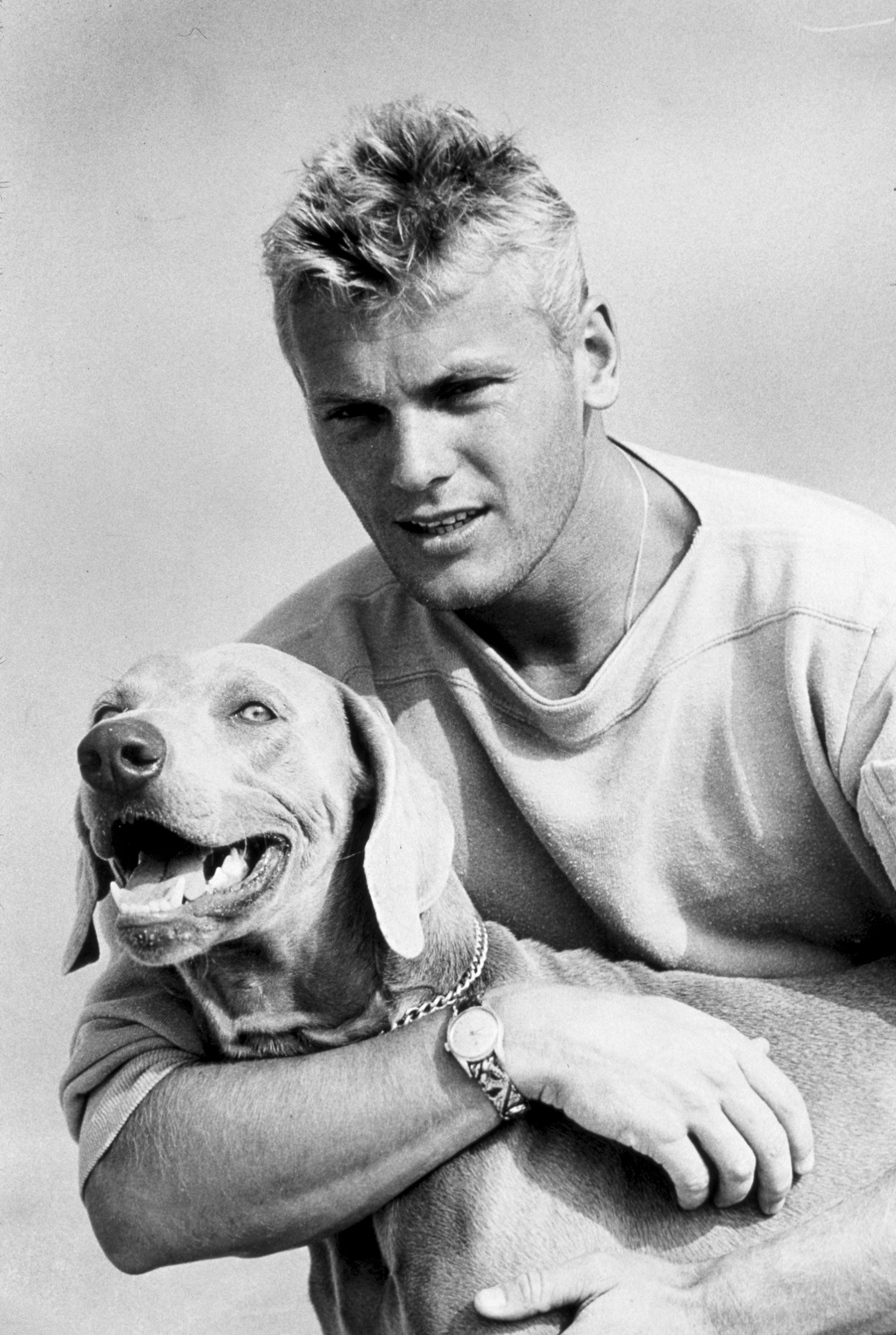
In addition to the much-anticipated re-release of 54: The Director’s Cut, there’s a documentary about closeted Hollywood hunk Tab Hunter, the hilarious must-see Do I Sound Gay?, and Tig Notaro‘s documentary Tig, which explores the comedian’s battle against cancer.
A few of our TV favorites will make noteworthy appearances in LGBT-friendly roles: Glee‘s Chord Overstreet (in Fourth Man Out) and Diana Agron (Bare) will be rubbing elbows with OITNB‘s Natasha Leone and Parks & Rec‘s Aubrey Plaza, who both star in Fresno.
See a select list below, and scroll down to see the Outfest 2015 trailer.
Kristen Wiig and Alia Shawkat (Nasty Baby)
Katherine Heigl, Alexis Bledel, Tom Wilkinson and Grace Gummer (Jenny’s Wedding)
Chord Overstreet, Parker Young and Kate Flannery (Fourth Man Out)
Dianna Agron and Paz de la Huerta (Bare)
Tab Hunter, Clint Eastwood, Robert Wagner, Debbie Reynolds, George Takei, John Waters and Portia De Rossi (Tab Hunter Confidential — Watch the trailer)
Victoria Justice and Pierson Fode (Naomi & Ely’s No Kiss List)
Judy Greer, Natasha Lyonne, Aubrey Plaza, Fred Armisen, Molly Shannon and Clea Duvall (Fresno)
John Lithgow, Kelsey Grammer, Gore Vidal, William F. Buckley, Christopher Hitchens and Noam Chomsky (Best of Enemies)
Dan Savage, Tim Gunn, Margaret Cho, David Sedaris and Don Lemon (Do I Sound Gay? — Watch the trailer)
Shirley Manson, Kurt Cobain, Carrie Brownstein, Mike McCready and Ben Gibbard, (The Glamour and the Squalor)
Tig Notaro, Sarah Silverman, Jason Sudeikis and Zach Galifianakis (Tig)
David Hockney (Hockney)
Mary Louise Wilson, Frances McDormand, Melissa Leo, Tyne Daly, Estelle Parsons, Charlotte Rae and Valerie Harper (She’s the Best Thing in It)
Ryan Phillippe, Salma Hayek, Mark Ruffalo, Neve Campbell (54: The Director’s Cut — Watch a clip).
Watch the Outfest 2015 Trailer below:

For more information and the complete lineup of films in the 2015 Outfest Los Angeles LGBT Film Festival, visit Outfest.org or call 213-480-7065.

Filed Under: Movie Reviews Tagged With: Do I Sound Gay, Los Angeles, Outfest, Tab Hunter

  • « Previous Page
  • 1
  • …
  • 9
  • 10
  • 11
  • 12
  • 13
  • Next Page »

Categories

Copyright ACOMSDave.com © 2026