
 Same-sex marriage in the UK and Ireland by Gavin Boyd, Policy and Advocacy Manager of The Rainbow Project.
The cause of marriage equality for same-sex couples has been growing globally for a number of years with many European and Latin American countries moving quickly to legislate and with legislation and strategic litigation furthering the cause in the United States. The passing of same-sex marriage legislation in England, Scotland and Wales coupled with the passing of the marriage referendum in the Republic of Ireland has left Northern Ireland as the only region within the UK or Ireland which neither conducts nor recognises same-sex marriages.
These legislative changes which are happening around the jurisdiction of Northern Ireland have led to an increase in speculation as to how or when equal marriage can be introduced. In light of the successful marriage referendum in the Republic of Ireland, many activists and politicians have intimated that a similar campaign could introduce equal marriage in Northern Ireland.
It is, however, important to remember that the referendum in the Republic was used because it was the only way to introduce equal marriage. Had the responsibility to introduce fallen to Dail Eireann, equal marriage would have already been introduced because all of the main political parties supported its introduction. However, the understanding of the government and its legal advisors was that the constitution of the Republic would have to be amended to allow for same-sex marriage and only a national plebiscite or referendum could amend the constitution in this way.
As UK has no written constitution there is not the same tradition of referenda to amend or create laws. In the UK, Parliament is sovereign and referenda are not legally binding. Although referenda may indicate public support for an issue, Parliament still has the authority to give effect to the will of the public or legislate in another way. The Rainbow Project believes that a referendum is not the solution to marriage inequalities in Northern Ireland. We know that there would not be the same consensus among political parties as there was in the Republic, likely leading to a more divisive and contentious campaign, without a certain outcome, which would still have to be voted on by the Northern Ireland Assembly. As the Northern Ireland Assembly has now failed four times to introduce marriage equality, we see no reason that a referendum result would compel those members, who are intractably opposed to its introduction, to vote for a marriage equality bill, even if it was supported by the public.
Due to the barriers which exist to a legislative solution to marriage for same-sex couples in Northern Ireland, The Rainbow Project has turned to strategic litigation. When same-sex marriage became lawful in England and Wales in March 2014, we understood that although couples from Northern Ireland could legally marry in England or Wales, they would only be recognised as civil partners when they returned to Northern Ireland. To us, this creates an anomalous situation where someone has their relationship reclassified against their will when they move to another part of the same state i.e. the United Kingdom. We are of the opinion, that if someone is married in the UK, then they are married everywhere within the UK and that any attempt to reclassify their relationship is an unlawful invasion of their rights to privacy, family life and marriage.
To this end, we are now supporting a couple who were lawfully married in England in 2014 who are seeking to have their marriage recognised in Northern Ireland. We are asking the family court to make a declaration of marriage; essentially stating that their marriage was lawfully conducted and that their marriage remains lawful in Northern Ireland. The role of The Rainbow Project in this test case is to source and support the clients. Our external solicitor had prepared the papers, sought counsel, and engaged with PILS to secure funding for the challenge.
Our clients wanted to be married, they did not want to enter a civil partnership. Had they wanted a civil partnership, they could have entered into one in Northern Ireland. The best option for them was to get married in England, as many people from Northern Ireland do. When they came back to Northern Ireland their relationship was downgraded to a civil partnership. We do not think that this is reasonable. We do not feel that this achieves any kind of legitimate state interest and we strongly feel that there is a public interest in ensuring that a person’s marriage is recognised everywhere within the state they live and cannot be reclassified without their consent.
We are not, at this stage, asking the court to declare that same-sex couples may marry in Northern Ireland, but simply to state that if someone is married they must be recognised as married. The referendum result in the Republic makes the need for recognition of marriages even more urgent. We could now have a situation where a married couple who live in Derry/Londonderry are not recognised as married at home but if one partner travels across the border to work in Donegal, they are recognised as married but the partner who remains in Northern Ireland is not recognised as married. This is a truly unreasonable position for any government to hold and deliberately devalues a same-sex relationship comparative to an opposite-sex relationship without providing any evidence as to why they should be treated differently.
It is important to note that recognition of marriages is only one part of the puzzle, the second is to ensure that same-sex marriages can be conducted in Northern Ireland. However, we believe that the most strategic outcome is to secure recognition of marriages in Northern Ireland and then either allow the Assembly to legislate for marriages to be conducted in Northern Ireland or challenge the failure of the government to introduce same-sex marriage in Northern Ireland.
As our recent rally for marriage equality in Belfast City Centre, with our partners Amnesty International and the Irish Congress of Trade Unions, demonstrated there is enormous public support for the introduction of marriage equality in Northern Ireland. Thousands of people attended to make their voices heard. If legislative or referendum solutions are not practical to achieving this, then the public interest is best served by strategic litigation.
Reprinted 11th Edition: 22nd June 2015

Australia: Anti-same-sex marriage booklet sent to Catholic schools 'degrades' gay students

Daniel Hurst Political correspondent @danielhurstbne
Monday 15 June 2015 09.10 BST Last modified on Tuesday 16 June 2015 02.39 BST
Advocates slam ‘desperate’ letter from Catholic bishops warning children ‘same-sex friendships’ are very different from ‘real marriages’
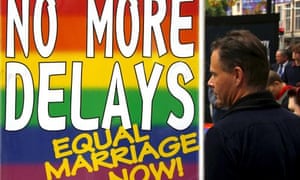
Gay rights activists stand next to a banner as they listen to speeches during a rally supporting same-sex marriage in Sydney on 31 May. Photograph: David Gray/Reuters
A booklet warning that “same-sex friendships” are very different from “real marriages” has been distributed directly to school students around Australia as part of the Catholic church’s lobbying against changes to the Marriage Act.
The wide distribution of the pastoral letter from the Catholic bishops of Australia has angered supporters of same-sex marriage, who say they are shocked at the discriminatory message it sends to vulnerable young people who are coming to terms with their sexuality.
Tony Abbott losing support over same-sex marriage and housing affordability
Read more
The letter is part of a conservative pushback against what appears to be growing momentum for same-sex marriage to be legislated in Australia.
The latest Fairfax Ipsos poll, published on Monday, showed public support for changing the Marriage Act stood at 68%. The poll results coincided with the resumption of debate in the lower house on the marriage equality bill proposed by the Labor leader, Bill Shorten.
The Catholic pastoral letter, titled Don’t Mess With Marriage, was published online by the Australian Catholic Bishops Conference in late May, but since that time has been distributed directly to students in numerous schools.
It is understood Catholic schools in New South Wales, Victoria, the Australian Capital Territory, the Northern Territory and South Australia are among those to have distributed the letter. The Australian Catholic Bishops Conference said it was left up to bishops in individual dioceses to decide how to distribute the letter.
The document urges people “of goodwill to redouble their support for the institution of marriage” and to make their views known to their parliamentary representatives.
Advertisement
The letter says the Catholic church “opposes all forms of unjust discrimination” but supporters of changing the Marriage Act “get things the wrong way around” by appealing to equality and non-discrimination.
“We must treat like cases alike and different cases differently,” it says. “Only women are admitted to women’s hospitals and only children to primary schools.”
The letter says it is “gravely unjust” to “legitimate the false assertion that there is nothing distinctive about a man and a woman, a father or a mother” and to “ignore the particular values that real marriage serves”.
The letter says the church’s traditional view of marriage is that it goes further than an emotional union and “involves a substantial bodily and spiritual union of a man and a woman” that is ordered “towards the generation and wellbeing of children”.
Senate debates same-sex marriage motion – politics live
Senate debates marriage equality; the royal commission accepts Bill Shorten’s request to bring forward appearance to July; and Labor and the Coalition clash over citizenship proposals and reported payments to people smugglers. All the developments from Canberra, live
Read more
“This is true even where one or both spouses are infertile: they still engage in exactly the same sort of marital acts as fertile couples, ie that naturally result in a child,” it says.
“On this traditional view what allows for this special kind of union between a man and a woman in marriage is precisely their difference and complementarity. Their physical, spiritual, psychological and sexual differences show they are meant for each other, their union makes them whole, and through their union ‘in one flesh’ they together beget children who are ‘flesh of their flesh’. They share the sameness of humanity but enjoy the difference of their masculinity and femininity, being husband and wife, paternity and maternity.
“Same-sex friendships are of a very different kind: to treat them as the same does a grave injustice to both kinds of friendship and ignores the particular values that real marriages serve.”
The letter argues messing with marriage “is also messing with kids” and “gravely unjust to them” – but adds that the church’s stance on marriage “is not to demean those other friendships or the individuals concerned”.
“We all know and love people with same-sex attraction. They are our brothers and sisters, sons and daughters, friends and neighbours. They need love and support like anyone else. But pretending that their relationships are ‘marriages’ is not fair or just to them. As Christians we must be willing to present the truth about marriage, family and sexuality and to do so charitably and lovingly.”
Australian Marriage Equality, the group that is spearheading lobbying efforts in favour of changing the Marriage Act, described the booklet as a “desperate” measure that would alienate bishops further from the next generation of Catholics.
The group’s national director, Rodney Croome, said bishops’ decision to “preach to a captive audience of children says that they know they’ve lost the debate”.
“The fact that the bishops have asked for this material to be distributed to students shows how completely out of touch they are with the strong support for marriage equality amongst young people and also the vulnerability of young gay people and the children of same-sex couples in their schools to the prejudice and discriminatory attitudes in the material,” Croome said on Monday.
“This material devalues and degrades and discriminates against the relationships that young gay people in Catholic schools aspire to enter.
“A 15-year-old at a Catholic high school in Australia today wants to believe that they can find love, they can find an enduring relationship in their life. There are many people in society that tell them that that won’t happen. The law tells them that won’t happen and now they have their own school telling them that shouldn’t happen.”
While an increasing number of Coalition MPs and senators have been prepared to add their voices to the ‘yes’ column, conservative members of the government have sought to head off the change by warning Tony Abbott against allowing a free vote.
Rightwingers in the Liberal party have told the prime minister that abandoning the long-held party position that marriage is between a man and a woman would anger the party’s base, and that frontbenchers should quit their positions if they felt strongly enough about supporting a change.
The deputy Labor leader, Tanya Plibersek, who co-sponsored Shorten’s bill, told parliament on Monday it was time to “remove this last great inequality from same-sex couples”.
“In a few years’ time, the notion that two men who love each other, or two women who love each other, could be barred from the social and legal status that marriage confers, will seem as anachronistic as marriage laws which prevented Aboriginal Australians marrying whom they chose,” Plibersek said.
But the Liberal MP Philip Ruddock, a former attorney general, told parliament it was “extremely disappointing” that Shorten had pursued his bill in a political manner. He pointed to separate efforts, supported by several Liberal MPs, to work together on a cross-party bill co-signed by all sides of politics.
Ruddock also pointed out that at the same time as the Coalition was being urged to allow a free vote, senior Labor MPs including Plibersek were pushing for their own party to be bound to vote for same-sex marriage.
Plibersek told Sky News she still stood by her position of a binding “yes” vote for Labor, but would not say whether she would actively pursue the policy at the party’s national conference late in July.
Presbyterians in Scottish gay ministers boycott
Editorial: So the Irish General Assembly of the Presbyterian’s are boycotting the Scottish Assembly over its more liberal views on gay marriage and gay vicars – loving and accepting aren’t they!
 BY ALF MCCREARY – 11 JUNE 2015

The Presbyterian Church in Ireland has delivered a resounding snub to its Scottish brethren by boycotting their Assembly in protest over a controversial gay clergy vote.
The Scottish Church voted last month to allow people in same-sex civil partnerships to serve as ministers and deacons, a move that angered many leaders of Presbyterianism here.
And now, in an unprecedented sign of the split between the regions, the Irish General Assembly has voted not to send a representative to the Scottish Assembly next year, thus breaking a long-standing tradition between the two sister Churches.
The Scottish Church historically has close links with the Presbyterian Church in Ireland, which has some 230,000 members.
Last month Church leaders here said their Scottish counterparts had “moved away from the historic and biblical position”.
The vote to boycott the Scottish Assembly, which is bound to further sour relations, was passed by 99 votes to 84.
Before the vote was taken the clerk of the General Assembly, the Reverend Trevor Gribben, said it would apply for one year and would not affect any invitation to the Church of Scotland to send a representative to the General Assembly in Belfast next year.
But a spokesman for the Irish Presbyterian Church told the Belfast Telegraph: “While we have not taken a formal stance on the Scottish vote, as we said at the time, many would have felt a sense of sorrow and deep regret at the Church of Scotland’s decision to allow the ordination of ministers who are in a same-sex marriage.
“In a heartfelt and finely balanced debate at the General Assembly last week, members judged that they would express this deep regret by taking a symbolic step not to appoint representatives on this occasion to go to Edinburgh in 2016.”
The decision by the General Assembly to boycott next year’s meeting in Edinburgh is at odds with the plea by the incoming Irish Moderator, the Rt Reverend Dr McNie, who appealed in his opening address for greater toleration by society of the Church’s views.”
He added: “Toleration is a two-way street.”
The position taken by the Church of Scotland means it maintains a traditional view of marriage between a man and woman, but allows individual congregations to “opt out” if they wish to appoint a minister or a deacon in a same-sex civil partnership.
Meanwhile, the Belfast Telegraph understands that the Armagh Presbytery is setting up a special commission to consider the views of the Portadown minister the Reverend Christina Bradley, who publicly expressed support for same-sex marriage at the time of the Irish referendum.
This is thought to be because the Presbyterian Church teaching opposes same-sex marriage.
A spokesman for the Presbyterian Church in Ireland told the Belfast Telegraph yesterday: “Ultimately, a minister or an elder is answerable to their Presbytery for matters of life and doctrine.
“This is an internal matter for the Church, and the Armagh Presbytery has indicated it would be inappropriate to comment further at this time.”
The vote in the Irish referendum was overwhelmingly in favour of gay marriage and resulted in calls for a change to the law in Northern Ireland, with several high-profile peeople joining the campaign.
Northern Ireland's Marriage Equality Battle
|


|

|
All Out is mobilising millions of people to build a world where no person will have to sacrifice their family or freedom, safety or dignity, because of who they are or who they love.
Our mailing address is:
All Out Action Fund 115 Fifth Ave New York, NY 10003 Copyright © 2015 All Out, All rights reserved. You can unsubscribe from this mailing list at any time. |
BELFAST CITY COUNCIL EQUAL MARRIAGE MOTION
1 June 2015
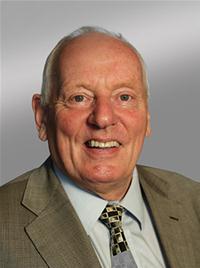 Cllr Jeffrey Dudgeon (UUP Balmoral)
I share the sheer joy of friends and comrades in the south at the referendum result.
Ireland, as someone has said, CAME OUT, and became a Republic of Freedom, perhaps for the first time.
Self-confident, modern, generous and tolerant.
Nothing illustrates that more than those hundreds who flew back into Dublin to vote.
It was not ever thus.
When they decriminalised in 1993, it was eleven years since I and a small band achieved the same in Northern Ireland. We had then a handful of non-gay supporters – Mary Holland the journalist, the poet John Hewitt and his wife, and another journalist still with us, Fionnuala O’Connor.
 It took the south another decade, David Norris following in my footsteps at the European Court of Human Rights.
Contrary social forces there were strong. Not so now.
Although four out of ten did find reasons to vote NO, the campaign was civilised and largely polite.
So why the change? What happened?
Gay people came out, and the world realised we were not what they were led to expect. That then became a geometric process. Everybody had a gay person in their family or one amongst their friends.
When we decriminalised in 1982, there was a small party in Belfast of a dozen people and later a celebratory disco, not a huge street party with global support.
There was still to be a series of uphill battles in Northern Ireland, to bring about an equal age of consent, a fair and non-discriminatory sexual offences law, and civil partnerships. All were achieved by and through Westminster, with the signal help of Kate Hoey MP in the age case.
Being realistic, most countries in Europe still do not have equal marriage laws.
And the fact remains that in communist and post-communist countries, in the Islamic world and in much of Africa there is prosecution, persecution and worse. A ray of hope – Mozambique has just decriminalised. London a recent opinion poll told us, worryingly, is twice as homophobic as anywhere else in Britain.
Now in Northern Ireland we are being asked to follow suit immediately in the matter of marriage.
I don’t want to be churlish, but decriminalisation in the 1980s was achieved without support from any political party in Northern Ireland.
When the going was tough, the tough were found wanting.
Even today the Alliance Party has an equal marriage policy but it does not discipline MLAs who defy the whip.
Sinn Fein who were not supportive of law reform when it was unpopular, still can’t celebrate or even recognise their most famous gay hero and martyr, Roger Casement.
I am living history and can only take the long view.
I also campaigned for civil partnership when that was the limit of what progressives in the Labour Party and LibDems were offering. I did not say then marriage was next.
We don’t want or need a referendum here. That is a silly notion. The Bill would still have to get through the Assembly where it would be vetoed.
I don’t think the proposers of this motion are showboating or trying to test those who have concerns about a change in the marriage law, but I am nervous of opponents getting demonised for opposing something that was common currency a few short years ago.
I have respect for those I know who cannot support this motion, either because of theological beliefs, or simply traditional views, but not for those in the DUP who would reverse the reforms achieved, even decriminalisation itself. I have said we need to be careful that the balance between the European Convention articles on freedom of conscience and the right to a private life do not get out of kilter. Equality law should not trump human rights.
In my own party there are differing views. We tend to hold to the status quo, and that I understand, but some have already voted for change and it cannot be said they have paid a political penalty – unlike Montgomery Hyde MP, the most prominent exponent in the House of Commons in the 1950s for enacting the Wolfenden report reforms. He lost the Ulster Unionist nomination for his North Belfast seat in 1959 for his courage.
To conclude, I got selected in South Belfast by the UUP for this august body, and elected in 2014, as an openly gay man, and have been treated with respect and courtesy by all the other members. This has warmed my heart like little else.
As to the matter in hand, I am not of the view that the legislative change sought will be achieved through Stormont, certainly for a number of years. This motion is not going to change many minds there. I rather expect my learned friends in the High Court and in Strasbourg will again be the vehicle of change.
jeffreydudgeon@hotmail.com
Motion re: Civil Marriage Provisions for Same Sex Couples – Cllr. Emmet McDonough-Brown (Alliance) to move (Seconded by Cllr. Jim McVeigh, Sinn Fein leader):“This Council believes that all couples in Belfast and across Northern Ireland, regardless of sexual orientation, should have the right to a civil marriage; that the rights of religious institutions to define, observe and practise marriage within their beliefs should be given legal protection; that faith groups which wish to marry same sex couples should not be prevented by the state from doing so; that all married couples of the same sex should have the same legal entitlement to the protections, responsibilities, rights, obligations and benefits afforded by the legal institution of marriage; and calls on the Minister of Finance and Personnel to introduce legislation to extend civil marriage provisions to same sex couples.” Passed by 38 to 13 with two abstentions.
Belfast City Council votes in favour of gay marriage
 Erin Reddy, Dee Campbell and Helen McCarthy at the Central Count Centre in Dublin Castle, Dublin as votes are continued to be counted in the referendum on same-sex marriage.” data-title=”(left to right) Erin Reddy, Dee Campbell and Helen McCarthy at the Central Count Centre in Dublin Castle, Dublin as votes are continued to be counted in the referendum on same-sex marriage.
Belfast City Council has backed same-sex marriage. Councillors voted in favour of legalising gay marriage in Northern Ireland by 38 to 13.
The motion was proposed by Alliance’s Emmet McDonough-Brown after the Republic voted to adapt its constitution to allow same-sex marriage.
“The sky has not fallen in. All that happens is that people who want to commit to each other are able to,” he said.
Openly gay UUP councillor Jeff Dudgeon fought a long legal battle to decriminalise homosexuality here in the 1980s.
But he warned that some politicians would vote to have decriminalisation reversed if a bill allowing same-sex marriage is introduced at Stormont.
More than 60% of those who cast their votes ticked the ‘yes’ box, and the cross-party support in the south turned attention to Northern Ireland, the only part of the UK and Ireland where same sex couples cannot be legally married.
Cllr McDonough-Brown said the “sun shone” on the Republic of Ireland on 23 May, the day the referendum results were revealed.
‘ Irish gay marriage referendum – Belfast reaction to yes vote’
Supporting members of the lesbian, gay, bisexual, and transgender societies, he said: “Their contribution makes our society a more vibrant one.
“I look forward to Northern Ireland joining the list of countries that allows couples to say I do.
“The sky has not fallen in. All that happens is that people who want to commit to each other are able to.”
Cllr McDonough-Brown described NI as a “backwater, an embarrassment” in its stance on gay marriage, but added that ministers should not be forced into enacting it.
“Alliance believe religious insitutions must be free to practice marriage as they see fit,” he explained.
The token motion, which would likely be defeated at the Assembly if proposed at Stormont, was seconded by Sinn Féin councillor Jim McVeigh.
Still wearing the ‘yes badge’ from the southern campaign, he said a mood of tolerance and mutual respect is infectious.
“This is the type of politics we should be talking about. There’s a groundswell of goodwill sweeping across these islands,” he said.
“I remember when fire and brimstone dominated politics here. This place is changing.”
The Lower Falls representative recalled the Save Ulster from Sodomy movement – started by Rev Ian Paisley – which Cllr McVeigh claimed was once the biggest campaign in Belfast.
“Now the second biggest rally in the city is Pride,” he added.
“Whether or not we manage to change the minds of the DUP, their position is only a matter of time.
“What an act of forward leadership to say this country belongs to everyone.”
“One of the ironies about this debate is that some of the people who opppose it say it undermines the insitution of marriage. How does love undermine marriage? I don’t understand how they feel it undermines it. In fact, it’s quite the opposite.
“It’s time for this part of this island, of these islands, to support marriage equality,” added Cllr McVeigh.
Openly gay councillor Jeff Dudgeon also spoke up during the debate. The UUP politician remembered back to  1982, when homosexuality was made legal in Northern Ireland, just over a decade before politicians in the Republic made the same change.
“There was a small party in Belfast of a dozen people, and then a disco. Not a street party with global support,” he explained.
“Most countries in Europe still don’t have equal marriage.”
He also referred to how politicians voted at Stormont during a Sinn Fein proposal in April to allow same-sex marriage in Northern Ireland.
It led to questions over divisions among the SDLP and Alliance parties on their members’ stance on the issue. Five SDLP MLAs did not turn up for the vote, while three Alliance party representatives abstained, despite official party line being to support gay marriage.
Cllr Dudgeon said: “Decriminalisaton in the 1980s was achieved without support from any political party. The Alliance party doesn’t discipline its members that don’t abide the party whip.
“This bill would still hve to go through Stormont where it’ll be defeated, and I’m nervous of those being demonised for their stance.
“In my own party there are differing views, we hold the status quo, though some have already voted for change.”
Cllr Dudgeon was a trailblazer in making homosexuality legal in Northern Ireland, taking his case to the European Court of Human Rights. Less than a decade later, David Norris also arrived at Strasbourg in a case that echoed Dudgeon’s.
The Unionist politician expressed fears that some politicians would vote to have the decriminalisation of homosexuality reversed.
“My colleagues at the High Court and at Strasbourg will once again be the agents for change.”
During the vote on Monday night, the motion was carried 38-13, with two no votes.
Marriage Equality Round-Up – June 4th

Here’s ‘gayapolis’ daily round-up of the marriage equality / LGBT rights stories that don’t warrant a full posting on the blog, or that we didn’t have time to add. We’re able to get more news and analysis to you this way every day – enjoy!
POP CULTURE: A petition has been started asking the Olympic Committee to remove Caitlyn Jenner’s medals. full story
POP CULTURE: Jennifer Hudson has released a new song and video celebrating marriage equality. full story
POP CULTURE: E! released a preview of Jenner’s upcoming reality show–I Am Cait. full story
POP CULTURE: AT&T wants everyone living openly to share their stories by creating their own 15-second “This is Me” video to tell the world how they live proud every day. full story

POP CULTURE: Skyy Vodka launched #ToastToMarriage and a new line of shirts to celebrate marriage equality. full story

POP CULTURE: On its Facebook page, American Airlines posted this Pride Month logo and wrote, “Proud to support the LGBT community and its allies.” full story

POP CULTURE: The radio host weighed-in on Caitlyn Jenner’s transition, arguing Republicans should reject Caitlyn Jenner, even if she agrees with them politically.full story
POP CULTURE: The Duggar parents appeared on Fox News to insist that their molester son was much better than those transgender pedophiles who want to enter public bathrooms. full story
INTERNATIONAL: Gay Star News has an overview of the state of LGBTI rights around the world. full story
INTERNATIONAL: U.S. officials on Tuesday insisted a U.S.-led pan-Pacific trade agreement has sufficient safeguards to ensure the rights of LGBT people and other marginalized groups in the countries that ratify it are protected. full story
ARGENTINA: Both of the Argentinean appeals court judges involved in the decision to reduce the sentence of a convicted child abuser because they claimed that his six-year-old victim was gay have now both resigned. full story
AUSTRALIA: A Catholic Bishop in South Australia has compared children of gay couples to children forcibly removed from Aboriginal families. full story
GERMANY: A German minister could be facing prosecution over her comments comparing gay marriage to incest and polygamy. full story
INDIA: The Delhi government has vowed to investigate a gay ‘cure’ racket in the city after a newspaper expose of the unethical practice triggered an avalanche of public outrage. full story
SOUTH KOREA: The Pride event in South Korea’s capital has been banned by police, but organisers have vowed to march regardless. full story =
UGANDA: NOM Chairman John Eastman hopes that Uganda reinstates the life sentence for homosexuality “in short order”. full story
UKRAINE: A campaign of billboards in Ukraine hopes to change the way people address LGBT issues, calling for people to “speak properly” and use the equivalent of “gay” instead of “faggot”. full story
UK: A group at Sheffield Hallam University are researching trans people’s access to toilets. full story
UK: Reverend Chris Newlands has called for the Church of England to catch up on trans issues. full story
UK, NORTHERN IRELAND: A city councillor in Belfast has said she tried to kill herself rather than come out as gay, because when her father did it “broke [her] mum’s heart.” full story
UK, NORTHERN IRELAND: Veteran actor Patrick Stewart has come out in favor of Ashers Bakery which was last month found guilty of discrimination for refusing to write “support gay marriage” on a cake. full story
USA: Media Matters for America cleverly debunks the right-wing claim that trans-inclusive school policies endanger students. full story
USA: The Department of Defense is celebrating gay pride month with a rainbow makeover. full story

USA: As the Supreme Court prepares to issue a ruling on same-sex marriage, Sen. Mike Lee (R-Utah) is calling on Congress to protect the freedoms of religious institutions. full story
USA: Hillary Clinton’s campaign released a series of LGBT rights shirts. full story

USA, ALABAMA: State Supreme Court Chief Justice Roy Moore has suggested that some people in the marriage equality movement hope its legalization will destroy the United States
full story
USA, ALABAMA: Legislation that would take the state of Alabama out of the business of issuing marriage licenses died in the House of Representatives committee. full story
USA, CALIFORNIA: Bisexual Sonoma teen takes his own life after years of bullying. full story
USA, CALIFORNIA: The Intolerant Jackass Act filed by activist Charlotte Laws in late March got the go ahead to start collecting signatures. full story
USA, COLORADO: The school that barred a gay valedictorian from coming out during his commencement speech says it will investigate what happened but is defending itself against accusations of discrimination from U.S. Rep. Jared Polis. full story
USA, FLORIDA: Leesburg and Greenacres have passed LGBT civil rights ordinances for their communities expanding the number of towns with laws protecting sexual orientation to eleven. full story
USA, INDIANA: Governor Mike Pence issued a welcome to pride letter for Indianapolis that doesn’t mention gay people, or pride. full story
USA, IOWA: In a surprise move, a local Chick-fil-A franchise is catering an Iowa gay pride picnic. full story
USA, KANSAS: The Hobbit’s Gandalf the White and Harry Potter’s Professor Albus Dumbledore are getting married opposite The Westboro Baptist Church (WBC) next weekend in Topeka. full story
USA, MISSISSIPPI: The executive director of a Mississippi LGBT advocacy group has resigned after making a series of anti-trans comments on his social media pages. full story
USA, NEW JERSEY: A jury in northern New Jersey is scheduled to hear opening arguments in the fraud trial of a nonprofit that offers so-called “gay conversion” therapy. full story
USA, NORTH CAROLINA: Rachel Maddow looks at how the anti marriage equality bill could open the door to discrimination for other reasons. full story
USA, NORTH CAROLINA: The vote to try to override the Governor’s veto of the anti marriage equality bill has been delayed in the House, which ends its current session Friday. full story
USA, OKLAHOMA: The state’s Department of Corrections has halted all prison weddings — apparently to avoid having inmates enter same-sex marriages. full story
USA, TEXAS: Anti gay groups are calling on Governor Abbott to bring the legislature back for a special session to pass an anti marriage equality bill. full story
USA, TEXAS: Plans are underway in smaller cities around Texas for the Supreme Court’s Day of Decision of marriage equality. full story
USA, TEXAS: The state government is stalling plans to update marriage forms until the US Supreme Court rules, which could delay the start of same sex weddings in the state. full story
USA, TEXAS: Lambda Legal is warning government officials who defy the Supreme Court on marriage equality – they could be sued personally and might face punitive damages. full story
USA, UTAH: God bought two billboards in the state to proclaim his love for gays.full story
Presbytery meeting over pro-gay marriage minister
The Armagh Road minister’s views are at odds with the Church’s policy that marriage is exclusively between a man and a woman.
Following last month’s referendum, she told the Portadown Times: “The referendum wasn’t a debate on the institution of marriage as the basis of human society as we know it, but about ending discrimination.
“This warm-heartedness is good to see in a world which often is a cold place as much for women in leadership as it is for gay and lesbian people in churches. I welcome the ‘yes’ vote.”
Mrs Bradley is not thought to have been at the first three days of the General Assembly, where Rt Rev Ian McNie was installed as Moderator on Monday night.
Rev Bradley – who conducted her Sunday service as usual at the weekend – has not been available for comment.
During an address to the Assembly on Tuesday, former moderator John Dunlop also reached out to the LGBT community. He said: “Lesbian, gay and bi-sexual people are equal members of the church, as they have an orientation about which they can do nothing. I am partially left-handed and there is nothing I can do about that.
Westminster MPs call for action on same-sex marriage

The rally outside Queen’s University
MPs table cross-party motion calling for action on same-sex marriage in Northern Ireland
MPs from a number of parties in Westminster have signed an early-day motion calling on the government to take action to support same-sex marriage in Northern Ireland.
Same-sex couples are allowed to marry in England, Wales and Scotland and the Republic of Ireland this week passed the measure by a landslide public vote, but it continues to be blocked in Northern Ireland by the DUP.
The Democratic Unionist Party has blocked same-sex marriage a number of times by filing a ‘petition of concern’ in the Stormont assembly.
Today, a cross-party group of MPs have filed an EDM congratulating Ireland for its move – and calling for Northern Ireland to follow suit.
The bill’s sponsors include Conservative MP Sir Peter Bottomley, Labour’s Emily Thornberry, Paul Farrelly and Conor McGinn, , and Northern Irish SDLP’s Alasdair McDonnell.
Signatories include the Scottish National Party’s Mhairi Black – who at 20 is the youngest LGB MP to ever sit in Parliament.
The motion states: “That this House congratulates the Republic of Ireland on becoming the first country in the world to endorse the call for marriage equality in a popular vote.
“[This house] believes that Ireland has fulfilled the aspirations of equality campaigners by winning majority support in virtually every parliamentary constituency and concluding the referendum process with a decisive 62 per cent result.
“[This house] notes the remarks of Taoiseach Enda Kenny that those who voted in the privacy of the ballot box made a very public statement in the spirit of generosity, compassion, inclusion, love and equal marriage; recognises the support given by LGBT Irish in Britain, many of whom got the boat or flew back to participate on the day
“[This house] further believes that the Irish vote can serve as a beacon of hope for those still facing oppression; and urges the Government to support LGBT equality around the world, most immediately in Northern Ireland, the only part of the UK and the island of Ireland where same-sex couples will still be barred from availing of their civil liberties.”
Islington South and Finsbury MP Emily Thornberry said: “I’m delighted to have tabled one of the first Early Day Motions of the new Parliament, celebrating this historic victory for equality.
“It’s a sign of remarkable progress that, just 14 years after the Netherlands became the first country in the world to legalize marriage for same sex couples in 2001, Ireland has now increased to 22 the number of countries where full marriage equality is the law of the land.
“But while we celebrate this result, it’s important also to remember that equality cannot be taken for granted across the world, or even within the UK.
“Northern Ireland is now the only part of the British Isles where LGBT couples lack the legal protections and the social recognition that marriage affords, so as advocates of LGBT equality we should all now redouble our efforts to make marriage a right, not a privilege that depends on where you live.”
Councils Call For Marriage Equality
Published on  29/05/2015
Belfast, Newtownards and North Down Councils are calling for all couples in Northern Ireland, regardless of sexual orientation, to have the right to civil marriage.
Councillors are set to lead key debates on the equality issue in June.
The move follows the yes vote for equal marriage during the referendum in Ireland last week and is the latest action by Alliance in moving the debate forward in Northern Ireland.
Alliance Councillor Emmet McDonough-Brown said: “Ireland’s result last week has left Northern Ireland out of step on equality issues. As it stands a same sex couple can now legally marry in all other parts of the UK and Ireland and the LGBT community should also have the same rights here.
“The Alliance Party is committed to delivering a shared society for everyone, based on civil and religious liberty and equality for all – regardless of age, gender, disability, race, ethnicity or sexual orientation – and has continually led the way on LGBT issues, including adoption and tackling homophobic bullying in schools.
“Alliance supports the extension of state provided civil marriage to same sex couples, while recognising protections are needed for those faith groups that wish to continue to observe and practise marriage within their beliefs.”
(CD/MH)