ACOMSDave

Community Journalist

  • Home
  • Community Journalist
  • Events
  • Media Page and Press Kit
    • Projects and Work
  • Resources & Documents
    • LGBTQ+ Support Groups and Documents
  • NIGRA
  • Archives
  • Contact

Nick Herbert: Parliamentary group on global LGBT rights will help tackle ‘discrimination and abuses’

30/06/2015 By ACOMSDave Leave a Comment

PinkNews

  • 29th June 2015, 11:36 AM
  • Nick Duffy

 
Tory MP Nick Herbert has said that a new cross-party Parliamentary group on LGBT rights will work with NGOs to help tackle “breaches of LGBT rights” around the world.
Members of Parliament and peers for the first time this month formed a new All-Party Parliamentary Group on global LGBT rights – to tackle rights issues around the world.
APPGs are informal cross-party groups, which have no official status within Parliament – but dedicate their time to working on specific issues across party lines.
The new APPG, which includes politicians from the Conservative, Labour, Lib Dem, Scottish National and Green parties from across the Commons and the Lords – will work to push issues in Parliament relating to LGBT people around the world.
Tory MP Nick Herbert said: “I am delighted to have been elected Chair of the APPG on Global LGBT Rights and I look forward to working closely with my fellow parliamentarians on these issues.
“While the advance of LGBT rights in many countries has been remarkable, as the decision of the Supreme Court in the US testifies, elsewhere in the world we are seeing discrimination and abuses which are of real concern.
“The power of this group is that is cross-party and will work closely with interested NGOs. I hope that it will help to ensure that, when breaches of LGBT rights occur around the world, UK parliamentarians respond in the most coordinated and effective manner possible.
“I would also like to put on record my gratitude to Crispin Blunt and the Kaleidoscope Trust for providing the foundations for this group, and I look forward to continuing their good work.”
The group’s vice chairs include Lord Cashman, Labour’s Envoy on LGBT Rights, SNP MP Stewart McDonald, Lib Dem peer Baroness Barker, and Green MP Caroline Lucas. Labour’s Lord Collins of Highbury was elected Treasurer, and Tory MP Ben Howlett MP as Secretary.
Caroline Lucas MP said: “There is a tremendous amount of work to be done in advancing LGBT rights across the world, and it’s good to see parliamentarians coming together on such a crucial issue.
“I hope that this all party group can hold the Government to account where necessary to ensure that British foreign policy, and our rules on immigration, promote the wellbeing of LGBT people across the world.”
Lord Cashman, who was one of the co-founders of Stonewall, said: “The APPG will give us a unique opportunity to share our skills to ensure that LGBT people both in the United Kingdom and internationally enjoy the same rights wherever they are born and wherever they live.
“Working with local activists in other countries and in the UK we can ensure that the universality of human rights becomes a reality.”
Baroness Barker said: “The APPG is uniquely placed to bring together governments, civil society and businesses to build strong, safe communities in which all citizens, including those who are LGBTI, prosper. Let’s get started.”
Stewart McDonald added: “I am very pleased to have been elected as vice chair of the APPG on Global LGBT Rights. This group has been founded at a crucial time.
“Although in the UK LGBT rights have advanced rapidly in recent years, the opposite is true in many other countries around the world.
“I look forward to working with colleagues across the House to put our commitment to promote LGBT rights internationally into practice.”
There is already a long-standing APPG on HIV and AIDS – which Tory MP Mike Freer was recently elected to chair.
Parliament introduced a Women and Equalities Select Committee for the first time last month, and former equalities minister Maria Millerwas elected as chair. Select Committees provide scrutiny of the government’s equality work, and are distinct from APPGs

Filed Under: Anti-Bullying & Homophobia Tagged With: LGBT rights, Nick Herbert, Westminster

Humanists have always been champions of LGBT rights

22/06/2015 By ACOMSDave Leave a Comment

Andrew Copson says Humanists and LGBT people are natural allies.

Andrew Copson says Humanists and LGBT people are natural allies.


PinkNews

  • 21st June 2015, 10:26 AM
  • LAST UPDATED AT 11:38 AM
  • Andrew Copson

 
Chief Executive of the British Humanist Association Andrew Copson writes for PinkNews on World Humanist Day.
Humanists are simply people who see the world as a natural place, best understood by science and reason, and who seek to live an ethical life on the basis of reason and humanity. It’s a valuable way of seeing the world – and one which has inspired great commitment to equality. In recent years, society has come a long way, and the UK in particular has become a more diverse, more tolerant, and more accepting place.
But as far back as you can look, you can see that humanists have not just been LGBT-friendly, but champions of LGBT people and their rights.
World Humanist Day, which falls on 21 June each year, provides us with an excellent opportunity to reflect not just on how much humanists have contributed to our society – but also to the struggle for LGBT equality.
Today the British Humanist Association (BHA), which represents humanists across the UK and campaigns on equalities issues, can count prominent LGBT figures such as Stephen Fry, Dr Christian Jessen, Peter Tatchell, and Angela Eagle MP among its Patrons. Other prominent humanists have included queer writers Virginia Woolf and E M Forster, the mathematician Alan Turing, and the economist John Maynard Keynes.
I’m proud of the fact that BHA celebrants were conducting same-sex humanist weddings decades before the legalisation of same-sex marriage. The BHA was later a prominent campaigner for legal same-sex marriages in Britain, working closely with the All Party Parliamentary Humanist Group on the passage of the Same Sex Marriage Act.
The Gay and Lesbian Humanist Association, now part of the BHA, also campaigned for legal same-sex marriages since its inception in the late 1970s. In 2001, the group campaigned heavily for gay couples to take part in the London Partnership Register – the policy which later inspired the Civil Partnerships Act and eventually the Same Sex Marriage Act.
When same-sex marriage was legalised in Scotland, the first weddings were humanist ones – as Scotland has the benefit of legal humanist marriages and legal same-sex marriages. England and Wales is still lagging behind in that department, but there is pressure now on Michael Gove to legalise humanist marriages south of the border as well. There’s still work to be done.
Like Humanism itself, the enthusiastic support humanists have shown for LGBT issues cuts across all divides – sexuality, race, and social background.
As Stephen Fry put it in a video he recorded for the BHA last year, ‘Ultimately, morality comes from us.’ We don’t look to religious texts to tell us what’s right or wrong. We consider a particular situation; we look to what the evidence says about it; and we try to think and feel as others might about a situation.
This approach has made natural allies of humanists and LGBT causes. But it’s also led to humanists taking an active role in a wide range of issues – from the anti-apartheid movement to anti-colonialism, animal rights issues, and the campaign to legalise assisted dying.
LGBT people have often adopted a similar approach – which is why the LGBT movement have been such enthusiastic advocates for others human rights causes as well. There’s something about being denied one’s rights, or one’s place in society, or being discriminated against, which teaches us to be aware of other’s feelings; to be conscientious; to try to see things fairly.
It’s an approach which is uniquely prepared to meet novel ethical challenges as time goes forward, but also one which is deeply embedded in our culture and in the way we see the world. Perhaps moreso than any religion. This World Humanist Day I will be reflecting on that long hard road, and the people who have walked it.
Andrew Copson is the Chief Executive of the British Humanist Association.

Filed Under: Anti-Bullying & Homophobia Tagged With: humanists, LGBT rights

Old Testament Christianity in NI is seriously out of touch

27/05/2015 By ACOMSDave Leave a Comment


Humanist Brian McClinton

Humanist Brian McClinton

Newsletter – 20:24Tuesday 26 May 2015

The Ashers Case was much more than about the icing on a cake.

It encompassed some of the basic values at the heart of liberal democracy.
Contrary to the view of evangelical Christians, the verdict, like the gay marriage referendum in the Republic, was a triumph for both freedom and equality.


Ashers argued that the message on the cake was against their freedom of conscience. But it was nothing of the kind. Freedom of belief is an empty concept if we deny our opponent the same freedom we demand for ourselves. As George Orwell put it, “if liberty means anything at all, it means the right to tell people what they do not want to hear”.

Orwell knew that throughout history every tyranny in the world has demanded freedom of speech when it was a minority or in opposition, only to deny it to everyone else once it acquired power. Freedom of speech only for our own point of view is really a total contradiction of liberal democracy.

Is it not also being intolerant to wish to suppress an opinion you dislike? Is the bakery’s ‘freedom of conscience’ not really a euphemism for the freedom to be intolerant? And is it not also fundamentally unChristian in that the Golden Rule of doing unto others as you would want them to do unto you is an alternative form of the principle of showing respect and tolerance for opposing views?
Fundamentalist Christianity and its associated political parties do not have a good record of supporting freedom of opinion here. During the period of Stormont rule they censored plays and films, and they were still doing it recently when they sought to ban a play in Newtownabbey and a painting in Banbridge. Freedom of conscience was in reality a euphemism for religious privilege.
Ashers also discriminated against the customer on grounds of sexual orientation and political opinion. Essentially, people owning businesses which provide public services cannot pick and choose their customers on these grounds. In this way the judgment struck a blow for both sexual and political equality.
In the Irish Republic 62 per cent of voters have just given their support for gay marriage. Like the Ashers ruling, this too enhances freedom and equality. It means that gay people who love each other can now choose if they wish to marry – a freedom which in no way inhibits a straight couple’s similar right. It also means that they will no longer be treated as second-class citizens and thus it entrenches their sexual equality.
In short, it establishes the Irish Republic as a truly pluralist democracy.
Northern Ireland is now the only part of the British Isles that still prohibits gay marriage, and the fact that a gay man had to bring a court case merely to establish his right to put a political message on a cake demonstrates how far it has to go.
The Archbishop of Dublin has stated that the Catholic Church needs a reality check. Clearly, all the main churches on the island need to examine the reasons why they seem to show less Christian tolerance and generosity of spirit than the mass of Irish people.
As for Northern Ireland, the question that has to be asked is whether the exclusive Old Testament conception of Christianity that has long dominated this society is seriously out of touch with the open and inclusive values of the modern world.
• Brian McClinton is a director of the Humanist Association of Northern Ireland

Filed Under: Anti-Bullying & Homophobia Tagged With: christianity, DUP. Irish politics, Human Rights, LGBT rights, marriage equality

‘Sextarianism’ is drawing new battle lines in Northern Ireland

24/05/2015 By ACOMSDave Leave a Comment

The Conversation 22 May 2015, 1.09pm BST
 

Livid. EPA/Paul McErlane
If you grew up in Northern Ireland during the 1970s and 1980s, sectarianism pervaded every aspect of your everyday life. In fact, such is the pervasiveness of sectarianism that it’s almost been normalised. These days, it’s sometimes not even recognised or regarded as a problem.
In simple terms, sectarianism is the dislike, hatred, and distrust of another religious faction, a bundle of ideas, beliefs and practices including verbal and physical intimidation and violence as well as political, economic and institutional discrimination.
The intent is to reinforce social stereotypes, perpetuate cultural differences and, ultimately to uphold the political and economic inequality between Northern Ireland’s Protestants and Catholics. Put another way, it’s all about securing and exercising political, economic, social and cultural power.

Simmering down?

In symbolic terms, the signing of the 1998 Good Friday Agreement and the Belfast Agreement marked the beginning of the end of sectarian violence by mainstream republican and loyalist paramilitaries.
And while sectarianism still looms large in Northern Ireland, statistics from the Police Service of Northern Ireland show an overall downward trend in sectarian incidents and crimes. Meanwhile, recent research by Paula Devine shows that the majority of both Catholics (71%) and Protestants (70%) would prefer to live in a mixed-religion neighbourhood.
Although there is still a long way to go in terms of eradicating sectarianism, these statistics offer a sign of optimism and improvement. But sectarianism’s sideways move on the political agenda has only made space for other social issues in the same hateful part of the spectrum.
Two issues in particular have caught the attention of NI Assembly members and local councillors, especially those from the Democratic Unionist Party (DUP), in recent years. On the one hand, sexual citizenship – gay rights, abortion and reproductive rights – and on the other, sexual commerce: the sale and consumption of adult goods and sexual services.
The attitudes of individual politicians and political parties, and, more importantly, the policy responses to issues of sexual citizenship and sexual commerce have taken on a deeply conservative and fervently activist bent. Northern Ireland has become a hotbed for what we might term “sextarianism” – a politicised dislike of those whose sexual identities, beliefs and practices are non-heteronormative, “deviant”, or commercialised.

Minorities targeted

Sextarianism revolves around religious and patriarchal ideas, beliefs, practices and policies that stigmatise, physically harm, and criminalise members of sexual minority groups, and deny them their human and labour rights.
Whereas civil and political sectarianism is about various religious and nationalist/republican and unionist/loyalist factions fighting one another, sextarianism sees civil society and politicians from both sides of the old sectarian divide coming together to fight common “enemies”.
An indication of the extent and scale of violent sextarianism can be gleaned from data on “hate motivated” incidents and crimes: year-on-year, the number of recorded homophobic incidents increased by 20% in 2013/14.
And in terms of political sextarianism, there has been considerable controversy, about a local bakery refusing to make a gay-themed cake for an LGBTQ customer. The case over the bakery’s refusal ended up in the High Court.
And while the bakery ultimately lost, related battles are being fought on other fronts.

War of words

Political sextarianism has seen Northern Ireland consumed by a range of sexual rights issues, among them gay adoption, gay marriage and gay blood donation. On these issues, there has been particularly strong opposition from the DUP.
The nationalist political parties, SDLP and Sinn Fein, have expressed some measure of support for gay marriage – but in the recent NI Assembly vote on it, a number of SDLP members “missed” the vote, and as such, the motion failed.
The undercurrent of hostility that greets gay rights periodically comes to the surface. Recent homophobic comments by the then minister for health Jim Wells, who claimed that children were more likely to be abused within same-sex households, resulted in him stepping down.

Sex shops are another bone of contention. Belfast City Council recently ruled that the number of sex shops in the Gresham Street area, where one of the first two sex shops in Northern Ireland opened in the early 1980s, should be zero. The argument was that “the presence of such premises would have an adverse impact upon the current and envisaged character of the area.” This resolution was moved by Tim Attwood, a councillor from the SDLP, a nationalist political party, but seconded by Alderman Guy Spence from the DUP.
Protests by religious groups, mainly the Free Presbyterian Church, were a common feature outside Belfast’s one and only lap dance club, the Movie Star Café, back in the early 2000s. This adult entertainment venue was also vehemently opposed by Belfast City Council, which sought to refuse a renewal of the club’s licence. The lap dance club closed within about a year of opening. There have been no clubs since.
More recently, Marie Stopes, which opened its first abortion advice centre and clinic in Belfast in late 2012, has been the subject of regular protests from both Protestant and Catholic religious groups as well as some women’s groups. The founder of one of the most vociferous pro-life organisations, Bernadette Smyth from Precious Life, was issued with a five-year banfrom approaching the Marie Stopes offices after being found guilty of harassing its recently departed director, Dawn Purvis.

Come together

But one of the starkest incidents of political sextarianism was the saga of the Human Trafficking and Exploitation (Further Provisions and Support for Victims) Bill by the NI Assembly in late October 2014.
The Bill, due to become law on June 1 2015, will introduce a version of the so-called “Nordic Model”, which criminalises the purchase of sexual services but not the sale of them. It was supported by 81 out of 91 NI Assembly members, spanning the ethno-sectarian divide.
As part of its “research” on different ways to regulate sex work, the NI Justice Committee visited Finland and Sweden to examine their much-ballyhooed models close up. This fact-finding fly-by does not represent a considered inquiry; it was clear at the committee’s hearings that many members had made up their minds in favour of the so-called Nordic model before all the evidence had been tendered.
If the committee were sincere in gathering as much evidence as possible about how best to regulate sex work and ensure the safety and well-being of sex workers, it would have bothered to look beyond the Nordic countries, and would have engaged properly with sex workers and sex worker organisations in Northern Ireland, the Republic of Ireland, and the rest of the UK.
The suspicion and harsh questioning that greeted the one and only current sex worker, sex work support organisations and academics researching sex work showed that there was little if any interest in being genuinely analytical of the Nordic model. Conversely, the Catholic and women’s organisations from the Republic of Ireland who gave oral evidence were welcomed with open arms, strange given Unionist politicians’ longstanding distrust of all things Irish.
This shows the sheer power of sextarianism. This sort of political alliance between Protestants and Catholics would have been virtually unimaginable about ten years ago. But since both Catholic and Protestant politicians have both long laid claim to the moral high ground on sex and sexuality, the human trafficking bill created the perfect conditions for a sextarian marriage of convenience – another sign of how nothing heals old wounds like a new enemy.

Filed Under: Anti-Bullying & Homophobia Tagged With: Irish politics, LGBT rights, sextarianism

Asher’s Gay Cake Judgement Reaction

19/05/2015 By ACOMSDave Leave a Comment

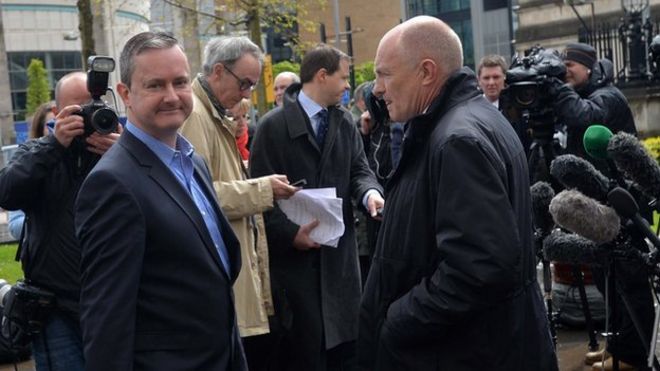
Gareth Lee outside Laganside Court, Belfast

Gareth Lee outside Laganside Court after a judge found Ashers Baking Company guilty of discrimination


The following reactions were noted from the BBC News website following the judgement given by a judge on the ‘Gay Cake’ case:

line

First Minister Peter Robinson
“I’m not terribly surprised. In many ways, that’s why we were preparing a legislating alternative.
“I think the term ‘reasonable accommodation’ is now what we would like to frame some legislation around, recognising that there are rights on both sides.”

line

Deputy First Minister Martin McGuinness, on Twitter
“Ashers bakery judgement a good result for equality. Gay people have for far too long been discriminated against. We and the law on their side.”

line

David McIlveen DUP, on Twitter
“Utterly sickened that a Christian-owned business has been hauled over the coals for refusing to promote something that is not legal in Northern Ireland.”

line

SDLP MLA Colum Eastwood, on Twitter
“Today’s judgment is a welcome and refortifying of our hard-won equality laws.”

line

Sinn Féin MLA Catriona Ruane
“It is a good day for equality and a good day for everyone in our society.”

line

John O’Doherty, The Rainbow Project
“The judge clearly articulated that this is direct discrimination for which there can be no justification.”

line

The Green Party NI, on Twitter
“Let us now move forward to rebuild relationships with the LGBQT community.”

line

DUP MLA Paul Givan
“What we cannot have is a hierarchy of rights, and today there’s a clear hierarchy being established that gay rights are more important than the rights of people to hold religious beliefs.”

line

Jim Allister TUV
“It is a dark day for justice and religious freedom in Northern Ireland.”

line

Peter Lynas, director of Evangelical Alliance
“This judgment will cause great concern for all those in business. It turns out the customer is always right and businesses have no discretion in deciding which goods and services to produce. The law rightly protects people from discrimination, but it has now extended that protection to ideas.”
 
line

Editorial:  The judgement has been made and it recognises that the law had been broken.  We will now have to follow carefully to ensure that our politicians do not decide that they can change the law to suit their bias.  The Human Rights Act is one of the cornerstones of the Good Friday Agreement, but with Westminster talking about withdrawing from it, we could see Stormont deciding to then repeal all the rights that the LGBT community have gained in Northern Ireland.


Filed Under: Anti-Bullying & Homophobia Tagged With: Ashers, editorial, gay cake, Irish politics, LGBT rights

Closet Queens by MIchael Bloch

18/05/2015 By ACOMSDave Leave a Comment

Reprinted from The Guardian

Michael Bloch
Saturday 16 May 2015 08.00 BST Last modified on Monday 18 May 2015 11.43 BST


Double lives – a history of sex and secrecy at Westminster

There are now 32 openly gay MPs, but for much of the 20th century many politicians were forced to lead complex, clandestine sexual lives. Michael Bloch tells their stories and salutes their powers of subterfuge

Closet Queens cover image

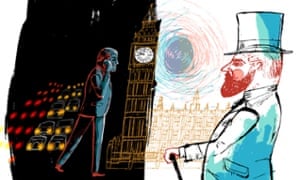
Westminster’s ‘closet queens’ were past masters when it came to keeping secrets, and taking calculated risks Illustration: Robin Heighway-Bury@goodillustration.com


Westminster’s ‘closet queens’ were past masters when it came to keeping secrets, and taking calculated risks.

From 1885, when the Labouchere amendment created the new offence of gross indecency, until 1967, when the recommendations of the Wolfenden committee were enacted, all homosexual behaviour was illegal in Britain. It continued to attract intense social disapproval for long after that: as late as 1993, according to the annual British Social Attitudes survey, most people still considered it to be “always wrong”. In this cruel and illiberal atmosphere, politicians with gay inclinations had to keep them secret from the public at large, and ran enormous risks. They were obliged either to repress their sexual feelings and lead celibate lives, or else to lead double lives, indulging their tastes clandestinely while outwardly conducting conventional, heterosexual existences, often married with children.
Yet paradoxically, “closet queens” (to use an expression that came into vogue in the 1960s) often made effective politicians. They were past masters when it came to keeping secrets, and taking calculated risks; they were also actors on life’s stage, with a strong sense of showmanship, and a flair for intrigue and subterfuge. And there was probably a far higher proportion of homosexuals in politics than in most other walks of life, partly because, as actors and risk-takers, they were drawn to the profession, and also because 20th-century British politicians were often educated at all-male boarding schools, which fostered intense (often sexual) friendships among their pupils, and provided unintentional training in the art of breaking the rules and getting away with it.
The quiet revolution: why Britain has more gay MPs than anywhere else
Read more
I became aware of this aspect of British political life when I wrote the biography (published after his death last year) of Jeremy Thorpe, the charismatic Old Etonian who led the Liberal party from 1967 to 1976. Always gallant with “the ladies”, Thorpe married twice, and fathered a son; but he led a hair-raising promiscuous gay life behind the scenes. When it came to both sex and politics he was a master of intrigue, exhibited outstanding seductive qualities and got a kick out of his risk-taking. He was eventually obliged to resign as Liberal leader when a former male model revealed that they had conducted an affair many years earlier, when it was still illegal; and he was subsequently tried at the Old Bailey for having allegedly conspired to have the man in question murdered – though he was acquitted, the revelations of his sex life and his efforts down the years to cover it up left him a discredited figure.

Jeremy Thorpe in 1977.

Jeremy Thorpe in 1977. Facebook Twitter Pinterest Jeremy Thorpe in 1977. Photograph: PA/PA wire ***


Many years earlier, two other Old Etonian Liberal politicians had found their careers ruined when they were hounded by men who claimed to have proof of their homosexual activities – the 5th Earl of Rosebery, prime minister in the 1890s, and the 7th Earl Beauchamp, a government minister from 1905 to 1915, subsequently Liberal leader in the House of Lords. They were cousins, who partly owed their early success to handsome looks; both were offered high positions in their 20s and joined the cabinet in their 30s. Both married fabulously rich heiresses – Rosebery, Hannah de Rothschild; Beauchamp, the sister of the 2nd Duke of Westminster. Rosebery’s marriage produced four children, Beauchamp’s no fewer than seven – but both were drawn emotionally to their own sex. (Both seem to have been infatuated by their handsome younger sons, by whose early deaths they were devastated.)
Rosebery had a liking for personable private secretaries. One of these was Francis, Viscount Drumlanrig, heir to the 9th Marquess of Queensberry, by whose qualities Rosebery was so taken that he arranged for him to be made a junior member of the government at the age of 26. This incensed “the mad marquess”, who was convinced that Rosebery was having an affair with his eldest son, just as he believed that Oscar Wilde was conducting one with his youngest son, Lord Alfred “Bosie” Douglas. Queensberry’s accusations were at first regarded as the ravings of a madman, but received some credence when in the autumn of 1894 – Rosebery having meanwhile become prime minister – Drumlanrig shot himself. Soon afterwards Rosebery suffered a breakdown and went into a state of seclusion: he was said to be terrified that his name would be raised in the libel case that Wilde brought against Queensberry. In 1895, less than a month after Wilde had been sentenced to two years’ hard labour for gross indecency, Rosebery tendered the resignation of his government (though it still commanded a parliamentary majority and no election was due).
 
Lord Rosebery speaking at the Foreign Office, c1900.

Lord Rosebery speaking at the Foreign Office, c1900. Photograph: Hulton Archive/Getty Images


Whereas Rosebery had a (possibly platonic) taste for secretaries, Beauchamp’s (by no means platonic) penchant was for footmen and grooms. He continued these escapades for decades without being exposed, and might have done so indefinitely but for a vendetta by the Duke of Westminster, who was resentful that Beauchamp had, through his marriage to Westminster’s sister, produced three sons, while Westminster’s sole male heir had died aged four. In 1930, Westminster’s agents obtained statements from former servants of what he termed his “bugger-in-law”, testifying to his peccadilloes; confronted with this evidence, Beauchamp resigned and fled into exile. His story provided the background for Evelyn Waugh’s novel Brideshead Revisited: Lord Marchmain, the distinguished peer obliged to live abroad, is based on Beauchamp, while his son, the beautiful but wayward Sebastian, is based on Beauchamp’s adored younger son Hughie, with whom Waugh had been intimate at Oxford.
***
As a young cavalry officer, the Old Harrovian Winston Churchill was accused of having “participated in acts of gross immorality of the Oscar Wilde type” with fellow cadets at Sandhurst; but he successfully sued his accuser for libel, and there is no evidence that, as an adult, he engaged in physical homosexual relationships. Yet he was far from being straightforwardly heterosexual. Although he worshipped his beautiful American mother, he showed a lifelong aversion to women. (In Churchill’s only novel Savrola, the obviously autobiographical hero has a purely chaste relationship with the heroine, obviously based on Churchill’s mother.) He seems to have had a low sex drive, and married rather cold-bloodedly, aged 33, for social and dynastic reasons, just after being appointed to Asquith’s cabinet. Though he came to depend on his “Clemmie” in many ways, she was often exasperated by his emotional unresponsiveness and treatment of her as a child-bearer and housekeeper, and more than once considered leaving him.
 
Winston Churchill c1900.

Winston Churchill c1900. Photograph: Everett/Rex Shutterstock


While he never showed much interest in women other than his wife, Churchill’s life was marked by a series of close platonic relationships with attractive young men. Prominent among these were Eddie Marsh, a civil servant who served devotedly for 25 years as his private secretary, whom Churchill described as “a friend I shall cherish and hold on to all my life”; Archie Sinclair, a cavalry officer, whom he chose as his second in command on the western front in 1916, as his personal assistant as war secretary and colonial secretary in 1919-22, and finally (after Sinclair had become leader of the Liberal party) as air minister in 1940; Bob Boothby, the youngest and handsomest MP, whom Churchill, as chancellor of the exchequer in the 1920s, appointed his PPS despite the bumptious Boothby having criticised his policies; and Brendan Bracken, a young man on the make whom Churchill (to the horror of his family) effectively adopted in the 1920s and who served as his right-hand man during the 1930s, finally becoming information minister during the second world war. (Of these four, Marsh, who developed crushes on young writers and actors, and Boothby, who had a taste for “rough trade” from the criminal underworld, were certainly predominantly homosexual, and Bracken, though he cloaked his private life in impenetrable secrecy, probably, too.) Like Rosebery and Beauchamp, Churchill seems to have had feelings towards his son, Randolph, that verged on the amorous (another factor that estranged him from his wife, who disliked the boy from birth) – though these feelings cooled as Randolph lost his looks owing to excessive drinking, and became a coarse womaniser. Arguably, the intensely narcissistic and exhibitionistic Churchill was romantically drawn to men rather than women, even if his relations with them stopped short of the physical.
Advertisement
***
The long parliament of 1935-45 contained a clandestine fraternity of homosexual and bisexual politicians who knew each other well, were aware of each other’s tastes and often met socially. Boothby featured prominently in this circle, as did his friend the leftwing MP Tom Driberg, who was addicted to having sex with strangers in lavatories (including those of the House of Commons). Another friend of Boothby was the National Labour MP and wartime minister Harold Nicolson; Nicolson was an active homosexual married to a lesbian, as was the Conservative MP Viscount “Hinch” Hinchingbrooke. Nicolson had two sons by his wife, the writer Vita Sackville-West, while Hinch’s artist wife Rosemary bore him seven children before leaving him to live with a female companion. Also in the circle were two Conservative MPs and close friends, the American-born Henry “Chips” Channon and the Churchill protege Alan Lennox-Boyd, who married sisters, Guinness heiresses, but enjoyed riotous homosexual adventures behind the scenes. Lennox-Boyd had a distinguished ministerial career in several governments, while Channon achieved posthumous fame with his racy diaries (from which any hint of his gay sex life was expunged when they were published in the 1960s). Other MPs in the coterie included the outrageously camp millionaire aesthete Sir Philip Sassoon, who as undersecretary for air befriended young airmen and seems to have had a close relationship with at least one of them; the rich and handsome Sir Paul Latham, who in 1941 became the only serving MP of modern times to go to prison for homosexuality, after attempting to seduce his batman; and Malcolm Bullock, a balletomane and former guards officer on close terms with the royal family. All these men undoubtedly enjoyed the sensation of belonging to a secret society, as well as the thrill of danger that their illegal sex-lives involved (though this should not blind us to the fears, disappointments and lack of self-fulfilment suffered by most gay men, including politicians, until recent times).
Bob Boothby, photographed for the Picture Post in 1949.

Bob Boothby, photographed for the Picture Post in 1949. Photograph: Haywood Magee/Getty Images


Boothby is an interesting case, for while continuing relationships with young men he also pursued a long affair, which was common knowledge at Westminster, with Lady Dorothy Macmillan, wife of a fellow Conservative MP, the future prime minister Harold Macmillan; it was she who seduced Boothby and made the running throughout the affair. (When asked what he saw in her, Boothby replied that she reminded him of a caddie he had once met on the links at St Andrews.) The affair, and the impression it gave that Boothby was “a ladies’ man”, provided a smokescreen for his homosexual activities, and also proved helpful when, in 1953, he pressed the home secretary, Sir David Maxwell Fyfe, to set up a body to reconsider the law relating to homosexuality. Maxwell Fyfe was a vicious homophobe, then organising the unprecedented national persecution of homosexuals; and it is curious that he went out of his way to get the cabinet (which was far from keen on the idea) to appoint a committee to examine the matter, chaired by the former public school headmaster John Wolfenden.
When, in 1957, Wolfenden reported in favour of decriminalising homosexual acts performed between adult males in private, Maxwell Fyfe, now Viscount Kilmuir and lord chancellor, declared that he was “not going down in history as the man who made sodomy legal”. The Conservative government, now led by Macmillan, shared his view, refusing to lay the Wolfenden proposals before parliament; and a long campaign began to get them enacted – which they finally were in 1967, thanks to several courageous parliamentarians who sponsored the necessary legislation, notably the charismatic bisexual Welsh Labour MP Leo Abse. The Labour government that then held office was no keener to be associated with the reform than its Conservative predecessor – though time was allowed for a private member’s bill thanks to the efforts of two ministers who, though they had become thoroughly heterosexual, had enjoyed homosexual adventures as Oxford undergraduates: the home secretary, Roy Jenkins, who had been in love with his future cabinet colleague Tony Crosland; and the leader of the House of Commons, Richard Crossman, who had had an affair with the poet WH Auden.
***
It is ironic that the Macmillan cabinet that resisted implementing Wolfenden seems to have contained more “closet queens” than any other of the century. During the years 1959-60, for example, it contained the following homosexual or bisexual members: the chancellor of the exchequer, Derick Heathcoat-Amory, who narrowly avoided scandal after engaging in frolics with “teddy boys” at Margate; the foreign secretary, Selwyn Lloyd, who was in love with his handsome godson and personal assistant Jonathan Aitken; and the colonial secretary, Alan Lennox-Boyd, who though married with three sons conducted a longstanding relationship with a major in the Coldstream Guards.
The cabinet also included the health secretary, Enoch Powell, who as a classics professor in Australia before the war had written to his parents about his infatuation with his male students; and the minister of labour, the unmarried and misogynistic Edward Heath.
Three junior members of the government were obliged to resign owing to homosexual scandal: the Foreign Office minister Ian Harvey, who in 1958 was caught with a guardsman in St James’s Park; the Home Office minister Charles Fletcher-Cooke, who in 1961 was found to be living with a former borstal boy; and the science minister Denzil Freeth, whom Lord Denning, during his inquiry into the Profumo affair in 1963, discovered to have “attended a party of a homosexual character and there engaged in homosexual conduct”. It was even rumoured that Macmillan himself had been expelled for homosexuality from Eton (where his elder brother Daniel certainly had a “reputation”; his lovers including the future economist John Maynard Keynes) – though his latest biographer believes it more likely that he was “removed” from the school by his parents when they discovered that he was being “used” by older boys.
Edward Heath after his election victory in 1970.

Edward Heath after his election victory in 1970. Photograph: Peter Kemp/AP


Heath, who became Conservative leader and prime minister, seems to have repressed his sexual nature totally in order to realise his political ambitions. He came from modest social origins, which he never tried to conceal: he was not close to his father, a former carpenter who ran a small building firm, but he worshipped his mother, who had a certain refinement, having worked as a lady’s maid in a country house. She adored her “Teddie”, and pressed him to achieve great things. Inspired by her, Heath was the star of his grammar school and won a scholarship to Balliol College, Oxford, where he became president of both the Union and the Conservative Association. Unlike his Oxford contemporary and future rival, Harold Wilson, Heath was not brilliant, but an intelligent and dedicated plodder. Following distinguished war service, in which he rose to be a colonel in the artillery, he was elected to parliament in 1950 and spent the ensuing decade as a whip, a role to which his personality – upright, thorough, affable but aloof – was ideally suited. That as government chief whip he managed to keep the party together after the Suez debacle of 1956 was a considerable achievement.
The Conservatives elected Heath as their leader in 1965 believing he would help them shed their elitist image, but he was an odd choice, awkward in his behaviour and lacking “the common touch”. It caused surprise when he defeated the charismatic Wilson to become prime minister in 1970. In 1975, after his administration been brought down by union militancy, he was replaced as leader by Margaret Thatcher, whom he regarded with an intense loathing that he never tried to conceal. (“When I look at him and he looks at me,” she once remarked, “it doesn’t feel like a man looking at a woman, more like a woman looking at another woman.”) Heath (like his hero, Churchill) was notoriously averse to women, and barely managed to be polite even to the wives of colleagues, but he does not seem to have been close to any men either, and was a self-absorbed, friendless figure.
Apart from Arthur Balfour, Conservative prime minister from 1902 to 1905 (who, though a narcissistic dandy, was in fact heterosexual and enjoyed sado-masochistic relationships with sophisticated women), Heath is modern Britain’s only bachelor premier, and his unmarried state gave rise to widespread rumour to the effect that he was actively gay – though no reliable evidence has emerged to suggest that he ever had a sexual or even a platonic relationship with anyone. Only in old age did he unbend to the extent of developing flirtatious friendships with some younger gay Tory MPs such as Alan Duncan and Matthew Parris, as well as with the gay couple who decorated his house in Salisbury. During his later years he also supported the lowering of the age of consent for homosexuality from 21 to 18 and then 16, whereas during his active political career he had studiously avoided showing interest in homosexual law reform.
***
Norman St John Stevas in 1950.

Norman St John Stevas in 1950. Photograph: Personalities/AP / TopFoto


Clandestine homosexuality also flourished in the Labour party; here two contradictory influences were at work. A strain in the party’s development (epitomised by the Fabian Society, and Edward Carpenter’s philosophy of “the dear love of comrades”) preached sexual toleration and the rejection of bourgeois morals; but the party was also deeply rooted in the fierce evangelical Christianity that spearheaded the crackdown on homosexuality during the Victorian era. The Old Etonian Hugh Dalton, a leading figure in the Labour movement and a senior cabinet minister throughout the 1940s, was in love with Rupert Brooke as a Cambridge undergraduate, and later became intimate with several younger Labour politicians whose careers he helped, notably the bisexual Hugh Gaitskell and Tony Crosland. There were also some Labour-supporting peers who, while continuing to “live like lords”, shocked their families by flaunting both their socialism and their homosexuality, such as Oliver Baldwin, son of the Conservative statesman Stanley Baldwin and successor to his earldom, who, appointed a colonial governor by Attlee, barely concealed his “married” relationship with another man; and Gavin Henderson, 2nd Baron Faringdon, who had a penchant for firemen, and turned Buscot, his country house in Oxfordshire, into a venue for party meetings. These men were relaxed about their sexuality; but it was quite otherwise with a man of working-class origins such as the Welsh Labour politician George Thomas, speaker of the House of Commons from 1976 to 1983 (in which role he succeeded another “closet queen”, Selwyn Lloyd), who lived in terror of the exposure of his guilty secret. His homosexuality was revealed after his death by his friend and fellow MP Leo Abse, who had on several occasions helped extricate him from blackmail situations involving young men.
***
At the end of the 20th century, two of the most colourful figures in British public life, whose ambiguous sexual natures had recently been made public, were the Conservative Michael Portillo and Labour’s Peter Mandelson (“Polly” and “Mandy”). Despite their political differences, there were some remarkable similarities in their backgrounds. Both were born in 1953, the youngest in families of boys; both had strong-willed mothers, who had married husbands with foreign ancestries of whom their families disapproved. (Portillo’s mother, daughter of a Scottish linen tycoon, married an eminent Spanish refugee professor; Mandelson’s mother, daughter of the Labour statesman Herbert Morrison, married the descendant of Russian revolutionaries who had sought sanctuary in Australia.) Both had suburban London upbringings, became prefects at their excellent local grammar schools, and took part in amateur theatricals. Portillo went to Peterhouse, Cambridge, where he fell under the influence of the rightwing historian Maurice Cowling, while Mandelson went to St Catherine’s College, Oxford, becoming a protege of the leftwing historian Alan Bullock. Portillo, recommended by Cowling, began his career in the Conservative Research Department, while Mandelson, recommended by Bullock, started as a researcher at the TUC. Both subsequently had a spell working in television – in the early 1980s, Portillo was a researcher on Channel 4’s The Week in Politics, Mandelson a producer on LWT’s Weekend World.
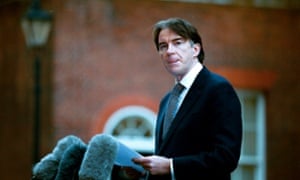
Peter Mandelson announcing one of his resignations, in 2001.

Peter Mandelson announcing one of his resignations, in 2001. Photograph: David Sillitoe


Their careers then diverged in two respects. Portillo, whose party was in power throughout the years 1979-97, became a cabinet minister in his late 30s, just after Mandelson had entered parliament as a backbench MP. And whereas Portillo was famously the most swaggery politician of his generation (especially after John Major had appointed him defence secretary in 1995), Mandelson was the ultimate scheming “backroom boy”, whose achievement was to engineer Tony Blair’s succession as Labour leader and steer the “New Labour” brand to its great electoral triumph in 1997. (Mandelson worshipped Blair much as Portillo had worshipped Thatcher.) Both performed great services for their parties while becoming widely unpopular: Portillo’s loss of his supposedly safe London seat was the great shock of the 1997 election, while Mandelson, regarded by many as “a prince of darkness”, was twice made to resign from the cabinet during Blair’s first term of office owing to minor transgressions. Both made comebacks: Portillo (having experienced a Damascene conversion and become a “compassionate Conservative”) returned to parliament in 1999 and was appointed shadow chancellor by William Hague, whom he was widely expected to succeed as Conservative leader; while Mandelson, having become an EU commissioner in 2004, was recalled to the cabinet with a peerage by Gordon Brown in 2008, showing brilliance as a strategist during Labour’s last two years of office. (Though effectively retired from frontline politics, both made their voices heard during and after the recent election campaign.)
Both Portillo and Mandelson enjoyed the company of women. In his late 20s, Portillo married the girlfriend of his teenage years, Carolyn Eadie; Mandelson shared a flat with Neil Kinnock’s press secretary, Julie Hall. However, it was widely known that Portillo, though enjoying relationships with women, had homosexual interests, while Mandelson was frankly gay. Portillo was attached during his 20s to two institutions in which homosexuality flourished, Peterhouse and the Conservative Research Department, and he did not hold himself entirely aloof from the opportunities offered. Mandelson had two longstanding close relationships, first with a fellow researcher at the TUC, later with the Brazilian Reinaldo da Silva, who was some years younger than himself. Within the space of a year, both their private lives were made public in a spectacular fashion. In 1998, Mandelson, not yet in the cabinet but wielding great (and, in the view of some, sinister) influence behind the scenes as the eminence grise of the Blair government, was inadvertently “outed” on the BBC’s Newsnight by the journalist and former MP Matthew Parris. And in 1999, Portillo, about to stand for re-election to Parliament, admitted in an interview with the Times that he had had “some homosexual experiences as a young person” – whereupon a businessman named Nigel Hart declared in the Mail on Sunday that they had had an affair lasting eight years. Although these revelations do not seem to have harmed Portillo’s standing with the public, concern among fellow Conservative MPs about possible further embarrassing disclosures undoubtedly contributed to his narrow failure to win the party leadership when Hague stood down after the Tory defeat in the 2001 general election.
Michael Portillo listens to Stephen Twigg's victory speech in Enfield Southgate in the 1997 general election.

Michael Portillo listens to Stephen Twigg’s victory speech in Enfield Southgate in the 1997 general election. Photograph: Kevin Lamarque/Reuters


The climate for gay politicians showed some dramatic swings during the last quarter of the 20th century. Despite her Methodist upbringing and strait-laced image, Margaret Thatcher, who became prime minister in 1979, was quite tolerant of homosexuality: she was one of the few Tories consistently to support Wolfenden, chose many gay men to serve her, and appointed the flamboyant Norman St John Stevas as one of her leading ministers (though she became irritatated by his love of gossip and sacked him after less than two years). However, the espousal of gay rights by some elements of the left, and the Aids epidemic, resulted in much public disquiet about homosexuality during the 1980s. In the Bermondsey byelection of 1983, the openly gay Peter Tatchell managed to lose the supposedly safe Labour seat to the Liberal Simon Hughes (who later admitted to having gay relationships). In this atmosphere, no MP felt able to “come out” – with the brave exception of Chris Smith, Labour MP for Islington South and Finsbury. In 1988, Section 28 of the Local Government Act provided that a local authority “shall not intentionally promote homosexuality or publish material with the intention of promoting homosexuality”. Though heterosexual, John Major, who succeeded Thatcher in 1990, was favourable to the cause of gay equality. He lifted the ban on homosexuals in “high security positions”, and in 1994 the age of consent was reduced from 21 to 18. However, the great terror for gay MPs in the 1990s was of being “outed” by the press, something which would scarcely have been imaginable in previous decades. The decision of the Murdoch press to launch a “morality crusade” against the Major administration led to the resignation of several gay Tory MPs from minor government positions, and reinforced the impression that the regime was mired in “sleaze”. Meanwhile the militant gay organisation Outrage! targeted MPs it believed to be gay who failed to support gay equality, one of whom, the Ulster Unionist Sir James Kilfedder, died of a heart attack after learning of his “outing”.
New Labour, elected in 1997, promised a new era of “diversity” and “inclusiveness”. Labour candidates who triumphed in former Tory strongholds included two openly gay men, Stephen Twigg in Enfield Southgate (where he unseated Michael Portillo) and Ben Bradshaw in Exeter (where he won a large majority in the face of a homophobic Conservative campaign). Chris Smith became culture secretary and the first openly gay cabinet minister, his male partner being included in such official occasions as Buckingham Palace garden parties. Great strides were made in reforming the law. The ban on homosexuals in the armed forces was lifted; the age of consent was reduced to 16; Section 28 was repealed; civil partnerships were introduced, giving gay couples the same legal privileges as married couples; and a series of measures made it illegal to discriminate against people, or “incite hatred” against them, on the grounds of their sexual orientation.
Chris Smith at the Tate Modern in 2000.

Chris Smith at the Tate Modern in 2000. Photograph: Martin Argles for the Guardian


Yet in 1998 the Blair government witnessed one of the most bizarre gay scandals of the century, when Ron Davies, secretary of state for Wales, resigned after what he termed “a moment of madness” on Clapham Common, which had led to his being robbed at knifepoint and relieved of his wallet, phone, car and Commons pass. And the Conservative-Liberal Democrat coalition that took office in 2010, which was equally committed to the cause of gay equality and legislated for “gay marriage”, similarly suffered the loss of a cabinet minister when the Lib Dem David Laws resigned as chief secretary to the Treasury after the Daily Telegraph revealed that he had claimed parliamentary expenses for London accommodation belonging to his “long-term partner and secret lover”, a situation disallowed by the expenses rules; he explained that he had wished to keep his sexuality secret out of respect for the feelings of his mother. It seems the age of the political closet queen may not be quite dead yet.
***
Is a study of this subject historically or politically relevant? I believe it is, because until recently many politicians (possibly more than one might imagine, for the men in question usually did their utmost to ensure that no details of this aspect of their lives emerged) were obliged to keep secret something important about themselves. And this inevitably affected the way they operated as politicians: apart from inculcating quick wits and sharp antennae, it tended to foster skills in several areas – tact and discretion; acting and showmanship; the “dark arts” of presentation and manipulation; awareness and management of risk. Following the election, Westminster now boasts 32 openly gay MPs and while one must be thankful that, in Britain, official homophobia is a thing of the past, and that gay men and women, in politics as elsewhere, can now be honest about their sexuality, the necessity for homosexuals in public life to hide their nature, though in itself deplorable, did not, perhaps, exercise an entirely negative influence on the 20th-century political scene.
• Michael Bloch’s Closet Queens is published by Little, Brown this month.

Filed Under: Book Reviews Tagged With: book review, British politics, Closet Queens, history, LGBT rights, Michael Bloch, sexuality

John Whittingdale, who has voted strongly against gay rights, elected as UK culture secretary

12/05/2015 By ACOMSDave 1 Comment

 Reprinted from 11 MAY 2015 | BY JOE MORGAN

He voted against gay marriage and lowering the age of consent for LGBTI peopleUK Prime Minister David Cameron has elected John Whittingdale as the new culture secretary.
The former chair of the commons culture committee has voted strongly against gay rights, with him being one of the few to vote against same-sex marriage in England and Wales.
He also voted against lowering the age of consent for gay people back in 1998 and was against including sexual orientation in the Equality Act.
Whittingdale is just one of the new appointments made by Cameron in his new Conservative government following the UK General Election on Thursday (7 May).
His opposition will be out gay MP Chris Bryant, promoted to become Labour’s shadow culture secretary.
While he will not be in charge of LGBTI rights in particular, his influence could see the community getting less say in the Department of Culture, Media and Sport.
He is already expected to be in favor of being against the BBC license fee.
When he said he would be voting against same-sex marriage in England and Wales, he said he felt like it would cause ‘distress to many, particularly those with strong religious beliefs’.
Nicky Morgan, who was chosen to be education secretary and women and equalities minister in the 2014 reshuffle, will keep her position. While she voted against same-sex marriage as well, she later said she was ‘proud‘ of the progress LGBTI equality has made in the UK.
Some were not happy with Whittingdale’s appointment, including Father Ted creator Graham Linehan.

– See more at: http://www.gaystarnews.com/article/john-whittingdale-who-has-voted-strongly-against-gay-rights-elected-uk-culture-secretary1105#sthash.E7bLERzT.dpuf

Filed Under: Anti-Bullying & Homophobia Tagged With: Caroline Dinenage, John Whittingdale, LGBT rights, UK Culture Secretary

Election Fever – Peter Robinson on Homosexuality

02/05/2015 By ACOMSDave 1 Comment

Editorial: During Election Fever it does happen that some leaders become leaders, some become leaders in waiting, and some become leaders who are wanting.  We would suggest that you view this interview with Peter Robinson, look at the history of the DUP, and decide for yourselves whether the DUP are a progressive party with LGBT rights built into their DNA!

So have the DUP  a policy over LGBT rights, Asa Bennett wrote in his column, that David Cameron would not find it easy to create an alliance with the DUP because of their track history, i.e.
Jim Wells  resigned as the DUP’s health minister after recently saying that “the gay lobby is insatiable, they don’t know when enough is enough”, adding: “The facts show that you certainly don’t bring a child up in a homosexual relationship. That child is far more likely to be abused or neglected”.
Iris Robinson, a former DUP MP and wife of the current party leader, Peter Robinson, described homosexuality as “disgusting, loathsome, nauseating, wicked and vile”, as well as an “abomination” that could be “cured”. Mr Robinson supported his wife’s remarks, saying: “It wasn’t Iris Robinson who determined that homosexuality was an abomination, it was The Almighty. This is the Scriptures. It is a strange world indeed where somebody on the one hand talks about equality, but won’t allow Christians to have the equality, the right to speak, the right to express their views.”
Obviously other parties have made comment on this interview,
Alliance Justice spokesperson, Stewart Dickson MLA, has criticised Peter Robinson’s remarks that if homosexuality was criminalised that he hoped they would obey the law.
Mr Robinson was questioned by the BBC on the remarks by his Mid Ulster Councillor, Paul McLean, who wanted homosexuality to be criminalised.
Stewart Dickson MLA said: “These remarks are just the latest in a long line of disgraceful and appalling comments by the DUP about the LGBT community. It beggars belief that Mr Robinson would want men and women to deny their own sexuality. He is completely out of step with British values and core beliefs.
“It is an indication of Mr Robinson’s position on these issues that he did not condemn the views of his Councillor who wanted homosexuality to be criminalised.
“Mr Robinson has got himself tied up in knots. If you are asked a question on this issue then your answer should be that you would not support the criminalisation of homosexuality.
 
Further Reading:

  • The religious stranglehold of the DUP in Northern Ireland

  • The DUP’s closet policies – Henry McDonald

  • DUP soft on ‘vile sin’ of homosexuality: Foster

  • 1982: DUP furious at gay law reforms – Jan 2013

  • editorial image

Filed Under: Anti-Bullying & Homophobia Tagged With: Alliance Party, Election Fever, homosexuality, LGBT rights, peter robinson

ELECTION Fever: LGBT issues: Northern Ireland party views

24/04/2015 By ACOMSDave Leave a Comment

Slugger O'Toole

Editorial :  Be careful who you vote for.  Educate yourself and your friends.

The Firemen on 22 April 2015 , 8:23 pm
Research conducted by Ruth McCarthy highlights some stark differences between the parties contesting this years Westminster elections in Northern Ireland on lesbian, gay, bisexual and transgender (LGBT) issues.
LGBT Isues
A series of questions were asked:

1a Does your party visibly support LGBTQ equality issues in your party manifesto, on your website and in election campaigning materials?
If YES, please give examples. If NO, please state why.
1b Please give any other examples of how your party supports LGBTQ visibility.
2a What is your party policy on tackling homophobia and transphobia through education and training in schools?
2b What is your party’s record in actively tackling homophobia and transphobia through education and training in schools?
3a What is your party’s policy on addressing the serious health inequalities faced by LGBTQ people?
3b What is your party’s record in actively addressing the serious health inequalities faced by LGBTQ people?
4a Does your party support Equal Marriage for same-sex couples in Northern Ireland?
4b What is your party’s record in actively supporting Equal Marriage for same-sex couples?
5a Does your party support the Conscience Clause? 5b What is your party’s record in actively opposing the Conscience Clause?
6a Does your party support a total ban on gay men giving blood?
6b What’s your party’s track record in opposing the blood ban for gay men?
7 Does your party have any LGBTQ-identified candidates standing in the 2015 General Election?
8 Does your party have any mandatory training or education for staff around LGBTQ issues? If NO, do you plan to change this? Please outline when.
9 Trans communities in the UK And Ireland have united to produce a simple three point manifesto that they
are asking all 2015 Election candidates to support or decline. It takes less than a minute to read and you can find it at www.transmanifesto.org.uk
Does your party support or decline the three main principles?
A few samples on the question “Does your party support Equal Marriage for same-sex couples in Northern Ireland?”
SDLP: 

The SDLP supports the equal marriage campaign and we believe that civil marriage should be available to all regardless of sexual orientation.

Sinn Fein:

Yes. Sinn Féin actively campaign for marriage equality north and south. Sinn Féin have put for- ward motions for marriage equality before the As- sembly and local councils across Ireland. Represent- atives from the Marriage Equality Campaign gave a keynote address at Sinn Féin Ard Fheis 2015 along- side elected representatives from Sinn Féin LGBT.

Green Party:

Yes. We support freedom of religion and freedom from religion. We believe that faith groups should be able to decide for themselves if they wish to solemnise same-sex weddings and this will work similarly to the recognition of divorce in the UK, whereby individual religious organisations can choose whether or not to recognise it or not, but it is state-recognised. We also support humanist groups being allowed to conduct same-sex marriages.

Alliance Party:

Yes/ Civil marriage should be available to same-sex couples on the same basis as different-sex couples. We do not believe that religious institutions should be required to conduct such marriages if they do not wish to do so.

DUP:

No. The DUP is opposed to marriage for same-sex couples and tabled a petition of concern ensuring the motion for Equality Marriage was blocked under the Northern Ireland Assembly’s cross- community voting rules. They blocked Marriage Equality motions a total of three times in 2013.

UUP:

No. Mike Nesbitt has stated that the party’s position on gay marriage was that it was a “matter of personal conscience”. Only one UUP MLA (Michael Copeland – Ed.) voted in favour of Equal Marriage. All others voted against or abstained.

TUV:

No. TUV supports “traditional family values” in its most recent manifesto and is outspokenly opposed to Equal Marriage. They also call for Civil Partnerships to be abolished.

Workers Party:

Yes. The Workers Party supports Marriage Equality.

UKIP:

No specific information. UKIP councillor David Silverster infamously claimed flooding in the UK in 2013 was God’s revenge for legalising gay marriage.

People Before Profit

Yes

Conservative Party of Northern Ireland:

No info available.

 
(N.B. ‘People Before Profit’ and the Ulster Unionist Party did not respond to the original survey questions. When we have them they will be uploaded and this post updated) 
(Disclaimer: this survey was NOT conducted by Slugger O’Toole – we encourage any parties featured or not featured to contact us) 
You can download the entire report here: LGBT NI Party Survey 2015 download

Filed Under: Anti-Bullying & Homophobia Tagged With: Alliance Party, Conservative Party of Northern Ireland, DUP, election, Green Party, LGBT rights, People Before Profit, SDLP, sinn fein, TUV, UKIP, UUP, Workers Party

The Importance of LGBT Cinema with Ana Souza (Outfest)

13/04/2015 By ACOMSDave Leave a Comment

Reprinted from ‘front row reviews’

By

Ollie.Charles

Published: April 10, 2015

As the glitter starts to fade on BFI Flare 2015, which some a great selection of features, documentaries and short films from around the world we decided to look forward and see what else we can expect from LGBT festivals for the rest of the year. We have recently caught up with Ana Souza, the latest recruit to the incredible Outfest team in Los Angeles. As the team prepare for the 2015 edition (July 9-19), Ana (who is working as the Programming Coordinator on their Programming team) sat down to chat with us about working on both the USA and UK circuit (and does she believe there are any profound differences) as well as looking at the importance of LGBT cinema today. Someone in her position, working to help exhibit and promote these films around the world (people from everywhere will visit LA during July to see what they have on offer), is integral in aiding LGBT filmmakers to tell their stories.
On the differences between the US and the UK Circuit
Ana Souza: This question definitely invites some generalizations so forgive these in advance! But it has been my experience that LGBT rights and the LGBT movement as a whole has been more accepted in the UK in the public sphere than in the US. Both countries still have a long way to go in terms of establishing and defending LGBT rights, the clearest example being the recent and outrageous Indiana Religious Freedom Bill. I think the two festival circuits have similar goals in bringing LGBT stories to prominence and giving them wider audiences, while still respecting the huge range of LGBT perspectives (and there are so many intelligent and wonderful stories to tell! – ed). I think that European and Latin American LGBT filmmakers in particular are taking some serious risks in their filmmaking lately and delivering some wildly original stories, while I’ve seen some incredible and thoughtful documentaries in particular emerging from the US. What I also love about Outfest is their Legacy Project initiative, which is one of the first archives in the world dedicated solely to preserving LGBT films, and that’s something that needs to be kept in mind – LGBT cinema has a long history that needs to be protected worldwide.
On the Importance of LGBT cinema
AS: I think LGBT cinema today is more crucial than ever for several reasons. It’s a marginalized group thatdeserves a voice and deserves equal rights, equal opportunity, and inclusion; these stories should be shared with people of all sexual orientations because above all they are human stories that deserve a wide audience. I find that the ‘othering’ of LGBT culture has readily tied it with independent cinema and alternative perspectives, and these are so unbelievably welcome and necessary, and I am so thankful for the festivals and distributors that are able to get these stories noticed and seen.
On the artist known as Franco
As much as I do have a self-aware soft spot for James Franco (Spring Breakers really brought this out in me somehow), I think it’s complicated for him to present himself as ‘gay in his art’ and ‘straight in real life’. I think he wanted to grab onto the fact that he has been portrayed as gay by various sources and run with that as a liberation of sorts that ascribes his art to a kind of openness and willingness to experiment. While I do think a lot of the work he does has this sensibility I think it’s problematic to equate that with homosexuality. When that is such a real, life-changing and life-defining sexual discovery for many it feels narcissistic that he would try to appropriate that. But then again, what did we expect from him?
On the Trends in the circuit
One trend in particular that I have increasingly noticed is a more complex take on bisexaulity, which has typically been lacking in cinema in general and even within LGBT films. I think it’s the kind of thing that requires serious treatment but often is represented in a light, almost flippant manner. I’m glad to see this change.

Filed Under: Anti-Bullying & Homophobia Tagged With: Ana Souza, BFI Flare 2015, front row reviews, lgbt movement, LGBT rights

  • « Previous Page
  • 1
  • 2
  • 3
  • Next Page »

Categories

Copyright ACOMSDave.com © 2026