

 by Ria Dhillon / 0 Comments / 43 View / 03/11/2015
In a country where progress and regress continue to share a path, the voice of the people who believe in equality keeps challenging cultural prejudices
In the year 2013 during the month of December, the Supreme Court of Delhi decided to take a regressive step by recriminalizing section 377 of the Indian penal code. Taking India by shock, this 150-year-old act was recriminalized once again after the 2008 decision of decriminalising the act of consensual gay sex.
But what is section 377 of the Indian penal code?
‘377. Unnatural offences.—Whoever voluntarily has carnal intercourse against the order of nature with any man, woman or animal, shall be punished with imprisonment for life, or with imprisonment of either description for a term which may extend to ten years, and shall also be liable to fine‘.
This put in simpler words means, if any individual has voluntary intercourse, which is classified as not natural, such as a man and a man or a woman and a woman, they can be put in jail. Sounding completely absurd to the citizens of India, the secular country ironically put forward the argument that homosexuality is against Indian culture and actually goes against the idea of what a ‘natural’ relationship stands for.
Putting the LGBT community to the forefront for extortion and threats, the clear violation of human rights angered many other communities within the country and they decided to speak up and show their views on the issue through tweets, satires and short films.
One of the very first and most popular comments on the topic, was a video from the comedy group AIB (All India Bakchod), who very creatively did a parody of a typical Q and A video calling it ‘AIB : Imran Khan Answers Questions About Being Gay & Sec 377′. The group of stand-up comics decided to phrase out ridiculous questions about homophobia. For example: ‘why do these gay people choose to be gay, why can’t they like ungay’. And hilariously gave sarcastic answers like ‘walk over to your nearest gay person and flick the switch, gay to straight’, sending a strong message about the equal rights of homosexuals in a humorous way. The viral video made a huge impact around India and gave people the encouragement to speak about an important human rights issue.
But just like any issue, the topic died down during the three-year period. New issues came into the spotlight and act 377 took a backseat. However just when we thought people forgot about act 377, recently the fashion company Myntra decided to touch upon the topic of same-sex couples. The ‘Anouk – Bold is Beautiful’ ad campaign was the first ever marketing strategy within India to touch on the idea of same-sex couples. The viral advert doesn’t satirise the idea of homosexuality, neither does it present itself as a PSA. Keeping the authenticity of the Indian culture, the short advert introduces the idea of two cosmopolitan girls in a relationship who have the intention of revealing it to their parents. Focusing on the anxiety and nervousness of the couple, the advert really showcases the normality of these types of feelings. It wanted to represent the girls like any other heterosexual couple that is shown in the media, thereby making a necessary first step towards public acceptance of same-sex relationships.
By 2020 India will be the youngest democracy in the world, constantly being torn between modern and traditional beliefs. Basic human rights are sometimes sacrificed in the war of traditions and in the end it’s not always an easy black and white situation.
India’s 29 states are a melting pot of thoughts, values and beliefs that are constantly being changed, improved and discussed. Now that people are finally debating, protesting and projecting their opinions on difficult topics, it shows to the world the progressive attitude India has, and this is the kind of push in the right direction towards equality that a growing democratic society needs.
The DUP are risking a great deal in blocking equal marriage

Siobhan Fenton
3 NOVEMBER 2015
By misusing the structures of the devolved assembly, the DUP could upset a fragile peace.
 [dropcap]I[/dropcap]t’s fair to say that Northern Ireland isn’t exactly a trail blazer when it comes to social justice issues. Long after England, Scotland, Wales and finally the Republic of Ireland voted to legalise same-sex marriage, the country continues to lag behind.
However, this changed yesterday as Northern Ireland finally voted yes to same-sex marriage. A cause for celebration, you might think, but same-sex couples won’t be booking into registry offices any time soon. Despite the bill being supported by 50.5 per cent of MLAs, it still cannot pass due to the Democratic Unionist Party (DUP) blocking it.
This has happened because under the devolved Stormont parliament, political parties can trigger a “petition of concern” to block legislation in the chamber. Once issued, it means that a bill cannot just get a simple majority vote overall, instead it needs to get a majority amongst Nationalist or Catholic politicians, as well as a majority amongst Unionist or Protestant politicians.
Many of the DUP’s leading politicians are staunch traditional Protestants who are fierce in their opposition to what they term “sodomites” within Northern Ireland. They are resolute in their determination to block LGBT rights through any means possible, no matter how underhand or undemocratic.
Although they were unable to stop same-sex marriage being approved by a majority, the DUP were able to stop it from being approved by a majority of Unionists by triggering the petition and then voting no themselves. This technicality meant that today’s vote cannot count and Northern Ireland will remain the only part of the UK or Ireland without marriage equality.
The “petition of concern” mechanism is thought to be unique to Northern Ireland’s political structures and was embedded in power-sharing to protect either side of the religious divide if a bill was genuinely harmful or unjust towards either ‘side’. However, the DUP have begun misusing the process in order to block same-sex marriage in Northern Ireland.
Today’s vote leaves Northern Ireland in a difficult position in terms of democracy. It will have significant repercussions for the nature of devolution and the relationship between Westminster and Stormont.
Westminster will now have to consider whether to intervene to circumvent the DUP’s petition in order to enable Northern Irish same-sex couples to finally marry. If they do not do so, they will be accused of letting the DUP’s bully tactics triumph and of allowing the Northern Irish LGBT community to suffer.
Yet, if Westminster does intervene, it will also face accusations of undermining the principle of devolution- that Northern Irish issues are for Northern Irish politicians alone to deal with.
Above all, the incident is yet another example of how power sharing structures negotiated in the 1990s are showing their strain. Whilst they might have proved effective elements of the Assembly in its infancy, “petitions of concern” are being misused by politicians to undermine the business of their own parliament. As Stormont’s near collapse in September proved, a number of elements of the Good Friday Agreement and Northern Ireland Assembly are proving to no longer be fit for purpose and are doing more to impede than support democracy in the province.
Charity head, Franklin Graham, claims gay people ‘take children’ and praises Russia’s anti-gay laws


Franklin Graham of Samaritan’s Purse praised Russia’s anti-gay laws
The President of Christian charity Samaritan’s Purse has praised Vladimir Putin’s support anti-gay laws, and claimed that homosexuals “take people’s children”.
Franklin Graham, the son of Christian evangelist Billy Graham, made the claim in an interview in Russia, according to Right Wing Watch.
Graham is the President of international charity Samaritan’s Purse. He is listed as a trustee of Samaritan’s Purse UK, which runs the annual Christmas Shoebox Appeal.
However, he often comes under scrutiny for his militant opposition to LGBT rights – as he demonstrated by praising Russia’s ban on ‘gay propaganda’.
In an interview with the Moskoviskij Komsomolets newspaper, he said: “I have met [Obama] on several occasions. He’s a very nice person.
“But he supports and promotes policies that contradict the teachings of God. As a Christian I believe that abortion is murder, he supports it. Homosexuality and same-sex marriage — those are sins against God, and the President is promoting them.
“I’m not against homosexuals as people. But God commanded that marriage should be between a man and a woman.
He added: “And I very much appreciate that President Putin is protecting Russian young people against homosexual propaganda. If only to give them the opportunity to grow up and make a decision for themselves.”

Repeating disturbing rhetoric used by anti-LGBT activists in Russia, he said: “Again, homosexuals cannot have children, they can take other people’s children.
“I believe that President Obama (and I’ll repeat, he’s a very nice person) is leading America down the wrong road. He’s taking a stand against God.”
Graham has previously accused Obama of spreading ‘immorality’ and ‘sin’.
Thomas Hitzlsperger discusses reports of two gay Premier League players considering coming out


Amid reports that two Premier League footballers are considering revealing they are homosexual, Thomas Hitzlsperger, arguably the most high profile former player to have come out as gay, has spoken about the difficulties they may face.
Reports have been circulating that two high-profile players playing in England’s top-flight of football are close to revealing their sexual orientation.
How any such announcement will be received is uncertain, with only a handful of footballers revealing their sexuality and in nearly all cases after their retirement from the game. There is currently just one openly gay professional or semi-professional footballer in Great Britain, non-league player Liam Davis.
Former Aston Villa player Hitzlsperger came out last year andspeaking exclusively to 888sport.com admitted there could be unknown repercussions for any players who follow his decision.
“You have to think of the players first. If they can handle it and if it will improve their lives that’s great,” said Hitzlsperger, who played 52 games for Germany.
“You just hope there is no change in how they look at the game and no disruption to the career they wanted.
“You also have to think of who you can support and help by coming out. A lot of people thanked me for doing so and said I inspired them to come out. That’s a big deal.”
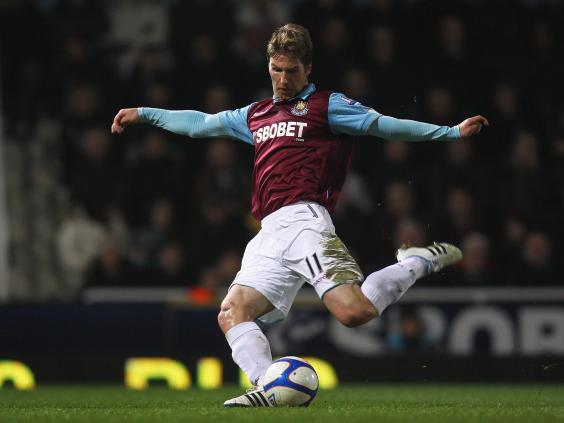
Thomas Hitzlsperger during a spell at West Ham
Hitzlsperger, who in his interview with 888sport.com spoke about the appointment of Remi Garde at Aston Villa, revealed being openly gay comes with difficulties but he is happy with his decision to be open.
“It’s not just in football, but in society; you are part of a minority, so I don’t think it will ever be a non-issue. But I’m very comfortable in my own skin and I’m comfortable going to games and meeting fans who know I’ve come out. I’m really delighted in how it is going. My life has changed, of course, but for the better.”
Read the full and frank interview with Hitzlsperger here.
Government Has ‘No Plans’ To Ban Gay Conversion Therapy

The Huffington Post UK | By Ned Simons
The government has “no current plans” to ban gay conversion therapy, a Conservative health minister said today after the practice was attacked by both Tory and Labour MPs.
Recent research carried out by Britain’s leading LGBT charity, Stonewall, revealed that one in 10 healthcare workers had witnessed colleagues express their belief in the so-called treatment.
The statistic rises to 22% in London health and social care environments, and has been hailed “incredibly harmful and dangerous” by Ruth Hunt, Stonewall’s chief executive.
The Royal College of Psychiatrists have said previously that conversion therapy creates “a setting in which prejudice and discrimination flourish”.
Tory MP Mike Freer led a debate on the practice in parliament on Tuesday and called for it to be banned. “Being gay is not a disease, it is not an illness and it is not something that I or any other gay man or woman can be cured of. To suggest otherwise is not only demeaning, but morally and medically wrong,” he said.
“Imagine the outcry if Parliament were to give tacit approval to curing heterosexual men and women of their heterosexuality. There would be uproar. Allowing conversion therapy to try to turn our straight colleagues gay would not last a day, yet we allow therapists to peddle the myth that they can ‘cure’ people of being gay.”

Labour MP Wes Streeting said “the suggestion that there could be a gay cure that makes all LGBT people, and young people in particular, feel that they are different and somehow alien”.
He added: “That is what causes them mental ill health.”
However Health minister Jane Ellison said while the government did not believe that being lesbian, gay or bisexual “is an illness to be treated or cured” – a ban was not currently being considered.
“I fully understand the concerns about so-called gay conversion therapy, but the government have no current plans to ban or restrict it via legislation, or to introduce statutory regulation for psychotherapists,” she said.
Ellison said she acknowledged there was a “continued challenge to the government to go further” in preventing gay conversion therapy.
Former Tory minister Nick Herbert said there needed to be a “a stronger statement of guidance from the government” that it was wrong.
Before the General Election, David Cameron said that the therapies were “profoundly wrong” and pledged to “protect people from harm” under a Conservative government.
Is there a homophobia problem in PE classes?

by Ross Semple

Is there a homophobia problem in PE classes
“Homophobic remarks are flung around on a regular basis”
A new article, part of a PE and school sports series by the Guardian, looks at ways to stop school pupils ‘climbing the school gates’ to avoid PE lessons. Among other reasons, such as unflattering uniforms and limited variety of activities, the article suggests that homophobia in changing rooms prevents some pupils from taking part in PE.
The anonymous writer begins: “The bell rings and once again I have to make the decision whether to climb the school gates or walk to my physical education (PE) lesson. I am not averse to sport – in fact I like keeping fit on the weekends and I’m pretty healthy. But the culture around PE in school means it has become my worst nightmare”
He goes on to explain why: “I am an openly gay teenager and getting changed in front of the other boys, with no privacy, makes me feel desperately uncomfortable.
“Homophobic remarks are flung around on a regular basis, with boys calling each other ‘faggot’ and saying ‘I bet certain boys love it in the changing rooms.’”
The writer suggests a simple remedy for this problem: “A zero-tolerance policy against homophobic slurs and body shaming – even if it’s so-called banter – would make the changing room a more comfortable environment for everyone.”
This insight into the changing rooms comes at a time when more sports stars than ever are publicly discussing their sexualities. Just in the last few months, Olympic skier Gus Kenworthy, and rugby players Keegan Hirst and Sam Stanleyhave all publicly come out as gay. There have also been rumours swirling that two high-profile football players are preparing to come out.
The Guardian’s PE and school sports series is funded by the Youth Sports Trust.
Donation not discrimination: allow gay men to give blood

1st November 2015Adam Hilsenrath
Anyone who has donated blood will know that the minutes spent in the (oddly comfortable) chair, watching a small bag fill up with blood constitutes a tiny fraction of the entire process.
 Before you are sat down, you are tested for anaemia and must fill in a lengthy health questionnaire. The first section on the form, entitled “Your Lifestyle”, is mainly about one thing: HIV. Whether you’ve had sex with a prostitute or with anyone from a country where HIV and AIDS are widespread, the National Blood Service doesn’t want your blood if there’s a chance of you having HIV. This, most would agree, is an understandable and efficient way of preventing donations from people with infected blood.
Yet it is the final two questions about “Your Lifestyle” which come across as archaic, nonsensical and bordering on the discriminatory.
In Great Britain, men who have had sex with men (MSM) in the last 12 months cannot give blood. Full stop. In Northern Ireland, no MSM can give blood at all, regardless of how recently they’ve had sex.
From one perspective you can see a semblance of logic. The United Nations estimates that between two and 20 percent of MSM are infected with HIV, though, clearly, in somewhere like the UK the percentage will be at the lower end of the scale. In 2009, the Centers for Disease Control and Prevention reported that MSM accounted for 61 percent of all new HIV infections, and of the nearly 800,000 people worldwide living with HIV, 51 percent are MSM. Considering that estimates on the non-heterosexual population range from four percent to ten percent, and that over half of these are women, this does point to a much greater chance of MSM having HIV compared with anyone else (about 60 times more than other men).
Furthermore, HIV can take, depending on the number of antibodies the body produces, about three months before it’s detectable. In about three percent of cases this can take up to six months, meaning that HIV-infected blood could be donated without anyone knowing (a serious problem considering that National Blood Service usually keep blood for only seven weeks). The focus on HIV is further understandable when it’s considered that other sexually transmitted diseases, such as gonorrhoea, can be detected within a matter of weeks.
However, that’s about as far as the logic will go. There are, on the other hand, many reasons why current practice is flawed.
Firstly, even if the 12 month window was kept to ensure that no one was inadvertently donating blood with HIV, under the current system there’s no space for those MSM who’ve had protected sex. Condom or no condom, MSM cannot give blood. On the other hand, heterosexual men, or any woman, can donate blood even if they sleep with a new partner every night without any protection.
Secondly, MSM in long-term relationships are also excluded. Two men who have been exclusively dating for years can often have unprotected sex, sure in the knowledge that neither man carries STDs and is unlikely to acquire one. But again, under present regulations there is no “I am in a long-term, exclusive relationship” box, and so blood cannot be donated.
Thirdly, sceptics might argue that some vindictive people might knowingly donate HIV-infected blood and that, because MSM are more likely to have HIV anyway, all MSM donations should be prohibited. If we, for a moment, ignore the crass offensiveness of this argument, one should bear in mind that anyone vindictive enough to donate HIV-positive blood would show up on the blood tests done automatically on all donations (because if they know they have HIV, then it’s already passed the three-sixth month period). What’s more, good-natured MSM who want to donate blood can already lie if they know they’re HIV-free.
At present, we are operating on decades-old blanket assumptions, which unnecessarily bar certain individuals from making a valuable contribution to society. Research on the correlation between MSM in long-term relationships and rates of HIV possession is yet to be done.
There is a simple remedy. If the law were altered so that any MSM who has either been in a relationship as long as the 12 month waiting period or has had adequately protected sex could donate blood, then the system would still prevent the possibility of HIV donations without unnecessary levels of discrimination.
It has been tried before. Michael Fabricant, MP for Lichfield, has campaigned on a number of occasions for such a legal amendment, but has always lacked support, though I can’t understand why. This is not only an issue of discrimination, but also of public health and liberty.
The current law is fundamentally outdated and homophobic, and at a time when blood stocks are low and the NHS in constant need of donations, it is irresponsible that people who want to save the lives of others are not allowed to do so.
IMAGE/ Mattbuck

First LGBT sci-fi film ‘Credence’ gets online launch

02 NOVEMBER 15 by MATT KAMEN
When independent film Credence launched its crowdfunding campaign last July, it made history as the first sci-fi project to specifically and overtly deal with LGBT themes. Now, 18 months on and with a West End premiere to its name, the short is finally available to purchase.
True to its community-driven origins, which saw a dedicated 607 backers chip in a total £23k — almost four times its initial goal of £6,000 — director Mike Buonaiuto has opted for an online release release with a miniscule price tag to get the film to as many viewers as possible. It’s currently available exclusively on Vimeo for £3.99 in high-def download and streaming formats.
Anyone who contributed more than £15 during the crowdfunding phase will get the film for free. The purchase price to new viewers is, Buonaiuto says “a minimal fee to cover outstanding costs for completing a production of this scale and detail”, which saw “countless people” contribute talent and production skills to see the project completed.
“Launching traditionally would not have made too much sense for Credence, which was completely built by people’s crowdfunded cash,” Buonaiuto tells WIRED. “So the team decided to give the film a completely independent launch — fuelled by the thousands of people who shared and contributed to the campaign over the last few years.”
The half-hour tale follows husbands John (Anthony Topham) and Scott (Alex Hammond) as they try to ensure safe passage for their daughter Ellie (Tia Kenny) away from a doomed Earth. Although it’s a rare portrayal of gay parents in cinema, it also stands — in this writer’s opinion — as an example of raw humanity and the extents people can go to for love. Buonaiuto is optimistic that both the characters’ portrayal, deliberately as far as possible from the standard imagery cinema often uses as shorthand for LGBT people, and Credence’s production model will have a positive impact.
“We hope this inspires other filmmakers to take a chance at breaking stereotypes in filmmaking, and in production models” he says. “Filmmakers have to get creative if they want to tell new stories that have never been told before. Credence was written, produced and funded completely differently to most short films, telling a very different story, and we wanted to launch to be very people-led and unique too.”
If digital downloads aren’t your movie-watching cup of tea, there are also plans for a more traditional release to follow. “We’ve had so much interest for Blu-ray and DVD releases, which is really encouraging,” Buonaiuto says. “This is something we’ll certainly consider next year, with a few partner options, and we’re also talking with film festivals for more screenings.”
Northern Ireland assembly votes to legalise same-sex marriage

Northern Ireland’s assembly voted narrowly in favour of gay marriage equality but the largest party in the devolved parliament, the Democratic Unionists, have since vetoed any change in the law.
Four independent unionist assembly members joined nationalists and others with 53 votes in favour of same sex marriage – just one vote ahead of the main unionist parties who oppose any reform.
But the motion in the regional parliament fell after the DUP used a “petition of concern” to argue that the law change that would allow same-sex couples to marry in Northern Ireland did not command sufficient cross-community support.
Under the complex rules of power sharing in the region, parties from either the unionist or nationalist community can use this mechanism if they feel there is not enough backing from Protestants or Catholics for particular legislation. It was designed to ensure no one community dominated the other following the 1998 Belfast agreement.
Amnesty International said on Monday it was ironic that a mechanism established to ensure the rights of minorities in Northern Ireland had been used to deny a fundamental right to the LGBT minority in the province.
The DUP veto means that Northern Ireland remains the only part of the UK where gay couples cannot get married legally. The party is heavily influenced by the socially conservative Evangelical Christian community, particularly the Free Presbyterian church, which was founded by the late DUP leader, the Rev Ian Paisley.
In an often fractious debate inside the Stormont assembly, there were a number of trenchant attacks on the notion of gay marriage equality from the unionist benches.
Jim Allister, leader of the hardline Traditional Unionist Voice, said same-sex couples getting married was a “perverse definition” of marriage. Allister said the gay marriage equality campaign was a “worked-up phoney demand for rights”.
The latest attempt to legislate for gay marriage was introduced in a joint SDLP-Sinn Féin motion to the house. Sinn Féin’s Daithí McKay noted that the three Ulster counties in the Republic of Ireland “all said yes to marriage equality” in the recent referendum there. He said recent opinion polls showed 68% of people in Northern Ireland were in favour of a change to the law.
Among those assembly members who changed their mind to vote in favour of same-sex marriage this time around was the Alliance party’s Trevor Lunn.
He told the parliament that he had been “on a journey” and had listened to his LGBT constituents and their families, and was now persuaded voting yes was the right thing to do.
Before Monday’s vote, gay couples handed out invitations to the weddings they were planning to have if the legislation had passed through without any veto.
At least three LGBT couples are planning legal action to challenge the same-sex marriage ban, pledging to take the fight to the European court of human rights if necessary.
Dr Richard O’Leary, of the Faith in Marriage Equality group, said Northern Ireland’s image as a backward society had been reinforced by the continued ban on equal marriage. “As a vulnerable, peripheral region fighting for its economic life in the teeth of a global depression, the message we risk sending out about Northern Ireland is that it is a region stuck in the past, out of touch with the cutting edge of global society,” he said.
“We should be honest – our history and the religious roots of our communal divisions mean we already suffer from a serious image problem. It is entirely possible that within a few years, Northern Ireland could find itself the last significant jurisdiction in western Europe where same-sex marriage remains prohibited and on the ‘wrong side of history’.”.
In the four previous votes attempting to bring in gay marriage reform, there have been narrow majorities against change. In April, the margin was only two votes against.
- This article was corrected on 2 November. We originally referred incorrectly to Alliance Party assembly member Trevor Lunn as Stephen Lunn. That has been changed
Hockey Wales ‘inundated’ with requests for rainbow laces after player Beth Fisher leads campaign

The campaign has been led by hockey player Beth Fisher
Welsh hockey star Beth Fisher, Wales’ LGBT hockey ambassador, with the rainbow lacesWelsh hockey star Beth Fisher, Wales’ LGBT hockey ambassador, with the rainbow laces
A campaign aimed at making life easier for gay hockey players has been a resounding success.

Welsh hockey star Beth Fisher, Wales’ LGBT hockey ambassador, with the rainbow laces
Hockey Wales was inundated with requests for its “rainbow laces” and ran out within a week of launching their campaign which was fronted by Wales women’s hockey star Beth Fisher.
Hockey Wales is now extending the #Hoctober campaign not only to clubs, but also to coaches, umpires, officials and others involved in the sport who want to show their support to the Lesbian Gay Bisexual and Transgender (LGBT) network.
LGBT Sport Network formed in 2013
Fisher, the 32-year-old from Penarth, who lives in Cardiff with former Wales netball star, Abergavenny’s Cara Moseley, started the campaign earlier this month by playing with a “rainbow hockey stick” to symbolise her role as Welsh hockey’s first LGBT ambassador.
Her rainbow stick was supplied by her sponsors Grays International, whose brands include Gilbert, the official ball suppliers to the Rugby World Cup 2015.

Cardiff and Met Hockey team with their boot tied with rainbow lacesCardiff and Met Hockey team with their boot tied with rainbow laces. Pic Credit :Irfon Bennett
The LGBT Sport Network was formed in 2013 in response to research conducted by Sport Wales.
The work identified that while many lesbian, gay and bisexual people were interested in sport, they have also been put off by negative experiences or the perception it’s an unpleasant and unsafe environment for gay people.
‘I don’t want anyone to feel like I did’
Midfielder Beth, who went to Howell’s School in Llandaff, Cardiff, plays hockey for the Swansea City Spartans and is a regular in the Welsh team.
Speaking about her ambassador role she said: “I don’t want anyone to feel like I did, and if I help one little girl or boy be more confident then I’ve done my job.”
Richard Jones, Hockey Wales’ lead on inclusion said: “We were really impressed with the number of clubs that got in touch and wanted to go the extra mile in showing their commitment to a more inclusive sport.
“Our National League men’s side, Cardiff & Met, were among the clubs to sign up and they’ve been wearing the laces in their fixtures throughout #Hoctober.
Additional 200 pairs of laces
“But we’ve also had requests from a number of other groups, including international level umpires that also want to show their support, which is fantastic.”
Hockey Wales was the first national governing body to sign the LGBT Sport Cymru Charter in 2014.

Hockey international Beth Fisher is taking part in a campaign run by LGB&T Sport Cymru to mark National Coming Out Day on October 11
A spokeswoman for the organisation said: “We continue to strive to ensure its clubs offer quality hockey opportunities in a safe and friendly sporting environment for members of the LGBT community, free from bullying and discrimination.
“An additional 200 pairs of rainbow laces are now going on offer to members of the hockey family in Wales who want to demonstrate their commitment to inclusive hockey.
“Those claiming laces will be listed as a LGBT friendly club on LGBT Sport Cymru’s new website, which launches at the end of November.”
‘I felt I couldn’t be myself’
Fisher added: “I’m delighted that we’ve such a response.
“Rainbow laces are a small gesture, but it delivers a huge statement which I hope will help all players, coaches, volunteers and officials involved in hockey feel welcome and safe”
She said: “Growing up I lied to my family and I lied to my friends because I wasn’t sure what their reaction would be if they found out I was gay.
“I purposely distanced myself away because I felt I couldn’t be myself.
“I didn’t know anyone who was gay and we certainly were never taught about it in school.
“The word lesbian would often be used as some sort of negative label for someone who wasn’t the flavour of the month.
“I’m honoured and excited to be a LGBT sport ambassador for Wales.”
- « Previous Page
- 1
- …
- 53
- 54
- 55
- 56
- 57
- …
- 108
- Next Page »