
ACOMSDave

Community Journalist

  • Home
  • Community Journalist
  • Events
  • Media Page and Press Kit
    • Projects and Work
  • Resources & Documents
    • LGBTQ+ Support Groups and Documents
  • NIGRA
  • Archives
  • Contact

Screenwriter Believes Marriage Equality Possible In Ireland

12/03/2015 By David McFarlane Leave a Comment

Tom Daley, Boyfriend Dustin Lance Black Out In Dublin; Screenwriter Believes Marriage Equality Possible In Ireland

Reprinted from kpopstarzBy Chill Harrison | March 07, 2015 07:30 PM

Dustin Lance Black and Tom Daley

(Photo : Tim P. Whitby / Getty Images Entertainment)
Dustin Lance Black was honored with the “honorary life membership” by the UCD Law Society and he brought along boyfriend Tom Daley with him for the occasion. Meanwhile, the screenwriter is optimistic that Ireland will eventually go along with same-sex marriage.

 According to Entertainment.ie, Dustin Lance Black also spoke about his advocacy on the rights of the LGBT and the importance of storytelling at the University College Dublin.

“Black certainly left his mark on those in attendance if the audience’s reaction is anything to go by,” it said.
Meanwhile, Speaking to Newstalk, the Irish news radio, Dustin Lance Black believes that same-sex marriage would be accepted in Catholic Ireland.
“I believe that marriage equality will be the law of the land in Ireland by the end of May and I think it’s a beautiful thing. It says something really wonderful about the Irish people,” said Dustin Lance Black.
More than people of the same sexual orientation getting married, fostering the rights of minority groups is the very essence of democracy.
“I think it’s the cornerstone of a democracy to protect the minority from the tyranny of a majority,” Dustin Lance Black said.
But Tom Daley’s boyfriend understands that it’s not going to be easy based on his own experience.
“My journey with my Mom, my family… it wasn’t all good all the time. My Mom didn’t understand right away. There was a period there of a lot of heartbreak and certainly with a lot of my extended family,” he said.
“Keep the avenues of communication open, keep talking about it because it’s about misinformation, that’s where homophobia comes from,” Dustin Lance Black added.
Dustin Lance Black’s boyfriend Tom Daley is actually considered as one of UK’s most influentialgay people.
According to Plymouth Herald, Dustin Lance Black’s boyfriend Tom Daley is a new entry at the 15th place on the Rainbow List by The Independent.
“Number one on the list is Labour Party activist and former EastEnders actor Michael Cashman,” the publication said. “The top of the list also features Newsnight presenter Evan Davies, Bake Off presenter Sue Perkins and musician Sam Smith.”

Filed Under: Anti-Bullying & Homophobia Tagged With: dustin lance, marriage equality, same sex marriage, Tom Daley

London student rugby team strips naked for gay charity

12/03/2015 By David McFarlane Leave a Comment

Lads get kit off to save LGBTI domestic abuse charity Broken Rainbow, and we’ve got exclusive pics

09 MARCH 2015

King’s College London’s Men’s rugby team have released a naked calendar in an effort to help Broken Rainbow UK, a leading LGBTI and domestic violence charity.
The lads get their kits off and bear the cold in and around the famous campus on The Strand. Endorsed by King’s College London, all proceeds raised from the calendar go to Broken Rainbow UK.
A spokesperson from Broken Rainbow UK said: ‘Domestic violence and abuse within LGBT communities is often overlooked and made hidden even within the LGBT community itself.
‘We have many young LGBT callers and we hope that by buying the calendar, students will become aware of the issue and that our helpline is there for them if ever they, or someone they know, need it.’
Dulcie Lee, the editor of KCL’s student paper Roar News, added: ‘The response so far has been fantastic. Everyone at King’s has been good humoured and supportive, and the public reaction has been brilliant.
‘With naked men of such gorgeous calibre as well as Mother’s Day coming up, there really is every excuse to raise money for such a worthwhile cause!’
And Barney Lynock, the head of the men’s rugby team, said he also hopes the calendar will help tackle homophobia in sport.
‘We hope to remind people that action still needs to be taken against homophobic, prejudiced sentiments that plague the sporting world, but also to be proactive about these problems, and in doing so change the unwelcoming stereotype that is often attributed to sporting clubs, particularly at university level.’ he said.
Photos from the calendar will be posted each day this week in the run up to London Varsity Series sporting events.
The calendar can be bought here:
And if you need any convincing, we’ve got a couple of exclusive shots right here:
KCL 1
KCL 2
KCL 3

(Note: Video includes shots of men’s bums.)
– See more at: http://www.gaystarnews.com/article/london-student-rugby-team-strips-naked-gay-charity090315#sthash.yypIsTOm.dpuf

Filed Under: Anti-Bullying & Homophobia Tagged With: Broken Rainbow, King’s College London’s Men’s rugby team, rugby, stripping

Bishop Doran's view on gay couples with children..

12/03/2015 By David McFarlane Leave a Comment

Catholic bishop Kevin Doran claims gay couples with children ‘are not parents’

Bishop also said women who become pregnant through rape should not ‘destroy a life in order to get back at the rapist’

10 MARCH 2015

Catholic Bishop, Kevin Doran, has been strongly criticised for claimed gay couples with children ‘are not parents’ and that women who become pregnant through rape should not have an abortion just ‘to get back at’ their attacker.

RELATED ARTICLES

Mass goers in Donegal walk out after priest criticises GAA star for backing ‘Yes’ on same sex marriage

A referendum on legalising same-sex marriage in the Republic of Ireland  will take place on 22 May

A referendum on legalising same-sex marriage in the Republic of Ireland will take place on 22 May


The Bishop of Elphin made a series of controversial comments as he discussed the same-sex adoption bill being debated in Irish Parliament ahead of the forthcoming referendum on legalising same-sex marriage, which will take place on 22 May.
The bishop also said he believes “the jury’s out” on whether people are born gay.
In the wide-ranging interview with NewsTalk Breakfast Radio he discussed abortion, homosexuality and same-sex adoption.
Bishop Doran was asked by the host whether a woman who is raped and becomes pregnant as a result should have to bear the child. “Well, the child is still a human being”, he responded. “That’s the issue – you don’t destroy a life in order to get back at the mother’s rapist.
“Women themselves vary in their view of this. I had the experience many years ago of talking to a woman who had been raped and had become pregnant – and she called me one evening and said the baby died in the womb.
“I kind of said ‘I thought you perhaps maybe you would have been somewhat relieved’ – and she said ‘No, you don’t understand – the only good thing I had was that child.’”
In comments that are likely to infuriate gay rights groups, he went on to say that lesbian and gay couples who have children are care-givers – but not parents. “They may have children – but that’s the point – people who have children are not necessarily parents,” he said.
“This legislation that the government is introducing – the Children and Family Relationships Bill – seems primarily focused about making it possible for people in various different relationships to have children. It’s not about ensuring that children have their parents.”
However, Bishop Doran added: “The point is that all people are equal both in eyes of God and in eyes of the State, there is no question about that – when people come in to Mass on Sunday their sexual orientation is not relevant.
“This is not about saying that people who are gay are not able to love, but it’s about saying that children need a mother and a father.”
When asked if he believed being born gay was something God intended, he replied: “That would be to suggest that if some people are born with Down’s syndrome or Spina Bifida, that that was what God intended either.”
His host responded by reminding him that sexual orientation is not a disability, to which Bishop Doran replied: “Well I’m not entering into that, I’m just simply saying that it would be wrong to suggest that everything that happens, happens because God intended it, I mean if that were the case, we’d be kind of talking about a very different kind of god to the God that Christianity believes in.”
In a statement on Tuesday, Bishop Doran said: “I believe that every person is willed by God and loved by God. I simply don’t believe that God micromanages the universe in such detail. I regret any hurt that may have been caused either by what I actually said or by how it was presented by others.”
“I referred in the interview to the way in which the Children and Family Relationships Bill sets out to broaden the legal definition of parents (and systematically removes the words “mother” and “father” from previous legislation. In that context I commented that people who have children are not necessarily parents.”
 

Filed Under: Anti-Bullying & Homophobia Tagged With: bishop doran, children of gay couples, gay children, rape victims, same sex couples, same sex marriage

Priest criticises GAA star for backing 'Yes' on same sex marriage

12/03/2015 By David McFarlane Leave a Comment

Mass goers in Donegal walk out after priest criticises GAA star for backing ‘Yes’ on same sex marriage

Father John Britto spoke in favour of a ‘No’ vote during the weekend sermon

Father John Britto spoke in favour of a ‘No’ vote during the weekend sermon

Reprinted from Belfast Telegraph – BY GREG HARKIN – 10 MARCH 2015

Members of a Catholic congregation in Donegal walked out of a Mass in protest at a priest’s views on gay marriage and his comments on an All-Ireland winning gaelic footballer.

Indian-born Carmelite priest Father John Britto spoke in favour of a ‘No’ vote during the weekend sermon in Annagry, west Donegal, criticising Donegal footballer Eamon McGee who has backed the ‘Yes’ camp in the marriage equality referendum.

Fr Britto said he didn’t see anyone leave during the sermon.
“I won’t talk to the media because the media will only twist what I have to say; I speak to the people in church and I only the speak the truth and the Word of God,” he said.
“I didn’t see anybody leaving. I didn’t see that,” he insisted.
However eye-witnesses confirmed more than a dozen people walked out of the Mass.
Among those who left were relatives of a woman who was being remembered during the anniversary Mass.
“Fr Britto said Eamon McGee was wrong to back the Yes campaign,” said the member of the congregation.
“He (the priest) is entitled to his view but it didn’t go down well. After the Mass some members of the congregation approached the family of the woman being remembered to say they only stayed because of them, otherwise they would have walked out too.”
Noel Sharkey, who is from the parish and served there as an altar boy, is part of the Yes campaign in Donegal.
He said: ”As a Catholic and a gay man from the area, I think it’s essential that we engage on this issue in a respectful and tolerant way, and I ask people to avoid using hurtful or upsetting language.
“Yes Equality Donegal asks people to focus their attention on the key principles of love and equality as they make their mind up on this important issue.”

Filed Under: Anti-Bullying & Homophobia Tagged With: same sex marriage

LGBT Asylum Seekers

12/03/2015 By David McFarlane Leave a Comment

“Guilty until proven innocent”: the trial of LGBT asylum seekers detained in the UK

Gay people who seek asylum in Britain and end up in detention centres continue to face the “reverse of justice” and the threat of deportation.

Reprinted from the New Statesman BY TOM BATCHELOR PUBLISHED 10 MARCH, 2015 – 10:16

Gay asylum seekers still face the threat of deportation. Photo: Flickr/Nicky Rowbottom
Sitting in the visitors’ hall of high-security Colnbrook immigration removal centre, Eric cuts a feeble figure beside two burly security guards who are keeping a watchful eye.
Eric was just 20 when he fled death threats in his native Ghana. The son of two farmers, he says since his village in the conservative African nation discovered he was gay, neighbours are no longer buying crops from his family’s smallholding, and now his relatives are struggling to survive.
Eric manages just a few of minutes of talking – whispering, almost – before he winces in pain and slowly lifts himself out of his chair. “I was beaten by men with sticks and nails,” he mutters. “It hurts to sit down. It hurts to talk and it’s painful even to breathe.”
“I fear going back because my life would be in danger. My parent’s used to call me but now they’ve stopped. They say they are in financial ruin because people aren’t buying their produce anymore.”
His story is not uncommon. Eric is one of a growing number of gay and lesbian asylum seekers trapped in the UK’s labyrinthine asylum system, which increasingly sees vulnerable people from some of the world’s most repressive countries locked up indefinitely, given scant time or resources to prepare their case, and ultimately threatened with deportation at short notice.
The arduous process for gay men and women seeking asylum in the UK comes despite a pledge by the government, spelled out in the coalition agreement, to “stop the deportation of asylum seekers who have had to leave particular countries because their sexual orientation or gender identification puts them at proven risk of imprisonment, torture or execution”.
The promise, repeated by the Home Secretary Theresa May, was backed by a Supreme Court ruling in 2010 that two gay men, from Cameroon and Iran, could remain in the UK. Their cases had initially been rejected on the grounds that the men could conceal their sexuality by behaving discreetly. However the court agreed that this contravened the 1951 Refugee Convention, which governs how countries are supposed to treat asylum seekers, and the case was quashed.
“To compel a homosexual person to pretend that his sexuality does not exist or suppress the behaviour . . . is to deny his fundamental right to be who he is,” read Lord Hope, in giving his judgement. Research by the UK Lesbian and Gay Immigration Group (UKLGIG) found that prior to this ruling, 98 to 99 per cent of asylum claims made by lesbians and gay men were rejected, compared to 73 per cent of general asylum claims.
The test now applied to lesbian, gay, bisexual and transgender (LGBT) asylum seekers has been extended to assess whether they would face persecution if they lived freely and openly, a landmark victory for campaigners and for those caught up in the system.
Yet still, LGBT asylum seekers are being routinely threatened with deportation, booked on flights and forcibly removed from the UK – including the recent high-profile cases of Anne Nassovi and Prossie N. More still are undergoing the same gruelling process, only to launch last-minute judicial reviews that clog up the system and, in doing so, buy them valuable time.
Eric faces an uncertain future, and while he awaits the decision on his asylum application, he says he can never return to his homeland. He was outed as gay after being caught kissing his then boyfriend on an abandoned construction site on the outskirts of town – the only place he says he felt safe to do so – and was forced to flee his home. Having applied for a tourist visa for the UK and twice been refused, he was eventually granted one and arrived at Heathrow in 2012.
Eric spent his first weeks in the UK sleeping rough at Hatfield train station. Not long after, he was picked up by police and was then arrested for outstaying his visa. Since being held at the detention centre, Eric has suffered from depression and is unable to sleep at night because of the pain caused by the beatings he suffered in Ghana. He has been separated from his partner, Foster, who was moved to neighbouring Harmondsworth detention centre, and has complained about limited access to both medical and legal help.
Yet despite all this, and regardless of the fact that Eric has since been recognised as a victim of torture – which statements by both the Home Office and High Court make clear should exempt him, and others like him who were tortured before claiming asylum in the UK, from being detained – he remains in a high-security immigration centre, locked in his room between 9pm and 8am each night, and still faces the prospect of deportation with little warning.
Homosexuality in his birthplace of Ghana is illegal, and LGBT people face widespread discrimination, police harassment and extortion attempts. It is no wonder that people like Eric flee to countries such as the UK, but human rights activists believe what greets them on their arrival is often not much better.

Proving you’re gay

According to Paul Dillane, a former expert in refugee issues at Amnesty International, one of the biggest problems for asylum seekers in gaining refugee status is credibility – simply, proving that they are gay.
“Consistently, we see cases where the answer that the Home Office is giving is ‘no, you’re lying, you’re making it up’. The Supreme Court has been very clear that if somebody is openly LGBT and from a country where they face a real risk of persecution, they should be given refugee status. The government agrees with that position, but in practice, years after the Supreme Court’s judgement, we’re still seeing cases that raise serious concerns about how the credibility assessment takes place.”
Dillane highlighted “inappropriate, shocking and highly sexualised questions”, as well as assumptions about what it is that “genuine” gay people should be doing.
“Asylum seekers survive on about £5 a day, and yet civil servants at the Home Office find it bizarre if they’re not going gay clubbing in their local community. There are assumptions about what it is that a ‘good’ gay applicant should be doing. These inappropriate questions need to end. Stereotypes are finding their way into the asylum system, partly due to a lack of training. Civil servants’ own assumptions and prejudices seem to be featuring in the asylum system, and that has no place,” he added.
Harriet Nakigudde, a victim of “corrective rape” – a hate crime used to try and “convert” lesbians to heterosexuality – by her family in Uganda, said her asylum claim was refused partly on the grounds that she had not had a partner in the UK for five years. Detained in Yarl’s Wood immigration centre, Harriet claimed she has been denied adequate counselling and, like so many others, was forced to launch a judicial review. In the meantime, a removal direction was issued, and Harriet was taken to the airport, however she collapsed while boarding the plane and the process was halted. If deported, she could face 14 years in prison.
Hassan, a 24-year-old asylum seeker from Bangladesh, has witnessed first-hand the intrusive nature of questioning that some are subjected too. He fled his rural village after starting a relationship with another man, and now says he fears what would happen to him if he was to return home.
“The Home Office don’t believe me. They asked me over 200 questions, personal questions. They asked me if I had sexual relations with my boyfriend. I was nervous but I answered them, but I’ve never been questioned like that in my life before. I was scared, I didn’t realise I would face a situation like that in my life.” Hassan says he even feared revealing his sexuality in front of his Bengali interpreter, in case the information was passed on to others in the Bangladeshi community.
Twice he was given a ticket to fly home – on each occasion he applied for a review of his case and the ticket was cancelled. Speaking from inside Harmondsworth, as he awaits the outcome of a judicial review on his case, Hassan wonders whether his experience points to a more worrying trend. He says immigration officials periodically threaten asylum seekers with imminent deportation, regardless of whether they are likely to be removed. “Some of my friends told me it could be their policy, they want to warn you, don’t do anything that will make you have to go back.”
Jackie Pierce, a solicitor and trustee for UKLGIG, is clear that the system is failing lesbian and gay asylum seekers. “People have started being refused in very large numbers on the basis that they were not the sexual identity they were claiming,” she says. “It’s a difficult thing to prove.”
And Labour MP John McDonnell, whose west London constituency includes two immigration removal centres in the shadow of Heathrow, has been a leading voice in the campaign to reform the asylum and detention system. He says: “The failure to monitor asylum claims is a reflection of a system in turmoil, in which large numbers of innocent people are detained for no just reason and others have their lives put on hold by delays in decision making.
“The monitoring undertaken by individual detention centre monitoring boards has demonstrated that a large percentage of even those held more than 12 months are released and eventually given leave to remain. Brutal and unfit for purpose, this system destroys lives.”

Where is safe?

Pierce believes part of the problem lies in how the Home Office evaluates countries that are “safe” for LGBT asylum seekers who lose their case to be sent back to. “People are still being told that despite being lesbian or gay, they are not at risk in their home country. The Home Office have to be dragged into a position where they accept that a country is dangerous. There’s a real tendency to assume that if there are no news reports that say these [homophobic] incidents have occurred, that that means there is no problem.
“That’s a dangerous assumption to make for a country where it is dangerous for anyone to know you are LGBT. People will be hiding their identity. You get the feeling that if it’s going to make it easier for asylum seekers to prove their case, it gets resisted by the Home Office.”
The situation is even more complicated for bisexual people, she adds. This is particularly true if you’ve had children, which Pierce says is, “taken as a clear sign that you must be straight”.
“You get very difficult assertions made that if you’re attracted to both men and women, then why not just limit yourself to the opposite sex when in your home country. It’s a lack of understanding about the complexities of people’s lives.”
Aderonke Apata faced a similar hurdle in proving her sexuality when interviewing officers discovered she had a husband in her native Nigeria. She now lives in Manchester and is awaiting a judicial review on her case – ten years after she first arrived in the UK. “My application was refused because I’ve had relationships with men in the past,” she said. “They didn’t believe I was a lesbian.”
The Home Office says it has worked with the gay rights campaign group Stonewall, the UKLGIG and the United Nations High Commissioner for Refugees to provide specific guidance on assessing asylum claims brought on the grounds of an applicant’s sexual orientation. Yet campaigners claim it is not the policy that is lacking – rather the oversight and scrutiny of those implementing it. And while the Home Office has responded with mandatory training sessions, and there has been a small rise in the proportion of applicants granted asylum – up from 28 per cent in 2009 to 37 per cent in 2013 – LGBT people are still facing deportation in growing numbers.
In December 2013, Prossie N was flown from the UK to Uganda, a country which has one of the worst gay rights records in Africa. Its president, Yoweri Museveni, recently passed an anti-homosexuality bill, increasing the tariff for gay sex or marriage to life imprisonment, while simultaneously closing down much of the country’s LGBT support network and outlawing the promotion of homosexuality. Gay rights campaigners here in the UK say that Ugandan organisations they have worked with in the past are now in crisis, and that Prossie herself has had to escape to the capital Kampala using money wired to her by mobile phone after her situation became unsafe.
David Hanson MP, shadow minister for immigration, warns that the government isn’t doing enough to safeguard vulnerable asylum seekers in the UK. “It’s important that people are treated with dignity and humanity when applying for asylum, and there are worrying allegations about the Home Office’s treatment of those fleeing from persecution because of their sexuality.
“Ministers made a commitment to reform this area of immigration but have done nothing, so they urgently need to look again at how these applications are dealt with, and ensure that the cases are treated efficiently, but with respect and sensitively.
“High profile cases that seem to be unjust undermine public confidence in our immigration system and send the wrong message about the way we treat those seeking protection in the UK.”

The fast-track system

The apex of anger directed towards the system by campaigners – and those passing through it – is the fast-track procedure, which civil rights group Liberty says is being employed on the basis of “administrative convenience” and which is leading many asylum seekers to be “denied the right to a full and fair consideration of their claim”.
Although most asylum seekers are not detained during their application, if the UK Border Authority believes a quick decision is possible, a process known as Detained Fast Track can be used by officials to hold a person in detention while their case is decided. It has led to criticism that those seeking asylum are not given the time or resources to compile enough evidence to support their claim.
Isadore, a gay man from Cameroon currently being held in Colnbrook, claims he was unable to present as evidence, an article published in his home country which had outed him as gay. Speaking through a French interpreter, he says the fast-track procedure meant his case had been rushed through the courts, leaving the judge unable to adjourn the trial to allow further evidence to be obtained. Isadore only managed to get hold of the newspaper containing a picture of him attending a gay conference in Cameroon in 2012 after the trial had concluded, and he now faces deportation.
Quoting his flight reference number, Isadore’s lawyer, Hani Zubeidi, explained he had been booked onto a plane back to Cameroon two weeks ago, which had been cancelled at the last minute. He is now working on a pro bono basis, as Isadore had not qualified for legal aid: “Invariably, they [legal aid firms] tend to pick and choose, because budget cuts have restricted the amount of files that they can open. So they won’t pick the harder cases such as his,” Zubeidi says.
“This situation is quite normal though, quite run-of-the-mill. It highlights the weakness of a fast-track determination process. To try and get all your evidence from Cameroon in a limited amount of time is not that easy.”
A separate legal practice, Wilson Solicitors LLP, which is not working on Isadore’s case, says that it was on a shrinking list of firms offering asylum seekers advice, as the legal aid budget has been reduced and providing assistance to those negotiating the asylum system has been made “very unprofitable”.
Another of the system’s pitfalls is that it places the burden of proof firmly on the asylum seeker. According to Anthony Gard, a campaigner with Movement for Justice, a group that defends the rights of asylum seekers in detention, “it’s the exact reverse of any normal court, where you’re innocent until proven guilty. In asylum cases, you’re guilty until you find some way, after you’ve fled from a country, often without papers, to prove you are genuine.”
“They go into a long gruelling interview, often in a state of shock, sometimes denied an interpreter, sometimes for up to ten hours of constant questioning, all designed to get you to contradict yourself. This is a completely unjust system, it’s a denial of human rights, and the only purpose of this is to maximise the number of deportations. It’s traditional divide and rule politics.”
“The case of LGBT asylum seekers is a double problem – you’re asked to prove that you are gay, it’s frankly a demeaning, dehumanising, vulgar exercise, and it comes close to a pornographic line of questioning.”
Liberal Democrat MP Julian Huppert, who sits on the Home Affairs Select Committee, says there has been “a total inefficiency and a complete lack of control in dealing with asylum cases for years. We have been given incorrect figures and people have been left languishing in the system for huge amounts of time – over ten years in some cases waiting for decisions to be made.”
The Home Office refused to comment on individual cases, but did add: “The UK has a proud history of granting asylum to those who need it and we do not remove anyone at risk of persecution because of their sexuality. We provide dedicated guidance and training to those dealing with such asylum claims, and all applications are carefully considered in line with our international obligations.”
The names of some people have been changed to protect their identities.

Filed Under: Anti-Bullying & Homophobia Tagged With: asylum seekers, LGBT, refugee

Video Review: ONE IN FIVE BRITISH GAY TEENS BULLIED IN SCHOOL BY TEACHERS OR OTHER ADULTS

12/03/2015 By David McFarlane Leave a Comment

Bullied in School – new research shows that one in five gay or bisexual teens in Britain have been subjected to homophobic bullying at the hands of teachers or other adults at school, reports the Independent.
The “Boys Who Like Boys” report produced by the National AIDS Trust (NAT) questioned more than 1,000 gay or bisexual males between the ages of 14 and 19 about their experience of sex and relationship education in school.
While 55 percent of respondents said they had experienced bullying and discrimination due to their sexual orientation, 39 percent of that segment said a teacher or another adult at school had been responsible for the bullying.
The survey also suggests that poor sex education lessons are driving a rise in the number of young gay men contracting HIV.
Deborah Gold, the chief executive of the NAT, said:
“It’s an incredibly high number. The idea that teachers or other adults at school are sometimes responsible for bullying and discrimination is utterly unacceptable. It’s definitely an area I’d want to know more about. It’s a worryingly high enough statistic that you’d want to find out how that is impacting on young people.”
Gold added:
“The majority of the people that filled in this survey are leaving education not knowing how to protect themselves from HIV is shocking. The number of young men who have sex with men who are contracting HIV is increasing. I think there’s an absolute link between the lack of this education at a time when people need it and the consequences of that.”
Stonewall chief executive Ruth Hunt said the findings are “a sad but accurate representation of the situation that many young gay men face growing up in Britain today”.
Watch an Educational Action Challenging Homophobia video used as a teaching resource in the UK, AFTER THE JUMP…

Reprinted from Towlerroad – Published on 23 Sep 2014

Students reflect on why we see homophobic bullying in schools – whether this is because of a lack of understanding, a fear of difference or an unwillingness to challenge it. What can we do to stop homophobic bullying? This short film is part of the Reach Teaching Resource.

Filed Under: Anti-Bullying & Homophobia Tagged With: bullied, gay and bullied in school, school. teacher resource

Five Gay Picture-Book Prodigies and the Difference They’ve Made

12/03/2015 By David McFarlane Leave a Comment

 Reprinted from the Horn Book Blog – with links to Amazon for the books at the end of the article.

MARCH 5, 2015 BY BARBARA BADER 1 COMMENT
depaola cover art
Andy Manley, a Scottish theater artist, travels the world putting on shows for children. In 2014, he was in New York doing My House, a “mostly wordless solo piece co-starring a cardboard box and a wayward melon,” according to theNew York Times. That one was designed for youngsters eighteen months to three years old.
“Do you have kids?” the Times reporter asked. “No,” Manley replied, “I’m gay.”
Two thoughts occur. First, being gay is less and less a barrier to fatherhood. But in any case it’s a rare father who, qua father, has Manley’s playful imagination, his creative reach: in sum, his ability to think big on a small child’s level.
That’s what a number of gay picture-book creators — distinctively, perhaps — have been doing for the past sixty years or so. Maurice Sendak, Arnold Lobel, James Marshall, Remy Charlip, and Tomie dePaola differ in just about every outward way, from the look and content of their books to the course of their lives and careers. But open the covers of those books and you’ll find tenderness, wit, and imagination as a common bond — qualities that they have in common with the unfettered young.
 

Maurice Sendak (1928–2012)

Sendak drew feelings — first and last, the feelings of small children. Over the years his subjects ranged from nursery-rhyme characters to life in a Polish shtetl to heroic nudes and portrait heads, but his work is grounded in 
the life force of the young, girls and boys alike.
AHoleIsToDig_straightenedUnisexism, or gender equivalence, showed its face — maybe for the first time on record — in A Hole Is to Dig (1952), where Sendak’s drawings illustrate Ruth Krauss’s collection of kids’ off-the-cuff definitions. Along with “A hole is to dig,” in multiple embodiments, we find the indelible “Eyebrows are to go over your eyes” and “The world is to have something to stand on.”
Think of that! On his first try, Sendak had girls and boys doing what each was “supposed” to do. Krauss, a progressive thinker, pointed out that young kids didn’t behave that way and, according to Sendak, he made a few changes to eliminate the stereotypes. Altogether, he did more than that: there are no sex roles whatever in the pair-ups or group scenes, and no pat tableaux as a consequence. In an independent jacket drawing, moreover, one little boy holds a bouquet of flowers for another to sniff.
A Hole Is to Dig, small but mighty, liberated little girls from dolls-and-doilies more than ten years before Betty Friedan’s Feminine Mystique touched off the second wave of American feminism — and, along the way, freed little boys from being he-men.
very far awayNow, a small boy could be desolate, feel rejected. In Very Far Away (1957), the second book Sendak himself wrote, Martin heads away from home, in an outsize cowboy hat, when his mother is too busy with the baby to answer his questions. His encounters with an old horse, an English sparrow, and a cat are fanciful, whimsical — and unrewarding. Martin heads home: maybe now Mama has time for him. Or he’ll count cars, and wait.
Martin, a timorous tyke depicted in a scratchy line and a light, almost neutral wash, is the first of the M-named Sendak surrogates.
His successor, the fierce and unrepentant Max of Where the Wild Things Are (1963), returns home after working his will over the Wild Things and finds his supper awaiting him, reassuringly, “still hot.” The illustration is at once vintage Neverland and, in the play of emotions across Max’s face, high cartoon drama.
Coming next: cartoons as an extension of child life.
in-the-night-kitchenMickey, the dream-traveler of In the Night Kitchen (1970), flies off, out of his nightclothes, into a graphic panorama of Sendak’s 1930s New York City childhood. Oliver Hardy triplets appear as the Sunshine Bakers and mix Mickey into the cake they’re baking; he pops out, molds the dough into a plane, plunges to the bottom of the milk bottle…and rises to the top where (in homage to King Kong atop the Empire State), he cries “COCK-A-DOODLE DOO,” his own little penis proudly on display. Time to return to bed, more than satisfied: sated.
Power trip, wet dream, whatever: Sendak had something to crow about, however he chose. By that time, he had illustrated the endearing Little Bear books and created the larky Nutshell Library. He’d become a world celebrity and won just about every possible award. On the domestic front, he was settled in with Eugene Glynn, a psychoanalyst, who would be his life partner.
The AIDS epidemic, in the early 1980s, was painful for Sendak, as it was for other gay men, and like many of them, he became more open about his sexuality. Those agonizing times, emotional and political, had creative issue in We Are All in the Dumps with Jack and Guy(1993), a virtual mural of social protest, panel by panel. An echo of Dickens in the backwash of Ronald Reagan.
No age range is indicated on the jacket, nor should there be. Sendak was no longer making the “kiddie books” that, he often grumbled, got no respect. But early childhood was still home ground. In a late press photo, the grizzled Sendak is seen snuggling up to a Wild Thing, his protector now.
 

Arnold Lobel (1933–1987)

With Lobel, less and less became more and more.
His first assignment, as an aspiring illustrator, was to draw a salmon for a Science I Can Read Book — the editor had spotted a realistic drawing of a cricket in his art-school portfolio.
That salmon swam, and Lobel’s career was launched. Science and history easy readers came to his hand; he took on stories of everyday childhood rigors by Charlotte Zolotow and Judith Viorst. But factual or fancy-free, his work had an identity of its own.
giant john photoBooks of his own came almost perforce. First, cartoonish stories: happy-go-lucky blends of the lovable and the ridiculous. Giant John (1964) sets out into the world to earn some money after he and his mother eat their last two potato chips. At a friendly castle, he’s a BIG help…until fairy music sets him a-dancing and the castle walls come tumbling down. Never fear: John rebuilds, after his fashion, and departs with gold and glory. He “promised to visit often and kissed the king and queen and princess and dog good-bye.” A GIANT display of affection, indeed.
With the success of his work, Lobel had less need to illustrate books by others, and more time to spend on books of his own, which quickly became more diverse and substantial, even traditional, in nature. Cartooning wouldn’t do: the illustration had to have the resonance of art.
You’d think Lobel would have taken to folklore, in high demand at the time, but he didn’t — with one exception, Hansel and Gretel (1971). In the galaxy of H & Gs, Lobel’s stands as the modest, intimate one: more the tale of two babes abandoned in the woods than the story of a brother and sister victimized by an evil stepmother.
It’s a motif that turns up repeatedly in Lobel’s work. A pair of children appears, for example, in many of his illustrations for Jack Prelutsky’s collection of monitory verses, Nightmares (1976) — a pair of small, imperiled children, helplessness incarnate, the nonsexist embodiment of Hansel and Gretel. Sometimes the boy is larger and leading, sometimes the roles are reversed.
frogandtoad1Frog and Toad Are Friends (1970): is there a more satisfying, more puzzling title in children’s lit? Friends pal around, have misunderstandings, make up; but a frog and a toad — strange. Lobel had watched frogs and toads and noticed their differences. He’d also learned that toads will overwinter in the city without ill effects; but you can’t coop up a frog. So we have energetic, adventurous Frog and his best friend and opposite number Toad, something of a sluggard and a bumbler. All told, an odd, appealing couple.
At a later, savvier time, a gay couple. Through a wide lens, the designation fits: Frog and Toad jousting, in what are essentially two-character skits, could be two old loving, teasing, mutually indulgent mates. Or they could simply be humanized animals in the tradition of Beatrix Potter et al., mimicking human behavior. Lobel may have thought of them as gay, or they may have developed as they did because he was gay.
Does it matter? Besides four additional Frog and Toad books, Lobel produced five other I Can Reads during the same years — individual books with no less individuality, perhaps more. The character studies Owl at Home (1975), Grasshopper on the Road (1978), and Uncle Elephant(1981) also reflect Lobel’s sensitivity to animal ways, and are also aptly titled. Those three idiosyncratic bachelors might well be gay, too.
One thing we know for certain: the more identities — ethnic, religious, racial, sexual — the richer life is for all.
 

James Marshall (1942–1992) & Remy Charlip (1929–2012)

No two author-illustrators could be more different than James Marshall and Remy Charlip. That’s just the point.
Marshall was an accidental illustrator. Texas born and bred, he was on track to be a professional violist, then injured his hand, took up teaching…and, as the origin story goes, lucked into picture books. Lying in a hammock one summer day, sketchpad in hand, he overheard the battling George and Martha, in Who’s Afraid of Virginia Woolf? on his sister’s TV, and — voilà! — conjured up the fondly parrying hippo couple of that name.
georgemartha_larger_colorfixedThe seven George and Martha books owe their acclaim to many factors. The spare illustration is flat-out brilliant, as the delicate line delineating the hippos’ bulk, a funny thing in itself, morphs into one sharp-witted, space-teasing composition after another. Take “Split Pea Soup,” the very first story. Martha keeps serving it to George, George keeps eating it reluctantly…until he doesn’t, and pours the remains of his bowl into his loafers under the dining table. The scene is tricky to picture, and a hoot as done: wit distilled to a pea-green pour.
Overleaf, George and Martha are sitting together at the table, close together, over a plate of chocolate chip cookies. Martha has caught him out: why didn’t he tell her he hated the split pea soup? “I didn’t want to hurt your feelings.” Back and forth, that’s the theme of the stories as a whole. The delicacy of the hippos’ feelings accords with the delicacy of the line, and it, too, contrasts with their bulk. Just any old animals, conventionally drawn, wouldn’t have done at all.
Once started, Marshall cultivated his talents and spread wicked glee in one high-colored, high-energy series after another. Top grades go, though, to the kindly camp of Miss Nelson and class.
Remy Charlip, on the other hand, was a serial initiator; an adventurer.
The son of immigrant New Yorkers, he studied art at Cooper Union, helped found the Merce Cunningham Dance Company, and — before filling his resume with performing, choreographing, and teaching stints — produced a picture book, Dress Up and Let’s Have a Party (1956), that’s also a performance, an improvisation.
Decked out in his mother’s pots and pans while she bakes a cake, John is inspired to ask his friends to come to his party in costume — and we wait with him to see what they’ll be wearing when, at the turn of the page, they come through the door. No dullards here: a carton on the street turns Hans into a special delivery package; a ball of string makes Vera a meatball covered with spaghetti. The final surprise comes when John carries in the cake, with the single word happy visible. In Charlip territory, nothing is all spelled out.
With Dress Up in his pocket, he got deeply into theater for young children — and for the rest of his life picture books and children’s theater figured in his career as corresponding “narrative forms.”
Every picture book was different from the others, its style chosen — 
conceived — to suit the subject matter. For The Dead Bird (1958), a brief text Charlip had plucked from a Margaret Wise Brown collection, he painted deep-toned primitivist tableaux. 
Fortunately (1964), the exuberant 
tale that seesaws between good and bad fortune, joggles accordingly between hot carnival colors and stark black-and-white. Each turn of the page — theater, to Charlip — brings a startling new composition, a new storytelling move.
charlip_arm in armArm in Arm (1969) brought Charlip’s genius for verbal play and pictorial invention to a peak. Verbal play and pictorial invention conjoined: “Two octopuses got married and walked down the aisle arm in arm in arm in arm in arm…” is exemplified by a fluorescent couple, long tentacles entwined, who could have come out of the Beatles flick Yellow Submarine.
Among the equivocal cartoons, visual puns, and other antic embodiments of the endless tales and other echolalia is many a rainbow — this, more than ten years before the AIDS epidemic and the gay community’s adoption of the rainbow flag as its emblem. Was Charlip a prophet, a visionary, a herald? When Arm in Arm was reissued in 1997, in a partially re-designed edition, it was out-and-proud: the white cover and endpapers became rainbow-hued all over, and Charlip himself appears on the last page in a rainbow-striped sweater.
 

Tomie dePaola (b. 1934)

Tomie dePaola, that most mild-
mannered of creative personalities, took the bull by the horns — gently, of course.
nana upstairs first ed_fixed2First, there was lots of freelance illustration; dePaola was a thoroughgoing pro. And there’d always be, along with the imperishable Strega Nona (1975), many other books of a folkish or religious nature. But dePaola was not long in addressing childhood joys and woes — foremost, the joys and woes of his own childhood.
Nana Upstairs & Nana Downstairs (1973), about his feeble great-grandmother and his bustling grandmother, came out at a time when the decline and death of a grandparent was a going topic in picture books, and endures when others have long vanished. For one, it’s not a demonstration model, it’s life — you couldn’t make this stuff up.
For Tommy, at four, Nana Upstairs, largely confined to her bed, is a fine companion, even a playmate and co-conspirator. On his visits they share candy mints from her sewing box and talk away about the Little People in the room’s shadowy recesses — sitting side-by-side, Nana Upstairs tied for safety into a big Morris chair, Tommy tied in his chair, too, at his own insistence. How, then, will he cope with her death? In a still, echoing picture, Tommy, who’s been told, rushes upstairs to Nana Upstairs’s room: “The bed was empty.” You may cry, too.
Oliver Button Is a Sissy (1979) is a spunky book about a spunky little boy with gay signifiers, Tommy/Tomie by another name. Oliver, in short, likes to do things that boys aren’t supposed to do — like reading and drawing pictures, even playing with paper dolls and dressing up, singing and dancing. No baseball for him, no kind of ball. So he’s sent to dancing school “for exercise,” and he thrives. Even when he’s tormented by the other boys for his tap shoes (and has to be rescued by the girls), he persists — and at the local talent show, he’s a star.
Not long before, kids might have gotten a very different message from another reputable book. In William’s Doll (1972), written by Charlotte Zolotow and illustrated by William Pène du Bois, William is taunted by the other boys for wanting a baby doll to take care of. His father, like Oliver’s, is ready with a basketball, and William, unlike Oliver, has nothing against playing ball; he just wants a baby doll too. Leave it to grandmother: he needs the doll, which she gets him, “so that he can practice being a father.”
Not, in 1972, a gay father.
26 fairmount 1DePaola was a brand, and beloved, before he returned to the story of that budding song-and-dance man, in 26 Fairmount Avenue (1999), and, in Tomie’s childhood voice, carried it forward. The ensuing series is partly a documentary, taking in the 1939 World’s Fair, the March of Dimes, Pearl Harbor…It’s partly a family sitcom, with cameos for a host of Irish and Italian relatives. But in its naive, confiding way, it’s also an object lesson: Tomie, a born performer and artistic wunderkind, is encouraged at home and at school; on holidays and other occasions, he dresses as Mae West and the Farmer’s Wife; at five, he puts on his mother’s makeup. Never does a child tease him or an adult look askance. It’s OK.
He’s OK. You are, too.
But all is not hunky-dory. In the last book of the series, For the Duration (2009), dePaola revisits Oliver Button Is a Sissy, with a less sanguine, more realistic outcome. A group of older boys, his brother Buddy’s friends, call him a sissy and seize his beloved tap shoes — and Buddy does nothing to help him. It may even be Buddy, Tommy/Tomie comes to realize, who has egged them on. (Resentment? Envy?) The sympathetic principal will tackle the problem (discreetly), but, she suggests to Tommy, it would be better if he brought the tap shoes to school “in a paper bag or something…”
Complexity: addressed by dePaola with tenderness, wit, and imagination — as Sendak, Lobel, Marshall, and Charlip themselves did time and again. They were gay, talented, and gifted also with insight.
From the March/April 2015 issue of The Horn Book Magazine.

Filed Under: Book Reviews Tagged With: gay, picture-books, readers

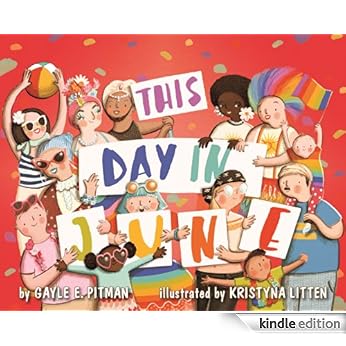
Book Review: This Day In June

12/03/2015 By David McFarlane Leave a Comment

This Day In June

Gayle E. Pitman (Author), Kristyna Litten (Illustrator)
Available in Kindle, Hardcover or Paperback format


In a wildly whimsical, validating, and exuberant reflection of the LGBT community, This Day In June welcomes readers to experience a pride celebration and share in a day when we are all united. Also included is a Reading Guide chock-full of facts about LGBT history and culture, as well as a Note to Parents and Caregivers with information on how to talk to children about sexual orientation and gender identity in age-appropriate ways. This Day In June is an excellent tool for teaching respect, acceptance, and understanding of lesbian, gay, bisexual, and transgender people.

Filed Under: Anti-Bullying & Homophobia, Book Reviews Tagged With: funny, Magination Press; pride parade

NI gay couple 'must separate for Scotland marriage'

11/03/2015 By David McFarlane Leave a Comment

Yesterday I received a call from a couple who had got married through civil ceremony some time ago in N Ireland.  The enquiry was whether they could convert their civil partnership (marriage) to a marriage.
Interestingly enough a BBC article from January 15, 2015 covered this situation in relation to a Scottish couple who had got hitched in a civil ceremony in N Ireland, and wished to do the same thing – I republish the article for information, and to highlight the problems that will continue to occur now that we have devolved governments within the United Kingdom:

NI gay couple ‘must separate for Scotland marriage’

Holding hands

A gay couple who wanted to convert their Northern Ireland civil partnership into a marriage in Scotland say they were told they would first have to live apart for two years.

In Scotland, civil partnerships can now be converted to a marriage.
A new law came into effect in December.
The couple, who did not want their surnames used, said they were initially told they could convert their civil partnership to a marriage.
They then had set a date for the wedding, they said.
Belfast-born Sean met his partner John, who is from Scotland, in 2000, and they had a civil partnership in Northern Ireland several years later.
“A lot of John’s family couldn’t attend, so we thought for our 15th anniversary we’d get married,” he told BBC Radio Ulster’s Talkback programme on Monday.
‘Dissolve’
John said: “I called the registrar in Inverness to ask them if it was possible to convert our civil partnership to a marriage, and we were advised that it was no problem whatsoever.”
The couple had begun to make plans to get married and had set the date for last Friday, but the registrar contacted them to say that they could not legally marry after all.

Shannon Sickles (left) and Grainne Close arrive at Belfast city hall as the first set of civil partnership ceremonies for gay couples in the UK takes place in Northern Ireland. Photograph: Paul Faith/PA

Shannon Sickles (left) and Grainne Close arrive at Belfast city hall as the first set of civil partnership ceremonies for gay couples in the UK takes place in Northern Ireland. Photograph: Paul Faith/PA

The first civil partnership ceremony took place in Belfast in 2005, provoking both celebration and protest. The couple were Shannon Sickles and Grainne Close.


“It transpired that it’s actually not legal to change our civil partnership into a marriage in Scotland, because we had a civil partnership in Northern Ireland,” said Sean.
“The advice we were given was that we could dissolve our civil partnership – get divorced to get married – and we’d have to live apart for maybe two years. It was just ludicrous.”
Tom French, from the Equality Network, which ran the campaign for same-sex marriage in Scotland, said: “The current situation in Scotland is that any couple can get married here, although if you are in a civil partnership the only people who can get that converted to a marriage currently are those who had a civil partnership in Scotland.
“The government are looking at this – there was an amendment to the bill made that the Equality Network sought and won that means that soon, hopefully by the summer, couples from other parts of the UK should be able to convert their civil partnership.”
Sean said he hoped the law in Northern Ireland could be changed to allow same-sex marriage.
“If the legislation did change in Scotland and we were able to go over and get married, it would only count in Scotland – if we came back here it wouldn’t be recognised,” he said.

Filed Under: History Tagged With: civil ceremony, gay couple, gay law, gay marriage

John Boyne writes about his life and abuse

11/03/2015 By David McFarlane Leave a Comment

John Boyne: ‘The Catholic priesthood blighted my youth and the youth of people like me’

John Boyne, author of The Boy in the Striped Pyjamas, grew up gay in Dublin. Now, after years of silence he is finally ready to write about sexual abuse within the church – and to talk about the effect it has had on his life

John Boyne  on the day of his confirmation with his younger sister.John Boyne on the day of his confirmation with his younger sister.
John Boyne  on the day of his confirmation with his younger sister.John Boyne aged fiveJohn Boyne as a teenager at Kylemore Abbey: “It’s not easy to be a young, gay teenager and to be told that you’re sick … particularly when you hear it from someone who groped you on your way to class”

John Boyne

Republished from Irish Times Fri, Nov 7, 2014, 15:25
 Over the course of my writing life, I’ve often been asked why I don’t set my novels in Ireland. To this question, I had a stock reply: that I didn’t want to write about my own country until I had a story to tell. Now, having written a book that takes the subject of child abuse in the Irish Catholic Church as its theme, I wonder if that answer was entirely honest.

I’ve spent the past two years recalling experiences from my childhood and teenage years that I would rather forget, reliving events that should never have taken place and recreating through fiction moments that seemed small at the time but that I’ve come to realise caused me great damage. Which makes me think that the real reason I never wrote about Ireland until now is explained in the opening sentence of my novel:

“I did not become ashamed of being Irish until I was well into the middle years of my life.”

When I was growing up in Dublin in the ’70s and ’80s, the parish priest lived in the house to my left while eight nuns lived in the house to my right. I was an altar boy, went to a Catholic school and was brought to Mass every Sunday. I knew there were Protestants in Dublin, and Methodists and Jews and Mormons, but I never laid eyes on any of them, and probably would have run a mile if I had. They were going to hell, after all, or so the priests told us. And as long as we learned our catechism by heart and lived good Catholic lives, we were not.

JOHNBOYNE4_WEB

The importance of church life in my parish during this era cannot be overstated. For a family not to attend Mass would have been to invite immediate exclusion from social circles. To have a priest to dinner was the dream and, if it happened, preparations would take place for weeks in advance. They say the queen thinks the world smells like fresh paint. Well the priests did too. The whole house needed a makeover before he came for his tea. And yet, for all the sycophantic behaviour that went on, it was rare to find true believers. Everyone knew which priests offered the shortest Masses and the briefest sermons, and no one ever told the truth at confession. I remember thinking that if I said what was really going on in my head, I would probably be excommunicated, arrested or both. And so I did what everyone else did: I made stuff up. Ordinary, decent sins.

I was a quiet, shy and well-behaved child and yet somehow, whenever I found myself in trouble, it was with the priests. As an eight-year-old altar boy, I was so terrified by the consequences of having shown up for the wrong Mass that I broke down in tears on the altar and had to be carried off. It sounds funny now but I can still recall the absolute panic at what would happen to me. I don’t think I’ve ever been so frightened, before or since.

At 13, I had the misfortune to be taught by a sadistic priest who carried a wooden stick up his sleeve with a metal weight taped to the end of it. He called the stick Excalibur and once beat me so badly that I was off school for two weeks. The pleasure he took as I crumbled before him was obvious.

Another priest conducted “fair trials”, where a boy – often myself – would be brought to the front for some infraction, tried by his classmates, inevitably found guilty and have his pants pulled down in front of everyone for a spanking.

JOHNBOYNE2_WEB

But it wasn’t just the priests. Lay teachers, fully aware of the accepted practices of their religious employers, could also be responsible for unpleasant acts. A teacher stood over my shoulder as I worked and reached his hand down the front of my trousers, keeping it there long enough for him to get his kicks before moving on to the next boy.

These things and more happened all the time and we never uttered a word of protest. We felt they had the right to do what they wanted because they wore a collar. And they wonder now why my generation has so little respect for them.

Once puberty and an independent mind kicked in, I began to feel more hostility towards the church. It’s not easy to be a young, gay teenager and to be told that you’re sick, mentally disordered or in need of electroshock therapy, particularly when you hear it from someone who groped you on your way to class the day before. I doubt any of them understood how, as they preached love and practised hatred, they blighted my youth and the youth of people like me, leading to the most unhealthy and troubling relationships once I became sexually active.

JOHNBOYNE6_WEB

Problems I have suffered in my life with depression – which have been ongoing and multitudinous and chemically alleviated – I put down to the fact that my priests and educators made me feel worthless, and disparaged and humiliated me at every turn. Which is ironic, considering that in all other facets of my life I had an extremely happy childhood.

Throughout my youth, as Pope John Paul II travelled the world in luxury, playing on his popularity to reinforce concepts that were not only outdated but also destructive and harmful, he basked in the applause of young people while making sure to cover up every single crime that was committed against them. And still, in behaviour that beggars belief, tens of thousands of people, many of them under 30, poured into St Peter’s Square earlier this year to celebrate his sanctification. Where is their compassion? Where is their humanity? And the more scandals that came to light over the years, the more I grew convinced that there was not a single good man to be found among their number and the sooner they disappeared from our lives, the better it would be for all.

When I started publishing novels 15 years ago, I knew that I couldn’t write about this until I was experienced enough to do so. And then one day a relation told me that he had seen a young priest lying prostrate before the grotto of Inchicore church, weeping hysterically, while a woman – apparently his mother – sat nearby in equal distress. Why he was there, I do not know, but I found myself greatly affected by the image. Was he a criminal, I asked myself? Probably. But how had he suffered when he was young? What had brought him to this place of personal devastation? And to my astonishment, I began to feel something that I had never expected to feel towards a priest: empathy.

A novelist looks for the stories that haven’t been told. It would be very easy to write a novel with a monster at the centre of it, an unremitting paedophile who preys on the vulnerable without remorse. The challenge for me was to write a novel about the other priest, the genuine priest, the one who has given his life over to good works and finds himself betrayed by the institution to which he has given everything. In doing so, I was trying to uncover goodness where I had spent a lifetime finding evil.

I interviewed many priests who will not venture out while wearing their habits in case they are spat at; others who are terrified of finding themselves alone with a child in case they are wrongfully accused. Their pain, and their compassion for the victims of abuse, moved me and forced me to confront my own prejudices.

In writing this novel I hoped that those who blindly defend the church against all critics might recognise the crimes that the institution has committed, while those who condemn it ceaselessly might accept that there are many decent people who have lived good lives within it. It’s a story that Irish writers have for the most part ignored but it’s not written in defence of the church – indeed, by the end of it, the reader has to consider the narrator’s complicity in the events that were taking place before him – but nor is it an outright attack. It is simply a novel that asks people to examine the subject from a broader perspective and to reconsider the lives of all those who have suffered, both within and without one of the fundamental pillars of Irish society.


Filed Under: Book Reviews Tagged With: abuse, doubleday publishers, Ireland, john boyne, priests

  • « Previous Page
  • 1
  • …
  • 5
  • 6
  • 7
  • 8
  • 9
  • …
  • 41
  • Next Page »

Categories

Copyright ACOMSDave.com © 2026