ACOMSDave

Community Journalist

  • Home
  • Community Journalist
  • Events
  • Media Page and Press Kit
    • Projects and Work
  • Resources & Documents
    • LGBTQ+ Support Groups and Documents
  • NIGRA
  • Archives
  • Contact

So much for Church's remorse over the sex abuse scandal

13/12/2008 By David McFarlane Leave a Comment

There are occasions when I genuinely despair of the direction our society is headed. Within the past seven days, the Government has sentenced the family of an autistic child to a future of bankruptcy; a cache of secret files has been unearthed, recounting the most abominable abuse of helpless residents in our nursing homes; and the Roman Catholic Church has proved yet again that it has absolutely no intention of dealing with the predators it has harboured and protected for decades.Of the three bitter injustices listed above, the latter is perhaps the most infuriating, as the Church hierarchy has had ample time to come to terms with the horrific damage their callous mismanagement of abuse cases has inflicted on countless victims.The hypocrisy of ‘moral leaders’ like Cardinal Connell is almost laughable. The thought of him scuttling to his lawyers in an attempt to stem the avalanche of criticism and condemnation that was surely about to rain down on him would actually be funny, if it were not for the fact that the documents he is trying to suppress could mean the end of a cycle of anguish for so many.“Anger doesn’t even begin to describe what’s inside me right now” Ben (not his real name) told me. Ben is a survivor of clerical abuse, and his case is awaiting trial. “There is a culture of secrecy and collusion within the religious community in Ireland. It’s obvious that nothing has changed.

“If the Church really wanted to see those bastards brought to justice, they would have stopped Cardinal Connell from getting his injunction. He’s part of a larger organisation, and has to follow orders. They’re all in it together.”Ben was abused by two different priests. His ordeal began when he was four years old, and ended when he was 16. He is in his 30s now, and tells me that he still carries the memories of what happened to him “like a tattoo — I see that damaged kid every time I look in the mirror.’So far, one of his abusers has been prosecuted, but not for his molestation of Ben. “I was so young when he did it to me, I couldn’t remember dates or precise details. So, when they were putting the case together, my situation wasn’t much good to them. “You read about these monsters who have been raping kids for decades, and they’re put away for five years on 20 counts of indecent assault — the reality is they interfered with children literally thousands of times. But they can only get them on what they can prove.”Ben is very clear about how the behaviour of Cardinal Connell makes him feel. “Worthless,” he says. “At the end of the day, this man was the boss of the creeps who ruined my life, and here he is saying that he values them more than he does me. He is telling me very directly that he doesn’t give a damn about the frightened kid that I was. I know it shouldn’t hurt, but it does.”Ben is articulating a prominent aspect in the psychology of the abuse victim, something that is particularly relevant for survivors of clerical abuse. We must not forget that for countless children who experienced abuse at the hands of the clergy during the SeventieSeand Eighties, a major barrier to disclosure was the apparent unbelievability of their experience.PriestSeand nuns were supposed to be closer to God than anyone else, and therefore beyond reproach. Sex was still a taboo subject. The suggestion that a priest or nun might behave in such an abhorrent manner was utterly unthinkable.Therefore, recognition of the suffering experienced by clerical abuse survivors is a hugely symbolic thing. To have somebody in authority in the Church — as Ben puts it, ‘the boss’ — acknowledge the rightnesSeand truth of their plight validates what happened.In one fell swoop Cardinal Connell has demonstrated complete and utter apathy towards the foul social evil his organisation allowed to flourish unchecked, begetting levels of hurt, grief and despair that he probably cannot even begin to comprehend.The Roman Catholic Church has many things for which it should feel remorse. The industrial schools, the Magdalene Laundries, the persecution of the gay community, the marginalisation of women, the suppression of contraception, the condemnation of the labour movement — all these things illustrate an institution clearly out of step with the needs of the people it professes to serve.As the investigations into clerical abuse continue, the Church haSean opportunity to show that it is truly sorry for what it did (and failed to do).It is time for someone in the Church to stand up and cry: ‘enough’. The sleight of hand, the smoke and mirrors has to stop.Shane Dunphy is a child protection expert and lecturer. He is the author of ‘Wednesday’s Child’ and ‘Last Ditch House’ Sean Morrin
Youth Support Worker
The Rainbow Project
12A

Queen Street, Derry BT48 7EG

Telephone 028 71283030www.rainbow-project.orgRegistered Company Office

2-8 Commercial Court, Belfast

.

Filed Under: Anti-Bullying & Homophobia, History

Oscar

13/12/2008 By David McFarlane Leave a Comment

To make a ballet of the life of Oscar WildeStatue of Oscar Wilde in Dublin's Merrion Square (Archbishop Ryan Park). is to run many risks, mainly to do with the public’s perceptions of the man and his history. He was, after all, a great literary figure, and as the dramatic aspects of his life were somewhat lurid, the risk of melodrama is also run. The Israeli choreographer Domy Reiter-Soffer has not been able to avoid purple patches completely, but the end result vindicates his decision to tackle the subject.

He also arranged the score from various pieces by Bax, whose reputation as a self indulgent musical reactionary will not survive this outing. It was played superbly by the RT Concert Orchestra. Bryan Love’s lighting was also beautiful. Patrick Murray’s designs, based on Art Nouveau motifs brought to mind a giant bras bedstead.

Wilde’s life is observed chronologically, apart from the Prologue, in which John Kavanagh’s voice-over, reads Wilde; an early letter setting out his high literary ambitions. Kavanagh affects the lugubrious, rounded chest-voice’ and enervated manner usually used in reading Wilde. The only recording of Wilde’s voice demonstrates it to have been high-pitched, almost feminine, as opposed to effeminate, and somewhat staccato in delivery. His quips may have been closer to the modern wise crack’ than to the polished aphorisms of his predecessors as great wits.

Scene 1, The Dream, in which Oscar foresees his downfall, with a Br nhilde-like figure to the fore, is difficult to understand. Why the Wagnerian elements for this least musical of men? Why is he the object of the attentions of a Valkyrie whose duty it was to guide the souls of dead warriors to Valhalla? One can only assume that it is to give to Wilde’s life a satisfying coherence. But his downfall was not coherent at all. It happened when he was at the height of his fame and popularity he was almost solvent.

He fell from grace because he struck a suburban pose, instead of impaling the Marquess of Queensbury on a honed and sharpened epigram. Queensbury was a dreadful human being. His only useful act in a longish life was to give his name to a set of relatively humane rules in Boxing. The only person who managed to be more uselesSeand unpleasant was Bosie’, Queensbury’s son, Wilde’s lover.

Bosie is presented here as a pathetic, almost tragic, figure haunted by d?”mons his youth probably was a factor in his recklessly foolish behaviour. But he used Wilde as a bludgeon in his feud with his father. He was as unconcerned about the fact that he broke Wilde, physically, socially, and almost, spiritually, as he would have been about breaking a stick. He is given jagged, edgy, movements when not engaged in lyrical pas de deux with Wilde.

Because it has to carry a fairly specific story-line parts of this ballet consist of somewhat bland steppin’ and leppin’, Act 1, Scene 3, Oxford Days, being a case in point. This sort of thing is off-set by the CafeRoyale scenes, the street scene followed by the one in the house of Taylor, Wilde’s procurer and betrayer.

Oscar’s Other Self (so described in the programme) surfaces in this brothel scene. He is a clown in a beautiful green silk clown’s suit, with a sad face, not unlike that of Nijinsky in Petrushka.

It is somewhat unfair to quibble about the interpretation of Wilde’s life presented here. It is what the artist, the choreographer, makes of it that really matters. But, judging from Oscar Wilde’s early attempts at drama and verse, he perceived of himself as a tragedian and not a jester.

He also had a quite strongly Leftist perspective on society despite his (apparent) delight in duchesses. Thus, his brilliant pamphlet The Soul Of Man Under Socialism, and the subversive elements in the later comedies.

Oscar’s fairy tales are the measure of the man. He never really became an adult. That is why Bosie found him so malleable. It is also why he never felt real remorse for his objectively outrageous behaviour towards his wife, Constance, and their two sons.

The choreographer appears to think Oscar ought to have had human feelings for Constance, and their are a number of awkward moments where the Wilde figure dithers between Ada Leverson / the Sphinx’ and Constance, then Robbie RosSeand Constance, and eventually Bosie and Constance. Oscar, unfortunately, had the impermeable ego of a five year old.

It is a great pity that this beautiful, substantial, absorbing work of art should be the final product of the Cork-based Irish National Ballet. It iSean especial pity as Domy Reiter-Soffer has precisely the talents to make viable ballets out of Oscar’s taleSeand short stories, not to mention Dorian Gray, Salome, and even, possibly, Vera, or The Nihilists.

He could also make ballets based on the literary efforts of one Dermot O’Byrne (alias Master of the King’s Music, Sir Arnold Bax), especially Red Owen, a play about Eoghan Rua Suilleabh in the last great Gaelic poet of Cork.

?üine n Ph l

From: Gay Star (Vol. 2, No. 2) Spring 1989

Filed Under: Music Reviews

and still the niffy Liffey flows

13/12/2008 By David McFarlane Leave a Comment

The Second All-Ireland Gay Conference

The following impression of the Dublin Conference is partial, pig-headed, probably ego-maniacal and, I hope, accurate and entertaining.1

I arrived at the Conference venue (the Junior Common Room at Trinity College, Dublin) at ten o’clock or thereabouts on Saturday morning. Having parted with my registration fee, I nipped into a biggish room and borrowed a corner of the Derry Community Bookshop Bookworm‘s table to layout my wares: two editions of your favourite organ, and some of the Ayatollah’ posters.2

Almost immediately, two people swept down and said that the posters were racist. How do ye mean sez I. It’s got slant eyes sez they. Aye sez I, but they slant downwards!. This confused both parties, and my interlocutors went off muttering about the Steering Committee disapproving of the posters. So did Ian Paisley odd auld world isn’t it?

The first Workshop I sat-in on was called Coming Out / Personal Liberation. If you are interested, I was accused of being a racist, again, by a person who persistently used the scientifically neutral term Brit.

We didn’t really get beyond the Coming Out stage in this Workshop, partly due to the fact that most of us hadn’t, but mainly because of the small number of women in this group. One man had the odd experience of discovering his Gayness in the Curragh Prison Camp.

We broke for socialising and snack-freebie tea / coffee and nibbles, and also very tasty veggie meals supplied by a pleasant couple and (presumably) their child. It is very unusual in find Dublin whole-foodie types with smiles on their faces. They take the British Road, I am sour, therefore I am serious. Belfast is more American people like to display their (very healthy) teeth.

The next Workshop was Gays in a Patriarchal Society, which became largely a conversation between the Dublin Gay Collective and some Gays from Manchester (organised around the magazine The Mancunian Gay), with sensible comments from (largely independent) women. Some of the Dublin men were very sharp in their criticism of Gay male pornography as part of capitalist and therefore patriarchal society it was no different from pornography featuring women. The Mancunians said that Gay (male) porn is not intrinsically oppressive of the Gay men on either side of the camera. One of this group also defended cottaging.

In opposition to this a DGC person said that he did not even accept the definition man any more, and that he rejected phallic, capitalist, society with it sexploitation and its emphasis on the notion that sex (in men) equals ejaculation. Then he said that we should solidarise with the Republican Movement and the IRA is it political axe-grinding to point out that guns could hardly be more phallic?

I tried to make the point against the same person’s contempt for both camp and macho men, that these stereotypes are at least an attempt to create a niche for Gay men. And I still do emphasise the creative element in the construction of these stereotypes. No matter how unpalatable it is to some of us, capitalism is generally a progressive factor in the short term liberation of Gay people. Gay USA may be appalling, but at least it is open, up-front and brazen. Gay USSR or the Gay PRC (Peoples’ Republic of China) are unknown factors.

Sharon from Belfast made the point that women are, to a very great extent, entrenched in their mother / homemaker roles, and that anew consciousness has to be created before we talk of drastic changes in society. Most of the women in the Workshop rejected the idea of joining the standard political parties. I detected a note of condescension towards people who were not politically-aware. Some men innocently made some fairly crass remarks about women and their role in society. But they were there and seemed willing to learn.

The next event after a wee break (incidentally, to get from the JCR to the dining / socialising area, one had to duck through what had been a fireplace, it was a bizarre, Lewis Carrollian sensation) was GaySeand the Media. Again this was pitched high, the Dublin radicals claiming that all bourgeois media were anti-Gay. The Mancunians again took up the issue, and pointed out that they had used local radio to good effect. So, also, I thought, had the IGRM (Irish Gay Rights Movement), but apparently this wasn’t Kosher, so to speak. The question of [London] Gay News was raised, and a broad front to oppose its banning was mooted this appears not to have got off the ground. Irish Gay News was discussed, and no conclusion was come to. It will inevitably be the organ of the Dublin Gay Collective, the biggest of the various Collectives. This Workshop struck me as being largely a matter of craw-thumping on he part of the radicals against the big two (the IGRM and NGF (the National Gay Federation)) and against the media in general.

At the end we all adjourned for tea / coffee, then EVERYONE rushed out to watch videos of Bette Midler doing her wonderfully off-colour politically-unsound stuff. This left two persons in the dining areas both bureaucrats’, one from NIGRA and one from NGF. The NGF apparatchik had a brush in his hand and busied himself sweeping up. Your own NIGRA Orgman offered to help, then wandered off feeling pretty redundant. At four o’clock the next morning I found my host. I doubt if any other city could show such cool in the face of such an appalling guest. Just think what you would do in Derry or Belfast if a loony rang your doorbell at that time.

The first session next day (Sunday) was Gays at Work / In the Trade Unions. I sneaked off to Roy Holmes’s piano recital (his first in Dublin) at the Hugh Lane Gallery. It was a demonstration of how capitalism enforces ifs basic ideas. There is no entry-fee for these performances, so we had touristSeand their children milling about making noise. The audience were, without a doubt, the worst-behaved I have ever sat among. Holmes’s playing was wonderfully apt in Faure and Mozart. He isn’t heavy-handed or humourless enough for Liszt. He might as well have been telling dirty jokes to banjo accompaniment for all eh interest it evoked at the back of the hall. It had not been paid for therefore it could not be worthwhile.

Back at the talk-in we were told that a picnic was to be held on College Green. As nobody bothered to tell me where this place was, I wandered off to St. Stephens Green and, of course, feeling silly, wandered back almost immediately. Then we got down to something called Structures for Development. This displayed an alarming gap between the radicalSeand ordinary Gays. There waSeanger to the point of shrillness, with NGF and IGRM over the Charles Self3 affair. NIGRA was quite sharply criticised for the handling of the Kincora affair,4 but nobody actually suggested anything concrete. I was shaken by the lack of historical perspective shown by some people in this discussion. Ten years ago, Gay Ireland lived in the shadowSeand conducted its affairs in a very few grotty pubSeand even grottier public conveniences. The various Gay Collectives (well, Dublin and Cork) also struck me as incubating yet another Bureaucratic org.

This developed into a closing Plenary Session, which I had to leave early, at which, mysteriously NIGRA was accused of excluding women from the Carpenter Centre.

(This was not explained, as the Minutes of the Conference simply stated the above. NIGRA did not own a brick of the Carpenter’ even our describing it as a Centre’ was a bone of contention with the actual owner. The accusation probably arose out of Jeff Dudgeon’s refusal, in his capacity as manager, to sanction a free women-only disco. It may have been a short-sighted judgement. But the enterprise was losing money hand over fist, it appeared to be disappearing down the s-bend, taking Jeff’s mortgage with it. If he had agreed to the fund-raiser it might have brought in a whole new clientele. It equally might have bust the bank. This was shortly before the (voluntary) staff asserted themselveSeand chucked out the scruff who were repelling reasonable people from coming to the place. It is a great pity that such an eventuality occurred but a number of women just cut themselves out of an interesting adventure.

There might have been a suspicion that NIGRA was a rich powerful corporation (m r dhaidh) but we grizzled all through the 1980s that Thatcher’s government had denied us our costs 26,000 from the Strasbourg case. We had brought the UK government to the European Court of Human Rights in the matter of the denial of Jeff Dudgeon’s right to privacy. Mrs. T was not happy at our win and we got 2,000, which was invested in the Carpenter’, and then a further 2,000 in 1984.)

1 These Conferences, there were three of them, in Cork, Dublin then Belfast, were held in August.

2 These were pasted up around Belfast as part of a campaign against Dr. Paisley’s Save Ulster from Sodomy campaign and also against the (UK) government’s hiding behind this. It alleged that Dr. Paisley had tapped-in to consensus opinion in Northern Ireland. We suggested he had not we were vindicated.

3 Charles Self, an employee of RT (Radio Telef s ireann the nation broadcaster) was killed (1982) rather than pursue his killer, or killers, the Garda S och na emulated British police forceSeand investigated’ hundreds of people in Mr. Self’s address books, and others in theirs. This caused a great deal of anger among the Gay community in fact it may have been the making of a Gay community.

4 This had become a generic’ term for a series of cases of (sexual) abuse of children in care in the greater Belfast region. Actual children were raped in Williamson House, in north Belfast and were seriously sexually abused in Marmion House in Bangor, Co. Down. Kincora was a hostel for employed teenagers (16 – 18), and not children. It is likely that MainSeand Semple who worked in the facility from the early 1960s suspected what the other was up to, but they probably did not conspire with each other. And they most certainly did not confide in the busybody William McGrath. The latter, the Beast of Kincora’, is accused to having molested a large number of teenagers, but he was tried for only one such incident.

It was our (NIGRA the Northern Ireland Gay Rights Association, and its publication Gay Star that the concentration on Kincora and McGrath had to do with anti-Unionist politicSeand not the welfare of children. There was practically no publicity about Williamson House, or Marmion House, despite their being facilities for actual at-risk’, orphaned, or disturbed children). We also felt that the insinuation (some of it quite blatant) that Gay men were inherently child molesters’.

It is likely that some of the anger even on the part of self-consciously radical Gay men (the Collectives split along gender lines shortly after this Conference) was that we refused to join in the campaign of vilification of the Unionists on the grounds that some of them might be homosexual (the Unionists did not return the compliment). McGrath had founded a strange paramilitary’ group Tara, which had a British-Israelite’ ideology, and wanted to outlaw the Roman Catholic Church (it would be a cosy fit in the current Gay Establishment in GB). He had some sort of relationship with British Intelligence, but that probably had to do with his smuggling Bibles into the USSR, in the Sixties, and not with Ulster in the Seventies.

Filed Under: History

DREAMING OF THE BONES?

13/12/2008 By David McFarlane Leave a Comment

On Sunday, November 25, 2007, BBC Radio Ulster broadcast ” a new work by Neil Martin, ossa. The word means bones’ and refers to the words on the Roman reliquary of Hugh O’Neill, (Aodh Neill) the Earl of Tyrone’ (he was rather more than that), Neil Martin’s commentary to the effect that he was treated like a prince of European standing was at odds with the official’ Beeb line, but the oddity was let stand. ossa is a symphony, commissioned to commemorate the Flight of the Earls’ in 1607. Flight Of The Earls engravingThis was when the last powerful Gaelic lords (O’Neill and O’Donnell of Ulster who still had armies at their command) departed to mainland Europe presumably to lobby for military aid. They had had military aid from Spain, but it was not very effective.

This was the end of the old Gaelic order (but not culture) in Ireland, the Earls’ in question, O’Neill and O’Donnell were the last Norman-Gaelic princes to exercise untrammelled power in their own territories. They, or their immediate predecessors, had submitted’ and accepted earldoms’ for tactical reasons. The Tudor establishment in Ireland, whose favoured policies were chicanery and mass murder could never get the better of the Ulster Earls Tudor forces suffered smashing military defeats in Ulster. This disaster (the Flight of the Earls) might well have been the result of the Dublin Castle authorities luring them out of Ulster. The immediate cause of their Flight was a defeat at Kinsale in deepest Munster.

The above may seem a very roundabout introduction to a music review, but it is useful to know. The audience for the premiere performance, in Whitla Hall (part of the QUB – the Queens University, Belfast) viewed a television documentary of Neil Martin’s following the trail of O’Neill to his death in Rome, where he was struck by the inscription on his tomb, which included the word ossa’. There was a big build up to this first performance by the BBC, with a television documentary, and a long interview with Neil Martin by John Toal on his Sounds Classical Radio Ulster show, this Invitation Concert was broadcast in the Sounds Classical slot.

So, did the thing itself measure up? On first hearing I’d have said No’. But that has probably more to do with historical pedantry than with the evidence of my ears. The Flight of the Earls’ was a political cataclysm that ranks alongside the social cataclysm of ?ün Gorta M r (of the 1840s) I don’t quite know what I was expecting maybe Sch nberg on a bad day. Listening again, having emptied my mind (insert you own smart remark here) of the historical baggage (and the Beeb’s build-up) I found it an impressive, and genuinely symphonic piece of music making.

The first movement is fuga: moderato’, their being a play on the fact that fuga’ (as well as being a musical form) also means flight’. It was a very substantial movement (and the word movement’ was the operative word, I wondered if Neil Martin had Bart k’s excitingly-named Music for Strings, Percussion and Celesta in mind, it’Sean unusual way of starting a long piece. I’m afraid that the things I was supposed to hear in the music went over my head, it waSeand interesting thing to listen to. As was viaticum: recitativo vivace’; viaticum’ is sustenance ” before a journey to sustain a traveller (it is also what Roman Catholics call, or used to call, the Last Rites). Neil Martin imagined the travellers taking sustenance from music, so there are references to an air segueing into a jig, but don’t expect picture postcard’ or Ring of Kerry stuff. Mind you, it isn’t Stockhausen either.

We then get laudate: andante’ (these spellings are in the lower case in the BBC handout about the broadcast. It is a psalm setting for treble. (The treble was Declan Kennedy, who had a slight problem at the beginning of this quite long setting, and was miked-up’ for the occasion. I’d have preferred him to be drowned out occasionally possibly so would he during his very short mishap rather than the unreal sound which was produced. Neil Martin might have wanted an ethereal sound though as a Radio 3 announcer said about a Scottish boys’ choir in Mahler, they sounded more like street kids than a band of angels. An adult choir joins the treble in the course of this movement, which rhythmically and texturally crescendos to a sustained high B flat in the choral soprano voice. There’s something Mahlerian in that description, and in the music, but it is not anachronistic or imitative (there is nothing of Britten, despite the Brittenesque use of the male treble).

The last movement is terminus: allegro agitato – lementoso’ is a setting for choir mostly, of a mixed-bag of words in English and Latin. It does what the label claims: the first piece of writing is by the composer, it is about O’Neill’s travelSeand travails, this is followed by a choral setting of a James Clarence Mangan poem, O Woman of the Piercing Wail, lamenting over O’Neill (and the Gaelic order?). Finally there is the treble singing a fragment in Latin:

ossa principis in hoc sepulcro sunt

hic finis ac terminus omnium

Perhaps colloquially

the chieftain’s bones lie in this grave

this is the end of things as we know them.

My one problem with that is that principis’ translates as prince’, chief’ and chieftain’ were inflicted on the Irish (and on the Africans) to imply that they were at an inferior level to their conquerers. The programme notes were written by Neil Martin, but they are not at the same level of inspiration as the actual music.

ossa has not been, so far as I know, been broadcast by the Beeb on any of its all-UK networks, or heard outside of Ireland. (The border doesn’t mean much to radio waves bouncing about the ether). It might not be a bad idea to ask the BBC to issue a CD of ossa. The audience in the Whitla Hall clearly thought it was a knockout; even at BBC prices it has the potential to being a seller’. Possibly not quite as big as Shaun Davey’s Relief of Derry Symphony. Despite the fact that Neil Martin does not big-up the title symphony’ ossa is more symphonic.

Dee Flatt

Filed Under: Music Reviews

Finzi, Bax and Dominic Nudd

13/12/2008 By David McFarlane Leave a Comment

I ought not to have attended the World AIDS Day concert by the LGSO (London Gay Symphony Orchestra) on Sunday 25th, November 2007. It had nothing to do with the band, or its peformance. I just realised quite early on in the proceeding that I needed a good night’s sleep. I had also managed to arrive late, despite setting out quite early! This may explain a certain element of the acerbic in what is written below.
The programme consisted of three pieces of English music, Britten’s Four Sea Interludes from Peter Grimes, Gerald Finzi’s Clarinet Concerto, and Bax’s Symphony No. 5. I was shooed into the choir/organ loft in the course of the Britten, and would not dare say much about the performance. It sounded fine, indeed superfine, but there were, or appeared to be from where I was sitting, problems of intonation in the upper strings.
There were similar problems at the start of the Finzi Concerto. He is a minor English composer (the name if Venetian Jewish – I think) for some people being a ‘minor English composer’ is the same as ‘unlisten-to-able’. This is probably a masterpiece and is exquisitely lovely. (And ‘exquisitively lovely’ is not a phrase that presents itself to my mind on a regular basis, let me tell you). There is very little ‘English pastoral’ about it, though I had the notion that the end of the first movement was a reference to a fox barking. A very well behaved fox, and very far in the distance, I should say (and it is just my notion). The slow Andante movement was toe-curlingly lovely. The last, rondo, movement has been used as the ‘Intro’ for a radio record request programme – I think – probably several decades before most members of the LGSO were born.
Martyn Robinson, the soloist, gave up the clarinet between 2000 and 2002, to ‘pursue a non musical career’. Thankfully, according to the Programme, “he teaches for the County Music Service”, in Suffolk. And turns in magical performances like this one “in regular concertSeand recitals in and around Suffolk and London”. He is planning to leave in the UK, so if you want to hear him ‘live’ you’ll have to do it PDQ.
Bax is a composer I have a problem with, I don’t really like his music, which is not the same as not being able to appreciate it. But, despite what is claimed, appreciation and liking are closely related. Bax wants his audience to be ‘stirred’ or even shaken, I am rarely either. Dominic Nudd, who wrote the programme notes, and is presumably the same person as one of the Double Basses, mentions Tintagel and The Garden of Fand. They are tone poems, and Bax could shape them any way he liked. They sound, and probably ought to sound like good quality film music. They are not symphonic. Bax encountered the ‘finale problem’ composing what he described as ‘symphonies’.
This was occasioned by the fact that they were writing after 1900. (Admittedly it was a bit more complex that that). Many composers found that a rosuing apotheosis at the end of the final movement was no longer appropriate to the sort of society they lived in. This was partly, in England, a matter of turning away from German models of composition. Bax’s Fifth is essentially a three movement work with an ‘Epilogue’ stuck on the end. It is a gesture towards a triumphant apotheosis. It is, like a number of similar movements in English music of the time, rather half-hearted. It is especially noticeable in a man like Bax, whom one suspects would have loved to ‘give it the gutty’.
The LGSO, under Simon Bowler (the new Leader is Jenny Kortal) gave a committed performance. But, as noted above, I was not in a really receptive frame of mind, and need serious advocacy to appreciate Bax.
I have a wee bone to pick with Dominic Nudd. Bax told pianist Harriet Cohen, his beloved (there waSeanother one, Mary Gleaves) that the two tone poems mentioned were “the last of my Irish music”. Dominic also writes that Bax wrote “playSeand poetry under the pseudonym Dermot O’Byrne”, implicitly “from 1907 until 1914”. ‘Dermot O’Byrne’ wrote inflammatory verse about the Easter Rising of 1916, and was censored by the Military Authorities in Ireland. His Third Piano Sonata of 1920, as Dominic writes was “a symphony, without orchestra”, a matter which Bax soon put right by by 1922. The whole work, and the “new, deeply elegiac slow movement” he (Bax) described as a ‘war symphony’.
The war in question being the so-called Irish ‘Civil War’ ‘So-called’ because there was no question that all of those involved wanted an entirely prosaic Republic. All felt that Downing Street’s threat of “immediate and terrible” war was credible. Some felt it needed to be circumvented rather than confronted. Others felt that their oath and the memory their dead comrades, demanded resistance to even overwhelmingly superior power.
I am bamboozled as to why this band is not more widely recognised, and why it is not turning away hordes of eager listeners, at each and every concert.The LGSO is not just a London but a national treasure.
So rush to give them lots of cash, at: sponsorship@lgso.org.uk

Filed Under: Music Reviews

1st Violin Wanted – LSGO

13/12/2008 By David McFarlane Leave a Comment

Hello

Not the usual LGSO announcement regarding our next LSGO and audienceconcert, this time we’re after your help!

For the first time in the orchestra’s history, we’ve decided to appoint a professional leader. We thought our supporters might be interested to know we’re recruiting and also help us spread the word. So if you know any violinists out there who might be interested, do let them know.


Details can be found on our website where the job description and application form can be downloaded. The deadline for application is in January and we’ll be interviewing and auditioning in February.


This is a big step for us, please help us get it right. If you work for a music college, if you’re a

music student, if you know friends who know friends, whatever, please spread the word. And if you want to apply, that’s cool too.


ThankSeand we look forward to seeing you at our next concert.


Nicole

LGSO Chair

Filed Under: Music Reviews

A Class Apart

13/12/2008 By David McFarlane Leave a Comment

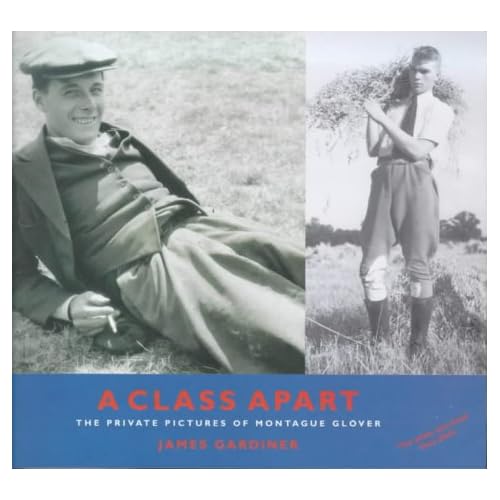
A Class Apart: Private Pictures of Montague Glover (Paperback)

Book cover for A Class Apart


Pub: Serpent’s Tail


ISBN: 1852427280


This book is a wonderful pictorial history of a period in Britain when though the laws were very harsh in relation to homosexuality, there seemed to be a freedom which we currently don’t have.

James Gardiner has successfully put together photographSeand letters taken and written by Montague Glover spanning a period of 32 years. A period in which people seemed to accept individualSeand their foibles, when time seemed to have stopped, and also when life seemed simpler.

Montague Glover waSean architect, and army officer with a distinguished service record from the First World War, and also a homosexual. The photographs in the book illustrate the three great obsessions of his life:

London’s rough trade

Men in uniform

And

Ralph Hall, his “loverMontague Glover's lover“

Highly recommended.

Filed Under: Book Reviews

Support for the older gays

13/12/2008 By David McFarlane Leave a Comment

I came across the following article at ‘The Derby Gripe‘ – the title iSeanything but supportive, yet the article is short, to the point and is at least non discriminatory. I wonder who wrote the article’s title?
HOMOSEXUALITY WILL BECOME COMPULSORY
Homosexual pensioners in Wales are to be provided with gay-only retirement homes. The Stonewall study found that gay OAPs need to be provided with separate sheltered accommodation and counselling to cope with being old and homosexual. Conservative Assembly member Mark Isherwood said, “We know of older people who are being forgotten by the system just because they are homosexual. Older people from the gay community have no family to support them in old age and often live in isolation.”

Filed Under: Anti-Bullying & Homophobia, History

FORTY YEARS ON

13/12/2008 By David McFarlane Leave a Comment

Channel 4 commemorated (rather than celebrated) the enactment of the Sexual Offences Act of 1967) which only applied in Britain‘ (meaning England and Wales). The latter entity was destined to be absorbed so thoroughly that the law of Britain is called English Law’. Thomas Cromwell’s law of 1533 That the Law of Wales be the same as the Law of This Realm ( this Realm’ being England) wound up the customary law of the (Anglo-Norman) Welsh Marches, and the law code of Llewellyn the Great. Scotland and Northern Ireland had to wait until the early 1980s, and other bits of Her Majesty’s Realm until well into the 1990s before they got parity with England‘.

40 Years On ran (mostly) from Saturday to Saturday 21 to 26 July (2007) first out was A Very British Sex Scandal, about the Peter Wildeblood Peter Wildebloodaffair’ of 1954. In many ways this was the full stop at the end of a quite hysterical witch hunt’ (the clicheis very apt, for once) in the early fifties (mostly in England, and mostly in London I am more than prepared to be corrected on this matter). The Wildeblood affair was every New of the Screws-type sub-editor’s wet-dream. Wildeblood (Martin Hutson) was a very successful journalist on the Daily Mail (always good for a bitching from the less successful in the profession), several aristos were involved and a couple of National Servicemen. (The latter description means men conscripted into the Armed Forces for two years. National Service, for most (male) citizens ran from the eighteenth to the twentieth birthdays, so the two lads Edward McNally (Sam Heughan) and Johnny Reynolds (Karl Davies) would have been under age’ until quite recently.

Wildeblood meets McNally, like a fair number of other pick-ups’ at or about a railway station public convenience’ (little did the stuffed shirts naming these facilities know ”). They were standard meeting places prior to the down-grading of the railways, coach stations took over somewhat in America, but not over here’. They hit it off socially, in so far as that was possible in the early 1950s in England (McNally is Scottish), and he is the one who pushes for something more than a one-night stand. We see, in a clunky kind of way, Wildeblood’s journalistic career in the ascendant. He is appointed Royal correspondent, (a rather important job in those days, especially as he has to cover the Coronation), and then Foreign correspondent. The latter entails his moving abroad, thus the country party with Lord Montagu, in a house by the sea shore.

News of this gets to the police and McNally and Reynolds are arrested by the Military Police, an unpleasant, violent, experience for them. The civilian police offer them the usual inducements, if they tell on the others they will get off with a lighter sentence. Young Reynolds falls for it, but McNally’s attitude to Wildeblood is more honourable and is motivated by more than the prospect of sex and presents. (Reynolds tagged along to the house party as a mate, possibly a fuck-buddy’, of McNally’s, while doing National Service.) While it is clear that the police are after Wildeblood and Montagu, as the older men’ from superior’ social positions who corrupted the two young men they are treated, relatively speaking, with kid gloves the young soldiers just get thumped. (Their sentences at the end of the trial were just as long as the other three, middle and upper’ class defendants.)

This is a very good drama-doc’, though I did feel that the police and lawyers verged on caricature, but it was more than half a century ago in England. (The people of Scotland, Wales and Ireland (the geographical expression) have been less inclined to look up to the quality’, to use the sardonic Irish expression. This is a reason why Tony Hancock’s humour, hilarious in the 1950s, and early 60s, is either quaint or inexplicable to anyone born since 1960.) Lord Hailsham is seen giving evidence’ to the Wolfenden Committee to the effect that queers recruit’ and that it was the mixing of men from all sorts of backgrounds during the War’ (presumably WW2) that has caused to problem to multiply. Maybe people were too busy Revolting after the Great War of 1914- 18 for their sexual proclivities to be noticeable.

The climax of this drama is when in answer to a direct question Wildeblood owns up, in a Crown Court, to being homosexual. He got a longish prison sentence, and when he came out of prison he campaigned against the law. He was also employed by the BBC as, apparently a very good, and creative, television Producer. McNally and Reynolds simply disappear. But a very good drama could be made out of their lives. McNally iSean Irish name, as is Reynolds (Mac Raghnail), they were Scottish, and probably RC, which three attributes apart from being working class nobodies would have been enough to unperson’ them in 1954. In fact, they would have been barely personned’. McNally and Reynolds might have first met as altar servers in the RC chapel in whatever cold, damp, dump of a garrison they were serving in.

This sort of class blindness iSean example of how people behaved in the 1950s. There were a number of similar situations in Paul Nicholls in Clapham Junction, (set in 2007), to be discussed after the actual drama. Kevin Elyot has been described as writing an anti-Gay’ play, but I wonder if he was writing any sort of Gay’ play. It is heavily populated, almost Jacobean in its large cast, including such persons as, Tough Man’, Man in Toilet 2′ and Man on Bench’, despite which it is not a standard realist’ telly-script. I feel this is what annoyed a great many people. We are so used to realism from Anglo-Saxon’ film makers that the utter unreality of what they make escapes us. How many times has Deirdre Barlow’ of Coronation Street been married? The central figure in Clapham Junction is (according to the press) Terry’, (Paul Nicholls). The latter appears not to have given any interviews about it. Most of what I read was nonsense, one magazine had Terry beating up the Alfie character (David Leon), which is inaccurate.

Terry, who hasn’t surname, is a conundrum, he may be a man struggling with his sexuality’. He may be a man who enjoys inflicting violence on others, and has discovered a sub-culture individual members of which are still (even in cosmopolitan London) comparatively fatalistic about having physical violence visited on them. This is, I believe, creative ambiguity, and Paul Nicholls has understood that it is really impossible to fathom whether or not he is sexually turned on by Gay male sex, or just despises potential victims. It is interesting that he surely realises that the man who inflicts violence on him at one point, is going to do so. This sort of thing is not psychologically improbable it is probably having a background in small scenes’ the current[ish] tiny Belfast one and the sub-atomic particle in Lancaster in the early Seventies, which makes me think along such lines. Most of those complaining about this play resided in London, (some in Clapham!), which has a huge scene’ (which is not the same as a society’ or community’- but overlaps them). Gay Londoners can easily avoid other Gay people whose sexual behaviour they disapprove of, or just find personally distasteful. It can be done semi-consciously, as nearly all the barSeand other places of entertainment, advertise what exactly is their speciality, either globally’ or on particular nights. Some nights are for flabby old honkies in underwear, others are for beautiful young athletic Afro-Caribbean men ” you pay’s your money ”

Terry encounters Alfie in a disco, complete with a pole dancer ignored by the clientele (just like in straight bars). Alfie (the lovely David Leon, whom any red-blooded poof would love to have as a Close Personal Friend) is not interested. Largely because he has had a heavy-duty encounter with a participant in a Civil Partnership celebration. It was one half of the Civil Partnership, a problematical situation for a skint waiter, dealing with the attentions of a very wealthy man. The latter could, and probably would, have complained to Alfie’s bosses if he had not been amenable to his attentions, jobs are not that easy to find. After evading Terry, Alfie chooses to walk round Clapham Common, and enters a public toilet. He encounters two heavies, who make it clear they think he’s a queer. He legs it, but is hunted down and beaten so badly that he does not last the night. Terry happens along and steals a ring on his finger, which he’d remarked on in the disco, but makes no effort to help or comfort Alfie, some passers by find him and send for an ambulance.

This is where the slightly redundant dinner party, in one of the big houses surrounding the Common touches on the main theme of the drama. One guest is a closeted lawyer who was in the same cottage an hour or two before Alfie’s killing, being fucked by a large brute of a man. (Incidentally his membrum virile, is like Terry’s (seen earlier in the proceedings) rather large. One did wonder about stunt doubles’. Far be it from me to give cognisance to the outrageous rumour labelled the Irish curse’, but they seemed bigger than they had a right to be). The lawyer is quietly irritated by a writer with whom he had had sex some time before. They are played by James Wilby and Rupert Graves respectively, who played the eponymous Maurice Hall in the 1987 film and Alec Scudder, his game keeper lover. The two women at the party are slightly anti-Gay, because of the behaviour’ on the Common. The third man is a sexual liberal, demonstrated later in the play, where he is prepared to accept a situation, which in all honesty would have most parents running to the police. (This iSean encounter between their early-teen son Theo and the twentysomething Tim).

The ring which Terry stole from Alfie is something of a leitmotif in the latter part of the drama. When Terry is taken to the A&E in a nearby hospital after he in turn is bashed, the person who deals with him is the other half of the Civil Partnership, who wonders how Terry acquired the gift he gave to his partner’. They had had an argument about what had happened to it. The drama stops at this bitter moment. It is not remotely up-beat, and the situation implies more drama and bitterness. Possibly this is what troubled many viewers, which is, again probably a consequence of the homogenisation of television drama. We are used to fifty minutes of bland drama interrupted by advertisements, which are often more creative than the actual drama which end in all the loose ends being tidied up, in a little apotheosis. A drama with raw edgeSeand unresolved sexual issues, like p?”dophilia, where the younger party Theo’ (Luke Treadaway) forces the issue with the sex criminal’ (whose flat has been petrol bombed) Tim’ (Joseph Mawle), is disconcerting. Presumably it is meant to be.

Another element linking the various disparate elements in the play is the case of young Danny’ (Jared Thomas), who is a violinist. He is also the only child of a single mother, and she has invested extremely high hopes in him. He is a talented musician, a violinist, and his playing of a Bach Gigue is heard over some quite shocking parts of the drama, (somewhat in the manner of the film Clockwork Orange). A number of people, described in the cast list as Black Youth’ there are a number of them hang around the house of his music teacher. I found this element in the drama difficult to relate to, I have a feeling that the music mad Black sub-culture of south London would be inclined to cherish a talented Black musician, no matter where his talents lay. This has been roundly sneered at by other London dwellers. But the implications of Danny’s stance when not playing, and when having to pass the Black Youths’ are that he is afraid of them. We see his violin smashed to pieces in a long underground passage, near to what appears to be a public toilet; Danny is nowhere to be seen. This may be based on a real incident in Belfast some year’s ago. A fourteen year old walking through Botanic Gardens, just across the road from his school, Methodist College ( integrated’ for more than a century) was hospitalised by some youths from Annadale flats. They decided that he and his mate were queers, and they paid special attention to the boy’s hands. He will never play the guitar or any other instrument again. He was a brilliant musician looking forward to great career as a classical’ guitarist. The difference between south London and south Belfast is that the latter has something of an excuse for this sort of nihilism. It was recovering from a thirty year civil war. South London‘s main problem is that it needs the Tube extended and connected.

As noted above, I fund the treatment of (working class) Black’ youth in Clapham Junction somewhat disturbing. The treatment of white working class people wasn’t exactly heartening either. Terry works as (apparently) for the Council’ or binman’ if you like my former avocation. The bashers’ are all plebes, as is the p?”dophile [?] Tim tormented by his neighbours in the Council Estate opposite the bourgeois semi owned by Theo’s parents. Alfie is a mere waiter, and is something of a cipher he is pictured as, in essence, too stupid to protect himself. Two of the three prominent women in the play are middle class homophobes (possibly a rather subtle touch. Don Milligan, author of The Politics of Homosexuality [Pluto] wrote to the Guardian a decade ago, to point out that he had never been attacked by working class people. His two encounters with physical violence were in nice, middle class environs, in one case a university campus, and in another at the opening of an art exhibition[!].)

The Stonewall, Gay Times, New Labour nexus has been pushing this line for over a decade now, that working class people are (almost inherently) homophobic. This iSean extension of the attitude which led to the destruction of Gay News, and the setting up of the pseudo-libertarian Gay Reporter, which was a commercial failure. The reading Gay public did not especially like misogyny, metropolitan self-obsession, and whinging about politics’ (it was too early for political correctness’). People wanted sex and politics just as well, too Section 28 was in the future. The Gay community of communities mirrors society at large, most of us work for a living, and in the nature of things are found in every political formation (clearly we are, largely, in political formations attempting to extend the rights of the citizen).

***

Other aspects of the 40 Years On were a mixed bag, one was a studio debate 40 Years Out chaired by David Aaronovitch with a what am I doing here’ look in his eyes. This would have worked much better in an After Dark format. After Dark was screened by C4 in the late 1980Seand early ’90s, it was a spectacularly simple format. A group of people were sat around in a circle of comfortable seats, with some nibbles’ and a fair amount of drink’, then talked until they, became incomprehensible, walked out, or fell asleep. One programme lasted until seven the next morning, having started about 10.30 or 11 p). In 40 Years Out we got a different collection of talking heads every ten minutes, it was choppy and not very enlightening. The only person talking sense was the rapper QBoy, who presented a C4 show called Out in Class aimed at school students earlier in the year. He was fairly sanguine about the violence and against Gay school students, and their alienation from there peers being countered, but it was going to be a long haul. Mark Simpson (author of Anti-Gay) seemed to be objecting to Clapham Junction, he muttered about not wanting pro-Gay agitprop’ same as a number of bloggers what’s wrong with Gay agitprop? He said something sensible about homophobia’ to the effect that people ought to be allowed to express distaste for queer folk. The problem with such an attitude (I tend to agree with it), is that such matters cut both ways. Would we shirt-lifters be allowed to jeer publicly at the notion of Richard Littlejohn or Kelvin Mackenzie, having sweaty and un?”sthetic heterosex? The vocabulary of anti-Gay abuse is rather large. Simpson said that he now lives in Leeds, maybe some of his (rather smugly metropolitan he coined metrosexual’) attitudes laid out in Anti-Gay, are changing.

I didn’t really understand what Mathew Parris (A Castle in Spain, among many other publications) was talking about I assume he was edited to tatters. Simon Fanshawe (The Done Thing) was also a bit odd he wants us to behave ourselves but do the others’ behave in the done’ way. If he wants a return to elements of the sort of social co-operation that existed as late as the 1970s, one would agree with him. Most of our fellow-citizens (hetero-, homo-, and anarcho-sexual) want discipline and orderliness for other people. Young people and queers being at the top of the list, as for Gay youth, they should be neither seen nor heard, in fact they probably should not exist. Brian Paddick, the queer ex-cop, partly helped into early retirement by creeps like Littlejohn, might have had something interesting to say, but there was no time to say it. Other people involved were the comedian Paul Sinha, a doctor, and a Gay Asian, (and a Catholic? Sinha’ has a Goan ring to it) and Julie Bindel (co-editor, among other things, of The Map of my Life, The Story of Emma Humphreys) who was a pleasing presence, but they like Paddick, did not really get time to say anything of consequence

Queer As Old Folk (July, 26) Queer As Old Folkwas interesting, and I thought heartening, with two old dears having a Civil Partnership, after forty five years of living with each other. There was also a fascinating coupling of a man in his sixties with a male stripper less than half his age. There was, admittedly, a lot of attention paid to the chap in his late forties (how old is Old’?) who was living the adolescence he did not experience. A number of correspondents of C4’s various internet forums (fora?) were irked by this, but it has to be said people do that sort of thing. They did not want pro-Gay agitprop, but then some bloke turns up not behaving like St Francis of Assisi (after he’d changed) and there is a chorus of indignation. Was it the sex they objected to, or that fact that some oldster was getting it?

There was also some griping about stereotypes’ effeminate old souls being, largely, the target. But as Jeff Dudgeon (Roger Casement: The Black Diaries With a Study of His Background and Irish Political Life) put it there are definite, and definable types in Gay and in general society live with it, this was in regard to the film The Boys in the Band (1970). This was also part of the response to How Gay Sex Changed the World, (July, 24) which consisted to talking heads’ mostly the usual metropolitan suspects. It was a gross misnomer Gay sexuality and the acceptance thereof, may have changed the Anglo-Saxon’ world, or even just England. It was, until quite recently, the conviction of the metropolitan bien pensant that persons living outside of England (they meant inner London) were living in a sexual Ice Age. Ireland waSean especial object of opprobrium, David Norris was (credibly) canvassed as a candidate in the last Presidential election in the Republic, and earlier this year a Paisleyite’, Northern Ireland Assembly Minister, confirmed a grant to Belfast LGBT Pride.

Times change, mainly because we trivial Gays made demands on the State and on society, the world’ outside of the US and UK did not need changing, especially those parts of the world in which Napoleon’s Criminal Code was the legal norm. Latin America used to be portrayed as steeped in machismo, but millions marched in an LGBT Pride demonstration in S o Paulo, Brazil. Millions more walked in Seville, Spain. These things did not happen because some Brit queers were able to have a gay old time in Soho discos in the late SeventieSeand pre-AIDS Eighties. It was GaySeand pro-Gays’ in Brazil and the rest of Latin America, and in Spain and the rest of southern Europe, who brought about such situations.

The films shown during the week (some shown on Film 4) are to be commented on in a different article. Here are the titles, Prick Up Your Ears, Un chant d’amour, Victim, Maurice, and on ITV 4, Midnight Express. Most of these films are worthwhile, though Maurice was described by one fan on the as a great film based on a great book’. The book is second-rate, especially in the context of EM Forster’s other works. It was Lady Chatterley’s Lover for Cambridge sensitives’ who loved a bit of rough and the desk drawer. Forster’s musing on its publishability where based on its ?”sthetic worth, not on his alleged closetry. Midnight Express and Prick Up Your Ears, are on the high end of competent, and Jean Genet’s Un chant d’amour is in its own way an erotic masterpiece. A complaint about Midnight Express was posted: it made prison sex a pop-culture joke. Prison sex was being joked about long before the film was made in a nervous cum panicky cum fascinated sort of way. Presumably one had to keep specialised company to appreciate such matters. There were some very odd comments on Un chant d’amour, by the above person, who ” can’t believe that all four reviews ” are preoccupied by the homosexual aspect of the film. That’s because it is all homosexual aspect’, m chroi.


[Sean McGouran]

Filed Under: History

St Patrick's Day – 2008

13/12/2008 By David McFarlane Leave a Comment

NIGRA (the Northern Ireland Gay Rights Association) has picketed Irish Government, or semi-state bodies (Aer Lingus, for example) in Belfast (and once in Dublin) for over a decade now, in solidarity with the ILGO (Irish Lesbian and Gay Organization) of New York.
ILGO have, since 1991, been barred from the famous New York St. Patrick’s Day Parade, by the organisers, the Ancient Order of Hibernians, on the spurious grounds that the Parade is a Roman Catholic devotional demonstration.
The argument is absurd, as can be demonstrated by the most cursory view of any Parade of the twentieth, or of this, century. The Ancient Order of Hibernians while a fraternity of Catholic Irish-Americans, has never been a strictly devotional group. It was suspect in the eyes of Church authorities for the first century of its existence.
It was involved in American Labour politics from the mid-19th century. It sponsored a body of armed men, the Hibernian Rifles, which took part in the 1916 Easter Rising in Dublin. It had connections with the Congress Party of India and with other anti colonialist groups.
Banning the ILGO is homophobic bigotry on the part of a powerful body with a genuinely radical history.
There have been three pickets in London since 2005, on or about St Patrick’s Day. The Irish Embassy’s Passport office in Brompton Road (opposite Harrods famous store) is the best ‘pitch’.
I am asking interested people to contact me about the picket in 2008 – the larger the picket the greater our impact -and the quicker this situation will be resolved in ILGO’s favour.
Pickets could also be mounted at the Irish Consulates in Cardiff (Wales) and Edinburgh (Scotland) – and. possibly other large urban areas. Most cities in Great Britain (England, Scotland and Wales) have some sort of Irish Government or semi state body’s office.
If you are interested contact:
Sean McGouran
127 Tollington Way
London
N76RD
Mob: 07952 223 986
e-mail: seanmcgouran776@hotmail.com

Filed Under: History

  • « Previous Page
  • 1
  • …
  • 34
  • 35
  • 36
  • 37
  • 38
  • …
  • 41
  • Next Page »

Categories

Copyright ACOMSDave.com © 2026