
PETER TATCHELL says biology is not destiny. One-sided genetic
explanations of homosexuality are crude, simplistic and doomed to
failure.
http://www.spiked-online.com/index.php?/site/article/5375/
A few years ago, Dr James Watson, the Noble Prize winner who
co-discovered DNA, reopened the controversy over the so-called gay
gene when he defended a woman’s right to abortion. He was quoted in
The Sunday Telegraph as saying: “If you could find the gene which
determines sexuality, and a woman decides she doesn’t want a
homosexual child, well, let her (abort the foetus)”.
Much of the reaction to Dr Watson’s statement focused on its
homophobic versus freedom of choice implications. Largely overlooked
was the fact that such an esteemed scientist was giving credibility to
the flawed theories which claim a genetic causation of homosexuality.
These theories have been given a recent boost by research suggesting
differences in the brain structures of gay and straight people.
According to gay gene theory, genetic factors are responsible for
sexual orientation, with our genetic inheritance programming us to
desire one sex rather than the other. This is a very simple,
deterministic thesis: A causes B.
I don’t disagree that genes (and hormonal exposure in the womb)
influence sexual orientation. The scientific evidence for these
biological influences is presented in the book, Born Gay (2005),
written by Glenn Wilson of the Institute of Psychiatry in London and
Qazi Rahman, a lecturer in psychobiology at the University of East
London.
But contrary to what the authors seem to suggest, an influence is not
the same as a cause. GeneSeand hormones may predispose a person to one
sexuality rather than another. But that’s all. Predisposition and
determination are two different things.
There is a major problem with gay gene theory, and with all theories
that posit the biological programming of sexual orientation. If
heterosexuality and homosexuality are, indeed, genetically
predetermined (and therefore mutually exclusive and unchangeable), how
do we explain bisexuality or people who, suddenly in mid-life, switch
from heterosexuality to homosexuality (or vice versa)? We can’t.
The reality is that queer and straight desires are far more ambiguous,
blurred and overlapping than any theory of genetic causality can
allow.
After studying the sexual experiences of thousands of men, Dr Alfred
Kinsey presented evidence, in Sexual Behaviour In The Human Male
(1948), that “many males combine in their single histories, and very
often in exactly the same period of time, or even simultaneously in
the same moment, reactions to both heterosexual and homosexual
stimuli”.
Some years later, the Kinsey researchers famously reported the case of
a happily married young woman who, ten years into her marriage,
unexpectedly fell in love with a female friend. Divorcing her husband,
she set up house with this woman. Many years later, despite a
fulfilling on-going lesbian relationship, she had an equally
satisfying affair with a man. Examples of sexual flexibility, like
that of this woman, don’t square with genetic theories of rigid erotic
predestination.
One of the main original proponents of gay gene theory, Dr Dean Hamer,
now concedes that it is unlikely that something as complex as human
sexuality can be explained solely in terms of genetic inheritance. He
seems to accept that while genetic factors may establish a
predisposition towards homosexuality a predisposition is not the same
as a causation.
Many studies suggest social factors are also important influences in
the formation of sexual orientation. These include the relationship
between a child and its parents, formative childhood experiences,
family expectations, cultural moreSeand peer pressure.
By about the age of five or six, a combination of biological and
social influences seem to lay the basis of an individual’s sexual
orientation. Because our sexuality is fixed at such an early age, many
lesbianSeand gay men feel they have been homosexual all their lives
and therefore mistakenly conclude that it must be genetic and that
they were born queer.
They also see the gay gene explanation as a useful defence against the
arguments of the religious right, which dismisses same-sex
relationships as a lifestyle choice. But no one sits down one day and
chooses to be gay (or straight). Sexual orientation is not a choice
like choosing which biscuits to buy in a supermarket. We don’t have
free will concerning the determination our sexual orientation. Our
only free will is whether we accept or repress our true inner sexual
and emotional desires.
The relative influence of biological versus social factors with regard
to sexual orientation is still uncertain. What is, however, certain is
that if gayness was primarily explainable in genetic terms we would
expect it to appear in the same proportions, and in similar forms, in
all cultureSeand all epochs. As the anthropologists Clellan Ford and
Frank Beach demonstrated in Patterns Of Sexual Behaviour (1965), far
from being cross-culturally uniform and stable, both the incidence and
expressions of same-sex desire vary vastly between different
societies.
They found, for example, that young men in some tribes (the Aranda of
Australia, Siwan of Egypt, Batak of Sumatra, Anga of Melanesia and
others) had relationships with boys or older male warriors, usually
lasting several years, often as part of manhood initiation rituals.
Eventually ceasing homosexual contact, they subsequently assumed
sexual desires for women.
If sexual orientation was genetically prefixed at conception, as the
proponents of the gay gene claim, these young men would never have
been able to switch between heterosexual and homosexual relations with
such apparent ease.
Likewise, a glance at history reveals huge disparities between
configurations of homosexuality in different eras down the ages.
Same-sex behaviour in Ancient Greece was very different, in both its
prevalence and particular manifestations, from homosexuality in
Confucian China, Renaissance Italy, Meiji Japan, Tudor England and
late twentieth century USA. Moral values, social ideologieSeand
cultural expectations – together with family patternSeand parent-child
interaction – seem the only credible explanation for these massive
historical divergences.
Despite obvious theoretical and empirical weaknesses, the claims that
certain genes cause homosexuality have been seized upon and vigorously
promoted by many in the lesbian and gay rights movement (especially in
the US).
The haste with which these unproven, questionable theories have been
embraced suggests a terrible lack of self-confidence and a rather sad,
desperate need to justify queer desire. It’s almost as if those
pushing these theories believe we don’t deserve human rights unless we
can prove that we are born gay and that our homosexuality is beyond
our control: ‘We can’t help being fagSeand dykes, so please don’t
treat us badly’. This seems to be the pleading, defensive sub-text of
much of the pro-gay gene thesis.
Surely we merit human rights because we are human beings? The cause of
our homosexuality is irrelevant to our quest for justice. We are
entitled to dignity and respect, regardless of whether we are born
queer or made queer, and irrespective of whether our homosexuality is
something beyond our control or something freely chosen.
The corollary of the ‘born gay’ idea is the suggestion that no one can
be ‘made gay’. This defensive argument was used by some gay leaders
during the campaigns against Section 28, which banned the “promotion”
of homosexuality by local authorities, and again during the lobbying
of parliament for the equalisation of the age of consent.
Supporters of Section 28 and opponents of an equal age of consent
justified their stance with the claim that people need to be protected
against ‘pressure’ and ‘seduction’ into the homosexual lifestyle.
Some gay spokespeople responded by arguing that it’s impossible to
‘make’ someone gay, and that a same-sex experience at an early age
cannot ‘persuade’ a heterosexual person to become homosexual.
At one level, they are right. Sexual orientation appears to become
fixed in the first few years of life. For most of us, it is impossible
to subsequently change our sexual orientation.
However, what definitely can change as people grow older is their
ability to accept and express formerly repressed queer desires. A
person who is ostensibly heterosexual might, in their mid-30s, become
aware of a previously unrecognised same-sex attraction that had been
dormant and unconscious since childhood. Society’s positive
affirmation of homosexuality might help such a person discover and
explore those latent, hidden, suppressed feelings.
The homophobes are thus, paradoxically, closer to the truth than many
gay activists. Removing the social opprobrium and penalties from queer
relationships, and celebrating gay love and lust, would allow more
people to come to terms with presently inhibited homoerotic desires.
In this sense, it is perfectly feasible to ‘promote’ lesbian and gay
sexuality and ‘make’ someone queer. Individuals who have a homosexual
component in their character, but are inhibited by repression or
guilt, definitely can be encouraged to acknowledge their same-sex
attraction and act upon it.
Were future generations to grow up in a gay-positive, homo-friendly
culture, it’s likely that many more people would have same-sex
relationships, if not for all of their lives at least for significant
periods. With this boom in queer sex, the social basis of homophobia
would be radically undermined.
In this state of greater sexual freedom, where homosexuality becomes
commonplace and ceases to be disparaged or victimised, gayness would
no longer have to be defended and affirmed. Gay identity (and its
straight counterpart) would thus, at last, become redundant. Hurrah!
Jeff Dudgeon
Blasts From The Past
The Myth of Homophobia Revolutionary Gay Men’s Caucus
Kelson Publications 1.50
A radical Marxist analysis of the Gay movement and its development. This publication by the RGMC identifies the real reason for our oppression. Our campaigns have always been regarded as a struggle against our various enemies, which have been defined as ignorance, the law, the family, even ourselves, and these factors have been consolidated into something called homophobia’. The word homophobia itself, as the writer rightly points out, seems to suggest a hang-up in the minds of those responsible for legislation and those who have command of the state, nothing more that a misguided attitude, i. e. that homophobia’ is simply an optional’ form of oppression to racism sexism, etc.
Many people feel content to attack the special characteristics of the capitalist system in the hope that more liberated life-styles can be achieved. This pamphlet argues that we can never harmonise radical ideas with the capitalist system, and our presumption that homophobia’ is the root of our oppression, has blinded us from understanding why we are oppressed at all. Fighting for integration within a capitalist society it is argued, has achieved nothing, as there has been an increase in convictions of Gay men since 1967 when the law against us was reformed! Job discrimination still takes place, and the struggle to protect Gay rights at work has achieved little, as yet.
The main reason why a gay scene’ developed in our society is that the free labour market has permitted a sizeable minority of Gay people to congregate in capital citieSeand large towns. We therefore have formed communities which do not exist in many other countries, as their economies have developed differently.
During the 18th century, huge increases in wealth derived from exploitation of the agricultural system by individual capitalists led to the growth of wage-labour and industrial capitalism. Same-sex relationships were most common among those who were economically independent. To be useful to the capitalist system, workers were encouraged and socially pressurised into, family relationships. Unproductive’ relationships which did not seem in the interest of the economic system were frowned upon by the state.
The Caucus conclude that due to the nature of the development of our society, reformism’ cannot possibly make us more accepted within the system. What is needed are revolutionary ideas which challenge the economic order. The struggle of the working class is inseparable from that of Gay people. The Gay movement’ has acted against the interests of working people by integrating with the Gay bourgeoisie and becoming their clients. The only positive movement is the movement for working class unity against capitalist interests everywhere, and the Stalinist leadership in
Tim Clarke
eeeee
ANOTHER VIEW:
In this pamphlet, the RGMC have tried to challenge mainstream Gay politics by placing it in context with the rise of capitalist industrial states. Historically, there is evidence to suggest that homosexuality was largely ignored in rural economies which dominated before the industrial revolution. This was because for a working class individual it was virtually impossible to survive outside the family unit, and so homosexuality never became a threat to that society.
With the industrial revolution came a change in the labour structure, with working class people moving from working for survival to a system of wage labour where they found they could more than just survive. Thus, rural societies declined as their populations moved to the new industrial centres.
It is in the changes of the social structures of this period that the roots of much of our oppression is to be found. Within these changing structures individuals came to an awareness that sexuality was no longer necessarily tied to a need to procreate, thus weakening the family’s hold on each successive generation. But, with the change to an industrially-based economy, the basic structure of the working class family had become vital to the ruling classes, whose new-found profits depended on the continued reproduction of a socially-stable labour force. Thus, such aberrations’ as homosexuality ceased to be merely perversions punished, but became a direct threat to be condemned legally, morally and socially.
Since the industrial revolution, the working classes have become generally better educated and increasingly self-aware, enabling oppressed people to come to re-define themselves in relation to society; witness the Black and Women’s movements, and now the post-Stonewall Gay movement.
After the Stonewall riots, Gays for the first time directly confronted the Trade Union and Labour movements of Europe, including the UK, with the facts of our oppression only to be met with shock and bewilderment. This reinforced the pre-Stonewall line taken by Gay Rights campaigners that our oppression stems from ignorance and that by law-reform and education of the public we would be defeating oppression and prejudice.
It is here the RGMC differ from mainstream Gay politics, in that they argue that law reform and public education are only treatments for the symptoms of our oppression rather than cures for the disease itself, which they see a capitalism, and that while capitalism surviveSeany gains that we make can also be reversed, as witness the Holocaust in Nazi Germany.
To conclude, it must be said that whilst the points raised by RGMC are all valid, the alternative they offer seems a high price to pay for an uncertain result, in that it would require us to submerge our new-found sense of identity virtually completely, to the needs to unite with other oppressed groups against present day society. But they do not state what form society would take after the change, or how a new social revolution would be brought about.
Tom McAlister
Gay Star (No. 9, January 1983)
LInks to sites about Homophobia on the Web:
- Menstuff?« has compiled information, bookSeand resources on the issue of homophobia
- Teaching about Homophobia in Schools
- Homophobia and masculinities among young men (Lessons in becoming a straight man)
Hate Capital of USA
The DVD of 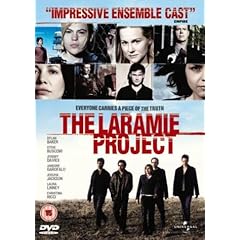 The Laramie Project could be accused of going straight for the tear ducts but it also has a substantial, and in many ways, subtle argument, which is sustained to the end. It’s a fairly simple argument, in essence; Thou shalt not kill’. Not even if you are the State of
The Project was the gathering by members of the Tectonic Theatre group of viva voce witness from the people of the town of
Matthew Shepard  was robbed, ferociously assaulted, and left tied to a wooden fence in the open
Some attempted to do so, one man chaseSean interviewer off his porch, a woman points out that a veteran State Trooper ( one of our own) had been killed, in an accident, on the same night as Matthew, she also implied that he was flaunting’ himself and was a bar fly’. I assume that we are supposed to disapprove of this, and admittedly, it is just a bit cold-blooded. People who lived in
Many interviewees stated that they were shocked that the killers came from
The latter, or their relations, attempted to float a vague class’ excuse Matthew Shepard was evidently well-off (his mother was a university teacher, and his father worked in oil’). He (Matthew) had travelled in
The details of Matthew’s injuries shocked everyone involved in the investigation of his killing, including the policewoman who was called to help when a Good Samaritan found him. (She is brilliantly played by Amy Madigan, Matthew was HIV+ and she got substantial quantities of his blood on her hands. She had cut them in several places when trying to save Matthew an upbeat moment at the end of the film is her barbecue celebrating her HIV negative status). Matthew was unrecognisable, covered in blood, and tied to the fence so tightly that it took and experienced police operative quite a long time to cut the twine used to tie him up. These are classic Portsmouth Defence’ signs designed to destroy the victim’s humanity it did not succeed in this case. And has, thankfully, become defunct as a ploy in law courts.
Moises Kaufman (played by Nestor Carbonell) directed the stage original of this drama. A number of big names’ play very small parts, like Joshua Jackson and Summer Phoenix, and Peter Fonda and Steve Buscemi, as medical personnel, and Francis Sternhagen (a famous Broadway, or more likely, off-Broadway performer) who plays the policewoman’s mother. Of the Tectonic Theatre team, James Murtaugh had the less than pleasant task of playing the Reverend’ Fred Phelps, who inevitably made an exhibition of himself, (and his children) at Matthew’s funeral. Michael Emerson played the Phelps-like Reverend’, and Tom Bower the sympathetic Catholic priest Fr. Roger Schmit.
I suspect that even the most detached persons, will feel strong emotions while viewing this movie. They will consist of what the ancient Greeks thought was necessary for catharsis terror and pity. All Gay women and men will also feel deep anger that such things can happen at all, much less at this point in our liberation. It is rather cold comfort, but clearly a great many non-Gay people feel the same way.
Se n McGouran ?
42 days and who is counting!
”A strong commitment to civil liberties, once considered a defining British characteristic, has weakened dramatically over the past 20 years, the survey found ”
(Telegraph.co.uk 1:44AM GMT 24/01/2007)
As someone who was born into a service family, and who then went onto to serve in the Forces, with time spent in Northern Ireland, Germany and Belize I feel that the current debate and result iSean insult to the British population.
The Government and its agents managed, albeit over a twenty year period, to contain and finally achieve a workable result for all of the people of Northern Ireland without resulting in a 42-day detainment. Indeed, all parties did agree that detainment without due process is counterproductive to the well being of the British people.
Why then have we now resorted to a further dilution of our civil liberties’ with the amendment to Habeas Corpus?
”The Habeas Corpus Act passed by Parliament in 1679 guaranteed that a person detained by the authorities would have to be brought before a court of law so that the legality of the detention may be examined. In times of social unrest, Parliament had the power to suspend Habeas Corpus. William Pitt did this in May 1793 during the war with France. Parliamentary reformers such as Thomas Hardy and John Thelwall were imprisoned as a result of this action ”
(http://www.spartacus.schoolnet.co.uk/PRgagging.htm)
Loss of Liberty and Rights since 1997 a full list of these losses are contained on the Open Democracy Network and further information is also on the Liberty website.
This change in the law cannot be seen in isolation. Various governments have been eroding our rights and because it has been slow, and in a lot of cases, the changes have been slid through on the back of other innocuous legislation most people have not noticed what has been happening.
A lot of people will say that if you are doing nothing wrong then it won’t matter’, however a clear identification of the misuse of legislation was highlighted in May this year when it came to light that local councils through middle managers are able to authorise surveillance of people suspected of petty offences using powers designed to prevent crime and terrorism.
This to my mind is a clear misuse of the legislation involved, and signals that the government (both central and local) have no moral compass and will use any means to achieve their ends.
I regret the fact we as a people have lost sight of our rights and allowed ourselves to be blinded by very poor rhetoric and people prey on fears, which may be slightly justified but not to the extent that we are being told, as indicated by the Head of MI5, Jonathan Evans.
Slivio – A voice from the gods!
I recently came across a new up & coming disco singer because my friend Womble had been raving about him for months. so i checked out his Myspace pages. Given the right promotion he has a chance to make it big. possessing an amazing voice and a stylish look please let me introduce Slivio.
1. Hello Slivio 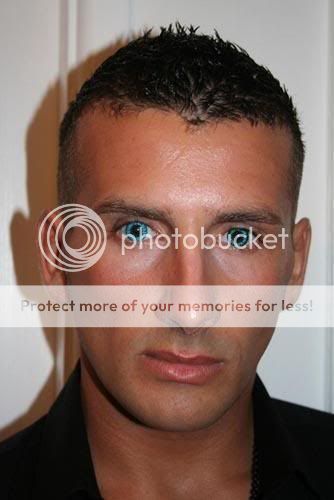 , please give us some info about yourself
I am a multi talented singer, songwriter and producer who is looking to bring back melody to music. I am more than a one trick pony and I am determined to reach my goals. I am
2. How did you discover that you could belt out a tune ?
I discovered that I could belt out a tune when I used to go to family weddings at the age of 5 or 6. I had a knack of getting free ice cream for singing. I usually sang songs such as “I am Just Wild About Harry.” They must have known I was screaming at a very young age…
3. Your music has a classic disco sound with an up to date twist, who are your musical influences? And also your favourite artists?
Without doubt I totally adored Sylvester which shows in my style of music. For a more recent artist I respect  (Oh how gay.)
4. in the golden age of disco and hi-nrg , we had very stylish artists such as Boy George, Sylvester , soft cell , Duran Duran and Spandu ballet. Most recently we have major artists such as the Scissor SisterSeand nightclub darlings like massive ego. Where does your style persona come from?
My style persona comes from my vivid imagination. I am always looking and finding inspiration… from the color of somebody’s curtains to the color of their hair. Inspiration is all around us, and most people draw inspiration from what they see. That style era will never repeat itself (the 80’s) and some people may say that is a good thing… but I just love shoulder pads with a hint of Alexis Colby (meow)
5. You have 2 band names Space Monkey & Culturedub , please tell us more about each band and how they differ from each other ?
Culture Dub iSean 80’s revue. It is a project based on the hits of the 80’Seand is a covers band. It is a tribute to the artists of that era. Some people may say it is selling out, but I just say it is having fun. Space Monkey is a name I dreamed up for the studio projects I perform with Phil Pickett. It is my alter ego. It is where I can express myself without being judged.
6. I know that there is a Culturedub cd out 1st May, is there any space monkey materiel due out soon ?
Yes. Of course there is… I hope you will all be buying a copy. It isn’t cheap to keep a girl in diamonds these days. My CD “Plastic Fantastic” will be available through my official Silvio site (coming soon) and through the Culture Dub website at www.officialculturedub.com
7. Your fans will be familiar with the tracks posted on Myspace and your official Culturedub pages, is there a full track list available yet
I have too many songs to list. All songs that you hear are MySpace are for test purposes. I listen to the opinions of the fans because they mean a lot to me. If they don’t like it, I change the song. I am always up for critisizm as long as it is constructive….
8. Any plans for a single or remixes of any tracks yet ?
We have lots of potential record labels interested. The problem is finding a record label that will find the balls to take a chance on an artist who will stand up and be counted.
9. Any chance of any duets with disco hi-nrg stars such as marc almond , Jimmy Sommerville or the one and only Boy GeorgeI
I won’t collaborate with Boy George because I sound like him on certain projects, so it would be like singing with him already. I do respect all those artists mentioned. I totally think they have added so much glamour to the pop world. I hope to achieve as much success as they previously have.
10. What download sites will your fans be able to download from? And will stores such as HMV be selling physical copies of it ?
Right now, our CD’s will be available through our official websites. I like to keep control of my destiny…
11. You work with Phil Pickett on Culturedub who wrote some very successful tracks for Boy George and Culture Club and is also a member of 70’s legends Sailor. How did that come about ?
Who’s Phil Pickett? Only joking! Phil is indeed a very multi talented individual who I totally respect and have started to call father as I feel I am his secret love child. I met Phil at an audition for the new and now defunct Culture Club, which dissolved due to lack of interest the band. A strong friendship was made and struck between me and Phil during that time. We have always encouraged each other to follow our dreams.. I thank Phil for this, without him, I would probably be selling ice cream on
12. Have you ever entered a TV talent show such as X Factor? And what is your opinion of such shows ?
Sadly I entered X Factor against my better judgment. This is not a television show for talent. It is a television show for controlled talent. I feel deep sorrow that such shows have destroyed the music industry and made it what it is today. Hence stopping artists who work the old fashioned way to reach their goals. Long live expression.
13. Do you have any forthcoming shows that you fans can go to see you
I just got back from a successful trip to
14. You are an openly gay artist, the music industry is notorious for keeping artists in the closet because they don’t want to lose record sales, please give your thoughts on this.
The closet has been open for so many years that if you look deep inside you’ll see so many people stuck in Narnia. The word gay artist is not something that I would like to be labeled. I do not want to put obstructions before me. I am a universal artist who loves everybody and can relate to anybody despite their sexuality, gender, race and creed. Saying all that, I love my sexuality and have no problems with who I am.
15. And finally Slivio please leave a message for your fans
I love you all. I thank you for all the hard work you are doing by clicking on my MySpaceSeand listening to my music. Your support means more than you can ever mention. Let me be your voice for the new world that is about to arrive. God bless… love your loyal subject…. Silvio xxoo
Here are links to Silvio’s site. Please check out this very talented artist.
The Official Culture Dub Site
MySpaces
www.myspace.com/iamsilviogigante
www.myspace.com/officialsilviostreetteam
www.myspace.com/theoriginalsilvio
Very special thanks to Slivio and Barbara for this interview. And to Womble for his invaluable help.
Pride responds to DUP criticisms
Belfast Pride have responded to DUP criticisms of a placard which appeared in this years Pride parade.

A spokesman said Whilst we recognise that the DUP may have legitimately found the Jesus is a fag’ placard offensive we are concerned that Cllr Campbell and others have used the incident for their own political gain.
No member of the DUP, or general public, drew parade officials attention to the placard on the day, instead waiting until after the event to complain to the media. This smacks of political grandstanding in order to achieve their ultimate goal of having the pride parade banned.
Belfast Pride would like to state that this particular placard was not sanctioned by the parade organiserSeand take the matter seriously”
However, given the provocative comments of Ian Paisley Jr about gay and lesbian people being repulsive and harming society we hardly find it surprising that people within the LGBT community would wish to react in such a way.
’ 2007 Copyright Belfast Pride Limited 
UK Pride Events 2008
|
17-18 May 2008 |
23-25 May 2008 www.birminghampride.com |
7 June 2008 www.plymouthprideevent.co.uk |
|
|
|
|
|
South Yorkshire Pride, 7 June 2008 www.southyorkshirepride.co.uk |
Rainbow Fest, 5 July 2008 |
Northern Pride, July 2008 (date to be confirmed) www.myspace.com/northernprideorguk |
|
|
|
|
|
5 July 2008 |
Bourne Free, 11-13 July 2008 |
12 July 2008 |
|
|
|
|
|
19-20 July 2008 |
26 July 2008 |
26 July-2 Aug 2008 |
|
|
|
|
|
Brighton & Hove 26 July 3 Aug 2008 |
3 Aug 2008 |
Gloucestershire 9 Aug 2008 |
|
|
|
|
|
9 Aug 2008 |
15-25 Aug 2008 |
16 Aug 2008 |
|
17 Aug 2008 |
23 Aug 2008 |
26 Aug 2008 |
|
|
|
|
|
30 Aug 2008 |
6 Sep 2008 |
Middlesborough 11-14 Sep 2008 |
Triangle launches rainbow mark

Triangle Wales has been granted Welsh Assembly Government (WAG) funding to address the housing needs of lesbian, gay and bisexual people in Wales.
The first phase of the project was to undertake an extensive research project (commissioned by Trothwy Cyf and Stonewall Cymru). This research found that there was inadequate recognition or understanding of the housing needs of LGB people amongst housing and homelessness service providers in Wales.
The research found that there were many types of housing issues that LGB people could encounter, including
Harassment in or around the home
Negative reactions, actionSeand attitudes of other people
Insensitive allocation of housing
Lack of tenancy security if a partner leaves or dies
Lack of monitoring and evaluation of LGB people, meaning that needs can be misdiagnosed or ignored
Consequently, the WAG provided the funding to develop a best-practice toolkit and training package to Local Authority housing and homelessness departmentSeand Registered Social Landlords across Wales.
This free training will be offered to all staff within these organisations to ensure they can ably meet the needs of LGB people experiencing housing problems. Two Training and Policy Co-ordinators have recently been appointed and they will travel across Wales to deliver bespoke and relevant training direct to housing providers. Triangle Wales will award a Rainbow Mark’ to all participating organisations a kite mark signifying an organisation’s commitment and knowledge of the specific housing issueSeand barriers facing LGB people.
As part of the ‘Rainbow Mark’, there will be criteria to meet and Triangle Wales will follow-up with post-training assessmentSeand monitoring (and perhaps even a mystery shopper here and there!). They will also be providing certificates, posterSeand leaflets to participantSeand helping (where necessary) to re-word policies, procedureSeand documents.
Stephen Brattan, Service Manager of Triangle Wales says It is really important that the particular needs of the lesbian, gay and bisexual community accessing housing are addressed. Trothwy Cyf hopes that this project assists housing providers in Wales to take that leap forward in addressing a range of equality and diversity issueSeand providing a fair and equal service to those identifying as lesbian, gay or bisexual.
To book some training or to learn more about the Rainbow Mark please telephone Sarah Jones or Claire Purvis on 029 20453030 or email: claire.purvis@gwalia.com or sarah.l.jones@gwalia.com
Fyne News
Day Of Silence To Honor Slain Gay Student
by 365Gay.com Newscenter StaffPosted: April 3, 2008 – 1:00 pm ET

 (New York City) This year’s national annual Day of Silence, when students observe a vow of silence to bring attention to bullying and harassment of LGBT students, will be dedicated to the memory of 15 year old Lawrence King.
The openly gay eighth-grader was shot by a fellow student in front of classmates in February in Oxnard, California. He died after being declared brain dead and life support was removed.
Brandon David McInerney, 14, has been charged with murder as a hate crime.
King would wear feminine attire, making him an unpopular figure with other boys at his campus.
The National Day of Silence will be held on April 25 this year.
“While this event is held every year to bring hope to millions of students, the murder of Lawrence King represents a literal and absolute definition of the silence many of them feel,” said the Gay, Lesbian, and Straight Education Network, which sponsors the Day of Silence.
The Day of Silence was created by University of Virginia students in 1996 and became a national event in 1997. GLSEN became the national sponsor in 2001.
This year hundreds of thousands of students at schoolSeand colleges across the country are expected to participate.
A 2005 study commissioned by GLSEN found that gay-bashing remains a major problem in the nation’s schools.
Three-quarters of students surveyed across America said that over the past year they heard derogatory remarks such as “faggot” or “dyke” frequently or often at school, and nearly nine out of ten reported hearing “that’s so gay” or “you’re so gay” – meaning stupid or worthless – frequently or often.
Over a third of students said they experienced physical harassment at school on the basis of sexual orientation and more than a quarter on the basis of their gender expression.
Nearly one-in-five students reported they had been physically assaulted because of their sexual orientation and over a tenth because of their gender expression.
The study also showed that bullying has had a negative impact on learning.
LGBT students were five times more likely to report having skipped school in the last month because of safety concerns than the general population of students.
e365Gay.com 2008
Gay Youth Deportation
Deportation order on gay Iranian to be reviewed
- The Guardian,
- Friday March 14 2008
- Article history
About this article
This article appeared in the Guardian on Friday March 14 2008 on p17 of the UK news section. It was last updated at 00:15 on March 14 2008.
The home secretary, Jacqui Smith, is to review the deportation of a gay Iranian, Mehdi Kazemi, 19, whose family say he faces execution if he is sent home to Iran, where his former boyfriend was hanged.
The decision follows a campaign by gay rights activists across Europe, culminating in a letter to Smith signed by 80 peers, including Lord Woolf, the former lord chief justice, Lady Boothroyd, the former Commons speaker, and Lord Ashdown.
The peers said that as Kazemi’s former partner had been executed, there was no doubt he would be persecuted and possibly face execution if forced to return. Kazemi’s first application for refugee status was rejected, but Smith has granted him a temporary reprieve from deportation while she reviews his case.
“Following representations, and in the light of new circumstances since the original decision was made, I have decided that Mr Kazemi’s case should be reconsidered on his return to the UK from the Netherlands,” Smith said last night.
After Kazemi’s application was rejected by Britain last year, he fled to the Netherlands, but also lost a legal battle there to have a claim for asylum heard. His family have told the Home Office that the Iranian police have issued an arrest warrant for him and his life will be in danger if he is returned. His uncle Saeed said his nephew was “living a nightmare which no young man should have to experience”.
Kazemi came to Britain in 2005 to study, but after a year was told by his family in Tehran that his former boyfriend had named him under interrogation as his partner before his execution in April 2006 for sodomy. Simon Hughes, the Liberal Democrat MP for Bermondsey, who has campaigned on Kazemi’s behalf, said he hoped the youth would now come back to Britain, and meet his family, lawyerSeand the MP to prepare a new application to the Home Office.
- « Previous Page
- 1
- …
- 32
- 33
- 34
- 35
- 36
- …
- 41
- Next Page »