ACOMSDave

Community Journalist

  • Home
  • Community Journalist
  • Events
  • Media Page and Press Kit
    • Projects and Work
  • Resources & Documents
    • LGBTQ+ Support Groups and Documents
  • NIGRA
  • Archives
  • Contact

Archives for 2008

There’s Orange in the Rainbow

13/12/2008 By David McFarlane Leave a Comment

The Independent on Sunday (08.07.07) had an Interview by Cole Moreton with Drew Nelson, of whom there is a photograph, according to the caption he is Grand Secretary of the Grand [Orange] Lodge [of Ireland, presumably] – his actual title may be slightly different. There is a strap-banner Northern Ireland and under it is the headline Orange Order marches on, but now it’s a festival. Which has a rather disapproving ring to it. The point being that the Orange Order is being given money from various funds to ‘clean up its act’. The Order got itself involved in the ‘stand-off’ at the Drumcree, County Armagh churchyard. It waSean uncharacteristically volatile reaction to a problem that had already been resolved.

The Order (and its – many – affiliated bodies) had damped down the reaction by the Protestant community in Northern Ireland to the prorogation of ‘Stormont’. The latter was the venue of the local sub-Parliament. It was got rid of in May 1972. The suspicion was that this was the first act in a ‘sell-out’ to the IRA. The Dublin government was not in a position to sustain its own economy at that point. It did not want to assume responsibility for Northern Ireland ‘ quite apart from the mayhem which would have ensued if an attempt had been made to expel it from the UK State. The Orange Order issued statementSeand publications to the effect that ‘Stormont’ had been something of an incubus, getting between the people of the six countieSeand those in Great Britain. This headed-off a fascist development called Ulster Vanguard.

The situation at Drumcree arose out of the fact that a housing estate had been built on part of the Portadown Orange district’s route back to the town, from Drumcree. This estate was entirely Catholic in population, and they objected to the march for a number of years. An agreement was come to that the route would be used without any of the ‘triumphalist’ trappings of Orange marches. This was adhered to by the locals in Portadown. But outsiders, including Dr. Paisley, who is not a member of the Order, decided to make an issue of the matter. They marched down the Garvaghey Road and gloated about ‘showing the Union flag’, without a hint of irony or embarrassment about that word ‘Union’.

Probably the whole Protestant community was roused by the Garvaghey Road situation. It looked like a straightforward case of a Protestant group being discriminated against. The above situation arose in 1995, I happened to be living in east Belfast at the time, and there was a great deal of tension about the matter. Twelve months on, the situation for most reasonable people had changed. They’d had a year to think. The first matter that came to mind was to wonder why there was no tension about getting to the church (for a Service). It became obvious that the Portadown District used one route to get to the church, and another to return to base. Every other Orange demonstration (now called ‘march’ due to media pressure – the old, unaggressive term was ‘walk’) uses the same route to and from its place of origin.

The Order was forced by die-hards in the local District to support a series of confrontations with the police and army. To uphold its sovereign right to annoy its neighbours, (with whom they had made a reasonable agreement – and then, had themselves, been blackmailed into breaking the agreement by people who saw it as a piece of ‘ more Loyal than thou’ grandstanding). These people, they included Ian Paisley and David Trimble were nowhere to be seen when the ‘Loyalist’ paramilitaries moved-in, and actually fired shots at ‘their’ police and army.

The above is to put things into perspective ‘ the Orange Order, which as, by anybody’s standards, been a moderating element in the course of the war in Northern Ireland ‘ was badly wrong-footed. It had to an extent, reinvent itself, and the above named OrangeFest is part of this.

The above could be said to be starry-eyed about the Orange Order, but it is no longer part of a power set-up. (It had a large number of seats on the Ulster Unionist Council for a century. And therefore was implicit in the running of Northern Ireland, which was not an exemplar of democratic procedure. But, it has to be said, the Order took its public duties more seriously than other elements on the Council.) More to the point, in upstart (www.upstartublishing.com), the Order seems to have taken a leaf out of NIGRA (the Northern Ireland Gay Rights Association)’s book.

The Belfast LGBT Pride committee was, for ten years, a sub-committee of NIGRA. From the beginning it was made clear that the ‘march’ at the end of a festival was not going have a Mardi Gras feel to it. It was given the non-threatening name ‘Dander’ (which did not, incidentally ‘come of the top of somebody’s head’) it was clearly thought-out to deflate any objections from the ‘usual suspects’. It happened to be the Free PresbyterianSeand the Free Methodists, one a small denomination and the other minuscule-to-non-existent. They were hog-tied by the fact that railing against anybody having a ‘wee dander’ is just absurd.

There were some objections to this designation. Some young people wanted a ‘serious’ demonstration (they meant ‘solemn’, which is not the same thing as ‘serious’), but NIGRA in its publicity always underlined that the Dander was a Civil Rights demonstration. As we noted, a serious point can be made with a smile on one’s face. In fact doing it with a smile makes the point ‘ we are citizens just like you ‘ more effective. Other objections came from the sort of people produced by any small city, we ought to have taken our line from more important places. (It is worth pointing out that the use of Mardi Gras as a designation for Pride events post-dates our first Pride’s publicity efforts. Even though Mardi Gras has a specific function, Fat Tuesday is the day before Ash Wednesday, the first day of the Lenten fast. It is a bit odd applying it to week long events in high summer.) For better or worse, more important places did not have a specific term for their ‘walks’, so ‘dander’ it is.This business of a serious event like a Gay Pride / Civil Rights demonstration being put in the context of a festival, was taken up by the ICTU (Irish Congress of Trade Unions) about five years ago. The Mayday march was no longer simply to be a gathering of the faithful. It became the main event in a lengthening (as the Gay one appears to be shrivelling) festival. This includes drama, music, poetry reading – and food and drink – supplied by the growing number of ‘ethnic’ minorities in Belfast and Northern Ireland. Even the food and drink may have been (probably subconsciously) suggested by us – we had a barbecue for many years.Thus the ‘family friendly’ OrangeFest?

The ‘family friendly’ might seem a bit out of reach for an LGBT ‘dander’. Our first in 1991 had a 77 year old participant and some lesbian mothers with children ranging in age from babes in arms to seven year olds.

Filed Under: Anti-Bullying & Homophobia

Happy 250th Gay Times!

13/12/2008 By David McFarlane Leave a Comment

GT‘s December (2007) edition was its two hundred and fiftieth ‘ that’Sean awful lot of pages ‘ and editors. Not to mention sub-editors, art-editors, and heaven knows what else. It’s been on the go for more than twenty years. That is worth (genuinely) celebrating, especially as GT was a very useful addition to the Gay press in the mid-1980s. And there was a Gay press. Journals were being produced in nearly every town of any size on a regular, mostly monthly, basis. They were largely run on co-operative lines, largely non-profit making, being produced because a Gay press ought to have been produced. There was a culture of the rolling up of sleeves to produce punchy and provocative material. The short-lived, London-based Gay Noise was one such. Belfast’s Gay Star, and in particular upstart were based on Gay Noise‘s strictly non-deferential style, (if not on its somewhat ‘PC’ outlook). Gay Noise also attempted to resurrect the spirit of GLF’s1 Come Together publication. Come Together was produced by GLF in different places. Mostly large cities, there were just more people available to do the dull bits as well as the writing. Gay News arose out of the fact that Come Together dissipated through lack of energy or commitment on the part of some groups (GLF waSean anti-organisation, ranging from anarchists to Maoists to Tories. Getting them in the same room, much less working on the same project waSean exercise in diplomacy. GLF couldn’t really last ‘ except in disguise NIGRA2 is GLF in collar’n’tie. GN was London-based, but encouraged other magazines, it was a co-operative and generally supported CHE3. More to the point, it appeared on a regular basis, was well written, and was not London, or ‘scene’ fixated.Some people (increasingly, it seemed) disliked this situation. After ten years existence, during which it became something of an institution, and was involved in the notorious ‘blasphemous libel’ case, things came to a head. There were a number of scandalSeand schisms. The editor, Denis Lemon, sold the publication, (which he did not own) to a chap who did not have the money to buy it. Prior to that a number of the staff had walked out. They argued that there were ‘too many’ lesbians on the writing staff (one: with about half a dozen ‘stringers’). They also insisted that the punters did not like ‘politics’ (this was before ‘PC’ was invented). They flounced off (the only phrase for it) and set up Gay Reporter, which rarely reported anything, and then it was only ‘scene’ events along the London Underground Victoria and Northern lines.GR shrivelled and died in a matter of months. GN was revived as a pale but uninteresting shadow of itself – complete with glossy cover – featuring, as Gay Star‘s ‘trypesetter’ as she described herself, Ann Cleave, put it “male tarts”. It ran into the ground and was sold to the combine that produced a range of glossy male porn magazines. It had taken in the waifSeand strays from GN and GR, and produced GT. It proudly carried Incorporating Gay News on its masthead for a long time. Boasting about having absorbed the ‘legendary’ GN in edition No. 100. It was mentioned again in edition 150. Then masthead was re-designed and references to GN disappeared.Why, one wonders? Is this a triumph for the mindless consumerism exemplified by Gay Reporter? If we had been slightly less ‘consumerist’ in Thatcher’s heyday we might not now be dependent on the People’s Republic of China. For every household item you care to think of. What does Gay Times actually stand for – other than being part of the Stonewall / New Labour nexus?upstart and Gay Times are the same age ‘ we’ve had somewhat different histories.Se n McGouran
1 The Gay Liberation Front – it was very widespread – from London to Derry.2 The Northern Ireland Gay Rights Association – named in emulation of the NI Civil Rights Association – still out there fighting.3 The Committee, then Campaign for Homosexual Equality – it’s still campaigning – see www.gaymonitor.co.uk.

Filed Under: History

Who Gets Fucked? And Why?

13/12/2008 By David McFarlane Leave a Comment

STALLION

Yaoi PressK sen & (Others)
Stallion (Yaoi Press)I bought this booklet / magazine (in Gay’s The Word) because I could not find a gift calendar for a friend with images of (preferably unclothed) East Asian chaps. A Manga comic would be just the ticket – and one that specified that it was Yaoi was even better – a legend on the back of this booklet announces Yaoi = Boys Loving Boys. I don’t know about “loving” but there’s a lot of fucking going on. The Stallion storyboard, while very sexy, is a bit non-specific about the three central characters’ sexual equipment. Probably to ward off the attention of censors.The three are the Native American Savage Stallion (referred to simply as The Pretty in an enclosed sticker, not that the other two boys are plug ugly). There is also The Bad Bill Tempest, a Bad Pill, who is described as a sadist in the text. He also fucks (uninvited) Savage Stallion ‘ the lovely non-WASP ‘ who is shorter than the two honkies. The third person (The Good) is Josey Blackwell, who needs to avenge himself on Bill Tempest. Mainly because Bill Tempest is ” well ” a Bad Pill. Bill Tempest gets his just desserts; more’s the pity, really. He’s exceptionally pretty. His ‘sadism’ is indicated by the fact that he has hair on his chin. And he fucks females (not too vigorously. He fucks Master Blackwell, (again, unasked) in preference to a female floozy in the hotel / saloon / brothel he is staying in.) Savage Stallion and Josey Blackwell have a serious fuck at the end of the story and – it is implied – live happily ever after.Despite the sweaty action all the boy-men in this story are ridiculously pretty (and implicitly well-hung) they spend a good deal of the action naked – especially the Josey Blackwell character. Savage Stallion, being a Redskin, (um! ” ‘Native American’) is barely clothed. Savage Stallion (an exceptionally pretty ‘girl’-boy) is fucked by both the honkies. He is shown as desperately wanting to be fucked by The Good (and lovely) Josey Blackwell. After the climactic fuck the two boys ride off into the future (represented as a desert).Which set me thinking: Who Gets Fucked? In this charming story the ‘Native American’ (‘Redskin’) gets fucked, cruelly by The Bad, and triumphantly (and just as vigorously) by The Good. If such happened in ‘real life’ would the ‘Red’ boy being fucked by either White boy be entirely certain about his response? In A Very British Sex Scandal the WASP Peter Wildeblood, was pictured fucking the Scottish-Irish, working class, Catholic, conscript soldier Edward McNally (Sam Heughan). Is that an entirely accurate image of their relationship? Or is there in the Noughties (Stallion is dated: First printing July 2006), still a notion about that being fucked is to be in a lesser, receptive, – passive – role? The above echo David Rees’s 1987 novel, The Hunger, (GMP – now Millivres) in which the short, slender, credulous / superstitious, – passive – ‘native’ Irish boy is fucked / protected by an older English (not even Anglo-Irish) soldier. This is in the course of ?ün G rta M r, the Great Hunger of the 1840s, so-described to distinguish it from the comparatively minor annual hungers from the 1690s to the 1890s. It is not too gross to infer that this is something of an image of the relations between the two countries. Not unlike the relations between France and Morocco as exemplified in books by metropolitan French ‘?”sthetes’ in which they drool over fucking very young Arab and Berber boys.I hope the above is not too heavy-duty a thesis to lay on the reader, but it is striking that Savage Stallion does not get to screw anybody. He is definitely and definably an ‘outcast’ – like the Irish boy in The Hunger, – and like him is something of a girl-boy. As is, to an extent, the husky Private McNally (Sam Heughan) in the ‘drama-doc’, A Very British ”.It is quite odd, in that this wee book carries the legend For Women Readers, and the editors, authors, and in particular, artists, are all women. It bears a US dollar price, ($12.95) and was printed in the USA. But K?öSEN is described as the “Famed Spanish Studio”. Which means that there is a women’s international dedicated to making images of beautiful boys fucking each other’s brains out. There are also representations of male on male oral sex. (It was accepted decades ago that women liked the thought of, and looking at images of, cute men snogging or in sexual foreplay. But these Yaoi Press comics brings this interest into a different dimension.) What does that say about Gay Liberation? Or about feminism?It casts Germaine Greer’s recent book about beautiful boys (meaning boys) in an interesting light. The second story in this publication is Eien (Japanese for ‘eternity’) “Story and Art by K?öSEN” it involves vampirism and little is left to the imagination. The third, and last, Cancellation of Darkness “[a]rt by Amelia Woo, Story by Laila Reimoz”. It has a ‘beautiful haunted boy’ theme, and strays very close to p?”dophilia. Yet another legend claims: “All characters depicted in sexual situations are aged 18 or older.” Kai (the haunted boy) is pictured as very young, and he is fucked by Bradley the (admittedly, just about) adult psychic (presumably) investigator. Though there iSean ambiguity in the last panel. Has Bradley defeated Kai’s internal monster – or morphed into him? (There’s no question; the monster is quite definitely a ‘him’).The art work is very interesting as the boys’ have virtually no bulges at the crotch. But the incidence of pistols, rifles, knives, swords, axes, violin bows, pogo-sticks, a huge pair of scissorSeand very penile trees [!] ensue that only holy innocents will remain unaware of what is going on. That is quite apart from seven fuck scenes, as many images of oral Gay male sex, and the fact that Savage Stallion and Josey Blackwell spend an unconscionable (and entertaining) amount of time in the buff.Se n McGouran

Filed Under: Book Reviews

So much for Church's remorse over the sex abuse scandal

13/12/2008 By David McFarlane Leave a Comment

There are occasions when I genuinely despair of the direction our society is headed. Within the past seven days, the Government has sentenced the family of an autistic child to a future of bankruptcy; a cache of secret files has been unearthed, recounting the most abominable abuse of helpless residents in our nursing homes; and the Roman Catholic Church has proved yet again that it has absolutely no intention of dealing with the predators it has harboured and protected for decades.Of the three bitter injustices listed above, the latter is perhaps the most infuriating, as the Church hierarchy has had ample time to come to terms with the horrific damage their callous mismanagement of abuse cases has inflicted on countless victims.The hypocrisy of ‘moral leaders’ like Cardinal Connell is almost laughable. The thought of him scuttling to his lawyers in an attempt to stem the avalanche of criticism and condemnation that was surely about to rain down on him would actually be funny, if it were not for the fact that the documents he is trying to suppress could mean the end of a cycle of anguish for so many.“Anger doesn’t even begin to describe what’s inside me right now” Ben (not his real name) told me. Ben is a survivor of clerical abuse, and his case is awaiting trial. “There is a culture of secrecy and collusion within the religious community in Ireland. It’s obvious that nothing has changed.

“If the Church really wanted to see those bastards brought to justice, they would have stopped Cardinal Connell from getting his injunction. He’s part of a larger organisation, and has to follow orders. They’re all in it together.”Ben was abused by two different priests. His ordeal began when he was four years old, and ended when he was 16. He is in his 30s now, and tells me that he still carries the memories of what happened to him “like a tattoo — I see that damaged kid every time I look in the mirror.’So far, one of his abusers has been prosecuted, but not for his molestation of Ben. “I was so young when he did it to me, I couldn’t remember dates or precise details. So, when they were putting the case together, my situation wasn’t much good to them. “You read about these monsters who have been raping kids for decades, and they’re put away for five years on 20 counts of indecent assault — the reality is they interfered with children literally thousands of times. But they can only get them on what they can prove.”Ben is very clear about how the behaviour of Cardinal Connell makes him feel. “Worthless,” he says. “At the end of the day, this man was the boss of the creeps who ruined my life, and here he is saying that he values them more than he does me. He is telling me very directly that he doesn’t give a damn about the frightened kid that I was. I know it shouldn’t hurt, but it does.”Ben is articulating a prominent aspect in the psychology of the abuse victim, something that is particularly relevant for survivors of clerical abuse. We must not forget that for countless children who experienced abuse at the hands of the clergy during the SeventieSeand Eighties, a major barrier to disclosure was the apparent unbelievability of their experience.PriestSeand nuns were supposed to be closer to God than anyone else, and therefore beyond reproach. Sex was still a taboo subject. The suggestion that a priest or nun might behave in such an abhorrent manner was utterly unthinkable.Therefore, recognition of the suffering experienced by clerical abuse survivors is a hugely symbolic thing. To have somebody in authority in the Church — as Ben puts it, ‘the boss’ — acknowledge the rightnesSeand truth of their plight validates what happened.In one fell swoop Cardinal Connell has demonstrated complete and utter apathy towards the foul social evil his organisation allowed to flourish unchecked, begetting levels of hurt, grief and despair that he probably cannot even begin to comprehend.The Roman Catholic Church has many things for which it should feel remorse. The industrial schools, the Magdalene Laundries, the persecution of the gay community, the marginalisation of women, the suppression of contraception, the condemnation of the labour movement — all these things illustrate an institution clearly out of step with the needs of the people it professes to serve.As the investigations into clerical abuse continue, the Church haSean opportunity to show that it is truly sorry for what it did (and failed to do).It is time for someone in the Church to stand up and cry: ‘enough’. The sleight of hand, the smoke and mirrors has to stop.Shane Dunphy is a child protection expert and lecturer. He is the author of ‘Wednesday’s Child’ and ‘Last Ditch House’ Sean Morrin
Youth Support Worker
The Rainbow Project
12A

Queen Street, Derry BT48 7EG

Telephone 028 71283030www.rainbow-project.orgRegistered Company Office

2-8 Commercial Court, Belfast

.

Filed Under: Anti-Bullying & Homophobia, History

Oscar

13/12/2008 By David McFarlane Leave a Comment

To make a ballet of the life of Oscar WildeStatue of Oscar Wilde in Dublin's Merrion Square (Archbishop Ryan Park). is to run many risks, mainly to do with the public’s perceptions of the man and his history. He was, after all, a great literary figure, and as the dramatic aspects of his life were somewhat lurid, the risk of melodrama is also run. The Israeli choreographer Domy Reiter-Soffer has not been able to avoid purple patches completely, but the end result vindicates his decision to tackle the subject.

He also arranged the score from various pieces by Bax, whose reputation as a self indulgent musical reactionary will not survive this outing. It was played superbly by the RT Concert Orchestra. Bryan Love’s lighting was also beautiful. Patrick Murray’s designs, based on Art Nouveau motifs brought to mind a giant bras bedstead.

Wilde’s life is observed chronologically, apart from the Prologue, in which John Kavanagh’s voice-over, reads Wilde; an early letter setting out his high literary ambitions. Kavanagh affects the lugubrious, rounded chest-voice’ and enervated manner usually used in reading Wilde. The only recording of Wilde’s voice demonstrates it to have been high-pitched, almost feminine, as opposed to effeminate, and somewhat staccato in delivery. His quips may have been closer to the modern wise crack’ than to the polished aphorisms of his predecessors as great wits.

Scene 1, The Dream, in which Oscar foresees his downfall, with a Br nhilde-like figure to the fore, is difficult to understand. Why the Wagnerian elements for this least musical of men? Why is he the object of the attentions of a Valkyrie whose duty it was to guide the souls of dead warriors to Valhalla? One can only assume that it is to give to Wilde’s life a satisfying coherence. But his downfall was not coherent at all. It happened when he was at the height of his fame and popularity he was almost solvent.

He fell from grace because he struck a suburban pose, instead of impaling the Marquess of Queensbury on a honed and sharpened epigram. Queensbury was a dreadful human being. His only useful act in a longish life was to give his name to a set of relatively humane rules in Boxing. The only person who managed to be more uselesSeand unpleasant was Bosie’, Queensbury’s son, Wilde’s lover.

Bosie is presented here as a pathetic, almost tragic, figure haunted by d?”mons his youth probably was a factor in his recklessly foolish behaviour. But he used Wilde as a bludgeon in his feud with his father. He was as unconcerned about the fact that he broke Wilde, physically, socially, and almost, spiritually, as he would have been about breaking a stick. He is given jagged, edgy, movements when not engaged in lyrical pas de deux with Wilde.

Because it has to carry a fairly specific story-line parts of this ballet consist of somewhat bland steppin’ and leppin’, Act 1, Scene 3, Oxford Days, being a case in point. This sort of thing is off-set by the CafeRoyale scenes, the street scene followed by the one in the house of Taylor, Wilde’s procurer and betrayer.

Oscar’s Other Self (so described in the programme) surfaces in this brothel scene. He is a clown in a beautiful green silk clown’s suit, with a sad face, not unlike that of Nijinsky in Petrushka.

It is somewhat unfair to quibble about the interpretation of Wilde’s life presented here. It is what the artist, the choreographer, makes of it that really matters. But, judging from Oscar Wilde’s early attempts at drama and verse, he perceived of himself as a tragedian and not a jester.

He also had a quite strongly Leftist perspective on society despite his (apparent) delight in duchesses. Thus, his brilliant pamphlet The Soul Of Man Under Socialism, and the subversive elements in the later comedies.

Oscar’s fairy tales are the measure of the man. He never really became an adult. That is why Bosie found him so malleable. It is also why he never felt real remorse for his objectively outrageous behaviour towards his wife, Constance, and their two sons.

The choreographer appears to think Oscar ought to have had human feelings for Constance, and their are a number of awkward moments where the Wilde figure dithers between Ada Leverson / the Sphinx’ and Constance, then Robbie RosSeand Constance, and eventually Bosie and Constance. Oscar, unfortunately, had the impermeable ego of a five year old.

It is a great pity that this beautiful, substantial, absorbing work of art should be the final product of the Cork-based Irish National Ballet. It iSean especial pity as Domy Reiter-Soffer has precisely the talents to make viable ballets out of Oscar’s taleSeand short stories, not to mention Dorian Gray, Salome, and even, possibly, Vera, or The Nihilists.

He could also make ballets based on the literary efforts of one Dermot O’Byrne (alias Master of the King’s Music, Sir Arnold Bax), especially Red Owen, a play about Eoghan Rua Suilleabh in the last great Gaelic poet of Cork.

?üine n Ph l

From: Gay Star (Vol. 2, No. 2) Spring 1989

Filed Under: Music Reviews

and still the niffy Liffey flows

13/12/2008 By David McFarlane Leave a Comment

The Second All-Ireland Gay Conference

The following impression of the Dublin Conference is partial, pig-headed, probably ego-maniacal and, I hope, accurate and entertaining.1

I arrived at the Conference venue (the Junior Common Room at Trinity College, Dublin) at ten o’clock or thereabouts on Saturday morning. Having parted with my registration fee, I nipped into a biggish room and borrowed a corner of the Derry Community Bookshop Bookworm‘s table to layout my wares: two editions of your favourite organ, and some of the Ayatollah’ posters.2

Almost immediately, two people swept down and said that the posters were racist. How do ye mean sez I. It’s got slant eyes sez they. Aye sez I, but they slant downwards!. This confused both parties, and my interlocutors went off muttering about the Steering Committee disapproving of the posters. So did Ian Paisley odd auld world isn’t it?

The first Workshop I sat-in on was called Coming Out / Personal Liberation. If you are interested, I was accused of being a racist, again, by a person who persistently used the scientifically neutral term Brit.

We didn’t really get beyond the Coming Out stage in this Workshop, partly due to the fact that most of us hadn’t, but mainly because of the small number of women in this group. One man had the odd experience of discovering his Gayness in the Curragh Prison Camp.

We broke for socialising and snack-freebie tea / coffee and nibbles, and also very tasty veggie meals supplied by a pleasant couple and (presumably) their child. It is very unusual in find Dublin whole-foodie types with smiles on their faces. They take the British Road, I am sour, therefore I am serious. Belfast is more American people like to display their (very healthy) teeth.

The next Workshop was Gays in a Patriarchal Society, which became largely a conversation between the Dublin Gay Collective and some Gays from Manchester (organised around the magazine The Mancunian Gay), with sensible comments from (largely independent) women. Some of the Dublin men were very sharp in their criticism of Gay male pornography as part of capitalist and therefore patriarchal society it was no different from pornography featuring women. The Mancunians said that Gay (male) porn is not intrinsically oppressive of the Gay men on either side of the camera. One of this group also defended cottaging.

In opposition to this a DGC person said that he did not even accept the definition man any more, and that he rejected phallic, capitalist, society with it sexploitation and its emphasis on the notion that sex (in men) equals ejaculation. Then he said that we should solidarise with the Republican Movement and the IRA is it political axe-grinding to point out that guns could hardly be more phallic?

I tried to make the point against the same person’s contempt for both camp and macho men, that these stereotypes are at least an attempt to create a niche for Gay men. And I still do emphasise the creative element in the construction of these stereotypes. No matter how unpalatable it is to some of us, capitalism is generally a progressive factor in the short term liberation of Gay people. Gay USA may be appalling, but at least it is open, up-front and brazen. Gay USSR or the Gay PRC (Peoples’ Republic of China) are unknown factors.

Sharon from Belfast made the point that women are, to a very great extent, entrenched in their mother / homemaker roles, and that anew consciousness has to be created before we talk of drastic changes in society. Most of the women in the Workshop rejected the idea of joining the standard political parties. I detected a note of condescension towards people who were not politically-aware. Some men innocently made some fairly crass remarks about women and their role in society. But they were there and seemed willing to learn.

The next event after a wee break (incidentally, to get from the JCR to the dining / socialising area, one had to duck through what had been a fireplace, it was a bizarre, Lewis Carrollian sensation) was GaySeand the Media. Again this was pitched high, the Dublin radicals claiming that all bourgeois media were anti-Gay. The Mancunians again took up the issue, and pointed out that they had used local radio to good effect. So, also, I thought, had the IGRM (Irish Gay Rights Movement), but apparently this wasn’t Kosher, so to speak. The question of [London] Gay News was raised, and a broad front to oppose its banning was mooted this appears not to have got off the ground. Irish Gay News was discussed, and no conclusion was come to. It will inevitably be the organ of the Dublin Gay Collective, the biggest of the various Collectives. This Workshop struck me as being largely a matter of craw-thumping on he part of the radicals against the big two (the IGRM and NGF (the National Gay Federation)) and against the media in general.

At the end we all adjourned for tea / coffee, then EVERYONE rushed out to watch videos of Bette Midler doing her wonderfully off-colour politically-unsound stuff. This left two persons in the dining areas both bureaucrats’, one from NIGRA and one from NGF. The NGF apparatchik had a brush in his hand and busied himself sweeping up. Your own NIGRA Orgman offered to help, then wandered off feeling pretty redundant. At four o’clock the next morning I found my host. I doubt if any other city could show such cool in the face of such an appalling guest. Just think what you would do in Derry or Belfast if a loony rang your doorbell at that time.

The first session next day (Sunday) was Gays at Work / In the Trade Unions. I sneaked off to Roy Holmes’s piano recital (his first in Dublin) at the Hugh Lane Gallery. It was a demonstration of how capitalism enforces ifs basic ideas. There is no entry-fee for these performances, so we had touristSeand their children milling about making noise. The audience were, without a doubt, the worst-behaved I have ever sat among. Holmes’s playing was wonderfully apt in Faure and Mozart. He isn’t heavy-handed or humourless enough for Liszt. He might as well have been telling dirty jokes to banjo accompaniment for all eh interest it evoked at the back of the hall. It had not been paid for therefore it could not be worthwhile.

Back at the talk-in we were told that a picnic was to be held on College Green. As nobody bothered to tell me where this place was, I wandered off to St. Stephens Green and, of course, feeling silly, wandered back almost immediately. Then we got down to something called Structures for Development. This displayed an alarming gap between the radicalSeand ordinary Gays. There waSeanger to the point of shrillness, with NGF and IGRM over the Charles Self3 affair. NIGRA was quite sharply criticised for the handling of the Kincora affair,4 but nobody actually suggested anything concrete. I was shaken by the lack of historical perspective shown by some people in this discussion. Ten years ago, Gay Ireland lived in the shadowSeand conducted its affairs in a very few grotty pubSeand even grottier public conveniences. The various Gay Collectives (well, Dublin and Cork) also struck me as incubating yet another Bureaucratic org.

This developed into a closing Plenary Session, which I had to leave early, at which, mysteriously NIGRA was accused of excluding women from the Carpenter Centre.

(This was not explained, as the Minutes of the Conference simply stated the above. NIGRA did not own a brick of the Carpenter’ even our describing it as a Centre’ was a bone of contention with the actual owner. The accusation probably arose out of Jeff Dudgeon’s refusal, in his capacity as manager, to sanction a free women-only disco. It may have been a short-sighted judgement. But the enterprise was losing money hand over fist, it appeared to be disappearing down the s-bend, taking Jeff’s mortgage with it. If he had agreed to the fund-raiser it might have brought in a whole new clientele. It equally might have bust the bank. This was shortly before the (voluntary) staff asserted themselveSeand chucked out the scruff who were repelling reasonable people from coming to the place. It is a great pity that such an eventuality occurred but a number of women just cut themselves out of an interesting adventure.

There might have been a suspicion that NIGRA was a rich powerful corporation (m r dhaidh) but we grizzled all through the 1980s that Thatcher’s government had denied us our costs 26,000 from the Strasbourg case. We had brought the UK government to the European Court of Human Rights in the matter of the denial of Jeff Dudgeon’s right to privacy. Mrs. T was not happy at our win and we got 2,000, which was invested in the Carpenter’, and then a further 2,000 in 1984.)

1 These Conferences, there were three of them, in Cork, Dublin then Belfast, were held in August.

2 These were pasted up around Belfast as part of a campaign against Dr. Paisley’s Save Ulster from Sodomy campaign and also against the (UK) government’s hiding behind this. It alleged that Dr. Paisley had tapped-in to consensus opinion in Northern Ireland. We suggested he had not we were vindicated.

3 Charles Self, an employee of RT (Radio Telef s ireann the nation broadcaster) was killed (1982) rather than pursue his killer, or killers, the Garda S och na emulated British police forceSeand investigated’ hundreds of people in Mr. Self’s address books, and others in theirs. This caused a great deal of anger among the Gay community in fact it may have been the making of a Gay community.

4 This had become a generic’ term for a series of cases of (sexual) abuse of children in care in the greater Belfast region. Actual children were raped in Williamson House, in north Belfast and were seriously sexually abused in Marmion House in Bangor, Co. Down. Kincora was a hostel for employed teenagers (16 – 18), and not children. It is likely that MainSeand Semple who worked in the facility from the early 1960s suspected what the other was up to, but they probably did not conspire with each other. And they most certainly did not confide in the busybody William McGrath. The latter, the Beast of Kincora’, is accused to having molested a large number of teenagers, but he was tried for only one such incident.

It was our (NIGRA the Northern Ireland Gay Rights Association, and its publication Gay Star that the concentration on Kincora and McGrath had to do with anti-Unionist politicSeand not the welfare of children. There was practically no publicity about Williamson House, or Marmion House, despite their being facilities for actual at-risk’, orphaned, or disturbed children). We also felt that the insinuation (some of it quite blatant) that Gay men were inherently child molesters’.

It is likely that some of the anger even on the part of self-consciously radical Gay men (the Collectives split along gender lines shortly after this Conference) was that we refused to join in the campaign of vilification of the Unionists on the grounds that some of them might be homosexual (the Unionists did not return the compliment). McGrath had founded a strange paramilitary’ group Tara, which had a British-Israelite’ ideology, and wanted to outlaw the Roman Catholic Church (it would be a cosy fit in the current Gay Establishment in GB). He had some sort of relationship with British Intelligence, but that probably had to do with his smuggling Bibles into the USSR, in the Sixties, and not with Ulster in the Seventies.

Filed Under: History

DREAMING OF THE BONES?

13/12/2008 By David McFarlane Leave a Comment

On Sunday, November 25, 2007, BBC Radio Ulster broadcast ” a new work by Neil Martin, ossa. The word means bones’ and refers to the words on the Roman reliquary of Hugh O’Neill, (Aodh Neill) the Earl of Tyrone’ (he was rather more than that), Neil Martin’s commentary to the effect that he was treated like a prince of European standing was at odds with the official’ Beeb line, but the oddity was let stand. ossa is a symphony, commissioned to commemorate the Flight of the Earls’ in 1607. Flight Of The Earls engravingThis was when the last powerful Gaelic lords (O’Neill and O’Donnell of Ulster who still had armies at their command) departed to mainland Europe presumably to lobby for military aid. They had had military aid from Spain, but it was not very effective.

This was the end of the old Gaelic order (but not culture) in Ireland, the Earls’ in question, O’Neill and O’Donnell were the last Norman-Gaelic princes to exercise untrammelled power in their own territories. They, or their immediate predecessors, had submitted’ and accepted earldoms’ for tactical reasons. The Tudor establishment in Ireland, whose favoured policies were chicanery and mass murder could never get the better of the Ulster Earls Tudor forces suffered smashing military defeats in Ulster. This disaster (the Flight of the Earls) might well have been the result of the Dublin Castle authorities luring them out of Ulster. The immediate cause of their Flight was a defeat at Kinsale in deepest Munster.

The above may seem a very roundabout introduction to a music review, but it is useful to know. The audience for the premiere performance, in Whitla Hall (part of the QUB – the Queens University, Belfast) viewed a television documentary of Neil Martin’s following the trail of O’Neill to his death in Rome, where he was struck by the inscription on his tomb, which included the word ossa’. There was a big build up to this first performance by the BBC, with a television documentary, and a long interview with Neil Martin by John Toal on his Sounds Classical Radio Ulster show, this Invitation Concert was broadcast in the Sounds Classical slot.

So, did the thing itself measure up? On first hearing I’d have said No’. But that has probably more to do with historical pedantry than with the evidence of my ears. The Flight of the Earls’ was a political cataclysm that ranks alongside the social cataclysm of ?ün Gorta M r (of the 1840s) I don’t quite know what I was expecting maybe Sch nberg on a bad day. Listening again, having emptied my mind (insert you own smart remark here) of the historical baggage (and the Beeb’s build-up) I found it an impressive, and genuinely symphonic piece of music making.

The first movement is fuga: moderato’, their being a play on the fact that fuga’ (as well as being a musical form) also means flight’. It was a very substantial movement (and the word movement’ was the operative word, I wondered if Neil Martin had Bart k’s excitingly-named Music for Strings, Percussion and Celesta in mind, it’Sean unusual way of starting a long piece. I’m afraid that the things I was supposed to hear in the music went over my head, it waSeand interesting thing to listen to. As was viaticum: recitativo vivace’; viaticum’ is sustenance ” before a journey to sustain a traveller (it is also what Roman Catholics call, or used to call, the Last Rites). Neil Martin imagined the travellers taking sustenance from music, so there are references to an air segueing into a jig, but don’t expect picture postcard’ or Ring of Kerry stuff. Mind you, it isn’t Stockhausen either.

We then get laudate: andante’ (these spellings are in the lower case in the BBC handout about the broadcast. It is a psalm setting for treble. (The treble was Declan Kennedy, who had a slight problem at the beginning of this quite long setting, and was miked-up’ for the occasion. I’d have preferred him to be drowned out occasionally possibly so would he during his very short mishap rather than the unreal sound which was produced. Neil Martin might have wanted an ethereal sound though as a Radio 3 announcer said about a Scottish boys’ choir in Mahler, they sounded more like street kids than a band of angels. An adult choir joins the treble in the course of this movement, which rhythmically and texturally crescendos to a sustained high B flat in the choral soprano voice. There’s something Mahlerian in that description, and in the music, but it is not anachronistic or imitative (there is nothing of Britten, despite the Brittenesque use of the male treble).

The last movement is terminus: allegro agitato – lementoso’ is a setting for choir mostly, of a mixed-bag of words in English and Latin. It does what the label claims: the first piece of writing is by the composer, it is about O’Neill’s travelSeand travails, this is followed by a choral setting of a James Clarence Mangan poem, O Woman of the Piercing Wail, lamenting over O’Neill (and the Gaelic order?). Finally there is the treble singing a fragment in Latin:

ossa principis in hoc sepulcro sunt

hic finis ac terminus omnium

Perhaps colloquially

the chieftain’s bones lie in this grave

this is the end of things as we know them.

My one problem with that is that principis’ translates as prince’, chief’ and chieftain’ were inflicted on the Irish (and on the Africans) to imply that they were at an inferior level to their conquerers. The programme notes were written by Neil Martin, but they are not at the same level of inspiration as the actual music.

ossa has not been, so far as I know, been broadcast by the Beeb on any of its all-UK networks, or heard outside of Ireland. (The border doesn’t mean much to radio waves bouncing about the ether). It might not be a bad idea to ask the BBC to issue a CD of ossa. The audience in the Whitla Hall clearly thought it was a knockout; even at BBC prices it has the potential to being a seller’. Possibly not quite as big as Shaun Davey’s Relief of Derry Symphony. Despite the fact that Neil Martin does not big-up the title symphony’ ossa is more symphonic.

Dee Flatt

Filed Under: Music Reviews

Finzi, Bax and Dominic Nudd

13/12/2008 By David McFarlane Leave a Comment

I ought not to have attended the World AIDS Day concert by the LGSO (London Gay Symphony Orchestra) on Sunday 25th, November 2007. It had nothing to do with the band, or its peformance. I just realised quite early on in the proceeding that I needed a good night’s sleep. I had also managed to arrive late, despite setting out quite early! This may explain a certain element of the acerbic in what is written below.
The programme consisted of three pieces of English music, Britten’s Four Sea Interludes from Peter Grimes, Gerald Finzi’s Clarinet Concerto, and Bax’s Symphony No. 5. I was shooed into the choir/organ loft in the course of the Britten, and would not dare say much about the performance. It sounded fine, indeed superfine, but there were, or appeared to be from where I was sitting, problems of intonation in the upper strings.
There were similar problems at the start of the Finzi Concerto. He is a minor English composer (the name if Venetian Jewish – I think) for some people being a ‘minor English composer’ is the same as ‘unlisten-to-able’. This is probably a masterpiece and is exquisitely lovely. (And ‘exquisitively lovely’ is not a phrase that presents itself to my mind on a regular basis, let me tell you). There is very little ‘English pastoral’ about it, though I had the notion that the end of the first movement was a reference to a fox barking. A very well behaved fox, and very far in the distance, I should say (and it is just my notion). The slow Andante movement was toe-curlingly lovely. The last, rondo, movement has been used as the ‘Intro’ for a radio record request programme – I think – probably several decades before most members of the LGSO were born.
Martyn Robinson, the soloist, gave up the clarinet between 2000 and 2002, to ‘pursue a non musical career’. Thankfully, according to the Programme, “he teaches for the County Music Service”, in Suffolk. And turns in magical performances like this one “in regular concertSeand recitals in and around Suffolk and London”. He is planning to leave in the UK, so if you want to hear him ‘live’ you’ll have to do it PDQ.
Bax is a composer I have a problem with, I don’t really like his music, which is not the same as not being able to appreciate it. But, despite what is claimed, appreciation and liking are closely related. Bax wants his audience to be ‘stirred’ or even shaken, I am rarely either. Dominic Nudd, who wrote the programme notes, and is presumably the same person as one of the Double Basses, mentions Tintagel and The Garden of Fand. They are tone poems, and Bax could shape them any way he liked. They sound, and probably ought to sound like good quality film music. They are not symphonic. Bax encountered the ‘finale problem’ composing what he described as ‘symphonies’.
This was occasioned by the fact that they were writing after 1900. (Admittedly it was a bit more complex that that). Many composers found that a rosuing apotheosis at the end of the final movement was no longer appropriate to the sort of society they lived in. This was partly, in England, a matter of turning away from German models of composition. Bax’s Fifth is essentially a three movement work with an ‘Epilogue’ stuck on the end. It is a gesture towards a triumphant apotheosis. It is, like a number of similar movements in English music of the time, rather half-hearted. It is especially noticeable in a man like Bax, whom one suspects would have loved to ‘give it the gutty’.
The LGSO, under Simon Bowler (the new Leader is Jenny Kortal) gave a committed performance. But, as noted above, I was not in a really receptive frame of mind, and need serious advocacy to appreciate Bax.
I have a wee bone to pick with Dominic Nudd. Bax told pianist Harriet Cohen, his beloved (there waSeanother one, Mary Gleaves) that the two tone poems mentioned were “the last of my Irish music”. Dominic also writes that Bax wrote “playSeand poetry under the pseudonym Dermot O’Byrne”, implicitly “from 1907 until 1914”. ‘Dermot O’Byrne’ wrote inflammatory verse about the Easter Rising of 1916, and was censored by the Military Authorities in Ireland. His Third Piano Sonata of 1920, as Dominic writes was “a symphony, without orchestra”, a matter which Bax soon put right by by 1922. The whole work, and the “new, deeply elegiac slow movement” he (Bax) described as a ‘war symphony’.
The war in question being the so-called Irish ‘Civil War’ ‘So-called’ because there was no question that all of those involved wanted an entirely prosaic Republic. All felt that Downing Street’s threat of “immediate and terrible” war was credible. Some felt it needed to be circumvented rather than confronted. Others felt that their oath and the memory their dead comrades, demanded resistance to even overwhelmingly superior power.
I am bamboozled as to why this band is not more widely recognised, and why it is not turning away hordes of eager listeners, at each and every concert.The LGSO is not just a London but a national treasure.
So rush to give them lots of cash, at: sponsorship@lgso.org.uk

Filed Under: Music Reviews

1st Violin Wanted – LSGO

13/12/2008 By David McFarlane Leave a Comment

Hello

Not the usual LGSO announcement regarding our next LSGO and audienceconcert, this time we’re after your help!

For the first time in the orchestra’s history, we’ve decided to appoint a professional leader. We thought our supporters might be interested to know we’re recruiting and also help us spread the word. So if you know any violinists out there who might be interested, do let them know.


Details can be found on our website where the job description and application form can be downloaded. The deadline for application is in January and we’ll be interviewing and auditioning in February.


This is a big step for us, please help us get it right. If you work for a music college, if you’re a

music student, if you know friends who know friends, whatever, please spread the word. And if you want to apply, that’s cool too.


ThankSeand we look forward to seeing you at our next concert.


Nicole

LGSO Chair

Filed Under: Music Reviews

A Class Apart

13/12/2008 By David McFarlane Leave a Comment

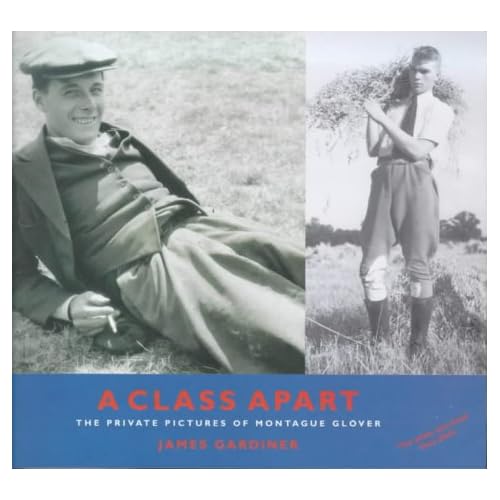
A Class Apart: Private Pictures of Montague Glover (Paperback)

Book cover for A Class Apart


Pub: Serpent’s Tail


ISBN: 1852427280


This book is a wonderful pictorial history of a period in Britain when though the laws were very harsh in relation to homosexuality, there seemed to be a freedom which we currently don’t have.

James Gardiner has successfully put together photographSeand letters taken and written by Montague Glover spanning a period of 32 years. A period in which people seemed to accept individualSeand their foibles, when time seemed to have stopped, and also when life seemed simpler.

Montague Glover waSean architect, and army officer with a distinguished service record from the First World War, and also a homosexual. The photographs in the book illustrate the three great obsessions of his life:

London’s rough trade

Men in uniform

And

Ralph Hall, his “loverMontague Glover's lover“

Highly recommended.

Filed Under: Book Reviews

  • « Previous Page
  • 1
  • …
  • 3
  • 4
  • 5
  • 6
  • 7
  • …
  • 10
  • Next Page »

Categories

Copyright ACOMSDave.com © 2026