
I came across the following article at ‘The Derby Gripe‘ – the title iSeanything but supportive, yet the article is short, to the point and is at least non discriminatory. I wonder who wrote the article’s title?
HOMOSEXUALITY WILL BECOME COMPULSORY
Homosexual pensioners in Wales are to be provided with gay-only retirement homes. The Stonewall study found that gay OAPs need to be provided with separate sheltered accommodation and counselling to cope with being old and homosexual. Conservative Assembly member Mark Isherwood said, “We know of older people who are being forgotten by the system just because they are homosexual. Older people from the gay community have no family to support them in old age and often live in isolation.”
Archives for December 2008
FORTY YEARS ON
Channel 4 commemorated (rather than celebrated) the enactment of the Sexual Offences Act of 1967) which only applied in
40 Years On ran (mostly) from Saturday to Saturday 21 to 26 July (2007) first out was A Very British Sex Scandal, about the Peter Wildeblood  affair’ of 1954. In many ways this was the full stop at the end of a quite hysterical witch hunt’ (the clicheis very apt, for once) in the early fifties (mostly in England, and mostly in London I am more than prepared to be corrected on this matter). The Wildeblood affair was every New of the Screws-type sub-editor’s wet-dream. Wildeblood (Martin Hutson) was a very successful journalist on the Daily Mail (always good for a bitching from the less successful in the profession), several aristos were involved and a couple of National Servicemen. (The latter description means men conscripted into the Armed Forces for two years. National Service, for most (male) citizens ran from the eighteenth to the twentieth birthdays, so the two lads Edward McNally (Sam Heughan) and Johnny Reynolds (Karl Davies) would have been under age’ until quite recently.
Wildeblood meets McNally, like a fair number of other pick-ups’ at or about a railway station public convenience’ (little did the stuffed shirts naming these facilities know ”). They were standard meeting places prior to the down-grading of the railways, coach stations took over somewhat in
News of this gets to the police and McNally and Reynolds are arrested by the Military Police, an unpleasant, violent, experience for them. The civilian police offer them the usual inducements, if they tell on the others they will get off with a lighter sentence. Young Reynolds falls for it, but McNally’s attitude to Wildeblood is more honourable and is motivated by more than the prospect of sex and presents. (Reynolds tagged along to the house party as a mate, possibly a fuck-buddy’, of McNally’s, while doing National Service.) While it is clear that the police are after Wildeblood and Montagu, as the older men’ from superior’ social positions who corrupted the two young men they are treated, relatively speaking, with kid gloves the young soldiers just get thumped. (Their sentences at the end of the trial were just as long as the other three, middle and upper’ class defendants.)
This is a very good drama-doc’, though I did feel that the police and lawyers verged on caricature, but it was more than half a century ago in
The climax of this drama is when in answer to a direct question Wildeblood owns up, in a Crown Court, to being homosexual. He got a longish prison sentence, and when he came out of prison he campaigned against the law. He was also employed by the BBC as, apparently a very good, and creative, television Producer. McNally and Reynolds simply disappear. But a very good drama could be made out of their lives. McNally iSean Irish name, as is Reynolds (Mac Raghnail), they were Scottish, and probably RC, which three attributes apart from being working class nobodies would have been enough to unperson’ them in 1954. In fact, they would have been barely personned’. McNally and Reynolds might have first met as altar servers in the RC chapel in whatever cold, damp, dump of a garrison they were serving in.
This sort of class blindness iSean example of how people behaved in the 1950s. There were a number of similar situations in  , (set in 2007), to be discussed after the actual drama. Kevin Elyot has been described as writing an anti-Gay’ play, but I wonder if he was writing any sort of Gay’ play. It is heavily populated, almost Jacobean in its large cast, including such persons as, Tough Man’, Man in Toilet 2′ and Man on Bench’, despite which it is not a standard realist’ telly-script. I feel this is what annoyed a great many people. We are so used to realism from Anglo-Saxon’ film makers that the utter unreality of what they make escapes us. How many times has Deirdre Barlow’ of Coronation Street been married? The central figure in Clapham Junction is (according to the press) Terry’, (Paul Nicholls). The latter appears not to have given any interviews about it. Most of what I read was nonsense, one magazine had Terry beating up the Alfie character (David Leon), which is inaccurate.
Terry, who hasn’t surname, is a conundrum, he may be a man struggling with his sexuality’. He may be a man who enjoys inflicting violence on others, and has discovered a sub-culture individual members of which are still (even in cosmopolitan
Terry encounters Alfie in a disco, complete with a pole dancer ignored by the clientele (just like in straight bars). Alfie (the lovely David Leon, whom any red-blooded poof would love to have as a Close Personal Friend) is not interested. Largely because he has had a heavy-duty encounter with a participant in a Civil Partnership celebration. It was one half of the Civil Partnership, a problematical situation for a skint waiter, dealing with the attentions of a very wealthy man. The latter could, and probably would, have complained to Alfie’s bosses if he had not been amenable to his attentions, jobs are not that easy to find. After evading Terry, Alfie chooses to walk round Clapham Common, and enters a public toilet. He encounters two heavies, who make it clear they think he’s a queer. He legs it, but is hunted down and beaten so badly that he does not last the night. Terry happens along and steals a ring on his finger, which he’d remarked on in the disco, but makes no effort to help or comfort Alfie, some passers by find him and send for an ambulance.
This is where the slightly redundant dinner party, in one of the big houses surrounding the Common touches on the main theme of the drama. One guest is a closeted lawyer who was in the same cottage an hour or two before Alfie’s killing, being fucked by a large brute of a man. (Incidentally his membrum virile, is like Terry’s (seen earlier in the proceedings) rather large. One did wonder about stunt doubles’. Far be it from me to give cognisance to the outrageous rumour labelled the Irish curse’, but they seemed bigger than they had a right to be). The lawyer is quietly irritated by a writer with whom he had had sex some time before. They are played by James Wilby and Rupert Graves respectively, who played the eponymous Maurice Hall in the 1987 film and Alec Scudder, his game keeper lover. The two women at the party are slightly anti-Gay, because of the behaviour’ on the Common. The third man is a sexual liberal, demonstrated later in the play, where he is prepared to accept a situation, which in all honesty would have most parents running to the police. (This iSean encounter between their early-teen son Theo and the twentysomething Tim).
The ring which Terry stole from Alfie is something of a leitmotif in the latter part of the drama. When Terry is taken to the A&E in a nearby hospital after he in turn is bashed, the person who deals with him is the other half of the Civil Partnership, who wonders how Terry acquired the gift he gave to his partner’. They had had an argument about what had happened to it. The drama stops at this bitter moment. It is not remotely up-beat, and the situation implies more drama and bitterness. Possibly this is what troubled many viewers, which is, again probably a consequence of the homogenisation of television drama. We are used to fifty minutes of bland drama interrupted by advertisements, which are often more creative than the actual drama which end in all the loose ends being tidied up, in a little apotheosis. A drama with raw edgeSeand unresolved sexual issues, like p?”dophilia, where the younger party Theo’ (Luke Treadaway) forces the issue with the sex criminal’ (whose flat has been petrol bombed) Tim’ (Joseph Mawle), is disconcerting. Presumably it is meant to be.
Another element linking the various disparate elements in the play is the case of young Danny’ (Jared Thomas), who is a violinist. He is also the only child of a single mother, and she has invested extremely high hopes in him. He is a talented musician, a violinist, and his playing of a Bach Gigue is heard over some quite shocking parts of the drama, (somewhat in the manner of the film Clockwork Orange). A number of people, described in the cast list as Black Youth’ there are a number of them hang around the house of his music teacher. I found this element in the drama difficult to relate to, I have a feeling that the music mad Black sub-culture of south
As noted above, I fund the treatment of (working class) Black’ youth in Clapham Junction somewhat disturbing. The treatment of white working class people wasn’t exactly heartening either. Terry works as (apparently) for the Council’ or binman’ if you like my former avocation. The bashers’ are all plebes, as is the p?”dophile [?] Tim tormented by his neighbours in the Council Estate opposite the bourgeois semi owned by Theo’s parents. Alfie is a mere waiter, and is something of a cipher he is pictured as, in essence, too stupid to protect himself. Two of the three prominent women in the play are middle class homophobes (possibly a rather subtle touch. Don Milligan, author of The Politics of Homosexuality [Pluto] wrote to the Guardian a decade ago, to point out that he had never been attacked by working class people. His two encounters with physical violence were in nice, middle class environs, in one case a university campus, and in another at the opening of an art exhibition[!].)
The Stonewall, Gay Times, New Labour nexus has been pushing this line for over a decade now, that working class people are (almost inherently) homophobic. This iSean extension of the attitude which led to the destruction of Gay News, and the setting up of the pseudo-libertarian Gay Reporter, which was a commercial failure. The reading Gay public did not especially like misogyny, metropolitan self-obsession, and whinging about politics’ (it was too early for political correctness’). People wanted sex and politics just as well, too Section 28 was in the future. The Gay community of communities mirrors society at large, most of us work for a living, and in the nature of things are found in every political formation (clearly we are, largely, in political formations attempting to extend the rights of the citizen).
***
Other aspects of the 40 Years On were a mixed bag, one was a studio debate 40 Years Out chaired by David Aaronovitch with a what am I doing here’ look in his eyes. This would have worked much better in an After Dark format. After Dark was screened by C4 in the late 1980Seand early ’90s, it was a spectacularly simple format. A group of people were sat around in a circle of comfortable seats, with some nibbles’ and a fair amount of drink’, then talked until they, became incomprehensible, walked out, or fell asleep. One programme lasted until seven the next morning, having started about 10.30 or 11 p). In 40 Years Out we got a different collection of talking heads every ten minutes, it was choppy and not very enlightening. The only person talking sense was the rapper QBoy, who presented a C4 show called Out in Class aimed at school students earlier in the year. He was fairly sanguine about the violence and against Gay school students, and their alienation from there peers being countered, but it was going to be a long haul. Mark Simpson (author of Anti-Gay) seemed to be objecting to Clapham Junction, he muttered about not wanting pro-Gay agitprop’ same as a number of bloggers what’s wrong with Gay agitprop? He said something sensible about homophobia’ to the effect that people ought to be allowed to express distaste for queer folk. The problem with such an attitude (I tend to agree with it), is that such matters cut both ways. Would we shirt-lifters be allowed to jeer publicly at the notion of Richard Littlejohn or Kelvin Mackenzie, having sweaty and un?”sthetic heterosex? The vocabulary of anti-Gay abuse is rather large. Simpson said that he now lives in
I didn’t really understand what Mathew Parris (A Castle in Spain, among many other publications) was talking about I assume he was edited to tatters. Simon Fanshawe (The Done Thing) was also a bit odd he wants us to behave ourselves but do the others’ behave in the done’ way. If he wants a return to elements of the sort of social co-operation that existed as late as the 1970s, one would agree with him. Most of our fellow-citizens (hetero-, homo-, and anarcho-sexual) want discipline and orderliness for other people. Young people and queers being at the top of the list, as for Gay youth, they should be neither seen nor heard, in fact they probably should not exist. Brian Paddick, the queer ex-cop, partly helped into early retirement by creeps like Littlejohn, might have had something interesting to say, but there was no time to say it. Other people involved were the comedian Paul Sinha, a doctor, and a Gay Asian, (and a Catholic? Sinha’ has a Goan ring to it) and Julie Bindel (co-editor,
Queer As Old Folk (July, 26)  was interesting, and I thought heartening, with two old dears having a Civil Partnership, after forty five years of living with each other. There was also a fascinating coupling of a man in his sixties with a male stripper less than half his age. There was, admittedly, a lot of attention paid to the chap in his late forties (how old is Old’?) who was living the adolescence he did not experience. A number of correspondents of C4’s various internet forums (fora?) were irked by this, but it has to be said people do that sort of thing. They did not want pro-Gay agitprop, but then some bloke turns up not behaving like St Francis of
There was also some griping about stereotypes’ effeminate old souls being, largely, the target. But as Jeff Dudgeon (Roger Casement: The Black Diaries With a Study of His Background and Irish Political Life) put it there are definite, and definable types in Gay and in general society live with it, this was in regard to the film The Boys in the Band (1970). This was also part of the response to How Gay Sex Changed the World, (July, 24) which consisted to talking heads’ mostly the usual metropolitan suspects. It was a gross misnomer Gay sexuality and the acceptance thereof, may have changed the Anglo-Saxon’ world, or even just
Times change, mainly because we trivial Gays made demands on the State and on society, the world’ outside of the
The films shown during the week (some shown on Film 4) are to be commented on in a different article. Here are the titles, Prick Up Your Ears, Un chant d’amour, Victim, Maurice, and on ITV 4, Midnight Express. Most of these films are worthwhile, though Maurice was described by one fan on the as a great film based on a great book’. The book is second-rate, especially in the context of EM Forster’s other works. It was Lady Chatterley’s Lover for
[Sean McGouran]
St Patrick's Day – 2008
NIGRA (the Northern Ireland Gay Rights Association) has picketed Irish Government, or semi-state bodies (Aer Lingus, for example) in Belfast (and once in Dublin) for over a decade now, in solidarity with the ILGO (Irish Lesbian and Gay Organization) of New York.
ILGO have, since 1991, been barred from the famous New York St. Patrick’s Day Parade, by the organisers, the Ancient Order of Hibernians, on the spurious grounds that the Parade is a Roman Catholic devotional demonstration.
The argument is absurd, as can be demonstrated by the most cursory view of any Parade of the twentieth, or of this, century. The Ancient Order of Hibernians while a fraternity of Catholic Irish-Americans, has never been a strictly devotional group. It was suspect in the eyes of Church authorities for the first century of its existence.
It was involved in American Labour politics from the mid-19th century. It sponsored a body of armed men, the Hibernian Rifles, which took part in the 1916 Easter Rising in Dublin. It had connections with the Congress Party of India and with other anti colonialist groups.
Banning the ILGO is homophobic bigotry on the part of a powerful body with a genuinely radical history.
There have been three pickets in London since 2005, on or about St Patrick’s Day. The Irish Embassy’s Passport office in Brompton Road (opposite Harrods famous store) is the best ‘pitch’.
I am asking interested people to contact me about the picket in 2008 – the larger the picket the greater our impact -and the quicker this situation will be resolved in ILGO’s favour.
Pickets could also be mounted at the Irish Consulates in Cardiff (Wales) and Edinburgh (Scotland) – and. possibly other large urban areas. Most cities in Great Britain (England, Scotland and Wales) have some sort of Irish Government or semi state body’s office.
If you are interested contact:
Sean McGouran
127 Tollington Way
London
N76RD
Mob: 07952 223 986
e-mail: seanmcgouran776@hotmail.com
Hooked On Books?
Write A Book Review For Your Target Audience
If you are burned out with writing how-to articles to promote your business then consider writing a book review. I recommend you write a review about a book you enjoyed that is related to your products or services. Your review, of course, will be capped off with your 5-6 line byline that includes your contact information and web site URL. Many of the article directories, e-zineSeand web sites that normally accept articles will accept book reviews too. In addition, you can find and submit to the many sites featuring book reviews.
To begin a review, I start with the format required by Midwest Book Review. I then adapt the format and word count to what is required by each submission site. Midwest Book Review recommends the following format (examples of paragraphs are enclosed in parenthesis):
Book Title:
Author:
Publisher:
Publisher Address:
ISBN:
Price: Publication Date: Page Count:
Reviewer Contact Information:
Name: Address: E-mail:
First Paragraph: Include information about the format of the book. A nice touch is to comment on the cover design, table of contents structure and/or glossary at the back of the book.
(Sample: This beautifully laid out trade paperback has a gorgeouSeand practical design both inside and out. I recommend you read this book with a highlighter and a pen, ready to take copious notes in the blank pages thoughtfully provided between chapters.)
Second Paragraph: Detail the recommended audience and note why they should read the book.
(Sample: Manners That Sell: Adding The Polish That Builds Profits should be required reading for high school and college studentSeand for anyone already in the business environment. Once upon a time, good manners were taught in school and at home, but that time has long since passed. This book provides the perfect refresher course for those of us who learned manners but no longer remember the finer points of etiquette.)
Third Paragraph: Write about the book structure and layout, number of chapterSeand topics covered.
(Sample: While reading this book, I discovered that the author, Lydia Ramsey, covered every conceivable point of etiquette including many that I’d never been taught. Each of the twelve chapters covers one main topic broken down into digestible bite sized chunks of ruleSeand guidelines to enhance credibility and professionalism. Topics include first impressions, greetingSeand introductions, the art of conversation, dressing for business, telephone courtesy, electronic etiquette, correspondence in business, etiquette in the office, gift-giving in business, etiquette out of the office, dining for profit and doing business internationally.)
Fourth Paragraph: Give a brief biography of the author including their name, name of their business (if applicable), business or personal expertise and if available, include titles of their other books.
(Sample: The author of this delightful book, Lydia Ramsey, is a business etiquette expert with over thirty years of experience working with non-profits, corporations, collegeSeand universities. She is a frequently published author who presents workshops, seminarSeand keynotes on all aspects of business etiquette.)
Fifth Paragraph: Recommend the book and offer some ideas of its practical use by individuals or groups. If applicable, mention that it would make a good gift book and wrap up the review with a positive summary of the book.
(Sample: I recommend businesses buy this book in bulk and present one to every employee from the frontline up to the top management. In this ever-changing world of so many consumer choices, the bottom line is often affected by the simple courtesies that can and should be afforded to customers. You need this book if you want your employees to succeed and your business to thrive.)
Add your copyright statement and byline to the bottom of the review and, as usual, have the review proofread by an editor before you begin submission. Your book reviews can be very effective marketing tools that will generate considerable exposure for you.
Bonnie Jo Davis iSean experienced writer and publications coordinator with over ten years of experience submitting articles online and in print. Visit http://www.ArticleSubmissionSites.com today to gain access to her submission list, e-book, newsletter and more!
(c) 2005. Davis Virtual Assistance. All rights reserved. Permission to publish online or in print granted provided the article and byline are printed intact with live links.
H. Montgomery Hyde, the Ulster Unionist MP (Part 2)
He was called to the Bar in 1934 working in
Lord Londonderry had been a
In 1939, Hyde married Dorothy Mabel Crofts from
Lt. Col. Hyde, as he became, and was so addressed throughout most of his parliamentary career, had a good war, mostly in intelligence but he continued writing and publishing. He first served aSean Assistant Censor in Gibraltar in 1940, was then commissioned in the intelligence corpSeand engaged in counter-espionage work in the
The background to Hyde’s political career in
The British Labour Party had declined to take members in
Hyde had planned a parliamentary career since the 1930Seand actively scouted for seats however the war intervened, postponing an election until 1945. He then applied for the South Belfast Unionist candidature and was unfortunate enough to miss the nomination by one vote. Five years later,
He was a UK Delegate to the Council of Europe Consultative Assembly in
In 1954, as the foremost author on the subject, he presided over the unveiling of a London County Council plaque to Oscar Wilde at his home in
Contrary to concerns expressed at home, he did involve himself in
In the section on productivity, he drew attention to
His earliest gay-related parliamentary intervention was a question tabled on police agent provocateurs after the acquittal in 1954 of Weng Kee Sam, a young Singaporean. He and another man, Frederick Beauchamp, who committed suicide before the trial, had been charged with gross indecency at
He first debated the question of Casement’s diaries in the Commons on 3 May 1956 when the junior Minister, William (now Lord) Deedes declined to depart from the (government’s) policy of silence, [vi] and again on 2 May 1957 when the Home Secretary, R.A. Butler only admitted that certain confidential documents of Casement’s existed.
In July 1959, the Home Secretary was asked again about the Casement diaries when Hyde called for the Home Office both to admit they existed and to allow the public to see them. As Singleton-Gates’s book, replicating some of them, had just been published, limited access to view them was then granted. [6] The fact that there were five, not three, diaries then first emerged. The erotic fifth diary was only published in my Casement book in 2002, as publication had previously been threatened with an obscenity prosecution.
After Wolfenden’s publication, the House of Lords on 4 December 1957 was the first to debate the report on a motion proposed in its favour by Lord Pakenham (later the Earl of Longford). It was not taken to a vote.
On 21 May 1958, Hyde came second in a Commons ballot for notices of motion and announced he would call attention to the Wolfenden Report in three weeks. The day before that debate, and backed by Hyde, the Desmond Donnelly [vii] (who with Bob Boothby [7] in 1953 had called for a Royal Commission “to investigate the law relating to the medical treatment of homosexuality”) pressed the government to allow enough time. The Home Secretary prevaricated, so on 13 June, Hyde was required to propose that the House took note of the report of the Departmental Committee on Homosexual OffenceSeand Prostitution.
Hyde stood up, and said he begged to move. He only managed 37 words: I regret that there is not more time to develop the subject. I hope that in the minute that is left to me I can express the opinion that this is a most valuable social document and ‘. The Speaker then cut him off.
The next day the remarkably modern looking, Daily Mirror headline was ONE MINUTE’. The accompanying, supportive article read, It is nine months since the Wolfenden Committee made their recommendations. The Committee took three years to collect their evidence ”and one minute [was] given to the subject yesterday. And so the matter disappeared off parliament’s timetable for a further six months. This courageous moment was to be Hyde’s political undoing.
In November 1958, when the government relented and allowed a debate, Hyde contributed a half-hour speech which was wide-ranging and thoughtful, and covered both aspects of the report. He concluded by demanding equality for the homosexual and the prostitute. Earlier he quoted a letter from a consenting adult who had been gaoled and released, only to be informed on again, losing his new job. He pointed out three popular fallacies that have been exposed by the Report; that male homosexuality always involves sodomy; that homosexuals are necessarily effeminate and that most relevant court cases are of practising male homosexuals in private. Only one hundred men a year, he said, were convicted of sex in private with consenting adults.
These ideas, novel to the wider public in 1958, can be directly traced back to the 1890s works of Havelock ElliSeand J.A. Symonds. The final government speaker David Renton, who died last month as Lord Renton, concluded definitively, unlike
Reports of Hyde’s speech at home were not extensive. The Belfast News Letter did title its story as Montgomery Hyde in Wolfenden debate’, but reported his remarks after the comments of R.A. Butler and Labour’s front bench spokesman Anthony Greenwood who said there is no justification to impose legislation on homosexuals. Hyde’s reading of a letter from a homosexual was quoted, as was his warning against dropping the legal requirement to prove annoyance by prostitutes before conviction.
Ironically on 26 November 1958, the day of the Commons debate, Ian Harvey, the Conservative MP for
But such seriously liberal views had already begun to pull Hyde down along with the traditional complaint that he did not visit the constituency sufficiently often. He was also a convinced abolitionist on capital punishment and was a co-sponsor with Sidney Silverman in 1956 of a bill to abolish hanging. It passed in the House of Commons only to be defeated in the Lords. [9] Tribune picked him out as one of four key players in that first success. Indeed he was drifting toward Labour, as he had presciently begun to doubt the wisdom or efficacy of the Unionist Party’s rigid alliance with the Conservative Party. Ironically Hyde also successfully moved an amendment to which Silverman agreed, excluding
The
Henry Holmes, the Shankill’s Stormont MP, defended him saying, although he has sponsored one or two unpopular causes I do not believe these are sufficient grounds for discarding him. His opposition to the death penalty, and his support of the Wolfenden recommendations on homosexuality and prostitution were all declared to be non-party matters.
Hyde was heavily backed in the English liberal press, with favourable editorials in The Guardian and The Sunday Times. There was however little or no controversy in the letters columns of the
A few weeks after Hyde’s speech in the Commons, and in the absence of any hope of law reform, Northern Ireland’s police and prosecutors accelerated their work of rooting out and imprisoning gay men for on 18 December 1958, nineteen Lurgan men were charged with gross indecency and other charges involving indecency.
Their cases were heard before Lord Justice Curran [x] at Belfast Winter Assizes. Before sentencing seven of them to terms of imprisonment, he remarked, Cries of repentance after an act had been committed was no new thing in his experience.
You seem to have been a cancer in the society of Lurgan, said Curran when sentencing William Wells aged 64 who was not professionally represented to three years in prison. Of the remainder, six were gaoled for a year: Thomas Burton 30, lorry driver, George Haddock 43, optical lens maker, George Hunter 27, engineer, now living in London, Edward Stevenson 38, unemployed, James Walker 30, packer, and Thomas Kerr 52, labourer. Of those bound over, James Robinson 32, a grocer was defended by E.W. Jones MP (later Attorney General) with a plea that he was liable to mental illness. This was accepted by the judge who said he was treating Robinson as a special case, declaring, you have had a week in prison and you know what it is like. I hope it will make some impression on your mind.
The other ten [10] were given recorded sentenceSeand also bound over. Thomas Jenkinson 23, linesman, denied the offence, pleaded not guilty and was acquitted. He said he had only made a statement to keep police from approaching his girl friend and family. The crimes were not described except in his case, where he had initially stated an incident took place at the entrance to some garages. The police claimed to have three witnesses to prove it. The judge commended the police officer concerned, Detective Constable Ernest Drew, saying, I think you have done a very useful piece of work in cleaning up this mess in Lurgan.
What seemed unusual in this trial was the sheer number charged and the severity of the sentences. However not much has changed in relation to such small town round-ups, exemplified by the 2006 Coleraine events, when a dozen men were convicted and publicly shamed (with their houseSeand cars duly attacked) for trivial cottaging offences. Such trials studded the English newspapers in the 1950s, but extensive group arrestSeand prosecutions [xi] continue to be an
Under the radar, opposition was building to Hyde’s Wolfenden and Casement activities which unfortunately only muddied already troubled waters so far as his constituency association was concerned. In the event, he faced a challenge for the parliamentary nomination from Air Marshall Sir George Beamish, once an Irish rugby international.
The MP went to the Unionist Party selection committee meeting on 12 January 1959 armed with a letter of endorsement from Edward Carson’s widow (which looked and read suspiciously as if he had written it himself). The vote was 70 for Hyde, 60 for Beamish and 12 for David Carlisle. After his elimination, it was 77 to 72, a five vote win for Hyde, a result greeted with prolonged applause. Reselection with nearly 150 voting was a remarkable achievement given the worrying publicity. This defeat knocked Sir George out of the running. Hyde’s enemies however fought on.
The ratification meeting, normally a formality was on 13 February 1959, but Hyde was in the West Indies on what was described aSean industrial parliamentary West Indies committee tour of the
Unwisely, Hyde chose not to cut short his trip and thus missed the full North Belfast Imperial Association ratification meeting in the Belfast YMCA. Despite pleas from his wife and certain
That plea was in vain as McClelland was already hostile. He simply replied, Wire received. Regret you cannot attend meeting. Must go on. Management Committee decision. Writing letters, from a hotel in
In a much bigger turnout, and by 171 votes to 152, Hyde’s reselection failed to be ratified. By 19 votes, the Unionist Party lost its one respected voice at Westminster and abroad, and the only MP who ever advised his people of changing times, while attempting to modernise and moderate Unionist opinion. Unionism’s failure to send a consistently liberal voice to
The Belfast Telegraph reported, Mr Hyde’s rejection is a result of criticism amongst constituents over his attitude over certain problems particularly the Wolfenden report, capital punishment and the return of the Lane pictures to Ireland; further there was a feeling he did not visit the division sufficiently. One view expressed was that as the vote was so close he might have carried the day, had he been present.
Two days later, now in
Although he had made little secret of his progressive views during his the capital punishment debates, the campaign for access to the Casement diarieSeand his writings on Oscar Wilde, Hyde’s political undoing was his parliamentary interventionSeand outspoken views on the decriminalisation of homosexuality. [xii]
Ironically, if he had managed to effect the Wolfenden report recommendations at
With Stormont back up and running, the no change; no reform’ policy is likely to prevail again in relation to implementing proposed sexual offences reform, adoption and other gay anti-discrimination measures, due in particular to having the Rev Ian Paisley, leader of the 1977 Save Ulster from Sodomy campaign, as First Minister.
Hyde vacated his seat at the election in October 1959, not standing aSean independent as had been mooted, and despite having received many letters of support from within North Belfast including a number from his Hebrew constituents, as he put it, and beyond. There was (and is) a folk view that the North Belfast Unionist Association at that time was conducted out of the Synagogue, explaining to a degree its apparently liberal approach, although no such aspect to the dispute surfaced in the press. The one (anonymous) antagonistic letter in the Public Record Office of Northern Ireland (PRONI) fileSeand postmarked Worthing, stated
[1] Lady Mairi Bury, daughter of the 7th Marquess of Londonderry, who still resides in
[2] Count Joachim von Ribbentrop, later German Foreign Minister was then Ambassador in
[3] The four books were Oscar Wilde (1975); Oscar Wilde: the Aftermath (1963); Lord Alfred Douglas (1984) plus the aforementioned Trials of Oscar Wilde (1948).
[4] Hyde’s maiden speech was on the Maintenance Orders Bill.
[5] News of the World, 5 February 1956. ThiSeand many other relevant cuttings were provided by the Lesbian and Gay Newsmedia Archive (LAGNA) at
[6] The Casement author, Roger Sawyer, recalled to the author (in 2007) Herbert Mackey, the doyen of the diary forgery theorists, telling him preposterously that Hyde was having an affair with R.A. Butler, which explained the decision to release the diaries.
[7] Bob, later Lord Boothby, was the long-time lover of the, then Prime Minister Harold Macmillan’s wife Dorothy, and was himself reputedly gay. Like Liberace, he was none the less successful in winning libel damages of 40,000 from Mirror Newspapers in 1964 over an accurate accusation in relation to his association with the Kray twins.
[8] PRONI D.3084/A/7
[9] The reverse happened with the Earl of Arran’s 1965 Sexual Offences Bill which passed first in the House of Lords. Humphry Berkeley’s Bill which succeeded in getting a 2nd reading in the Commons fell due to the calling of the 1966 general election when he lost his
[10] The other ten, very ordinary martyrs bound over were George Wilson, 44, clerk; William Sharpe 55, TA watchman; Howard Thompson 44, fitter; David McKinley 44, hotel employee; George Fleming 48, packer; John McCappin 58, clerk; Thomas Neill, 52, weaver; William Magill 65, old age pensioner; William Taylor 44, power loom tenter; and William Dowds 32, unemployed. They were indeed martyred, as in the words of the Earl of Arran, on 21 July 1967 when his Bill finally became law: My Lords, Mr Wilde was right: the road has been long and the martyrdoms many, monstrouSeand bloody. Today, please God! sees the end of that road. (Quoted in The Other Love p. 268).
[11] Recollection of former Belfast Councillor John Harcourt, in conversation with the author in 2007.
[12] PRONI D/3084/I/A/2
[1] Lord Castlereagh, Robert Stewart, the 2nd Marquess of Londonderry, b. 1769, was Foreign Secretary from 1812 until he committed suicide in 1822, due to depression. It was suggested he was being accused or blackmailed for homosexuality, as he put it himself, the crime of the Bishop of Clogher’. Percy Jocelyn, a son of the 1st Earl of Roden was charged after being caught in a compromising position with a guardsman, John Moverley, at the White Hart public house in
[ii] Sir William Stephenson’s biography was written by Hyde and published in 1962 as The Quiet Canadian.
[iii] His nearest rival for the
[iv] There is little Hyde broadcast material extant. BBC NI has, at Cultra (tel. 028 90395127), an arts programme on Oscar Wilde, broadcast in September 1976, in which Hyde participated, while BBC Motion Gallery (motiongallery@bbc.co.uk) has a networked 1972 Self Portrait programme featuring him. Its script is in PRONI; D.3084/A/5B.
[v] The Other Love, p. 210-11
[vi] Hansard, Commons Debates. Vol. 552, cols. 749-60. Deedes argued that verification of the diaries existence and granting access would be unfair as Casement, due to his execution, was now unable to answer the allegations!
[vii] Desmond Donnelly, the independent-minded MP for Pembrokeshire, was later a rebel against Harold Wilson’s steel nationalisation planSeand ultimately joined the Conservative Party. He committed suicide in 1974.
[viii] A device appointing someone to an office of profit under the crown thus compelling an MP to vacate his seat.
[ix] CHE, one of
[x] Ironically, Lord Justice Curran’s daughter Patricia had been murdered in November 1952 in a case where there were rumours of a homosexual connection between her brother and the young airman later convicted. He was known to have gay contacts in
[xi] Ironically in 1893 the first prominent person convicted of gross indecency under the 1885 Act, preceding Oscar Wilde, was a fellow Belfast MP and Orangeman, Edward de Cobain. He was sentenced to 12 months’ imprisonment with hard labour (see The Other Love p 137-8).
[xii] In an Irish Times interview of 5 January 1985, Hyde stated, In fact Lord Boothby and I really initiated the whole thing and started the Wolfenden committee – the [Unionist Party] caucus said we cannot have our member condoning unnatural vice’. That was it. That really finished me.
[1] Lord Castlereagh, Robert Stewart, the 2nd Marquess of Londonderry, b. 1769, was Foreign Secretary from 1812 until he committed suicide in 1822, due to depression. It was suggested he was being accused or blackmailed for homosexuality, as he put it himself, the crime of the Bishop of Clogher’. Percy Jocelyn, a son of the 1st Earl of Roden was charged after being caught in a compromising position with a guardsman, John Moverley, at the White Hart public house in
[1] Sir William Stephenson’s biography was written by Hyde and published in 1962 as The Quiet Canadian.
[1] His nearest rival for the
[1] There is little Hyde broadcast material extant. BBC NI has, at Cultra (tel. 028 90395127), an arts programme on Oscar Wilde, broadcast in September 1976, in which Hyde participated, while BBC Motion Gallery (motiongallery@bbc.co.uk) has a networked 1972 Self Portrait programme featuring him. Its script is in PRONI; D.3084/A/5B.
[1] The Other Love, p. 210-11
[1] Hansard, Commons Debates. Vol. 552, cols. 749-60. Deedes argued that verification of the diaries existence and granting access would be unfair as Casement, due to his execution, was now unable to answer the allegations!
[1] Desmond Donnelly, the independent-minded MP for Pembrokeshire, was later a rebel against Harold Wilson’s steel nationalisation planSeand ultimately joined the Conservative Party. He committed suicide in 1974.
[1] A device appointing someone to an office of profit under the crown thus compelling an MP to vacate his seat.
[1] CHE, one of
[1] Ironically, Lord Justice Curran’s daughter Patricia had been murdered in November 1952 in a case where there were rumours of a homosexual connection between her brother and the young airman later convicted. He was known to have gay contacts in
[1] Ironically in 1893 the first prominent person convicted of gross indecency under the 1885 Act, preceding Oscar Wilde, was a fellow Belfast MP and Orangeman, Edward de Cobain. He was sentenced to 12 months imprisonment with hard labour (see The Other Love p 137-8).
[1] In an Irish Times interview of 5 January 1985, Hyde stated, In fact Lord Boothby and I really initiated the whole thing and started the Wolfenden committee – the [Unionist Party] caucus said we cannot have our member condoning unnatural vice. That was it. That really finished me.Ø
Political Correctness Gone Sane
Some commentators managed to introduce ‘political correctness’ into the discussion of the ‘Orchestral Manouvres’ article printed earlier in this publication. That is despite the fact that it was a simple matter of applying preordained standards to a relatively arcane environment. Nobody explained why artists should have lower health and safety standards than those of street sweepers or shop workers. Nobody referred to the fact that the HSE (Health & Safety Executive) has no power to enforce its judgements. Building workerSeand their Unions could tell you endless tales of employers avoiding their responsibilitieSeand weeping crocodile tears over the injurieSeand deaths that result from enforcing simple safety procedures. A bit of political correctness would not go amiss in the construction industry.
But what is this ‘political correctness’ or ‘PR’ business? It started about twenty years ago in the USA. One item that was made great play of was the insistence on University campuses (campii?) that male students sign a declaration that they would not take sexual advantage of their female colleagues. This was noised about the ‘Anglosphere’ (the term had not been coined at that point) as if it was being enforced everywhere from the Bob Jones University to Bryn Mawr to Harvard.
It was particular to Rutgers, in New Jersey, an ‘Ivy League’ university, meaning one of a half a dozen, mostly East Coast, elite (at least in the social sense) colleges. Prior to the declaration being introduced there had been sixteen particularly brutal rapes on the actual campus. A fancy Latin.:origin word (it means ‘field’) for the grounds of a college. The authorities refused to increase security on the campus, which would have been pretty easy as it is a relatively small area. Their ‘reasoning’ was that the rapes were either figments of the students’ imaginations, or they could not possibly have happened in Rutgers, even assuming they were genuine. The underlying ‘reasoning’ was that their male students would not engage in rape (neither would the male academic staff). There waSean implicit notion hanging in the air that lesser breeds (African-Americans, Latinos, and possibly pink-gray plebes) were responsible for the rapes.
That the latter idea did not absolve them from protecting women for whom they were technically in loco parentis, does not seem to have struck the authorities. Thus the declaration and the vociferous campaign to get the Regents to carry out what is a basic duty. And thus the accusation – largely by radio ‘shock jocks’ – that Rutgers, the rest of the Ivy League and indeed every third level college in America was under threat by ‘feminazis’. The accusation had a good ‘shelf life’ and led to attacks on other aspects of life in the universities.
This included new areas of academic endeavour like Women’s Studies and Gay and Lesbian Studies. These were deemed to be trivial and academically invalid – they could, and should be studied in the context of other long-established courses – though nobody ever indicated which course. The shelves in the psychology, anthropology, (less than a century old as academic disciplines in most universities), groan under the weight of homophobic garbage, the same in the medical and history departments. The sociologists like to congratulate themselves on being on the side of the angels in this matter. But there is still a frighteningly large literature in this discipline that takes a moralistic and punitive view of sexually variant people. We need hardly mention theology, theologians have not been unanimous on LGBT matters, but most in the Judeo-Christian-Muslim tradition have toed the line.
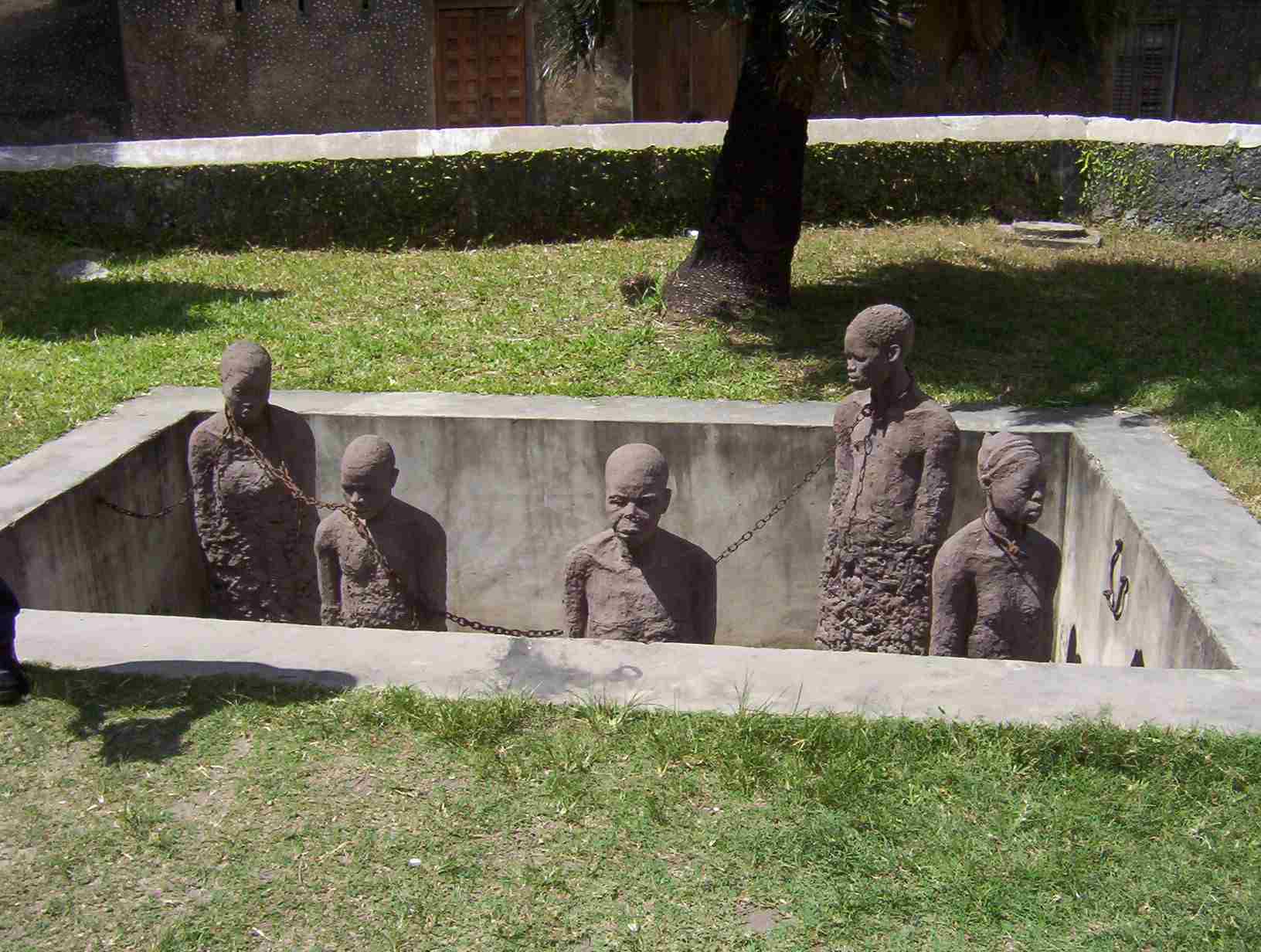 African and African-American Studies have been attacked, and the academics teaching such studies have been heavily policed. They have to be extremely careful discussing the ‘Triangular Trade’ (the Slave Trade in plain English) any flaw in scholarship, will be pounced on by a whole movement ranging from ‘shock jocks’ to entrenched academic conservatives. This movement has a beautifully articulated propaganda that they are the oppressed, they are merely attempting and plain American patriots to keep the record straight. The Slave Trade and chattel slavery had positive elements – as above, they are at something of a loss to say what these were. Along with an element of sexual prurience in regard to Black academic’s behaviour in regard to their students (especially if they are ‘Caucasians’), this looks remarkably like old-fashioned racism. Which, as ever, is shored up by sexism and queer-hatred.
[Sean McGouran
H. Montgomery Hyde, the Ulster Unionist MP (Part I)
H. Montgomery Hyde, the Ulster Unionist MP (and author of The Other Love) who led the 1950s Westminster
It will be surprising to many, and perhaps distressing to some, that the Member of Parliament who led the campaign to have the House of Commons debate the Wolfenden report – let alone implement it – waSean Ulster Unionist MP, Harford Montgomery Hyde. He was to pay a heavy political price for his bravery.
The debt owed to him has gone largely unremarked, although he would be recognised by many as the author of that, still fresh, history of homosexuality in
Hyde was to be the author of nearly fifty books. [v] Although he wrote rapidly he was a consistently thorough and accurate historian. Some of his biographies were written to order but it was those works on a spying or sexual topic to which he devoted most attention and effort. His publications on intelligence and defence matters however nearly outnumber those with gay themes. He also wrote innumerable articleSeand reviews.
There iSeanother anniversary to be celebrated this year, related to the Wolfenden report, and that is the 25th anniversary of the passing of the Northern Ireland Order in Council in 1982 which brought the
I must be one of a now, small number of people who actually attended some of the parliamentary debates at Westminster from 1965 to 1967, actually in 1966, in the House of Lords, when I waSean eager 20-year-old wishing to meet other gays, not knowing where to find them, and very afraid to ask. This was despite being happy in my homosexuality. I have ruefully gathered since that supporters of the HLRS were also present in the public gallery but I had not conceptualised the Trust was manned by other gay men, nor did I notice them.
This year, 2007, is also the so far unmarked, centenary of Hyde’s birth. Born on 14 August 1907, his background was
Married three times, he was on the surface an unlikely champion of homosexual law reform so why the exceptional interest in the matter? And how was it that what is now reported [ix] to be the most homophobic place in the western world, and was then certainly, highly conservative, produce, elect and tolerate such a public representative?
The further question in most minds must be: Did he have gay relationships? His own words on that subject were, My feelings were always distinctly heterosexual. [i] He certainly knew gay people, particularly at
When first in
As to religion, Hyde wrote, For a time, I admit I was greatly attracted to the Roman church, especially the ritual, so much more appealing to my aesthetic sense than the dull Protestant services. But already at Queen’s I was beginning to have doubts about all religious beliefs.” [iii] This lack of religious belief enabled Hyde to break from many related conformities. In the House of Commons, he always affirmed, instead of taking the oath but this, he said, was never noticed back home.
He looks like a matinee idol in his 1930s studio photographs, yet earlier, at his graduation, more of a young fogy [iv]. He was 5′ 7″ tall and appears to be a classic 1920s person; somewhat louche, having lost his virginity to a prostitute in
[end of Part I]
[i] None the less, all the classic markers of gayness were there; an interest in history, archives, genealogy and spying (he was nicknamed Monty the Mole’), an affection for aristocracy, the ownership of two ginger marmalade catSeand a tendency toward
[ii] PRONI D.3084/B/B/2/1. Ronnie wrote to Hyde from a house named Royton in Marlborough Park North,
[iii] PRONI D.3084/A/5B
[iv] PRONI D.3084/A/3 and D.3084/B/A/2
[i] Confusingly,
[ii] The Other Love: A Historical and Contemporary Survey of Homosexuality in
[iii] Dictionary of National Biography (DNB) entry.
[iv] Antony Grey is the pseudonym of A.E.G. Wright, b. 1927. The Albany Trust was a charity set up alongside the Homosexual Law Reform Society to promote psychological health in men through research, education and social action.
[v] Other books in the Hyde oeuvre include those on T.E. Lawrence, entitled Solitary in the Ranks; Edward Carson (thought by Dr Ian Paisley to be the best of the three Carson biographies); British air policy between the wars; Bloody’ Judge Jeffreys; Strong for Service (on Lord Nathan, Attlee’s Aviation minister); and Rufus Isaacs, 1st Marquess of Reading, Viceroy of India, and the Lord Chief Justice who presided at Roger Casement’s trial.
[vi] Hyde won a scholarship to
[vii] James Hyde, an auctioneer and linen merchant, was a councillor for Belfast Corporation’s Cromac Ward.
[viii] Mrs Isobel Hyde died in 1966.
[ix] Love Thy Neighbour: How Much Bigotry Is There In Western Countries? Vani K Borooah,
[x] None the less, all the classic markers of gayness were there; an interest in history, archives, genealogy and spying (he was nicknamed Monty the Mole’), an affection for aristocracy, the ownership of two ginger marmalade catSeand a tendency toward
[xi] PRONI D.3084/B/B/2/1. Ronnie wrote to Hyde from a house named Royton in Marlborough Park North,
[xii] PRONI D.3084/A/5B
[xiii] PRONI D.3084/A/3 and D.3084/B/A/2
[xiv] Lady Mairi Bury, daughter of the 7th Marquess of Londonderry, who still resides in
[xv] Lord Castlereagh, Robert Stewart, the 2nd Marquess of Londonderry, b. 1769, was Foreign Secretary from 1812 until he committed suicide in 1822, due to depression. It was suggested he was being accused or blackmailed for homosexuality, as he put it himself, the crime of the Bishop of Clogher’. Percy Jocelyn, a son of the 1st Earl of Roden was charged after being caught in a compromising position with a guardsman, John Moverley, at the White Hart public house in
[xvi] Count Joachim von Ribbentrop, later German Foreign Minister was then Ambassador in
[xvii] Sir William Stephenson’s biography was written by Hyde and published in 1962 as The Quiet Canadian.
[xviii] The four books were Oscar Wilde (1975); Oscar Wilde: the Aftermath (1963); Lord Alfred Douglas (1984) plus the aforementioned Trials of Oscar Wilde (1948).
[i] An abridged version of this paper was given at the Wolfenden50 conference (28-30 June), King’s College London, on 30 June 2007.
Welcome to nrg-rob's Music News & Reviews Column
Hi everyone I’m nrg-rob and welcome to my news & reviews column. I will feature a hi-nrg chart with reviews every month so if you hear any tracks that should be featured please let me know. hi-nrg chart july 20071. 1. Belle Laurence – Love don’t you go through no changes on me (almighty records)
2. Northernbeat – Earthquake (Pumpin records) 3. John Travola & Olivia Newton John – You’re the one that I want (Almighty records)4. Kenny Hayes featuring Karen Danzig – You Came 5. Quartzlock – No Regrets (Almighty Records)
Blasts from the Past Chart
1. Lorraine McKane – Let the night take the Blame (UK Carrerre Records)
2. Wanda Cross – Watch Out
3. James & Susan Wells – RSVP (UK Fanfare Records)
4. Marlene Ricci – Tonight (German Hansa Records)
5. Hush – Heart’s On Fire (UK Spirit Records)
I love the track let the night take the blame‘, it is a bonafied hi-nrg classic and rightly so. Deep meaningful lyrics, great production and a

truly outstanding vocal by Ms Mckane. All in all a perfect hi-nrg song.
Special Thanks to Laurence & DJ Modelle
Eating Out – a gay movie review

Eating Out’s plot centres on Caleb (Scott Lunsford), a hunky straight boy, who after breaking up with his slutty girlfriend Tiffany (Rebekah Kochan), hatches a plan with his gay roommate Kyle (Jim Verraros) to pretend to be gay in order to catch the eye of the beautiful Emily (Emily Styles), the only problem is he is so convincing that Emily sets him up with her best gay friend Marc, who just happens to be Kyle’s dream man and so begins a comedy of errors. I have to say I love this movie, it’s funny, charming and sweet. Best performances come from Rebekah Kochan as Caleb’s ex and Jillian Nushban as Caleb’s acid-tongued younger sister Jamie.
Extras include a photo gallery and 5 trailers
Eating out ( tla releasing ) cert 15
Stars
[R McQuillan]
Moan of the Month
Whose music is it
Why is the music inflicted on punters in gay bars always such sh**e? Practically every bar in the ‘Anglosphere’ (and even other parts of the world that should know better) plays the same corny stuff. This runs the gamut from the White Hart in Tottenham (in every other regard a model, friendly, socially-aware (but-not-up-its-own-arse-about-it) working class ‘local’) to the Stonewall Inn (on a visit last summer) to the chic (but ever so slightly naff) dives of Compton Street. The sounds consist of thirty year old stuff by Donna Summer (or is it Somer?) right up to mere fifteen year old warblings by Madonna – there are some other favoured ‘divas’, about six, all told.

This stuff gets played practically on a loop in every bar catering for Gay men (and even ‘family-friendly’ establishments like the White Hart) – lesbian majority places might have better taste, might… Sometimes it’s loud, sometimes it is Iow in the background. Always, it is a pain in the arse and the ear. It’s not quite up there with ‘white noise’ torture, but it’s pretty bloody close for aurally (look it up, Bruce) sensitive souls. It makes conversation almost impossible, and nobody actually appears to enjoy the sensation of having this noise forced on them as if it was some sort of legal requirement.
If gay, and other bars, choose to ‘entertain’ their customers with gratuitous recorded music, they ought to do a bit of – to use a slightly pompous phrase – ‘market research’. The most successful commercial radio station in the past ten years in the UK has been Classic FM. Mainstream, middle minded, melodious, mild, and madly successful – it attracts millions while the radio stations that feature Madonna and Co. are going down the tubes.
This is not to suggest that we be regaled with bleeding chunks of ‘classical’ music. A bit of hush while we actually engage each other in conversation would not come amiss
- « Previous Page
- 1
- …
- 4
- 5
- 6
- 7
- 8
- …
- 10
- Next Page »