
ACOMSDave

Community Journalist

  • Home
  • Community Journalist
  • Events
  • Media Page and Press Kit
    • Projects and Work
  • Resources & Documents
    • LGBTQ+ Support Groups and Documents
  • NIGRA
  • Archives
  • Contact

ACOMSDave Community Journalist

30 Years On, Miners Take Pride Again

18/03/2015 By David McFarlane Leave a Comment


30 years on, miners take pride again,  with their first meeting immortalised on the silver screen, Welsh miners will be reunited tonight with their lesbian and gay supporters.
Twenty-seven members of Lesbians and Gays Support the Miners (LGSM), led by Mark Ashton, travelled from London to Onllwyn miners’ welfare hall on October 26 1984.
That night of “dancing in Dulais” sparked the famous solidarity story told in Bafta-winning blockbuster Pride…


LGSM activists return to Wales for another ‘dance in Dulais’

Reprinted from : The Morning Star
 
 Saturday 14th Mar 2015  posted by Luke James in Britain

…Many of the miners and LGSM members there from the outset will be among more than 250 people packed into a sold-out celebration at Onllwy’s Palace of Culture tonight.
The special event is being staged after both LGSM and the Neath, Dulais and Swansea Valleys Miners Support Group reformed in the wake of the film’s success.
Hywel Francis, the historian and local miners’ support group leader turned Labour MP, will launch a new edition of his book History on Our Side at the event.
Speaking to the Star yesterday he said: “It will be almost as if we were back 30 years ago.
“It’s a sense of reminding ourselves of the struggle and also renewal for the future.”
Pride was the catalyst for Dr Francis to take a fresh look at the consequences of the miners’ dispute in 1984-85.
He said that the “valuable alliance” built between miners and LGSM is part of the legacy that have helped coalfield communities endure in the face of industrial devastation.
“There were resources of hope that came out of that, including a tremendously strong sense of community and a sense of responsibility to one and other,” said the MP.
“That message, that eternal message, is still there and in that sense, despite the defeat, we feel that history is on our side.”
Pride actor Bronwen Lewis will join miners and their supporters, who are coming from across Britain and Europe, to attend the Onllwyn miners’ welfare hall tonight.
In a foreword for Dr Francis’s new book, LGSM secretary Mike Jackson describes his fateful first visit in 1984 “as one of the most memorable experiences of my life.”
He recalls: “As we walked through the double swing doors the level of the conversations dropped for a moment.
“Then someone started clapping and the rest followed.”

30 years on, miners take pride

File:Photo of plaque commemorating the life of Mark Ashton 02.jpg – Wikimedia Co

Links:

  • Still fighting for equality: So So Gay speaks to Lesbians & Gays Support the Miners

Filed Under: Anti-Bullying & Homophobia, Campaigns, Community Journalist, Movie Reviews Tagged With: Gays The word, Mark Ashton, Pride, Support the Miners

BACK IN THE U. S. S. R.

26/06/2013 By David McFarlane Leave a Comment

[Edited] out-take from upstart Vol 3, No. 1., March ’91
 

BACK IN THE U. S. S. R.BACK IN THE U. S. S. R. …Whether this displays arrogance, naivety, or simply the kind of journalism that piques the interest of our readership—perhaps all three—is for the reader to decide. In a sub-provincial publication like ours, such nuances are part of the charm.
Since Gorbachev stepped into power in the USSR, the policy of glasnost—or “openness”—has fundamentally altered the landscape. For the first time, gay people are coming out in almost unprecedented ways. Even back in the 1920s and 30s, gay individuals in the Soviet Republic were cautious, careful about proclaiming their sexuality. Today, however, the scene is different. Open groups are forming in Leningrad (now St. Petersburg—though the locals, who want it back to the name Leningrad, remain ambivalent). Early 1990s elders protested the name change, holding banners that reminded everyone they had defended Leningrad during one of history’s greatest sieges. Similarly, the citizens of Tsaritsyn (now Volgograd) cling to their history, fighting, starving, and dying defending Stalingrad. Upstart 2013.

Moscow even has a gay magazine called Tema. There was a notable conference on homosexuality in Tallinn, Estonia, during the summer of 1990. No doubt, there are other “out” manifestations we might not be aware of.

Roman Kalinin, Tema’s editor and founder of the Moscow Gay and Lesbian Union, found himself hauled to a police station on December 17. He and ten others were accused of engaging in anal sex—an offense that could carry a five-year stint in a labor camp—and, quite shockingly, of drug use. The police, with their usual inventive logic, had pulled a page from the RUC’s old book—arresting gay people under the pretext of moral outrage back in 1977. Kalinin, demanding proof of these charges, managed to get them dropped. After all, how could the police possibly prove such things?

Kalinin later gave an interview about AIDS and HIV, which sparked an influx of letters from ordinary Soviet citizens—an indication of how deeply fears about “the plague” run through society. Sadly, Kalinin’s activism cost him dearly—his landlord found out he was gay and an activist, and he’s now homeless, likely a not-so-subtle message from the KGB.

Things are even worse in Leningrad. Olga Zhuk, founder of the Tchaikovsky Foundation for Cultural Initiatives and Defence of Sexual Minorities, has suffered harassment for months. Recently, the KGB arrested her under Article 121.1—an article strictly targeting “sexual acts between men.” Olga was also accused of “gathering groups of criminals,” a charge rooted in her meeting with the city council, which refused to recognise her foundation.

Meanwhile, tragedy struck: Alexander Lukeshev, an activist and editor of the independent journal *New Life*, was murdered in Moscow. Was it the KGB? Perhaps. Or maybe the racist group Pamyat, whose ideological mouthpiece Valentin Rasputin (seen last month on C4’s *The Media Show*) described gays as “less than vermin,” had a hand in it. For those who’ve travelled or engaged with Western media, it’s clear that maintaining outside contacts is vital. Isolated prisoners—whether in large prisons or society at large—are vulnerable to harassment and even death. The USSR, in many ways, has become a vast prison for its gay communities, which are only now beginning to emerge.

The list of names and addresses of Soviet officials involved in repression is now irrelevant—most of them probably found cosy billets in the United States, which, by 2013, had seceded from the Union, leaving the Russian Federation as the largest successor. The Federation, sharing the same territory as the RSFSR, contains a patchwork of republics—some more independent than others. The Buddhist Komi Republic, for example, embraced capitalism with vigour, while Tatarstan (a Muslim-majority region) still holds onto Soviet values. Tatarstan’s most famous son, Rudolf Nureyev, remains a legendary ballet figure, though debates about his influence and legacy persist.

This is not to diminish his talent—Nureyev was a true star, who thrilled audiences worldwide, even in the television age when spectacle became more about the screen than the stage…

Today, the LGBTQI+ community in Russia faces continued repression and hostility. Authorities frequently harass activists like Olga Zhuk and Roman Kalinin, arresting them under strict laws targeting gay relations, often accusing them of criminal behavior. Public gatherings and advocacy are met with suspicion, and violence remains a threat—evidenced by the murder of activist Alexander Lukeshev. While some pockets of openness exist, such as underground groups and discreet activism, the overall environment remains hostile, with societal attitudes and government policies conspiring to keep LGBTQI+ individuals marginalized and vulnerable.

Links:

  • Russian LGBT festival perseveres despite anti-gay laws
  • Russia: Rising Toll of LGBT ‘Extremism’ Designation


Filed Under: Community Journalist, History Tagged With: gay community Russia, gay rights movement Russia, lgbtq persecution, LGBTQ rights Russia, LGBTQ+ activists Russia, LGBTQ+ community challenges, LGBTQ+ history Russia, LGBTQ+ Russia, LGBTQ+ society Russia, LGBTQI+ repression, Olga Zhuk, Roman Kalinin, Russia LGBTQ laws, Russian gay activism, Russian gay rights

HISTORICAL GAY CAMDEN…

26/06/2013 By David McFarlane Leave a Comment

HISTORICAL GAY CAMDEN (or in this case the Camden LGBT Forum)

Historical Gay Camden issued early in the year an A5 booklet Camden & Islington LGBT History Month 2013.  Which was just as well as History Month is, effectively a Camden phenomenon. There was an event in deepest Clapham, south London run by QuAC (Queers Against the Cuts) though the date might have been just happenstantial).  And not much elsewhere in what might vaguely be called inner London, though there were events in Croydon and other places.

Room 106… Room T 102… [?]

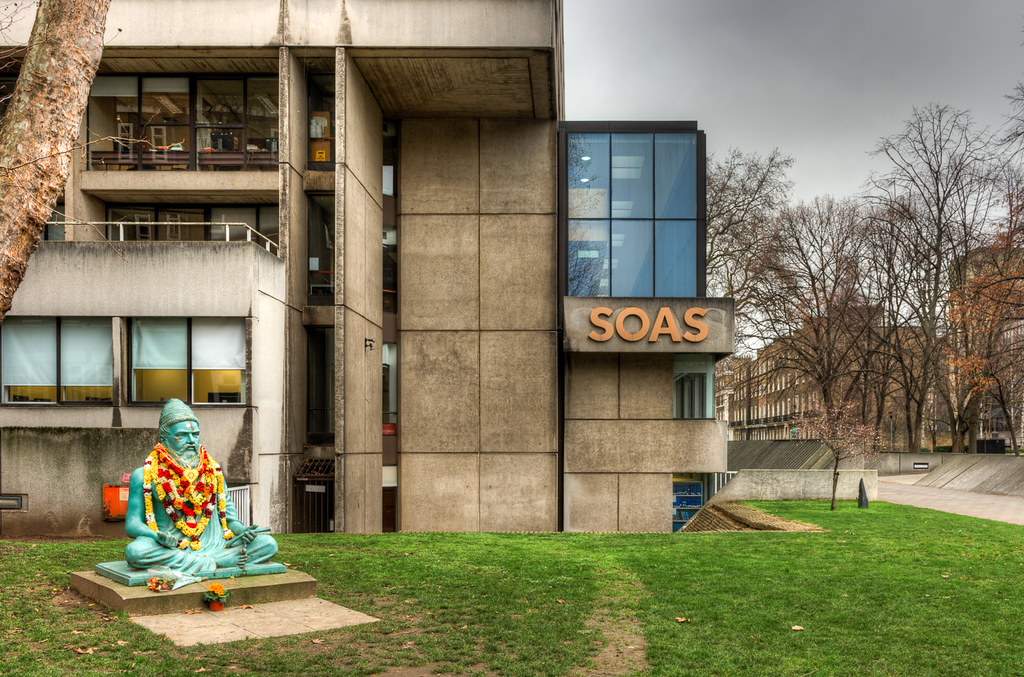
HISTORICAL GAY CAMDEN - SOAS Library and Thiruvalluvar | This is the School of Orien… | Flickr

‘My’ first event was in SOAS (School of Oriental and African Studies), LGBTQ and Religion / Faith.  It was held in Room 106. The organisers, (“… [s]peakers from the Christian and Muslim communities, as well as SOAS lecturer and writer, Ben Murtagh”) did not turn up!)).  A ‘Room T 102’, on the same floor as the room we were on, is mentioned at the back of the booklet in connection with this discussion.  Most of us probably spent the evening wondering if we should be in another Room (even building; UL, and SOAS itself are enormous) we got on with it anyway.  There was one Irish, one Polish and one Italian Catholic, all-male, in my case ‘collapsed’, two Jewish persons, one transgender, a ‘lapsed Anglican’, (a young heterosexual man who is doing a MA on religion and sexuality), and ‘Lee’ / ‘Leigh’ who’s background was Pentecostal.  There were two largely quiet young women of Anglo-Caribbean (and Pentecostal) origin.

In the nature of things very few conclusions were come to, we simply discussed our inherited faiths and our environments.  Catholic Irish don’t take a denunciatory attitude to Gay people, they never have; sex, sexuality, and orientation simply were not discussed.  ‘Sex education’ was handled very awkwardly, if at all.  (Currently, sex education in the Republic is quite open, and – ‘liberal’ is the word, – probably due to a number of females, Fianna Fáil, Education ministers, Máire Geogeghan Quinn and Mary Burke.  LGBT matters are dealt with, though as ever, the B and T tend to be neglected).  The Pole and the Italian said that homosexuality was not discussed, except in terms of total rejection.  The M-to F Trans woman was of quite rigidly Orthodox background and said her own feeling was that anything other than heterosex was frowned upon. Sex variant people were simply perverts – end of story.   Or get lost – you were no longer of the Faith – or the family.  She had had a long and problematical journey out of this mind-set.


A problem with religion in our political context is that all the parties have similar policies.

They’ll do as little as possible to put them into effect, and we can always expect half a dozen Tory closets to do something stupid.  (The fact that there is – in context – a major homophobic party in Northern Ireland is more useful than not.  It means than nearly everyone else feels the need to be pro-LGBT, or at least, consider the matter.  The current leader of the UUP has attended Belfast LGBT Pride for a number of years now.  As have all the other (non-‘Paisleyite’) parties).

The churches can treat LGBT members any way they feel.

Vincent Nichol, immediately on becoming Archbishop of Westminster and RC Primate of England unilaterally closed down the Soho-based LGBT Apostolate and masses for LGBT people.  Quite what this has to do with Christian charity it is difficult to fathom.  And may create a problem of authority.  They’ll probably continue in disguised form.

So far as the ‘Room 106’ discussion was concerned, it is a pity nobody turned up with a notion of how to lead such.   (Michael Brown took the chair at – basically, -my request, but obviously could only facilitate the conversation; not lead it).  We, inevitably, gave our ‘testimonies’ and left, we didn’t even swap e-mail addresses.  Which was a bit of a lost opportunity.  I managed not to get to other events, partly because some were at awkward times, an interesting talk on Magnus Hirschfeld, The Scientific Humanitarian Committee and the First Wave of the Queer Movement in Germany 1897 – 1933, was held in Islington Town Hall at six in the evening. The time and venue were not problematical for me.  I didn’t remember the event until about 6.15 p. m. on the actual day.
I didn’t, but probably I ought to, have gone to Jonathan Kemp’s readings from his books in Islington Museum.  I felt it was somewhat redundant, and I should just read and review the books in the standard fashion.

QuACers

QUAC’s event was held in an architectural wonder – the ?? Centre – it is spheroid.  The rooms and study pods do have corners.  I inserted myself into a corner furthest from the door – nearest the wine – but ought not to have.  I had a very heavy cold and a braying cough, as did a woman near the door.  We both had to leave the room and share Fisherperson’s Friends as the rest of the audience simply could not hear the speaker from Syriza.  I asked him if he could send upstart a version of his talk.  He said that he only had notes, but would try to do something


Written by S McGouran


Internal links to other interesting articles:

  • Holy Sexuality Conference
  • The National Union of Students (NUS), Lesbian and Gay Liberation Campaign Conference 1988

Filed Under: Community Journalist, History Tagged With: Camden & Islington LGBT History Month, christian, HISTORICAL GAY CAMDEN, ian paisley, Muslim, OAS, religion, Room 106, School of Oriental and African Studies

  • « Previous Page
  • 1
  • …
  • 15
  • 16
  • 17

Categories

Copyright ACOMSDave.com © 2026