
Shorts are far more than just a practical piece of summer clothing — they are a garment that has travelled through thousands of years of history, evolved through function and fashion, and become a powerful symbol of style, identity, and self-expression. From ancient loincloths to today’s diverse range of cuts and lengths, men’s shorts tell a story of how we dress, how trends shift, and how culture — especially gay culture — has shaped what we wear and how we wear it.
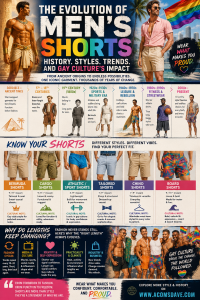 🕰️ A Brief History: From Function to Mainstream Fashion
Ancient & Early Origins
As early as 3000 BCE, ancient Egyptians wore short wrapped garments suited to the hot climate. In Ancient Rome, laborers, soldiers, and athletes wore the subligaculum — a short, loincloth-like undergarment that was sometimes worn alone during warm weather or sporting events.
Through the Middle Ages (5th–15th centuries), European men wore braies: loose, knee-length trousers made of linen or wool, worn under tunics by people of all classes for work or travel. By the 17th and 18th centuries, knee-length breeches became the formal standard for upper-class men, paired with stockings and made from fine fabrics like silk or velvet. By 1800, however, long trousers had largely replaced breeches as everyday wear, and shorts disappeared from adult men’s wardrobes almost entirely.
19th Century: Shorts = Childhood
For nearly the whole of the 1800s, shorts were strictly seen as clothing for boys. Young boys wore knee-length knickerbockers until their teenage years; switching to long trousers was a clear marker of becoming an adult. For grown men in Europe and North America, wearing shorts in public was considered childish, improper, or even inappropriate. The only exceptions were soldiers serving in tropical colonies, where shorts were adopted purely for comfort and mobility in hot climates.
Early 20th Century: Sports and Military Change the Rules
The 1920s and 1930s marked the first major shift. Athletes — tennis players, runners, and swimmers — began wearing lightweight, knee-length shorts to allow freedom of movement. By the 1930s, white tennis shorts had become an iconic look, slowly normalising shorts as acceptable adult wear, though only in specific contexts.
World Wars I and II accelerated this change. Allied forces, especially British troops, wore khaki shorts in Africa, Asia, and Bermuda. It was from military use in Bermuda that Bermuda shorts were born: tailored, knee-length, and smart enough to move from combat wear to civilian casual and semi-formal style. Even so, shorts were still mostly reserved for sports, holidays, or tropical service — rarely seen in cities or everyday life.
1940s–1970s: Leisure, Rebellion, and Bold Style
After WWII, the rise of seaside holidays and a growing casual culture made shorts a regular part of men’s summer wardrobes — though still mostly for vacation wear.
Everything changed in the 1960s and 70s. Youth rebellion, surf culture, and changing social norms pushed styles shorter, brighter, and bolder. Board shorts — long, loose, and colorful — became synonymous with surf and beach life. Shorts moved from being just practical to being a statement: fun, youthful, and expressive. This era also saw the first signs of how subcultures — including gay culture — would start using shorts as a way to signal identity and confidence.
1980s–1990s: Fitness, Streetwear, and Variety
The 1980s fitness boom brought athletic shorts into the spotlight: tight, short, colourful styles from brands like Nike and Adidas became popular both in the gym and on the street. Cargo shorts, with their practical side pockets, also became a staple for casual wear.
In the 1990s, sports and hip-hop culture shifted trends toward long, baggy shorts — popularised globally by basketball stars like Michael Jordan. Lengths went from mid-thigh down to just above the knee, and loose fits dominated street style. For many, longer lengths also offered a way to balance comfort, coverage, and style.
2000s–Present: Versatility and Fashion Freedom
Today, shorts are one of the most versatile items in a man’s wardrobe. We see everything from ultra-short athletic cuts to long tailored styles, and everything in between. They are no longer limited to casual or sportswear: tailored linen shorts, smart chino styles, and hybrid designs are now worn in smart-casual settings, paired with blazers, button-down shirts, or loafers. Fabrics range from performance synthetics and durable canvas to luxury linen and sustainable materials. Shorts have become acceptable almost everywhere — and the range of choice has never been wider.
🩳 Key Styles: What’s What?
With so many options, it helps to know exactly what defines each style:
Bermuda Shorts
- Length: Knee-length or just above (9–11 inch inseam)
- Fit: Tailored, neat, slightly fitted — not tight or baggy
- Design: Clean, flat front, belt loops, standard pockets; no extra bulk
- Fabric: Cotton, chino, linen, lightweight wool
- Best for: Smart-casual occasions, office summer wear, dinners, or polished everyday looks
- Cultural note: Long a favourite in gay style circles for looking put-together while staying relaxed.
Cargo Shorts
- Length: Knee-length or slightly longer (9–11+ inch inseam)
- Fit: Loose, roomy, relaxed through the leg
- Design: Defined by large, flap-covered side pockets; originally military, now functional casual wear
- Fabric: Durable canvas, twill, ripstop
- Best for: Outdoors, hiking, practical wear, or a rugged casual look
- Cultural note: Less common in more style-focused spaces, but embraced by those who value function or a utilitarian aesthetic.
Athletic / Sport Shorts
- Length: 3–5 inches (very short) to 7–9 inches (long and loose)
- Fit: Lightweight, stretchy, or loose for movement
- Design: Elastic waist, drawstrings, often mesh liners or side slits; bold colours or logos
- Fabric: Polyester, spandex, quick-dry synthetics
- Best for: Gym, running, sports, or lounging
- Cultural note: Highly significant in gay culture — shorter athletic cuts have long been a way to celebrate the body, show confidence, and signal openness or style awareness.
Tailored Shorts
- Length: 7–9 inch inseam, sitting 1–3 inches above the knee
- Fit: Slim or straight, structured and sharp — like short suit trousers
- Design: Pleats, flat fronts, formal pocket details; polished finish
- Fabric: Linen, cotton blends, wool, high-quality twill
- Best for: Summer weddings, garden parties, smart events, or when you want to look sharp
- Cultural note: A go-to for “dressed-up casual” and very popular in gay fashion for looking elegant yet summery.
Chino Shorts
- Length: 7–9 inch inseam (above or just at the knee)
- Fit: Slightly slim or regular — close but not tight
- Design: Simple, timeless, flat front, clean finish
- Fabric: Soft cotton chino
- Best for: Everyday wear, holidays, weekends — the ultimate versatile style
- Cultural note: A staple for every wardrobe, and often styled in unique ways (bright colours, bold patterns) within gay fashion.
Board Shorts
- Length: 9–11+ inch inseam, covering most of the thigh
- Fit: Loose, straight cut
- Design: Lace/velcro fly, no elastic waist, bright prints or patterns; no lining
- Fabric: Nylon, polyester, quick-drying
- Best for: Beach, swimming, water sports, or laid-back summer style
- Cultural note: Loved for bold prints and colours — a way to show personality and fun, very popular in gay resort and holiday style.
📉📈 Why Do Lengths Keep Changing Every Year?
If you’ve noticed that “the right length” seems to shift up or down every season, you’re not imagining it. This constant change happens for several key reasons — and gay culture has played a big part in driving these shifts too.
Fashion Cycles Repeat
Fashion moves in cycles, usually every 10–20 years. Styles from the 1960s–70s (very short lengths) came back in the 2000s and again recently. The long, baggy shorts of the 1990s returned in the early 2020s. Designers intentionally update old styles to feel new, and length is one of the easiest ways to refresh a look.
Cultural and Media Influence
What we see in movies, sports, and social media shapes what we want to wear. Basketball made long shorts famous in the 90s; tennis and fitness culture pushed shorter lengths later. Crucially, gay culture has often been ahead of the curve here: gay men have long embraced shorter, tighter, or more fitted styles as a celebration of the body and self-expression — trends that later spread to mainstream fashion. When style icons, influencers, or gay celebrities adopt a certain length, it quickly becomes the new standard.
Identity and Self-Expression
For many men — and especially within gay culture — shorts are more than just clothes. Length and fit send subtle signals. Shorter lengths have historically been associated with confidence, openness, and a focus on style and body positivity. Longer lengths can signal a more relaxed, retro, or utilitarian vibe. Because gay culture has always placed a high value on self-presentation and breaking traditional rules, it has consistently pushed the boundaries of what lengths are acceptable or desirable. When mainstream society thought “shorts should be knee-length,” gay fashion was already showing that shorter could be stylish, acceptable, and empowering.
Practicality and Climate
Hot weather naturally drives demand for shorter, cooler styles. When comfort or coverage becomes a priority, longer or looser cuts gain popularity. But even here, culture plays a role: in gay-friendly cities, resorts, and spaces, shorter lengths remain popular year after year, regardless of mainstream trends, because they are tied to identity and community.
Industry and Business
Brands and retailers need new trends to encourage sales. By shifting the “ideal” length each year, they give us a reason to update our wardrobes. High fashion sets the direction, and street style — heavily influenced by gay style leaders — brings it to life.
✨ Final Thoughts
The story of men’s shorts is a story of freedom. From being forbidden for adults to becoming a canvas for creativity and identity, shorts have come a long way. What makes this history even richer is the role of gay culture: by embracing bold cuts, shorter lengths, and expressive styles, gay fashion has not only shaped how shorts look today but also helped change how men think about dressing — encouraging confidence, body positivity, and the freedom to wear what feels right for you.
Whether you prefer ultra-short athletic styles, smart tailored cuts, or retro long lengths, the best rule is simple: wear what makes you feel confident, comfortable, and proud.
Links:
#MensShorts #MensFashion #GayFashion #StyleHistory #SummerStyle #FashionTrends #ShortsStyle #MensStyle #BodyPositivity #FashionCulture
Thanks for reading — explore more style and history on www.acomsdave.com
Leave a Reply