ACOMSDave

Community Journalist

  • Home
  • Community Journalist
  • Events
  • Media Page and Press Kit
    • Projects and Work
  • Resources & Documents
    • LGBTQ+ Support Groups and Documents
  • NIGRA
  • Archives
  • Contact

Can you be LGBT and Catholic? This documentary investigates

13/01/2016 By ACOMSDave Leave a Comment

Gay Times Logo

12th January 2016 by Daniel Megarry

A documentary has gone inside the walls of an LGBT-friendly church in Baltimore to dispel myths that people cannot be both gay and Catholic.

The LGBT Educating and Affirming Diversity Ministry within the Saint Matthew Catholic Church seeks to provide church-goers with a community that is universally accepting of people from all walks of life.

LGBT-Church

© Eric Kruszewski


Filmmaker Eric Kruszewski recently crossed paths with LEAD and decided to create a documentary series to share their mission statement, and look at the lives of people who identify as both LGBT and Catholic.
He told Out magazine: “I was raised Catholic, but have not practiced my faith in years. And before this project, I had never heard of Saint Matthew Catholic Church. One of the parishioners knew my work and me. So when we bumped into each other at a media event, she told me, ‘I have a story for you…’
“There’s no way I can fully understand what it’s like to be an LGBT Catholic in 2016. But through interviews, the documentary process and getting close to the individuals portrayed in these videos, my goal was to accurately capture their thoughts, feelings and experiences.”
Watch the first part of the documentary below

Filed Under: Anti-Bullying & Homophobia Tagged With: Catholic, church, LGBT Christian, politics

Stonewall Housing to investigate how the older LGBT community live

13/01/2016 By ACOMSDave Leave a Comment

Gay Times LogoRainbow Flag

12th January 2016

by Daniel Megarry

Stonewall Housing have announced a pioneering study into the need for specialist housing for the older LGBT community.

The housing advice and support provider has been awarded funding from the Big Lottery Fund and Commonweal Housing to carry out their study, which will establish the demand for dedicated LGBT housing.
CEO of Stonewall Housing, Bob Green, said: “The feasibility study is a great opportunity to really investigate the housing needs and requirements of the older LGBT community.
“At present there are no older LGBT housing schemes in the UK and we will be looking to Europe and the USA for examples of how such schemes can provide live in safe and supportive housing.”
In 2015, the National LGB&T Partnership survey found that 33% of respondents felt unsafe in residential settings and only 13% were satisfied with their care.
Bob continued: “We have worked with older LGBT people around the UK in recent years to ensure their voice is heard, and that housing providers recognise their needs – this study will take us one step closer to ensuring that the wishes of the LGBT community become a reality.”
The Stonewall Housing Feasibility Study will be released in April 2016.
Last year it was announced that Britain would see its first LGBT retirement home within the next three years, either in London or Brighton.
The organisation behind the project said: “If you don’t have your own children, and if you have fractured family relationships, which is a possibility, then you would not have the support networks that many older people count on.”

Filed Under: Anti-Bullying & Homophobia Tagged With: elderly, housing, LGBT, retirement homes

Stop Neglecting the True State of LGBT Refugees

13/01/2016 By ACOMSDave Leave a Comment

advocate_logoBY NEIL GRUNGRAS
JANUARY 12 2016


isis_mob_waiting

Crowd gathers to watch as ISIS throws man from roof after accused of being gay.

LGBT people face mortal danger from ISIS and around the world, yet few ever obtain refuge in the U.S.

In December 2011, President Obama published a trailblazing memorandum vowing to apply U.S. power to create safety for LGBT people oppressed and endangered around the world. Among the key means: securing LGBT refugees’ access to the U.S. refugee system. This venerable goal is eluding us.
As the president delivers his final State of the Union address tonight, the perils facing LGBT people in many countries around the world have never been so dire.
Never have so many LGBT people been so viciously targeted by state and nonstate actors in so many countries. Never before have leaders outside the U.S. used LGBT issues for political gain with such ease. And far from gaining access to refugee systems, the few LGBT people who escape carnage in their countries are unable to access the fortress of international refugee protection or the U.S. Refugee Admissions Program.
Several months ago, U.S. Ambassador to the United Nations Samantha Power shocked the world when she revealed that of the 70,000 refugees the U.S. took in during 2014, fewer than 100 were LGBT. The numbers for 2015 will not be better.
Without a solution, LGBT people will continue to be executed in places like Syria, where the bloodthirsty Islamic State terrorist group and the masses alike execute accused gays in the name of piety.
With so much goodwill and commitment on the president’s part, something is terribly wrong. Without a firm understanding of how and why LGBT refugees access — and are locked out of — refugee systems, the State Department, which runs our country’s refugee program, has been faltering at efforts to improve the dismal picture, using methods that have been tried and have failed.
But there is a way. The U.S. certainly can admit vastly more LGBT refugees.
LGBT refugees face insurmountable barriers accessing protection, as self-disclosure puts them in mortal danger. We’ve all heard the countless horrifying stories of innocent people being thrown from buildings simply because they are accused of being gay. Yet receiving protection requires revealing their identity.
To begin creating access routes, the State Department must work much more closely with LGBT organizations already in the field. To create a sliver of trust and safety in such treacherous territory, refugee professionals must not only have extraordinary expertise and sensitivity, they must also embody the message they utter.
The humanitarian community understands that a female survivor of rape should not be expected to tell her true story to anyone but another woman. Yet LGBT refugees are expected to blithely allow ostensibly heterosexual adjudicators into the most difficult vaults of their personal lives.
A rainbow flag and a concerned look are a good start. But for an LGBT refugee escaping certain death after being hounded by decades of external and internal homophobia, these gestures are not nearly enough. To collect the courage to come out — even in order to save their own lives — most refugees need to derive strength and solace from other LGBT people. Yet in most places, this essential touchstone is nowhere to be seen.
In a recent informal survey of Gaziantep, Turkey, the ground zero refugee city housing 220,000 Syrians, I found not a single “out” LGBT refugee. Not surprisingly, of the thousands of nongovernmental organization workers in that border city, not one refugee worker is “out.” If well-protected refugee agency staff will not dare come out of their comfort zone to colleagues, how can we possibly expect a powerless LGBT refugee to expose this most private and lethal vulnerability to a stranger?
Many refugees have paid with their lives to safeguard their secret sexual orientation or gender identity. We cannot bring them back. But we can spare those now clamoring for dear life in hundreds of places like Gaziantep.
The president’s bold call for increasing the Syrian refugee quota by 10,000 slots is commendable. Employing and protecting openly LGBT staff and partnering closely with openly LGBT groups is the key to creating system access for LGBT refugees. We ask that the Obama administration take these essential steps to fulfill the wise objectives originally set out by the president in 2011.

NEIL GUNGRAS

NEIL GRUNGRAS is the founder and executive director of the Organization for Refuge, Asylum, and Migration, an international nonprofit devoted to advocating on behalf of the world’s most vulnerable refugees and asylum-seekers, including those fleeing persecution based on their sexual orientation and/or gender identity.

Filed Under: Anti-Bullying & Homophobia Tagged With: abuse, ISIS, LGBT refugees, politics

Justice?

12/01/2016 By ACOMSDave Leave a Comment

Human Rights

Editorial:

The definition of justice varies from individual, to individual, depending upon what has happened, how it has affected that individual, and also on how it has affected the societal group that he or she belongs to.

The Law Dictionary defines justice as: 

“Protecting rights and punishing wrongs using fairness. It is possible to have unjust laws, even with fair and proper administration of the law of the land as a way for all legal systems to uphold this ideal.”

Law Dictionary: What is JUSTICE? definition of JUSTICE (Black’s Law Dictionary)

So you are probably asking why I am discussing this topic, and as you can probably guess it is because of an article written in one of our daily newspapers, in this case The Telegraph:  ‘The Church, the police and the unholy destruction of Bishop Bell’
I have to state that I have no knowledge of Bishop Bell, or of the case that is outlined in the news article, indeed in terms of religion I am an atheist – but open to discussion.  My problem with religion is that man is involved, and to often man has used religion as a means to elevate themselves above the ordinary being.
So to get back to the article; Charles Moore, the writer of the article writes critically on how it appears that church in an attempt of heading off bad publicity, has decided that Bishop Bell is ‘guilty’ of a sexual crime without there having been a court case to assess the evidence. Indeed the Church has gone even further, in that it has demoted Bishop Bell, flowers placed on his memorial in the cathedral are removed, and what was the ‘George Bell house’ (a centre for vocation, education and reconciliation) is to be renamed shortly.
The fact that the church has jumped in with both feet, instead of following the due process of law, is why I have an argument with the Church.

The key legal principle – the presumption of innocence – is being set aside’

I would urge you to read the article, to then to read the article ‘Police State UK: The Rights You Didn’t Know You’d Lost’ written by Scriptonite / March 19, 2013
 
I believe in justice, but justice must be seen to be done fairly and without favour to one side or the other.  I will leave you with the last paragraph from Charles Moore’s article…

 Justice is not guaranteed by passionate feeling against a particular, horrible crime such as child abuse. It depends absolutely on proper process. When public bodies set that process aside, what trust or “transparency” is left? If Bishop Bell had been a Nazi war criminal, the charges against him would have had to reach a far higher standard of proof than those by which the Church of England has destroyed him. The restoration of justice should be its New Year resolution. 


Filed Under: History Tagged With: civil liberties, Human Rights, justice, politics

Will Stabbing Attack Tear Apart Israel’s LGBT Community?

12/01/2016 By ACOMSDave Leave a Comment

Published in Forward – Naomi ZeveloffAugust 5, 2015
Fractured Gay Pride Flag
When an ultra-Orthodox fanatic named Yishai Schlissel stabbed six people at the Jerusalem Gay Pride march in July — 16-year-old Shira Banki later died of her wounds — Schlissel also fractured Israel’s self-image as a global beacon for lesbian, gay, bisexual and transgender rights.
For years, Israeli diplomats have used their country’s impressive record on LGBT issues to score political points on the world stage. But the picture they painted was of Tel Aviv, the so-called gay capital of the Middle East, with its gay and lesbian bars and beaches, and miles of rainbow bunting unfurled ahead of the raucous annual pride parade. Forty miles to the east, Jerusalem’s gay community feels like a stifled minority.
As the broad LGBT movement in Israel takes stock of the attack, the differences between the two societies has come to the fore. Three days after the stabbing, Tel Aviv activists declined to travel to Jerusalem to protest the violence, instead staging a separate rally in Tel Aviv’s Gan Meir park. The Tel Avivians had already planned a memorial service that evening to coincide with the six year anniversary of a fatal shooting at a local gay youth center. But Jerusalemites still felt stung by the decision.
“When this happened the expectation was that everyone would drop everything and come and be in solidarity in Jerusalem,” said Tom Canning, spokesman of the Jerusalem Open House for Pride and Tolerance. “We wouldn’t be our small group of hundreds of activists, we would be our group of activists with thousands behind us. There was a strong sense of disappointment, I would even say disbelief, that [Tel Avivians] were deciding to go ahead with their own event.”
Tel Aviv’s rally drew major politicians, with impassioned speeches by Zionist Union chairman Isaac Herzog and Yesh Atid chairman Yair Lapid. Though President Reuven Rivlin spoke at the Jerusalem protest, activists there bemoaned the disunity between the two communities that they said feeds into Tel Aviv’s image as the only safe haven for gays in Israel.
“The Tel Aviv-based organizations are giving hand to creating and strengthening an LGBT ghetto in Tel Aviv,” said Canning.
The gay rights movement in Israel has its roots in Tel Aviv in the 1970s, with the founding of the national Israeli Gay, Lesbian, Bisexual and Transgender Association, known as the Agudah. One of the first public pride events took place in Kings of Israel Square, now known as Rabin Square, in the Tel Aviv city center.
In the 1990s, the fledgling movement was buoyed by a “legal revolution,” Hebrew University of Jerusalem professor Alon Harel wrote in the Columbia Human Rights Law Review. Within a few short years, the Knesset banned workplace discrimination against gay people , the Israel Defense Forces ensured their equal treatment — 19 years before the United States army did the same — and, following a high court order, El Al airlines began giving free tickets to the partners of gay employees.
Then, in 2009, a gunman entered a Tel Aviv gay youth center and opened fire, killing two. Six years later, the perpetrator has still not been found. The attack traumatized LGBT Israelis, but it also sparked a national conversation about their rights. Today, Tel Aviv’s gay community is central to the city’s identity and politics. Even politicians from the right, such as Likud minister Miri Regev, have appeared at the city’s gay pride parade, which drew 100,000 Israelis and tourists in 2015. Contrast that to Jerusalem, where only left and center-left politicians show up, and marchers typically number only about 5,000.
For Tel Aviv’s well-established LGBT community, the next frontier is same-sex marriage. But while legalizing gay marriage would benefit all Israelis, it’s a distant priority for gay people in Jerusalem, who are focused on survival.
“There are two voices here,” said Sattath. “One is the voice of Tel Aviv that seeks freedom of marriage, like in the United States, and that is a very difficult goal to achieve, but it is a valid goal. The other voice is that of Jerusalem. The majority of gay Jerusalemites are so oppressed that they can’t even dream of marriage; they need education and societal change.”
Jerusalem’s activists say that they face a combination of municipal neglect and incitement from ultra-Orthodox rabbis and politicians who see their parade as an “abomination.” Jewish Home Knesset member Betzalel Yoel Smotrich even took to Facebook after the stabbing to call the parade an “attempt to besmirch traditional Jewish family values.”
“The message for years has been that we are desecrating the holy city of Jerusalem,” said Canning. “People say, ‘It’s horrible that someone stabbed us and attacked us, but why you are you doing this in Jerusalem?’”
On the official level, Jerusalem’s LGBT community has had to fight its way to recognition. For years, the Jerusalem municipality refused to fund the Jerusalem Open House, even though it provided services to thousands of Jerusalemites and thus was entitled to public support. In 2010, after years of legal wrangling, the high court ordered the municipality to pay $120,000 to the Open House in compensation.
The seemingly careless policing of Pride — Schlissel had recently been let out of prison for carrying out a similar attack on the same march in 2005 — only heightened the feelings of vulnerability among gay Jerusalemites.
Jerusalem’s LGBT activists say that education is the key to acceptance in their city and beyond. According to Sattath, all secular schools in Israel have the option to include an LGBT-themed curriculum. But she wants it to be a central component of Israeli education rather than an add-on. Eventually she would like to see LGBT issues addressed in Orthodox and Arab schools as well.
“Extremists have to be nourished somewhere, and they are nourished by a society that ignores us and silences us, and where homophobia is very, very prevalent,” she said.
Sattath said that she has been buoyed by the solidarity of other Israelis. Many showed support by changing their Facebook photos to a rainbow flag with a candle. Two Israeli celebrities — Labor politician Itzik Shmuli, of Lod, and Tel Aviv journalist Keren Neubach — publicly came out after the stabbing. But Orthodox gay Israelis in places like Jerusalem and Beit Shemesh found themselves burrowing deeper into the closet.
“[The stabbing] has created an atmosphere in which people are afraid to tell the truth to tell their families, their close friends,” said Ron Yosef, founder of Hod, an organization for Orthodox gay men and lesbians.
In Jerusalem there is a feeling that LGBT leaders have no choice but to work within the city’s conservative culture to change religious attitudes about their existence. In Tel Aviv, on the other hand, activists are vigilant about politicians trying to score political points at the expense of their community. Naftali Bennett, a minister from the ultranationalist Jewish Home party, was turned away from the Tel Aviv solidarity rally when he refused to sign a document to advance gay rights in Israel. Bennett’s party opposes gay marriage in Israel.
Jerusalem activists, by contrast, opted against such a litmus test at their own rally.
“This was in order to allow everyone from the entire political spectrum and the religious spectrum to come and speak freely against homophobia and violence,” Canning said. “We didn’t want to turn this into a political event.” Bennett chose not to attend the rally in Jerusalem.
After the protests, Tel Aviv activists made a belated gesture toward Jerusalem when the Agudah chartered a bus to Jerusalem for a vigil for Banki, the victim of the stabbing attack.
And some Tel Aviv activists are acknowledging it’s time to look past the Tel Aviv “ghetto” to Jerusalem as the new battleground for gay rights.
“The real fight is in Jerusalem,” said Mickey Gitzin, a Tel Aviv city council member and gay activist. “Many times our opponents want to keep us in the ‘ghetto’ in Tel Aviv. They say, ‘This is your city, stay there.’ But we are here, we are everywhere, and it is time for us to speak up.”
Contact Naomi Zeveloff at Zeveloff@forward.com or on Twitter, @naomizeveloff
Read more:

  • Forward
  • Forward – Don’t blame all ultra-orthodox for actions of one stabber
  • Forward – What Gay Pride Parade Stabber Has in Common With His Victims
  • How Not To Cover a Gay Pride Parade Stabbing
  • The Ultra-Orthodox Hatred Behind the Stabbing at Jerusalem Gay Pride

Filed Under: Anti-Bullying & Homophobia Tagged With: Gay Pride, Israel, Jews, LGBT, orthodox, stabbing

Pride and protest in Hattiesburg

12/01/2016 By ACOMSDave Leave a Comment

LGBT in the SOUTH Conference 


Posted on January 4th, 2016

By Felicia Blow
My first trip with the Campaign for Southern Equality and my first trip to the Deep South were one and the same. Although I’ve lived in the South all my life, I’ve never ventured farther than North Georgia (well, Florida, technically, but I wouldn’t consider Disney World the Deep South), and making the drive to Hattiesburg, Mississippi earlier this month was daunting for a couple reasons: I get carsick and restless on long drives, and I was a newcomer to CSE where the staff has built strong connections and relationships with Hattiesburg locals. I wasn’t really sure what to expect.
Southern Pride-1
My awesome coworkers Chloe and Ivy, right before we hit the road!
As we packed up the car, I volunteered to take the first shift driving to keep occupied. I marked each border we crossed ­– city limits, county, state – as the highway wound us back and forth out of the mountains. We had a short, but sweet stopover in Birmingham for the night, where we ate at a delicious Asian food truck with extremely generous portions. It was an unexpected find and reminded me of something I’d see back in Asheville, with its love of fusion food and novelty eats. I dove into the heaping plate of pork eggrolls, grateful for good food and a break from the car ride, and by then I’d started to feel settled into the trip. There are few better ways to get comfortable with a group of people than by traveling together. We jammed to Top 40 in the car and crammed into a hotel room on the outskirts of downtown, Ivy taking one for the team, sleeping on a stiff, squeaky sofa bed.
I would have regretted the short amount of time we spent there if I hadn’t known we’d be returning in a month for Birmingham’s own convening. So the next morning, we arrived in Hattiesburg and immediately got to work, shopping for snacks and setting up the space for the next day’s convening at the Spectrum Center, a fairly recently opened LGBT community center – and the only one in Hattiesburg – run by Sara and LB Bell, longtime leaders in CSE.
We had a late night and an early start the next morning to get the food set up and tie up loose ends before people started arriving, so I downed some coffee and we were off and running. I had to do some public speaking at the start of the convening, which is never my first choice, and I characteristically rushed through it, but since I started in August, the whole staff has been great at getting me to do things I’d usually shy away from. I got through it and spent the rest of the day in a picture-taking frenzy, uploading things to Facebook and Twitter, inviting people to come out.
As it was, we had an amazing turnout; there was barely enough room for everyone to sit in the small house-turned-center. It always energizes me to be in a space full of folks who are engaged – with the work and with each other – and who are committed to learning, working, and making change. There’s something undeniable about it, and dropping in on sessions throughout the day showed me how much people were taking away from this event that I’d had an, admittedly small, hand in helping to create in the last month and a half.
Southern Pride-2
Awesome attendees after a great day of learning and connecting.
There’s something exciting and warming about bearing witness to a sense of community among others; I’m always glad to be invited into those spaces, and in this one I felt immediately welcome. It’s something I love about the South, and it’s more than just run-of-the-mill Southern hospitality. For some, the notion of Southern Pride might seem like a paradox in and of itself, but those of us from these states know there is reason to be proud, both of where we come from and of who we are. The next day at Southern Fried Pride, Hattiesburg’s first ever Pride celebration, it was evident how many people had banded together to make this possible. How much love, and, as it soon became clear, how much courage and conviction it took.
Southern Pride-3
Nationwide, tensions are high around rights and safety for LGBT folks and people of color, and day after day there is news of another mass shooting. Two had taken place just the day before. So when protesters arrived, their intentions unclear and their affiliations muddled – Christian, Confederate, Klan – I was terrified for a moment. Even with the local police presence and relatively small number of protesters, the fact remained that we were a group of people of all kinds of racial, sexual, and gender identities, and the cause for concern was not unwarranted. A few weeks later one of the protesters was arrested for bombing a Wal-Mart in Tupelo, Mississippi after the store’s decision to discontinue selling confederate flags. Sometimes that gut feeling just can’t be ignored.
But as the day wore on, it seemed their only goals were intimidation and attention. Some of them set up in camper chairs and took selfies with their flags (I can only imagine how one would caption that), and ultimately, after entering the parade through downtown – some trailing behind, some directly inserting themselves, rubbing shoulders with us – they packed up early and headed home.
There were four hours left in the day for Pridegoers to celebrate unopposed, but the contrast between the great hospitality I experienced and the sharp hostility of their presence stuck with me. I knew I’d be back to this region again in a month’s time, in Birmingham, and wondered if we’d face similar resistance there. It’s a fearful and confusing time to be living in, but it’s important to hold that tension and uncertainty while we figure it out

Filed Under: History Tagged With: Campaign for Southern Equality, Florida, Mississippi, North Georgia, Pride, South USA, Southern

Anti-gay armed forces laws set to be officially removed

12/01/2016 By ACOMSDave Leave a Comment

By WMNDavidWells  |  Posted: January 11, 2016

By WMN reporters

soldiers
Existing rules state that engaging in a homosexual act can constitute grounds for discharging a member of the armed forces.
And while the policy was abandoned in 2000, it still technically exists in law.
But MPs have agreed to change that as the Armed Forces Bill cleared its final House of Commons hurdle.

A Government amendment to get rid of the relevant discriminatory laws was added to the Bill unopposed.
Defence Minister Mark Lancaster said the existing rules are “inconsistent with the department’s current policies and the Government’s equality and discrimination policies more generally”.
Mr Lancaster said when the provisions were originally put in place it was government policy that homosexuality was “incompatible with service in the armed forces” and therefore people who “engaged in homosexual activity were administratively discharged”.
But since 2000 “these provisions have had no practical effect and they are therefore redundant”.
“These provisions in no way reflect the position of today’s armed forces,” he said.
“We are proud in defence of the progress we have made since 2000 to remove policies that discriminated against homosexual men, lesbians and transgender personnel so that they can serve openly in the armed forces.”
He added: “This amendment is a practical step which shows that this Government is serious about our commitment to equality in this area.”
The shadow defence minister Toby Perkins welcomed the move.
He said: “Removing this from the statute book will be a welcome step forward so that the explicit refusal to discriminate against homosexual service men and women is expunged from the service book just as it has in practice been outlawed.
“It is very clear that this is an important step forward and it is one we welcome very strongly.”
Meanwhile, the SNP’s shadow armed forces spokeswoman Kirsten Oswald also backed the amendment.
She said: “It is scarcely credible that we are discussing this in 2016. It is discriminatory and it is offensive that this provision exists.
“Notwithstanding the fact that it hasn’t been used in reality for a number of years, it is most welcome that the Government are finally removing the provision as they should.”
The Armed Forces Bill legislates for the UK to keep its Army during peace time.
The latest version contains provisions relating to armed forces pensions and to the powers of Ministry of Defence fire fighters.
The Bill will now proceed to the House of Lords for further scrutiny
Read more: http://www.westernmorningnews.co.uk/Anti-gay-armed-forces-laws-set-officially-removed/story-28505362-detail/story.html#ixzz3x1a13qaM
Follow us: @WMNNews on Twitter | westernmorningnews on Facebook

Filed Under: History Tagged With: armed forces, discrimination, government, homophobia, laws

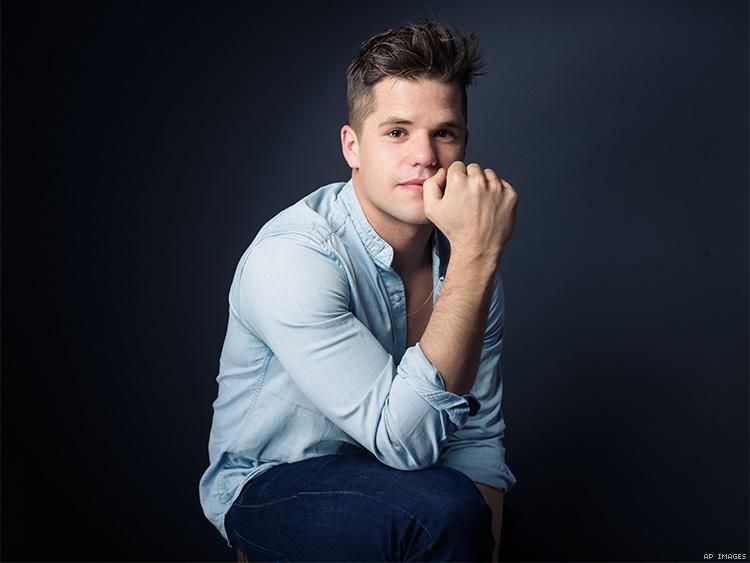
Teen Wolf Actor Charlie Carver Comes Out as Gay

12/01/2016 By ACOMSDave Leave a Comment

advocate_logo
BY JASE PEEPLES
JANUARY 11 2016 
AP Images

In a heartwarming series of personal posts on Instagram, the actor shares his coming-out process.

 
Actor Charlie Carver publicly revealed that he is a “proud gay man” in a series of posts onInstagram.

“I now believe that by omitting this part of myself from the record, I am complicit in perpetuating the suffering, fear, and shame cast upon so many in the world. In my silence, I’ve helped decide for to you too that to be gay is to be, as a young man (or young woman, young anyone), inappropriate for a professional career in the Arts,” Carver wrote on Instagram. “So now, let the record show this — I self-identify as gay. And does that really matter anymore? As a young man, I needed a young man in Hollywood to say that — and without being a dick about it, I owe it to myself, more than anything, to be who I needed when I was younger.”
Best known for his roles in Desperate Housewives and Teen Wolf, the 27-year-old also opened up about his coming-out process and his previous fear that publicly acknowledging his sexuality would have a negative effect on his career.
“As an actor, I believed that my responsibility to the craft and the business was to remain benevolently neutral — I was a canvas, a chameleon, the next character,” he wrote. “For the most part I had a duty to stay a Possibility in the eye of casting, directors, and the public. If I Came Out, I feared I would be limiting myself to a type, to a perception with limits that I was not professionally comfortable with. And I created in my imagination an Industry that was just as rigid in this belief as well.”

However, Carver said he believes the idea that actors should remain closeted is a thing of the past and is inspired by the changing landscape for the LGBT population.
“Things in this business have changed and will continue to. Thank GOD. I know that because of all of the brave men and women who’ve come out, self-identified, or couldn’t have possibly ever been ‘in,’” Carver wrote. “I get fucking MOVED every time I hear a high school voted in their transgender classmate as Prom King or Prom Queen, or when I see Twitter afire with outrage over mistreatment, brutality, and injustice.”
He added, “I long for the world to be simple, for everyone to feel happy and safe in who they are as individuals and members of a community. I can only hope that the beginning of this unrest is productive, something our generation(s) is moving through in order to end up someplace better.”
Carver also pointed out that his twin brother and fellow actor, Max Carver, “is just as cool for being straight.”
RELATED: Why It Still Matters When Celebs Come Out
Read his full heartwarming five-part post below.

Pt 1: “Be who you needed [when you] were younger”. About a year ago, I saw this photo while casually scrolling through my Instagram one morning. I’m not one for inspirational quotes, particularly ones attributed to “Mx Anonymous”- something mean in me rebukes the pithiness of proverbs, choosing to judge them as trite instead of possibly-generally-wise, resonant, or helpful. And in the case of the good ol’ Anonymous kind, I felt that there was something to be said for the missing context. Who wrote or said the damn words? Why? And to/for who in particular?
Nonetheless, I screen-capped the picture and saved it. It struck me for some reason, finding itself likeable enough to join the ranks of the “favorites” album on my phone. I’d see it there almost daily, a small version of it next to my other “favorites”; I’d see it every time I checked into the gym, pulled up a picture of my insurance cards, my driver’s license…. Important Documents. And over the course of about-a-year, it became clear why the inspirational photo had called out to me.
As a young boy, I knew I wanted to be an actor. I knew I wanted to be a lot of things! I thought I wanted to be a painter, a soccer player, a stegosaurus… But the acting thing stuck. It was around that age that I also knew, however abstractly, that I was different from some of the other boys in my grade.
Over time, this abstract “knowing” grew and articulated itself through a painful gestation marked by feelings of despair and alienation, ending in a climax of saying three words out loud: “I am gay”. I said them to myself at first, to see how they felt. They rang true, and I hated myself for them. I was twelve. It would take me a few years before I could repeat them to anyone else, in the meantime turning the phrase over and over in my mouth until I felt comfortable and sure enough to let the words pour out again, this time to my family…
Pt 2: For anyone who can identify with that experience (and I think we all can to some degree; saying something from a place of integrity, owning and declaring oneself), the immediate and comingling sense of relief and dread might sound familiar to you. For me, and my family, it was a precious conversation, one where I felt that I’d begun to claim myself, my life, and what felt like the beginning of a very-adult-notion of my own Authenticity. For that, and for them, I am forever grateful. *Note “Coming Out” is different for everyone. You can always Come Out to yourself. Coming Out as Gay/Bi/Trans/Non-Binary/Yourself or What-Have-You is at first a personal and private experience. If you’re ready and feel safe, then think about sharing this part of yourself with others. I recognize that I was born with an immense amount of privilege, growing up in a family where my orientation was celebrated and SAFE. If you feel like you want to Come Out, make sure first and foremost that you have a support system and will be safe. I would never encourage anyone to Come Out only to find themselves in harm’s way – a disproportionate number of Homeless American (and Global) Youth are members of the LGBTQ community who were kicked out of their families and homes out of hate and prejudice. It is a major issue in-and-of itself, and a situation not worth putting oneself at risk for.
The more I adjusted to living outwardly in this truth, the better I felt. But my relationship to my sexuality soon became more complicated. The acting thing HAD stuck, and at nineteen I started working in Hollywood. It was a dream come true, one I had been striving for since boyhood. But coupled with the overwhelming sense of excitement was an equally overwhelming feeling of dread- I would “have to” bisect myself into two halves, a public and private persona, the former vigilantly monitored, censored, and sterilized of anything that could reveal how I self-identified in the latter.
I had my reasons, some sound and some nonsensical. I do believe in a distinction between one’s professional life and their private one…
Pt 3: After the first episode of television I shot went to air, it became clear to me that I was at least no longer anonymous. For the first time, I found myself stopped on the street, asked to take a picture by a complete stranger – part of the job I had willingly signed up for.
Fame, to whatever degree, is a tricky creature. In this day and age, particularly with the access offered by social media, it demands that you be On, that you be Yourself, Always, in your work and to your fans. In this way, the distinction between public and private has become blurry, begging questions like “to what extent do I share myself? Do what extent do I have to?” When it came to this differentiation of public/private, I was of the opinion that my sexuality could stay off the table. While my Coming Out was very important for me, I wanted to believe in a world where one’s sexuality was for the most part irrelevant. That it didn’t “matter,” or that at least it was something that didn’t need to or ideally shouldn’t ever have to be announced to a stranger, a new colleague, an interviewer. Even the words “Coming Out” bothered me. I took issue with them insofar as that “Coming Out” implied being greeted with attention, attention for something I would prefer to be implicitly just Human, an attribute or adjective that was only part of how I saw my whole self. I did not want to be defined by my sexuality. Sure, I am a proud gay man, but I don’t identify as a Gay man, or a GAY man, or just gay. I identify as a lot of things, these various identifications and identities taking up equal space and making up an ever-fluid sense of Self.
Furthermore, as an actor, I believed that my responsibility to the craft and the business was to remain benevolently neutral – I was a canvas, a chameleon, the next character. For the most part I had a duty to stay a Possibility in the eye of casting, directors, and the public. If I Came Out, I feared I would be limiting myself to a type, to a perception with limits that I was not professionally comfortable with. And I created in my imagination an Industry that was just as rigid in this belief as well.
Pt 4: After having the privilege of playing a range of characters, gay, straight and otherwise, I realize this is not the case. Things in this business have changed and will continue to. Thank GOD. I know that because of all of the brave men and women who’ve come out, self-identified, or couldn’t have possibly ever been “In”. So to them, I am also forever grateful.
But then I saw that little photo on Instagram. Well, in truth, it had found me long after I’d made up my mind to write something like this. There were so many drafts and plans, none of them ever getting off the ground. So I bided my time, justifying the silence with the fact that I hadn’t really ever been “in”. I tried to live as authentically as I’ve known how to, as a gay guy, since that concept became available to me, only once or twice intentionally dodging the ever ill-timed question with the subtext that might have as well read “ARE YOU GAY???” I’ve lived “out,” not feeling the need to announce so. I was comfortably out in my private life. And for a time, that was enough.
Things change. There’s a lot about the Now that I’m very excited about these days. I feel like more and more people, particularly young people, are striving to create a safe world for each other. We’re learning new vocabularies to help others feel heard when they try and articulate their perceived “otherness”- words like cis- and trans-, non-binary, fluid… We’re together exploring the possibilities of the Social Media Frontier, experimenting with new ways to connect, galvanize, and awaken. I get fucking MOVED every time I hear a high school voted in their transgender classmate as Prom King or Prom Queen, or when I see Twitter afire with outrage over mistreatment, brutality, and injustice. But I also mourn over what feels like a lot of anger and righteous indignance. I long for the world to be simple, for everyone to feel happy and safe in who they are as individuals and members of a community. I can only hope that the beginning of this unrest is productive, something our generation(s) is moving through in order to end up someplace better.
Pt 5: But what can I do? How can I participate? Honesty is probably a great step in the right direction. I now believe that by omitting this part of myself from the record, I am complicit in perpetuating the suffering, fear, and shame cast upon so many in the world. In my silence, I’ve helped decide for to you too that to be gay is to be, as a young man (or young woman, young anyone), inappropriate for a professional career in the Arts (WHAAA???) So now, let the record show this- I self-identify as gay. And does that really matter anymore? As a young man, I needed a young man in Hollywood to say that- and without being a dick about it, I owe it to myself, more than anything, to be who I needed when I was younger.
Happy 2016, and all my best to you and yours in the year ahead.
And let the record show my twin brother is just as cool for being straight

Filed Under: TV programme reviews Tagged With: Actor, Charlie Carver, coming out, Teen Wolf

TGEU’s Guides on EU Law relevant for Trans People

12/01/2016 By ACOMSDave Leave a Comment

 
TGEU’s two guides on EU law provide an overview and summary of EU law that is relevant for trans people living, working, visiting or claiming asylum in the EU.
Both guides cover the areas of

  • discrimination in employment,
  • discrimination in the access to and provision of goods & services,
  • crime victim’s rights,
  • and asylum.


TGEU’s Activist’s Guide on Trans People’s Rights under EU Law

TGEU’s Activist’s Guide summarises the legal provisions in EU law that protect trans people from discrimination in the areas of employment and goods & services, as well as the rights of trans victims of crime and trans asylum seekers and refugees. The 20 page booklet contains references to specific legal cases and legal texts and paragraphs, thus making it a useful tool for activists to use in their advocacy work. The Activist’s Guide is the more technical and legal publication of the two guides.
Download the Activist’s Guide
Cover activist's guide
 

TGEU’s “Know your Rights!” Guide for Trans People in the EU

TGEU’s “Know your Rights!” Guide provides an overview over the same areas of EU law as the Activist’s Guide, but it is shorter and written in more accessible, less technical language. The guide aims to raise knowledge and awareness about trans people’s rights not just among activists, but also among trans people more generally. It also contains information on how rights can be claimed if they have been violated. The guide can be unfolded into a poster, providing an easy way to reach more trans people at events or in public spaces.
Download the “Know your Rights!” Guide
Cover of the Know Your Rights Guide
 

Order copies of the guides

To order copies of the guides, please fill in the order form. We especially appreciate orders from groups or organisations that are willing to distribute the guides in their national or regional context.
 

More information on EU law

For more information and resources on EU law and trans people’s rights in the EU, check our EU law resources page.
 
Funders
These publications have been produced with financial support from the Open Society Foundations, the Dutch Government and the Rights, Equality and Citizenship Programme of the European Union. The contents of this publication are the sole responsibility of Transgender Europe, and can in no way be taken to reflect the views of the European Commission, the Open Society Foundations or the Dutch Government.

Filed Under: Anti-Bullying & Homophobia Tagged With: EU Law, trans people, your rights

Trio of HS basketball players accused of raping teammate in cabin

12/01/2016 By ACOMSDave Leave a Comment

By LGBTQ Nation
· Friday, January 8, 2016
il_340x270.483564470_tbp7 Derek de Koff

 
Three high school basketball players from Tennessee are facing charges of aggravated rape and aggravated assault after allegedly attacking another teammate.
The school’s superintendent has canceled the remainder of the boys’ varsity basketball team season so a thorough investigation can be conducted.
The incident happened in a cabin on December 22 and involved the three older suspects and a 15-year-old freshman.
Related: NJ priest rapes teen, flees country, says victim “wanted” it
According to the victim’s grandmother, her grandson was pinned down by two of the suspects while the third ripped off the boy’s clothes and violently raped him with a pool stick.
The injuries were so severe the victim had to be driven to a local hospital by the team’s coach.
He was later transferred to another hospital in Knoxville to undergo emergency surgery.
He’s currently recovering.
Related: Six men who tortured gay teens and posted the footage online have been jailed
As a result of the attack, the three suspects have all been kicked off the team, but the victim’s grandmother says that’s not enough. She wants them permanently expelled from the school, and she’s prepared to do whatever she must to make this happen.
“Legal actions will be taken against all negligent parties,” she threatened in a statement.
Meanwhile, school administrators are still grappling with how exactly to handle the situation.
Superintendent Rick Smith called the whole thing a “tragedy” before canceling the remainder of the basketball season.
Related: This man hopes to end the stigma surrounding male rape by telling his story
Board Chairman Jonathan Welch added that he couldn’t even put into words how the assault has affected the community.
“Tragic, horrific, none describe it,” he said.
But there are some families who say these assaults have been going on for months and that school officials have been largely ignoring them.
They’re accusing the school of trying to cover up what the local D.A.’s office calls “an ongoing pattern of assaults allegedly committed under the guise of hazing.”
The D.A.’s office says it is now investigating more reports made by other freshmen, who claim they’ve been assaulted by older teammates prior to the incident in December.
The accused teens are scheduled to appear in court on January 26.

Filed Under: Anti-Bullying & Homophobia Tagged With: assault, basbetball players, high school, rape, raping

  • « Previous Page
  • 1
  • …
  • 38
  • 39
  • 40
  • 41
  • 42
  • …
  • 108
  • Next Page »

Categories

Copyright ACOMSDave.com © 2026