
Out-take from Labour & Trade Union Review No. 228 June 2012
The Morning Star, the publication of the mainstream Communist Party of Britain (a Scottish CP was set up in anticipation of self-government) organised a conference People’s Britain or Bankers’ Britain, in Bishopsgate Institute, on Saturday 31/03/12. The first session / ‘Plenary’ consisted of speechifying by important people. They didn’t say anything memorable. The freshest voices were Megan Dobney (SERTUC – South East [England] Region Trade Union Committee) Secretary, and the baby-faced (and Gay, as it happens) Owen Jones, author of Chavs, the Demonisation of the Working Class. It is debatable if there is a ‘British working class’. Prime Ministers Thatcher and Major, Blair and Brown dissolved it in their period in office.
No major party wants to re-industrialise in UK. ‘Working class’ may be history. Blair seemed happy to create a US-like ‘underclass’ existing on ‘Welfare’ and descending into nihilistic apathy. Last summer’s [2011-upstart 2013] riots may be an indication that that part of his legacy is as toxic as his foreign policy. Anita Halpin who presided, was brisk and interesting. Her affiliation was the PPPS (People’s Press Publishing Society, ‘official’ publishers of MS) Management Committee.
This was followed by Workshops, which, as seems to be the case now, did not report-back to a ‘Plenary’ session. Discussion of the various issues would have been interesting. I happened across Civil disobedience: innovative action & safety, having inserted myself into an inappropriate Workshop, it was moderated by Daniel Garvin of UK UnCut. As none of his audience had knowledge of non-violent civil disobedience, he did more than just ‘moderate’. He was taken by a suggestion, (from NI ‘Civil Rights’ days) about hyper-‘civil obedience’.
Meaning gumming up the bureaucratic works by insisting that every rule and regulation be observed *. He’d never encountered the notion. ‘Safety’ in his billing referred to whether or not the police or security personnel at events would be inclined to violence. The London Metropolitan Police can be, apparently, quite volatile.
The Second (and last) Plenary consisted of more speeches. The two MPs, Michael Meacher and Kelvin Hopkins made essentially the same speech (this is not a complaint about them. The organisers must have realised they’d say much the same thing). Kelvin Hopkins said that the EU was always anti-Socialist in concept. (It was a Christian Democratic project. Kelvin Hopkins may be of the opinion that Christian Democrats are ‘right wing’. The label was generously distributed by British politicians – who appeared not to notice that the CDs created welfare and health services – just as good, if not better that the UK’s. That the EU is now in the grip of ‘Anglo-Saxon’ economic liberalism is partly the fault of the Labour Left’s national chauvinism. Germany’s Christian Democrats seem to have rediscovered their faith in themselves, and may put the City of London in its box.
Augusto Praça of Portugal’s CGT spoke. He may have said something interesting. But he had trouble with the microphone and had a very strong accent. Bob Crowe made a fine, fighting speech and said his wee group would be fighting the local elections – (George Galloway’s victory in Bradford haunted the meeting. Galloway, who writes a monthly MS column, sent a message of solidarity. He was busy celebrating his victory with an old-fashioned rally in a local (Bradford) public park).
A ‘whip round’ for MS produced £4,000 (well-paid ‘union leaders’ present?). There was an implication we might not be allowed out…). A ‘Socialist choir’ gave us the International and The Red Flag (printed on a classy handout, possibly a subtle advert for the PPPS). The choir, Straw-berry Thieves, consists of eight women and one man. ‘Socialist choir’ used to mean scores of Welsh miners Strawberry Thieves (title unexplained) was excellent. Thompsons Solicitors provided (good quality) vino, the ‘photo exhibition’ remained mostly on the floor. Ian Townson (QuAC – a Queer Against the Cuts, formerly Lancaster GLF (Gay Liberation Front, Brixton Faeries etc.)) also attended. He said it was just a prolonged ‘plug’ for the Morning Star. But it had, effectively, been billed as such.
Seán McGouran
* PA Mag Lochlainn (President of the NI Gay Rights Association 1991 – 2012) in 1968 was part of the NI Civil Rights Association group in Omagh (Co. Tyrone). They realised that the Ministry of Agriculture was obliged to examine every single animal being raised by the farmers of Ulster. So, helpfully, they took to driving local farmers’ cattle, sheep, pigs, goats and various poultry up the stairs to the Ministry’s local office (They were always on the first floor for some reason). The effect on the Ministry’s carpet-cleaning bills can only be guessed-at.
Archives for 2013
BACK IN THE U. S. S. R.
[Edited] out-take from upstart Vol 3, No. 1., March ’91
 BACK IN THE U. S. S. R. …Whether this displays arrogance, naivety, or simply the kind of journalism that piques the interest of our readership—perhaps all three—is for the reader to decide. In a sub-provincial publication like ours, such nuances are part of the charm.
Since Gorbachev stepped into power in the USSR, the policy of glasnost—or “openness”—has fundamentally altered the landscape. For the first time, gay people are coming out in almost unprecedented ways. Even back in the 1920s and 30s, gay individuals in the Soviet Republic were cautious, careful about proclaiming their sexuality. Today, however, the scene is different. Open groups are forming in Leningrad (now St. Petersburg—though the locals, who want it back to the name Leningrad, remain ambivalent). Early 1990s elders protested the name change, holding banners that reminded everyone they had defended Leningrad during one of history’s greatest sieges. Similarly, the citizens of Tsaritsyn (now Volgograd) cling to their history, fighting, starving, and dying defending Stalingrad. Upstart 2013.
Moscow even has a gay magazine called Tema. There was a notable conference on homosexuality in Tallinn, Estonia, during the summer of 1990. No doubt, there are other “out” manifestations we might not be aware of.
Roman Kalinin, Tema’s editor and founder of the Moscow Gay and Lesbian Union, found himself hauled to a police station on December 17. He and ten others were accused of engaging in anal sex—an offense that could carry a five-year stint in a labor camp—and, quite shockingly, of drug use. The police, with their usual inventive logic, had pulled a page from the RUC’s old book—arresting gay people under the pretext of moral outrage back in 1977. Kalinin, demanding proof of these charges, managed to get them dropped. After all, how could the police possibly prove such things?
Kalinin later gave an interview about AIDS and HIV, which sparked an influx of letters from ordinary Soviet citizens—an indication of how deeply fears about “the plague” run through society. Sadly, Kalinin’s activism cost him dearly—his landlord found out he was gay and an activist, and he’s now homeless, likely a not-so-subtle message from the KGB.
Things are even worse in Leningrad. Olga Zhuk, founder of the Tchaikovsky Foundation for Cultural Initiatives and Defence of Sexual Minorities, has suffered harassment for months. Recently, the KGB arrested her under Article 121.1—an article strictly targeting “sexual acts between men.” Olga was also accused of “gathering groups of criminals,” a charge rooted in her meeting with the city council, which refused to recognise her foundation.
Meanwhile, tragedy struck: Alexander Lukeshev, an activist and editor of the independent journal *New Life*, was murdered in Moscow. Was it the KGB? Perhaps. Or maybe the racist group Pamyat, whose ideological mouthpiece Valentin Rasputin (seen last month on C4’s *The Media Show*) described gays as “less than vermin,” had a hand in it. For those who’ve travelled or engaged with Western media, it’s clear that maintaining outside contacts is vital. Isolated prisoners—whether in large prisons or society at large—are vulnerable to harassment and even death. The USSR, in many ways, has become a vast prison for its gay communities, which are only now beginning to emerge.
The list of names and addresses of Soviet officials involved in repression is now irrelevant—most of them probably found cosy billets in the United States, which, by 2013, had seceded from the Union, leaving the Russian Federation as the largest successor. The Federation, sharing the same territory as the RSFSR, contains a patchwork of republics—some more independent than others. The Buddhist Komi Republic, for example, embraced capitalism with vigour, while Tatarstan (a Muslim-majority region) still holds onto Soviet values. Tatarstan’s most famous son, Rudolf Nureyev, remains a legendary ballet figure, though debates about his influence and legacy persist.
This is not to diminish his talent—Nureyev was a true star, who thrilled audiences worldwide, even in the television age when spectacle became more about the screen than the stage…
Today, the LGBTQI+ community in Russia faces continued repression and hostility. Authorities frequently harass activists like Olga Zhuk and Roman Kalinin, arresting them under strict laws targeting gay relations, often accusing them of criminal behavior. Public gatherings and advocacy are met with suspicion, and violence remains a threat—evidenced by the murder of activist Alexander Lukeshev. While some pockets of openness exist, such as underground groups and discreet activism, the overall environment remains hostile, with societal attitudes and government policies conspiring to keep LGBTQI+ individuals marginalized and vulnerable.
HISTORICAL GAY CAMDEN…
HISTORICAL GAY CAMDEN (or in this case the Camden LGBT Forum)
Historical Gay Camden issued early in the year an A5 booklet Camden & Islington LGBT History Month 2013. Which was just as well as History Month is, effectively a Camden phenomenon. There was an event in deepest Clapham, south London run by QuAC (Queers Against the Cuts) though the date might have been just happenstantial). And not much elsewhere in what might vaguely be called inner London, though there were events in Croydon and other places.
Room 106… Room T 102… [?]
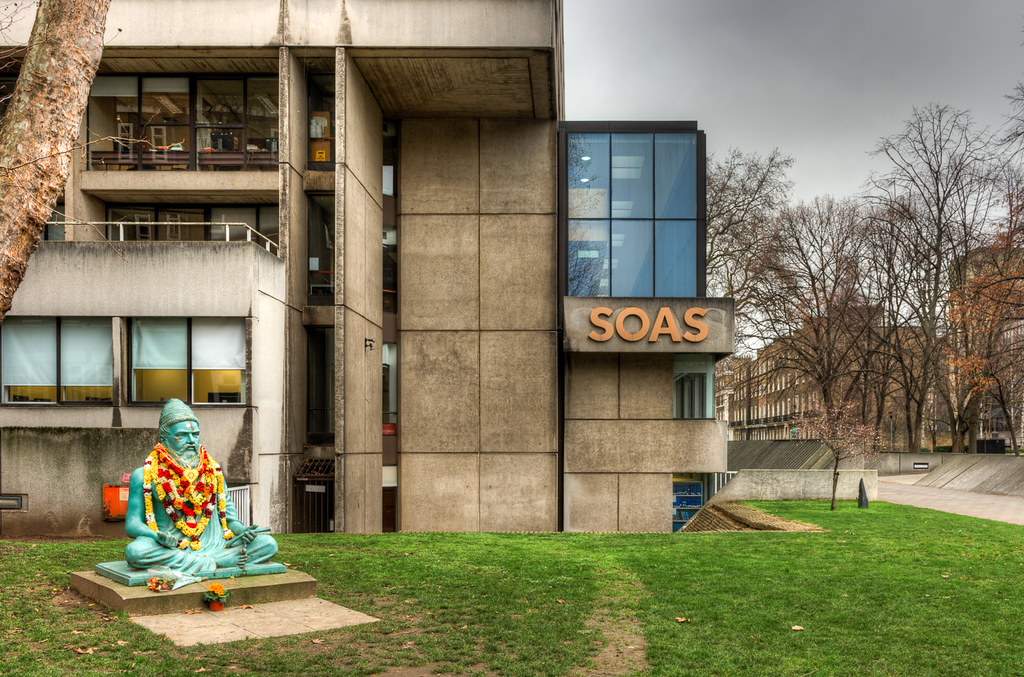
‘My’ first event was in SOAS (School of Oriental and African Studies), LGBTQ and Religion / Faith. It was held in Room 106. The organisers, (“… [s]peakers from the Christian and Muslim communities, as well as SOAS lecturer and writer, Ben Murtagh”) did not turn up!)). A ‘Room T 102’, on the same floor as the room we were on, is mentioned at the back of the booklet in connection with this discussion. Most of us probably spent the evening wondering if we should be in another Room (even building; UL, and SOAS itself are enormous) we got on with it anyway. There was one Irish, one Polish and one Italian Catholic, all-male, in my case ‘collapsed’, two Jewish persons, one transgender, a ‘lapsed Anglican’, (a young heterosexual man who is doing a MA on religion and sexuality), and ‘Lee’ / ‘Leigh’ who’s background was Pentecostal. There were two largely quiet young women of Anglo-Caribbean (and Pentecostal) origin.
In the nature of things very few conclusions were come to, we simply discussed our inherited faiths and our environments. Catholic Irish don’t take a denunciatory attitude to Gay people, they never have; sex, sexuality, and orientation simply were not discussed. ‘Sex education’ was handled very awkwardly, if at all. (Currently, sex education in the Republic is quite open, and – ‘liberal’ is the word, – probably due to a number of females, Fianna Fáil, Education ministers, Máire Geogeghan Quinn and Mary Burke. LGBT matters are dealt with, though as ever, the B and T tend to be neglected). The Pole and the Italian said that homosexuality was not discussed, except in terms of total rejection. The M-to F Trans woman was of quite rigidly Orthodox background and said her own feeling was that anything other than heterosex was frowned upon. Sex variant people were simply perverts – end of story. Or get lost – you were no longer of the Faith – or the family. She had had a long and problematical journey out of this mind-set.
A problem with religion in our political context is that all the parties have similar policies.
They’ll do as little as possible to put them into effect, and we can always expect half a dozen Tory closets to do something stupid. (The fact that there is – in context – a major homophobic party in Northern Ireland is more useful than not. It means than nearly everyone else feels the need to be pro-LGBT, or at least, consider the matter. The current leader of the UUP has attended Belfast LGBT Pride for a number of years now. As have all the other (non-‘Paisleyite’) parties).
The churches can treat LGBT members any way they feel.
Vincent Nichol, immediately on becoming Archbishop of Westminster and RC Primate of England unilaterally closed down the Soho-based LGBT Apostolate and masses for LGBT people. Quite what this has to do with Christian charity it is difficult to fathom. And may create a problem of authority. They’ll probably continue in disguised form.
So far as the ‘Room 106’ discussion was concerned, it is a pity nobody turned up with a notion of how to lead such. (Michael Brown took the chair at – basically, -my request, but obviously could only facilitate the conversation; not lead it). We, inevitably, gave our ‘testimonies’ and left, we didn’t even swap e-mail addresses. Which was a bit of a lost opportunity. I managed not to get to other events, partly because some were at awkward times, an interesting talk on Magnus Hirschfeld, The Scientific Humanitarian Committee and the First Wave of the Queer Movement in Germany 1897 – 1933, was held in Islington Town Hall at six in the evening. The time and venue were not problematical for me. I didn’t remember the event until about 6.15 p. m. on the actual day.
I didn’t, but probably I ought to, have gone to Jonathan Kemp’s readings from his books in Islington Museum. I felt it was somewhat redundant, and I should just read and review the books in the standard fashion.
QuACers
QUAC’s event was held in an architectural wonder – the ?? Centre – it is spheroid. The rooms and study pods do have corners. I inserted myself into a corner furthest from the door – nearest the wine – but ought not to have. I had a very heavy cold and a braying cough, as did a woman near the door. We both had to leave the room and share Fisherperson’s Friends as the rest of the audience simply could not hear the speaker from Syriza. I asked him if he could send upstart a version of his talk. He said that he only had notes, but would try to do something
Written by S McGouran
Internal links to other interesting articles:
ERNST ROEHM – STREET FIGHTIN' MAN
Out-take from Gay Star No. 4 Summer 1981
STAR GAYS NO. 4
By Peter Brooke
At the end of the First World War, there was a widespread passionately held belief in Germany that the soldiers at the Front had been ‘stabbed in the back’ by politicians at home. When the General Staff realised that defeat was inevitable, they arranged for the transfer of power to the German Parliament (whose powers had previously been very limited). They argued that the Parliament (‘Reichstag’) could make a better peace with the victorious allies than they could themselves, since the allies would be more sympathetic to a fledgling democracy in Germany than they would to the old Prussian military oligarchy. At the same time, the allies would have an interest in negotiating a reasonable peace, sine the German army was till intact and able to mount substantial and costly opposition to any possibility of an invasion.
No sooner had power been transferred, however, than the army, its morale shattered began to break up, while large scale rioting broke out at home. The new government tried at first to appease the rioting by getting rid of the monarchy and expressing revolutionary sentiments. Later they suppressed it viciously, using the ‘Freikorps’ – groups of soldiers who had informally banded together in opposition to the revolutionary movement.
But in t he meantime, Germany had suffered a military and political collapse which eventually resulted in the humiliating terms of the Treaty of Versailles. It was in this period that the ‘German Workers Party’ (later National Socialist Germany Workers Party) was founded, in Munich, capital of Conservative and Catholic Bavaria, in 1919.
Ernst Roehm was one of the first members of the Nazi Party, and a highly influential one, owing to his position as Chief of Staff of the Reichwehr (German Army) in Bavaria. Together with is commandant, Franz von Epp, he had been active in the Freikorps immediately after the war. He illustrates the ambivalence that existed between the army, the local government in Bavaria, and the extreme right. The Munich putsch of November 1923 was originally projected as a march on Berlin (in imitation of Mussolini’s march on Rome) headed by the Bavarian government. Roehm was closely involved in the negotiations to bring this about. In the event, of course – though only at the last moment – the negotiations proved abortive and Hitler spent a year on Landsberg gaol, where he wrote Mein Kampf.
Paramilitary Strength
During that year, the movement split in a bewildering number of directions, but the main disputes were those between, on the one hand, a socialist wing in North Germany (mainly led by the brothers Gregor and Otto Strasser, and by Goebbels) and the right wing in Bavaria. And, on the other hand, those who wanted to pursue a parliamentary road, and those who wanted to build up the movement’s paramilitary strength. Roehm was very much in favour of paramilitary activity and, after the failure of the putsch, had formed the ‘Frontbann’ – a private army independent of party discipline.
While in prison, Hitler kept aloof from these disputes, ensuring that all sides maintained their personal loyalty to him, but in 1925, after his release, he concentrated on building a unified party command to which all paramilitary activity would be subordinate.
With the defeat of his views on the need for an independent paramilitary force, Roehm left Germany and went to Bolivia as a Lieutenant Colonel on the General Staff of the Bolivian army. He came back in 1928 and had an autobiography – The Story of a Traitor – published by the Nazi Party’s publishing house in the same year. Early in 1931, Hitler appointed him as Chief of Staff of the SA.
Stormtroopers
The SA (Sturmabteilung – stormtroopers, or ‘Brownshirts’) had been established in 192, dissolved after the putsch, and revived again after Hitler’s release from Landsberg in 1925. Their leader since then had been Franz von Pfeffer who, however, fell out with Hitler in 1930, by which time a rival had emerged in the shape of the SS (Schutzstaffeln – protective squads). This had been led, since January 1929, by Heinrich Himmler, who had originally been introduced to the Nazi Party by Roehm.
When Roehm was appointed, he was known as an early ‘hero’ of the Nazi movement, a close friend of Hitler’s (despite their differences on opinion) and also as a confidante of the Reichswehr leaders, notably the powerful General Schleicher. Nonetheless, it was still, apparently an odd choice. Hitler’s argument with Pfeffer had turned on the autonomy of the SA from the political structure of the Nazi party. Roehm had in the past had much more extreme views on the need for such autonomy than ever Pfeffer had (and he delayed agreeing to take the job for nearly a year because of this issue.)
As an older NSDAP member than Hitler he was less likely to be absorbed in the Hitler-myth that almost any other Nazi leader. He had been out of the country when Hitler was most vigorously establishing his supreme control over the movement. His main contribution to the Munich putsch had been to secure promises of help, which, in the event, were broken. And he had not played a prominent part in the movement since his return from Bolivia.
In addition to which, of course, e was gay, and made few attempts to conceal the fact.
Genteel Young Ladies
Roehm’s homosexuality had made him enemies from the start – principally Rudolf Hess, Martin Bormann and Walter Buch (head of Uschla – the Nazi’s internal secret police). But in February 1932, Hitler dismissed these attacks, saying: ” …the SA is a body of men formed for a specific political purpose. It is not an institute for the moral education of genteel young ladies, but a formation of seasoned fighters.” The following month saw the publication of letters from Roehm complaining of the difficulty of obtaining boys in Bolivia. This led to an attempt from within the SA to assassinate him. While he tried to prevent publication, he made no attempt to deny that he had written the letters.
Hitler became Chancellor of Germany in January 1933, and set about wiping out all the opposition parties to establish a one party sate. The SA and the SS had become by the middle of the year organs of the state. The SA which, since Roehm took command, had increased from around 60,000 members to around two and a half million, even had its own prisons. The only non-Nazi power centre left by 1934 was the (very heavily infiltrated) army. The army was willing to be incorporated into the Nazi system (it adopted the eagle and swastika as its insignia in May 1934) but Roehm argued that it should be subjected to SA command and remoulded ideologically.
Throughout 1933, in fact, the SA, while given plenty of opportunities to brutalise opposition groups, was chafing under the political control which prevented it from overrunning the society completely. In February 1933, Roehm proposed that the army shod be subjected to the SA and was denounced by Hitler, who pointed out that an army would be more effective in a European war than a uniformed mob. Roehm denounced this his friends as a ‘new Versailles treaty’ and, over dinner with Himmler, accused the SS of supporting reaction. In April he complained ” … the Party isn’t a political force anymore; it’s turning into an old age home”. At another meal with Himmler in that month, Himmler denounced his homosexuality; Roehm burst into tears but the next night he held an especially large and noisy gay party at the SA headquarters).
Anarchic Force
By June 1934, a clear alliance had formed against Roehm consisting of Hess, Bormann, Himmler and Goering (Goebbels until the last moment was attempting to promote reconciliation). They could argue that the state was well on its way to becoming a monolithically Nazi state, yet the SA was an anarchic force operating independently of it. The SA, on the other hand, took the view that it was itself the Nazi revolution, so the state should be subjected to it. It was reluctant to become just another component part of the state under the direction of the political wing of the movement (which it had traditionally regarded – always excepting Hitler himself – with contempt).
In June 1934, Hitler, who had, in typical manner, delayed choosing between the two perspectives for as long as possible, threw in his lot with the anti-Roehm group and resolved the issue once and for all with a dramatic purge of the SA leadership. This also entailed a speedy resolution of his previously ambivalent attitude to homosexuality. On the day of the purge, he ordered Roehm’s successor as Chief of Staff of the SA, Victor Lutze (who had been proposed by Himmler, to enforce Paragraph 175 of the German legal code (the German anti-gay law).
Hitler On Homosexuality
That he had been thinking along these lines previously is suggested by a conversation he had with Rudolf Diels, the first commandant of the Gestapo (which had been established in Berlin by Goering partly as a counterbalance to the SA) in January 1934. Paradoxically, Hitler’s argument against homosexuality may also a tribute to the high personal regard he undoubtedly had for Roehm:
“He [Hitlerl lectured me on the role of homosexuality in history and politics. It had destroyed ancient Greece, he said. Once rife, it extended its contagious effects like an ineluctable law of nature to the best and most manly of characters, solely eliminating for the reproductive process those very men on whose offspring a nation depended.”
Roehm would certainly have appeared to Hitler to be one of the ‘best and most manly characters’ and his aggressively masculine homosexuality had already been extensively theorised upon in German in a manner that would have been unthinkable in Britain. (E. g. in Hans Bluher’s The German Wandervogel Movement as an Erotic Phenomenon and in Benedict Friedlander’s group – a breakaway from Magnus Hirschfled’s Scientific-Humanitarian Committee – the Community of the Special).
According to Hans Peter Bleul (in his Sex and Society in Nazi Germany), Hitler was also worried about the possibility of an Order of the Third Sex – a gay freemasonry organising in secret for its own purposes. This notion may well have been encouraged by Roehm’s tendency to pick gay men for the leadership of the SA (though Karl Ernst, the SA leader in Berlin, who is represented in [the play, then film] Bent as gay, had a reputation for seducing high society heiresses).
Male Comradeship
I am unable at this point to reconstruct Roehm’s own politics. He was of course fundamentally opposed to parliamentary democracy and had been a Royalist before becoming a Nazi. Like many Nazis he was nostalgic for the war and the male comradeship of the army. Tight army discipline, by relieving the individual of much of the responsibility for decision making, can allow for a high degree of individual anarchy, and this seems to have been how Roehm envisioned the Nazi state.
He was not particularly anti-Semitic and argued against the emphasis on anti-Semitism after the take-over of power (though, of course, the SA was the main vehicle for Nazi anti-Semitic activity prior to the war). Despite his love for the army, he was not particularly interested in territorial expansion. He doesn’t seem to have held any particular economic theories (though Hjalmar Schacht, the economist who fashioned the Nazi welfare state was one of his proteges). In contrast to the elitist SS, the SA was designed to be a mass movement and, though opposed to parliamentary democracy, he probably had some vague notion that power should come from below.
He could perhaps be summed up as an anarchist, who was opposed to all moral conventions but who accepted that, without moral conventions, the strong will triumph over the weak and who was therefore determined to be one of the strong. We may also suggest that he was encouraged in this point of view by his feelings as a gay man watching thousands of young men reduced to utter poverty and purposelessness in the early 1920s. In a Germany that had been deliberately economically crippled in the aftermath of an (in his view) undeserved defeat.
NOT A GAME OF TWO HALVES
In April 2011 the manager of Glasgow Celtic football Club (Neil Lennon) and three other officers were sent letter bombs. This led to hand-wringing articles in the press. To the effect that one urban tribe (Celtic) was as bad the other (Glasgow Rangers FC (Football Club)). The next time team-members, officers or supporters of Rangers get letter bombs or bullets in the post, will be the first time. Neil Lennon has a growing collection of the latter. He resigned from Northern Ireland’s ‘national’ squad, because when he scored a goal he was the object of abuse, including death threats, from a bloc of ‘fans’.
There was, (prior to the letter bombs), a controversy in (the Communist Party of Britain’s daily) Morning Star about Celtic and Rangers. Writers dismissed the idea of actual differences between the teams: the ‘Old Firm’. They’re both commercial enterprises. Martin O’Neill, a former manager, distanced the enterprise from ‘Rebel’ songs. An MS letter-writer said Belfast Celtic wound itself up in 1948. But not why. A Celtic player was shot dead in mid-match. The killer was never found. The next time a Rangers player is shot dead, or a ‘teen in Glasgow gets his throat slashed for wearing a ‘blues’ strip, will be the first time.
Some commentating on the latest incivilities claim both sides sing sectarian songs. Since when have ‘Rebel’ songs been sectarian? Do Celtic fans censor their repertoire to avoid mentioning Wolfe Tone and the rest? It would be disingenuous not to acknowledge that much of this is engaged in because it winds up the opposition. The ‘on the one hand; on the other hand’ balance is disingenuous. There is an imbalance in the behaviour of the ‘ultras’ following the teams. MS‘s correspondents did not note some relevant matters. The National Front and the UDA (Ulster Defence Association) did a roaring trade outside Rangers ground, selling journals and collecting money. Rangers’ management claims this has declined due to their efforts. It is probably due to Unionism in Scotland being in (probably terminal) decline.
This article is not a denunciation of the ‘blues’. Rangers’ fans were horrified by the letter bombs. Northern Ireland supporters were disgusted at Lennon’s treatment. It’s not healthy to argue with those barracking him, they constitute a solid bloc in stadiums, or when beating-up those less Loyal than themselves.
There has been a follow-up to the bombs and bullets, partly pro forma declarations of indignation and distaste by Scotland’s Establishment. Meanwhile Neil Lennon received another bullet in the post, and was physically assaulted in the course of a match by a Hearts (Heart of Midlothian) fan. Hearts is Edinburgh’s equivalent of Rangers, Hibernian being the Celtic-equivalent. Edinburgh disdains Glaswegian crudity, but the sectarian beast is clearly dozing, not dead.
James MacMillan, a composer, in the 1998 Edinburgh Festival lecture, said sectarianism was Scotland’s dirty little secret. The [Labour & Trade Union] Review’s response (I wrote it) was ‘on the one hand; on the other hand’ hand wringing. But this sequence of events is eye opening. The London media is detached about these matters. It’s been implied that Neil Lennon attracted his bullets, letter bombs (some put ‘bomb’ in quotes — the police described them as ‘viable’) and assaults, whether on the grounds of being red haired, “Northern Irish”, or manager of Glasgow Celtic, it’s difficult to assess.
Some bloggers (who don’t denounce Glasgow Celtic in grossly sectarian and racist terms) accuse its fans of supporting ‘terrorists’, meaning the IRA. It is ‘whataboutery’ – but – (some) Rangers fans support the UDA and UVF (Ulster Volunteer Force) and not just by cash in collection tins. The UK government (to which they are, allegedly, ‘Loyal’) negotiated with the IRA, which put away its guns well before the Loyalist UDA / UFF or UVF did.
If the recipients of these bombs had been Jewish or even African or Afro-Caribbean people would have been the objects of sympathy, ‘think pieces’, and possibly even some action, (unless they happened to be Muslims). Why is the official response to these acts of aggression so sluggish? Is sectarianism systemic to Scottish (even British) society? Retaliatory violence may happen unless the Establishment from Parliament (Westminster as well as Holyrood) down indicates that sectarianism is history.
Sean McGouran
Outhouse (Dublin) – A safe space for LGBT people
Outhouse has opened it’s new house. Click out logo to go to our site.
Outhouse is a community and resource centre for LGBT people, their families and friends.
It is based in central Dublin. Its primary goal is to offer a safe space for people to inform, meet, organise and make things happen.
Outhouse is very often the first point of contact for people into the LGBT world and also the place in which lots of groups and organisations have been established.
ESSAY IN DUBLIN REVIEW OF BOOKS (IN TWO PARTS) by Jeff Dudgeon
‘Casement Wars’ – DRB response to Angus Mitchell in Field Day Review Part II 4 June 2013 ‘Casement’s War’ – DRB response to Angus Mitchell in Field Day Review Part I 25 March 2013 Tralee Casement conference schedule October 2013
Part I, Casement’s War, Issue 31, 25 March 2013 [On Casement in Germany and the Easter Rising]
Part II Casement Wars, Issue 36, 4 June 2013 [On the Black Diaries’ authenticity controversy]
Responding to: FIELD DAY REVIEW 8. 2012
· ‘A Strange Chapter of Irish History’: Sir Roger Casement, Germany and the 1916 Rising by Angus Mitchell.
· Diary of Roger Casement, 1914–16, Part I: ‘My Journey to the German Headquarters at Charleville’, annotated by Angus Mitchell.
· ‘A last Page of My Diary,’ 17 March to 8 April 1916, with an introduction by Angus Mitchell.
· ‘Phases of a Dishonourable Phantasy’ by Angus Mitchell.
Also attached is the programme for the Casement conference in Tralee this October organised by Notre Dame University and Limerick University.
A Casement documentary archive, extensive diaries controversy material and a photograph gallery is at http://jeffdudgeon.com/
A violent thug who attacked a gay man in the toilets of a gay bar has been sent to prison
Although 27-year-old Kenneth McIntyre was ordered to serve a year in custody at Belfast Crown Court, Judge Gordon Kerr QC said that as a dangerous offender who posed a risk of serious harm to the public, he was ordering him to spend a further three years on supervised licence in an effort to protect the public.
Earlier he had heard that on Valentine’s Day 2009, McIntyre and another man not before the court had been drinking in Mynt nightclub in the city centre when they went to the toilet.
Prosecuting lawyer Robin Steer said their victim, Mark Saunders, had been in the cubicle when he overheard them talking about gay men and when he challenged them about it, McIntyre’s friend said “are you another gay b******” before the pair came at him.
Mr Saunders, who is himself homosexual, cannot remember what happened, the lawyer told the court, but as a result of either a blow or a push, two teeth were knocked out, two teeth were fractured and he fell to the ground cutting the back of his head, with the gash needing seven staples.
Having identified the two males to door staff, bouncers told McIntyre and his friend to stay but having tried unsuccessfully to run out the back door, they bolted for the front door – but ran into police.
McIntyre, originally from east Belfast but now with an address at the Rickamore Road Upper in Ballyclare, pleaded guilty to causing grievous bodily harm to Mr Saunders.
In jailing McIntyre, Judge Kerr revealed he had only been released from prison for a previous violent offence just five days before the incident, commenting that he had “an appalling record”.
News Letter
12 June 2013
An openly gay mayor has been appointed to North Down Borough Council for the first time.

Alliance councillor Andrew Muir was elected to the position on Thursday and has chosen the theme of his term of office to be ‘Working as one’.
A graduate of the University of Ulster, the keen athlete holds a degree in Peace and Conflict Studies.
He told UTV: “My sexuality hasn’t been an issue for me nor for my electorate nor my constituents since I became a councillor in 2010.
“And it won’t be a defining issue for me as mayor because the challenge as mayor is to reach out and represent everyone across our society – people of different faiths, backgrounds.”
Mayor Muir says that this is how society will move forward.
“I think it’s a proud moment for me – but there’s lots of challenges and opportunities ahead.”
Bringing economic growth to the area, reaching out to people and celebrating the diversity of activity are at the top of his agenda.
“If we work as one we can achieve so much more for everyone across the borough.”
Councillor Jennifer Gilmour was elected as North Down’s new deputy mayor.
The DUP politician is a graduate of Queen’s University Belfast.
http://www.u.tv/News/North-Down-elects-gay-mayor/f39ca9c9-c4ff-4911-a0c1-02ff3420ef60
© UTV News
Midnight in the Northern Ireland Assembly and gay marriage
http://www.niassembly.gov.uk/Assembly-Business/Official-Report/Reports-12-13/24-June-2013/#8
This links to the whole day’s Assembly discussions while the attachment is the debate on the Legislative Consent Motion (LCM) only. It is designed to put Northern Ireland into a small part of the equal marriage bill going through Westminster as we speak.
Sammy Wilson MP (DUP Minister of Finance) it appears resisted London on a couple of issues including one on marriages conducted by armed forces’ chaplains.
Steven Agnew makes the telling point that this is the first time the DUP has put forward such legislation – albeit turning English marriages into Ulster civil partnerships. A form of alchemy?
Same sex marriage LCM debate NI Assembly 24 June 2013
- « Previous Page
- 1
- …
- 4
- 5
- 6
- 7
- Next Page »